MNJ05-001
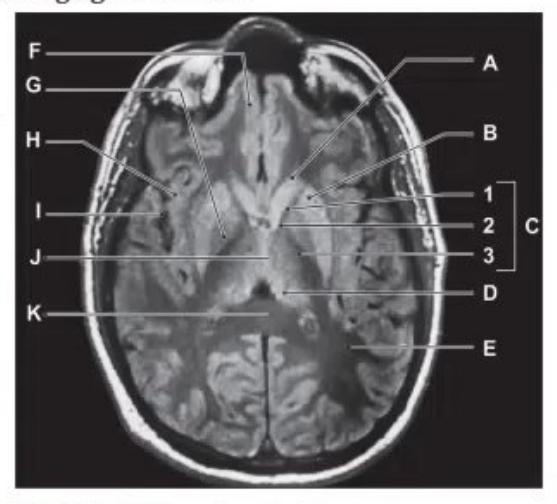
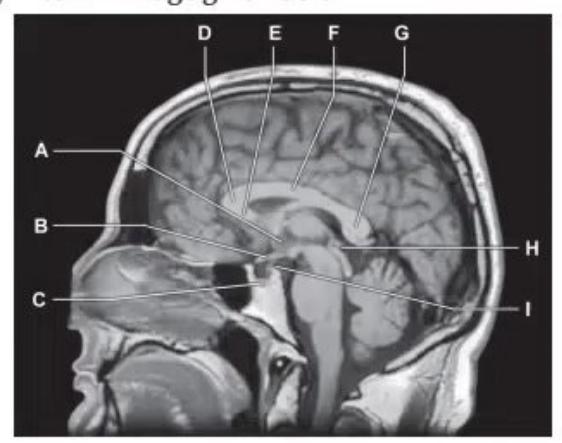
* Identify A to K in image given below:
Answer
No model answer in source material.
MNJ05-002
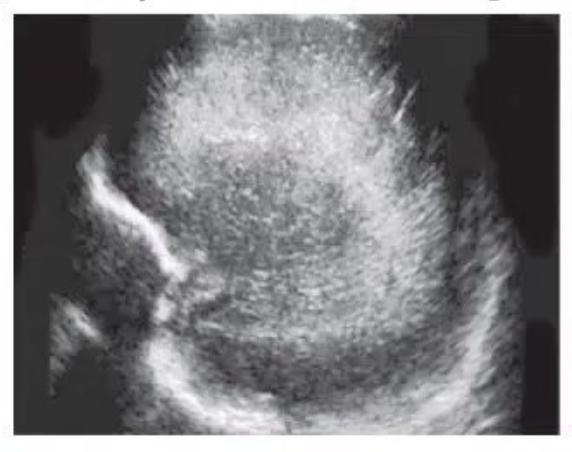
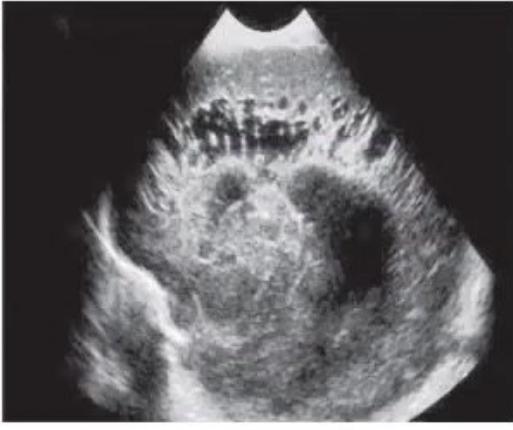
* See the image and give answer of following:
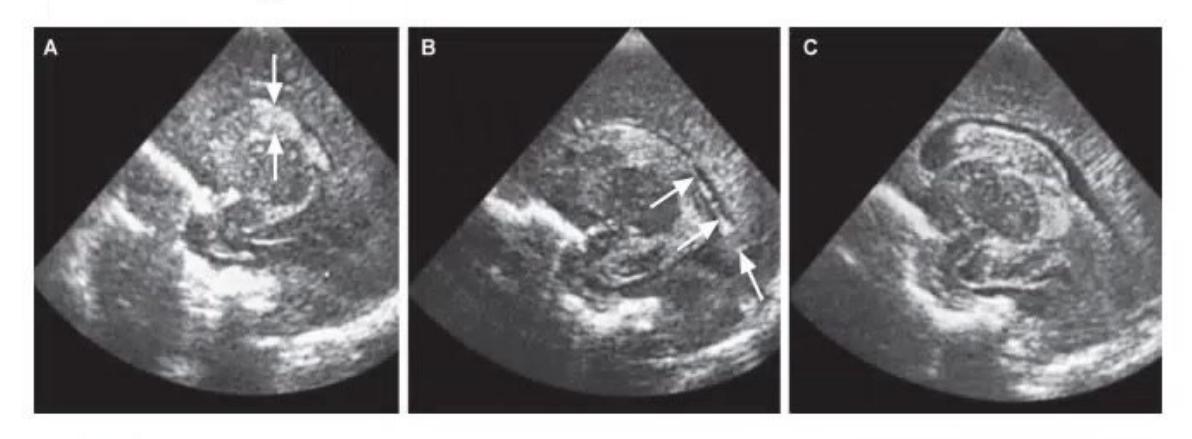
- What are risk factor for this disease
- CT and USG criteria for grades
- Preventive modality
- Possible complication if this happen in a newborn preterm baby
- Grade these images
Answer
No model answer in source material.
MNJ05-003
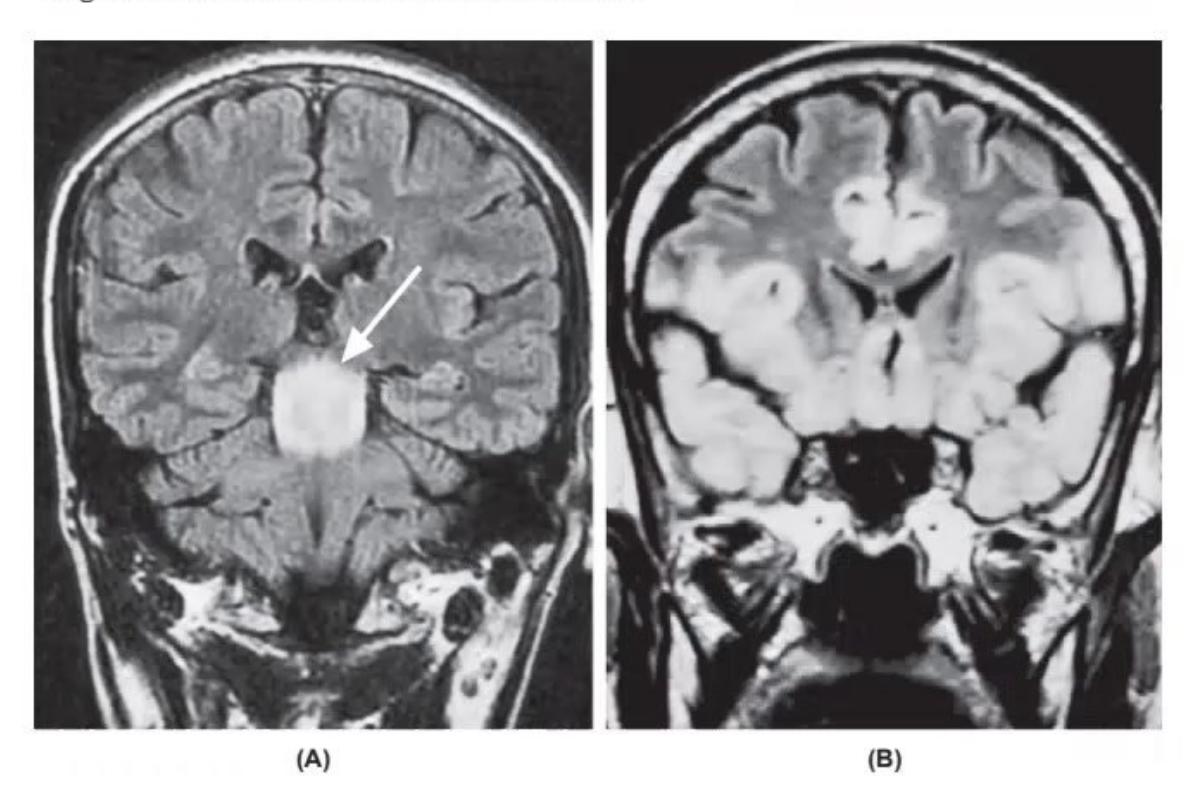
* Nov 2014 Diagnose these 2 conditions and write treatment
Answer
No model answer in source material.
MNJ05-004
* Nov 2014
An 8-year-old child presents with complaints of seizure with multiple cranial nerve palsy and disarthria and dysphasia, past history of viral illness is positive:
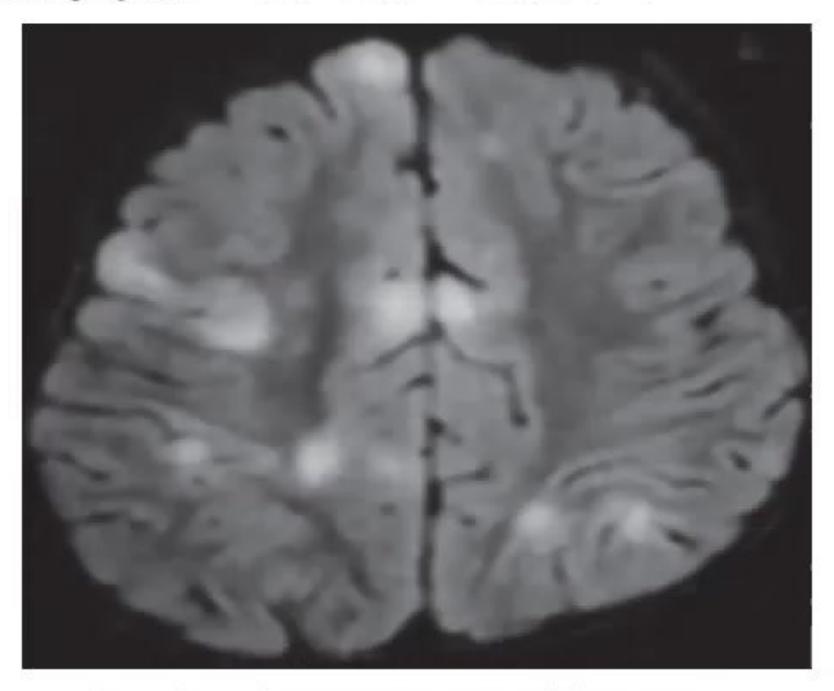
- Identify the condition
- Treatment and prognosis
Answer
No model answer in source material.
MNJ05-005
-
- Clinical presentation
-
- Treatment
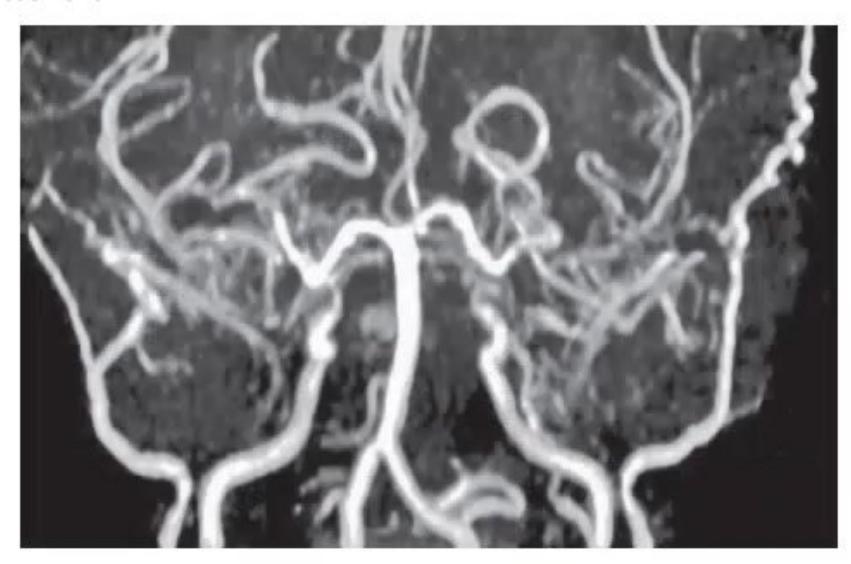
- Risk factor (4)
- Clinical presentation
- Treatment
Answer
No model answer in source material.
MNJ05-006
CT scan of an 8-year-old child:
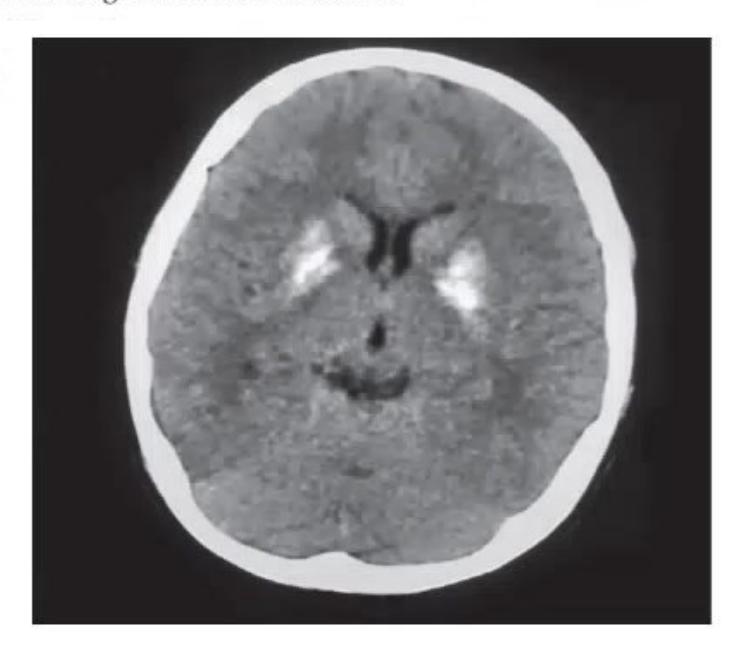
- Dia gnose the CT scan given below:
- Give 4 differential diagnoses of this condition.
Answer
No model answer in source material.
MNJ05-007
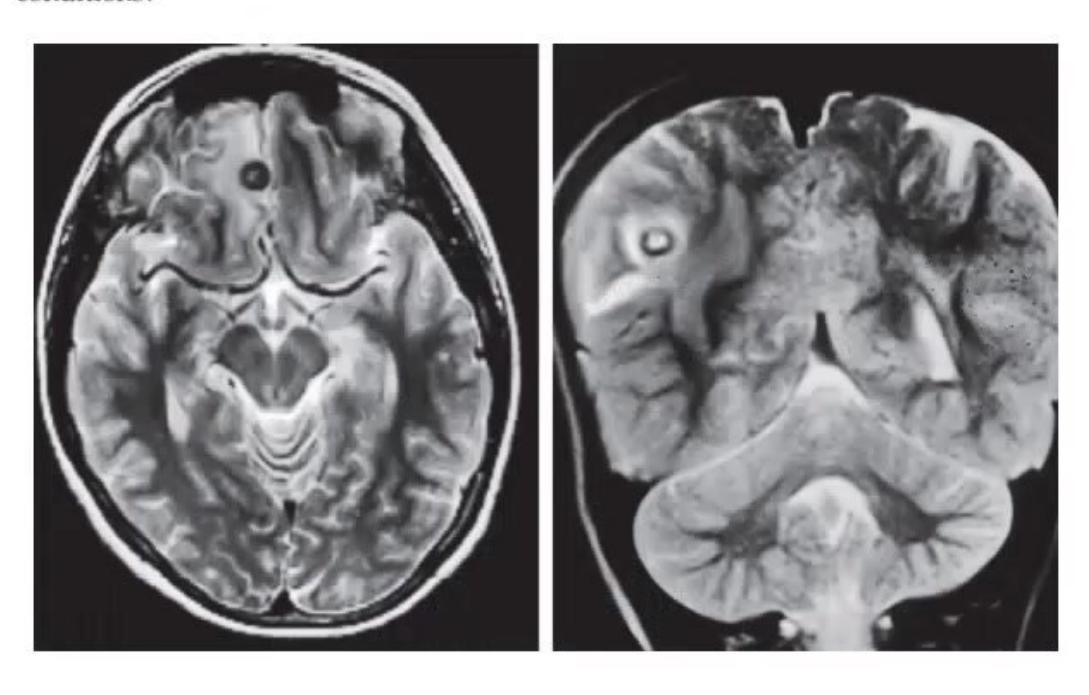
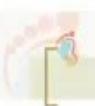
- Whats this maging modality?
- What are these two images and how can we differentiate by this imaging in these two condihons?
Answer
No model answer in source material.
MNJ05-008
Diagnose A, B, C, D:
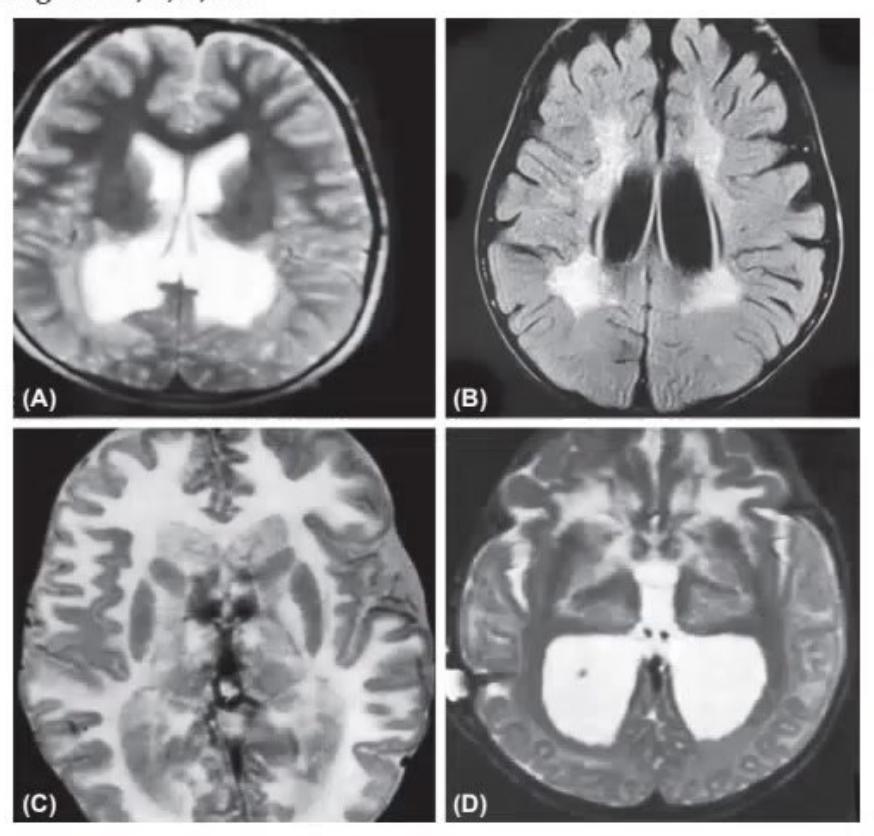
Answer
No model answer in source material.
MNJ05-009
* May 2010:
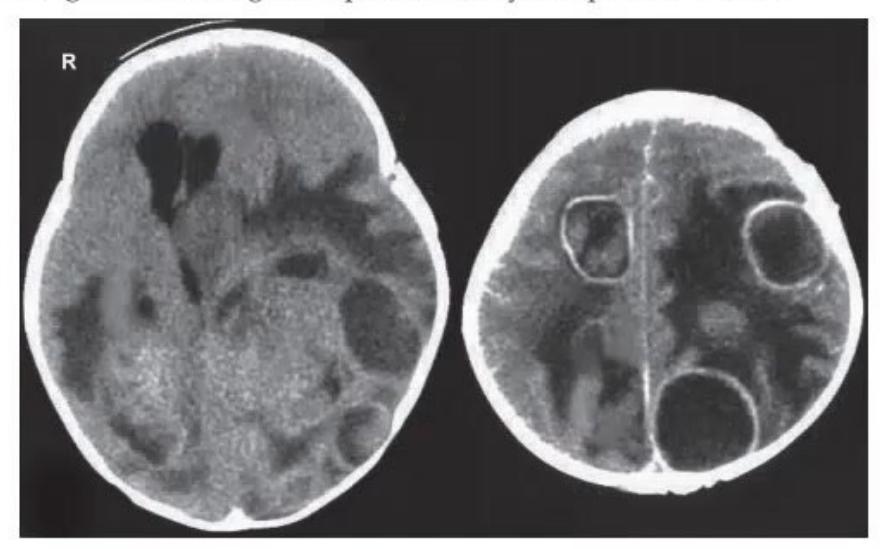
- Interpret the CT brain.
- What are the predisposimg factors for their conditions (mention at least 5)?
- What long-term neurological sequelae would you expect in this child?
Answer
No model answer in source material.
MNJ05-010
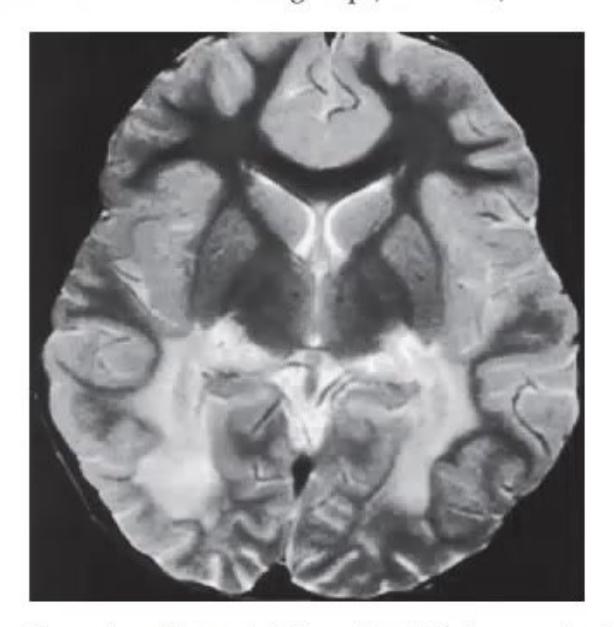
- Identify the image /level
- Give diagnosis
- Mention other two diseases form the same group (metabolic).
Answer
No model answer in source material.
MNJ05-011
* 10-month infant, brought with complaints of rapidly increasing head size and delayed development. He was noticed to have prominent occiput:
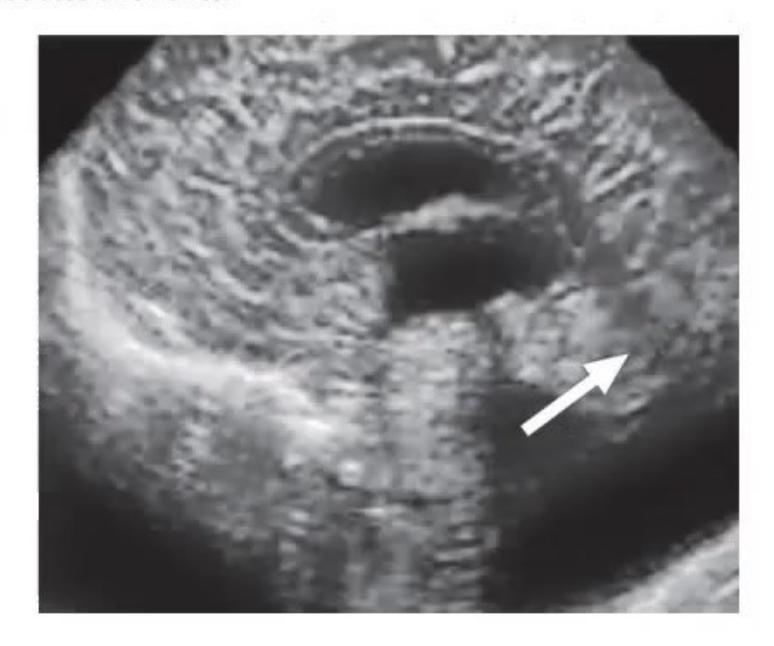
- Mention abnormalities noted on this image
- Give your diagnosis.
- Mention associated anomalies.
Answer
No model answer in source material.
MNJ05-012
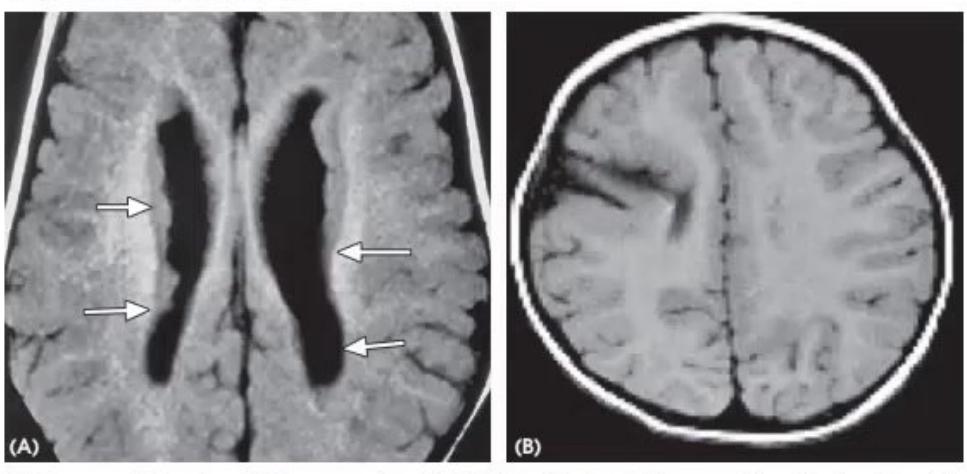
" Identify image A and B.
Answer
No model answer in source material.
MNJ05-013
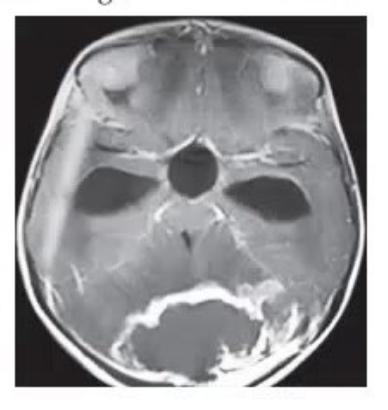
15.* A 10-year-old male child presents with fall during walking and headache since 3 months that is progressively increasing, neuroimaging done that is given below:
1 Diagnose the condition given in image 2. Treatment
Answer
No model answer in source material.
MNJ05-014
"
Neuroimaging 55
ANSWERS
-
Ans. 1. See the image given in neuroanatomy.
-
Ans. 2. See the image given in neuroanatomy.
-
Ans. 3. Sagittal section of cranial USG grade 1 and grade 3 PVL.
-
Ans. 4. 1. Preterm, fast bolus, poor ventilation, HCO3 bolus
-
- See text in beginning of chapter (Volpe and papile staging)
- Antenatal steroid, slow bolus, gentle ventilation, maintain perfusion, gentle handling of baby
-
- PHVD, hydrocephalus
- Grade I IVH: Note the echogenic blood in the germinal matrix (arrowheads) just anterior to the anterior tip of the choroid plexus, which (normally) is also echogenic.
- Grade IIIVH Note the echogenic blood (arrowheads) filling <50% of the ventricular area.
- Grade III IVH: Note the large blood clot nearly completely filling and distending the entire lateral ventricle.
-
-
Ans. 5. 1. JE—lesion always present in basal ganglia region Treatment—maintain BP, sugar, treatment of increase ICT
- HSV—lesion presents in fronto-temporal area, acyclovir is treatment.
-
Ans. 6. 1. ADEM (Acute demyelinating encephalomyelitis)
- 30 mg/kg/day methylprednisolone for 5 days followed by oral prednisolone for 2–4 weeks.
-
- Prognosis is good for single episode
-
Ans. 7. 1. Moyamoya disease
-
- Idiopathic (mc), Down syndrome, NF-1, Asian race, hypothyroidism.
- Recurrent episode of hemiplasia.
-
- Shunt between temporal artery and middle carotid artery.
-
-
Ans. 8. 1. Basal ganglia calcification
- Idiopathic, Fahr's disease, hypoparathyroidism, postinflammatory (TB, CID, toxoplasmosis, cysticercosis, congenital HIV).
-
Ans. 9. 1. T2 MRI
- a. Tuberculomas (hypointense on T2W image)
- b. Neurocysticercosis (hyperintense on T2W image)
- a. Tuberculomas (hypointense on T2W image)
-
Ans. 10. A ALD
-
B. MLD
-
C Canavan disease
-
D. Alexander disease
-
Ans. 11. 1. Multiple cerebral abscesses.
- CHD with R-L shunt (usually TOF), soft tissue infections of the scalp/sinusitis/ orbital cellulites/immunodeficiency/VP shunt infection/penetrating head injury to the skull.
- Hemiparesis/seizure/hydrocephalus/cranıal nerve palsies/behaviour and leaning problems.
-
. MRI T2W image at level of internal capsule and basal ganglia
- . Ocerpital white matter most involved adrenoleukodystrophy.
- . Differential diagnosis: Refsum/Zellweger/acetyl CoA deficiency peroxisomal disorders.
-
Cystic Ath ventricle + dilated horns + dilated third ventricle.
- . Dandy-Walker malformation.
- . Hydrocephalous + agenesis of corpus callosum + agenesis of cerebellar vermis + winged cerebellum
-
Ans. 14. a.
Heterotropia b Schizencephaly
Ans. 15. Meduloblastoma, surgical
-
Ans. 16. 1.
- Z Miller Dicker syndrome, microophthalmia, optic neuritis
-
Ans. 17. 1. Multiple NCC
- 2: Manage if sign of increase ICP, start AED, do fundas examination, then start steroid for 7 days, after starting 2 days of steroid start Albendazole for 7-21 days.
- . At least 2 years or 6 months seizure free period whichever is later
- . Do not use meal without proper cooking
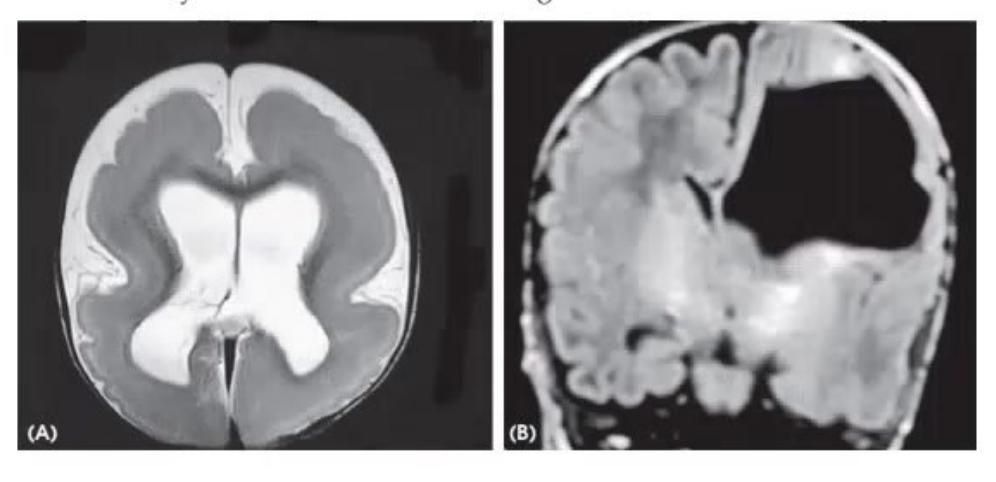

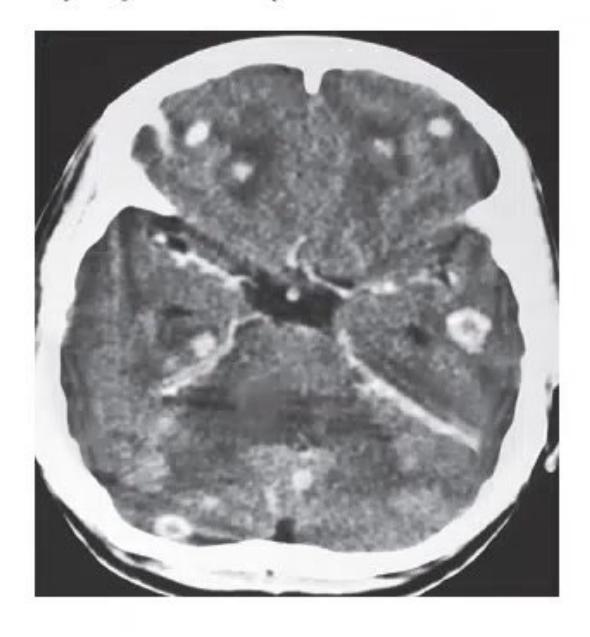
- Identify image A and B
- Write down one syndrome associated with image A and other associates features
- What 1s diagnosis?
- Stepwise management with investigation.
- How prolong you will give antiepileptics?
- What preventive advice you give to family?
- See text in beginning of chapter (Volpe and papile staging)
- PHVD, hydrocephalus
- mg/kg/day methylprednisolone for 5 days followed by oral prednisolone for 2–4 weeks.
- Prognosis is good for single episode
- Idiopathic (mc), Down syndrome, NF-1, Asian race, hypothyroidism.
- Shunt between temporal artery and middle carotid artery.
a. Tuberculomas (hypointense on T2W image)
b. Neurocysticercosis (hyperintense on T2W image)
b. MLD
d. Alexander disease
a. A—lissencephaly b. Porencephalic cyst
Answer
No model answer in source material.