MNJ16-001
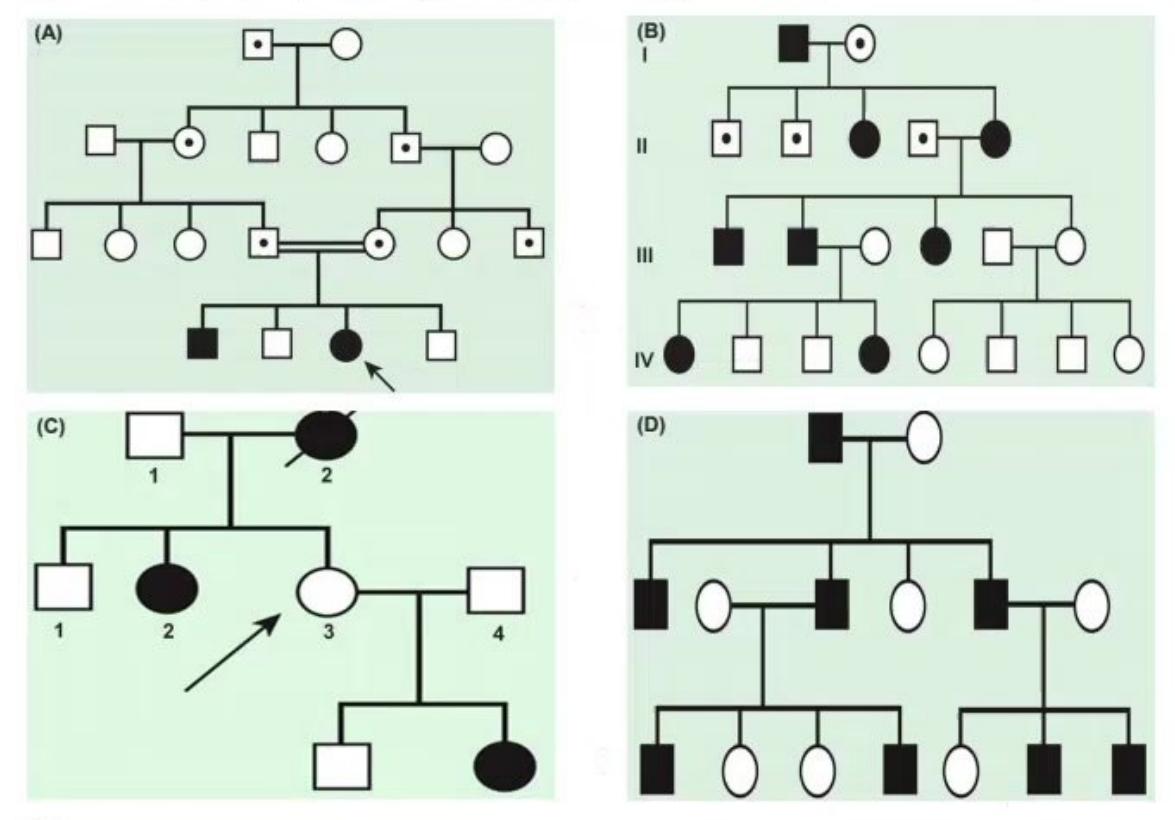
Identify genetic pattern of spot A, B, C, D and give 2 examples of each.
Answer
A. Autosomal recessive—cystic fibrosis, Wilson disease
- B. Incomplete panetration of autosomal dominant pattern—famulial cancer syndrome, famihal polyposis
- a X-linked dominant—urea cycle defect, incontinentia pigmenti
- DD: Y-linked dominant—Langer mesomelic dwarf, Leri-Weil dyschondrosteosis
MNJ16-002
- 4, Which sex 1s affected?
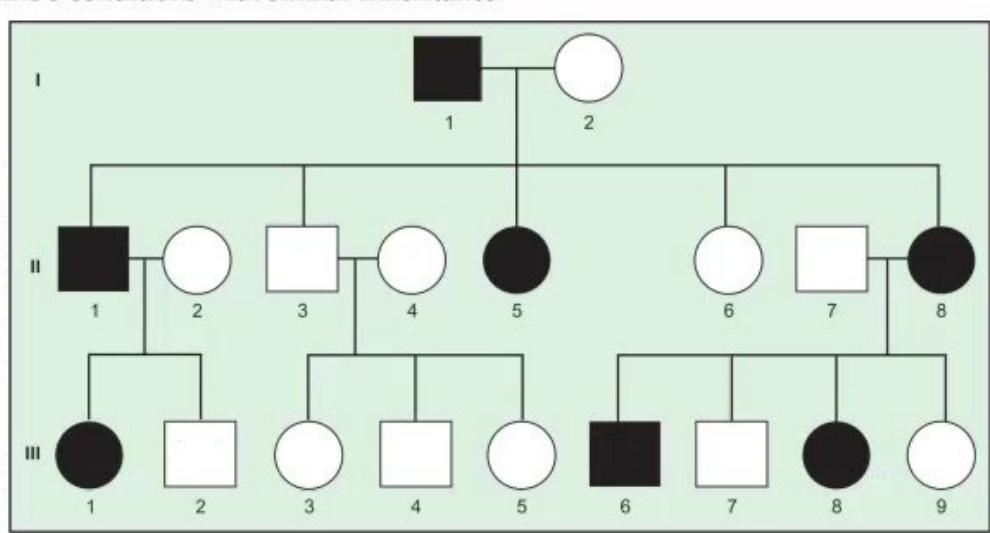
- Identify the pattern of inheritance.
- Name 3 conditions with similar inheritance.
- Whats the degree of inheritance?
Answer
. Autosomal dommant
- . Dominant
- * D: Dystonia myotonia
- * O- OL, osteopetrosis
- « M: Marfan,
- * Incontinentia pigmenti
- « N: NF 1
- « A: Achondroplasia, PED (AD)
- * N: Noonan syndrome
- * T Tuberous sclerosis
- * VH,: VVD, histospherocytosis
- 50%
- Either sex.
MNJ16-003
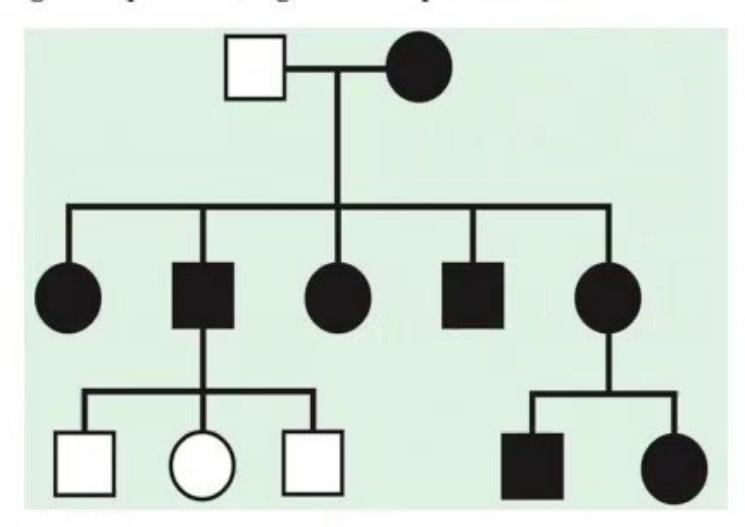
Identify this genetic pattern and give 4 examples of this.
Answer
Mitochondrial inheritance
- Melas, MERRF, Pearson, Kearns-Sayre syndrome
MNJ16-004
** A 39-year-old female Ritu, 10 weeks pregnant, is concerned about Down's syndrome.
- 4, Name the associated chromosomes with translocation.
- Which antenatal tests will you advise?
- Name some other antenatal markers used.
- If mother 1s a translocation carrier, how much is the risk to the offspring?
- Recurrence risk 1s highest with which translocation?
Answer
Chorionic villi sampling (10-12 weeks), ammocentesis (16-20 weeks), cordocentesis (20 weeks)
Triple test (2nd trimester)—low serum alpha fetoprotein, low unconjugated estradiol, high levels of human chorionic gonadotropin. Fetal USG—increased nuchal fold thickness, short femora.
- 10-15 %
- 14, 15, 21, 22
- 21q/21q (100%)
MNJ16-005
Images of the girl child Pooja at birth and at 6 years of age:
- . What 1s the phenotype in this syndrome?
- Mention the cardinal features of the syndrome.
- Any easy outpatient OPD procedure for the diagnosis. Ul me We bh
- Which hormone treatment you will offer later in life?
- oe What 1s the male version?
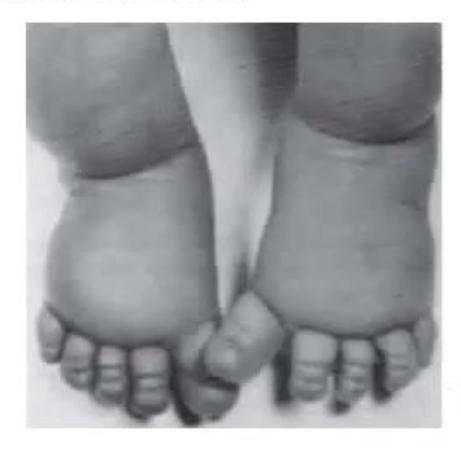
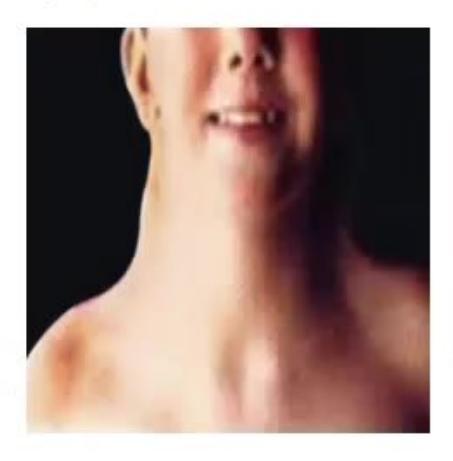
- Identify the syndrome and state the chromosomal anomaly.
Answer
Turner syndrome, 45 XO
- Female
- PR fe ee ep eee pS Re Bee Short stature, broad chest with wide spacing of nipples, congenital lymphedema, webbed neck, hyperconvex nails, ovarian dysgenesis, cubitus vulgus, short fourth metacarpal, horseshoe kidney, bicuspid aortic valve
- Buccal smear for barr body
- Thyroxin, growth hormone, estrogen
- Noonan syndrome
MNJ16-006
**
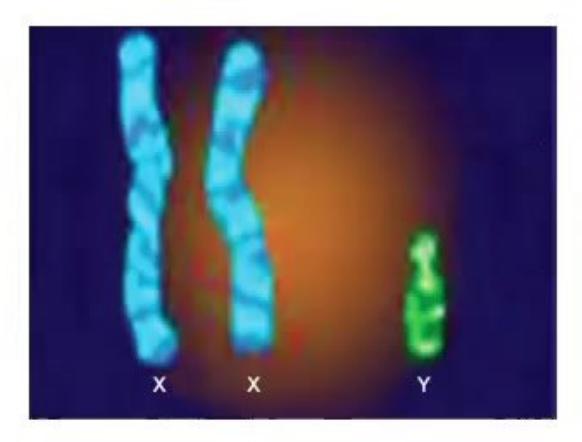
- Which syndrome has this genotype?
- What is the phenotype?
- State associated salient features.
- Investigation you will do.
- Treatment.
Answer
Khnefelter syndrome (XXY non-disyunction of X chromosome)
- Male
- Hypogenitalism, hypogonadism, tall stature, mental retardation and behavior concerns—aggressive behavior, antisocial acts, learning difficulties, anxiety. Tall individual with normal fertility who may have some learning disabilities.
Diagnosis of rarely before puberty, should be consider 1n all tall male with behaviour and learning problem.
- . Karyotyping, FSH/LH level increase by mid puberty with low testosterone level, testicular biopsy
- . Testosterone replacement therapy from 11-12 years of age imp note—high incidence of pulmonary disease, varicose vein
MNJ16-007
Male child with mental retardation:
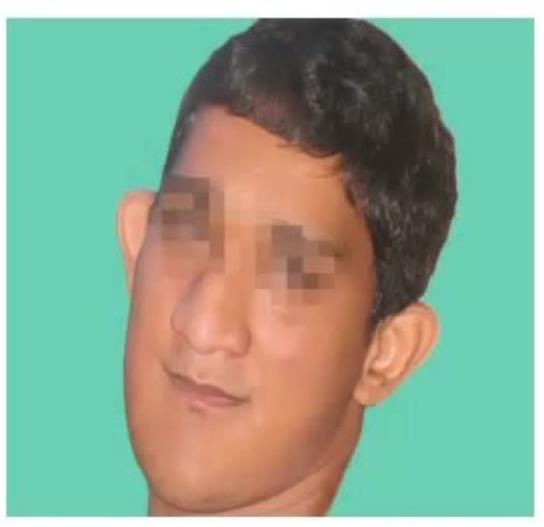
- Identify the syndrome. What is its meaning?
- What is the exact locus?
- What is pattern of inheritance?
- What are clinical and associated cognitive and behavioral problems?
- Mention any another syndrome with similar inheritance.
Answer
. Fragile X syndrome, constriction at sites other than centromere 1s known as fragile site and shows a tendency to break
- . xp27.3
- . Allelic expansion—change in the increasing size of a particular DNA sequence from generations to generations (CGG)
- . Chnical—large testis, large cupped ear, elongated face, high arch palate Cognitive—development delay, MR, autism, ADHD, anxiety
- . Huntington disease CAG
Spinocerebellar ataxia' CAG
Myotonic dystrophy: CTG
Frederich ataxia' GAA
MNJ16-008
- 4, What will be the risk of inheritance to offsprings m affected males with disease?
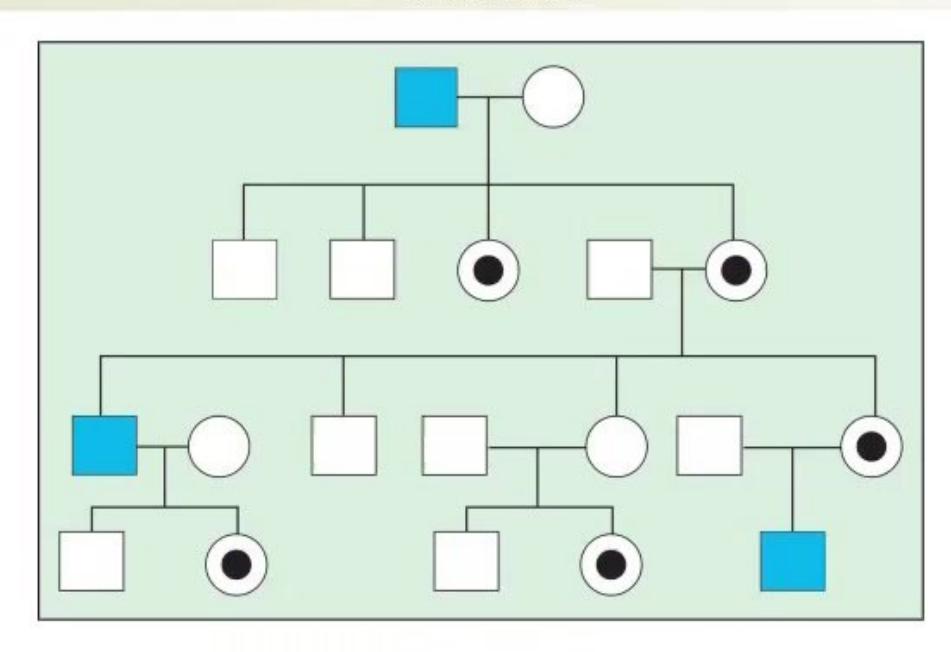
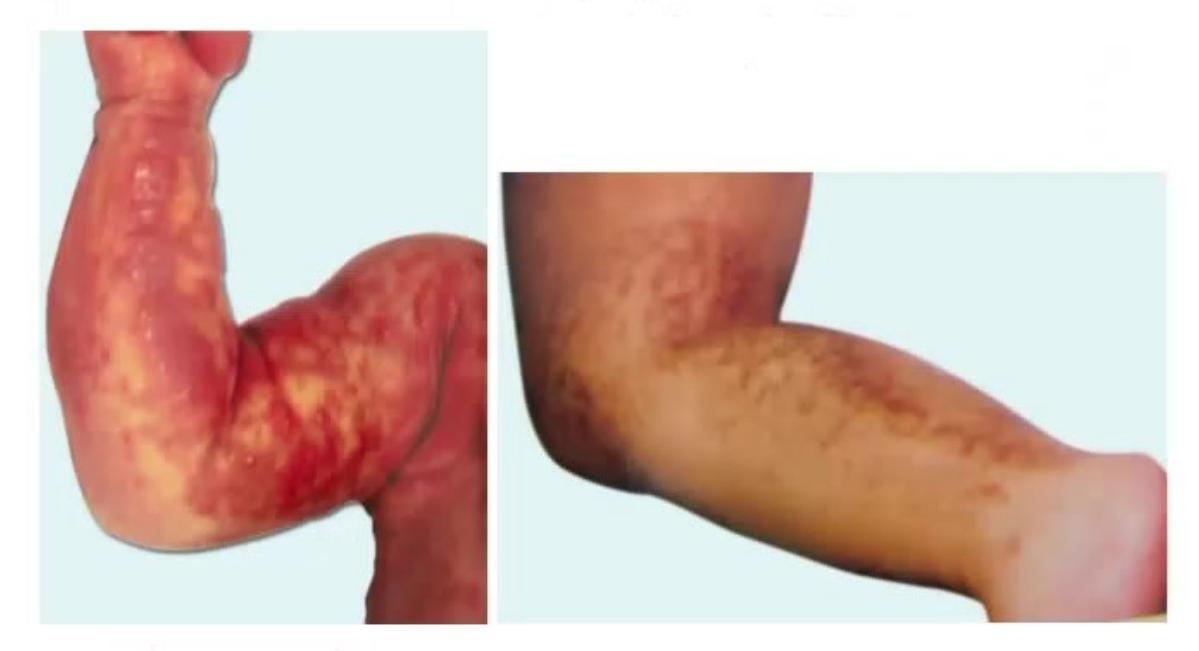
- Identify the pattern of inheritance
- Name 3 conditions of similar inheritance.
- Which is the affected sex? What is the risk of getting affected in each pregnancy?
- Identify the syndrome. Name the pattern of nheritance
- What are stages and what 1s gene affected?
- Give 3 another examples of similar inheritance
Answer
— . X-linked recessive
-
- GH is LADKITYA Dood wale 5E chai mangti
G G6PD deficiency
H: Hemophilia
Ladkiya:
Dood: Wiskott-Aldrich syndrome
Mangti Menkes kinky hair disease
- . Male, the msk is 50% for male child in each pregnancy
MNJ16-009

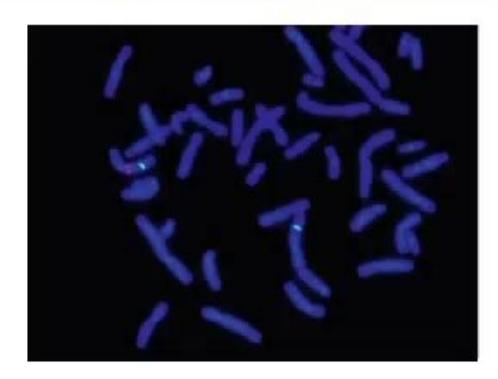
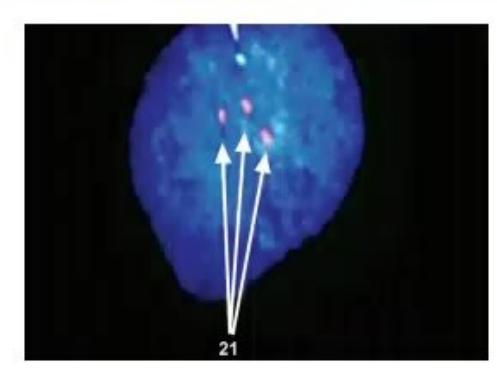
- Identify the diagnostic technique and what is diagnosis in slide B?
- Name 3 syndromes in which this technique 1s used for diagnosis.
Answer
Pee ee (FISH) fluorescent in situ hybridization shde B showing Down syndrome
- Down syndrome
Prader-Willi syndrome
Angelman syndrome
Willams syndrome
Miller-Dicker syndrome
MNJ16-010
- . What 1s the risk of fetal loss?
- Common diseases in which antenatal diagnosis is available.
- Name 3 vectors used in gene therapy. He Go po
- Lt State 3 candidate diseases (with single gene defects) for gene therapy.
- State three procedures for antenatal genetic diagnosis, also mention about the earliest gestational age at which these tests can be performed.
Answer
. Ammocentesis: 15-16 weeks of gestation
Chorionic villi sampling: 10-12 weeks
Cordocentesis—20 weeks
Skin hiopsy, liver biopsy
- Ammocentesis: 0.5-1% CVS- 1-2%
- . Down syndrome, DMD, SMA, beta-thalassemia, Turner syndrome
- . Retrovirus, adenovirus, adeno associated virus, naked DNA
- . Any chromosomal anomalies, severe combined immunod eficiency, cystic fibrosis, hemophiha, PKU, Gaucher disease, beta-hemoglobinopathies
- Prader-Willi syndrome, chromosome 15
- . Genomic imprinting /uniparental disomy
- . Angelman syndrome (15g 11-13)
MNJ16-011
A 7-year-male child with hypotonia and hypogonadism:
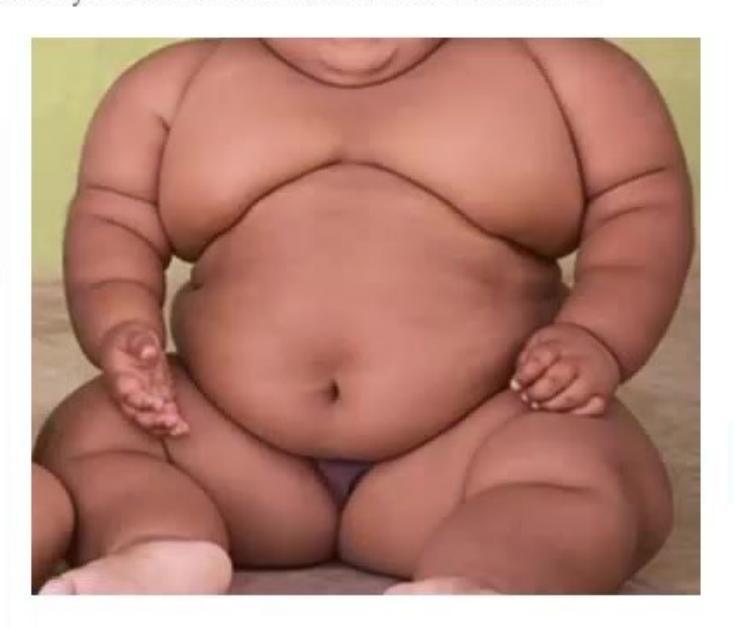
- Identify the syndrome and chromosome involved.
- Name the genetic pattern of inheritance.
- Which 1s the other syndrome related to the same chromosome?
Answer
No model answer in source material.
MNJ16-012
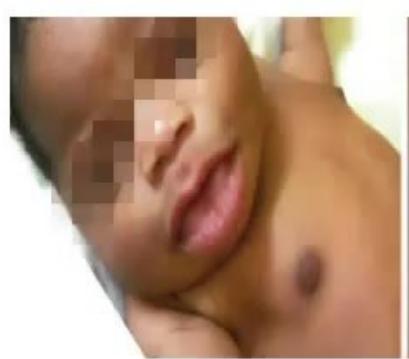
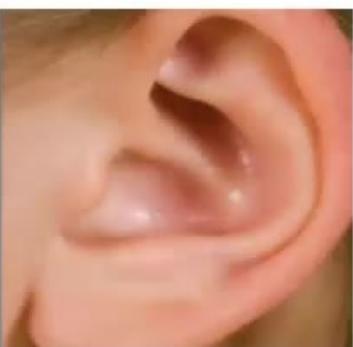
- Identify the syndrome.
- Which metabolic problem these children face?
- Give three salient features.
- Mention the chromosome involved.
Answer
- Beckwith-Wiedeman syndrome
- . Hypoglycerma (Hyperinsulinemia)
- . LGA, macroglossia, earlobe crease, visceromegaly, umbilical hernia, microcephaly, fissure in ear cartilage, omphalocele
-
- Chromosome 11p15 (Uniparentral like PW5).
MNJ16-013
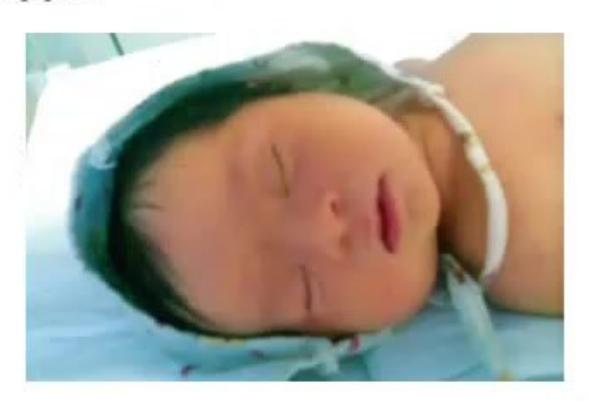
- Name three associated systems involved with 2 conditions in each.
- A test you need to do prior to discharge from hospital at birth.
- What are radiological feature?
- Write down follow-up plan.
Answer
et . Eyes. Cataract, Brushfield spots, myopia, nystagmus
- * Cardiac: Endocardial cushion defect, VSD, PDA
- * GIT: Duodenal atresia, annular pancreas, TOF, Hirschsprung
- * Endocrine: Hypothyroidism
- : Thyroid assessment
- ee) . Radiological feature
- . Hearing assesment:
- * Strabismus, nystagmus * Constipation
- * Celiac disease * Hematological
- * Atlantoaxial dislocation * Gynecological care
- * Reccurent infection
MNJ16-014
- Diagnosis the given condition.
- Inheritance of this condition.
- Incidence of next sibling with same problem.
- Which sex is involved?
- Which genes are involved?
Answer
SU ee Se Tuberous sclerosis
- Autosomal domimant
- 50%
- Both, equal chances
- TSC, gene—on chr 9q 34—encodes hamartin. TSC, gene—on chr.16 p13—encodes tuberin
- . Alcohol, warfarin, valproate, phenytoin, methotrexate, retmoic acid, lithium
- . Fetal alcohol: IUGR, microcephaly, small palpebral fissures
- « Fetal hydantoin: Growth def, MR, finger and nail abnormalities, cleft hp and palate
- * Fetal valproate: Dysmorphisms, coarctation of aorta, spma bifida, NTD
- * Fetal warfarin: Nasal hypoplasia, stippled epiphysis, hypoplastic distal limbs.
- . Fetal alcohol: IUGR, microcephaly, small palpebral fissures
MNJ16-015
- Name three drugs contraindicated in pregnancy.
- Name three drug related syndromes with one associated feature each.
Answer
No model answer in source material.
MNJ16-016
Write the pattern of inheritance that is appropriate for each condition listed below:
OQ. 18. Define and give examples:
- Achondroplasia
- Adrenal hyperplasia
- Cystic fibrosis
- Hemophilia A
- Duchenne muscular dystrophy
- Huntington's disease
- Neurofibromatosis
- Marfan syndrome
- Phenylketonuria (PKU)
- Sickle cell disease
- Glucose-6-phosphate dehydrogenase
- Hemophilia B
- Associaton
- Sequence anomalies
- Field defects
- Syndrome
Answer
- AD 2 AR 3. AR 4. XLR . ALR 6 AD 7. AD 8 AD . AR 10. AR 11 XLR 12. XLR
MNJ16-017
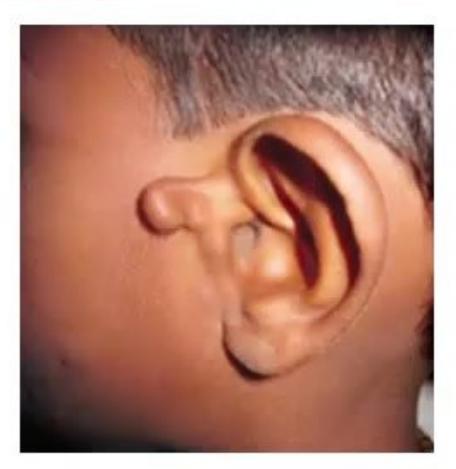
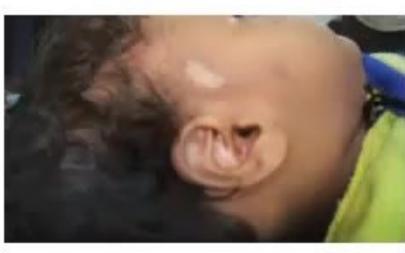
- Spot the diagnosis and give the other name of this condition.
- Defect to cause this syndrome
- What 1s prognosis of this condition?
Answer
- Goldenhar syndrome (oculo auriculovertebral syndrome)
-
- Ist and 2nd branchial arch maldevelpoment (usually unilateral)
-
- Good—normal lifespan and almost normal intelligence (15% has mild MR)
MNJ16-018
This patient had high forehead with brachycephaly, syndactyly (mitten hands) with prematurely fused cranial sutures:
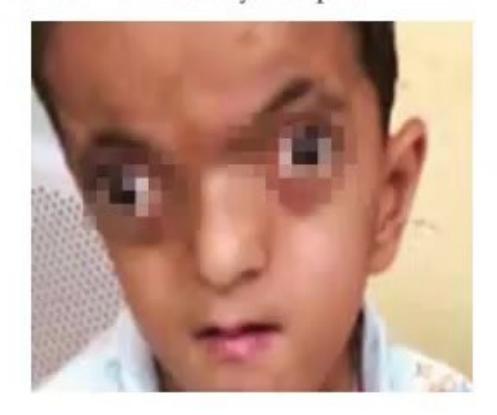
- Spot the diagnosis of this child
- Timing of surgical intervention for facial dysmorphism
Answer
- Apert Syndrome (cramofacial hmb anomalies)
- . LeFort IL is used to correct midfacial hypoplasia. Usually done after substantial growth is complete (preadolescence) and may be repeated as necessary
- Atlantoasaal instability
- . Hypothyroidism (FT3, FT4 and TSH)
- . CBC for possibility of leukemia
- . 46: Total no. of chromosome
XY: Genetic male
t Reciprocal translocation
First parenthesis: Numbers of chromosomes
Second parenthesis: Bands of chromosomes
p—short arm and q—long arm
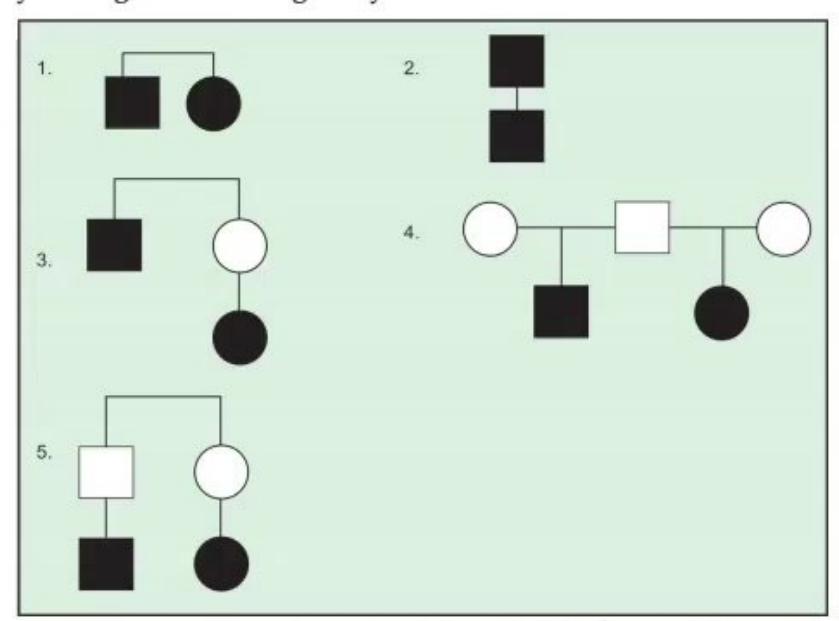
Ans. 22. First degree
- ll Sibs from same parents
- Z Parent-child
Second degree
-
- Uncle /aunt—Niece/Nephew
-
- Half sibs (from different mothers)
Third degree (most common)
5: First cousins (children of brothers and sisters)
Ans. 23. Absent clavicle
- 1, Cleidocranial dysostosis
-
- Autosomal dominant with variable expression
-
- Long second metacarpals with tapering terminal phalanges
-
- Both shoulders can be approximated 1n front
MNJ16-019
6-year-old male child Panna brought with concerns of abnormally flat looking face, poor academic and recurrent cold and cough. However, child is otherwise playful.
He is found to have epicanthal folds, short broad hands, brachycephaly. Pan systolic murmur of grade 4 in the left parasternal area conducting all over the precordium. He had low IO, delayed milestones and hypotonia.
- Keeping the possible diagnosis in mind, if you are asked for checking the all joints, which one you prefers the most and why?
- Ifasked to check for a treatable cause for mental retardation in this patient what will you go for testing?
- On regular follow-up what blood test you would like to follow in this child?
- Elaborate—46, XY, t (4.8) (p 21; q 22).
Answer
No model answer in source material.
MNJ16-020
Identify the degree of consanguinity
Answer
No model answer in source material.
MNJ16-021
- 2? Write down the mode of inheritance.
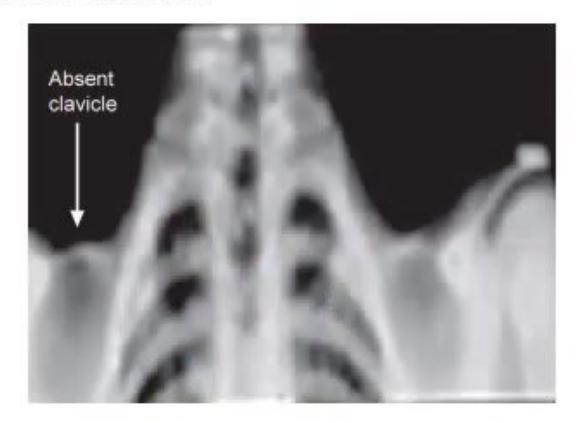
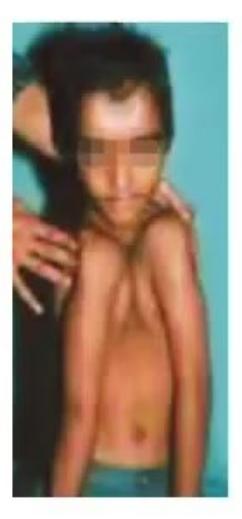
- Identify the condition shown in the picture with X-ray.
- What abnormality you will find in hand X-ray.
- Clinical test used to diagnose this condition.
Answer
No model answer in source material.
MNJ16-022
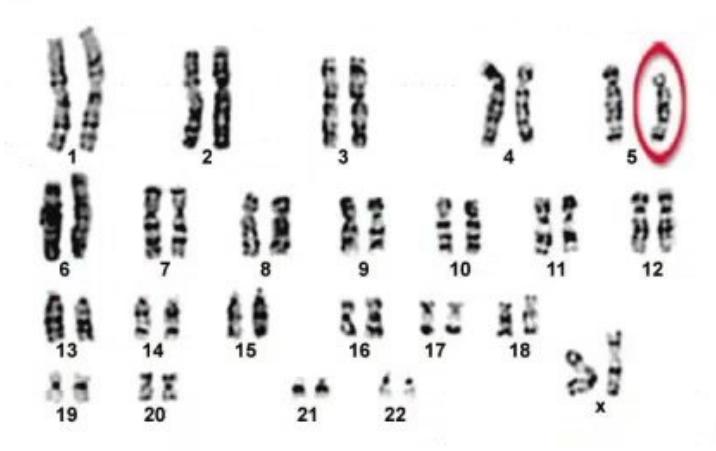
- 1Identify the karyotype
- Whatis the basic genetic defect?
- List four clinical features.
Answer
- Cri du chat syndrome
- . 5p deletion
- . Characteristic cry, hypotonia, microcephaly with prominent metopic suture, hypertelorism, bilateral epicanthic folds, high arched palate, flat nasal bridge, short stature and mental retardation.
- Noonan syndrome
- . Cryptorchidism, developmental delay, hypotonia, webbed neck, short stature
- . Pulmonary stenosis (most common), ASD, VSD
MNJ16-023
10-year-old male child Raman came to you, you examine the child:
fi Genetic Disorder 223 |
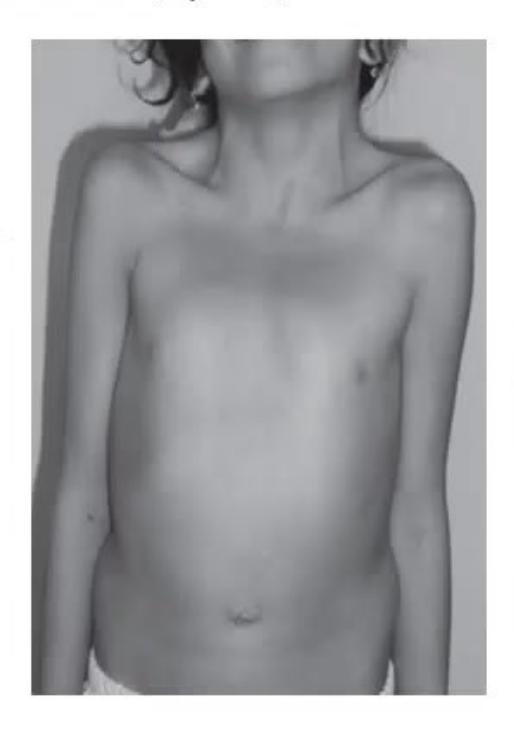
- What 1s the diagnosis of this condition?
- What abnormality will you seen in this?
- What are its cardiac manifestation (any three) and which one is most common?
Answer
No model answer in source material.