THG15-001
A 1-year-old child presents with paroxysms of cough of 2 weeks duration, without fever, with hoarseness of voice, and tachypnea. Respiratory examination is normal.
a. What is the probable diagnosis?
b. How will you confirm the diagnosis?
c. What is the characteristic hematologic abnormality seen?
d. What is the preferred agent of choice in treatment of this condition?
e. What is the desired chemoprophylaxis?
Answer
| a. | Pertussis |
| b. | Culture/PCR (polymerase chain reaction) of nasopharyngeal secretions |
| c. | Absolute lymphocytosis |
| d. | Erythromycin 40 mg/kg/day QID for 14 days or azithromycin 10 mg/kg/day for 5 days or clarithromycin 15 mg/kg/day BD for 7 days |
| e. | Azithromycin for 5 days or erythromycin for 14 days for close contacts |
Suggested Reading
| 1. | Centers for Disease Control and Prevention. (2005). Recommended Antimicrobial Agents for the Treatment and Postexposure Prophylaxis of Pertussis, 2005 CDC Guidelines. [online] Available from https://www.cdc.gov/mmwr/preview/mmwrhtml/rr5414a1.htm [Last accessed April, 2024]. |
| 2. | Indian Academy of Pediatrics. (2022). Standard Treatment Guidelines 2022: Pertussis in Children. [online] Available from https://iapindia.org/pdf/Ch-113-Pertusis-in-Children.pdf [Last accessed April, 2024]. |
THG15-002
A 2-year-old child is brought by his mother for tuberculosis screening, as there is a family history of recently diagnosed pulmonary tuberculosis. You are planning to get a tuberculin skin test (TST) with purified protein derivative (PPD).
a. What is the current recommendation of strength of PPD?
b. What is the recommended site for TST administration?
c. How will you know that TST administration technique was proper?
d. How will you store the tuberculin vial after administration?
e. When will you read the TST after administration?
f. How will you read the TST?
g. How will you interpret?
h. How will you approach a patient who reports late for TST reading?
i. What is the impact of live viral vaccine on TST?
Answer
| a. | PPD-RT 23 2 TU is ideal. If unavailable up to 5 TU can be used |
| b. | 2–4 inches below elbow joint in ventral forearm |
| c. | PPD injected should raise a wheal of at least 6 mm in diameter. |
| d. | Refrigerated at 2–8°C |
| e. | Read between 48 and 72 hours after administration |
| f. | Induration should be palpated and measured in horizontal plane. |
| g. | Induration >10 mm is positive TST |
| h. | Reports beyond 72 hours, but within 7 days a positive test is interpreted as such but a negative test or if reports beyond 7 days, the test is repeated in other forearm. |
| i. | Live viral vaccine administered within 6 weeks period prior to TST can cause false-negative Mantoux. |
Suggested Reading
| 1. | National Health Mission. (2022). Paediatric TB Management Guideline 2022 (pp. 116-117). [online] Available from https://tbcindia.gov.in/WriteReadData/l892s/9534339438Paediatric_TB_Mangement_Guideline_22082022_V1.pdf [Last accessed April, 2024]. |
THG15-003
This is the X-ray of an adolescent girl who presented with unremitting cough of 3 weeks duration along with weight loss.
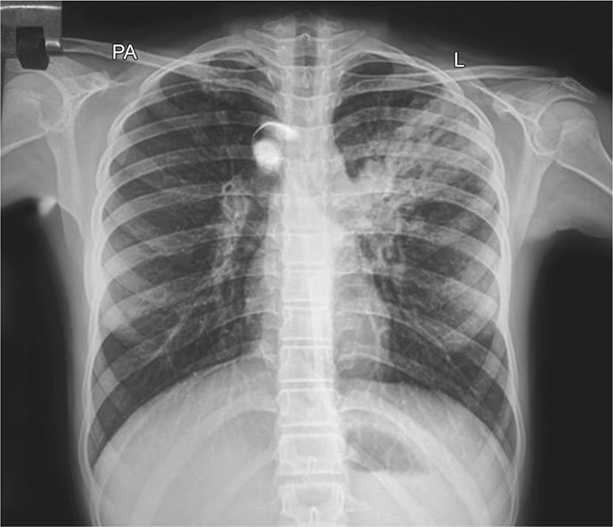
a. How will you proceed based on this X-ray finding?
b. Explain the steps of induced sputum sample collection.
c. What are the criteria for good sputum sample?
d. Which is the preferred container for sample collection?
e. How many samples of sputum are required for molecular tests?
Answer
| a. | Chest X-ray is highly suggestive of tuberculosis (consolidation fibrocavitory lesion left upper zone with paratracheal adenopathy). Hence, sputum evaluation for TB by National Tuberculosis Elimination Program (NTEP) approved rapid nucleic acid amplification test (NAAT) for TB |
| b. | 2–3 hours fasting, priming with salbutamol by metered-dose inhaler (MDI) or nebulization, nebulize with 5 mL of 3% hypertonic saline, and collect the expectorated sputum |
| c. | Recently discharged material from airway, mucoid-mucopurulent nature, with volume of 2–5 mL |
| d. | Falcon’s tube |
| e. | Only one sample is enough |
Suggested Reading
| 1. | National Health Mission. (2022). Paediatric TB Management Guideline 2022 (pp. 121-122). [online] Available from https://tbcindia.gov.in/WriteReadData/l892s/9534339438Paediatric_TB_Mangement_Guideline_22082022_V1.pdf [Last accessed April, 2024]. |
THG15-004
This toddler, who is on bottle feeds and who has recently completed 5 days course of co-amoxiclav for respiratory infection, has come with this lesion.
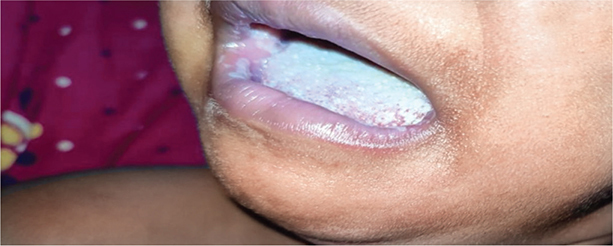
a. Describe the lesion.
b. What is the diagnosis?
c. What is the etiological agent?
d. How will you confirm the diagnosis?
e. What is the recommended treatment?
Answer
| a. | Whitish plaques on buccal mucosa and tongue, with “cottage cheese” appearance |
| b. | Oral thrush (candidiasis) |
| c. | Candida albicans |
| d. | Clinical diagnosis |
| e. | Topical clotrimazole if <50% mucosa involved, 5–6 times a day for 7–14 days or nystatin suspension 400,000–600,000 units four times per day for 7–14 days. Oral fluconazole 3–6 mg/kg/day OD for 7–14 days if >50% mucosa involved. |
Suggested Reading
| 1. | Taylor M, Brizuela M, Raja A. Oral Candidiasis. In: StatPearls [Internet]. Treasure Island (FL): StatPearls Publishing; 2024. |
| 2. | UpToDate. (2023). Candida infections in children. [online]. Available from https://www.uptodate.com/contents/candida-infections-in-children?search=oral thrush children&source=search_result&selectedTitle=1~150&usage_type=default&display_rank=1#H3789983392 [Last accessed April, 2024]. |
THG15-005
A 6-year-old child, became sick, 5 days after playing in stagnant water after recent heavy rainfall. She developed abrupt onset of high-grade fever, rigors, myalgia (especially in calf), and headache. On examination, she had intense conjunctival hyperemia (suffusion) without discharge, muscle tenderness, and hepatosplenomegaly with lymphadenopathy.
a. What is the most probable diagnosis?
b. What is the causative organism and reservoir?
c. What are the typical hematological findings?
d. How will you confirm the diagnosis?
e. What is the recommended treatment?
f. What reaction is anticipated after parenteral treatment for this disease?
Answer
| a. | Leptospirosis |
| b. | Leptospira species; rat |
| c. | Neutrophilia, anemia, thrombocytopenia, and elevated erythrocyte sedimentation rate (ESR) |
| d. | PCR in the 1st week or serology testing for IgM antibody by ELISA after first week |
| e. | Mild disease—oral doxycycline for 7 days; severe disease—parenteral penicillin G or ceftriaxone or cefotaxime for 7 days |
| f. | Jarisch–Herxheimer reaction |
Suggested Reading
| 1. | UpToDate. (2022). Leptospirosis: Epidemiology, microbiology, clinical manifestations, and diagnosis. [online]. Available from https://www.uptodate.com/contents/leptospirosis-epidemiology-microbiology-clinical-manifestations-and-diagnosis?search=leptospirosis&source=search_result&selectedTitle=1~86&usage_type=default&display_rank=1#H1 [Last accessed April, 2024]. |
| 2. | UpToDate. (2023). Leptospirosis: Treatment and prevention. [online]. Available from https://www.uptodate.com/contents/leptospirosis-treatment-and-prevention?search=leptospirosis&topicRef=5527&source=see_link [Last accessed April, 2024]. |
THG15-006
A 7-year-old child presents with fever, sore throat, and dysphagia of 2 days duration. On third day of illness, child develops papular rash on trunks, axilla, and groin. Later it spreads to extremities sparing palms and soles and circumoral area.
a. What is the probable diagnosis?
b. Name the findings on examination of oral cavity?
c. What is the causative organism?
d. What is the reason for the rash?
e. What is the investigation of choice to confirm the diagnosis?
f. Name two long-term complications of this infection.
g. What is the recommended treatment?
Answer
| a. | Scarlet fever |
| b. | Strawberry tongue and tonsillitis with exudates |
| c. | Streptococcus pyogenes |
| d. | Endotoxins, named scarlatina toxins or erythrogenic toxins |
| e. | Throat swab culture or rapid antigen detection test (RADT) for Streptococcus pyogenes |
| f. | Rheumatic fever, glomerulonephritis, pediatric autoimmune neuropsychiatric disorder associated with group A streptococci (PANDAS), poststreptococcal reactive arthritis |
| g. | Oral penicillin or amoxicillin for 10 days |
Suggested Reading
| 1. | Pardo S, Perera TB. Scarlet Fever. In: StatPearls [Internet]. Treasure Island (FL): StatPearls Publishing; 2024. |
THG15-007
Match the antibiotic with its side effect:
a. Vancomycin | | i. | Flu-like illness |
b. Clindamycin | | | ii. | Ototoxicity |
c. Erythromycin | | | iii. | Red man syndrome |
d. Ciprofloxacin | | | iv. | Disulfiram-like reaction |
e. Rifampicin |
f. Gentamicin | | | vi. | Optic neuropathy |
g. Cefoperazone | | | vii. | Infantile hypertrophic pyloric stenosis |
h. Ethambutol | | | viii. | Pill esophagitis |
i. Chloramphenicol | | | ix. | Tendon rupture |
j. Doxycycline | | x. | Gray baby syndrome |
Answer
a: iii, b: v, c: vii, d: ix, e: i, f: ii, g: iv, h: vi, i: x, j: viii
Suggested Reading
| 1. | Alves C, Mendes D, Marques FB. Fluoroquinolones and the risk of tendon injury: a systematic review and meta-analysis. Eur J Clin Pharmacol. 2019; 75(10):1431-43. |
| 2. | Cummings ED, Kong EL, Edens MA. Gray Baby Syndrome. In: StatPearls [Internet]. Treasure Island (FL): StatPearls Publishing; 2023. |
| 3. | Davis RL, Smith AL, Koup JR. The “red man’s syndrome” and slow infusion of vancomycin. Ann Intern Med. 1986;104(2):285-6. |
| 4. | Dhhar G, McColl J, Kitai I, Levy DM, Verstegen RHJ. Rifampin-induced flu-like syndrome with shock in a patient with tuberculosis infection. CMAJ. 2023;195(34):E1151-E1153. |
| 5. | Kadayifci A, Gulsen MT, Koruk M, Savas MC. Doxycycline-induced pill esophagitis. Dis Esophagus. 2004;17(2):168-71. |
| 6. | Mounsey A, Lacy Smith K, Reddy VC, Nickolich S. Clostridioides difficile Infection: Update on Management. Am Fam Physician. 2020;101(3):168-75. |
| 7. | Murchison L, De Coppi P, Eaton S. Post-natal erythromycin exposure and risk of infantile hypertrophic pyloric stenosis: a systematic review and meta-analysis. PediatrSurg Int. 2016;32(12):1147-52. |
| 8. | Ren S, Cao Y, Zhang X, Jiao S, Qian S, Liu P. Cephalosporin induced disulfiram-like reaction: a retrospective review of 78 cases. Int Surg. 2014;99(2):142-6. |
| 9. | Sabhapandit S, Gella V, Shireesha A, Thankachan L, Ismail M, Rao R, et al. Ethambutol optic neuropathy in the extended anti-tubercular therapy regime: A systematic review. Indian J Ophthalmol. 2023;71(3):729-35. |
| 10. | Turnidge JD, Waterston JA. Gentamicin and ototoxicity: why this drug is still in use. Med J Aust. 2012;196(11):665-6. |
THG15-008
State whether the following statements are True or False.
a. Streptococcus pyogenes can cause necrotizing fasciitis and toxic shock syndrome.
b. All pathogenic species of Staphylococcus are catalase negative.
c. In cystic fibrosis exacerbations, pseudomonal coverage is always needed.
d. Ceftazidime or cefepime can be used in the treatment of melioidosis.
e. All enterococci exhibit high-level resistance to most cephalosporins
f. There is no “carrier state” in Mycoplasma infection.
g. The primary goal of antibiotic treatment in paroxysmal phase of pertussis is to prevent the complications.
h. Ceftriaxone and cefotaxime are effective agents of chemoprophylaxis in Haemophilus influenzae infection.
i. Moldy odor perspiration is classical sign of brucellosis.
j. If Salmonella isolates are resistant to ampicillin and ceftriaxone, it is referred as multidrug-resistant typhoid.
Answer
| a. | True |
| b. | False |
| c. | True |
| d. | True |
| e. | True |
| f. | False |
| g. | False |
| h. | False |
| i. | True |
| j. | False |
Suggested Reading
| 1. | Bruun T, Kittang BR, de Hoog BJ, Aardal S, Flaatten HK, Langeland N, et al. Necrotizing soft tissue infections caused by Streptococcus pyogenes and Streptococcus dysgalactiae subsp. equisimilis of groups C and G in western Norway. Clin Microbiol Infect. 2013;19(12):E545-50. |
| 2. | Dance D. Treatment and prophylaxis of melioidosis. Int J Antimicrob Agents. 2014;43(4):310-8. |
| 3. | Hayoun MA, Muco E, Shorman M. Brucellosis. In: StatPearls [Internet]. Treasure Island (FL): StatPearls Publishing; 2023. |
| 4. | Kristich CJ, Rice LB, Arias CA. Enterococcal Infection—Treatment and Antibiotic Resistance. In: Gilmore MS, Clewell DB, Ike Y, Shankar N (Eds). Enterococci: From Commensals to Leading Causes of Drug Resistant Infection [Internet]. Boston: Massachusetts Eye and Ear Infirmary; 2014. |
| 5. | Lauria AM, Zabbo CP. Pertussis. In: StatPearls [Internet]. Treasure Island (FL): StatPearls Publishing; 2023. |
| 6. | Meyer Sauteur PM, Unger WW, Nadal D, Berger C, Vink C, van Rossum AM. Infection with and Carriage of Mycoplasma pneumoniae in Children. Front Microbiol. 2016;7:329. |
| 7. | Taylor TA, Unakal CG. Staphylococcus aureus Infection. In: StatPearls [Internet]. Treasure Island (FL): StatPearls Publishing; 2023. |
| 8. | UpToDate. (2022). Prevention of Haemophilus influenzae type b infection. [online] Available from https://www.uptodate.com/contents/prevention-of-haemophilus-influenzae-type-b-infection?search=haemophilus influenzae&source=search_result&selectedTitle=2~150&usage_type=default&display_rank=2#H15 [Last accessed April, 2024]. |
| 9. | Wilson MG, Pandey S. Pseudomonas aeruginosa. In: StatPearls [Internet]. Treasure Island (FL): StatPearls Publishing; 2023. |
| 10. | Zaki SA, Karande S. Multidrug-resistant typhoid fever: a review. J Infect Dev Ctries. 2011;5(5):324-37. |
THG15-009
Q15.9
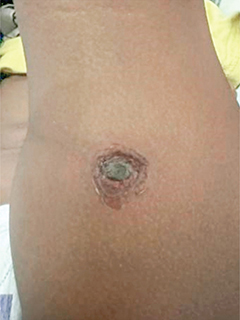
a. Describe the skin lesion?
b. What is the diagnosis?
c. Name two common causative organisms
d. Name two complications for each organism
e. What is the recommended treatment?
Answer
| a. | Ulcerative type of impetigo, with “punched out” ulcer with dark-brown crusts surrounded by raised violaceous margin |
| b. | Ecthyma |
| c. | Group A Streptococcus and Staphylococcus aureus |
d. i. Group A Streptococcus: Scarlet fever, glomerulonephritis, rheumatic fever
| ii. | S aureus: Septic arthritis, sepsis, staphylococcal scalded skin syndrome |
| e. | Oral cephalexin |
Suggested Reading
| 1. | Medscape. (2019). Erythema Treatment and Management. [online] Available from https://emedicine.medscape.com/article/1052279-treatment?form=fpf [Last accessed April, 2024]. |
| 2. | Nardi NM, Schaefer TJ. Impetigo. In: StatPearls [Internet]. Treasure Island (FL): StatPearls Publishing; 2023. |
THG15-010
Find the odd one out from each statement
a. Gram-positive bacteria:
i. Enterococcus
b. Bactericidal antibiotic:
i. Ceftazidime
c. Pre-extensively drug resistant tuberculosis (pre-XDR TB):
i. Isoniazid resistance
d. Streptococcal pharyngitis clinical feature:
i. Tender anterior cervical adenopathy
e. Treatment of Helicobacter pylori infection without antibiotic susceptibility testing:
i. Clarithromycin
Answer
| a. | Neisseria |
| b. | Teicoplanin |
| c. | Linezolid resistance |
| d. | Cough |
| e. | Clarithromycin |
Suggested Reading
| 1. | Sizar O, Leslie SW, Unakal CG. Gram-Positive Bacteria. In: StatPearls [Internet]. Treasure Island (FL): StatPearls Publishing; 2023. |
| 2. | Dykhuizen RS, Harvey G, Stephenson N, Nathwani D, Gould IM. Protein binding and serum bactericidal activities of vancomycin and teicoplanin. Antimicrob Agents Chemother. 1995;39(8):1842-7. |
| 3. | World Health Organization. (2021). WHO announces updated definitions of extensively drug-resistant tuberculosis. [online] Available from https://www.who.int/news/item/27-01-2021-who-announces-updated-definitions-of-extensively-drug-resistant-tuberculosis#:~:text=The new definition of pre,also resistant to any fluoroquinolone [Last accessed April, 2024]. |
| 4. | Fine AM, Nizet V, Mandl KD. Large-scale validation of the Centor and McIsaac scores to predict group A streptococcal pharyngitis. Arch Intern Med. 2012;172(11):847-52. |
| 5. | UpToDate. (2023). Helicobacter pylori: Diagnosis and management in the pediatric patient. [online] Available from https://www.uptodate.com/contents/helicobacter-pylori-diagnosis-and-management-in-the-pediatric-patient# H1479114971 [Last accessed April, 2024]. |
THG15-011
The following is the complete hemogram and peripheral smear findings of a child who presented with fever of 5 days duration without any respiratory symptoms.
a. What is the abnormality seen in the hemogram?
b. What is the terminology given to this abnormality?
c. What is the most probable diagnosis?
d. What is the causative organism?
e. What is the mode of spread?
f. What is the recommended treatment?
Answer
| a. | Low platelet in hemogram, but normal platelet in peripheral smear |
| b. | Pseudothrombocytopenia |
| c. | Scrub typhus |
| d. | Orientia tsutsugamushi |
| e. | Bite of chiggers of trombiculid mite |
| f. | Doxycycline 2.2 mg/kg twice daily for 7–10 days |
Suggested Reading
| 1. | UpToDate. (2024). Scrub typhus. [online] Available from https://www.uptodate.com/contents/scrub-typhus?search=scrub typhus&source=search_result&selectedTitle=4~19&usage_type=default&display_rank=4 [Last accessed April, 2024]. |
THG15-012
Match the following:
| Test | | | | Disease | | |
| | | | | | | |
| 1. | Weil-Felix test | | a. | Leptospirosis | | |
| | | | | | | |
| | | | | | | |
| 2. | Rapid plasma reagin test (RPR test) | | b. | Cryptococcus | | |
| | | | | | | |
| | | | | | | |
| 3. | Microscopic agglutination test (MAT) | | c. | Diphtheria | | |
| | | | | | | |
| | | | | | | |
| 4. | Quantitative buffy coat test | | d. | Rickettsial infection | | |
| | | | | | | |
| | | | | | | |
| 5. | Indian Ink test | | e. | Syphilis | | |
| | | | | | | |
| | | | | | | |
| 6. | Paul-Bunnell test | | f. | Malaria | | |
| | | | | | | |
| | | | | | | |
| 7. | Casoni test | | g. | Infectious mononucleosis | | |
| | | | | | | |
| | | | | | | |
| 8. | Elek test | | h. | Staphylococcus | | |
| | | | | | | |
| | | | | | | |
| 9. | D-zone test | | i. | Tuberculosis | | |
| | | | | | | |
| | | | | | | |
| | 10. | Interferon-Y release assay (IGRA) test | | j. | Hydatid disease | |
| | | | | | | |
Answer
1: d, 2: e, 3: a, 4: f, 5: b, 6: g, 7: j, 8: c, 9: h, 10: i
THG15-013
An 8-year-old presented to you with nasal discharge and daytime cough of 2 days duration. The child had nasal discharge 1 week back associated with fever for 2 days duration at the onset. The symptoms were gradually improving over past 5–6 days, when the worsening of symptoms started. Child had recurrence of fever with worsening nasal discharge of purulent nature and daytime cough.
a. What is the clinical diagnosis?
b. What are the common organisms implicated?
c. Any laboratory test required for the diagnosis?
d. What is the empiric treatment of choice?
e. Name two complications in this condition?
Answer
| a. | Acute bacterial rhinosinusitis |
| b. | H. influenzae (nontypeable), Streptococcus pneumoniae, and Moraxella catarrhalis |
| c. | No. It is a clinical diagnosis |
| d. | Co-amoxiclav for 10 days |
| e. | Preseptal cellulitis, orbital cellulitis, cavernous venous thrombosis |
Suggested Reading
| 1. | UpToDate. (2022). Acute bacterial rhinosinusitis in children: Clinical features and diagnosis. [online] Available from https://www.uptodate.com/contents/acute-bacterial-rhinosinusitis-in-children-clinical-features-and-diagnosis?search=sinusitis children&source=search_result&selectedTitle=1~150&usage_type=default&display_rank=1 [Last accessed April, 2024]. |
THG15-014
An adolescent hailing from a rural area with agricultural background and cattle farming presents with fever of insidious onset of 2 weeks duration. There is associated malaise, night sweats which has strong, peculiar moldy odor, and arthralgia. On examination, there is hepatosplenomegaly with lymphadenopathy.
a. What is the probable diagnosis?
b. What is the causative organism?
c. What is the most common mode of transmission?
d. How is the diagnosis confirmed?
e. What is the recommended treatment?
Answer
| a. | Brucellosis |
| b. | Brucella spp. melitensis, abortus, suis, canis |
| c. | Consumption of unpasteurized milk |
| d. | Standard tube agglutination (total antibody titer >160), Brucella DNA PCR |
| e. | Doxycycline and rifampicin for 6 weeks |
Suggested Reading
| 1. | Hayoun MA, Muco E, Shorman M. Brucellosis. In: StatPearls [Internet]. Treasure Island (FL): StatPearls Publishing; 2024. |
THG15-015
Fill in the blanks with the name of bacteria.
a. ______ is the most common cause of osteomyelitis in patients with sickle cell anemia
b. Pediatric autoimmune neuropsychiatric disorder associated with ______
c. Albert stain is used in detection of ______
d. Ecthyma gangrenosum is associated with ______
e. Cat-scratch fever is caused by ______
f. Neuromelioidosis is caused by ______
g. ______ is most often seen in conjunctivitis-otitis media syndrome
h. Rusty sputum is seen in pneumonia due to ______
i. Guillain–Barré syndrome is associated with ______
j. Ekiri syndrome is due to infection with ______.
Answer
| a. | Salmonella species |
| b. | Streptococcus pyogenes |
| c. | Corynebacterium diphtheriae |
| d. | Pseudomonas aeruginosa |
| e. | Bartonella henselae |
| f. | Burkholderia pseudomallei |
| g. | Nontypeable H. influenzae |
| h. | Streptococcus pneumoniae |
| i. | Campylobacter jejuni |
| j. | Shigella sonnei |
Suggested Reading
| 1. | Baranowski K, Huang B. Cat Scratch Disease. In: StatPearls [Internet]. Treasure Island (FL): StatPearls Publishing; 2023. |
| 2. | Bodor FF, Marchant CD, Shurin PA, Barenkamp SJ. Bacterial etiology of conjunctivitis-otitis media syndrome. Pediatrics. 1985;76(1):26-8. |
| 3. | Chaudhary A, Pandey S. Corynebacterium diphtheriae. In: StatPearls [Internet]. Treasure Island (FL): StatPearls Publishing; 2023. |
| 4. | Epps CH Jr, Bryant DD 3rd, Coles MJ, Castro O. Osteomyelitis in patients who have sickle-cell disease. Diagnosis and management. J Bone Joint Surg Am. 1991;73(9):1281-94. |
| 5. | Jabeen S, Saini J, Mishra T, Mailankody P, Ts L, Chandrashekar N. Neuromelioidosis Presenting as a Stroke-like Syndrome. Neurol Clin Pract. 2021;11(4):e589-e591. |
| 6. | Pourakbari B, Mamishi S, Kohan L, Sedighi L, Mahmoudi S, Fattahi F, et al. Lethal toxic encephalopathy due to childhood shigellosis or Ekiri syndrome. J Microbiol Immunol Infect. 2012;45(2):147-50. |
| 7. | Sattar SBA, Sharma S. Bacterial Pneumonia. In: StatPearls [Internet]. Treasure Island (FL): StatPearls Publishing; 2023. |
| 8. | Shah M, Crane JS. Ecthyma Gangrenosum. In: StatPearls [Internet]. Treasure Island (FL): StatPearls Publishing; 2023. |
| 9. | Tan J, Smith CH, Goldman RD. Pediatric autoimmune neuropsychiatric disorders associated with streptococcal infections. Can Fam Physician. 2012; 58(9):957-9. |
| 10. | World Health Organization. (2023). Guillain–Barré syndrome. [online] Available from https://www.who.int/news-room/fact-sheets/detail/guillain-barré-syndrome#:~:text=This leads the immune system,common risk factors for GBS [Last accessed April, 2024]. |
THG15-016
Match the condition with the antiviral agent of choice:
a. Primary genital herpes simplex virus (HSV) | | i. | Valganciclovir |
b. Neonatal herpes | | | ii. | Ganciclovir IV |
c. Congenital cytomegalovirus (CMV) | | | iii. | Cidofovir |
d. HSV keratoconjunctivitis | | | iv. | Acyclovir oral |
e. Chronic hepatitis C <12 years age | | v. | Vidarabine |
f. Chronic hepatitis C >12 years age | | | vi. | Ganciclovir oral |
g. CMV pneumonitis in immunocompromised | | | vii. | Foscarnet IV |
h. CMV retinitis in acquired immunodeficiency syndrome (AIDS) |
i. Resistant HSV | | | ix. | Acyclovir IV |
j. Severe adenoviral infection in immunocompromised | | x. | Peg interferon with ribavirin |
Answer
a: iv, b: ix, c: ii, d: v, e: x, f: viii, g: ii, h: ii or i, i: vii, j: iii
Suggested Reading
| 1. | Schleiss MR. Principles of antiviral therapy. In: Kliegman RM, St. Geme III JW (Eds). Nelson Textbook of Pediatrics, 21st International edition. Philadelphia: Elsevier Health Sciences; 2019. pp. 1664-70. |
THG15-017
A pregnant woman of 5 weeks gestation is having low-grade fever, rash, and postauricular lymphadenitis. Clinically rubella is suspected.
a. How do you confirm maternal rubella infection?
b. How will you identify if mother is immune?
c. What will be the suggested course of action?
d. How do you interpret the tests result in the mother?
e. What is the suggested action if mother is confirmed to be infected?
Answer
| a. | High IgM rubella titer in the mother |
| b. | If rubella IgG is positive in the acute stage, mother is considered to be immune. |
| c. | (i) If maternal rubella IgM negative, repeat a sample after 2 weeks and test concurrently with the saved first sample; (ii) If both negative, repeat a third sample 6 weeks after exposure |
| d. | (i) If both second and third specimens negative, no infection; (ii) If first specimen negative, and second or third specimen positive, active infection |
| e. | Counseling regarding medical termination of pregnancy |
Suggested Reading
| 1. | Mason WH, Gans HA. Rubella. In: Kliegman RM, St. Geme III JW (Eds). Nelson Textbook of Pediatrics, 21st International edition. Philadelphia: Elsevier Health Sciences; 2019. pp. 1676-80. |
THG15-018
A 12-year-old girl with β-thalassemia major developed low-grade fever, and rhinitis for 4 days followed by erythematous macular rash on cheeks, which spread to trunks and resolved in 10 days. Two weeks later, she had pain and swelling of both hands and wrists and bilateral cervical lymphadenitis which subsided in 3 weeks and progressive pallor. Rheumatoid factor was positive.
a. What is the probable diagnosis?
b. What is the causative virus?
c. Name the diagnostic tests.
d. Name four complications of this virus infection.
e. Name two situations which predispose to development of complications in this viral infection.
f. What is the treatment?
Answer
| a. | Erythema infectiosum (fifth disease) |
| b. | Parvovirus B19 |
| c. | B19-specific IgM, viral DNA (PCR) in blood |
| d. | (i) Transient aplastic crisis; (ii) Vaso-occlusive crisis; (iii) Myocarditis; (iv) Chronic anemia and pancytopenia; (v) Central nervous system (CNS): aseptic meningitis and encephalitis; (vi) Hemophagocytic lymphohistiocytosis; (vii) Papular-purpuric gloves and socks syndrome (PPGSS) |
| e. | Chronic hemolytic anemias, immunocompromised, fetus, and infants |
| f. | Trial of intravenous immunoglobulin (IVIG) |
Suggested Reading
| 1. | Koch WC. Parvoviruses. In: Kliegman RM, St. Geme III JW (Eds). Nelson Textbook of Pediatrics, 21st International edition. Philadelphia: Elsevier Health Sciences; 2019. |
THG15-019
A 10-day-old newborn, delivered normally to an asymptomatic mother, developed fever, irritability, and poor feeding for 1 day. Vesicular skin lesions were seen over face, eyes, and mouth. Child developed respiratory distress and shock.
a. What is the likely diagnosis?
b. What is the mode of transmission?
c. What are the types of clinical presentation?
d. What is the confirmatory test?
e. What is the specific treatment?
Answer
| a. | Neonatal herpes simplex virus (HSV) infection |
| b. | Vertical from the maternal genital HSV infection |
| c. | (i) Skin, eye, and mouth (SEM) disease; (ii) Disseminated infection; and (iii) Encephalitis |
| d. | PCR of secretion from the lesion, blood, and cerebrospinal fluid (CSF) |
| e. | IV acyclovir 60 mg/kg divided 8 hourly for 21 days |
Suggested Reading
| 1. | Stanberry LR. Herpes simplex virus. In: Kliegman RM, St. Geme III JW (Eds). Nelson Textbook of Pediatrics, 21st International edition. Philadelphia: Elsevier Health Sciences; 2019. pp. 1701-8. |
THG15-020
An 8-year-old previously normal child is brought with fever, altered sensorium, behavioral changes for 1 day, and focal seizures. He has expressive aphasia. There are no other similar cases reported from that area.
a. What is the most likely diagnosis?
b. Name two features suggesting the etiology?
c. What is the confirmatory laboratory finding?
d. What is the neuroimaging finding you expect?
e. What are the other laboratory test findings?
f. What is the specific treatment?
Answer
| a. | Herpes simplex encephalitis |
| b. | Focal seizures, sporadic occurrence, behavioral changes, and expressive aphasia |
| c. | HSV PCR in CSF |
| d. | MRI: Changes in temporal and infratemporal region in diffusion-weighted images and flair sequences with sparing of basal ganglia |
| e. | (i) Other CSF findings: Moderate number of monocytes and polymorphs, normal biochemistry, and moderate number of RBCs; (ii) Periodic lateralized epileptiform discharges (PLEDs) |
| f. | IV acyclovir 10 mg/kg 8 hourly for 14–21 days |
Suggested Reading
| 1. | Stanberry LR. Herpes simplex virus. In: Kliegman RM, St. Geme III JW (Eds). Nelson Textbook of Pediatrics, 21st International edition. Philadelphia: Elsevier Health Sciences; 2019. pp. 1701-8. |
THG15-021
A term newborn weighing 2.8 kg was delivered naturally to a mother who developed chickenpox 2 days before delivery. The baby was normal on examination.
a. What is the treatment required for the newborn?
b. What is the rationale of the treatment?
c. Any other alternative treatment can be tried if the primary treatment medicine is not available.
d. For preterm babies of <28 weeks gestation, is the treatment guideline same?
Answer
| a. | Varicella zoster immunoglobulin (VZIG) as soon as possible; preferably within 96 hours; can be given up to 10 days. 1 vial (125 units) for babies >2 kg and 0.5 vial for babies weighing <2 kg, IM |
| b. | (i) Infants of mothers developing varicella in the period from 5 days prior to and 2 days after delivery are at high risk of severe varicella; (ii) In this period, a high dose of virus is transmitted to the fetus without maternal anti-VZV antibodies which she has not developed yet |
| c. | IVIG 400 mg/kg within 10 days |
| d. | Preterm babies should receive VZIG, even if the mother develops varicella >5 days before delivery. |
Suggested Reading
| 1. | LaRussa PS, Marin M, Gershan A. Varicella-zoster virus. In: Kliegman RM, St. Geme III JW (Eds). Nelson Textbook of Pediatrics, 21st International edition. Philadelphia: Elsevier Health Sciences; 2019. pp. 1708-15. |
THG15-022
A term newborn (39 weeks) with birth weight of 1,800 g and head circumference of 32 cm is brought on 8th postnatal day with jaundice and hepatosplenomegaly. Serum bilirubin is 12.8 mg/dL with the direct fraction of 6.8 mg/dL.
a. What is the most likely intrauterine infection?
b. Name two clues in the information provided for the diagnosis.
c. Mention two other features which may be seen in this condition.
d. How will you confirm the diagnosis?
e. How is the child treated?
Answer
| a. | Congenital CMV infection |
| b. | Small for gestational age (SGA), microcephaly, increased serum bilirubin with raised conjugated fraction, hepatosplenomegaly |
| c. | Chorioretinitis, hearing loss, petechial skin rash |
| d. | Recovery of virus or viral nucleic acid from urine, saliva, or blood within first 2 weeks of life |
| e. | IV ganciclovir for 6 weeks or oral valganciclovir for 6 months |
Suggested Reading
| 1. | Britt WJ. Cytomegalovirus. In: Kliegman RM, St. Geme III JW (Eds). Nelson Textbook of Pediatrics, 21st International edition. Philadelphia: Elsevier Health Sciences; 2019. pp. 1718-22. |
THG15-023
An 8-week-old infant develops runny nose followed by cough, low-grade fever with chest retractions, and feeding difficulty. On examination, child is afebrile, respiratory rate is 64 breaths/min with bilateral wheeze a saturation of 92% in room air.
a. What is your clinical diagnosis?
b. What tests are required to diagnose this condition?
c. Name four organisms responsible.
d. Name four high-risk conditions for severe complications associated with the commonest organism
e. How is the causative organism confirmed?
f. What is the treatment?
g. Is there any way serious infection can be prevented in high-risk infants?
Answer
| a. | Bronchiolitis |
| b. | No test is required. It is a clinical diagnosis. |
| c. | Respiratory syncytial virus (RSV), human metapneumovirus, human bocavirus, influenza virus, parainfluenza virus, rhinovirus, enterovirus, and coronavirus |
| d. | Prematurity, bronchopulmonary dysplasia, congenital heart disease, immunodeficiency, congenital airway anomalies, and neuromuscular diseases |
| e. | RT PCR for the viral RNA from nasopharyngeal swab |
| f. | Clearing the airway by suctioning the nasal secretions, oxygen, maintaining fluid and electrolyte balance, and respiratory support |
| g. | Monoclonal antibody, palivizumab 15 mg/kg monthly from the beginning till end of RSV season |
Suggested Reading
| 1. | Crowe JE. Respiratory syncytial virus. In: Kliegman RM, St. Geme III JW (Eds). Nelson Textbook of Pediatrics, 21st International edition. Philadelphia: Elsevier Health Sciences; 2019. pp. 1734-7. |
THG15-024
A 4-year-old child brought with fever and headache for 4 days and abdominal pain, vomiting, and gum bleeding for 1 day. Examination reveals a febrile, lethargic child with flushed skin and petechiae on both legs, with heart rate of 130 beats/min, weak peripheral pulses, capillary refill time (CRT) of 3 seconds, and a normal BP.
a. What is the physiologic status?
b. What is the probable diagnosis?
c. How do you classify this infection?
d. Name two tests to confirm the diagnosis.
e. What is the initial treatment?
f. How do you continue if the child responds to initial treatment?
g. How do you monitor the child?
Answer
| a. | Compensated shock |
| b. | Severe dengue |
| c. | (i) Dengue fever; (ii) Dengue fever with warning signs; and (iii) Severe dengue |
| d. | (i) NS1 antigen in the first 4 days of illness; (ii) IgM ELISA after 5 days of illness; (iii) Dengue virus PCR; and (iv) A fourfold raise in IgG antibodies between acute and convalescent sera |
| e. | 10–20 mL/kg of normal saline or Ringer’s lactate over 1 hour |
| f. | Gradually taper fluids at 10 mL/kg/h for 1–2 hours, 6 mL/kg/h for 2–4 hours, 3–1.5 mL/kg/h for 2–4 hours, and discontinue after 24–48 hours |
| g. | Vitals, hematocrit, and urine output |
Suggested Reading
| 1. | Gupta P, Dabas A. Dengue. In: Gupta P, Menon PSN, Ramji S, Lodha R (Eds). PG Textbook of Pediatrics, 2nd edition. New Delhi: Jaypee Brothers Medical Publishers (P) Ltd; 2018. pp. 1449-59. |
THG15-025
A 2-year-old child is brought with history of a stray dog bite in the leg 2 hours ago. There are two bleeding bite marks.
a. How do you categorize animal bites for treatment purpose?
b. What category this bite belongs to?
c. What is the first aid?
d. How do you treat this child?
e. If this child is again bitten by a stray dog after 2 months, what is the treatment recommended?
f. What is pre-exposure prophylaxis?
Answer
| a. | Category I: Licks on intact skin |
| Category II: Nibbles, scratches or abrasions without bleeding | |
| Category III: Transdermal bites or scratches with bleeding; licks on broken skin; contamination of mucous membrane with saliva | |
| b. | Category III |
| c. | Wash the wound with soap and running water for 10–15 minutes; apply antiseptic (povidone-iodine and surgical spirit) |
| d. | (i) Early wound care; (ii) Rabies immunoglobulin (RIG): human RIG 20 units/kg or equine RIG 40 units/kg or human rabies monoclonal antibody 3.33 IU/kg or murine, cocktail monoclonal antibody 40 units/kg to be infiltrated around all wounds; (iii) Antirabies vaccine. Any modern purified cell culture vaccine on day 0, 3, 7, 14, and 28 days |
| e. | No treatment other than thorough washing of wound with soap and water |
| f. | Any modern tissue culture vaccine on 0, 7, and 21–28 days |
Suggested Reading
| 1. | Choudhury J. Rabies. In: Gupta P, Menon PSN, Ramji S, Lodha R (Eds). PG Textbook of Pediatrics, 2nd edition. New Delhi: Jaypee Brothers Medical Publishers (P) Ltd; 2018. pp. 1404-8. |
| 2. | Shenoy B, Marathe S. Rabies vaccines. In: Indra Shekhar Rao M, Kasi SG (Eds). IAP Guidebook on Immunization 2022. 4th edition. Indian Academy of Pediatrics, 2023. pp. 373-87. |
| 3. | Agarwal A, Shivaprakash Sosale S, Narayan A. Rabies Prophylaxis in Children. In: Remesh Kumar R, Ratageri V, Gupta P (Eds). IAP Standard Treatment Guidelines 2022. Jaypee Brothers Medical Publishers (P) Ltd, New Delhi 2023. pp. 382-88. |
THG15-026
State True/False regarding Entamoeba histolytica (EH) infection in children:
a. Nearly 30% of infected individuals develop amebic colitis—T/F.
b. Presence of EH cysts in the stool examination can be associated with colitis—T/F.
c. Stool microscopy is the most sensitive and specific test for amebic colitis—T/F.
d. Entamoeba dispar closely mimics EH in stool microscopy—T/F.
e. Cyst passers need not be treated—T/F.
f. Serology [immunoglobulin M enzyme-linked immunosorbent assay (IgM ELISA)] has the highest sensitivity in extraintestinal amebiasis—T/F.
g. Invasive amebiasis can produce splenic abscess—T/F.
h. Only symptomatic children with EH need to be treated—T/F.
i. Metronidazole as a single drug is enough to treat amebic colitis—T/F.
j. Young age and immunocompromised state are the risk factors for severe EH infection—T/F.
Answer
| a. | False (only 4–10% if the infected develop colitis) |
| b. | False (presence of trophozoites is indicative of colitis, not cysts) |
| c. | False (sensitivity and specificity: microscopy <60% and 10–50%, serum antibody >90% and >85%, stool antigen >95% and >95%, and PCR >70% and >90%) |
| d. | True |
| e. | False |
| f. | True |
| g. | True |
| h. | False (luminal amebicide should be used to eradicate cysts.) |
| i. | False (metronidazole, a tissue amebicide has to be combined with a luminal amebicide such as diloxanide furoate for complete eradication.) |
| j. | True |
Suggested Reading
| 1. | Gupta P, Dabas A. Amebiasis. In: Gupta P, Menon PSN, Ramji S, Lodha R (Eds). PG Textbook of Pediatrics, 2nd edition. New Delhi: Jaypee Brothers Medical Publishers (P) Ltd; 2018. pp. 1484-9. |
THG15-027
In influenza infection:
a. What are the common organisms causing secondary bacterial infection?
b. How did 2009 H1N1 differ from the previous pandemics?
c. Name two common complications.
d. What are the benefits of oseltamivir treatment in children?
e. What are the advantages of a pregnant woman taking the vaccine?
f. What is the efficacy of available influenza vaccines?
Answer
| a. | Staphylococcus aureus, Streptococcus pneumoniae |
| b. | (i) Most deaths occurred in older children and young adults without any underlying chronic condition; (ii) Higher morbidity; (iii) Gastrointestinal (GI) symptoms were more frequent; and (iv) More neurologic complications |
| c. | Otitis media, pneumonia, sinusitis, and myositis |
| d. | (i) Decreased duration of illness; (ii) Decrease in severity of illness and hospitalization; and (iii) Decrease in secondary bacterial pneumonia and otitis media |
| e. | (i) Protecting the pregnant woman; and (ii) Reduces spontaneous abortion |
| f. | About 60–70% for well-matched strains |
Suggested Reading
| 1. | McCullens JA. Influenza viruses. In: Cherry JD, Harrison GJ, Kaplan SL, Steinbach WJ, Hotz PJ (Eds). Feigin and Cherry’s Textbook of Pediatric Infectious Diseases, 8th edition. Philadelphia, PA: Elsevier; 2019. pp. 1729-45. |
THG15-028
A 20-month-old child brought for influenza vaccine who previously received one dose at 6 months.
a. What is the recommendation for influenza vaccine now?
b. What are the two types of influenza vaccine?
c. What is the efficacy of influenza vaccines?
d. What are the constituents of current influenza vaccines?
e. It was noticed after 2 weeks that second dose of MMR (measles-mumps-rubella) has been missed. Can it be given now, 1 week after the influenza injection? What is the rationale?
Answer
| a. | Two doses of current influenza season vaccine (children who have not received ≥2 doses of trivalent or quadrivalent vaccines require two doses currently) |
| b. | Inactivated influenza vaccine and live attenuated vaccine |
| c. | About 60–70% |
| d. | Two influenza A strains and two influenza B strains |
| e. | Yes. All the influenza vaccines currently available in our country are inactivated vaccines. Hence, any other vaccine indicated can be given at any time without any specified time interval. |
Suggested Reading
| 1. | Havers FP, Campbell AJP. Influenza viruses. In: Kliegman RM, St. Geme III JW (Eds). Nelson Textbook of Pediatrics, 21st International edition. Philadelphia: Elsevier Health Sciences; 2019. pp. 1727-32. |
THG15-029
A 3-year-old child with moderate wasting has abdominal pain frequently. He passed two long worms looking-like earth worms.
a. What is the diagnosis?
b. Name two common symptoms of this condition.
c. Name two complications of this condition.
d. Name the pulmonary complication and clinical features.
e. What is the treatment of choice?
f. What is the preventive strategy recommended by World Health Organization (WHO)?
Answer
| a. | Intestinal ascariasis |
| b. | Abdominal distension, cramps, and vomiting |
| c. | Malnutrition, acute intestinal obstruction, intussusception, laryngospasm, obstructive jaundice, and pancreatitis |
| d. | Loeffler’s syndrome; fever, cough, dyspnea |
| e. | Albendazole single dose 400 mg |
| f. | Deworming twice a year for preschool and school age children and women of childbearing age. 400 mg one dose for children above 2 years and 200 mg for children 1–2 years of age. |
Suggested Reading
| 1. | Ganguly S. Ascariasis. In: Gupta P, Menon PSN, Ramji S, Lodha R (Eds). PG Textbook of Pediatrics, 2nd edition. New Delhi: Jaypee Brothers Medical Publishers (P) Ltd; 2018. pp. 1493-7. |
THG15-030
An 8-year-old boy had high-grade fever with chills for past 3 days. For past 1 day, he has altered sensorium and a generalized seizure. He has pallor and hepatosplenomegaly. Rapid diagnostic test (RDT) for malaria is positive.
a. What is the diagnosis?
b. What is the specific treatment for this child?
c. What is the sensitivity and specificity of RDT in this condition?
d. What is the principle in RDT? What are the antigens employed in the RDT?
e. What are the limitations of the RDT?
f. Child is suspected to have a relapse after 2 months. Can RDT be used for diagnosis?
g. What is the definition of hyperparasitemia?
Answer
| a. | Cerebral malaria |
| b. | Parenteral artesunate at least for 24 hours irrespective of the child’s ability to take orally. After the first 24 hours, oral therapy, if possible, can be given to complete the course of artesunate combination therapy (ACT). |
| c. | Sensitivity and specificity can be >95% depending on the kit quality. |
| d. | Immunochromatography test. The monoclonal antibodies are employed against the following antigens: (i) Histidine-rich protein II (for asexual stages and young gametocytes of Plasmodium falciparum); (ii) Parasite LDH (for P. falciparum, Plasmodium vivax, pan-specific); (iii) Aldolase. |
| e. | (i) RDTs may remain positive in the presence of gametocytes even after the asexual forms are cleared and the infection is treated, thereby giving false-positive results; (ii) At low parasitemia microscopy is superior; (iii) High temperatures and humidity variations can affect kit quality. |
| f. | Relapse should be confirmed by microscopy and not by RDT, as RDT may remain positive even after successful treatment. |
| g. | Hyperparasitemia—if ≥5% RBCs are parasitized in low transmission areas and ≥10% RBCs are parasitized in high transmission areas |
Suggested Reading
| 1. | Kundu R. Malaria. In: Shah RC, Gupta P, Balasubramanian S, Shah AK, Choudhury J, Gupta A (Eds). IAP Textbook of Tropical Diseases, 1st edition. New Delhi: Jaypee Brothers Medical Publishers (P) Ltd; 2020. pp. 392-401. |
| 2. | Kundu R. Malaria. In: Choudhury J, Shastri DK, Kundu R, Yewale V, Shah AK, Dharmapalan D, Shenoy B, Uttam KG (Eds). Textbook of Pediatric Infectious Diseases, 3rd edition. New Delhi: Jaypee Brothers Medical Publishers (P) Ltd; 2023. pp. 549-60. |