VVK08-001
A 4-year-old female presents with ulcers on her tongue and oral mucosa. The patient refuses to eat due to pain in her mouth. Her temperature is 102 F. A rash is noted on hands, feet and buttocks.
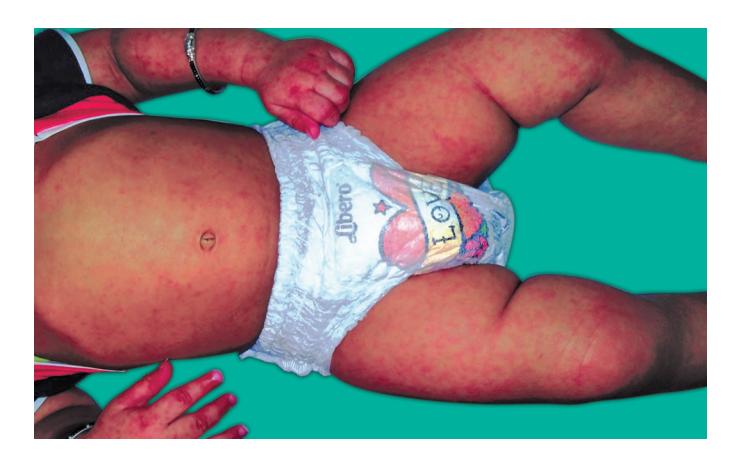
a. What is the diagnosis?
b. What is the causative organism?
c. How is it transmitted?
d. What is the treatment?
Answer
- a. Hand foot and mouth disease.
- b. Entero virus group including polio viruses, coxsackie viruses, echo viruses, and entero viruses. Coxsackie A virus is the commonest virus causing HFMD.
- c. An infected person may spread the viruses that cause hand, foot, and mouth disease to another person through:
- Close personal contact
- Air droplets (through coughing or sneezing)
- Contact with feces
- Contact with contaminated objects and surfaces.
- d. Supportive, adequate liquid intake and pain relief
VVK08-002
An infant girl is born 4 weeks prematurely and manifests jaundice, an intractable rash, persistent rhinitis, pneumonia, anemia, generalized lymphadenopathy, and bony abnormalities on radiograph.
a. What is the most likely diagnosis?
b. What historical features is the most important when questioning the mother regarding the history of the pregnancy?
c. What findings would most likely be present on ophthalmic examination of this newborn child?
d. What is the famous triad and its association in older children?
Answer
- a. Congenital syphilis
- b. Sexual history
- c. Segmental pigmentation of the retinal periphery, salt and pepper appearance to the fundus
- d. Hutchinson's triad—interstitial Keratitis, widely spaced and peg-shaped teeth, Deafness
VVK08-003
Select the answers
a. Neonatal herpes
b. Congenital cytomegalovirus infection
c. Congenital toxoplasmosis
d. Congenital syphilis
e. Congenital varicella
i. Sensorineural deafness
v. Hydrocephalus
Answer
- a. 8
- b. 1
- c. 5
- d. 7
- e. 2
VVK08-004
Pulmonary Koch's
a. Write drug therapy of a 10 kg boy according to IAP guideline.
Answer
- Intensive phase 2 months
- 3 days a week
- Isoniazid 100 mg
- Rifampicin 100–120 mg
- Pyrazinamide 300–350 mg
- Ethambutol 200–250 mg
- Continuation phase 4 months
- 3 days a week
- Isoniazid 100 mg
- Rifampicin 100–120 mg.
The following are the daily doses (mg per kg of body weight per day)
- Rifampicin 10–12 mg/kg (max 600 mg/day)
- Isoniazid 10 mg/kg (max 300 mg/day)
- Ethambutol 20–25 mg/kg (max 1500 mg/day)
- PZA 30-35 mg/kg (max 2000 mg/day) and
- Streptomycin 15 mg/kg (max 1g/day).
A 5:
- a.
- b. 4H2R2
- c.
- d. 5H3R3E3
| Category of treatment |
Type of patients | TB treatment regimens | |
|---|---|---|---|
| Intensive phase |
Continuation phase | ||
| New cases |
|
||
| Previously treated cases |
|
H=Isoniazid, R= Rifampicin, Z= Pyrazinamide, E= Ethambutol, S= Streptomycin. *The number before the letters refers to the number of months of treatment. The subscript after the letters refers to the number of doses per week. Pulmonary TB refers to disease involving lung parenchyma.
A 6:
- a. Reproductive, maternal, newborn, child and adolescent health
- b. 2013
- c. Targets
- i. Reduction of infant mortality rate (IMR) to 25 per 1,000 live births by 2017
- ii. Reduction in maternal mortality ratio (MMR) to 100 per 100,000 live births by 2017
- iii. Reduction in Total Fertility Rate (TFR) to 2.1 by 2017
A 7:
i.Default
-
ii. a. Children who show inadequate or no response (on smear or clinico-radiological basis) at 8 weeks of intensive phase should be given benefit of extension of IP for one more month.
- b. In patients with TB meningitis, spinal TB, miliary/disseminated TB and osteo-articular TB, the continuation phase shall be extended by 3 months making the total duration of treatment to a total of 9 months. A further extension may be done for 3 more months in continuation phase (making the total duration of treatment to 12 months) on a case to case basis in case of delayed response and as per the discretion of the treating physician/ pediatrician.
-
iii. a. All asymptomatic contacts (under 6 years of age) of a smear positive case, after ruling out active disease and irrespective of their BCG, TST or nutritional status.
-
b. Chemoprophylaxis is also recommended for all HIV infected children who either had a known exposure to an infectious TB case or are tuberculin skin test (TST) positive (>5 mm induration) but have no active TB disease.
-
c. All TST positive children who are receiving immunosuppressive therapy (e.g. Children with nephrotic syndrome, acute leukemia, etc.).
-
d. A child born to mother who was diagnosed to have TB in pregnancy should receive prophylaxis for 6 months, provided congenital TB has been ruled out. BCG vaccination can be given at birth even if INH chemoprophylaxis is planned.
VVK08-005
Pulmonary Koch's, Complete the table below
Treatment Categories and Regimens for Childhood Tuberculosis
| Category of | Type of patients | TB treatment regimens | |
|---|---|---|---|
| treatment | Intensive phase |
Continuation Phase |
|
| New cases | • New smear-positive pulmonary Tuberculosis (PTB) • New smear-negative PTB • New extra-pulmonary TB |
A | B |
| Previously treated cases |
• Relapse, failure to respond or treatment after default • Re-treatment Others |
C | D |
Answer
No model answer in source material.
VVK08-006
RMNCH+A
a. What is RMNCH+A?
b. When was it launched?
c. Targets- Fill in the xblanks
i. Reduction of infant mortality rate (IMR)to_______per 1,000 live births by 2017
Answer
No model answer in source material.
VVK08-007
A 12 year 32 kg presents with active pulmonary tuberculosis. He previously has taken treatment for 6 weeks and comes after interruption of treatment for 1 year.
b. Which patients are candidate for Extending intensive and continuation phase?
c. What is the guideline for TB preventive therapy
a. What is the diagnosis?
b. What is the most common organism associated with the said abnormality?
c. What is the treatment?
Answer
No model answer in source material.
VVK08-008
This 4 years old child has the lesions shown below which are itching in nature. Lesions were also there in the groins, male genitalia and between the buttocks.
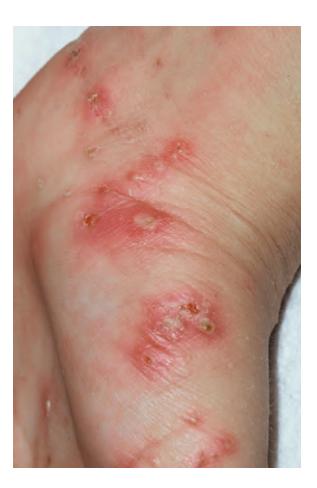
a. What is the likely diagnosis?
b. What is the organism causing above problems?
c. What is the treatment?
Answer
- a. Scabies
- b. Sarcoptes scabei (Mite)
- c. 5% permethrin cream for local application x 10 hrs
All family members to be treated simultaneously
All linen and cloths to be cleaned (boil put out in the sun and subject to hot iron)
Treatment may be repeated 2 weeks later (Oral ivermectin after 5 years of age)
VVK08-009
Answer the following questions on malaria.
a. Define drug sensitive malaria.
b. What are the grades of resistance?
c. What are the indications for use of primaquine in the treatment of malaria?
Answer
- a. Sensitive todrugs if clearance of asexualparasitemiabyday 6 frominitiation of treatment without subsequent recrudescence until day 28.
- b. Resistance to drugs: R1, R2, R3.
- R1—Clearance of asexual parasitemia for at least 2 consecutive days, latest by day 6, after initiation of treatment, followed by recrudescence within day 28.
- R2—Marked reduction of asexual parasitemia to less than 25% of pretreatment counts within 48 hours of initiation of treatment, but with no subsequent disappearance of asexual parasitemia (positive on day 6 after initiation of treatment).
- R3—Modest reduction (not < 25%), no change or increase in asexual parasitemia during first 48 hours following implementation of treatment and no subsequent clearance of asexual parasitemia.
- c. Primaquine is used as a gametocidal agent for P. falciparum—0.75 mg/ kg single dose and in P. vivax to prevent recrudescence at a dose of 0.25 mg/kg/day for 5 days.
VVK08-010
A 15-year-old female presents with fever for past 24 hours. Fever is high grade associated with sweating and loose motions (10 large, watery stools over past 6 hours). For past 2 hours patient is complaining of giddiness. 5 days back (prior to fever) patient had her menses which were of normal duration and normal blood loss. On examination—Toxic looking, drowsy with Glasgow coma scale of 10. Blood pressure systolic 70 mm Hg, pulse rate 140/min, capillary fill time 4 seconds, RR–30/min. There is diffuse erythematous macular rash (sun burn like) all over body.
a. What is the most probable diagnosis?
b. What is the first step in management other than airway and breathing?
c. What class (targeting particular bacteria) of antibiotic you would like to give to this patient?
d. Name common predisposing factor which can cause above mentioned disease.
e. Intravenous immunoglobulin has no role to play in the above mentioned disease at any level: (Write true/false).
Answer
- a. Toxic shock syndrome.
- b. Management of shock, fluid boluses.
- c. Anti-staphylococcal drugs.
- d. Use of tampoons or vaginal device.
- e. False.
VVK08-011
Study this picture of a 8-month-old infant who developed a rash during the declining phase of fever starting with the cheeks.
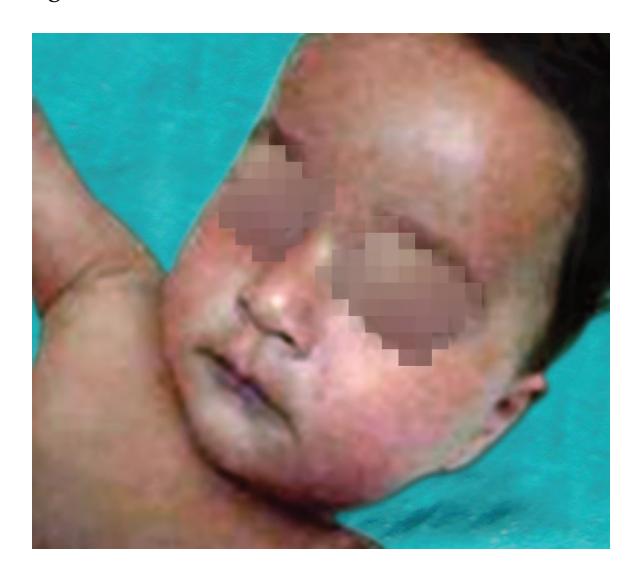
a. What is the most probable diagnosis?
b. What is the causative organism?
c. Name two situations where infection with this organism may be life threatening.
Answer
- a. Erythema infectiosum/fifth disease.
- b. Parvovirus B19.
- c. Life threatening situations:
- Aplastic crisis in hemolytic anemia
- Non-immune hydrops fetalis in fetal infection.
VVK08-012
A one-year-old child presented with fever, barking cough and breathing difficulties. Initially child was having only running nose. O/E: Tachypnea, stridor, subcostal retractions and intercostal retractions.
a. What is the diagnosis?
b. What is the usual etiological agent?
c. Which X-ray sign is diagnostic of this condition?
Answer
- a. Croup.
- b. Para influenza A.
- c. Steeple sign (on lateral X-ray neck).
VVK08-013
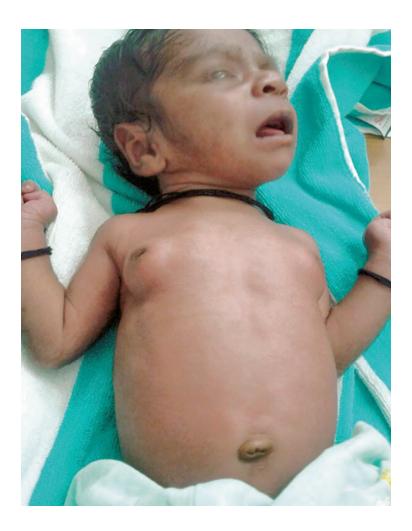
This 8-day-old female baby (shown in photograph) was brought to PHC with complaints of progressive difficulty in feeding, crying excessively and seizures. Parents of baby were 2nd degree cousins and laborers by occupation. Mother had not received any antenatal care. Baby was born at home, had moderate cry, and was well till day-8. On examination: HR–140/ min; RR–42/min; AF–at level; sutures–normal. Tone–Increased in all 4 limbs with neck retraction, intermittent seizures, worsening with stimulus.
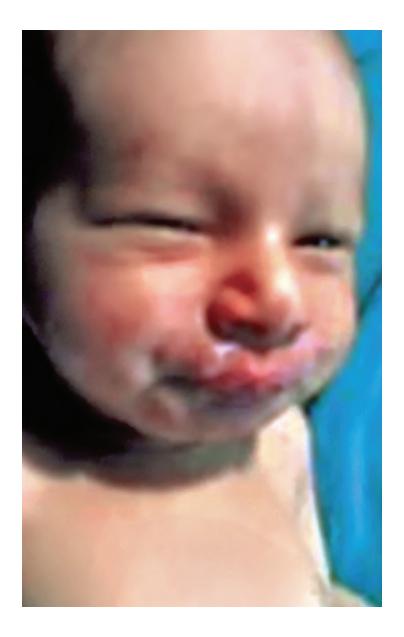
a. What is the diagnosis of this baby?
b. What is the treatment?
c. What is the usual cause of death in this condition?
d. What are the various types of this disease?
e. Excision of umbilical stump is recommended in this case (state true/false).
Answer
- a. Neonatal tetanus.
- b. Penicillin G-1 lakh units/kg/day q 4-6 hourly IV for 10-14 days
- Tetanus immunoglobulin, muscle relaxants—Diazepam, baclofen
- MgSO4 , midazolam
- NM blockers—Pancuronium, vecuronium.
- c. Recurrent spasms causing airway obstruction.
- d. Neonatal, localized, generalized, cephalic.
- e. False.
VVK08-014
During a prenatal visit, an HIV seropositive woman asks you about the advisability of breast-feeding.
a. How would you counsel her if she is from educated, well to do family from an urban area like Delhi?
b. If she is uneducated and poor from rural India?
c. How your advice would differ, if at all, she was HbsAg +ve positive instead?
Answer
- a. In Delhi she should refrain from breast-feeding, where safe alternatives to breast-feeding are available. Both free and cell-associated viruses have been detected in breast milk from HIV-infected mothers. The additional risk for transmission through breast-feeding in women with HIV infection before pregnancy is 14% compared with a 29% increase in breast-feeding women who acquired HIV postnatally. This suggests that the viremia experienced by the mother during primary infection doubles the risk for transmission. It therefore seems reasonable for women to substitute infant formula for breast milk if they are known to be HIV-infected.
- b. In rural India, because of infectious disease and malnutrition, breastfeeding would be continued. WHO recommends that in developing countries where other diseases (diarrhea, pneumonia, malnutrition) substantially contribute to a high infant mortality rate, the benefit of breast-feeding outweighs the risk for HIV transmission, and HIV-infected women in developing countries should breast-feed their infants for the 1st 6 months of life followed by rapid weaning.
c. If HBsAg is positive, infant should receive hepatitis B immunoglobulin and hepatitis B vaccine within 24 hours of birth (no later than 72 hours) and hepatitis B vaccine at 6 and 14 weeks or 6 weeks and 6 months and breastfeeding should be given.
VVK08-015
A 7-year-old male presents with headache, fever and vomiting for past 24 hours. Fever is high grade associated with sweating. For past 2 hours patient is complaining of uneasiness, headache and vomiting. On examination–Toxic looking, drowsy with Glasgow coma scale of 8. Blood pressure systolic–50 mm Hg, pulse rate 140/min, capillary fill time 4seconds, RR–30/min. There is rash (petechial) over abdomen and limbs.
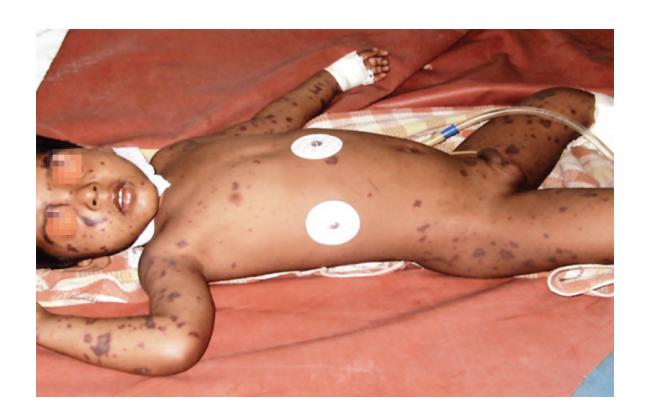
a. What is the most probable diagnosis?
b. What is the first step in management other than airway and breathing?
c. What class (targeting particular bacteria) of antibiotic you would like to give to this patient?
d. What drug you would like to give in dopamine refractory shock?
Answer
- a. Meningococcemia.
- b. Management of shock, fluid boluses.
- c. Ceftriaxone.
- d. Steroids.
VVK08-016
When the mother is HIV positive:
a. What is the percentage of transmission of HIV through breast milk?
b. What should the mother be appraised of, if she chooses to breast feed her baby?
c. What are the methods by which breast milk can be processed to reduce chances of transmission?
d. What criteria should be taken into account if mother wants to feed the baby with formula milk?
Answer
- a. 14% if mother acquired infection before pregnancy.
- 29% increased risk if mother acquired infection during pregnancy.
- b. i. Benefits of breastfeeding.
- ii. Risk oftransmission while breastfeeding (e.g.through cracked nipple).
- iii. To avoid mixed feeding and to rapidly wean off breastfeeds by the end of 6th month of life.
- iv. Mother should be on ART while feeding.
- c. i. Pasteurized breast milk.
- ii. Boiled human milk.
- iii. Frozen human milk.
- iv. Expressed breast milk allowed to stand and remove the lipid layer.
- d. Acceptability.
- Affordability.
- Sustainability.
- Safety and feasibility.
A 18: Varicella
- a. Symptomatic treatment with antipyretics/antihistamines/hygiene, etc. is advised if child is healthy and is suffering from uncomplicated varicella. Acyclovir is started within 72 hours if child is immunosuppressed/on steroids or on salicylates/has chronic cardiac or pulmonary disorder or is having complicated varicella.
- b. Secondary bacterial skin infections.
- Encephalitis/cerebellar ataxia.
- Pneumonia.
- Purpura/HUS.
- Nephritic syndrome/nephrotic syndrome.
- Arthritis.
- Myocarditis/pericarditis.
- Pancreatitis/orchitis.
- c. Varicella vaccine can be given for 5 years old sister within 3 to 5 days after exposure if she has not been infected or vaccinated earlier. If mother has not been infected or vaccinated earlier, VZIG can be given to the mother to prevent her from getting chicken pox but she has to be told that it may
not prevent the fetus from being infected or prevent development of total embryopathy.
VVK08-017
Study the two pictures shown below and answer the following questions.
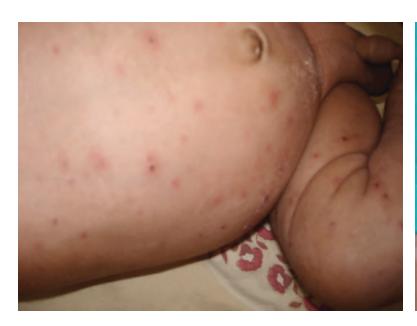
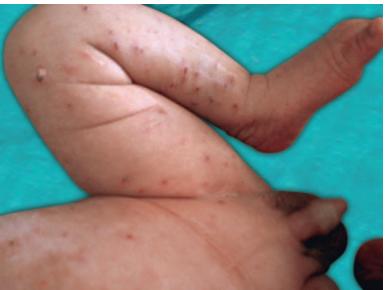
a. Outline the treatment for this condition.
b. List 4 complications of this condition.
c. Any medications you would advise for his 5 years old elder sister and his mother who is 2 months pregnant?
Answer
No model answer in source material.
VVK08-018
A primigravida mother who had a history of fever with vesiculopustular rash during second trimester of pregnancy gives birth to a IUGR baby having cicatricial skin lesions and hypoplasia of certain fingers and toes. Neuroimaging of this baby revealed cortical atrophy with ventriculomegaly.
a. What is the diagnosis?
b. List 3 clinical features of this condition.
c. What percentage of fetus may get infected if a pregnant lady gets this infection in early pregnancy?
Answer
- a. Congenital varicella syndrome.
- b. Shortened/malformed extremities.
- Zigzag scarring of skin—cicatrix.
- Neurological defects including dysfunction of anal and urethral sphincters.
- Developmental defect of eye including Horner's syndrome and cataracts.
- c. Around 25% fetus may be infected although clinically apparent disease may be seen in about 2% of fetuses whose mother had varicella in first 20 weeks of pregnancy.
VVK08-019
A 3-year-old female child is a newly diagnosed case of HIV. Write down the prescription (names only) for this patient with protease inhibitor based regimens keeping in mind her latest investigations, which are; CD4 cell count is 70/mm3 and the percentage of this is <15% of total lymphocytes. Her Hb is 9.2 g%, platelets are 1.6 lacs/mm3 and normal LFT.
Answer
- Zidovudine.
- Lamivudine.
- Ritonavir/Nelfinavir.
For prophylaxis:
- Azithromycin—(20 mg/kg once a week or 5 mg/kg/day) for MAC prophylaxis.
- Cotrimoxazole—(150 to 750 mg/m2 /day in 2 divided doses).
VVK08-020
A 5-year-old child has sustained a bleeding injury on left leg due to exposure to the paws of a clinically rabid dog. There was definitely no bite or saliva contamination of the wound.
a. What class of bite (injury) is this?
b. How would you manage this patient?
a. What is the diagnosis?
b. Mention two most likely causative organisms.
c. Mention three complications of this entity.
a. Identify the condition.
b. What is the best possible diagnostic test?
c. How do you treat this condition?
Answer
- a. Class III bite.
- b. i. Soap and running water for 10 minutes.
- ii. Viricidal agent (betadine).
- iii. Antimicrobial agent.
- iv. Tetanus toxoid if indicated.
- v. RIG 20 U/kg locally as much as possible (class III).
- vi. Avoid suturing.
- vii. Vaccine—0,3,7,14,30,90 (optional).
VVK08-021
A 8-year-old child resident of Delhi is admitted with fever for last 5-6 days, loss of appetite for 6 days and hepatosplenomegaly. His peripheral smear is shown below.
a. Identify the picture (name the form of parasite).
b. Name the culture media used for growth of this parasite.
c. Name the drugs used to treat resistant cases infected with this parasite.
Answer
- a. Kala Azar (LD bodies-Amastigote form, nonflagellated form).
- b. NNN media (Novy, MacNeil and Nicolle).
- c. Amphotericin B, pentamidine, aminosidine, miltefosine, recombinant INF gamma, allopurinol and adjunct splenectomy.
VVK08-022
A pregnant lady found to be HBsAg positive, gives birth to a term baby.
a. What is the risk of the baby getting hepatitis B infection?
b. How do you protect the baby?
c. Is there a possibility for the baby to be infected in spite of proper management?
d. What is the prognosis in the infected newborns?
Answer
- a. Such a baby has a 30% chance of getting the infection. If the mother is also HBeAg positive, the risk rises to 80–90%.
- b. The baby should be given the first dose of hepatitis B vaccine within 24 hours of birth. Hepatitis B immune globulin (HBIG) preferably should also be given to the baby on the other thigh simultaneously. This is then followed by 2 more doses of the vaccine at 6 and 14 weeks or at 6 weeks and 6 months of age.
- c. Yes, the baby can be found to be infected in spite of proper management if the baby has already acquired the infection in utero*.*
- d. Once infected, 90% of the newborns become chronic carriers and 30% of them go on to develop complications like chronic hepatitis, cirrhosis and hepatocellular carcinoma.
VVK08-023
A 7-year-old boy presented with 4 weeks history of high grade fever, fatigue, weight loss and was found to have a grossly enlarged relatively non tender liver 4 cm below costal margin and spleen 6 cm but no lymphadenopathy. His Hb was 4 g%, TLC was 3500 cells/mm3 and platelet counts of 56,000 mm3 . A bone marrow aspiration was done and the slide is depicted below.
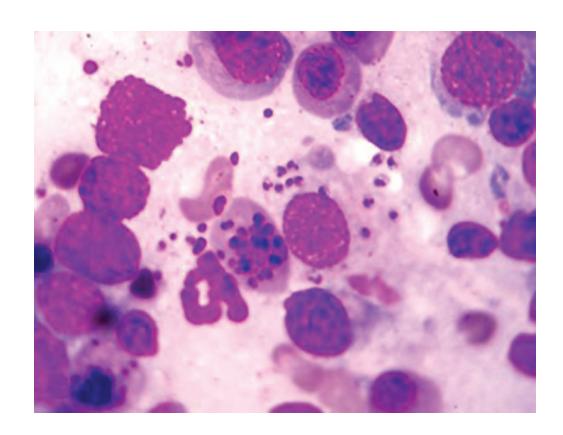
a. Describe the findings on smear and give the diagnosis.
b. Name the first line drug for the condition. Write the dose, route of administration and duration.
c. Name two other drugs for this condition.
Answer
- a. Leishmania donovani. Amastigote form of Leishmania donovani present inside macrophages in the bone marrow.
- b. Sodium stibogluconate IM/IV 20 mg/kg/day for 30 days.
- c. Pentamidine isethionate, amphotericin B, miltefosine.
VVK08-024
A 7-year-old boy, resident of UP comes home from school daily by walking through a paddy field. Near his home are found many stray cattle and other wild animals like pigs. Two days ago he developed high grade fever, headache and vomiting. Ten hours later he developed multiple seizures and became unconscious. On examination, there is no pallor, he is febrile, comatose and has generalized hypertonia and a left hemiparesis. There are no signs of meningeal irritation. There is no hepatosplenomegaly. He has received all childhood immunizations appropriate for his age. There is history of similar cases in the area in the preceding two weeks.
a. What is the likely clinical diagnosis?
b. How is this disease transmitted?
c. What are the methods to confirm the diagnosis?
d. What is the test of choice?
Answer
- a. Japanese encephalitis.
- b. Bites of Culex mosquitoes.
- c. i. JE IgM in CSF.
- ii. 4 fold or greater rise in paired sera (acute and convalescent) through IgM/IgG ELISA, HI, neutralization test.
- iii. Detection of virus antigen or genome in tissue, blood or other body fluid by immunochemistry, immunofluorescence or PCR.
- iv. Isolation- tissue culture, infant mice.
- d. IgM ELISA is the method of choice.
VVK08-025
A 5-year-old male child presents with fever for past 10 days. Fever is high grade, continuous in nature without chills and rigor. There are no associated loose motions, vomiting, headache, photophobia, cough, cold or rash. On examination child is conscious, febrile, normotensive with conjunctival congestion but no discharge. Two cervical lymph nodes (Right sided) are palpable, approximately 2 cm each. There is desquamation of the skin around the fingers. There is no hepatosplenomegaly. Rest of systemic examination is normal.
a. What is your most probable diagnosis?
b. Name one characteristic feature that can be found in complete blood counts.
c. In what percentage of cases does the acute illness tend to recur?
d. What drug (drug of choice ) you would like to give to this patient?
Answer
- a. Kawasaki disease.
- b. Thrombocytosis.
- c. 1–3%.
- d. Intravenous immunoglobulin 2 g/kg over 10–12 hours.
VVK08-026
A 14-year-old female child complains of pain in abdomen for past 10 days. She has also developed vomiting and loose motions for past 4 days. She also has weakness of both lower limbs and is unable to walk past 24 hours. On examination—she is hypertensive, with a HR 142/min. CNS examination reveals diminished tone in both her lower limbs with power grade 2. Deep tendon reflexes are not elicitable.
a. Give 2 differential diagnoses for this condition.
b. Investigations revealed serum Na+–110 mEq/L, K+–4 mEq/L, SGPT–37 U/L.
c. Suggest one investigation for diagnosis.
d. Suggest the appropriate treatment.
Answer
-
a. GBS/Ac intermittent porphyria/hypokalemia.
-
b. Ac intermittent porphyria.
-
c. Urine for porphobilinogen.
-
d. Intravenous hemin, combined with symptomatic and supportive measures, is the treatment of choice for most acute attacks of porphyria. Mild attacks, without severe manifestations such as paresis and hyponatremia, may be treated initially with intravenous glucose.
VVK08-027
A male child aged 13-month-old presented with loose motions for 5 days. On 2nd day of loose motions, he passed blood along with stools. On the 4th day of illness loose motions stopped but he also developed decreased urine output. He became irritable, and had one episode of abnormal movements with altered sensorium 1 hour back. Parents were giving ORS for past 3 days. Weaning was started 3 months back. On examination—the child is pale, and also has petechiae, hepatomegaly, tachypnea and edema. His BP is 100/60 mm Hg. There is mild acidosis on ABG.
a. Name two differential diagnoses.
b. Name 3 electrolyte disturbances that can be associated with the illness.
c. What would be your management plan?
Answer
- a. (i) HUS (ii) AGN (iii) Dyseletrcrolytemia.
- b. Hyponatremia/hypernatremia/hyperkalemia.
- c. IVF (ARF regime), peritoneal dialysis.
VVK08-028
A 12-year-old male presented with pain in abdomen for past 8 days (acute intermittent, periumbilical). He also developed swelling over the scrotum 6 days back which subsided within 24 hours. During the past 2days, he has developed pain over right wrist and swelling of the right knee. He also developed rash over both lower legs and gluteal region. This morning his stools were bright red. Abdominal palpation reveals generalized tenderness and the right lower quadrant is empty.
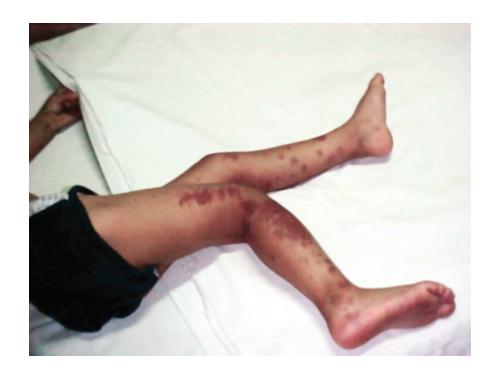
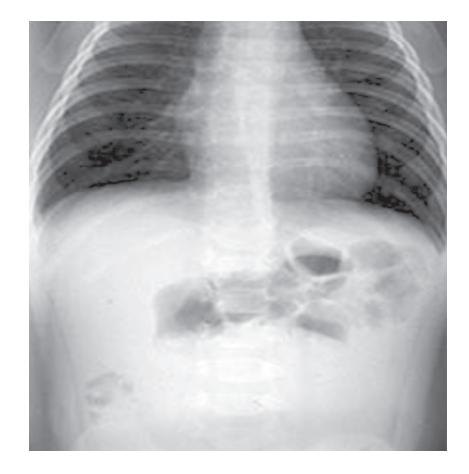
b. X-ray abdomen is shown above—What complication has the patient developed?
c. What is the definitive medical treatment (specific for disease—other than blood/resuscitative fluid)?
Answer
- a. HS purpura.
- b. Intussusception.
- c. Steroids.
VVK08-029
A 4-year-old female child presented with gradually increasing difficulty in breathing with cough and fever for past 10 hours. She had one episode of hemoptysis and 1-2 episodes of malena 24 hours back. On examination, she is pale, HR–162/min and RR–50/min. Examination of respiratory system shows bilateral wheezing. Blood investigations showed microcytic hypochromic anemia with reticulocytosis. Serum iron was found to be low.
a. What is the diagnosis?
b. What is the diagnostic investigation with findings?
c. Which cardiac condition can resemble such symptomatology?
Answer
- a. Pulmonary hemosiderosis.
- b. Bronchoalveolar lavage showing hemosiderin laden macrophages.
- c. Mitral stenosis.
VVK08-030
Match the appropriate antidote to its corresponding drug overdose.
b. N-Acetyl cysteine 2. Benzodiazepine
d. Vitamin K 4. Isoniazid
a. Desferoxamine 1. Acetaminophen
c. Pyridoxine 3. Nitrates/methemoglobinemia
e. BAL 5. Heavy metals (mercury, gold, arsenic)
f. Methylene blue 6. Organophosphate
g. Atropine 7. Iron
h. Flumazenil 8. Coumarin
Answer
| a. | Desferoxamine | — | Iron |
|---|---|---|---|
b. N-Acetyl cysteine — Acetaminophen
c. Pyridoxine — Isoniazid d. Vitamin K — Coumarin
e. BAL — Heavy metals (mercury, gold, arsenic)
f. Methylene blue — Nitrates/methemoglobinemia
g. Atropine — Organophosphate h. Flumazenil — Benzodiazepine
VVK08-031
Study the given CT scan of head.
Answer questions based on CT head shown above
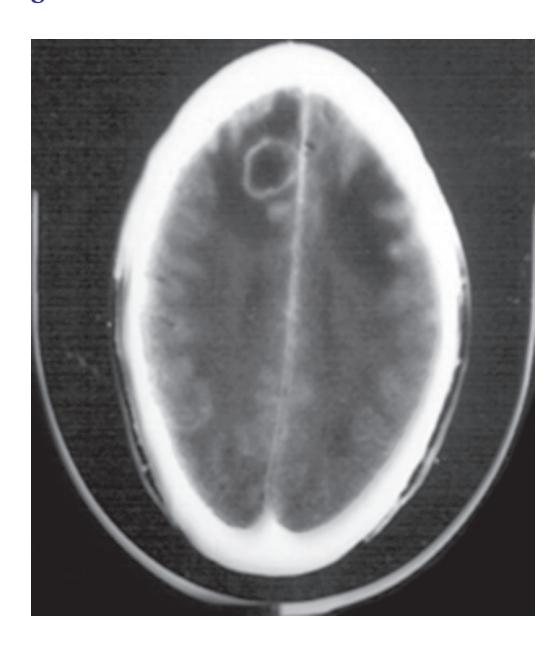
a. What does this CT scan head reveal?
b. What is the likely diagnosis?
c. Name the drugs used in medical management of this condition.
d. What are the indications for surgical interventions in such a case?
Answer
- a. A ring enhancing hypodense lesion seen in left frontal region with edema in bilateral frontal region.
- b. Cerebral abscess.
- c. When causative organism is unknown, a combination of vancomycin, 3rd generation cephalosporin and metronidazole is commonly used, usually for 4–6 weeks.
- d. Surgery is indicated when:
- Abscess > 2.5 cm in diameter.
- Gas present in abscess.
- Lesion is multiloculated.
- Lesion located in posterior fossa.
- Presence of fungus.
VVK08-032
Answer the questions based on the picture shown below. This child was systemically unwell with fever.
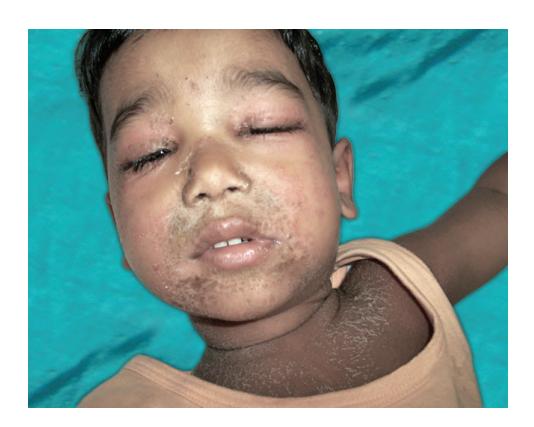
a. What is the diagnosis?
b. Name two causes for this condition.
c. What sites are commonly affected in this condition?
Answer
- a. Stevens-Johnson syndrome.
- b. Antibiotics (esp. sulfonamides) and viral infection.
- c. Eye—conjunctivitis, corneal ulceration, uveitis, stomatitis with ulceration, urethritis.
VVK08-033
A 5-year-old male child residing in an overcrowded slum, presents with itchy lesions in the groins, male genitalia and between the buttocks.
a. Spot the diagnosis and name the etiological agent.
b. What is the treatment for this condition?
Answer
- a. Scabies and Sarcoptes scabei (Mite).
- b. Application of permethrin 5% cream or 1% lindane cream or lotion to the entire body from the neck down, with particular attention to intensely involved areas, is standard therapy. The medication is left on the skin for 8–12 hour. If necessary, it may be reapplied in 1 week for another 8–12 hour period. For infants younger than 2 months, alternative therapy includes 6% sulfur in petrolatum applied for 3 consecutive 24 hour periods.
VVK08-034
A 7-year-old male child presented with sudden onset explosive watery diarrhea with abdominal distension, flatulence and epigastric cramps without any blood or mucus in the stool. Stool examination of this child is shown below.
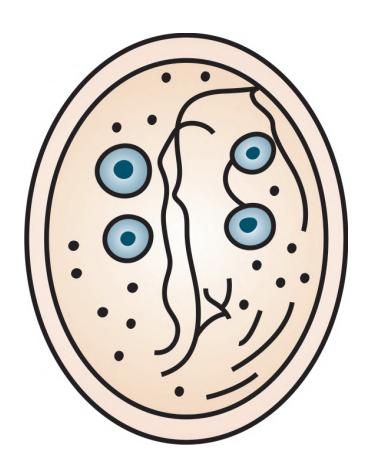
a. What is the diagnosis?
b. What would be the schedule for stool microscopic examination for this condition?
c. Name two other modalities of diagnosis other than stool microscopy.
d. What are the drugs used in treatment? (At least 3).
Answer
- a. Acute symptomatic giardiasis (Asymptomatic carriage form is the most common form).
- b. At least 3 stool specimen collected on alternate days (Detection rate up to 90%) because there is intermittent shedding of giardial cyst.
- c. Microscopy of duodenal aspirate, duodenal biopsy, fecal ELISAfor antigen detection.
- d. Metronidazole, albendazole, tinidazole, furazolidine and quanicrine.
VVK08-035
A 18-year-old student presents to OPD with 10 days history of fever, sore throat, malaise, and a rash that developed today. Fever was initially low grade but rose to 103°F (39.4°C) 4 days ago. She has worsening sore throat and difficulty swallowing solid foods but she is drinking well. She denies emesis, diarrhea, or sick contacts.
On examination, there is a diffuse morbilliform rash over the body. She appears tired but in no distress. Her temperature is 102.2°F (39°C). She has mild supraorbital edema, bilaterally enlarged tonsils that are coated with a shaggy gray exudate; a few petechiae on the palate and uvula; bilateral posterior cervical lymphadenopathy; and a spleen that is palpable 3 cm below the costal margin. Laboratory data include a white blood cell (WBC) count of 17,000 cells/mm3 with 50% lymphocytes, 15% atypical lymphocytes, and platelet count of 100,000/mm3 .
a. What is the most likely diagnosis?
b. What is the best tool to quickly confirm this diagnosis?
c. What is the best management for this condition?
d. What is the expected course of this condition?
Answer
- a. Epstein-Barr virus (EBV) infection (infectious mononucleosis).
- b. Assay for heterophil antibodies (Monospot).
- c. Symptomatic care, avoidance of contact sports while the spleen is enlarged (usually 1–3 months).
- d. Acute illness lasts 2 to 4 weeks, with gradual recovery; splenic rupture is a rare but potentially fatal complication. Rarely, some patients have persistent fatigue.