THG38-001
What are the mechanisms of action of following drugs?
a. Canakinumab |
b. Mycophenolate mofetil |
c. Tocilizumab |
d. Abatacept |
e. Daclizumab |
f. Belimumab |
Answer
Mechanism of action:
| Interleukin 1£ (IL-1P) receptor antagonist | |||
| a. | Canakinumab | ||
| Inosine monophosphate dehydrogenase inhibitor | |||
| b. | Mycophenolate mofetil | ||
| IL-6 receptor antagonist | |||
| c. | Tocilizumab | ||
| CD80 and 86 binder | |||
| d. | Abatacept | ||
| IL-2 receptor antagonist | |||
| e. | Daclizumab | ||
| B lymphocyte stimulator (BLyS) antagonist | |||
| f. | Belimumab | ||
THG38-002
What are the adverse effects of following drugs?
a. Lamotrigine |
b. Valproate |
c. Carbamazepine |
d. Phenytoin |
e. Topiramate |
f. Vigabatrin |
Answer
Adverse effects of following drugs:
| Stevens-Johnson syndrome | |||
| a. | Lamotrigine | ||
| Pancreatitis | |||
| b. | Valproate | ||
| Agranulocytosis | |||
| c. | Carbamazepine | ||
| Pseudolymphoma | |||
| d. | Phenytoin | ||
| Glaucoma | |||
| e. | Topiramate | ||
| Visual field defects | |||
| f. | Vigabatrin | ||
THG38-003
Q38.3
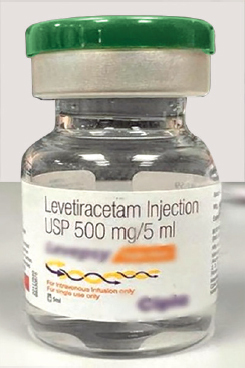
a. What is the mechanism of action of this drug?
b. What are the indications of the above mentioned drug?
c. Mention the dose of the above mentioned drug?
d. Mention few adverse drug reactions of the same?
Answer
| a. | Levetiracetam binds to the SV2A glycoprotein and modulates neurotransmitter release |
| b. | Focal onset seizures, generalized tonic–clonic seizure (GTCS), and myoclonic seizures |
| c. | 20–60 mg/kg/day maintenance in two divided doses |
| d. | Anger, irritability (behavioral disturbances), somnolence, and dizziness |
THG38-004
Q38.4
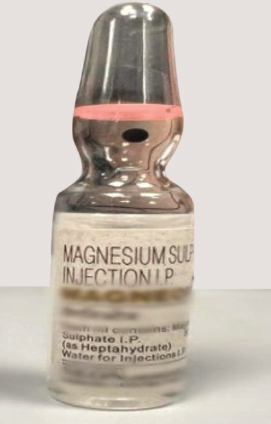
a. Mention three indications for MgSO4
b. What is the dose and elemental content in 50% MgSO4?
c. What to monitor while administering?
d. What is the mechanism of action?
Answer
| a. | Acute severe asthma, hypomagnesemia, and refractory hypocalcemia |
| b. | Dose: 30–50 mg/kg/dose. Content—50 g in 100 mL |
| c. | Hypotension, bradycardia, and respiratory depression |
| d. | Inhibits calcium uptake in the bronchial smooth muscles causing relaxation and decreases histamine and acetylcholine release |
THG38-005
Q38.5
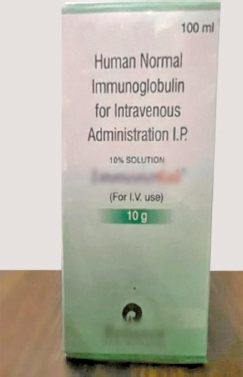
a. Mechanism of action of IV immunoglobulin.
b. Mention four clinical indications.
c. What are the adverse effects?
d. How is it prepared?
Answer
| a. | Intravenous immunoglobulin binds competitively to the Fc receptor of macrophages in liver, spleen, and prevents phagocytosis |
| b. | (i) Kawasaki disease, (ii) Primary immunodeficiency conditions like severe combined immunodeficiency (SCID), (iii) idiopathic thrombocytopenic purpura (ITP), and (iv) systemic onset juvenile idiopathic arthritis (SOJIA) |
| c. | Anaphylaxis, aseptic meningitis, transfusion-related infections, such as hepatitis C and hemolysis. |
| d. | Polyvalent immunoglobulin predominantly immunoglobulin G (IgG) prepared from pooled human plasma of >3,000 donors. |
THG38-006
Q38.6
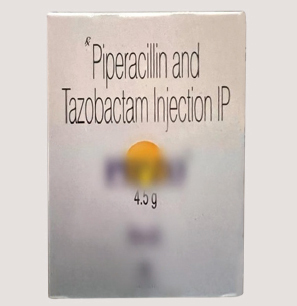
a. Mention the spectrum of microbials covered by this antibiotic.
b. What is the dose of the drug?
c. What are the side effects of the drug?
d. Which class does piperacillin and tazobactam belong to?
Answer
| a. | Gram-positive like staphylococcus aureus and serious gram-negative bacteria like Pseudomonas and Klebsiella |
| b. | 300–400 mg/kg/day every 6th hourly or 8th hourly |
| c. | Anaphylaxis, leukopenia, angioedema, and thrombocytopenia |
| d. | Beta-lactam group extended-spectrum penicillin of ureidopenicillin class |
THG38-007
Q38.7
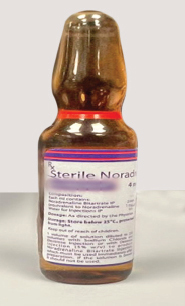
a. What are the indications of noradrenaline?
b. What are the target receptors of this drug?
c. Mention the dose range of noradrenaline infusion.
d. Mention few adverse drug reactions of noradrenaline?
Answer
| a. | Vasodilatory shock like septic shock with low systemic vascular resistance and low mean arterial pressure (MAP) |
| Raised intracranial pressure—to maintain high normal MAP to target optimum cerebral perfusion pressure (CPP) | |
| b. | α1, α2, and β1 receptors |
| c. | 0.05–1 µg/kg/min |
| d. | Extravasation tissue necrosis, it may worsen cardiac failure by increasing afterload, hypertension, and hyperglycemia. |
THG38-008
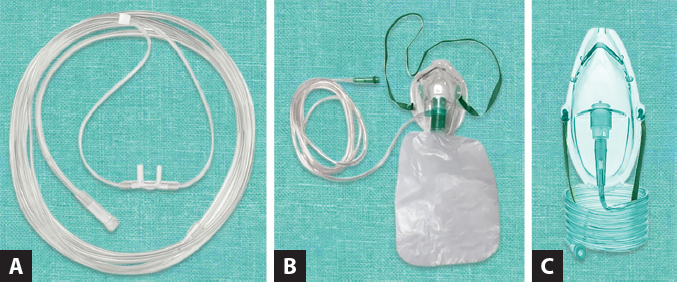
Name the devices shown in images A to C, their oxygen flow volume and FiO2 delivery, one advantage, and disadvantage of each.
Answer
| Q. No. | Name of the device | FiO2 | Flow of oxygen | Advantage | | | Disadvantage | | |
| A | Nasal cannula | 22-60% | 0.25-4 L/min | | | | FiO2 varies with inspiratory flow rate or volume of inspired air or nasal resistance due to secretion | | |
| • | Better tolerated in infants and toddlers where mask use is difficult. | |
| • | Can feed the child with oxygen on flow | |
| • | Low cost and easy to use | |
| | | |
| B | Simple oxygen face mask | 35-60% | 6-10 L/min | Easy and low cost | | | | | |
| • | Cannot deliver >60% FiO2, ill-fitting mask lowers the FiO2 | |
| • | Difficult in using in younger children because of agitation | |
| | | |
| C | Nonbreathing mask | 90-95% | 10-15 L/min | | | | | | |
| • | High-flow O2 delivery devise | | • | Needs sufficient sealing of mouth and nose for higher concentration of O2, contraindicated to use in respiratory failure | |
| • | The exhaled air is prevented from rebreathing as it is directed out through the one-way valve | | • | No humidification, cannot be used for long duration | |
| | | | | | |
THG38-009
Q38.9
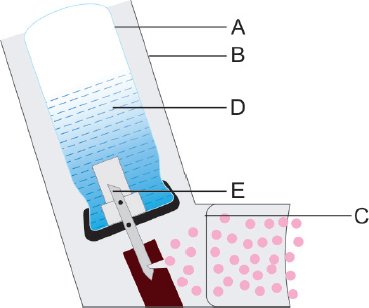
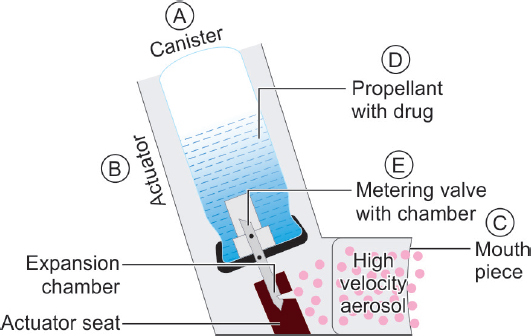
a. Name this device and label the marked parts.
b. What will you do for a younger age group who is not cooperative to use this device? If yes, why?
c. Name any two groups of drugs administered via this device.
d. Mention the advantages and disadvantages of this device.
Answer
| a. | Metered dose inhaler (MDI): A compact portable instrument to deliver aerosolized drug in a unit dose into lungs. |
The canister is placed inside the plastic outer case contains the drug mixed with propellant and surfactant in high pressure. The propellant will be in liquid state under high pressure but when released it quickly evaporates and carries the drug along in aerosolized form. Most commonly used propellant in hydrofluoroalkane (HFA). The surfactant prevents the drug clumping together preventing agglomeration.
| b. | Yes. MDI needs hand and respiratory coordination which is difficult in younger age groups. Hence adding MDI to spacer or spacer with face mask will be effective. |
| c. | Beta-2 agonist like salbutamol, inhalational corticosteroid like budesonide and fluticasone |
d. • Advantages: Compact, portable, no need of electricity, lesser nosocomial infection, and good aerosol delivery to lungs in short time
| • | Disadvantages: Needs technique training, needs hand-lung coordination—synchronized act of MDI actuation and inhalation, difficult to use in acute severe or life-threatening condition, and high oropharyngeal deposition causes oropharyngeal candidiasis |
THG38-010
Q38.10
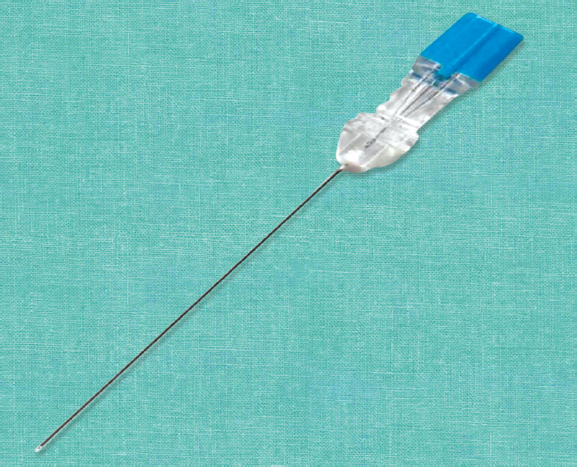
a. Name this device
b. Mention two therapeutic and two diagnostic indications for using this device
c. Mention four side effects
d. Mention two contraindications for usage of this device
Answer
| a. | Lumbar puncture (LP) needle— Quincke |
b. • Diagnostic indication: Diagnosis of meningitis, encephalitis, metastatic leukemia, and measurement of intracranial pressure
| • | Therapeutic indication: Benign intracranial hypertension to lower intracranial pressure (ICP), spinal anesthesia, and administration of intrathecal drugs such as chemotherapy and antibiotics. |
| c. | Headache post LP, back pain, bleeding or hematoma, intracranial hypotension, and infection |
If the procedure is done in presence of symptomatic intracranial hypertension, there is a high risk of brain stem herniation.
Late onset epidermoid tumor in thecal sac if LP performed with a stylet or poorly fitted stylet as it may cause transplantation of epidermoid tissue into spinal cord.
| d. | Thrombocytopenia with platelet <50,000/mm3, skin infection overlying the selected site of LP, suspected raised ICP due to space occupying lesion/hydrocephalus obstructive type/cerebral edema due to risk of cerebral herniation. |
THG38-011
Q38.11
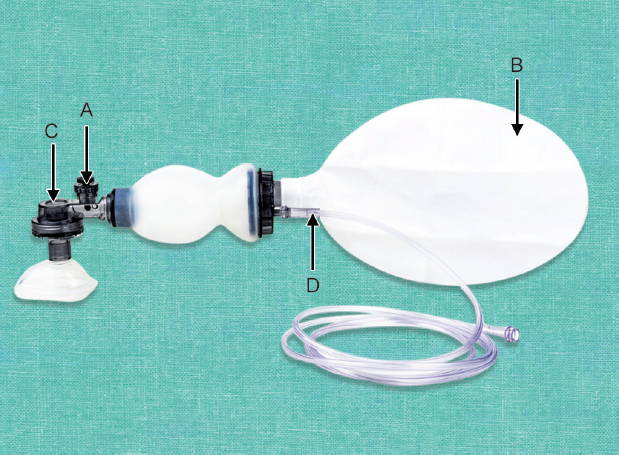
a. Name the labeled parts (A, B, C, and D) of artificial manual breathing unit (AMBU) bag
b. What is the volume of bag to be used in different age group?
i. Neonates
c. What is the use of labeled part A?
d. How to select appropriate size mask?
e. What is the use of reservoir?
f. Mention any two complications in AMBU usage
Answer
a.
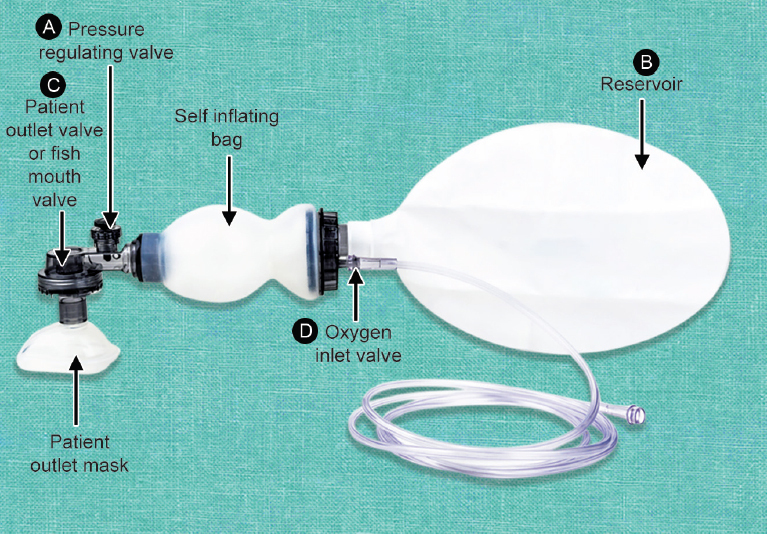
b. i. 250 mL
| ii. | 500 mL |
| iii. | 1,000–1,500 mL |
| c. | POP off valve or pressure release valve safeguard from barotrauma and it opens up if the pressure in the bag increases above 35–40 mm Hg. |
| d. | The mask should cover mouth, nose, and chin but should not extend beyond the chin or and not covering the eyes. |
| e. | The oxygen concentration in the delivered oxygen raises to 60–95% when used with reservoir from 30 to 80% without reservoir. |
| f. | Barotrauma, volutrauma, gastric inflation with air, and lung aspiration of gastric contents. |
THG38-012
Q38.12
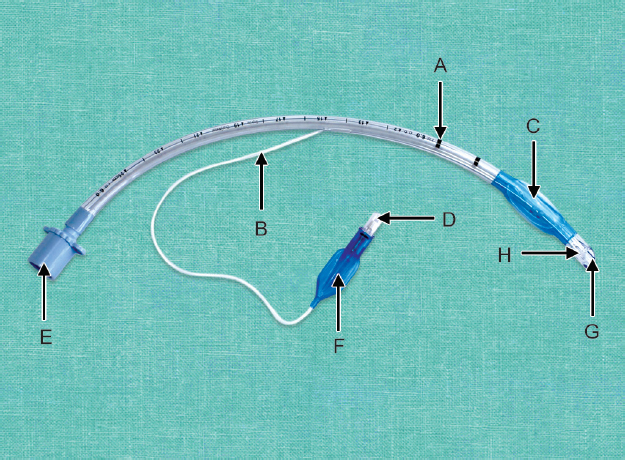
a. Identify this instrument and how do you select the size in different age group children?
b. Identify the marked part A, G, and H and mention its significance.
c. Identify the marked part C and mention its significance.
d. Identify the marked parts D and F and mention its significance.
e. How do you determine the depth of insertion?
f. What are the methods to confirm proper placement of this instrument and which among it is the gold standard?
Answer
| a. | Endotracheal tube (cuffed) |
| The inner diameter of the tube (in mm) is taken as the size. | |
| Example: In 6 size endotracheal tube (ETT), the inner diameter is 6 mm. | |
| Size determination of uncuffed ETT (Fr) using the formula |
(AGE in years + 4)/4
Size determination for cuffed ETT (Fr) using the formula
(AGE in years + 3.5)/4
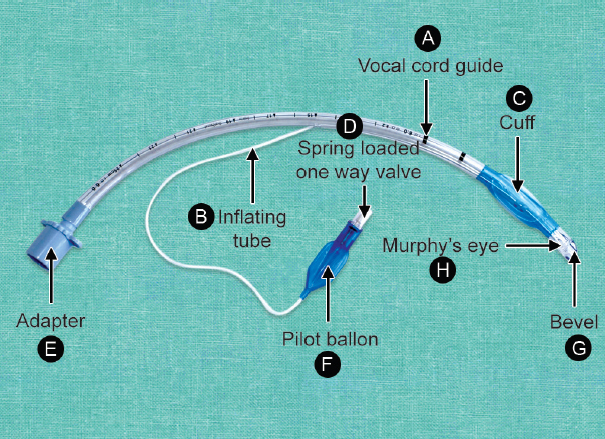
| b. | A: vocal cord guide (It is a solid black line. It is recommended that the ETT should be advanced until the line is visible at the level of vocal cords as a guide for its optimal placement); G: beveled tip (this type rather than the completely rounded tip, ensures easy visualization and separation of vocal cord, less traumatic and also the opening diameter is increased making it less likely to be occluded by secretions); H: Murphy’s eye (ensures ventilation still occurs even if the primary beveled opening gets occluded). |
| c. | C: cuff. This provides a seal within the airway preventing leak and microaspiration. This is of two types: high-volume low pressure and low-volume high pressure. |
| d. | D: Spring-loaded valve (The cuff is inflated through a spring-loaded valve); F: Pilot balloon (Valve is attached to a pilot balloon which allows visual and tactile confirmation of the inflation of cuff). |
| e. | Depth of insertion of ETT (in cm) is determined by age in years/2 + 12 |
| f. | Inspection of chest rise, auscultation of breath sound, mist formation in ETT, clinical improvement, X-ray or USG visualization of ETT, end tidal CO2 35–45 mm Hg. The gold standard method is end tidal CO2 measurement. |
THG38-013
A 1-month-old male child was brought by the mother with complaints of (c/o) progressive pallor noticed since the past 10 days. She has also noticed yellowish discoloration of the eyes, palms, and soles and decreased activity since last 4 days.
a. What is your likely diagnosis?
b. What is the flow cytometry test performed in the disease?
c. What is the molecular defect associated with the disease?
d. What is the dreadful complication associated with a viral infection in the disease (name the complication and the virus causing it)?
e. What is the mode of inheritance of the disease?
Answer
| a. | Hereditary spherocytosis (HS) |
| b. | EMA (eosin-5-maleimide) |
| Binding of fluorescence labeled EMA to band 3 and other membrane proteins is decreased in HS erythrocytes. This is an easy test to perform with good diagnostic sensitivity and specificity. | |
| c. | The most common molecular defects in HS are abnormalities of ankyrin and spectrin. |
| d. | HS patients are prone to aplastic crisis due to parvovirus B19 infection. During these crises, there is profound anemia, high-output heart failure, cardiovascular collapse, and death. |
| e. | Autosomal dominant |
THG38-014
A 4-year-old developmentally normal female child brought by her parents with c/o vomiting and altered sensorium. She had a mild trauma 2 days back. Now presenting with a hematoma at the site of injury. On enquiring father had prolonged history of bleeding while undergoing a major surgery. Laboratory values included showed normal coagulation profile and normal platelet count.
a. What is your diagnosis leading to this present complication?
b. What is the confirmatory next step of investigation to arrive at your diagnosis?
c. How to manage this acute complication?
d. What are the extra-hematological manifestations of the above discussed diagnosis?
e. Treatment recommend for this condition and prophylaxis protocol followed?
Answer
| a. | Factor 13 deficiency leading to intracranial hemorrhage |
| b. | Factor 13 assay |
| c. | FFP, cryoprecipitate, factor 13 concentrate if available. |
| d. | Delayed umbilical cord separation, poor wound healing and recurrent miscarriages |
| e. | For bleeding or major surgery—20–40 U/kg of factor 13 concentrate. Recombinant A subunit protein is also available for factor 13 A subunit deficiency. |
| Prophylaxis—because of high prevalence of intracranial hemorrhage factor 13 concentrate—20–40 U/kg every 4 weeks in patients with less than 10% of normal activity |
THG38-015
Q38.15
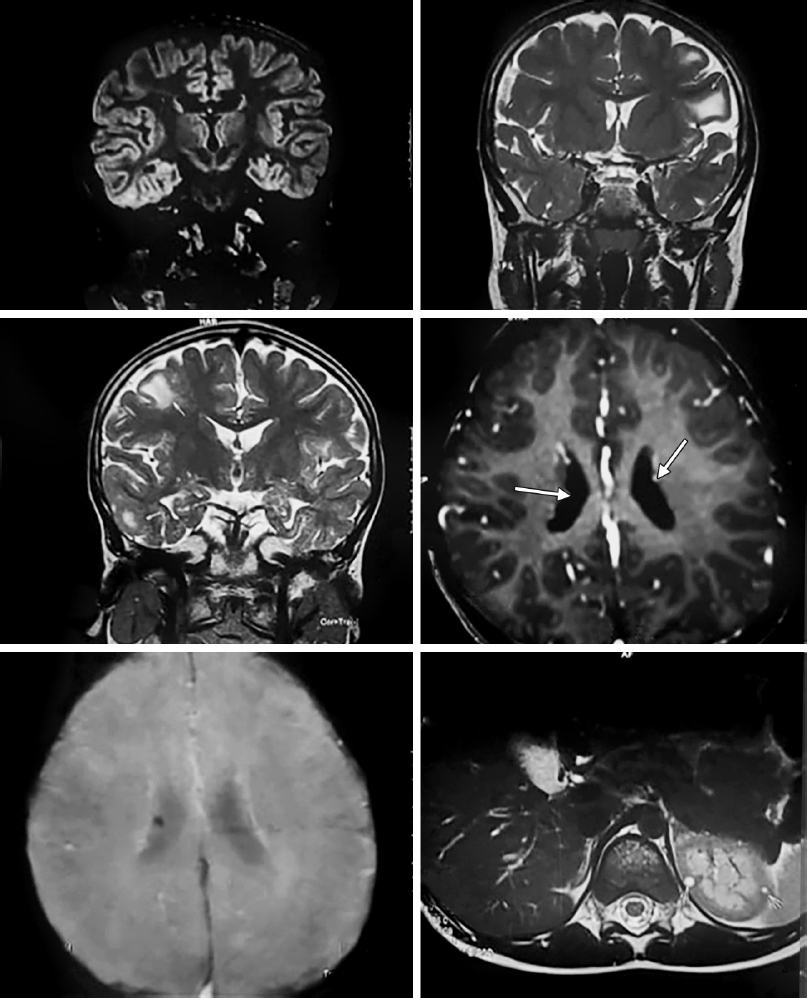
a. What does the magnetic resonance imaging (MRI) show and name the condition associated with it?
b. What are the genetic foci of the condition and its chromosomal location?
c. What are the other features of the disease (name any four)?
d. What are the differential diagnosis (DDs)?
e. What is the drug of choice when it is associated with West syndrome?
Answer
| a. | Subependymal nodules seen in tuberous sclerosis |
| b. | TSC1 gene located on chromosome 9q34 and TSC2 gene located on chromosome 16p13 |
| c. | Cortical dysplasia, subependymal giant cell astrocytoma, facial angiofibromas, and ungual fibromas |
| d. | Neurofibromatosis, Sturge–Weber syndrome, Von Hippel–Lindau disease, and PHACE syndrome |
| e. | Vigabatrin |
THG38-016
A 10-year-old male child was brought to the outpatient department (OPD) with c/o recurrent bilateral (B/L) parotitis since the last 6 months. He had completed three courses of oral antibiotics to which there was no response. There is no history of fever or any history of local trauma.
a. What is your likely diagnosis?
b. What is the gold standard procedure for the diagnosis of the disease?
c. What are the antibodies used for the diagnosis of the disease?
d. What are the other tests used for detection of the disease?
e. What are the other differentials of the disease?
Answer
| a. | Sjögren syndrome |
| b. | Biopsy of the parotid gland or the salivary gland demonstrating foci of lymphocytic infiltration |
| c. | Anti-SSA/Anti-SSB |
| d. | Schirmer test for abnormal tear production (<5 mm of wetting of filter paper strip in 5 minutes) and rose Bengal staining for damaged ocular epithelial conjunctival and corneal cells. |
| e. | Juvenile recurrent parotitis and infectious parotitis trauma |
THG38-017
A 10-year-old girl child presents to the emergency room (ER) with c/o of vague abdominal pain over the past 4 weeks. Mother has noticed yellowish discoloration of the eyes and gross distension of the abdomen since the past 1 week. Her scholastic performance has recently showed a declining trend and she prefers to stay alone at home also.
a. What is your likely diagnosis? (please mention the other name also)
b. What is the genetic inheritance and the gene associated with the disease?
c. What are the two blood indices and the levels of the same used for the diagnosis of the disease?
d. What is the biochemical evidence of the disease?
e. What is the treatment of choice of the disease?
Answer
| a. | Wilson’s disease (hepatolenticular degeneration) |
| b. | Autosomal recessive disorder and ATP7B gene located on the chromosome 13 |
| c. | Serum ceruloplasmin (<20 mg/dL) and serum copper and urinary copper excretion (>1.6 µmol/L) and >100–1,000 µg/day |
| d. | Hepatic copper content >250 µg/g dry weight |
| e. | D-penicillamine 20 mg/kg/day, triethylenetetramine dihydrochloride (trien, TETA, and trientine) at a dose of 20 mg/kg/day |
| Other agents are ammonium tetrathiomolybdate and zinc |
THG38-018
A 13-year-old adolescent girl brought to ER with acute onset breathlessness, history of vomiting, and fever for 1 day. On examination, she is verbally responsive; Her heart rate (HR) is 124 beats/min, respiratory rate (RR)—32 breaths/min, effortless tachypnea was present, blood pressure (BP)—100/60 mm Hg, peripheral pulses well felt, and weight of the child is 35 kg.
a. What are the metabolic abnormalities noted here?
b. Calculate the fluid management to be given.
c. Calculate expected pCO2.
d. State the acid–base disorder noted.
e. Calculate delta anion gap, delta bicarbonate, and delta ratio.
f. Calculate corrected Na+ levels
g. Write the formula for calculating plasma osmolarity.
Answer
| a. | Metabolic abnormalities: Hyponatremia, hyperglycemia, ketosis, acidemia, and low bicarbonate levels |
| b. | Normal saline (NS) bolus to be given over 1 hour = 10 mL/kg = 350 mL over 1 hour |
| Fluid calculation: Dehydration correction and maintenance fluids to be given [(dehydration correction fluid + maintenance fluids over 48 hours) – NS bolus over 1 hour]/48 hours |
| = | (8.5 × 10 × Weight (35) + 1,800 ×2)48 – 350 (assuming child requires 8.5% correction) |
| = | 129 mL/hour of NS |
| c. | Expected pCO2 = [(1.5 × Serum bicarbonate) + 8] ± 2 |
| = | [(1.5 × 2) + 8] +/- 2 |
| = | 9 – 13 (range) |
Here, pCO2 = 8
| d. | In this case, pH↓ and pCO2↓ are low so it is metabolic acidosis. |
| e. | Anion gap = Na+ – Cl– + HCO3 – |
= 132 – (103 + 2)
= 27 (high anion gap metabolic acidosis)
Delta AG = AG – 12
= 27 – 12 = 15
Delta HCO3 = 24 – HCO3 = 24 – 2 = 22
Delta ratio = Delta AG/Delta bicarbonate
= 15/22 = 0.68
| (Normal anion gap metabolic acidosis + High anion gap metabolic acidosis) | |
| Sodium levels to be corrected in case of hyperglycemia. | |
| f. | Corrected Na+ = Measured Na+ + 2 [(plasma glucose – 100)/100] |
= 132 +
= 138
| g. | Serum osmolality = (2 × Na+) + (BUN/2.8) + (glucose/18) |
THG38-019
A 2-year-old child came with c/o fever for 2 days, c/o cough, and cold for 2 days. On examination, child is irritable, consolable, pallor present, HR—130 beats/min; RR—28 breaths/min; capillary refill time (CRT) <2 seconds, and pulses well felt. Blood investigations shows:
a. Identify the abnormalities.
b. Calculate Mentzer index and give the interpretation.
c. Calculate the reticulocyte index when reticulocyte % is 4.0 and PCV is 29.0.
d. Calculate the absolute neutrophil count when % of bands is 3 and % of polymorphs is 22 and WBC count is 4,000; Interpret the result.
e. Calculate the corrected erythrocyte sedimentation rate (ESR) when ESR = 35 and hematocrit (HCT) = 29?
Answer
| a. | Abnormalities: Anemia, macrocytosis, and high RDW |
| b. | Mentzer index = MCV/RBC = 69.7/4.28 = 16.2 |
| If Mentzer index is >13 – iron deficiency anemia | |
| If Mentzer index is <13 – thalassemia minor/major | |
| c. | Reticulocyte index |
= Reticulocyte percentage × 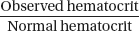
= 4 × (29/35) × 1/2
= 1.64
| (µ is maturation factor of 1–3 related to severity of anemia) | |
| d. | Absolute neutrophil count |
| = (Percentage of bands + Percentage of Polymorphs) × WBC count/100 | |
| = [(3 + 22) × 4,000)]/100 = 1,000 | |
| e. | Corrected ESR = [ESR – (Standard HCT – Observed PCT) × 1.75] |
= [35 – (35 – 29) × 1.75]
= 24.5
THG38-020
A 12-year-old developmentally normal female child, known case of (k/c/o) wheezer diagnosed with asthma on irregular controller therapy visits ER with c/o cough and cold 1 week, fever for 1 day, and history of fast breathing for 2 hours. She was alert, barely speaks few words, and tachypneic. Her HR was 140 beats/min and RR— 44 breaths/min. Suprasternal and intercostal retractions were seen. SpO2 was 89% in room air; peripheral pulses felt; BP—100/70 mm Hg; RS—B/L wheeze+
a. Calculate the alveolar arterial oxygen difference (AaDO2) gradient. Interpret the result.
b. Name two acute conditions with elevated AaDO2 gradient and respiratory acidosis.
c. What is oxygenation index calculation?
d. When is it considered as severe hypoxemic respiratory failure?
e. In what condition, AaDO2 gradient is normal in spite of hypoxemia?
Answer
| a. | AaDO2 gradient calculation: |
| Step 1: |
| • | Calculate pAO2 (alveolar oxygen tension), i.e., |
| pAO2 (alveolar oxygen tension) = [FiO2 (760 – 46)] – [paCO2/R]; where, 760 mm Hg is barometric pressure and 46 is water vapor pressure; R is respiratory quotient, i.e., 0.8 and FiO2 in inspired air is 0.21 | |
| Substituting the values pAO2 = [0.21 (760 – 46) – 50/0.8] | |
| pAO2 = 87.4 |
Step 2:
| • | Determine paO2 (arterial oxygen pressure) from arterial blood gas (ABG) = 68 |
Step 3:
| • | AaDO2 gradient = pAO2 – paO2 = 87.4 – 68 = 19.4 (elevated) |
| b. | Mostly elevated in acute exacerbation of wheeze, obstruction, and pneumonia because of V/Q mismatch |
| c. | OI = (FiO2 × Mean airway pressure × 100)/paO2 |
| d. | If OI >25—severe hypoxemic respiratory failure |
| e. | In hypoventilation, paCO2 may be elevated to make the gradient normal—occurs in central respiratory center depression—due to (d/t) trauma/encephalitis. |
THG38-021
A 2-year-old boy admitted and treated for severe burns. He suddenly develops tachypnea and respiratory distress progressively worsens. Chest X-ray shows air bronchogram, pleural effusion, and atelectasis. Computed tomography (CT) shows ground glass opacification and air bronchogram. VBG shows paO2 = 41, pH = 7.4, pCO2 = 32 mm Hg, and HCO3 = 21; 2D echo did not show any major abnormalities.
a. What is the complication observed postburns here?
b. What is oxygenation criteria formula used to derive at the diagnosis of the above complication?
c. What are lung protective strategies to be followed if considering for mechanical ventilation?
d. With what value of oxygen index (OI), extracorporeal membrane oxygenation (ECMO) can be considered in such situation?
Answer
| a. | Acute respiratory distress syndrome (ARDS) |
| b. | PaO2/FiO2 should be <200; here it is 190. |
| c. | VT (tidal volume) 6 mL/kg |
| Maintain FiO2 <0.6 accept pCO2 if pH is between 7.15 and 7.2; PEEP from 10 to 12 mm Hg | |
| d. | If OI >40, ECMO to be considered. |
THG38-022
A 7-month-old male infant recently weaned off to complementary food has come with c/o loose stools >20 episodes/day, vomiting >10 episodes/day, fever for 1 day, and bad child rearing practices present. On examination, child is lethargic, HR 150 beats/min, RR 24 breaths/min, peripheral pulses 1+. Moderate-to-severe dehydration signs present, BP—70/50 mm Hg, urine output <0.5 mL/kg/hour in 12 hours; his laboratory values show urea 155 mg/dL, serum creatinine 0.8 mg/dL, HCO3 – = 10 mEq/L, Na+—148 mEq/L, K+—3.4 mEq/L, Cl– = 110 mEq/L; urine sodium = 143 mEq/L, urine creatinine = 0.7 mEq/L; anthropometry: weight and height of the child was 7.0 kg and 66 cm respectively.
a. Calculate fractional excretion of sodium (FeNa)? Interpret the result?
b. Calculate estimated glomerular filtration rate (eGFR)?
c. How would you expect the urine osmolality to be in this scenario? Increased/normal/low?
d. Which stage of acute kidney injury (AKI) does this child fall according to kidney disease improving global outcomes (KDIGO) classification?
Answer
| a. | FeNA =  |
= 
| FeNa <1 = Prerenal AKI | |
| FeNa >1 = Intrinsic AKI | |
| b. | eGFR = 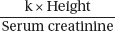 |
= 0.55 × 
| (k = 0.55 in children) | |
| c. | Increased |
| d. | Stage 2 |
THG38-023
A 31-week-old baby boy delivered by emergency lower segment cesarean section (LSCS) cried immediately after birth. The baby had a respiratory distress syndrome (RDS) score of 6 and was started on bubble continuous positive airway pressure (CPAP). Chest X-ray showed ground glass appearance, was not improving even after 4 hours of CPAP [FiO2: 40% and positive end-expiratory pressure (PEEP): 6].
a. What is the next line of management?
b. What is this technique called? What are the newer modalities?
c. What are the indications for the above procedure?
d. What are the complications for the above procedure?
Answer
| a. | Surfactant replacement therapy |
| b. | INSURE technique. |
| Other modalities: MIST (minimally invasive surfactant therapy) or LISA (less invasive surfactant administration) | |
| c. | Respiratory distress syndrome, meconium aspiration syndrome, pneumonia, congenital diaphragmatic hernia, and pulmonary hemorrhage. |
| d. | Complications: Airway obstruction, air leak, and hemorrhagic pulmonary edema |
THG38-024
A 7-month-old baby girl came to the ER with hypotensive shock. The intravenous (IV) line could not be secured after multiple attempts. The shock was managed after this procedure.
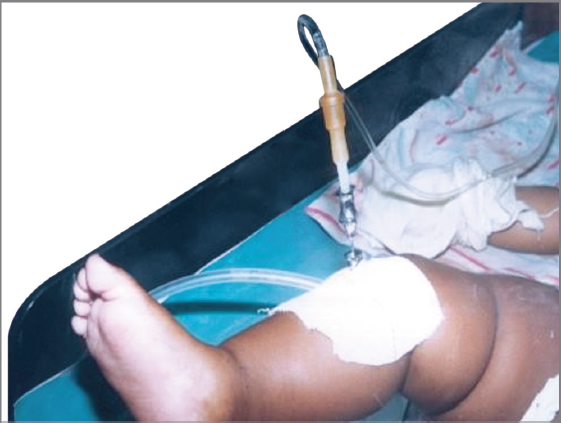
a. Identify this procedure.
b. What are the possible sites for this access?
c. What are the indications?
d. What are the contraindications?
e. What precautions will you take while administering fluid by this route?
Answer
| a. | Intraosseous vascular access |
| b. | Sites: Distal femur/proximal tibia/distal tibia |
| c. | Indications are: |
| • | Unable to obtain venous access or delayed venous access |
| • | Immediate vascular access is required. |
| • | Blood samples for laboratory analysis |
| • | Useful in radiological contrast studies |
| d. | Contraindications: Peripheral line access present, burn site, fracture of the bony site, cellulitis or infection of site, previous IO attempted site, and recent orthopedic surgery |
| e. | Always flush after administering fluids |
THG38-025
Q38.25
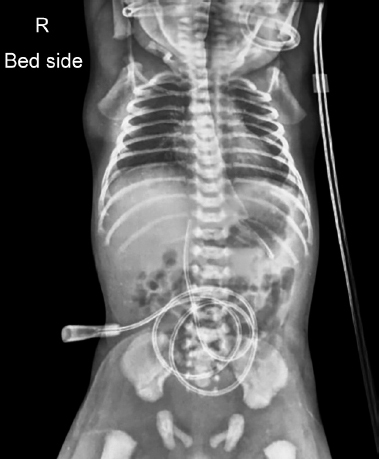
a. What is the catheter shown in the picture?
b. What are the indications for this procedure?
c. How long the tube can be placed?
d. Name any four complications.
Answer
| a. | Umbilical venous line |
| b. | Indications: |
| • | For securing emergency vascular access during resuscitation at birth |
| • | For central venous monitoring |
| • | Exchange transfusion |
| • | Administration of total parenteral nutrition (TPN), blood products, and hyperosmolar solutions |
| c. | 10 days |
| d. | Infections, e.g., sepsis, cellulitis, endocarditis, liver abscess |
| i. | Thrombosis/embolism in lungs, liver, or systemic circulation |
| ii. | Line malposition: Cardiac arrhythmia, pericardial effusion, cardiac tamponade, and necrotizing enterocolitis (NEC). Cardiac complications are rare, but life-threatening complications. |
| iii. | Blood loss |
| iv. | Catheter breakage |
THG38-026
A 7-year-old boy child presented to ER with alleged history of road traffic accident (RTA) due to two-wheeler collision. On arrival, he was pain responsive, had cold peripheries, BP 80/50 mm Hg, HR 150 beats/min, RR 10 breaths/min, SpO2 85% RA, air entry decreased over right axillary, and infrascapular region. IV line was secured and bolus was given. He was intubated and shifted to pediatric intensive care unit (PICU) for further management. X-ray chest was taken.
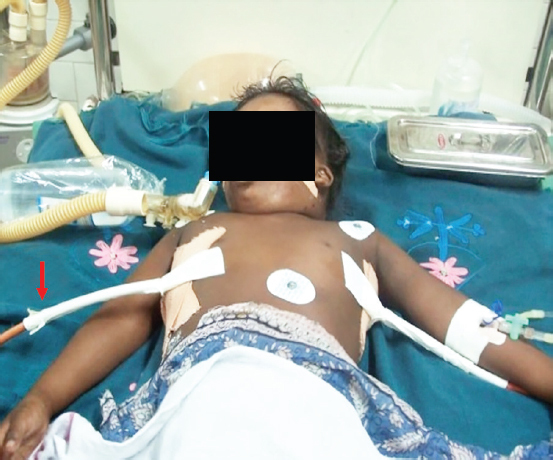
a. What is the probable diagnosis?
b. What bedside procedure has been done in this picture?
c. What are the indications for this procedure?
d. What are the contraindications of this procedure?
e. When will you discontinue this procedure?
Answer
| a. | Pneumothorax |
| b. | The next line of management is intercostal drainage |
| c. | Pneumothorax, hemothorax, pleural effusion, and empyema |
| d. | Pulmonary adhesions from previous surgery, pulmonary disease, trauma, coagulopathy, and diaphragmatic hernia |
| e. | (i) No pneumothorax on chest X-ray on water seal and (ii) No air leak for 24 hours. |
THG38-027
A 5-year-old boy presents with fever for 3 days and severe fatigue. On physical examination, he was febrile with HR 122 beats/min, RR 32 breaths/min. He was noticed to have marked pallor on his lips and palpebral conjunctiva. He has B/L cervical lymphadenopathy. Per abdomen examination revealed a palpable spleen 3 cm below his left costal margin. Investigations revealed Hb 5 g/dL, platelet 30,000, and Tc 3,500. Peripheral smear showed the presence of blast cells.
a. What will be the investigative procedure? Name any two indications.
b. Mention the sites where this procedure can be performed.
c. What complications can you expect from the above procedure?
d. What is dry tap? Name any two conditions where this can be seen?
Answer
| a. | Bone marrow aspiration and biopsy. |
| Indications: |
| • | To investigate children with abnormal peripheral blood findings, like pancytopenia, atypical cells, or blasts, etc. |
| • | Malignant hematological disorder, hypoplastic anemias, and inherited bone marrow failure syndrome |
| • | To investigate hypersplenism, mediastinal or abdominal mass; for follow-up after chemotherapy or hematopoietic stem cell transplantation HSCT. |
| b. | (i) Posterior superior iliac spine, (ii) anterior iliac crest, (iii) sternum, and (iv) tibial tuberosity |
| c. | Excessive bleeding/infection/complications to IV sedation like allergic reaction |
| d. | Dry tap: A failure to obtain any sample of hematopoietic tissue |
| Conditions: Myelofibrosis, carcinomatous infiltration of marrow, aplastic anemia, and at times in leukemia. |
Figure Sources
All the figures are from author’s personal collection.