VVK09-001
Write eight distinguishing features between gray and white matter diseases of brain.
Answer
| Gray matter disease | White matter disease |
|---|---|
| Dementia: Early | Late |
| Seizures: Early prominent | Late |
| Disturbed tone, gait, reflexes : Uncommon late | Most prominent feature |
| Basal ganglia signs symptoms: Present | Absent |
| Retinitis pigmentosa: May be present | Absent |
| MRI: Cortical atrophy, basal ganglia disease | Good yield for white matter |
| disease | |
| ERG: May be abnormal | Normal |
| VER/BERA: Normal | Abnormal |
VVK09-002
A 4-year-old boy is brought by the parents with history that the school has complained that he is aggressive, cannot sit in one place, is forgetful, restless and constantly getting into fights with his friends. At home, the parents say that he is constantly on the move and even does not watch the television continuously for more than a few minutes. The child had a normal birth and developmental milestones.
a. What is the diagnosis?
b. Give three cardinal features of this condition.
c. Name two treatment options.
Answer
- a. Attention deficit hyperactivity disorder.
- b. Inattention, hyperactivity and impulsivity.
- c. • Medications (methyl phenidate, amphetamines, fluoxitine, atomoxitine)
- • Behavior therapy.
VVK09-003
A three-year-old male child is brought to you by the mother with the concern that he has been having trouble running and keeping up with his peers. She also states that he had been slow attaining other major motor milestones like walking and climbing stairs. The child is in the exam room sitting on the floor. You ask him to get up and he proceeds to arise by using his arms to climb up his legs and body.
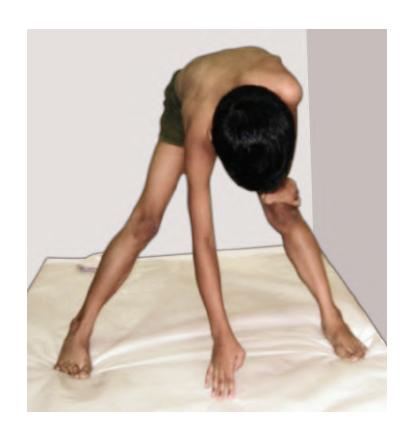
a. Name the sign.
b. Name three conditions in which this sign can be seen.
c. Name three investigations in sequence of importance.
d. What is the mode of inheritance and the locus of abnormal gene in the most common cause for this condition?
Answer
- a. Gower's sign.
- b. Duchenne muscular dystrophy, spinal muscular atrophy type III, limb girdle dystrophy, Becker muscular dystrophy, myopathy.
- c. Dystrophin gene study, electromyograph/nerve conduction velocity, Creatinine phosphokinase levels.
- d. X-linked recessive/Xp 21 ( for DMD).
VVK09-004
Parents bring a 1½-year-old infant for routine evaluation. He is thriving well and gross and fine motor milestones are normal for his age. The parents are concerned that the child has not started speaking as yet. A previously consulted pediatrician diagnosed the child to be autistic. On further questioning and examination, the infant is not using bisyllables like 'mama' and 'dada'. He started cooing, laughing, and babbling at the appropriate ages, but the babbling is disappearing now. He responds to a command with gestures. The child interacts with his parents and asks for objects by pointing to them. He was born at 32weeks of gestation, and required care in the NICU, during which he received a course of antibiotics and phototherapy.
a. What is the likely diagnosis?
b. Do you agree with the diagnosis of autism? Justify your answer.
c. What is your assessment? Name two significant points in the history that could suggest an etiology for your diagnosis.
d. What investigations will you do on the child?
Answer
- a. Hearing loss.
- b. No. The child is interacting with parents, pointing at objects.
- c. The infant has hearing loss. The significant points in the history include the antibiotics received (aminoglycosides), and bilirubin-induced brain injury. Other factors could be meningitis, prematurity, excessive noise in NICU (not mentioned in question).
- d. Play audiometry, BERA, impedence audiometry.
VVK09-005
A 6-year-old boy and his parents come for an evaluation of a "behavioral problem". The child's teacher insists that he needs medical consultation because he is very disruptive in class. He keeps running out of class and does not concentrate on his classwork. She also states that he is careless in his work, has difficulty waiting his turn in group situations and talks excessively. The parents feel that he is just an active boy with "a lot of curiosity". They state that he can watch TV for a long period of time without problems and that other children have trouble playing with him because he "likes to be the leader". He is an only child.
a. Is the child normal? If not, what is he suffering from?
b. Name three clinical subtypes of this condition.
c. Name three drugs used in the management of this condition.
Answer
- a. Attention deficit hyperactivity disorder.
- b. i. Attention—deficit/hyperactivity disorder, predominantly inattentive type.
- ii. Attention—deficit/hyperactivity disorder, predominantly hyperactiveimpulsive type.
- ii. Attention—deficit/hyperactivity disorder, combined type.
- c. Methyl phenidate, amphetamines, fluoxitine, atomoxitine.
VVK09-006
A 4-month-old baby is brought with delayed developmental milestones. Clinically, the infant is alert, interacting with the examiner and mother. Neurological examination shows the infant to be floppy with generalized hypotonia affecting the trunk and limbs. Deep tendon jerks are not elicited and there is CTEV of the left foot. Fasciculations are noted on the tongue.
a. What is the most likely diagnosis?
b. Name two definitive diagnostic tests for this condition.
c. What is the mode of inheritance in this condition?
d. Give 4 subtypes of this diagnosis.
Answer
- a. Spinal muscular atrophy type I (Werdnig Hoffman disease).
- b. Electromyography, muscle biopsy, genetic analysis for SMN gene.
- c. Autosomal recessive.
- d. Type I—severe infantile form (Werdnig Hoffman disease).
Type II—late infantile and more slowly progressive.
Type III—chronic or juvenile form ( Kugelberg Welander disease).
Type 0—severe fetal form; usually lethal in utero*.*
VVK09-007
A 4-month-old male infant, born of a consanguineous marriage to a primigravida mother, is brought to hospital with delayed milestones and feeding difficulty since birth. Antenatal period was uneventful, except that the mother did not perceive strong fetal movements. There was also history of polyhydramnios. Clinically, there is generalized hypotonia, with absent deep tendon jerks. The testes are undescended. Rest of the systemic examination is normal.
a. What would be the probable diagnosis?
b. Name 3 specific types of this disease.
c. What is the basic pathology causing this condition?
d. What would be the line of management for this child?
Answer
- a. Congenital myopathy.
- b. Myotubular myopathy. Nemaline rod myopathy. Central core disease.
- c. Maturational arrest of fetal muscle during myotubular stage of development.
- d. (i) Confirm the disease, (ii) Physiotherapy, (iii) NG feeds, (iv) Genetic counseling.
VVK09-008
An 8-month-old infant is brought to hospital with complaints of excessive irritability, high-grade fever, vomiting and altered sensorium since past 18 hours. The infant had a generalized seizure 15 minutes ago. Clinical and laboratory investigations confirm meningitis. The microbiology laboratory returns the report of H. influenza meningitis on CSF. The child's paternal grandfather, under treatment for multiple myeloma, resides in the same house.
a. What is the prognostic significance of seizures in bacterial meningitis?
b. The commonest sequalae of bacterial meningitis is_________________.
c. What would be your advice to the child's parents regarding prevention of spread of this disease to other members in the household?
d. Define household contact.
Answer
- a. Prognosis related to generalized seizure depends upon time of onset and duration. Seizures persisting after 4 days into the course of meningitis and which are difficult to treat have poor neurological prognosis.
- b. Sensorineural hearing loss.
- c. Rifampicin prophylaxis for family members @ 20 mg/kg (max 600 mg) once daily for 4 days for all household members.
- d. Household contact: A household contact is one who lives in the residence of the index case or who has spent a minimum of 4 hours with the index case for at least 5 of the 7 days preceding the patient's hospitalization.
VVK09-009
A 3-year-old female has been brought with history of low-grade fever for 2 weeks with headache, lethargy and projectile vomiting. Today she had a focal tonic-clonic seizure with loss of consciousness. She was earlier on treatment for a heart condition. Clinically, the child is comatose, febrile and her blood pressure is normal. A harsh pan systolic murmur is heard best at left sternal border. Fundus examination reveals bilateral papilledema. Reflexes are exaggerated on the left side of the body and the left plantar reflex is extensor.
a. What is the most probable diagnosis?
b. What is the etiological agent most likely responsible for the child's neurological condition? What is the likely cardiac condition?
c. What investigation would confirm the neurological diagnosis?
d. What is the first line treatment?
e. Is surgery required for the neurological disorder? List the indications for surgical intervention.
Answer
- a. Cerebral abscess (right sided).
- b. Streptococcus pyogenes (Group A, B) S. milleri, S. pneumonia, S. fecalis. Cyanotic heart disease with right to left shunt.
- c. Contrast CT scan or MRI head.
- d. In the presence of cyanotic congenital heart disease: ampicillin + sulbactam with or without metronidazole + 3rd generation cephalosporin.
- e. CT guided aspiration if: encapsulated abscess, raised intracranial pressure, mass effect. Surgical excision if: Abscess > 2.5 cm in diameter, gas in abscess, multiloculated lesion, lesion in posterior fossa, fungus isolated from abscess.
VVK09-010
Male infant aged 7-month-old was brought with history of delayed developmental milestones and increased precordial activity, noted since 3 months of age. Clinically, the infant had tachycardia, bounding pulses, blood pressure 104/36 mm Hg, head circumference of 51 cm, with evidence of UMN involvement of the lower limbs. Cardiac examination revealed an ill
sustained heaving apex in the left fifth intercostal space in the midclavicular line. Heart sounds were normal and no murmur was heard. Liver was palpable 4.5 cm below the costal margin. MR angiography is shown below.
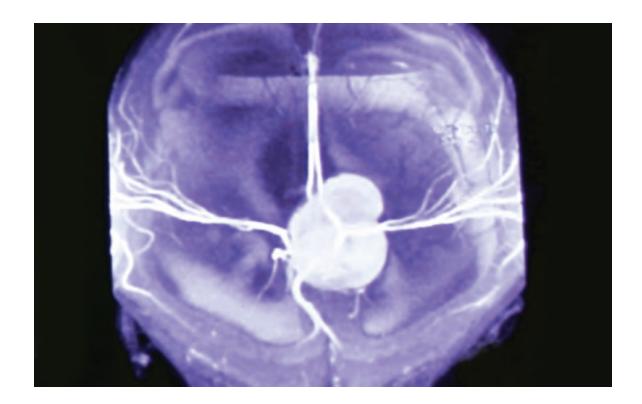
a. What is the most likely cause of the large head?
b. What clinical sign (not mentioned above) would give a clue to the diagnosis?
c. Name three signs seen on plain radiograph of the skull in hydrocephalus.
d. Name six causes of a large head.
Answer
- a. Vein of Galen malformation.
- b. Cranial bruit on auscultation.
- c. (i) Sutural separation (ii) Erosion of the posterior clinoid process (iii)Beaten silver appearance (increase in convolutional markings).
- d. (i) Rickets (ii) Osteogenesis imperfect (iii) Epiphyseal dysplasia (iv)Chronic subdural hematoma/effusion (v) Megalencephaly due to Tay-Sachs disease,
gangliosidosis, mucopolysaccharidosis (vi)Aminoacidurias (maple syrup urine disease) (vii) Leucodystrophies (metachromatic leucodystrophy, Alexander disease, Canavan disease) (viii) Cerebral gigantism (ix) Familial megalencephaly (x) Chronic anemia.
VVK09-011
Female neonate aged 3 days, born at home following an unbooked pregnancy to a primigravida mother was brought to the hospital with a mass on the back. Clinically, a reddish leaking lesion was seen on the lumbar region. The lower limbs were hypotonic and areflexic and the anal opening was patulous. There was a constant dribble of urine. Response to painful stimuli could not be elicited below the level of L1. Craniospinal MRI ruled out the presence of hydrocephalus.
a. What is the recurrence risk of this lesion in the next child? If a mother has had two such children in the past, what is the recurrence risk?
b. Name the drug and dosage schedule required to prevent the recurrence of this lesion in the next pregnancy.
c. The long-term neurological outlook for the neonate, in case of successful surgery is likely to be:
i. Ambulant.
d. Name the associated central nervous system defect which may be present and name its components.
Answer
- a. 3–4%, 10%.
- b. Folic acid, 4 mg daily beginning one month prior to planned conception.
- c. Wheelchair bound.
- d. Chiari defect type II—Herniation of cerebellar inferior vermis, pons and medulla through foramen magnum, hydrocephalus, elongation of 4th ventricle, kinking of brainstem.
VVK09-012
A two-year-old, previously asymptomatic child is rushed to the emergency department with history of loss of consciousness and generalized tonic, clonic seizures lasting for 2 minutes. The child had been having running nose since one day and high-grade fever since 4hours. Clinically, the child is drowsy, with no neck stiffness, rash, or neurological deficit. Other than a congested throat, rest of the clinical examination is normal.
a. What is the indication for doing a lumbar puncture in such a case?
b. For recurrent febrile seizures, which of the following have been proved to prevent recurrence of febrile seizures: (you may select more than one answer).
i. Antipyretics at the time of fever.
v. Oral diazepam at the time of fever.
c. What are the diagnostic criteria for complex febrile seizures?
d. Name three factors associated with increased risk of recurrence of febrile seizures.
Answer
- a. Lumbar puncture should be performed if:
- i. The infant is less than 12 months of age.
- ii. Consider LP if the infant is between 12 and 18 months of age and seizures are complex or sensorium remains clouded.
- iii. Meningitis cannot be excluded on clinical grounds.
- b. (iv,v) Long-term phenobarbitone and oral diazepam at the time of fever.
- c. Complex partial seizures:
- i. Duration > 15 minutes.
- ii. Repeated convulsions in 24 hours.
- iii. Focal seizure activity or focal findings during the postictal stage.
- d. Factors associated with increased risk of recurrence.
- i. Age < 12 months.
- ii. Lower temperature at onset of seizures.
- iii. Positive family history of febrile seizures.
- iv. Complex febrile seizures.
VVK09-013
A 7 ½-year-old girl is brought with history that she has started having episodes of inattentiveness since 2 weeks. The episodes last 10 to 15 seconds and occur several times a day. There is no history of fall, convulsive movements, tongue bite or bladder/bowel incontinence during these periods.
a. What is your diagnosis?
b. Name one biochemical test to differentiate true seizure from a pseudoseizure.
c. Name one maneuver that is likely to precipitate the episode.
d. What is the characteristic EEG finding in this disorder?
Answer
- a. Simple absence seizure.
- b. Serum prolactin level will be increased in a true seizure but not in a pseudoseizure.
- c. Hyperventilation for 3–4 minutes.
- d. 3 per second spike and wave pattern.
VVK09-014
A 6½-year-old boy is brought by his parents with the history that since the past six months, the child has undergone a marked behavioral change, with inattention, irritability, poor attention span and loss of scholastic skills. In addition, the child has stopped talking and is barely able to communicate his needs with gestures. The child was diagnosed as having autism by a doctor. Three months back, the child started having falls, which caused injuries to his face and hands, and in the past one week, has had two generalized tonic clonic seizures. Clinically, there is no nutritional or clinical abnormality noted on examination. MRI of the brain is normal.
a. What is the most likely diagnosis?
b. What is the diagnostic test for this condition?
c. What is the drug of choice for this condition?
d. What other medications can be used?
Answer
- a. Landau Kleffner syndrome.
- b. EEG: shows high amplitude spike and wave discharges, more apparent during non-REM sleep.
- c. Valproate is the drug of choice.
- d. Clobazam, steroids.
VVK09-015
A 10-year-old girl is brought with history of gradual loss of interest in studies, psychological withdrawal, irritability, and episodes of abnormal
behavior starting about 8 months back. Treatment from various doctors and faith healers failed to provide any relief and the child started having frequent falls and involuntary, jerky movements of the limbs and trunk. These became so frequent over the past three months and now the child is completely bedridden. Clinically, the child is afebrile, normotensive, with no pallor, jaundice or cutaneous bleed. She does not respond to verbal commands. No apparent cranial nerve deficit is seen. There are involuntary movements in the form of myoclonic jerks of the trunk. Tone is increased in all four limbs (lead pipe rigidity) and deep tendon reflexs are poorly elicited.
a. What is the likely diagnosis?
b. Name three diagnostic tests for the condition.
c. What treatment options have been studied in this condition?
Answer
- a. Subcaute scleorsing panencephalitis.
- b. i. CSF measles antibody titer > 1: 8, ii. EEG: Burst suppression pattern, iii. Isolation of virus or viral antigen on brain biopsy.
- c. Isoprinosine, interferon α2 β.
VVK09-016
A male infant aged 18-month-old is brought with history of regression of milestones and generalized seizures since the age of 1 year. The infant was well till one year of age but is now losing milestones in all sectors of development. Birth history is normal and there has been no major illness prior to one year of age. Clinically, the infant is irritable, resists handling, is pale, with few petechial spots on the abdomen and limbs. The liver is enlarged 12 cm below the costal margin and the spleen 6 cm below the costal margin. Neurologically, there is no focal deficit. Hearing, vision, fundus examination are normal. A bone marrow examination shows the presence of PAS positive staining cells.
a. What is the most probable diagnosis?
b. Other than bone marrow examination, what is the diagnostic modality?
c. What is the possible treatment and definitive cure?
Answer
- a. Gaucher disease.
- b. β-glucosidase enzyme levels in leucocytes, cultured fibroblasts.
- c. Enzyme replacement therapy (60U/alternate week) with recombinant acid β-glucosidase (imiglucerase). Bone marrow transplantation is the definitive cure.
VVK09-017
A 4½-year-old girl from Gorakhpur (Eastern UP) is brought with highgrade fever with headache of 5 days duration and altered sensorium since 2 days. Several other cases have been reported from her neighborhood recently. Since this morning, the child has had three generalized tonic clonic seizures. Clinically, the child is febrile, normotensive and has mild pallor. Neurological examination reveals bilateral sixth nerve palsy, dystonia and a coarse tremor of both upper limbs.
a. What is the most likely diagnosis?
b. Name the main transmitter of this disease to man.
c. How will you reach a diagnosis of the etiology?
d. What is the preventive measure?
Answer
- a. Japanese encephalitis.
- b. Female culex mosquito (Culex tritaeniorhynchus and C.vishnui).
- c. i. JE IgM in CSF, ii. 4 fold or greater rise in IgM/IgG, HI or neutralization tests in paired sera (acute and convalescent), iii. Detection of virus antigen or genome in tissue, blood or other body fluid by immunochemistry, immunofluorescence or PCR, iv. Isolation-tissue culture, infant mice.
- d. Vaccine in the interepidemic stage and fogging with malathion in 3 km range from the infected case.
VVK09-018
A 12-year-old boy is brought with history of progressive slurring of speech and frequent falls and clumsiness since the past 8 months. There is history of jaundice 2 years ago, that lasted for 2 months. Clinically, the child is pale, with hepatomegaly (5 cm below the costal margin). There is no jaundice or cutaneous bleed. Neurological examination shows presence of dystonia, intention tremor and dysarthria. Other systems are normal. Examination of his asymptomatic younger sister who is 6 years old, reveals hepatomegaly of 4 cm, without jaundice.
a. What is the most probable diagnosis?
b. What is the pattern of inheritance?
c. What is the test to confirm the diagnosis?
d. Name two ocular findings in this disease.
e. Name the drug and dosage used in this disease.
Answer
- a. Wislon disease.
- b. Autosomal recessive.
- c. Hepatic copper content (>250 µg/g dry weight of liver).
- d. Kayser-Fleischer ring, sunflower cataract.
- e. D penicillamine 20 mg/kg/day in two divided doses.
VVK09-019
A mother brings her 14-month-male infant with history of regression of all milestones since the past two months, following a diarrheal illness. The infant is exclusively milk fed, both from the breast and cow's milk. Clinically, the infant is conscious, pale, plump, and has sparse brownish scalp hair. Cranial nerves are normal. There is a coarse tremor of the upper and lower limbs, which disappears during sleep and a bleating cry. There is mild spasticity of all four limbs and plantars are upgoing. The MRI shows cortical atrophy.
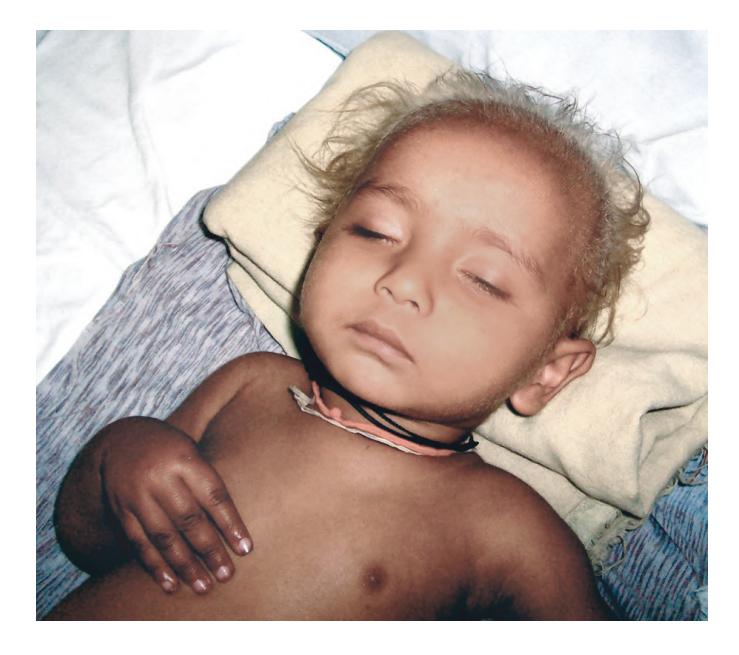
a. What is the diagnosis?
b. What is the likely peripheral smear finding?
c. What is the treatment?
Answer
- a. Infantile tremor syndrome.
- b. Macrocytic anemia.
- c. Vitamin B12.
VVK09-020
13-year-old girl is brought with history of weakness of both the lower limbs since 3 days. Initially mild, the weakness has progressed over the past three days and the child is unable to take even a few steps and is completely
bedridden. There is history of diarrhea about a month back. Clinically, the child has weakness of the lower limbs and trunk with areflexia. There is no sensory deficit but the calves and thighs are tender. Upper limbs and cranial nerves are normal.
a. What is the most probable diagnosis?
b. What is the diagnostic test for the disorder? What are the findings (give criteria).
c. What is the drug of choice and what are the indications for its use? Give the dosage schedule.
Answer
- a. Guillain Barre syndrome, postinfectious polyneuropathy.
- b. CSF: Albuminocytological dissociation. CSF protein more than twice the normal level and cells < 10/cumm.
- c. Intravenous immunoglobulin, rapidly progressive paralysis, 400 mg/kg/ day × 5 days.
VVK09-021
A 14-year-old boy has sustained injury to the neck due to a diving accident in the swimming pool. He is breathing on his own but cannot move or feel his arms or legs.
a. What is the recommended maneuver for opening the airway in neck injuries?
b. X-ray of the cervical spine shows no bony injury. Is it still possible for the child to have a spinal cord injury? Name the condition, its incidence and mode of diagnosis.
c. What is the emergency drug treatment that can be offered to this child?
Answer
- a. Jaw thrust without head tilt.
- b. Yes, SCIWORA (spinal cord injury without radiographic (bone) abnormalities), lucidence (20%), MRI of the spine.
- c. High dose methyl prednisolone within 8 hours of injury.
VVK09-022
A nine-month-old boy is taken to the Primary Health Center for a checkup and routine immunization. By mistake, the nurse gives the infant 5 mL (500,000 units) of vitamin A. One week later, the infant is brought back with features of vomiting and irritability. There is no history of fever or alteration in level of consciousness. Clinically, the physician finds a conscious infant with normal vitals, with a bulging fontanel and widening of sutures. There is no focal neurological deficit and rest of the examination is essentially normal.
a. What is the most probable diagnosis?
b. What findings do you expect the CSF to show?
c. Name three drugs that can lead to a similar clinical situation.
d. Name one complication of this disease.
Answer
- a. Pseudotumor cerebri.
- b. Normal.
- c. Nalidixic acid, doxycycline, minocycline, tetracycline, nitrofurantoin, isotretinoin.
- d. Optic atrophy, blindness.
VVK09-023
A previously well, 3½-year-old girl comes with history of sudden onset of unsteadiness while walking since 4 days. Initially, the complaint was mild but now the child is unable to walk and is reluctant to sit up in bed. There is history of fever with a rash about 2 weeks back. Clinically, the child is afebrile, normotensive, and has no neck stiffness or features of raised intracranial pressure. The cranial nerves are normal. The child has truncal ataxia. Tone is diminished in all the four limbs and there is nystagmus with fast component to the right, with past pointing, and dysarthria.
a. What is the most probable diagnosis?
b. Is there a role of CSF examination in this child? What findings do you expect?
c. What is the likely organism responsible?
Answer
- a. Acute cerebellar ataxia.
- b. CSF would show mild increase in protein, and pleocytosis, without abnormalities of sugar or culture.
- c. Varicella.
VVK09-024
This 7½-year-old girl was brought with history of delayed developmental milestones and generalized seizures. As an infant she had had myoclonic seizures.
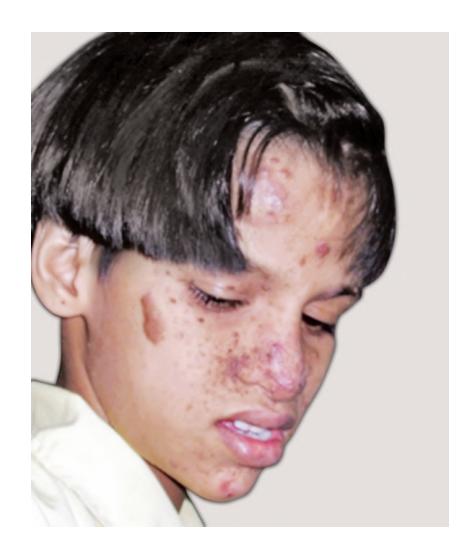
a. What is the diagnosis? What are the lesions on the face?
b. Name three other types of skin lesions seen in this condition.
c. What is the inheritance?
d. Name three organ systems other than skin and brain that may be affected.
Answer
- a. Tuberous sclerosis, adenoma sebaceum.
- b. Hypopigmented macules, shagreen patch, periungual fibromas, subungual fibromas.
- c. Autosomal dominant with variable penetrance.
- d. Retinal phakomas, renal cysts, cardiac rhabdomyoma, bone cysts, rectal polyps, dental enamel pits, gingival fibromas, nonrenal hamartomas, retinal achromic patches.
VVK09-025
Study the image of the 10-year-old child and answer the questions.
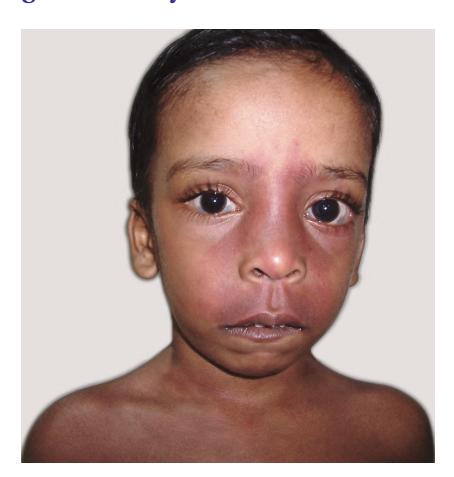
a. Name the lesion and the syndrome that it forms a part of.
b. What are the neurological morbidities of this syndrome (Name three).
c. What is the ocular complication that can accompany?
d. Name the radiological sign associated with cranial involvement.
Answer
- a. Prot wine stain, Sturge-Weber syndrome.
- b. Seizures, hemiparesis, stroke-like episodes, mental retardation.
- c. Glaucoma, buphthalmos.
- d. Intracranial calcification ("Railroad track" appearance).
VVK09-026
A 2½-year-old child is brought by the mother with history of poor development of speech. The child plays with his toys but not with other children. He also does not respond to her calls. On examination, the motor system, sensory system, hearing and vision are normal. The child is able to say a few words. He does not interact with the examiner.
a. What is the most probable diagnosis?
b. What are the three characteristic features of this condition?
c. Which part of the brain is affected in this condition?
d. What is the scale used to assess this condition?
Answer
- a. Autistic disorder.
- b. (i) Impairment in verbal and nonverbal communication, (ii) Impairment in reciprocal and social interaction, (iii) Imaginative repetitive activity.
- c. Cerebellum, reticular activating system, hippocampus.
- d. CARS (Childhood autism rating scale).
VVK09-027
Match the following.
Q 28. Study the plain CT scan film of a breastfed 3-month-old infant who was brought to the hospital with history of left-sided focal seizures.
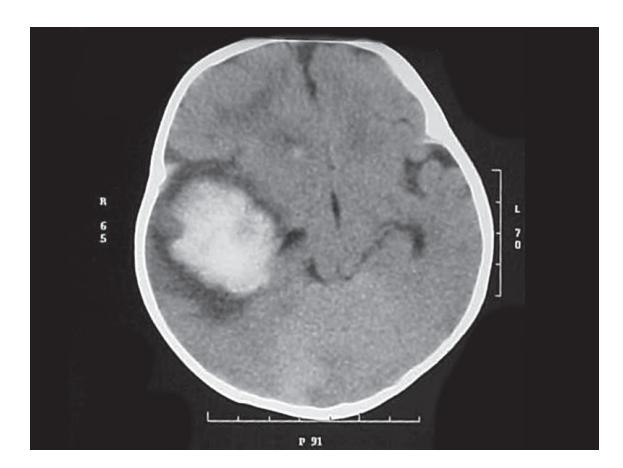
a. What is the CT scan finding suggestive of and what is the most probable diagnosis?
b. How would you confirm the etiological diagnosis? Name three tests.
c. What is the preventive measure for this condition?
Answer
| Chorea | Rapid, unsustained, irregular, purposeless, nonpatterned |
|---|---|
| movement | |
| Athetosis | Slow, coarse, writhing movement that is more pronounced |
| in the distal muscles | |
| Dystonia | Sustained, slow, twisting motion that may progress to a fixed |
| posture and can be activated by repetitive movement | |
| Tremor | Rhythmic, oscillatory movement caused by simultaneous |
| contractions of antagonistic muscles | |
| Myoclonus | Brief flexion contraction of a muscle group, resulting in a |
| sudden jerk |