MNJ21-001
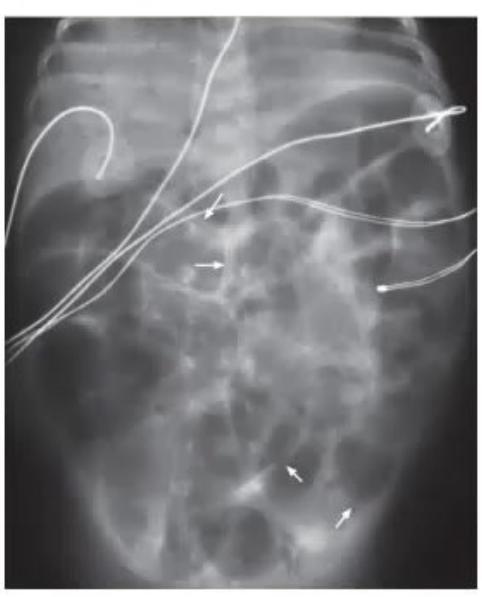
- What stage of NEC 1s depicted in the X-ray?
- What 1s the radiological feature of bell stage IIT NEC?
- Name two more conditions associated with pneumatosis intestinalis.
Answer
No model answer in source material.
MNJ21-002
A two hours old newborn admitted in NICU with complaints of severe respiratory distress soon after birth. X-ray chest was done that shown below:
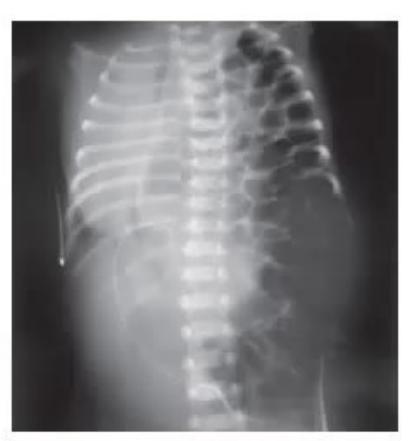
- Diagnosis of this condition.
- What are the embryologic events that lead to this development of this condition?
- What are three causes of respiratory distress in a baby born with this condition?
Answer
No model answer in source material.
MNJ21-003
Anewborn delivered to a G2P1 mother and baby have complaints of vomiting of feeding and continuous frothing from mouth. In antenatal USG polyhydramnios was present:
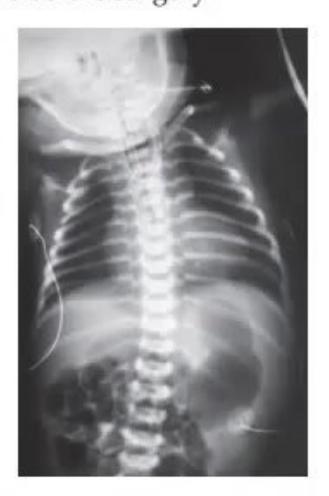
- Diagnosis the condition.
- What 1s the bad prognoshe criteria for surgery?
- What 1s the requirement of echo before surgery?
Answer
No model answer in source material.
MNJ21-004
Neonatology 275 |
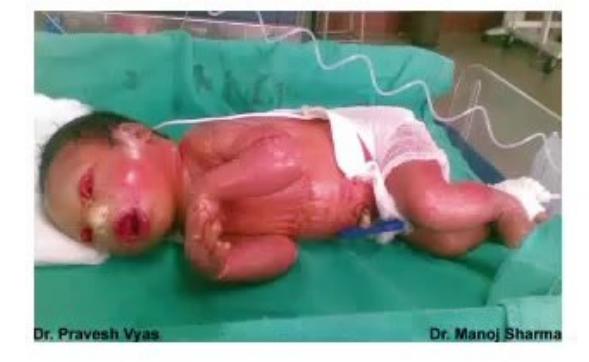
- What 1s this condition?
- Name a metabolic complication.
Answer
No model answer in source material.
MNJ21-005
-
- What other nvestigation would you advise in this case?
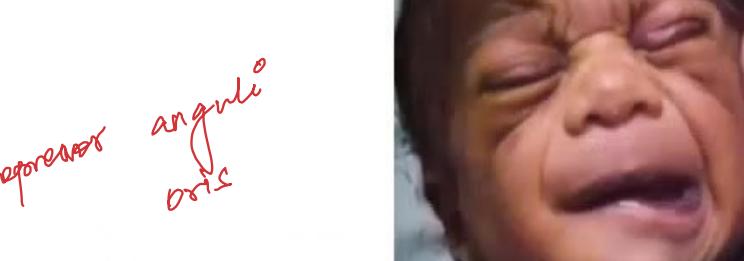
- What is the diagnosis of this condition?
- What other nvestigation would you advise in this case?
Answer
No model answer in source material.
MNJ21-006
A 14-day-old home delivered neonate is admitted with chief complaints of persistent jaundice and desquamating skin lesion of hands and feet with mucocutaneous rash. On examination, baby is found to have mild hepatosplenomegaly, diffuse lymphadenopathy. On CBC baby found to have low platelets (78,000), Coombs' negative hemolytic anemia and cries a lot on handling but is quiet when in the bed. His ophthalmoscopic finding is consistent with chorioretinitis. His X-ray is given:
- 2? What are the late manifestations of this disease (at least 5)?
276 OSCE Clinical Pediatrics ]
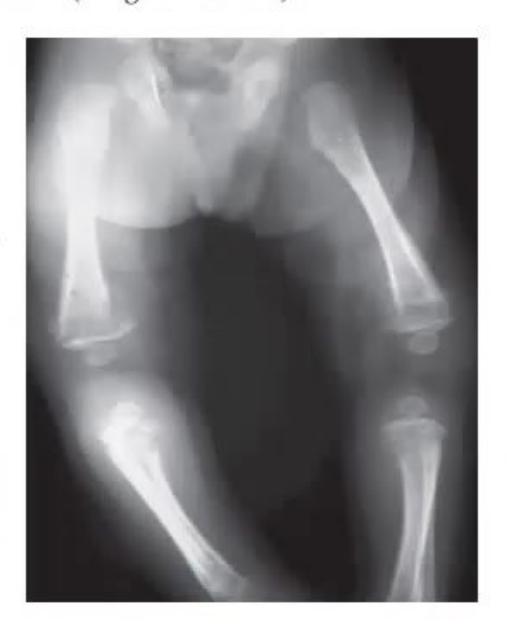
- What 1s the diagnosis?
- Treatment for this condition (drugs and doses)
Answer
No model answer in source material.
MNJ21-007
-
- After putting in a UA line, the nght lower limb appears pale What would you do?
-
- What is the level of the renal artery?
-
- How do you maintain a UA line?
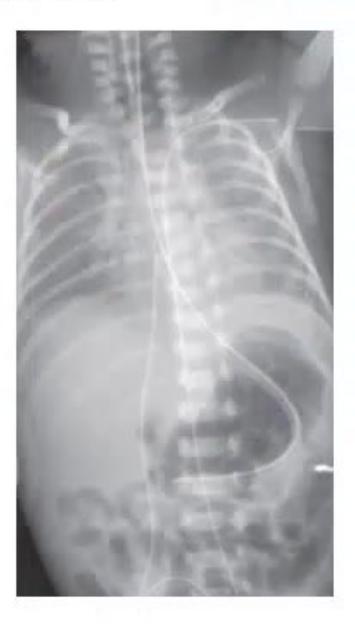
- What is the ideal position of placement of umbilical arterial and umbilical venous line?
- After putting in a UA line, the nght lower limb appears pale What would you do?
- What is the level of the renal artery?
- How do you maintain a UA line?
Answer
No model answer in source material.
MNJ21-008
Term baby presents to you with abdominal distension on day 2 of life AXR shows:
Neonatology
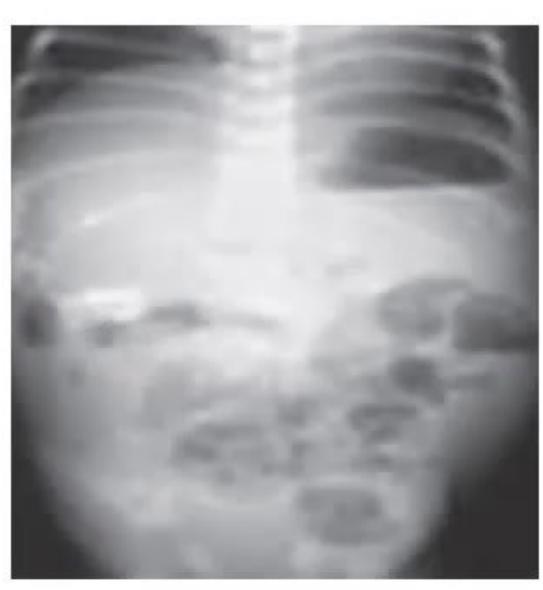
- What 1s the diagnosis?
- What is mutation associate with the syndrome that is very commonly associated with this condition?
Answer
No model answer in source material.
MNJ21-009
-
- Commonest heart disease in Down's syndrome.
-
- Antibiotic used in the treatment of GER.
-
- What are Janiceps twins?
-
- Dose of steroids for refractory hypotension?
- Positive pressure ventilation to be started at what heart rate in resuscitation?
- Commonest heart disease in Down's syndrome.
- Antibiotic used in the treatment of GER.
- What are Janiceps twins?
- Dose of steroids for refractory hypotension?
Answer
No model answer in source material.
MNJ21-010
-
- Commonest cardiac defect in IDM
-
- After how many weeks of gestation is pupillary reflex present?
-
- In PPHN with similar pre- and post ductal pO2 shunting is at what level?
-
Calorie 67 Q.11. 1. What is the protein content in 100 ml of breast milk?
- At what pressure dose the pop-off valve release in AMBU bag?
-
- What percentage of normal pregnancies are complicated by feto-maternal bleed?
- Most commonly used drug in NICU.
-
- Production of IgM starts at how many weeks of gestation?
-
- What is the initial dose of PGE1 used to maintain patency of ductus? D. D. D. & Mily min
- What should be the depth of chest compression during resuscitation?
- Commonest cardiac defect in IDM
- After how many weeks of gestation is pupillary reflex present?
- In PPHN with similar pre- and post ductal pO2 shunting is at what level?
- What percentage of normal pregnancies are complicated by feto-maternal bleed?
- Production of IgM starts at how many weeks of gestation?
- What is the initial dose of PGE1 used to maintain patency of ductus? D. D. D. & Mily min
Answer
No model answer in source material.
MNJ21-011
When antenatal mother has the following problem? What effect would you anticipate in the fetus/neonate?
- Myasthenia gravis
- Endemic goiter Hypothyrodilm 2 Graves' disease Thyrotoxicone
- Hyperparathyroidism Totany
- Hypertension IVUR
- SLE Haart block.
- Sickle cell anemia Prefam (VLR 10. Tuberculosis Fetal La
Answer
No model answer in source material.
MNJ21-012
Amniocentesis is brief contemplated for pregnant woman for genetic counseling:
-
- What is the most common indication?
- Name 4 other indications.
- What is the ideal time?
- What is the most common indication?
Answer
No model answer in source material.
MNJ21-013
A 36 weeks neonate presents to NICU on day 2 of life with abdominal distension, gastric aspirates. Barium enema shows:
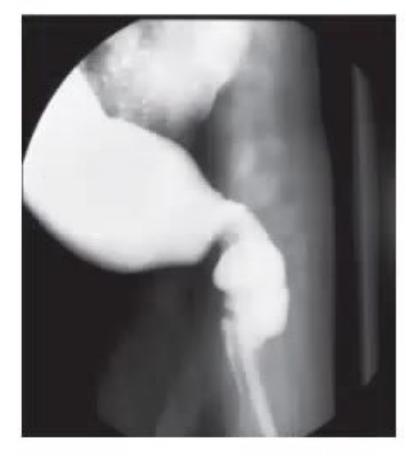
- What is the diagnosis?
- What is the characteristics histochemical test on rectal biopsy?
Answer
No model answer in source material.
MNJ21-014
A12-day-old baby who was in the NICU and on feeds develops abdominal distension, greenish aspirates and is found to be cold, dusky with poor perfusion. AXR shows:
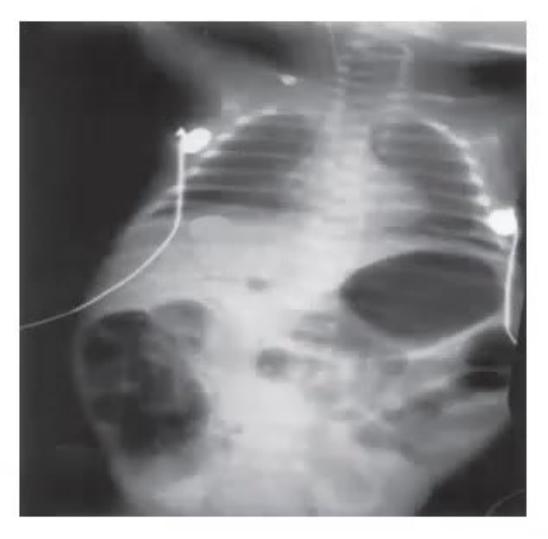
- What 1s X-ray finding and diagnosis?
- Which gas is this?
Answer
No model answer in source material.
MNJ21-015
Preterm 30 weeks baby had RDS and required ventilatory support. Baby''s ventilatory requirements increased and baby started desaturating. X-ray showed below:
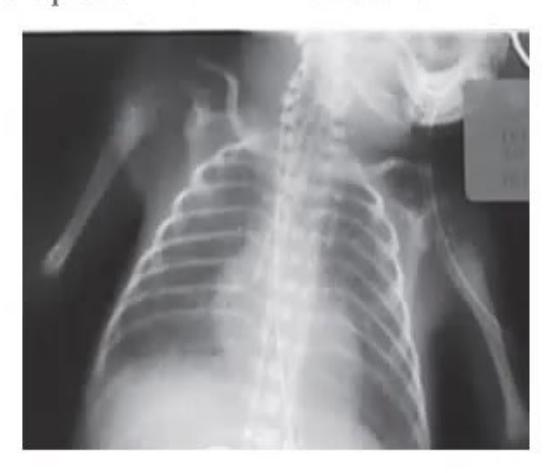
- Whats cause of this desaturation according to X-ray?
- What you will do for the problem?
Answer
No model answer in source material.
MNJ21-016
-
- What is RUSH disease?
- 4, What are nsk factors (at least 4)?
-
- What is drug treatment?
[ Neonatology 279 |
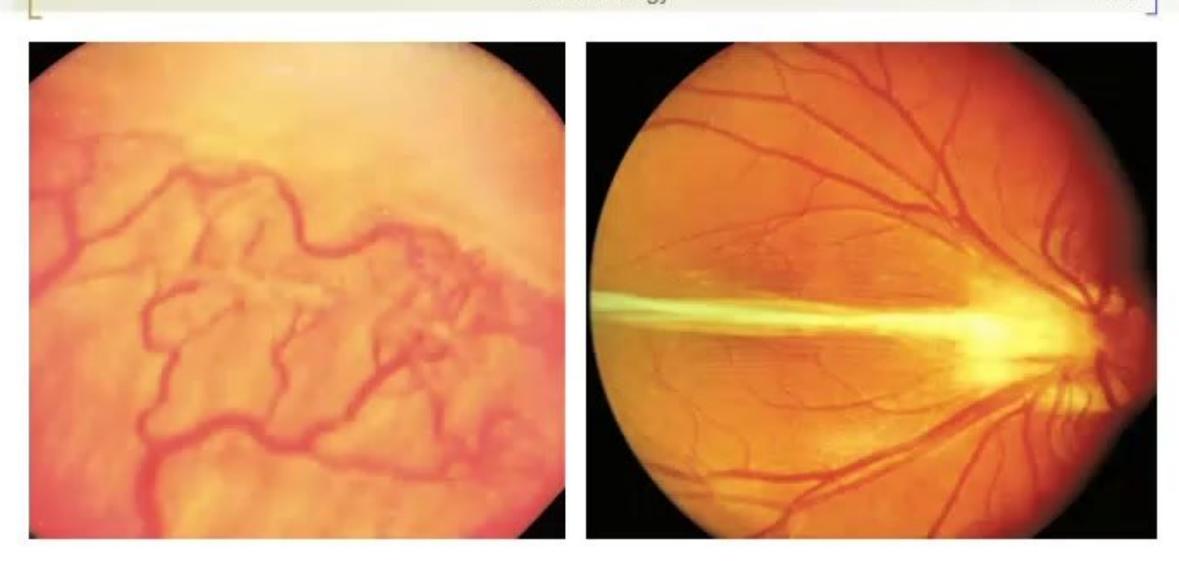
- Wnite down the stages.
- What is RUSH disease?
- What is drug treatment?
Answer
No model answer in source material.
MNJ21-017
A 32-week-old preterm neonate who was on ventilator with minimum setting shows sudden increase in ventilator setting and episode of desaturation. Doctor on duty perform the test shown in figure:
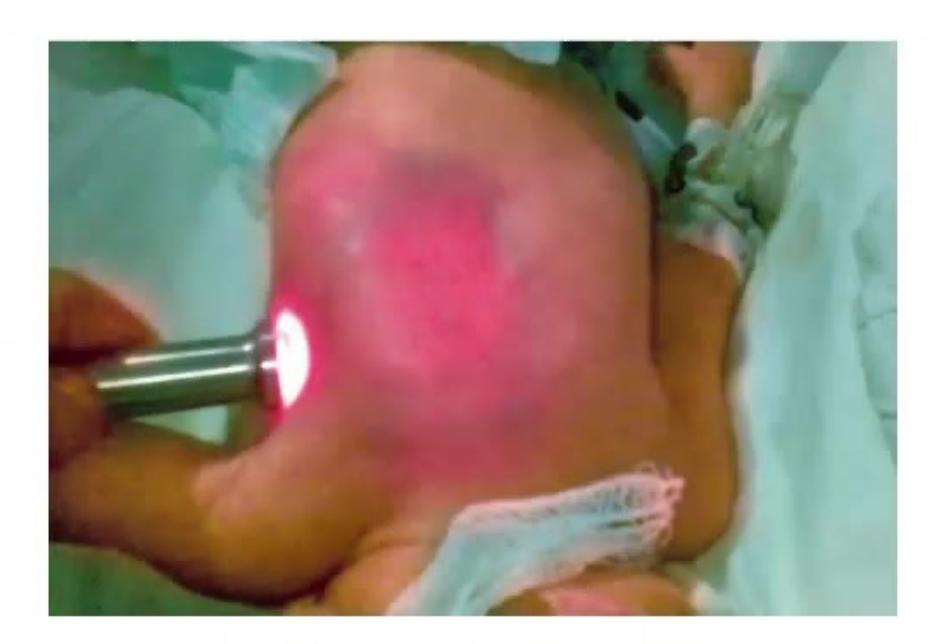
- What 1s this test?
- What you can diagnosis by this test without X-ray?
Answer
No model answer in source material.
MNJ21-018
Diagnosed the following conditions A, B, C, D. Give the answer of following questions about image D:
Courtesy: Dr Pravesh Vyas (Sundar Lal Jain Hospital)
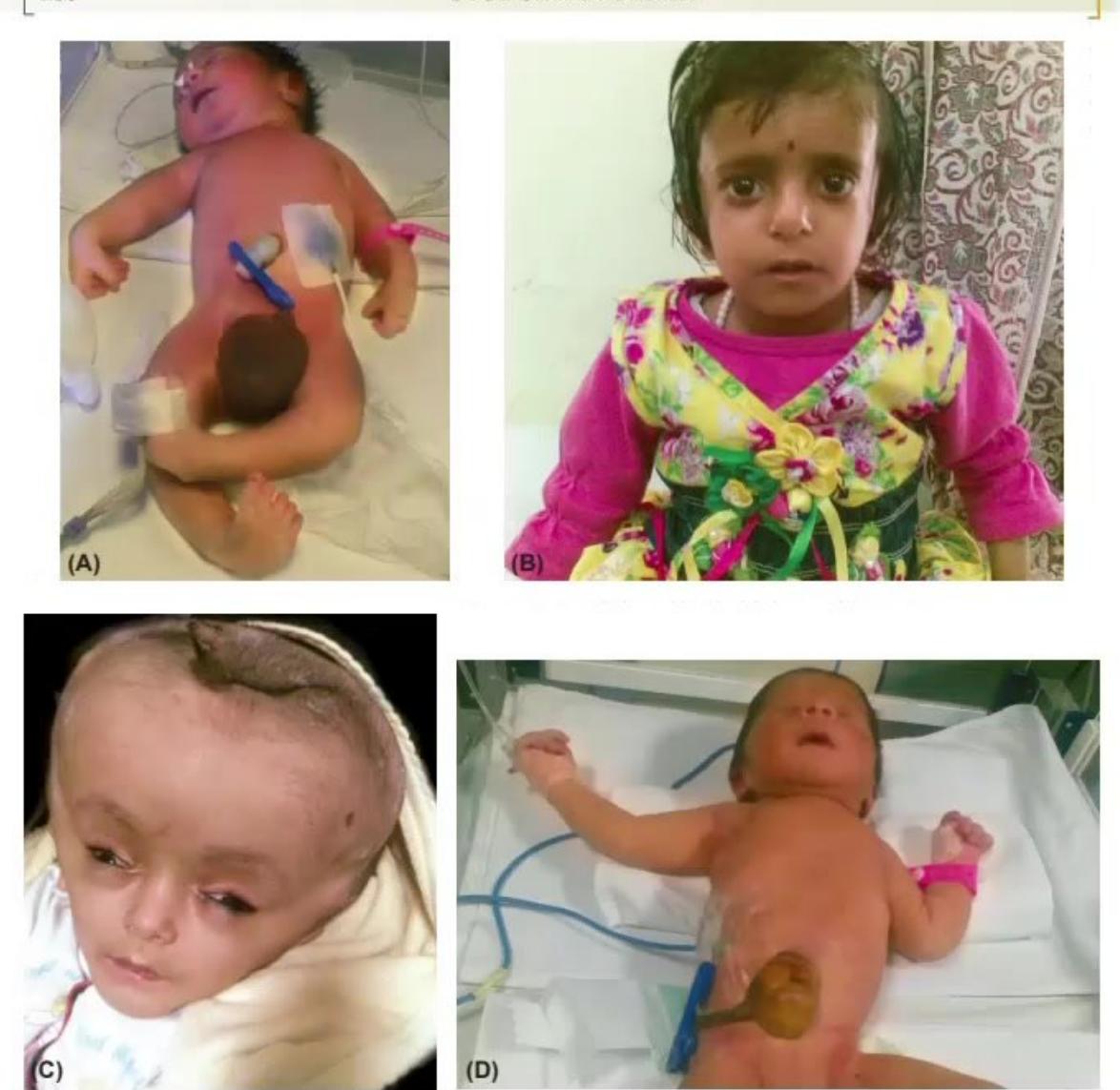
- What precaution will you take 1n care of this baby and transport?
- Name one syndrome that associated with this disorder.
Answer
No model answer in source material.
MNJ21-019
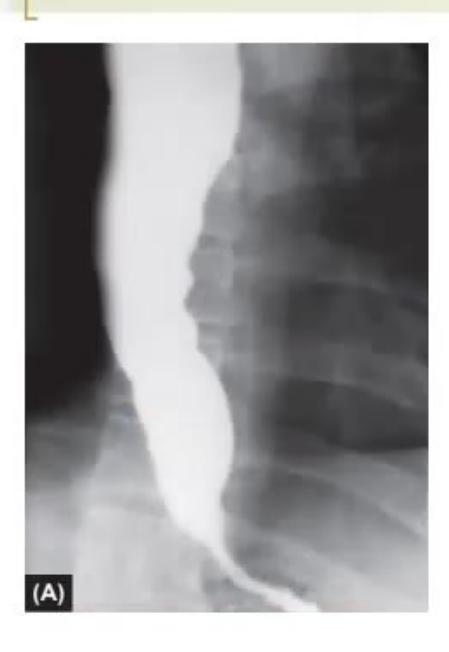
See the X-ray film and answer the following question
-
b. What is the diagnosis of this condition
-
c. What is pathogenesis of this condition
-
d Write most sensitive diagnostic test for this
-
e. Write 2 drugs effective in treatment of this
-
f. Write down 2 possible intervention you can do in this
-
b Mention 4 common presentation of this condition
Neonatology 284 |
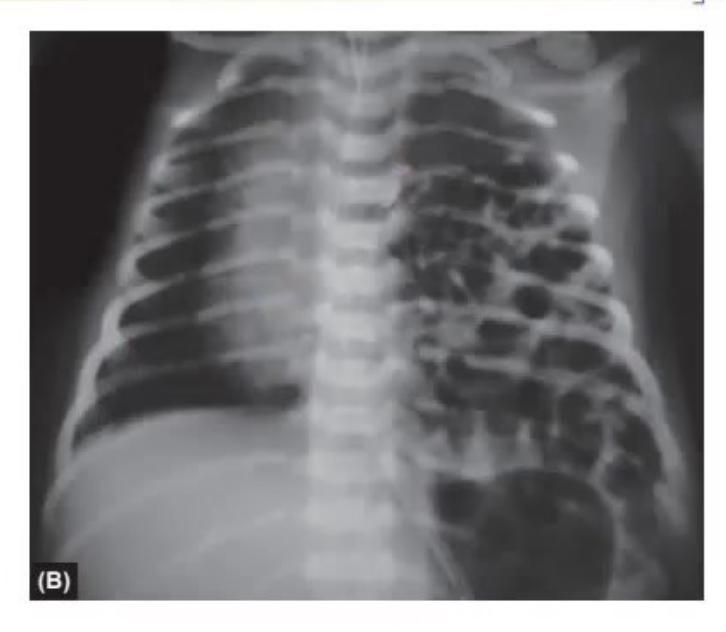
- a. What is finding in this X-ray
b. What is the diagnosis of this condition
c. What is pathogenesis of this condition
e. Write 2 drugs effective in treatment of this
f. Write down 2 possible intervention you can do in this - a. Describe the finding in this X-ray
Answer
No model answer in source material.
MNJ21-020
A 6 days old 29 weeks preterm baby is admitted in your unit. Baby is stable since 3 days and now on increasing feed. All sepsis markers are negative and baby is off antibiotics. Since last 6 hours baby developed tachycardia and episode of desaturations. Nurse inform you that baby is now not tolerating feeds also. You examine the baby and found palpable dorsal pedis pulse and systolic murmur.
- What will be the next gold standard inveshgation in this child and what is diagnosis?
- What are the diagnostic criteria of this gold standard investigation?
- What are indicaton of treatment?
- What are 2 drugs that we use regularly?
- What 1s new drug nowadays in use?
Answer
No model answer in source material.
MNJ21-021
See the image below and answer the following questions?
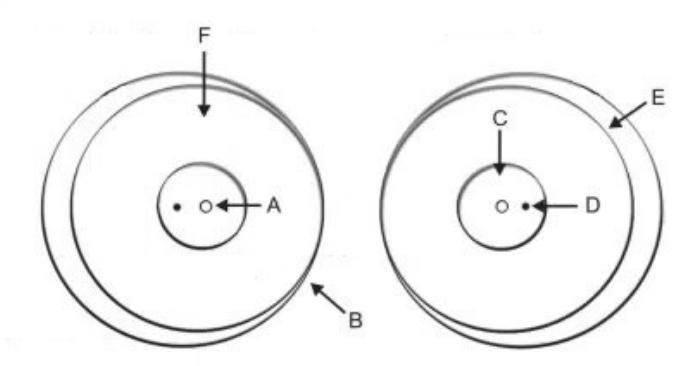
- Name the following structure in image a, b,c, d, e, f.
- Which zone is most sensitive for vision and why?
- Write down the indication of early treatment in ROP
- What modality for diagnosis of ROP you will use 1f you are in remote area and trained ophthalmologist is not available m your area for screen.
Answer
No model answer in source material.
MNJ21-022
A 26 weeks preterm baby delivered by LSCS with birth weight of 668 gm. After initial stabilization you decided to start TPN.
- What are the indication of TPN 1n neonate with birth weight of less than 1500 gm?
- What 1s adequate balance between protem: energy source in TPN for adequate balance between nitrogen and non-protein energy source?
- What 1s ideal distribution of calories m TPN?
- How much requirement of calcrum, magnesium, phosphate for newborn in TPN?
Answer
No model answer in source material.
MNJ21-023
A 2-month-old baby came to your clinic with complaints of constipation. You noticed that baby have umbilical hernia also on examination. See the image below and answer the following questions.

- Whats possible diagnosis of this baby?
- What is most common cause?
- What is best way to screen this condition in newborn baby?
- For best outcome how early treatment should be started and what is dose?
Answer
No model answer in source material.
MNJ21-024
A 29 weeks preterm born and managed as per NICU protocol. At the age of 17 days she collapses. Later she was ventilated for9 days and has since been stable on CPAP in 285 FiO,. She was kept on TPN via a PICC line situated in right atrium along with tube feeds. At the time of collapse she was in shock. ABG showed metabolic acidosis. X-ray showed right-side of this page. USG brain showed grade I IVH.
Neonatology 283
ANSWERS
- Ans. 1. 1. NEC stage II
-
- Pneumoperitoneum
- Any two of the following Hirschsprung's diseases, pseudomembranous enterocolitis, neonatal ulcerative colitis, ischemic bowel disease
-
- Ans. 2. 1. Congenital diaphragmatic hernia
- The posterolateral portion of the diaphragm has remained open between the ninth and tenth weeks of gestation as a result the viscera will pass into the chest, and a CDH will result.
-
- a. Mechanical compression of the lungs from the herniated viscera
- b. Pulmonary hypoplasia from compression of the developing lungs in utero
- c. Pulmonary hypertension
- Ans. 3. 1. Tracheoesophageal fistula
-
- Gap between two esophageal and more than 3 to 4 cm
-
- To rule out associated congenital heart diseases right-sided aorta
-
- Ans. 4. 1. Collodion baby (ichthyosis)
-
- Hypernatremic dehydration
-
- Ans. 5. 1. Absence of depression of the right angle of mouth while crying
-
- DAOM (deficiency of depressor anguli oris muscle)
-
- 2D echocardiography as the condition is associated with cardiac anomalies
-
- Ans. 6. 1. Congenital syphilis
- Olympian brow (frontal bossing), Higoumenaski's sign (U/L or bilatral thickening
of the medial portion of the clavicles), Saber tibia, Hutchinson teeth, mulberry
molars, saddle nose, rhagades and eighth nerve damage, bilatral interstitial keratitis
and Clutton's joint. - Aqueous crystalline penicillin: 100,000–150,000 U/kg administer as 50,000 U/kg IV every 12 hourly x first 7 days, then same dose 8 hrly for total 10 days
- Olympian brow (frontal bossing), Higoumenaski's sign (U/L or bilatral thickening
or
Procaine penicillin: 50,000 U/kg/day IM (once a day) for 10 days.
- Ans. 7. 1. Abnormally placed umbilical arterial line in the subclavian artery
- For umbilical arterial line, High. Between T7 and T10, in the thoracic aorta above diaphragm between ductus and celiac axis; Low Between L2 and L3, or L3 and L4, in abdominal aorta, between inferior mesenteric artery and aorta bifurcation
- · For umbilical vein: Just above the diaphragm.
-
- Warm the other limb; If still pale >1/2 hour, remove the UA line
-
- L-1
-
- Use heparin infusion at a rate of 0.5-1.0 Unit per hour
- For umbilical arterial line, High. Between T7 and T10, in the thoracic aorta above diaphragm between ductus and celiac axis; Low Between L2 and L3, or L3 and L4, in abdominal aorta, between inferior mesenteric artery and aorta bifurcation
- Ans. 8. 1. Meconium peritonitis
-
- Delta F 508 Cystic fibrosis.
-
- Ans. 9. 1. 7.6 kcal
-
- <100
-
- Endocardial cushion defect
-
- Erythomycin
-
Ans. 10. 1. 6.5 cal
Ans. 11.1. 1.1 g/100 ml
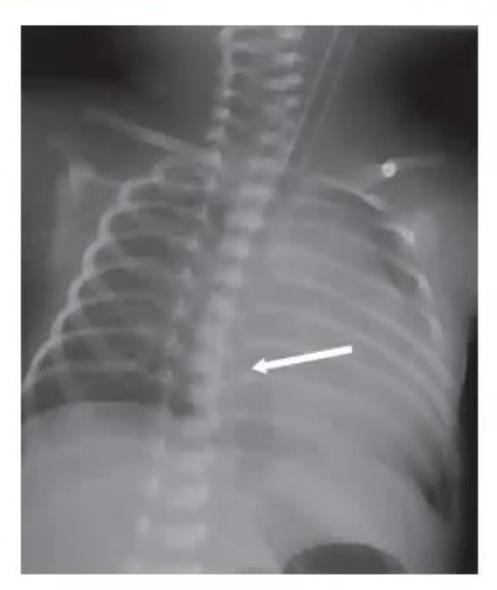
- What 1s most likely diagnosis?
- What are possible differential diagnosis?
- What 1s reason for this diagnosis 1n this patient?
- What are management options?
- Pneumoperitoneum
- a. Mechanical compression of the lungs from the herniated viscera
b. Pulmonary hypoplasia from compression of the developing lungs in utero
c. Pulmonary hypertension - Gap between two esophageal and more than 3 to 4 cm
- To rule out associated congenital heart diseases right-sided aorta
- Hypernatremic dehydration
- DAOM (deficiency of depressor anguli oris muscle)
- 2D echocardiography as the condition is associated with cardiac anomalies
- Warm the other limb; If still pale >1/2 hour, remove the UA line
- L-1
- Use heparin infusion at a rate of 0.5-1.0 Unit per hour
- Delta F 508 Cystic fibrosis.
- <100
- Endocardial cushion defect
- Erythomycin
- Joined with single forehead and thorax
- Hydrocortisone: 1 mg/kg every 12 hourly
- One-third of AP diameter of chest
- Asymmetric hypertrophy of intraventricular septum
- 28-30 wks
- PFO
- 0.1 mg/kg
- 30-40 cm H2O
- 8%
- Oxygen
- 30 wks
Answer
No model answer in source material.
MNJ21-025
–0.4 micrograms/kg/min.
Ans. 12.1. Hypothyroidism
Ans. 13.1. 15 to 16 weeks
- b. Either parent—a translocation carrier
- c History of genetic disorder diagnose by DNA analysis/biochemistry
- d. Sex detection in XLD/XLR diseases
- e. Maternal blood testing (triple screening) indication risk
- f Work up for fetal anomalies suggested by USG
Ans. 14.1. Hirschsprung's disease
- Ans. 15. 1. NEC—gas in the portal system
-
- Hydrogen gas
-
- Ans. 16.1. ET tube is in the right main bronchus.
-
- pull the ET tube
-
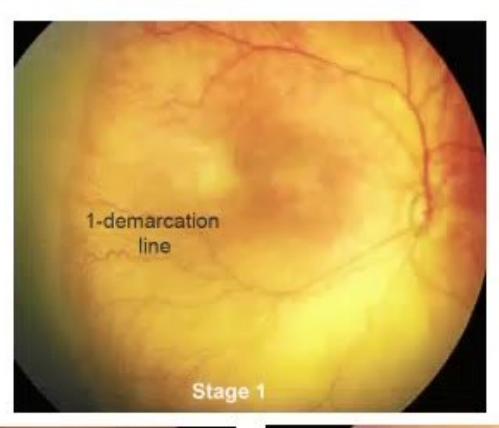
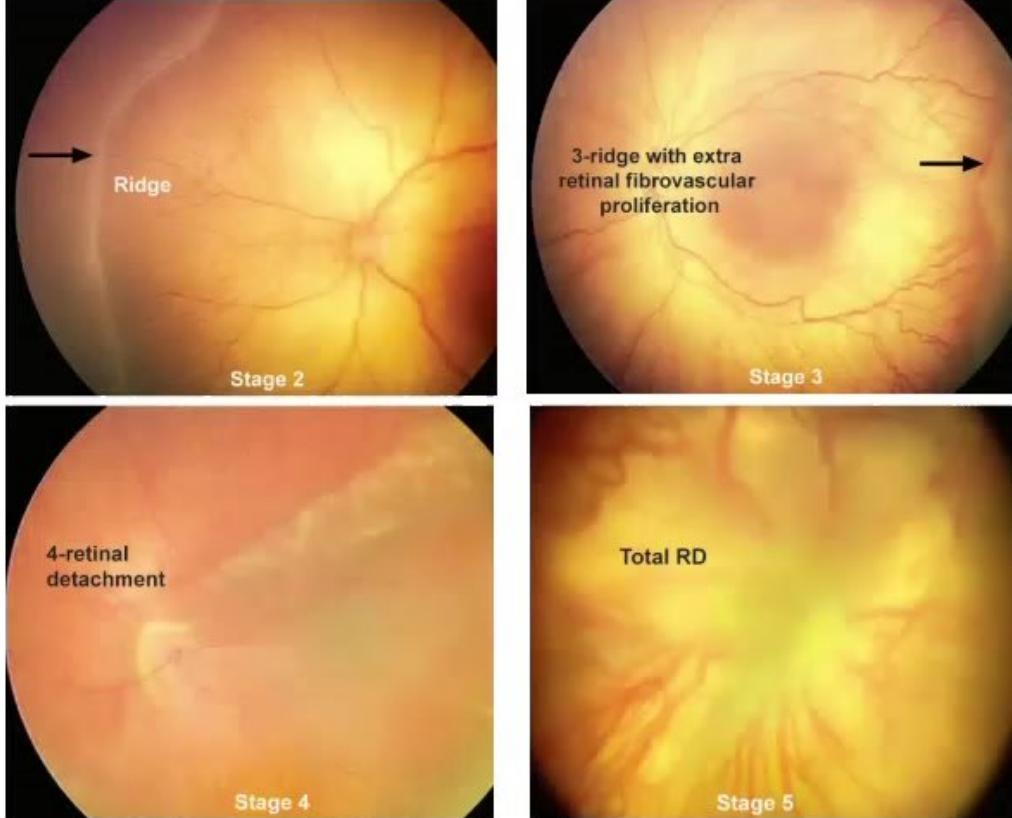
Ans. 17.1. ROP stage 2, stage 4
- Demarcation line
- Ridge
- Ridge with extra retinal fibrovascular proliferation
- · Subtotal retinal detachment
- A. Extrafoveal
- B. Retinal detachment including fovea
- · Total retinal detachment
[ Neonatology 285 |
i
-
Ans. 18. 1. Transillumunation test
-
- Diagnosis of pneumothorax.
-
-
Ans. 19.A. Arthrogryposis: Read about this from Nelson
- B. Sunset eye sign of hydrocephalus
-
C. Russell-Silver syndrome
-
D. Omphalocele
- Treatment: Transport supine with the hernia suspended by a string, cover the omphalocele with a waterproof covering soaked with saline, IV fluids, place OG tube.
- Backwith-Wiedemann syndrome
-
Ans. 20.1. a. Barium meal study showing dilated esophagus and narrowing of lower sphincter
- b. Achalasia cardia
- c Loss of Lower esophagus sphincter relaxation and loss of esophagus peristalsis
- d. Manometry
- e. Calcium channel blockers, botulism toxin, Phospodiestwrase inhibitors
- f Hellers myotomy, pneumatic dilatation
- a. Chest X-ray demonstrating retro sternal mass suggestive of congenital diaphramatic hernia/Morgagni hernia
- b. Asymptomatic, recurrent respiratory problems, vomiting, symptoms of GER
Ans. 21.1. 2 DECHO, PDA
-
Classical three legged stool appearance of duct, turbulence in main pulmonary artery, LA/Ao ratio >1.5:1, raised left ventricle stroke volume (Recent change 2014)*
-
Feature of CHF, need of prolonged respiratory support, Recurrent Apnea, PDA >1.5 mm with LA/Ao ratio >1.5:1, Retrograde flow in descending aorta, Left ventricular outflow >320 ml/kg/min (Recent change 2014)
-
Ans. 22. 1. a. Optic nerve b. Ora serrata c. zone 1 d. Macula e zone 3, f. zone 2
-
- Zone 1 because this is nearer to optic disc
-
- Early treatment of rop (ETROP) is based on screening result if-
-
Zone 1-any stage with plus disease
Zone 1-stage 3 without plus disease
Zone 2-stage 2 or 3 with plus disease
- Ans. 23.1. Birth weight less than 1000 gm, birth weight less than 1500 gm and anticipated to be not on significant feeding on day 3
-
- Protein/energy ration 3-4/100 kcal
-
- Calory from carbohydrates 50–55%, protein 10–20%, lipid 30–35% 20–40 mg/kg/day
-
- Calcium-150-200 mg/kg/day, magnesium 15-25 mg/day, phosphate
-
- Ans. 24. 1 Congenital hypothyroidism
-
- Thyroid dysgenesis
-
- By newborn screening at day 3-4 should be done with TSH and T4 level
- Best outcome occur with L-thyroxin started by 2 weeks of age at 9.5 mcg/kg or more/day
-
- Ans. 25. 1 Cardiac tapenade.
- Tension pneumothorax, congenital heart disease, inborn error of metabolism, Overwhelming sepsis.
-
- Long line migrated in pericardial sac, can confirm with X-ray contrast in long line.
- Removal of line, drainage of pericardial fluid with sub-xiphisternal approach.
- Transient neonatal thyrotoxicosis
- Neonatal hypocalcemia
- IUGR/fetal demise
- Transient neonatal myasthenia
- Congenital heart block, rash, anemia, thrombocytopenia, neutropenia
- Congenital poliomyelitis
- Myocarditis, meningitis, hepatitis
- Preterm IUGR
- Prematurely fetal death congenital TB.
- Advanced maternal age >35 years
- a. Previous child: Chromosomal anomaly
b. Either parent—a translocation carrier
d. Sex detection in XLD/XLR diseases
e. Maternal blood testing (triple screening) indication risk - See the Nelson
- Hydrogen gas
- pull the ET tube
- Stage # characteristic features
a. Extrafoveal
b. Retinal detachment including fovea - RUSH disease: The presence of plus disease with zone 1 disease, severe and fast progressing
- Premature infants <1500 g weight, <32 weeks, sepsis, multiple blood transfusion, respiratory distress syndrome
- Bevaluzimab.
- Diagnosis of pneumothorax.
b. Sunset eye sign of hydrocephalus
c. Russell-Silver syndrome
d. Omphalocele
b. Achalasia cardia
d. Manometry
e. Calcium channel blockers, botulism toxin, Phospodiestwrase inhibitors
a. Chest X-ray demonstrating retro sternal mass suggestive of congenital diaphramatic hernia/Morgagni hernia
b. Asymptomatic, recurrent respiratory problems, vomiting, symptoms of GER - Indomethacin, Ibuprofen
- IV paracetamole
- Zone 1 because this is nearer to optic disc
- Early treatment of rop (ETROP) is based on screening result if-
- New modality for diagnosis of ROP-RetCam (digital retinal photography)
- Protein/energy ration 3-4/100 kcal
- Calory from carbohydrates 50–55%, protein 10–20%, lipid 30–35% 20–40 mg/kg/day
- Calcium-150-200 mg/kg/day, magnesium 15-25 mg/day, phosphate
- Thyroid dysgenesis
- By newborn screening at day 3-4 should be done with TSH and T4 level
- Long line migrated in pericardial sac, can confirm with X-ray contrast in long line.
Answer
No model answer in source material.