MNJ27-001
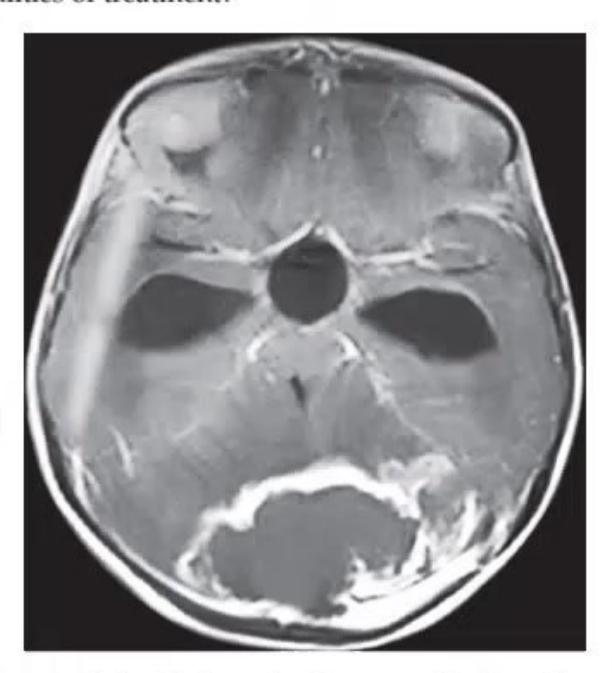
An 8-year-old child Mahesh presented with bilateral sudden loss of vision, motor weakness and seizures following upper respiratory infection. There is no significant family history. MRI finding of the child is shown here:
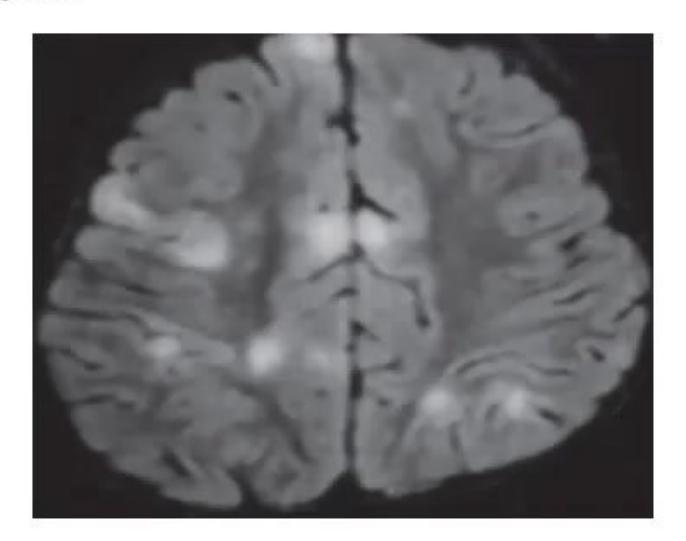
- Describe the abnormality and diagnosis
- Give a differential diagnosis.
- How will you differentiate between the two?
- What is the CSF finding?
- What is the line of treatment?
- What is the prognosis?
Answer
- Large, patchy areas of subcortical and deep white matter hyperintensity in the bilateral corona radiata suggestive of ADEM
-
- Multiple sclerosis
-
- See Table 27.1.
| Table 27.1: Clinical and MRI features that may distinguish |
ADEM fromm first attack of MS | |
|---|---|---|
| ADEM | MS | |
| Age | <10 years | >10 years |
| Stupor / coma | + | = |
| Fever / vomiting | + | = |
| Family history | No | 20% |
| Sensory complaints | + | = |
| Optic neuritis | Bilateral | Unilateral |
| Manifestations | Polysymptomatic | Monosymptomatic |
| MRI imaging | Widespread lesions: Basal ganglia, thalamus, cortical gray-white junction |
Isolated lesions periventricular white matter, corpus callosum |
| CSF | Pleocytosis (lymphocytosis) | Oligoclonal bands |
| Response to steroids | + | + |
| Follow-up | No new lesions | New lesions |
Some features that may help distinguish an initial acute episode of demyelination from a first attack of MS in children. Final diagnosis of MS is based on follow-on evaluation and possibly MEI +, more likely to be present; less to be present, ADEM, acute disseminated encephalomyelitis; CSF, cerebrospinal fluid; MS, multiple sclerosis.
-
- Lymphocytic pleocytosis
-
- Intravenous methylpredmsolone 30 mg/kg/day for 3-5 days followed by oral prednisolone 1 mg/kg/day for 10 days.
-
- 70 percent will recover without any residual disability in 6 months.
Oligoclonal bands are also found in
- * Multiple sclerosis
- * Devic's disease
- * Systemic lupus erythematosus
- ® Neurosarcoidosis
- « SSPE
- * Subarachnoid hemorrhage
- * Syphilis
- * CNS lymphoma
- Ans.?. 1. Multifocal cerebral and cerebellar encephalomalacia.
-
- Sequel of ischemic injury in the perinatal period.
-
MNJ27-002
A 6-month-old child came to your clinic. Mother is complaining that child still not able to support his head, no smile and not able to sit. MRI brain was done:
Neurology 357 |
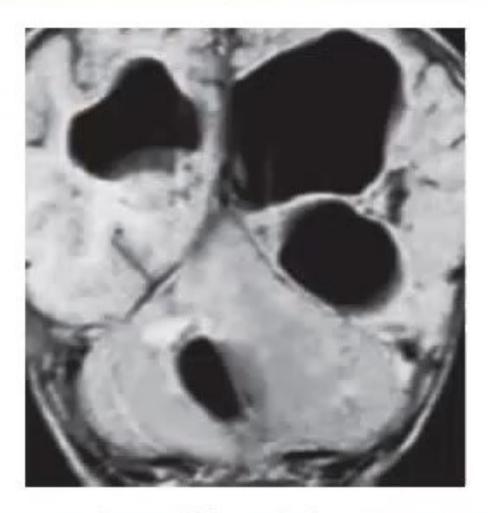
- What are the MRI findings?
- What could be the etiology?
Answer
No model answer in source material.
MNJ27-003
A 12-year-old child has complaints of fever for last three months and backache and now he has problem in bending forward. MRI spine was done:
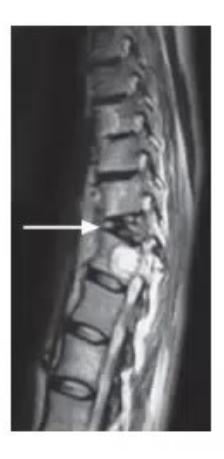
- What 1s the likely diagnosis?
- Which is the commonest site?
Answer
- TB Spine
-
- Thoracolumbar—area of max stress and valveless venous dramage
MNJ27-004
- | 358 OSCE Clinical Pediatrics
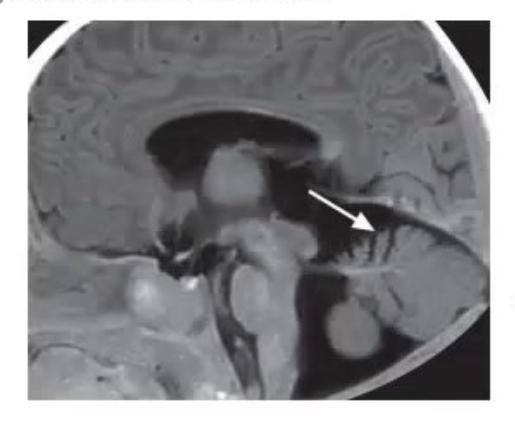
- Diagnosis
- By what gestahonal age would this defect occur?
- What is preventive treatment, in what dose and started when?
- Whats nsk factor for this disorder?
Answer
- Occipital encephalocele
-
- 26 days post conception
-
- Folic acid
- Dose: 0.4 mg/day
-
- Periconceptional period
MNJ27-005
Parents of a 2-year-old child came to you that their child is not able to walk properly, he sway to one side when walk and from last 2 months he start to loss his previously acquired milestones and have abnormal hand movement throughout the day (myoclonic jerks). He had six episodes of respiratory infection in last one year. You examine the child and found some positive finding inhiseyes: **(Asked in exam)
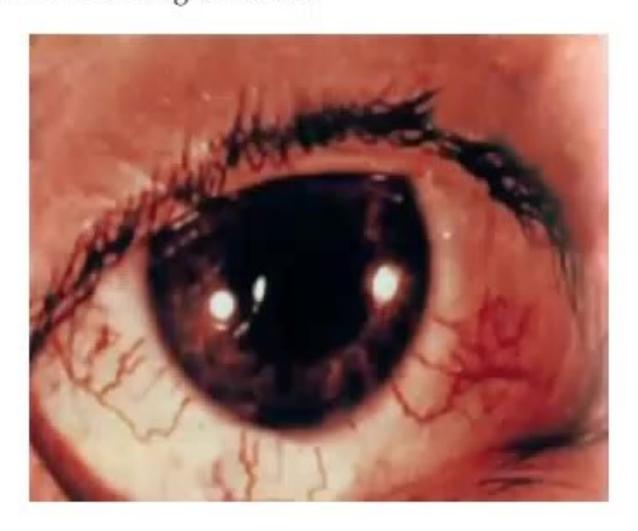
- Give the diagnosis of given condition.
- State mode of inheritance
- Name five important components.
- Name most frequent immunological defect
Answer
- Ataxia-telangiectasia
-
- Autosomal recessive
- Important components
- a. Cerebellar ataxia
- b. Oculocutaneous telangiectasia
- c Immunodeficiency
- d. Sinopulmonary infections
- e. Lymphoreticular malignancies
-
- Selective absence of IgA
(No marks if first answer is wrong)
MNJ27-006
A 6-year-old child admitted in hospital with complaints of intractable epilepsy, mental retardation and lesion on the face (shown below):
Neurology 359 |
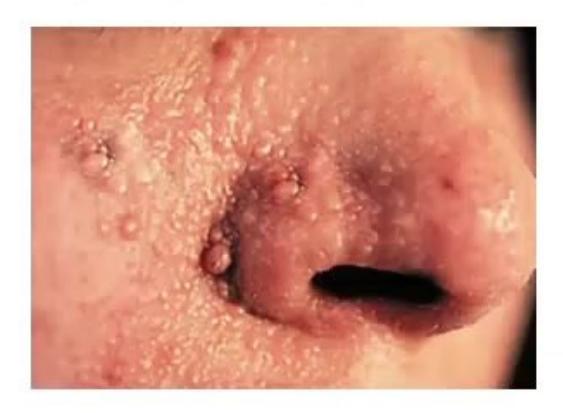
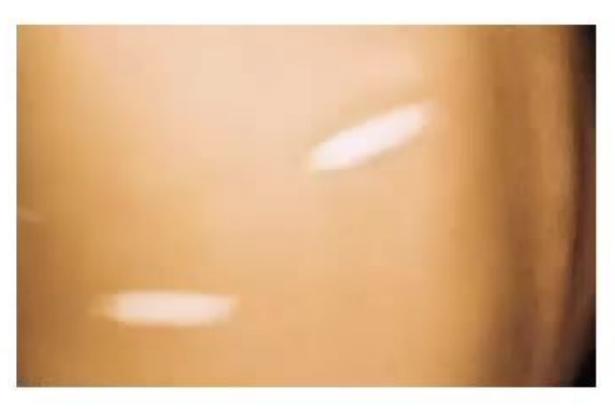
- What is the diagnosis of this condition?
- Describe the lesions given in both images
- Whatis the mode of inhentance and which chromosome is involve CNS?
- Whatis CNS associahon?
Answer
- Tuberous sclerosis
- Adenoma sebaceun, ash leaf macule
-
- Autosomal dominant, chromosome 11
-
- Characteristic brain lesions are tubers located in convolutions of cerebral hemisphere typically in the subependymal region.
MNJ27-007
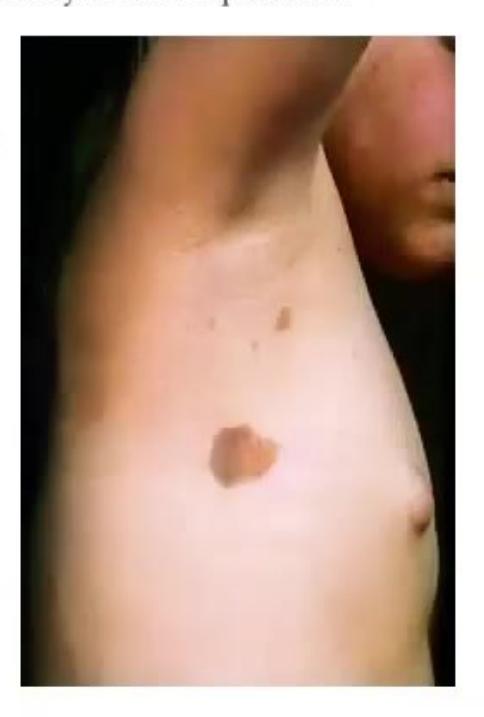
- Name the neurocutaneous marker seen.
- In NF-1, what 1s the diagnostic criteria with respect to this marker?
- Name a X-linked dominant neurocutaneous syndrome.
- What are the three stages of syndrome in question 3?
Answer
- Café au lait macule
-
- Six or more CAL macules larger than 5 mm in greatest diameter in prepubertal. And larger than 15 mm in greatest diameter in postpubertal individuals.
-
- Incontinentia pigmenti
-
- Stage 1. Vesicular stage
- Stage 2. Verrucous stage
- Stage 3. Pigmented stage
MNJ27-008
- 4, What 1s the major ocular criteria for diagnosis?
| 360 OSCE Clinical Pediatrics | Q.9. A 4-year-old child admitted in hospital with complaints of intractable epilepsy. You
examine the child and found a birth lesion on face involving upper eyelid. Neuroimaging
- was done that shown below:
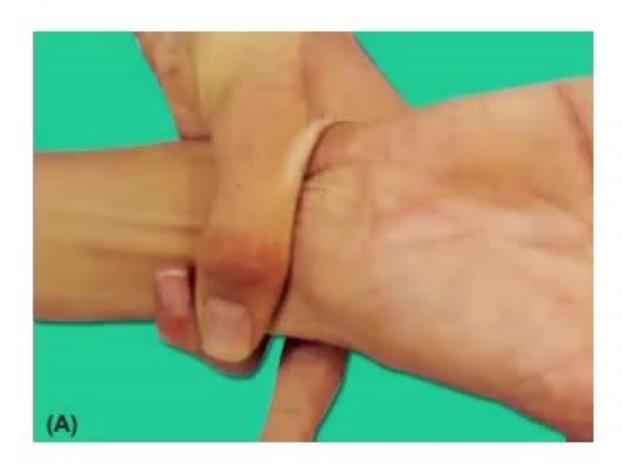
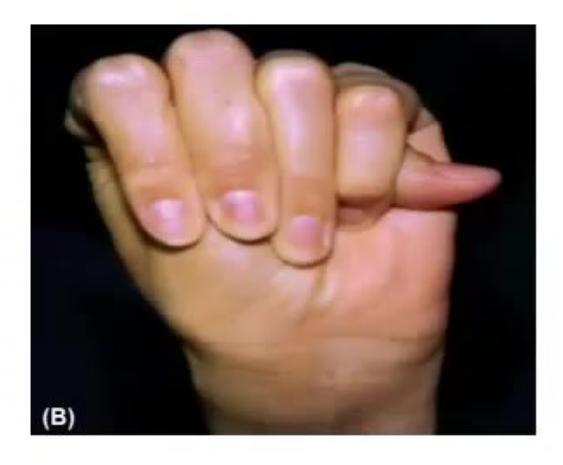
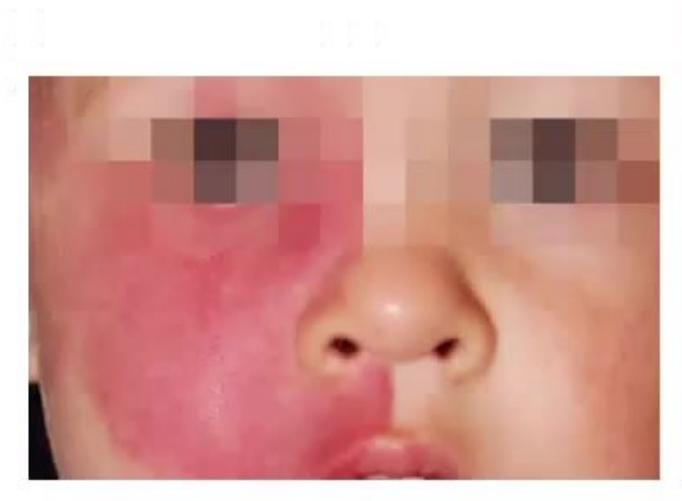
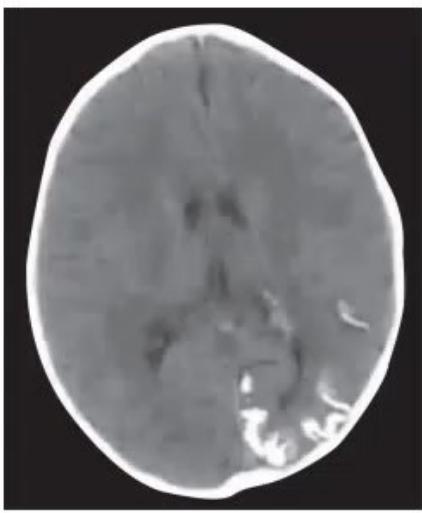
- What is exhibited in the photographs A and B?
- Diagnosis.
- Whats the mode of inheritance?
- Diagnose the condition according to climcal picture and images.
- Whats the pattern of inheritance?
- What 1s the characterise radiographic image called?
- What 1s the ophthalmologic complication?
Answer
- a: Hypermobility of finger joints. b: Positive thumb (Steinberg) sign
- Marfan syndrome
-
- Autosomal dominant
- Ectopia lentis (superior and temporal)
MNJ27-009
What is the classic triad of infantile spasms?
Answer
Spasms, hypsarrhythmia, and developmental regression.
MNJ27-010
The examination of a newborn reveals a lump of soft tissue of size of 2 coin overlying the lower spine. There is no neurological deficit and child is moving both lower limbs well and knee and ankle reflexs are present:
- 4, What are the options for managing bladder incontinence im this condihion?
- Whats the likely diagnosis?
- What 1s likely risk of recurrence of disorder in future pregnancies?
- What intervention started at what time and for how long, can reduce the risk of intervention?
Answer
- Occult spinal dysraphism
-
- Risk of recurrence
- · One affected child
- Two affected children
-
- Intervention
- Started
- (started before pregnancy)
- Continued
-
- Bladder incontinence management
- · Clean intermittent catheterization
- Artificial urinary sphincter
- Surgical urinary diversion
- Augmentation cystoplasty
3-4%
10%
Folic acid 400 ug/d Periconceptionally
Till 12 weeks of pregnancy
Neurology 374 |
MNJ27-011
Match the following sign/symptom with the expected location of the lesion in the brain:
- * Leakage of CSF from nose
a. Deafferented pupil * Nystagmus
f. Cribriform plate of ethmoid * Pinpoint pupils
b. Cerebellum * Toric deviation of the eye(s)
c. Ipsilateral cortex *® Marcus Gunn pupil
d. Midbrain tectum * Horner's syndrome
e. Pons * Midposition pupils
Answer
a. Deafferented pupil * Marcus Gunn pupil
- f. Cribriform plate of ethmoid * Leakage of CSF from nose
-
- b. Cerebellum * Nystagmus
- c. Ipsilateral cortex * Tonic deviation of the eye(s)
- d. Midbrain tectum *® Midpositon pupils
- e. Pons * Pinpoint pupils
MNJ27-012
A3-year-old child Raju has complaints of weakness while playing, droping of eyelids in evening and not able to sustain his grip. You think a provision diagnosis myasthenia gravis:

- What 1s the characteristic EMG in myasthenia?
- Whats the chest X-ray finding in this condition?
- Whats the clinical test for diagnosing myasthenia?
- Which antibiotics can worsen the condition?
- What drugs are used for treatment?
Answer
- Decremental response to repetitive simulaton
-
- Enlarged thymus
-
- Edrophonium test
-
- Aminoglycosides
-
- Neostigmine
0.4 mg/kg PO 4-6 hourly 0.04 mg/kg IM 4-6 hourly
MNJ27-013
Examination of the cerebrospinal fluid of a 6-year-old child Arjun, mildly febrile child with nuchal rigidity and intermittent stupor for 3 weeks shows the following:
- * White blood cells 100/l (all lymphocytes)
- * Negative Gram stain
- ® Protem 750 mg/dl
- * Glucose 25 mg/dl
- What are the likely differential diagnosis?
- What drugs can be used to reduce intracranial tension?
- Which cranial nerve 1s mvolved 1n false localizing sign?
Answer
- Tubercular/fungal meningitis
-
- Mannitol, glycerol
-
- Sixth cramal nerve (abducens)
MNJ27-014
Match the following:
| Clinical scenario | Diagnosis |
|---|---|
| 1. Eye blinking or throat-clearing noises in an otherwise healthy $-year-old boy |
a. Transient tic disorder of childhood |
| 2. A 6-year-old boy with eye twitching and ecolalia | b. Tourette syndrome |
| 3. A 2-year-old infant who was born prematurely and is unable to walk or talk |
c. Cerebral palsy |
| 4. A 14-year-old girl with a history of precocious puberty who now develops a large goiter |
d. Tuberous sclerosis |
| 5. An infant with infantile spasms, a hypsarrhythmic EEG pattern, and ash-leaf depigmentation on her back |
e. McCune-Albright syndrome |
Answer
- a, 2.b, 3 c, 4.e, 5 d
MNJ27-015
A 9-year-old male child complaining of increasing weakness of all limbs x 3 days and URTI one week back. On examination bilateral facial nerve palsies, power grade 0-1 both legs; grade three arms, loss of deep tendon reflexs, no sensory deficit/papilloedema. On abdomen examination you find palpable midline mass arising from pelvis. Child is conscious and responding well your answers:
- What 1s the likely diagnosis?
- Mention three mvestigations to clinch diagnosis
- What 1s the most sensitive measure of respiratory muscle involvement?
- Mention three modalities of treatment.
- Whats the midline mass, explain its significance and how should it be managed?
Answer
- GBS
-
- CSF—protein cellular dissociation
NCV
EMG
- The most sensitive measure of respiratory muscle involvement 1s
Vital capacity
In children, the normal VC may be calculated as VC = 200 ml x age in years. If the VC falls below 25% of normal, endotracheal intubation 1s performed
-
- IVIg, plasmapheresis, steroids
-
- Bladder distension due to ANS involvement
MNJ27-016
A 3-year-old boy was unconscious for 1 min following head injury after fall from bed. Now he is fully conscious but there is bruising on the left side of the head over the parietal bone. Skull X-rays are performed and he is admitted for neurological observations as advised by neurologist:

- What chnical features would suggest requirement of CT skull and/or neurosurgical opmion?
- What non-surgical temporary measures can be used to reduce raised intracranial pressure?
- What advice needs to be given to parents if after 24 hours the child has remained well and is ready for discharge?
- What does the imaging show and what 1s probable diagnosis?
- What are the modalities of treatment?
Answer
- Neurosurgical opinion/CT skull
- * Deteriorating level of consciousness
- * Focal neurological signs
- * Depressed skull fracture
- * Basal skull fracture
- * Seizures
- * CSF leak
-
- Signs of raised ICT temporary maneuver to reduce raised ICT
- * Nursing in a 30 degrees head up position
- *« Diuretics (mannitol)
- * Hypertonic saline, artificial hyperventilation
-
- At discharge it should be stressed that child should be brought back if he develops any of following:
- * Vomiting
- * Drowsy /altered sensonum
- * Blurred / double vision
- * Seizures
MNJ27-017
This newborn presented with hepatosplenomegaly, jaundice and convulsions. His mother's Sabin-Feldman dye test was positive:
Neurology 363 |
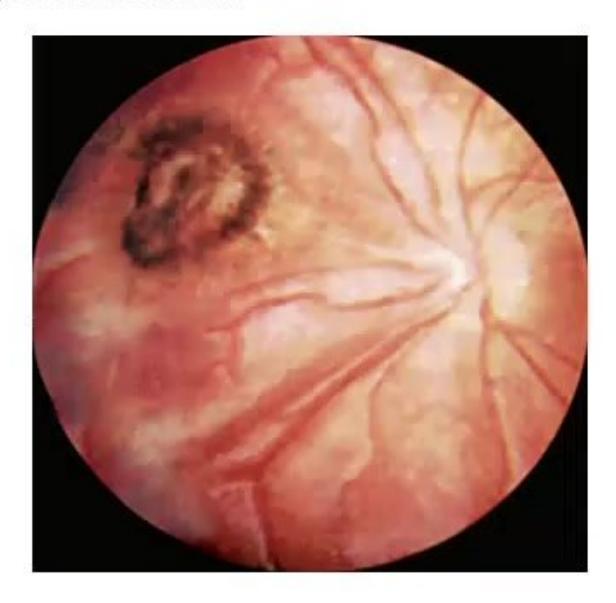
- Whatis the diagnosis?
- Whats classic triad of signs in this condition?
- What are the drugs used in treatment?
Answer
- Congenital toxoplasmosis
-
- Chorioretinitis, congenital hydrocephalus and cerebral calcifications.
- Treatment for 1 year with oral pyrimethamine (2 mg/kg/day) for 1 week and 1 mg/kg/day for 2–6 months then 1 mg/kg on Mon–Wed, Fri.
Sulfadiazine or triple sulfonamides (100 mg/kg/day BD) and leukovorin (5–10 mg/kg/day on Mon/Wed/Fri)
MNJ27-018
Nidhi is 5 months pregnant with her first child. Her 15-year-old brother Vijay began to have difficulty in climbing stairs at 4 years of age. He is now confined to a wheelchair. All other family members are normal. She is worried that her child may be affected and she reffered by a gynecologist to you for future advise:
- What 1s the most likely clinical diagnosis of Vijay?
- What 1s the inheritance pattern of this problem?
- What are the chances that Sowmya could be affected with the same diasease?
- What would you recommend for antenatal diagnosis?
Answer
- Duchenne's muscular dystrophy
-
- X-linked recessive
-
- 0%. She will be a carrier.
-
- Chorionic villi sampling by 12 weeks of gestation for DNA analysis
MNJ27-019
10-year-old girl Shivani brought to emergency with history of fall from a height 4 hours back. After that she developed vomiting and GCS drops from 14/15 to 9/15. You advised a urgent CT scan in ER:
- 4, What 1s the differential diagnosis and how will you differentiate the two?
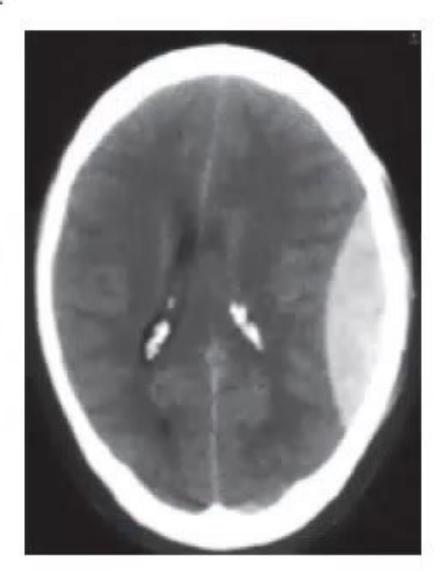
- Describe the abnormality shown in CT.
- Whats the diagnosis of this condition.
- Which 1s the commonest site and vessel involved 1n this
- What is the management?
Answer
- High density biconvex shadow
-
- Extradural hematoma
-
- Temporoparietal region, middle meningeal artery and MMA
-
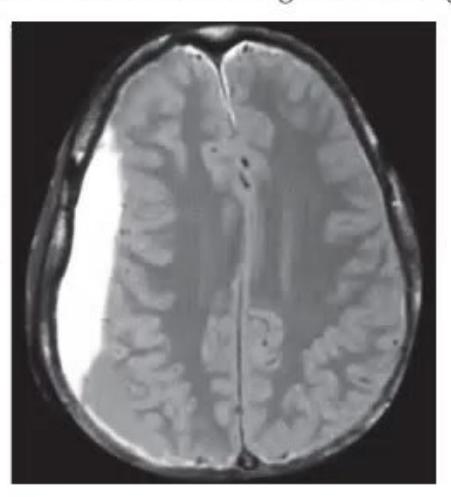
- Subdural hematoma. Subdural hematoma is crescent shaped (image below)
-
- Intubation due to sudden fall in GCS. Urgent neurosurgical referral for craniotomy.
Ans. 22. 1. a. Hyperbilirubinemia
- b. Subarachnoid hemorrhage
- c Markedly elevated CSF protein
- d. Carotenemia
-
- a. TB meningitis
- b. GBS
- c Tumors of spinal cord/brain
- d. Degenerative disorders
- e. Vasculitis
- f Multiple sclerosis
-
- a. Bacterial meningitis
- b. TBM
- c. Fungal meningitis
- d. Aseptic meningitis
- e. Neoplasms of meninges
-
- Elevated WBC or RBC count
Neurology 373 |
MNJ27-020
- Alumbar puncture 1s performed and the CSF is xanthochromatic. What are the four possible causes?
- CSF protein levels are 400 mg/dl. What are the three possible causes for the same?
- CSF glucose in 200 mg/dl and blood glucose is 112 mg/dl. List five causes for the same.
- CSF is also cloudy, what does it imply?
Answer
No model answer in source material.
MNJ27-021
Observe the images A and B given below and answer the following questions:
-
- Identify image A/level i Identify the image B/level
- i. Give diagnosis ui, Give diagnosis
- in. Differential diagnosis (any four) ii. Mention other two diseases from the same group (metabolic)
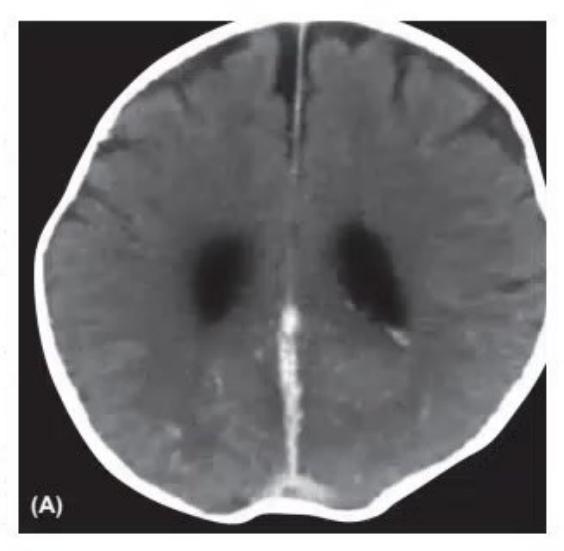
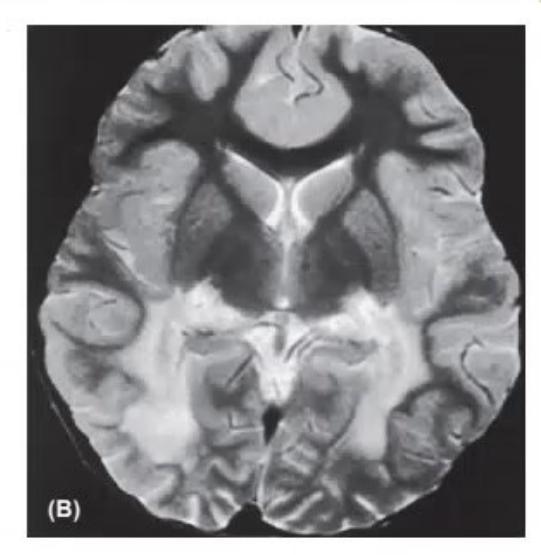
- 2
- Identify image A/level i Identify the image B/level
i. Give diagnosis ui, Give diagnosis
Answer
- i. CT with contrast at the level of lateral ventncle.
- ii. Venous sinus thrombosis.
- iii Sepsis /dehydration/ cyanotic heart/ protein deficiency /SLE /nephrotic, etc
- i MRI: T, mage at level of internal capsule and basal ganglia
- ii. Occipital white matter most involved adrenoleukodystrophy
- iii. Differential diagnosis of Refsum/Zellweger/acetyl CoA deficiency (peroxisomal disorders)
Ans. 24.1. Images:
- * Adenoma sebaceum
- * Shagreen patch
- * Ungual fibroma (Konen's tumors)
- P Tuberous sclerosis
- Other skin manifestations:
- * Ash leaf macule
- * Café au lait spots
- « Skin tags
- * Flat plaques on forehead
- * Tuft of white hair on scalp/eye lids
MNJ27-022
These are three skin manifestations of the same disease:
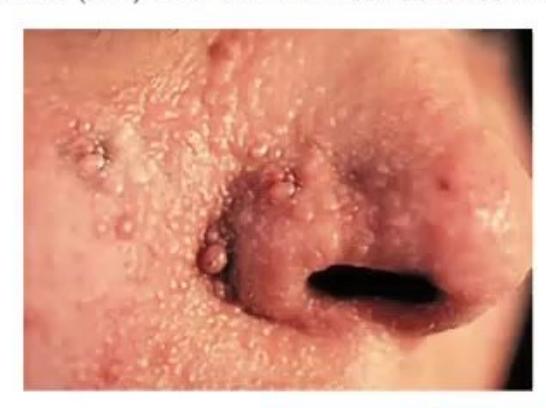
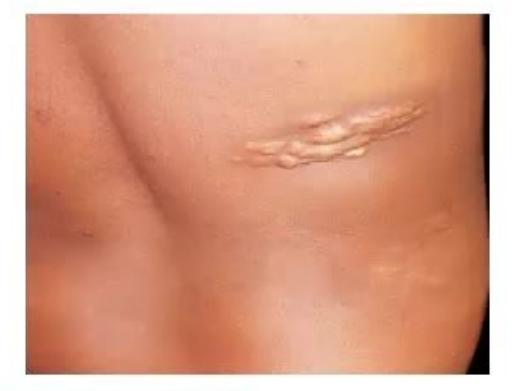
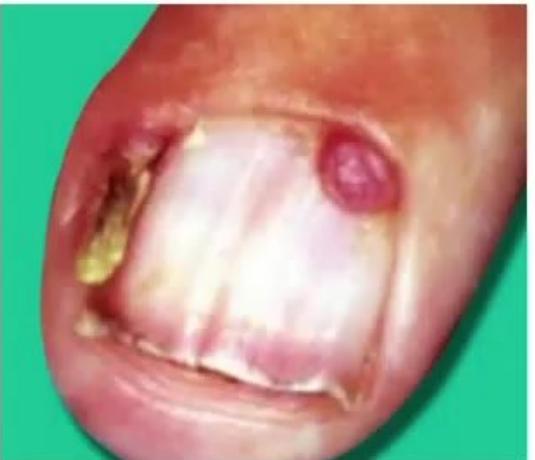

- Name these all three skin manifestations.
- Give diagnosis of this disorder
- Write (two) other skin manifestations seen in this condition.
Answer
No model answer in source material.
MNJ27-023
A 14-year-old female Anchal with history of recurrent seizures. Admitted in PICU with stroke 12 hours back. She was evaluated for same before 2 time. You order MRA (shown below):
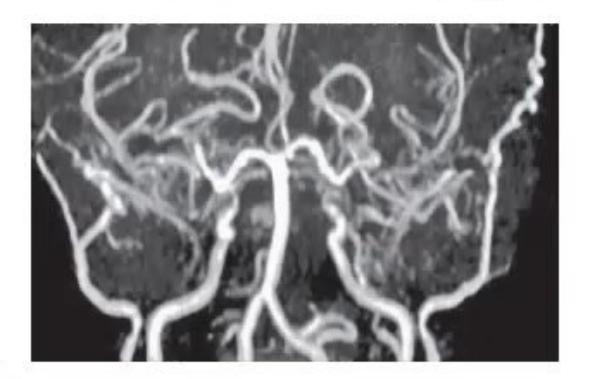
- Identify and describe the investigation.
- What is the diagnosis?
- What other disorder are associated with this disease?
- Whats the treatment of choice?
- What are syndromes associated with contralateral hemiplegia in children?
Answer
- a. MRI T,-weighted images show extensive collateralization of vessels in region of circle of Willis.
- b. MRA reveals reduced luminal calibre of left internal carotid artery in petrous, cavernous and suprachnoid segments
- bo . Moya-moya disease.
- . Down syndrome, neurofibromatosis, or sickle cell disease.
- . Direct superficial temporal artery (STA) to middle cerebral artery (MCA) bypass 1s considered the treatment of choice.
- . Weber syndrome, Benedict syndrome, Millard-Gubler syndrome
- . Setting: Sun sign, enlarge ventricals (hydrocephalus)
- . a. Extensor plantar
- b. Increased tone (LL)
- . Name the treatment options (any two)
- a VP shunt
- b Endoscopic third ventriculostomy (ETV)
- . a. Extensor plantar
- Acute transverse myelitis/SOL in spine (Koch/vascular infarct/bleed /bony spikule)
- MRI spine
- IV steroid pulse
- Post/ para-infectious/SLE with thrombosis/Lyme disease
- HC < 35D below for mean age and sex
- Primary causes—familial, Down's syndrome, Edward's syndrome, cri du chat syndrome
- . MRI brain, TORCH, karyotyping, urme AA profile
MNJ27-024
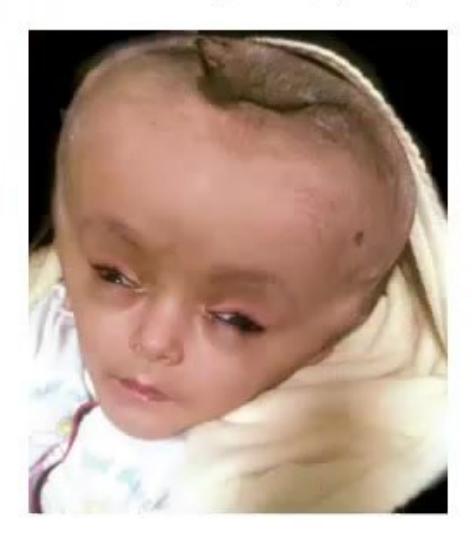
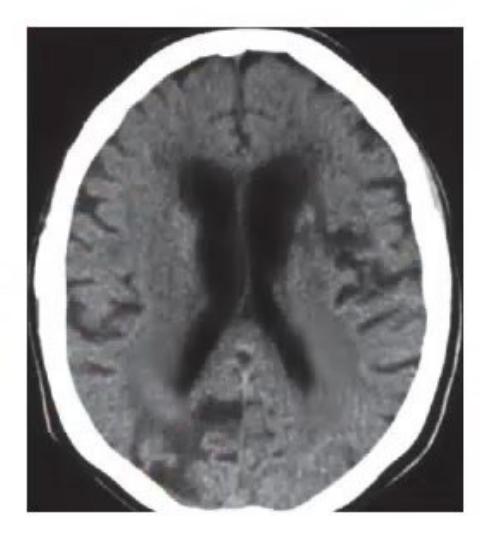
- Identify the clinical sign and neuroimaging sign.
- What abnormalities are hikely on motor system examunation?
- Name the treatment options (any two)
Answer
No model answer in source material.
MNJ27-025
An 8-year-old girl Priyanka came in emergency with history of rapidly progressive, both lower limb weakness since 3 days. She was apparently normal except for a history of sore throat and bilateral neck swelling with fever about 20 days back. Now she is very depressed because of illness as she has exam after 7 days. She started with difficulty while walking and not being able to pass urine despite of the sensation being there. On
examination: Normal sensorium and cranial nerves. Had normal neurology findings in both upper limb and shoulders examination. Lower limb, symmetrical flaccid paralysis; distal more than proximal. Deep tendon reflexs were exaggerated and planters were extensors. There was a sensory discrepancy below T8 and temp/light touch were affected. Vibration and position were normal. Her urinary bladder was palpable:
- 4, Name (any 2) causative factors for this condition
- Whats your differential diagnosis?
- What 1s the investigation of choice?
- Treatment.
Answer
No model answer in source material.
MNJ27-026
An 18-month-old male child Rahul presents with complaints of delayed milestone on examination HC was 42 cm and he still not developed all milestones according to his age:
- 3, What investigation you advice in this child?
- Whats definition of microcephaly?
- What are causes of primary microcephaly?
Answer
No model answer in source material.
MNJ27-027
A 14-month-old male child Robert presents with cough, fever and one episode of generalized seizure for 4 minutes. He has history of similar episode in 2 months back:
- What 1s most probable diagnosis?
- What 1s risk for future epilepsy?
- What are major risk factors for recurrence.
- Will you do lumbar puncture in this patient?
- What are indications of neuroimaging in this disease?
- What is current status in use of clonazepam?
Answer
, 1. Febrile seizure
-
In simple febrile sz—1%, complex—6%
-
Age <1, duration of fever <24 hours, fever 38-39°C
-
aor Yes, children <1 year age LP should be done
-
- Complex febrile seizure, neurological examination 1s abnormal
-
- Recurrent febnle sz, anxious parents
MNJ27-028
Match the common side effect of these drugs:
-
Valproic acid d Hirsuhsm
-
Carbamazepine a. Irreversible visual field defect
-
Lamotrigine b. Stevens-Johnson syndrome
-
Topiramate c. Weight gain
-
Vigabatrin e Hyperammonemia
-
Phenytoin f Glaucoma
Answer
- c, 2.b, 3f, 4e, 5.a, 6d
MNJ27-029
A mother of 6-year-old child with refractory seizure came to you that she found on google that some special type of diet can stop seizure in children:
- 4, What 1s formulation of this diet?
- What 1s this diet she 1s taking about?
- What are indications to use this diet?
- What are contraindications to use this?
Answer
- Ketogenic diet
-
- Indication: GLUT 1 deficiency, pyruvate dehydrogenase deficiency, myoclonic epilepsy, Rett's syndrome, tuberous sclerosis complex.
-
- Cl—carmitine deficiency, }-oxidation deficiency, medium chain acyl dehydrogenase deficiency
-
- 3:1 or 4:1 fat' Non fat ratio
MNJ27-030
**A 7-year-old male child came to hospital with complaints of ataxia from last 3 months along with dysarthric speech. On examination, Romberg test is positive. But DTR was absent and plantar is extensor and loss of vibration sense. Nystagmus is also present on examination:
(Asked in Exam)
[ Neurology 367 |
- Whats probable diagnosis and what is inheritance?
- Where parts of brain involve in this disease?
- What are causes of recurrent ataxia?
- Whats cause of death 1n this patient?
Answer
- Friedreich ataxia: AR, GAA repeat
-
- Spinocerebellar tracts, dorsal columns, spinal cord
-
- Brain tumor, phenytoin, migraine, multiple sclerosis, ADEM
-
- Cardiomyopathy—CHF
MNJ27-031
**A 9-year-old female child came with complaints of abnormal movement. Mother told that these movements are fast and increase when she is in stress and disappear in sleep. On examination, child has difficulty in keeping protruded tongue:
- Whats probable diagnosis of this condition?
- What are hallmark features of this?
- What important inveshgation you will order?
- Whats treatment for this?
Answer
- Chorea (Sydenham's chorea)
-
- Chorea, hypotonia, emotional hability
-
- 2D echo to see cardihs
-
- Resolve in 6 months, some need prednisolone 2 mg/kg /day—t weeks.
-
- Retts syndrome
-
- Repetitive hand wringing movement
-
- 9 month to 1 year of age
- 4, Ataxic gait and fine tremors of hand
- 5. Motor, language
Ans. 35,
| Milestone | Age of attaining (in months) |
|---|---|
| * Follows moving object 150° | 2 |
| * Sustain social contact, listen to music | 3 |
| * Polysyllable vowel sound | 7 |
| * Creep or crawl | 10 |
| * Plays simple ball game | 12 |
| * Hope of feet | 48 |
| * Name 4 colors | 60 |
| * Make tower of 4 cubes | 18 |
| * Dress and undress | 60 |
| * Put 3 words together | 24 |
MNJ27-032
This 3 yrs old female child geeta came with neuro-regression from early infancy with this (see in pic)jabnormal movements and autism, Her head circumference is also below 3rd percentile.
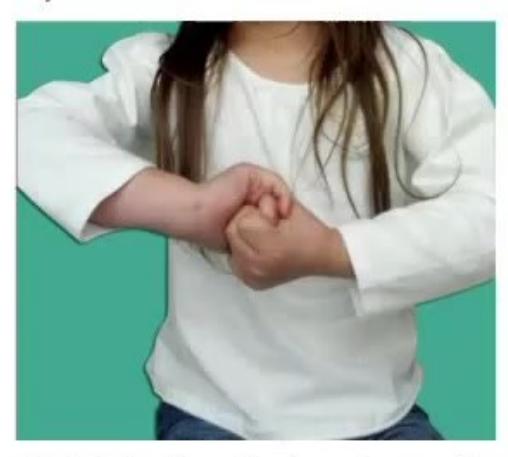
- What 1s the diagnosis?
- What is the hallmark of this disorder?
- What 1s age of onset of neuro-regression?
- Which are earliest neurological findings?
- Which milestones are delayed.
Answer
No model answer in source material.
MNJ27-033
Write down the age of attaining the milestones in month
Milestone
- * Follows moving object 180
- * Sustain social contact, listen to music
- * Polysyllable vowel sound
- * Creep or crawl
- * Plays simple ball game
- * Hope of feet
- * Name 4 colors
- * Make tower of 4 cubes
- * Dress and undress
- * Put 3 words together
Answer
No model answer in source material.
MNJ27-034
A 32 weeks preterm baby with birth weight of 1.52 kg was born with HC of 26 cm (3rd centile). Otherwise stable baby has bilateral arthogryposis with fixed flexion deformity. He has episode of seizure at 6 hours of life which was difficult to control after routine AED. His CBC showed platelets count 56000 and low Hb. A cranial USG was done (Image below)
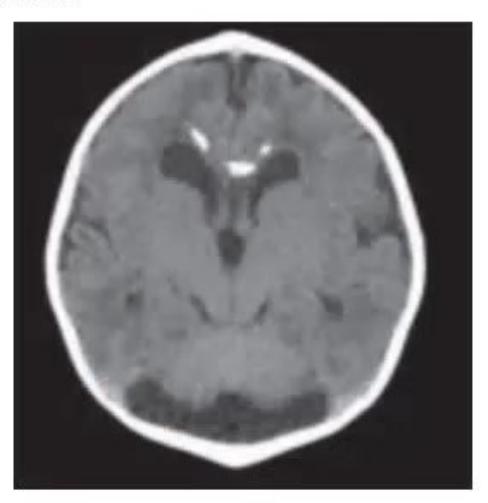
- What 1s most likely diagnosis?
- What three tests you will perform to confirm the diagnosis?
- Elaborate findings in USG brain.
- What are important sequelae?
Answer
- Congenital CMV infection
-
- Serology for CMV, CSF exammmaton for CMV, ophthalmological review
-
- Periventricular echodensities
-
- Sensorineural deafness, microcephaly, development delay.
MNJ27-035
A 4-month-old male baby presented in OPD for a prominent forehead. According to mother, this has always been the case through to a lesser extent then he was born. The baby is otherwise well, weight following the 0.4th centile, length along 9th centile and head circumference is at 50th centile. On examination baby has very small anterior fontanelle and frontal prominence. X-ray head was done (Image below)
| Neurology 369 |
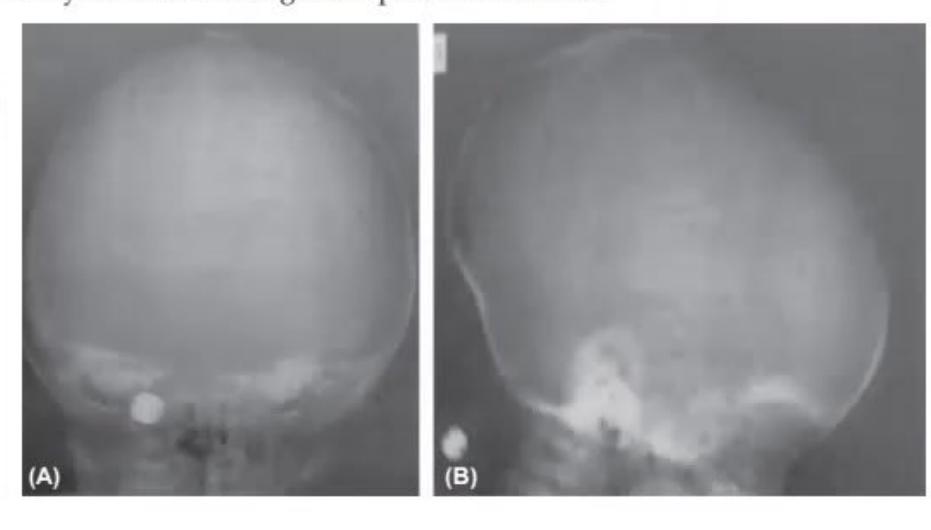
- What 1s skull X-ray shows images A and B?
- What 1s possible diagnosis?
- How will you make a management plan for this child?
Answer
- Image A: Fused sagittal suture, Image B-Dolicocephalic head shape
-
- Sagittal cramostenosis
-
- Refer to maxillofacial surgeon and his team for crarmofacial surgical assessment.