MNJ13-001
Mother of a 14-day-old baby came to you to know about the polio vacine:
- What 1s meaning of polio drop at birth and what1s 1ts significance?
- What are the contents of OPV and what is the new name of OPV?
- Why multiple doses of OPV are recommended despite it is a live vaccine?
- What specific instruction has to be given to the mother after OPV administration?
Answer
No model answer in source material.
MNJ13-002
A 32 weeks pregnant lady found to be HBsAg positive, gives birth toa 3 kg male baby:
- Whats the risk of the baby getting hepatitis B infection from mother?
- How do you protect the baby from getting this infection?
- Is there a possibility for the baby to be infected 1m spite of proper management?
- What 1s the prognosis in the infected newborns?
Answer
No model answer in source material.
MNJ13-003
All vaccines are susceptible to loss of potency when exposed to warm temperatures:
- Whats meaning of cold chain?
- What is a vaccine carner?
- How long can you keep vaccines in a vaceime carrier when going in field for vaccination
Answer
No model answer in source material.
MNJ13-004
Answer the following questions regarding MMR vaccine:
- a. Rash immediately after giving the vaccine
Immunization 175 |
- b Parotid swelling

- What is the upper age limit of giving this vaccine in children?
- Whats the dose and by which route is 1 given in children?
- Which of the following side effects may occur after MMR vaccination (True /False)?
a. Rash immediately after giving the vaccine
c. Cardits - What is the current schedule of MMR vaccine?
Answer
No model answer in source material.
MNJ13-005
* Answer the following regarding UIP (Universal Immunization Programme):
- 5, What are the immunization targets in the UIP?
- When was the programme initiated in India?
- What was the main aim of the UIP?
- What are the objectives of UIP other than the immunization of children?
- Name the vaccines used im UIP in India.
Answer
No model answer in source material.
MNJ13-006
Many vaccines have been licensed for use in India (for routine office use):
- Name 1 live-attenuated bacterial vaccines used 1n India.
- Name 4 live-attenuated viral vaccines used in India.
- Name 2 killed bacterial vaccines used m India
- Name 2 killed viral vaccines.
Answer
No model answer in source material.
MNJ13-007
Certain substances like aluminium salts are used in some vaccines as adjuvants:
- Name 2 vaccimes in which adjuvants are used in India.
- Give 2 advantages of using adjuvants im various vaccine
- Give 2 drawbacks of using adjuvants in vacine
- Name some newer adjuvants under trial.
Answer
No model answer in source material.
MNJ13-008
A 5-year-old well child has no BCG scar. According to the parents a definite scar was present initially. But after that it disappears:
- What are the possibilities of absence of BCG-scar?
- Do you need to re-vaccinate with BCG of this child?
- Can you give BCG to this child along with OPV and DT as he 1s due for these vaccine?
- How should you clean the skin before giving BCG?
Answer
No model answer in source material.
MNJ13-009
A child has developed a painless nodule in the thigh following DPT injection given 2 months back at thigh:
- What needs to be done for this condition?
- What are the contents of a standard recommended dose of DPT vaccine in children?
- Can DPT vaccine be frozen when not in use?
- List all absolute and relative contraindications to the use of DTP vaccine
Answer
No model answer in source material.
MNJ13-010
A 13-year-old boy came to casualty for a dose of TT injection as he had sustained a trivial fall. He had received all his immunizations as per schedule and also had been taking TT after every fall in last 3 years.
- Does he need a dose of TT now for this fall?
- Are there any hazards of taking repeated unnecessary doses of TT injections?
- What you know about Td vaccine?
Answer
No model answer in source material.
MNJ13-011
A child developed parotid swelling 10 days after MMR vaccine given as per schedule:
| 176 OSCE Clinical Pediatrics
- Whats the likely cause of this parotid swelling?
- Can MMR be given to children who already have had mumps in the past?
- Should MMR be given only to girls?
- Should adolescent girls be given MMR vaccine if they have not received vaccine 1m their childhood?
- What 1s recent change in schedule of MMR vaccine in 2021?
Answer
No model answer in source material.
MNJ13-012
A mother of 2 children is worried as her husband is down with typhoid from last 4 days and she wants to immunize the children:
- Do you recommend the children be vaccinated against typhoid?
- How long does it take before the protection becomes effective following vaccination?
- What other precautions you would advice the mother about thyphoid.
- What are the vaccines against typhoid available?
- What are recent changes in 2021 in typhoid vaccine?
Answer
No model answer in source material.
MNJ13-013
Blood banks refuse to take blood from donors with history of jaundice few days back:
- Does it mean that all cases of jaundice are due to hepatitis B?
- Can HAV or non-A non-B hepatitis be transmitted through blood transfusion?
- Does vaccination against hepatitis B protect against hepatitis D also?
- Whats the efficacy of transmission of hepatitis B via infected blood transfusion?
Answer
No model answer in source material.
MNJ13-014
A pregnant lady presents with history of dog bite 3 hours back:
- Is rabies prophylaxis indicated for this lady?
- Is transplacental transmission of rabies to the foetus possible?
- Cana lactating mother be given rabies vaccine if dog bite occur.
- Can neonates be given rabies vaccine?
Answer
No model answer in source material.
MNJ13-015
A child presents with history of questionable bite by a stray animal:
- 4, What are the dog vaccines available against rabies and what 15 the commonly used schedule?
- Is rabies prophylaxis indicated in this child?
- What is Essen protocol?
- Can a vaccinated dog transmit rabies to human?
Answer
No model answer in source material.
MNJ13-016
A doctor would like to give Hib vaccine along with OPV, DPT, Hep B and MMR to his patient at the same sitting:
- Can all these vaccines be given on the same day in a child?
- How many types of conjugate vaccines are available against Haemophilus influenzae type b?
- Why are Hib vaccines combined with carrier protem?
Answer
No model answer in source material.
MNJ13-017
The parents of a 15-year-old teenager would like to protect her from chickenpox as her exams were nearing. According to them she has never suffered from chickenpox earlier:
- Whats the vaccine available for chickenpox?
- Would you like to vaccinate her now?
- If yes, what 1s the dose schedule?
- What 1s the protective efficacy?
- Whats the change in new schedule 2021?
Answer
No model answer in source material.
MNJ13-018
* A baby born to a HIV positive mother is brought for immunization at your clinic:
- Write down IAP vaccine schedule for this child.
2 A3-month-old baby develop axillary lymphadenitis after BCG vaccine What will you advice for this?

Answer
No model answer in source material.
MNJ13-019
An affluent mother would like to immunize her child against hepatitis A?
- How many types of vaccines have been licensed for use? And what are recent changes in 2021?
- Would you vaccinate this child for Hep A?
- Give two indications for administration of Hep A other than routine schedule.
- Give other important measures to reduce hepatitis A infection.
Answer
No model answer in source material.
MNJ13-020
*
- Write the vaccimation schedule for a child who has been bitten by a dog 3 hours back. The patent had been bitten by the same arumal 10 months back and has received a full course of vaccinations at that time.
- What are classes of dog bite and what are treatment recommended for them?
Answer
No model answer in source material.
MNJ13-021
Give the answer about vaccine preparation:
- What 1s procedure called lyophylization?
- Name 3 lyophylized vaccines.
Answer
No model answer in source material.
MNJ13-022
"
- What is meaning of IPV?
- How many doses IPV are needed 1n a child first 2 years of life as per LAP recommendations and what are the recent changes?
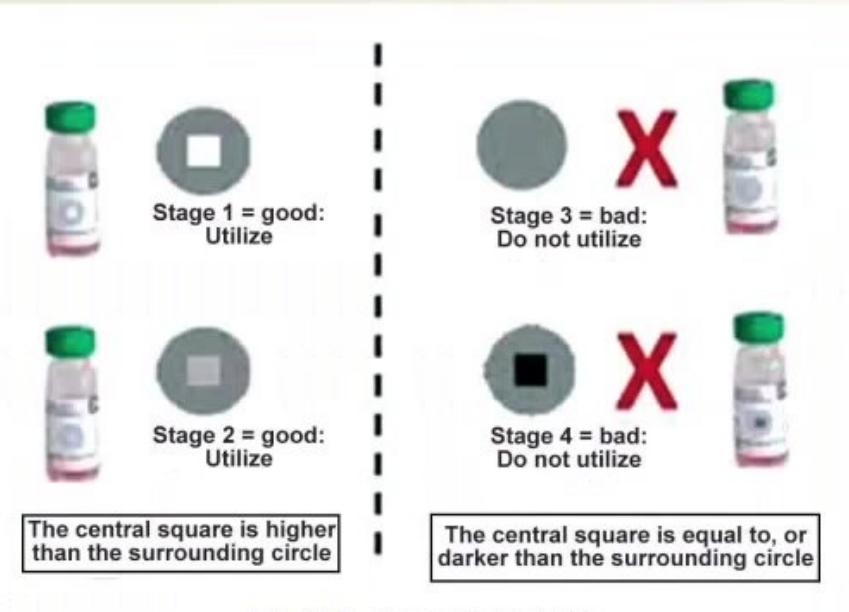
- What does VVM mean in context to a polio vaccine vial? And when not to use vaccine according to VVM?
- The average risk of vaccine induced poliomyelitis with oral polio vaccine.
- Write down contents of IPV.
Answer
No model answer in source material.
MNJ13-023
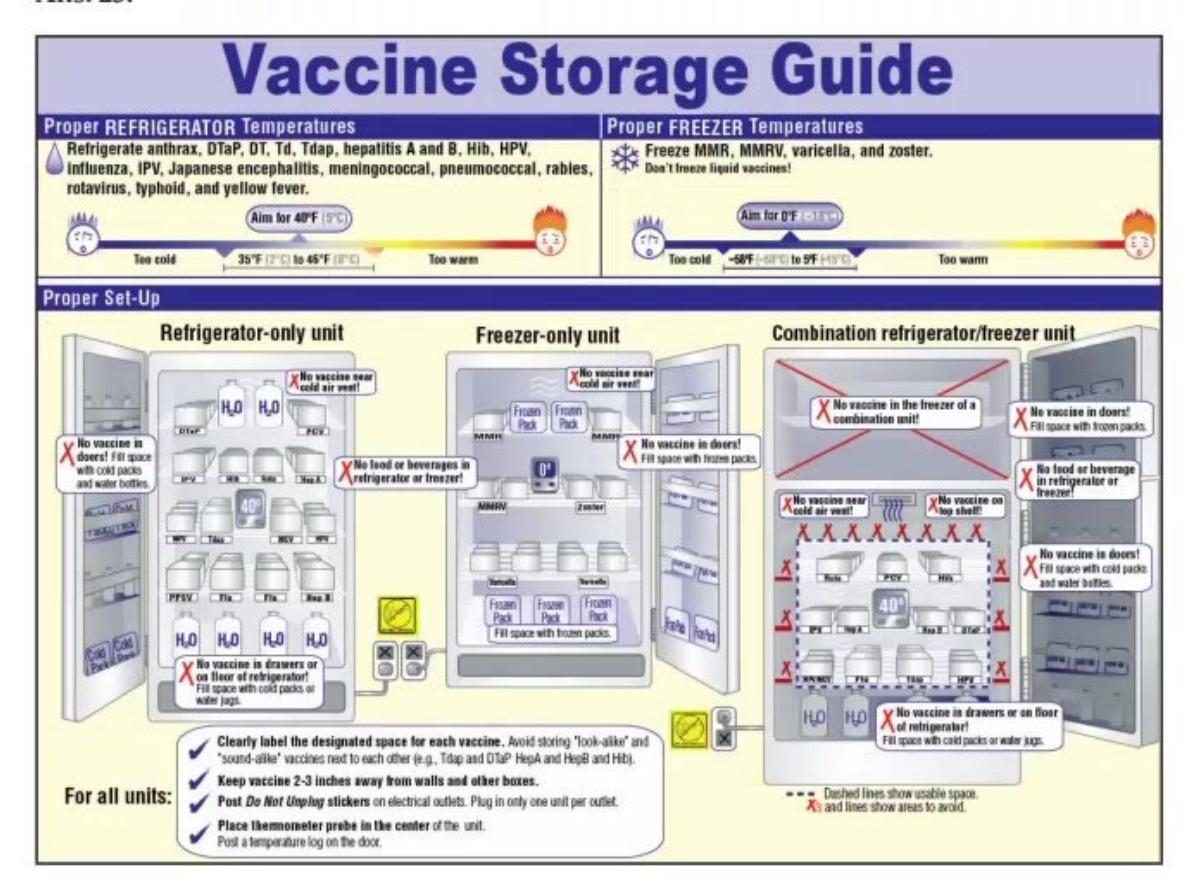
Draw a figure of a refrigerator (cross section) to illustrate the placement of vaccines, diluent.
Answer
No model answer in source material.
MNJ13-024
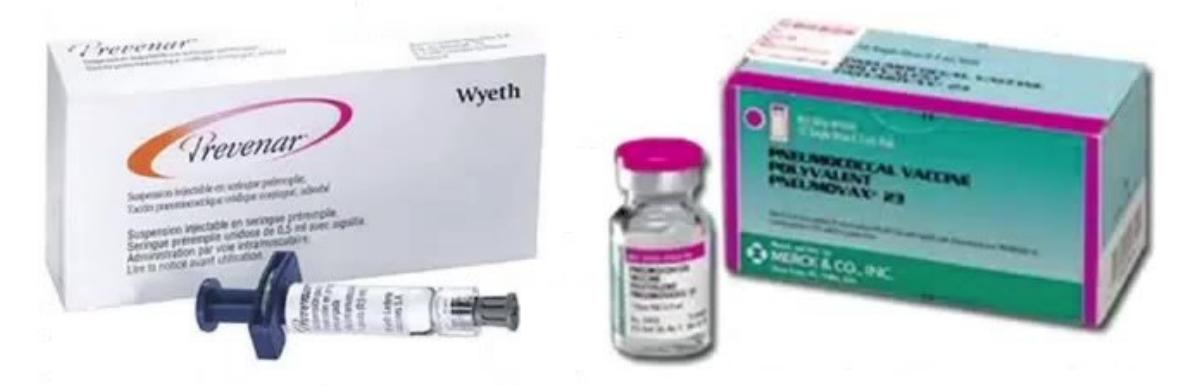
What is the dosage schedule of new pneumococcal vaccine for a 4-year-old child who is suffering from sickle cell disease? Which new pneumococcal vaccine is available now.
Answer
No model answer in source material.
MNJ13-025
A 3-year-old male child from UP, admitted as a case of Japanese encephalitis from last 7 days. Father want to know how can he protecthis younger boy of age 17 month from this disease?
- What is indication for this vaccine?
- Which vaccine of JE recommended by IAP?
- What is dose and schedule of JE vaccine?
Answer
No model answer in source material.
MNJ13-026
**
- Name strain/strains of cholera vaccine in India.
- Name two contraindications (other than hypersensitivity, etc.) for use of cholera vaccine.
- Name the WHO approved available cholera vaccine.
- What is available rapid test for diagnosis of cholera?
- Write two drugs above 9 years of age and two drugs below 9 years of age.
Answer
No model answer in source material.
MNJ13-027
** Enumerate adolescent (for a 12-year-old) immunization schedule (IAP recommendation): Who has received immunization as per EPI at a government hospital till 8 years.
Answer
No model answer in source material.
MNJ13-028
** Mother brings her 14-year-old daughter Geeta for immunization advice. She has already reached her 10 years Tdap and 2nd dose of MMR vaccine:
- A: Serotype
- B. Schedule
- C: Disease protection
- What vaccine will you advice?
- Give information on different types of vaccines (with respect to)
b. Schedule
Answer
No model answer in source material.
MNJ13-029
* Match the following:
1 BCG Toxoid and killed bacteria
2 OPV Live-attenuated bacteria
3 DPT Bacterial subunit
- Hib Viral antigen
5 Hep B vaccine Live-attenuated viral 6 Typhoid VI Killed virus
7 Hep A vaccine Capsular polysaccharide 8 Acellular pertussis Capsular polysaccharide
Answer
No model answer in source material.
MNJ13-030
* Answer the following:
- What is the diluent used for BCG?
- What is the diluent used for MMR?
- How long can reconstituted BCG be used at a vaccine centre?
- How long can reconstituted MMR be used at a vaccine centre?
- Name 5 vaccines which should not be frozen at any cost.
- What does IAP recommend at 5 years (DPT/DT)?
Answer
No model answer in source material.
MNJ13-031
Answer the following questions about rabies vaccine:
- What are class III bites according to WHO bite category?
- What is the schedule of post-exposure vaccination in a case of dog bite?
- What is the indications of extended immunisation?
- What are the prerequisites for wound suture in rabies bite cases?
Answer
No model answer in source material.
MNJ13-032
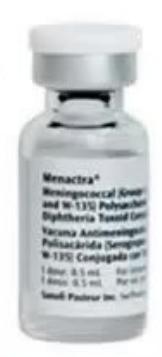
Answer the following questions about meningococcal conjugate vaccine (MCV):
-
- 4 IAP recommendations for use (any 2) other than routine use
-
- What are two vaccine available of MCV?

- Dosage and administration of MCV
- Composition of MCV
- Contraindication for MCV
- What are two vaccine available of MCV?
Answer
No model answer in source material.
MNJ13-033
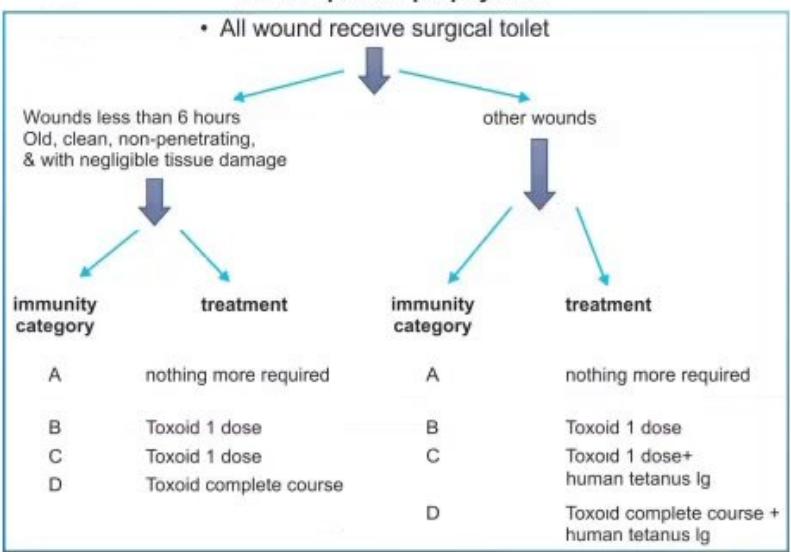
A 11-year-old boy Mahesh is brought with a penetrating crush injury with acompound fracture. His immunity and immunization status for tetanus is unknown according to mother. Which of the following action is correct with regard to tetanus prevention?
- b Toxoid 1 dose
- ec Toxoid 1 dose + TIG
a. Nothing 1s required
d. Toxoid complete course + TIG
Answer
No model answer in source material.
MNJ13-034
His §-year-old sister Ritu has multiple clean abrasions. She has earlier received 3 doses of DPT in the first year and 1 booster at 1% year and no other vaccines after that. What prevention will you carry out?
- b TT1
- ce. TT1 + TIG
a. Nothing
d. TT complete course + TIG
Answer
No model answer in source material.
MNJ13-035
An 8-month-old child Tarun with history of egg allergy in the form of generalized urticaria is brought to your hospital:
- * MMR, chickenpox vaccine, influenza IM vaccine, ntranasal influenza and yellow fever vaccme.
- What advise will you give, eg skin testing/contraindicaton, etc (w.r.t his allergy and vaccine) for?
- Which vaccines (any 2) are contraindicated in patients with allergy to neomycin?
- What HBV immunization instruction will you give to a newborn 1.8 kg born 2 hours back to a mother whose HBsAG is not known?
Answer
No model answer in source material.
MNJ13-036
- * Varicella
- « Measles/MMR
ANSWERS
- Ans. 1. 1. Polio drops at birth is called zero dose polio drops. It is responsible for better absorption of polio vaccine because in neonatal period as there is no gut flora to interfere Also as it is the first contact period between the baby and the health care provider, it enables logistic ease of administration.
-
- Each dose of OPV contains:
-
Type 1 106 TCID50
Type 3 105.5 TCID50
*Type 2 polio antigen has been withdrawl now. New name of oral polio vaccine is Bipolio.
- Because of poor antigenicity of OPV, multiple doses of OPV are needed for satisfactory seroconversion. Thermal lability requiring stringent cold chain maintenance and interference by enteroviruses in the gut for proper uptake of the oral vaccine.
- The mother need not be given any specific instructions after OPV, except that she
has to report for subsequent immunizations regularly - Ans. 2. 1. This baby has a 30% chance of getting the infection. If the mother is also HBeAg positive, the risk rises to 80–90%.
- I will give the first dose of hepatitis B vaccine within 12 hours of birth. Hepatitis B immunoglobulin (HBIg) preferably should also be given to the baby on the other thigh simultaneously. This is then followed by 2 more doses of the vaccine at 1 and 2 months of age and a booster at 1 year of age.
- Yes, the baby can be found to be infected in spite of proper management if the baby has already acquired the infection in utero.
- Once infected, 90% of the newborns become chronic carriers and 25% of them go
onto develop complications like chronic hepatitis, cirrhosis and hepatocellular
carcinoma.
- Ans. 3. 1. The system of transporting, distributing and storing vaccines under refrigeration using any convenient methods, from the manufacturer right up to the point of use is referred to as the cold chain
- A vaccine carrier is a thick-walled, insulated box with a tight lid, used for carrying 6–8 vaccines for use in field.
-
- One working day in vaccine carriers
- Ans. 4. 1. No upper age limit
-
- 0.5 ml subcutaneous
-
- False, True, False
-
- Three dose schedule at 9 month, 15 month and 4 years of age.
-
- Ans. 5. 1. UIP watch initiated in 1985
- Main aim was to immunize all children before the first birthday against 6 vaccine preventable diseases and TT immunization of pregnant women
- Self sufficiency in vaccine production
Establishment of a functional cold chain system
Introduction of district level monitoring
Immunization 181
Ans. 6. 1. BCG
- Ans. 7. 1. DPT, hepatitis B vaccine
- Adjuvants increase effective particle size and immunogenicity of antigens resulting in antibody production that is many times higher than that evoked by unadjuvanted vaccines.
They also increase the stability of the vaccines.
They induce only humoral immunity and do not enhance the immune response to all antigens
They increase the cost of the vaccine and also adjuvanted vaccines cannot be frozen but are freeze dried
- Ans. 8. 1. Fading away of the scar over time; improper uptake of the BCG due to inadequate potency/improper technique
- Mantoux test should be done and if there is no reaction (≥5 mm) even after 12 weeks, then BCG should be repeated
-
- Yes BCG can be given along with OPV and DT
- The skin should be cleaned only with sterile water before BCG, as cleaning with spirit/other disinfectants may destroy vaccine bacillus and affect the immune response adversely.
- Ans. 9. 1. Nothing needs to be done as a painless residual nodule will resolve on its own
-
- Each 0.5 ml contains:
-
Diphtheria toxoid 25 Lf
Tetanus toxoid 5 Lf
Pertussis 4 I U (20,000 million killed bacteria)
- DPT vaccine should never be frozen and it should be stored at 2-8°C
Relative
-
c Persistent or inconsolable cry lasting 3 hours or more within 48 hours
-
Ans. 10. 1. No. He does not need a dose of TT now as he has had all his immunizations per schedule
- Unnecessary doses of TT injections may lead to decreased immunogenicity, hypersensitivity, haemolytic anaemia, amyloidosis
- Td vaccine consists of tetanus toxoid: 5 Lf along with a smaller component of diphtheria toxoid: 2 Lf/dose instead of the regular 25 Lf as in DPT, recommended
for use in older children beyond 7 years of age instead of TT, so as to simultaneously boost immunity against both tetanus and diphtheria, DPT/DT should not be given to older children >7 years as it can cause severe reactions.
-
Ans. 11. 1. It is most likely a side effect of mumps component of the MMR vaccine, as parotitis occurring within 1–2 weeks after vaccination is a known complication.
- Parotitis itself can have different etiologies other than mumps. Moreover MMR protects against measles and rubella as well, hence MMR can be given to children who have had mumps in the past
- MMR should be given to both sexes as both are vulnerable to measles, mumps as well as rubella.
-
- It is advisable to give MMR to adolescent girls if they have not received the same in their childhood in order to prevent the possible congenital rubella syndrome in the future offspring especially if the mother has no protective antibodies against rubella. However, pregnancy following the vaccine should be avoided for at least 3 months.
-
- 3 doses of MMR at 9, 15 month and 4 year of age.
-
Ans. 12. 1. It is advisable to immunize the children against typhoid at 6 month of age (conjugated)
-
- It takes 2-3 weeks before protection becomes effective following vaccination.
- Mother should be advised about environmental sanitation, safe drinking water and hygienic food habits
-
- Conjugated vaccine (new)
- Recent changes 2021 6 month—only conjugated vaccine
Typhoid conjugate vaccines (6 month to 45 years), available and licensed in india.
Only a single dose of the vaccine at 6 month.- · MMR vaccine should be maintained
- · Boosters: No need of any booster dose
- · Duration of protection
- · Catch-up schedule. Up to 45 years
-
-
Ans. 13. 1. Though all cases of jaundice are not due to hepatitis B, it is a fairly common infection in our country, hence blood banks are justified in refusing blood from a donor with history of jaundice.
- HAV is not transmitted through blood. Non-A non-B hepatitis can be transmitted through blood as well as feco-oral routes.
-
- Vaccination against hepatitis B also protects against hepatitis D, as hepatitis D is an incomplete virus and depends on co-existing hepatitis B infection for its growth.
-
- Nearly 100%
-
Ans. 14. 1. Yes, pregnancy is not a contraindication to the vaccine.
-
- Transplacental transmission of rabies is not a possibility as rabies virus is of high molecular weight and cannot be transported across the placental barrier.
- Yes, a lactating mother has to be given rabies vaccine if required as it does not produce any harmful effects on infants.
-
- Neonates have to be given rabies vaccine in the event of a bite
-
-
Ans. 15.1. Yes, even questionable bites by any stray animal does require rabies prophylaxis as risk of rabies overrides all other considerations.
-
. Essen protocol is the WHO standard schedule which comprises 5 injections of rabies vaccine on days 0, 3, 7, 14 and 28 or 30
-
. Yes, even vaccinated dogs can transmit rabies especially if they have not received booster doses regularly and also if there was inadequate potency of the vaccine in the first place.
-
. Dog vaccines available are: Live-attenuated vaccine, nerve tissue vaccine and tissue culture vaccine.
- Dose: 3 ml single dose followed by booster every 3 years.
-
Ans . 16.1. Hib vaccine can be givenon the same day as OPV, DPT, Hep B, MMR, but should be given on different limbs.
- . 4types of conjugate vaccines are available at present: PRP-D, PRP-T, PRP-CRM and PRP-OMP.
- . The vaccines become adequately immunogenic only when combined with a T-cell dependent protein carrier.
-
Ans Fae be ee Live-attenuated varicella vaccine containing OKA strain 1s available
- . Itis advisable to vaccinate her as children acquiring infection in older age groups tend to get a more severe disease. Also, varicella is usually never a subclinical infection. Hence, a nagative past history of chickenpox indicates susceptibility to infection
- . Two doses of 0.5 ml per dose subcutaneously one month apart.
- . Protective efficacy is said to be 98% in normal vaccines and 80-90% in immunocompromised hosts
- . Second dose should be given after 3 months of first dose.
-
Ans See Table 13.4.
- . No treatment needed, if persist than I/D, never use at
-
Ans Presently live and mactivated type of vaccines are available 2021—single dase of live vaccine (>12 months of age) and 2 doses of killed vaccine (at 12 and 18 months).
- . Lf fmance is not a constraint the child can be vaccinated as the available vaccine is safe and effective with an efficacy of 95-100% seroconversion
- . Travellers to endemic areas, laboratory workers.
- . Improved sanitation and personal hygiene.
-
Ans 2 doses of the vaccme are recommended on day 0 and 3, only (if history of bite is less than 3 years and when child 1s fully smmumized for that)
-
- See Table 13.5.
-
-
Ans. . Live vaccines in powder form and need reconstitution before usage
-
- Measles, BCG, MMR and oral typhoid vaccine
-
-
Ans. . Enhanced potency inactivated polio vaccine (eIPV)
-
- LAP-3 doses of 6, 10 and 14 weeks along with DPT and 4th dose at 16-18 months, now 5th dose of IPV 1s recommended at 4-6 years of age along with DPT
- . Vaccine vial monitor (VVM) (see Fig. 13 1 on page 185)
- . 11m 2.5 x 10° doses
- . Type 1-40 D
- Type 2-8 D
- Type 3-32 D
-
| Table 13.4: [APCO! recommendations for immunization of HIV infected children | ||
|---|---|---|
| Vaccine | Asymptomatic | Simnptomatic |
| BCG | Yes (at birth) | No |
| DIwP/DTaP/TT/Td/Tdap | Yes as per routine schedule at 6w, 10w, 14w,18m and 5 years | |
| Polio vaccines | IPV at 6, 10, 14 weeks, 15-18 months and 5 years If indicated IPV to household contacts If IPV is not affordable, OPV should be given* |
|
| Measles vaccines | Yes, at 9 months | Yes if CD4 count +15% |
| MMAR vaccine | Yes, at 15 months and at5 years | Yes if CD4 count >15% |
| Hepatitis B | Yes, at 0, 1 and 6 months | Yes, four doses, double dose, check for seroconversion, regular boosters |
| Hib | Yes as per routine schedule at 6w, 10w, 14w and 18 months | |
| Pneumococcal vaccines (PCV) |
Yes as per routine schedule at 6w, 10w, 14w and 15 months | |
| Inactivated Influenza vaccine | Yes as per routine schedule beginning at 6 months, revaccination every year |
|
| Rotavirus vaccine | Insufficient data to recommend | |
| Hepatitis A vaccine | Yes | Yes, check for seroconversion, boosters if needed |
| Varicella vaccine | Yes, two doses at 4-12 weeks interval |
Yes, if CD4 count >15%, two doses at 4-1? weeks interval |
| Vi typhoid vaccine | Yes as per routine schedule | |
| HPV vaccine | Yes as per routine schedule 2 doses at 0, 6 months at 9 years |
"OPW has been found to be generally safe in HIV infected especially in carly stages
| Table 13.5: Cotegorie | ontact ond recommended post-exposure prophylaxs (¢ |
|---|---|
| Categories of contact with suspect rabid animal | Post-exposure proplijlaxis measures |
| Category —touching or feeding animals, licks on intact skin |
None |
| Category [l—nibbling of uncovered skin, minor scratches or abrasions without bleeding |
Immediate vaccination and local treatment of the wound |
| Category [[—single or multiple transdermal bites or scratches, licks on broken skin; contamination of mucous membrane with saliva from licks, contacts with bats |
Immediate vaccination and administration of rabies immunoglobulin; local treatment of the wound |
All category I and II] exposures assessed as carrying a risk of developing rabies require PEP. This risk is increased if:
- The biting mammal is a known rabies reservoir or vector species;
- The animal looks sick or displays an abnormal behaviour;
- A wound or mucous membrane was contaminated by the animal's saliva;
- The bite was unprovoked; and
- The animal has not been vaccinated.
Immunization 185
Fig. 13.1: Vaccine vial monitor
Ans. 23.
Proper Management
Designate one fully trained staff member to be the primary vaccine coordinator and at least one person to be backup. Ensure ongoing training for all immunization staff
Manage vaccine inventory
- Review your vaccine inventory on a monthly basis and with each vaccine order to avoid over-ordering.
- Check vaccine expiration dates.
Identity vaccine that will expire and determine if it should be transferred. - Rotate your vaccine supply by placing vaccines with the earliest expiration dates in front of other vaccines and always use them first.
- Call the MnVFC program if you have MnVFC vaccine that will expire within three months that you cannot use.
- If you have stock of both private and MnVFC vaccine, mark them clearly.
- Make sure you have enough space to store vaccine for the back-to-school rush and flu season.
Store vaccine correctly
- Place the thermometer's temperature probe in the center of the refrigerator or freezer with the vaccines.
- Use open trays, wire baskets, or other uncovered containers to help organize vaccines
- Clearly label each container with the vaccine type. Avoid storing look-alike, sound-alike vaccines next to each other (e.g., Tdap and DTaP, Hep A and Hep B).
- Keep vaccines in their original packaging.
- Store vaccines on the middle shelves and two to three inches from the walls of the combination refrigerator/freezer, not in the door or bins.
- Keep water bottles, jugs, or cold packs in the retrigerator and frozen packs or other ice-filled containers in the freezer. Mark water bottles "DO NOT DRINK."
Monitor temperatures
- Use thermometers that come with a certificate stating they have been calibrated according to national standards. Thermometers without this certificate are not acceptable.
- Check and record refrigerator and freezer temperatures twice a day, first thing in the morning and last thing at the close of business.
- Record temperature readings on a temperature log and post it in a visible location on or near the refrigerator or treazer
- Make sure to record the date, time, and name or initials of the individual checking the temperatures.
- Record the minimum and maximum temperatures each morning and reset, if needed, after recording them.
- Take immediate action on all out-of-range temperatures!
Take action on out-of-range temperatures
- . Determine the cause. If possible
- · Adjust the thermostat, if necessary.
- · Monitor the temperature.
If the temperature doesn't stabilize in the correct range within 30 minutes:
- . Stop using the vaccine.
- . Mark the vaccine "DO NOT USE."
- Move the vaccine to a refrigerator or freezer that's maintaining the correct temperature.
- For MnVFC vaccine, call the MnVFC program at 651-201-5522 to report out-of-range temperature incidents.
- Call the vaccine manufacturer and ask to speak to a medical consultant or quality assurance staff.
- Be ready to share the lot numbers, expiration dates, temperature logs, and the time the unit may have been out-of-range.
- Ans. 24. 1. Both PCV13 and PCV10 should be offered. Both should be given 1st single dose of PCV13–0.5 ml IM followed by single dose of PPV13–0.5 ml IM, 2 months later.
- The new pneumococcal vaccine is PCV14
- Ans. 25. 1. JE vaccine is now in routine schedule of IAP all over the India.
-
- 3 types of vaccine available -2 inactivated and one live (not available in market)
- Killed SA 14–14–2, two dose schedule at >1 year 1 month apart, 3 mcg IM (6 mcg > 3 years). Minimum age 1 year.
-
- Ans. 26. 1. O1 (Ogawa/Inaba) O139 (Bengal)
-
- Below 1 year and pregnancy
-
- Dukoral (swedish) cholera vaccine
- To see darting motility under dark-field microscopy which stops on adding O1 and O130 antiserum.
- Above 9 years: Tetracycline/doxycycline
Below 9 years: Sulpha-trimetho/erythro/furazolidine- Dukoral—monovalent vaccine formalin killed classical, El Tor, inagba and ogawa)
1.5 ml 2 dose 7 days apart per oral, >1 year age, CI—pregnancy, <1 years age -
- Sanchol
- Dukoral—monovalent vaccine formalin killed classical, El Tor, inagba and ogawa)
-
Ans. 27. TT/Td/Tdap
MMR
Hepatitis B
Typhoid conjugated
Varicella
Hepatitis A
HPV
Tdap preferred to Td every 10 years
12–13 years (mono/MMR) 0–1–6 months (if not given)
0-6 months, single dose is live vaccine
Immunization 187 |
Ans. 28. ® HPV
Types of vaccine:
| HPV4 (Gardasil 4) | HPV4 (Corvavac) | HPV-9 | |
|---|---|---|---|
| L1 protein of HPV-serotype |
16/18/6/11 | 16/18/6/11 | 16/18/6/11/31/33/45/ 52/58 |
| Schedule (months) | 0-6 months (9-14 years) 0,2,6 months (>14 years) |
0, 6 (9-14 years) 0,2, 6(>14 years) |
0), & (9-14 years) 0, 2, 6 (>14 years) |
| Protection | Cervical cancer+ genital warts (hpv) + vaginal + vulval |
Cervical cancer + genital warts (hpv) + vaginal + vulval |
Cervical cancer + genital warts (hpv) + vaginal + vulval |
| *For girls only | 9-14 years for boys and girls both >14 years for girls only |
9-14 years for boys and girls both >14 years for girls only |
Ans. 29.1. BCG Live attenuated bacteria
Ans. 30.1. Diluent for BCG is stenle NS
Ans. 31. Rabies vaccines
- Single or multiple transdermal bites or scratches. Contamination of mucous membrane with saliva
- 0,3, 7, 14, 28
- Immunocompromused extra dose at day 90)
- Wound infiltration with HRIG or ERIG prior to closure.
Ans. 32. 0.5 ml, intramuscular
- diphtheria toxoid . Quadrivalent A, C, Y and W-135 polysaccharide 4 pg each conjugated to 48 pg of
- . Anaphylaxis after previous dose of MCV
Guillian-Barré syndrome
- pilgrims, students. . Disease outbreaks, immunocompronused children, lab/ health care workers, Saudi
-
2 year) . 1. Menactra (2 doses schedule at 9 and 12 months), 2 Manveo (single dose
Ans. 33.
Post-exposure prophylaxis:
Ans. 34. See answer 33.
Ans. 35. Egg allergy
- MMR—allowed without skin testing. Keep ready and patient should wait 90 mins after vaccine
- Chickenpox vaccine—can be given
- Influenza IM vaccine—no contraindicahon
- Yellow fever vaccine after skin testing if no reaction can be given (0.5*5 = 2.5)
- Contraindicated in patents with allergy to neomycin
- IPV
- MMR
- Varicella (0.5*2 = 1)
- HBsAG status unknown 1.8 kg
- Give HBV vaccine (0, 1, 2, and 6 or 7 months) dose ummediately
- Test mother's status... if +ve give HBlg 0.5 ml immediately at different site as early as possible (within 7 days of life)
- HBV vaccine (0, 1, 2, and 6 or 7 months) 4 doses (0.5*3 = 1 5)
- Ans. 36. 1. Subcutaneous route should be used (unless contramdicated)
For aluminium adjuvanted vaccines that can only be given intramuscularly, vaccination should be scheduled after factor replacement therapy Needles <23 G should be used for injection and the parents should be asked to
apply firm and sustained pressure, without rubbing, for at least 5 minutes.
- Freezer compartment: BCG, OPV, measles, and MMR.
- . Varicella = 30 min (and protect from light) Measles /MMR = 4-6 hours
- . Two doses are given on days 0 and 3 (For re-exposure at any point of time after completed (and documented) pre- or post-exposure prophylaxis).

- How will you immunize a child Mamsh with bleeding disorder?
- Name the vaccines which can be placed 1m the freezer compartment of the refrigerator
- Write down the time limits for using the following vaccines after reconstitution:
- Write the schedule of rabies vaccine for a person, who has been bitten by a dog but has received 5 doses of rabies vaccine earlier.
- Each dose of OPV contains:
- One working day in vaccine carriers
- 0.5 ml subcutaneous
- False, True, False
- Three dose schedule at 9 month, 15 month and 4 years of age.
- BCG, OPV, DPT, hepatitis B, Hib, rotavirus, PCV and MR, JE and TT in pregnant women
- 100% coverage
- MMR, OPV, hepatitis A (bio vac A), varicella
- V. cholerae, B. pertussis
- Rabies, Japanese B encephalitis
- Liposomes, squalene, live vectors and bacterial products
- Yes BCG can be given along with OPV and DT
- Each 0.5 ml contains:
- Absolute: Encephalopathy, anaphylaxis
a. Temp of >40.5°C or more within 48 hours
b. Collapse or shock like state presents within 48 hours
d. Convulsions within 3 days, with or without fever. - It is advisable to give MMR to adolescent girls if they have not received the same in their childhood in order to prevent the possible congenital rubella syndrome in the future offspring especially if the mother has no protective antibodies against rubella. However, pregnancy following the vaccine should be avoided for at least 3 months.
- 3 doses of MMR at 9, 15 month and 4 year of age.
- It takes 2-3 weeks before protection becomes effective following vaccination.
- Conjugated vaccine (new)
- Vaccination against hepatitis B also protects against hepatitis D, as hepatitis D is an incomplete virus and depends on co-existing hepatitis B infection for its growth.
- Nearly 100%
- Transplacental transmission of rabies is not a possibility as rabies virus is of high molecular weight and cannot be transported across the placental barrier.
- Neonates have to be given rabies vaccine in the event of a bite
- See Table 13.5.
- Measles, BCG, MMR and oral typhoid vaccine
- LAP-3 doses of 6, 10 and 14 weeks along with DPT and 4th dose at 16-18 months, now 5th dose of IPV 1s recommended at 4-6 years of age along with DPT
- 3 types of vaccine available -2 inactivated and one live (not available in market)
- Below 1 year and pregnancy
- Dukoral (swedish) cholera vaccine
- Sanchol
- OPV: Live attenuated viral
- DPT: Toxoid and killed bactena
- Hib: Capsular polysaccharide
- Hep B vaccine: Viral antigen
- Typhoid VI capsular polysaccharide
- Hep A vaccine: Killed virus live vaccine also
- Acellular pertusis. Bacterial subunit
- Diluent for MMR 1s distilled water
- Reconstituted BCG can be used for 3 hours
- Reconstituted MMR can be used for 1 hour
- DPT, hepatitis A and B, varicella, Hib, TT
- LAP recommends DPT at 5 years alongwith IPV
Answer
No model answer in source material.