MNJ09-001
* A 3 months female child is admitted with history of recurrent episodes of respiratory distress on examination: Respiratory rate—70/min, suprasternal and subcostal retractions, bilateral reduced air entry, inspiratory and expiratory rhonchi CXR-bilateral hyperinflation:
Intensive Care 121 |
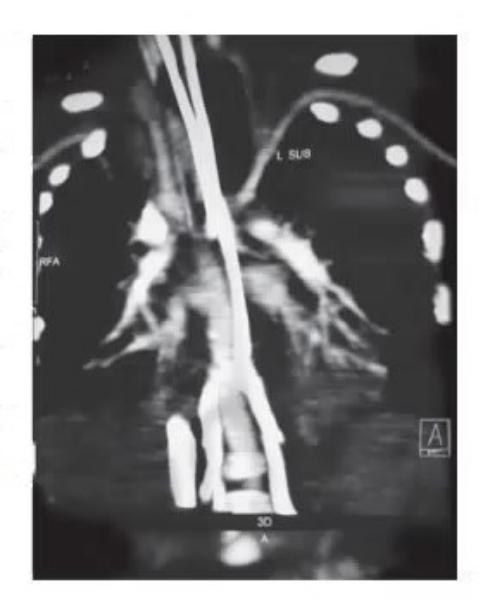
- Give your clinical diagnosis
- Whats the CT scan suggestive of?
- Enumerate initial steps of management.
- Definitive treatment.
Answer
1 . Intrathoracic upper airway obstruction
- 2 CT-vascular sling around the trachea causing extrinsic compression
-
- Position, sedation, oxygen, intubation under anesthesia with the smallest ET available
-
- Definitive cardiovascular surgery to remove the sling
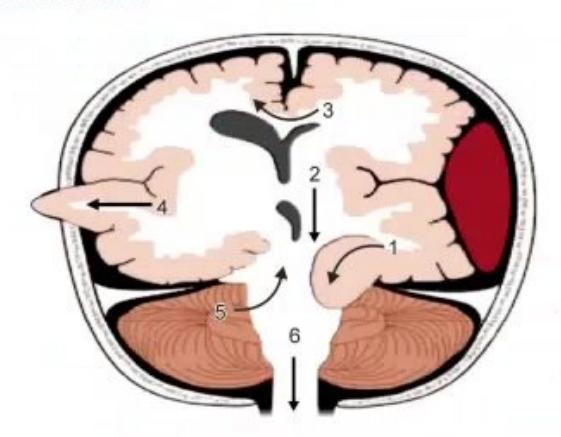
Ans. 2. Supratentorial herniation
- iL: Uneal
- Central (transtentorial)
- Cingulate (subfalcine)
- Transcalvarial infratentorial herruation
- Upward (upward cerebellar or upward transtentorial)
- Tonsillar (downward cerebellar)
MNJ09-002
In view of herniation of brain
Identify the numbers
Answer
No model answer in source material.
MNJ09-003
- * A 3-year-old male child 1s admitted m PICU with status emleptius. He is on ventilator and on midazolam infusion at 10 pg/kg /mun since last 3 days. He 1s seizure free and maintaining good blood pressure but 1s still very obtunded.
- * ABG shows a pO, 120 mm Hg, pCO, 18 mm Hg, and pH 7.1.
- * Laboratory tests reveal the following: Na: 138 mEq/L, K. 4.0 mEq/L, Cl 96 mEq/L, HCQ;: 10 mEq/L, glucose: 80 mg/dl (4.4 mmol/L), and BUN: 4 mg/dl (1.1 mmol/L).
- * Serum osmolality is 346 mOsm/kg
- i What do you think is the metabolic disorder in this child?
- ii. Whatis the cause of this metabolic disorder?
- iii. What 1s the supporting evidence for the diagnosis?
- iv. Mention other causes of similar metabolic disorder.
Answer
Metabolic disorder—high armon gap metabolic acidosis.
- Propylene glycol—used as the vehicle for midazolam.
- High osmolal gap (346-282 = 64).
- fe ON oo de fh Other differentials—methanol, ethylene glycol, salicylate toxicity, other drugs which contain propylene glycol—phenytoin and melphalan.
MNJ09-004
* State which of the following situations would be expected to lower a patient's arterial pO,. There may be none, one, or more than one correct answer:
-
a Anemia.
-
b Carbon monoxide poisomng
-
d An abnormal hemoglobin that holds oxygen with twice the affiruty of normal hemoglobin.
c. An abnormal hemoglobin that holds oxygen with half the affinity of normal hemoglobin.
e. Lung disease with intra-pulmonary shunting.
Answer
Only (e) lung disease cause low pO,
- a . Affects only content, not oxygen saturation or pO,
- b. Through d. affect only oxygen saturation and content, not pO,
MNJ09-005
* Which patient is more hypoxemic, and why?
| Patient A | Patient B |
|---|---|
| pH: 7.48 | pH: 7.32 |
| paCO, 34 mm Hg | paCO;: 74 mm Hg |
| paO, 85 mm Hg | paQ.: 55 mm Hg |
| 5aQ3: 95% | SaQ,: 85% |
| Hemoglobin: 7 g% | Hemoglobin: 15 g% |
Answer
* The body needs oxygen molecules, so oxygen content takes precedence over partial pressure in determuning degree of hypoxemia. In this problem the amount of oxygen molecules contributed by the dissolved fraction is negligible and will not affect the answer. Also, the paCO, and pH are not needed to answer the question.
- * Patient A Arterial oxygen content = 95 x 7 x 134=89ml10O,/dL
- * Patient B: Arterial oxygen content = .85 x 15 x 1.34 = 17.1 ml Q,/dL
- * Patient A, with the higher paOQ, but the lower hemoglobin content, 1s more hypoxemuc
MNJ09-006
*
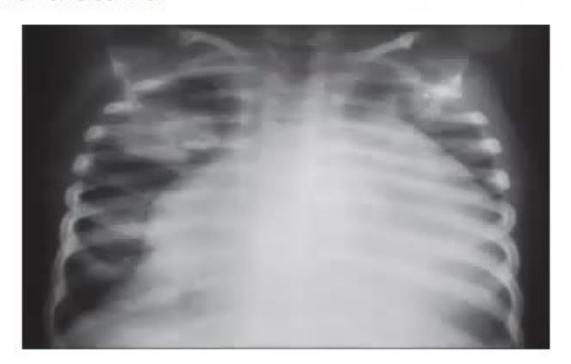
- Identify the chest X-ray.
- What is the acute emergency therapy? Mention the technique.
- Give the indications for the same.
Answer
1 . ChestX-ray suggestive of massive pericardial effusion with rightrmd-zone consolidation
- 2 . Acute emergency therapy—pericardiocentesis
- . Indications for pericardiocentesis
- a. Clinical features of cardiac tamponade or obstructive cardiogenic shock
- b. 2 Decho suggestive of diastolic buckling of RA or RV
- . CT scan suggestive of—right subdural hematoma with midline shift
- bo . Take care of ABC, intubation and hyperventilation
- . Neurosurgical evacuation of the subdural hematoma is the definitive therapy. Maintain mean arterial pressure to maintain cerebral perfusion pressure (CPP = MAP-ICP). Decongestive measures such as mannitol or 3% NaCl.
- . Hyponatremia
MNJ09-007
* A 12-year-old female presents after head injury, GCS, HR 60/min, irregular respiratory, normotensive with CT scan shown
- Identify the CT scan.
- Immediate management.
- Further management.
- What is the most common electrolyte disturbance associated with above patient?
Answer
No model answer in source material.
MNJ09-008
*
- A 6-year-old female child comes with history of progressive weight loss over the last several months, polydipsia and oral thrush Now she has complaints of severe breathlessness, abdominal pain and vomiting.
- O/E-dehydrated, acidotic, urine sugar and ketones are 4+
-
- What is your diagnosis?
-
- What is the therapy in the first hour?
-
- After 8 hours of treatment her K+ report comes as 2.8. What actions will you take?
-
- What are her risk factors for developing cerebral edema?
-
- What are the mortality predictors in this condition?
-
- What is your diagnosis?
- What is the therapy in the first hour?
- After 8 hours of treatment her K+ report comes as 2.8. What actions will you take?
- What are her risk factors for developing cerebral edema?
- What are the mortality predictors in this condition?
Answer
— . Diabetic ketoacidosis
-
. First hour—normal saline bolus 10 ml/kg
-
- Add KCl in the IV fluids to 60 mEq/L, reduce insulin to 0.5 to 0.8 μ/kg/hour
-
Younger age (<3 years), new onset, and longer duration of symptoms, lower pCO2, severe acidosis (pH <7 1), increased BUN, use of bicarbonate, greater volumes of rehydration fluids (in excess of 4 L/m2/24 hrs) and failure of serum Na to rise with treatment.
-
- Cerebral edema and hypokalemia
Ans. 9. ARDS
-
- Acute onset
-
- Bilateral pulmonary infiltrates on chest radiography
- Pulmonary artery occlusion pressure <18 mm Hg or no clinical evidence of left atrial hypertension
- paO2: FiO2 ratio ≤300 = ALl
-
- paO2: FiO2 ratio ≤200 = ARDS
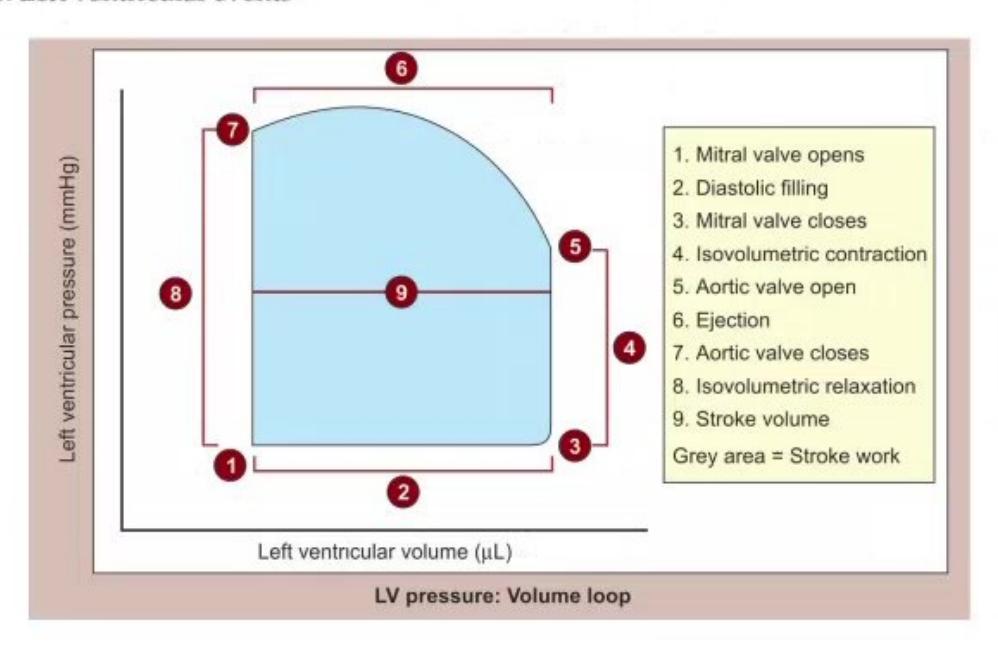
Ans. 10. Left ventricular events
MNJ09-009
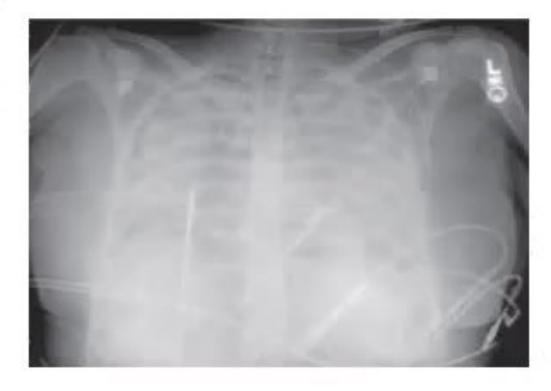
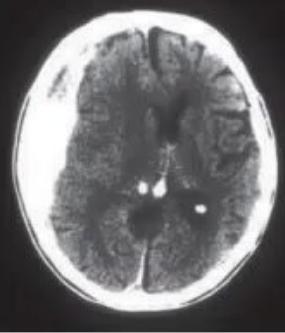
* Identify the CXR and give the diagnostic criteria for this condition.

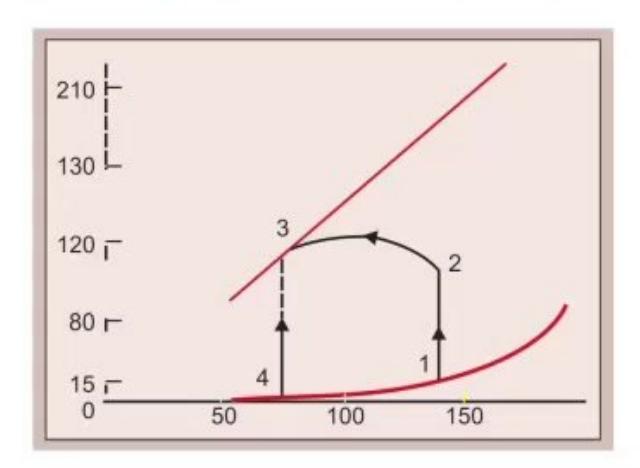
- Identify the diagram.
- What does the X-axis and Y-axis stand for?
- What does the numbers denote?
Answer
No model answer in source material.
MNJ09-010
*
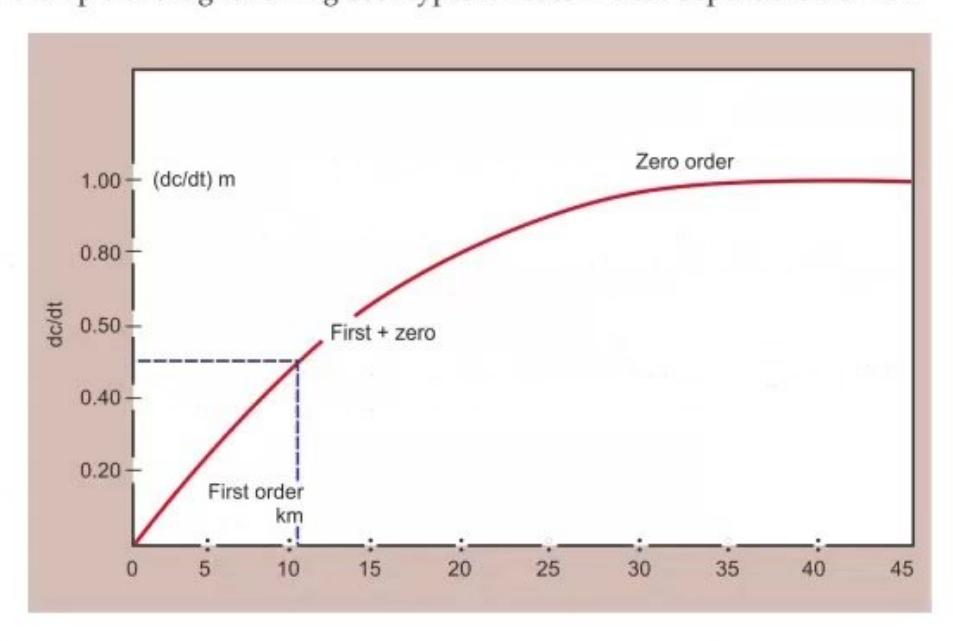
- What does the graph suggest?
- Define zero order and first order kinetics.
- Give example of drug following both types kinetics in dose dependent manner.
Answer
- Graph suggests progression of drug metabolism from first order kinetics to zero order kinetics with increasing circulating drug levels
-
- First order kinetics—where a fixed proportion of circulating drug gets metabolised.
- Zero order kinetics—fixed amount of drug irrespective of the circulating drug level gets metabolised.
-
- Phenytoin
MNJ09-011
"
- A4.5-year-old child on therapy for all has relapsed and had very high WBC counts (58000).
- Following first cycle of remducton child has following parameters WBC: 21900, Uric acid: 9, LDH: 2600, Ca: 7.6, PO,: 8, and acidosis with K* of 6.8.
- What is the diagnosis?
- Mention the doses of fluid, HCO, and allopurimol.
- What will you monitor?
- Whats the choice of dialysis?
- Mention newer modality of treatment with its mechanism.
Answer
- Tumour lysis syndrome
-
- Fluid: 3000 ml/m2
-
- Allopurinol: 10 mg/kg/day
- HCO3: 50–80 mEq/L (role controversial)
-
- Monitor signs of fluid overload, urine output and urinary pH
-
- Choice of dialysis—hemodialysis
Intensive Care 127 |
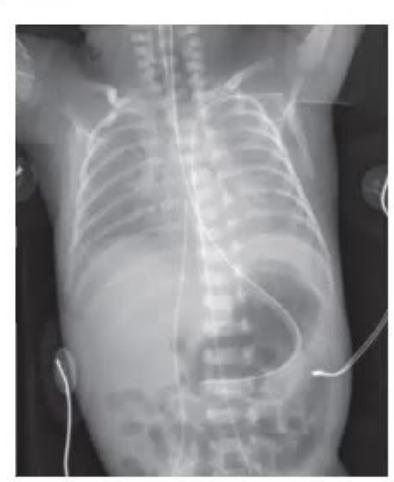
- Abnormally placed umbulical arterial line in the subclavian artery.
- For umbilical arterial ine: High: Between Tj-T,,. In the thoracic aorta above diaphragm between ductus and celiac axis; Low: Between L,-L;, or L,-L,, abdominal aorta, between inferior mesenteric artery and aorta bifurcation
- For umbilical ver: Just above the diaphragm
- Warm the other limb; if still pale >1/2 hour, remove the UA line.
- L-1
- Use heparin infusion at rate of 0.5-1.0 urut per hour.
- . Airway obstruchon and inhalational injury (singed nasal hairs, carbonaceous material in throat, hoarseness of voice, persistent cough, stridor)
- Airway management, BC, IV access and flinds, pain management, management of hypothermia
- . Parkland formula (4 ml/kg/% burn) + mamtenance fluids.
- . HTPS (hypertropic pyloric stenosis)
- . Hypochloremic metabolic alkalosis
- . HR 120-160, normal beat to beat variability, two accelerations of 15 beat/mun, lasting for 15 sec over a 20 min observahon period.
- Persistent O, or ventilatory requirement for >28 days for mfants born after 32 weeks or at 36 weeks post-menstrual age for infants born before 32 weeks.
- . pCO, 55-65, pO;: 50,with a pH >7.2
- . Stage 1 (suspect): Clinical signs and symptoms and nondiagnostic radiographs Stage 2 (definite): Clinical sign and symptoms with pneumatosis intestinalis on radiograph.
- Stage 3 (advanced) Above plus crtically ill, impending perforation, proven perforation
- . Five or more contiguous or eight cumulative clock hours of stage 3 with plus disease in either zone 1 or 2.
MNJ09-012
"
- What 1s abnormal in this X-ray?
- Whatis the ideal position of placement of umbilical arterial and umbilical venous line?
- After putting in a UA line, the right lower limb appears pale. What would you do?
- Whats the level of the renal artery?
- How do you maintain a UA line?
Answer
No model answer in source material.
MNJ09-013
* A 5-year-old child is caught in a house fire and brought to ER with 60% burns. His weight is around 16 kg:
- Whatis the immediate complication likely to occur in this case and how will you identify this complication?
- What are the 4 most important steps in the management of this child?
- Write fluid therapy for first 24 hours for this child
Answer
No model answer in source material.
MNJ09-014
* May 2013
A mother in pediatric emergency room states that her one-and-half month baby has been vomiting everything he eats for 2 weeks. The vomit contains no bile or blood, birth history was normal. Physical examination reveals a hungry dehydrated infant:
Vital s1gns: HR: 200; RR: 36; BP: 75/palpable; T: 37.6°C; weight: 3.7 kg. Infant is given a bottle and the following finding was noted during the physical examination:
- What 1s your diagnosis? '
- What will be the ABG findings in this child? -
Answer
No model answer in source material.
MNJ09-015
*
[* Intensive Care 125 |

- Define reactive NST.
- What 1s the definition of CLD?
- What 1s permissive hypercapma?
- Enumerate Bell's staging for NEC
- What 1s threshold ROP?
Answer
No model answer in source material.