MNJ20-001
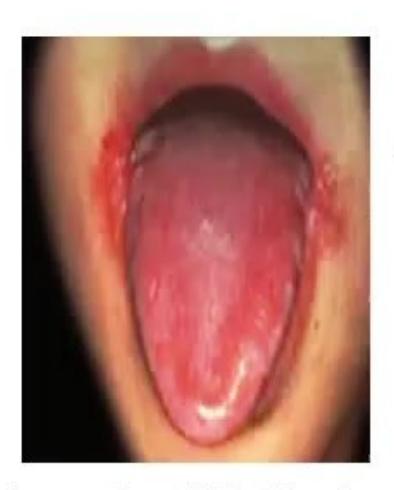
- Identify the image and the underlying cause.
- Name any two other clinical features of this condition.
- Name two tests to confirm the underlying cause.
- What 1s the treatment?
Answer
- Angular cheilitis and glossitis: Riboflavm deficiency
-
- Keratitis /lacrimation/ photophobia / seborrheic dermatitis
-
- * Erythrocyte glutathione reductase (EGR)
- * Urinary excretion of riboflavin <30 pg/day
-
- Treatment—oral administration of 3-10 mg/day of riboflavin 1
Ans. 2.
| Nutrients | Requirement | |
|---|---|---|
| Vit A | 500 pg | |
| Folate | 50-150 pe | |
| Vit B, | 0.5-1 ng | |
| Biotin | 20 pg | |
| Riboflavin | 0.5-1.5 mg | |
| Vit E | 5-15 1U | |
| Niacin | 5-15 mg | |
| Thiamine | 0.5-1.5 mg | |
| Ascorbic acid | 40-50 mg | |
| VitA | 400 TU |
Ans. 3.
| * | Rice | 350 keal and 7 g¢ |
|---|---|---|
| * | Bengal gram | 360 keal and 17 ¢ |
| * | Groundnut | 560 keal and 25 ¢ |
| * | Fish | 80 keal and 6 g |
| » | Egg | 80 kcal and 6 g |
| * | Dates | 317 keal and 2.5 ¢ |
| « | Apple | 59 keal and 0.2 ¢ |
| * | Almond | 655 keal and 20 ¢ |
Ans.4 1.
| WHO/ORS | ReSoMal | ||
|---|---|---|---|
| Sodium | 75 | 45 | |
| Potassium | 20 | 40 | |
| Glucose | ia | 125 |
-
- Write calorie and protem content
- * One chapatti or one slice bread (70 calories and 2 g protein)
- * One egg (80 calories and 6 g protein)
- * One TSF mashed potato (40 calories and no protein)
-
- Dextrose content of 1 liter Ringer lactate 1s zero
- * Na* content of one ml of 3% NaCl is 0.5 mEq
- * Elemental Ca in 1 ml of 10% calc1um gluconate is 9 mg
- * K* content of 1 liter of isolyte-P is 20 mEq/L
MNJ20-002
Write the nutritional requirement for a child of the given nutrients:
- * Vit Bis * Biotin
- * Riboflavin * VitE
- * Ascorbic acid * VitA
- * VitD * Folate
- * Niacin * Thiamine
Answer
No model answer in source material.
MNJ20-003
Calorie and protein contents of the following food items (100 g):
-
* Rice * Bengal gram * Groundnut
-
* Apple * Almond
-
* Fish * Ege * Dates
Answer
No model answer in source material.
MNJ20-004
- * One chapatt or one slice bread
-
* One egg
-
* One TSF (teaspoon) mashed potato
-
* Na* content of one ml of 3% NaCl is mEq.
-
* Elemental Ca in 1 ml of 10% calcium gluconate is mg.
-
* K* content of 1 liter of 1solyte-P 1s mEq/L.
-
- Write constitution of rehydration solution for malnutrition (ReSoMal) and WHO/ORS.
- Write calorie and protein content
- Dextrose content of 1 liter Ringer lactate 1s zero.
Answer
No model answer in source material.
MNJ20-005
- Vitamin A prophylaxis programme in India: Mention the dosage and schedule
- Daily requirement of vitamin A.
- Name two manifestations of hypervitamunosis A.
Answer
- 5 doses 9 months-3 years, oral retinol palmitate 1 lakh at 9 months (along with measles), 2 lakh at 14 yrs, 2,2 4 years 3 years
-
- 400 mg to 600 mg of requirement
-
- Nausea, vomiting, anorexia, sleep distress, irritability, hepatomegaly
| 266 OSCE Clinical Pediatrics
Ans. 6.
| 1. Chronic renal failure | B | |
|---|---|---|
| 2. Fanconi syndrome | F | |
| 3. Hypophosphatemic rickets | E | |
| 4. VDDR, type 1 | A | |
| 5. VDDR, type 2 | c | |
| 6. Vitamin D deficiency | D |
Ans.7. 1. Vitamin A deficiency
- Stage X,B
WHO staging
X, A: Conjunctival xerosis
X, B Bitot's spots
X, Corneal xerosis
X,A: Corneal ulceration (<1 /3rd)
X3B: Keratomalacia
Secondary signs
XN: Night blindness
XF; Xerophthalmia fundus
XS: Corneal sears
Ans. 8.
1
| Protein | 0.22 |
|---|---|
| Fat | 0.1 ¢ |
| Sodium | 1.5 mg |
| Calcium | 50 mg |
| Vit D | 250 1U |
| Thiamine | 12 pe |
| By | 0.05 ps |
| Zinc | 0.18 mg |
| Biological value (%) | NPU | PER | ||
|---|---|---|---|---|
| Meat | 74 | 76 | a2 | |
| Egg | 96 | 96 | 3.8 | |
| Bengal gram | 74 | 61 | 1.3 | |
| Wheat | 66 | 61 | 13 |
Ans. 9. Hypophosphatemic rickets
- X-linked dominant Pee
- Mutation in PHEX gene
- Treatment: Phosphorus supplement orally 1-4 g/day QDS, alfacalcidiol 25-50 ng/ ke /day or calettriol: 0.25=2 pe /day.
-
- 4 causes
- * Pan hypopituitarism
- * Isolated GHD
- * Hypothyroidism
- * Cushing syndrome
- * DM
MNJ20-006
Match the following:
| 5. No. | Ca | Pi | PTH | 1,25-+(OH); D | ALK PHOS | Urine ECa |
Urine E Pi |
|---|---|---|---|---|---|---|---|
| A | N, + | L | T | L | T | 4 | T |
| B | N, + | tT | t | L | t | N, 4 | L |
| C | N, + | 1 | i | it | T | 4 | T |
| D | N, + | 4 | T | 1,N,T | T | 4 | T |
| E | N | L | — | RD | tT | 4 | tT |
| F | N | 1 | — | RDorT | T | LorT | T |
- Hypophosphatemic rickets 4. VDDR, type 1
- Chronic renal failure 2. Fanconi syndrome
- VDDR, type 2 6. Vitamin D deficiency
Answer
No model answer in source material.
MNJ20-007
A3-year-old girl child, with a weight of 7 kg and height of 75 cm, is brought with complaints of difficulty in seeing and pain in left eye with discharge. The child also has history of recurrent episodes of loose stools and pneumonias. The examination findings are shown below:
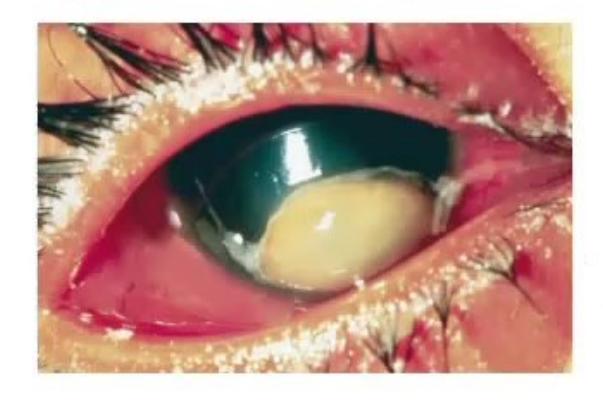
- What 1s the diagnosis?
- Enumerate the WHO staging and mention what stage this child belongs to?
Answer
No model answer in source material.
MNJ20-008
- Write content of the following in human milk fortifier:
Protein Vit D Fat Thiamine Sodium Vit By Calcmmm Zine
- Write biological value, net protein utilization (NPU) and protein efficacy ratio (PER) of:
Meat
Egg
Bengal gram
Wheat
Answer
No model answer in source material.
MNJ20-009
An 8-year-old boy Karzan Parashar brought with the deformity shown in the figure. His sister, 8 years also has a similar deformity gradually increasing since 4 years of age. On examination, his height is below the third percentile and US/LS ratio is 1.6: 1. There are multiple dental abscesses. Mother also has a similar deformity but very mild in nature. 5. calcium : 8.8 mg/dl, phosphorus: 1.8 mg/dl, ALP: 380 IU, PTH levels: 18 pg/ml (9-55 pg/ml), 25-OH cholecalciferol: 26 ng/m1(10-50 ng/ml), 1,25(OH), cholecalciferol; 18 pg/ml (20-60 pg/ ml), TMPO,/GFR: Reduced. X-ray of both lower limb shows florid ricketic changes:
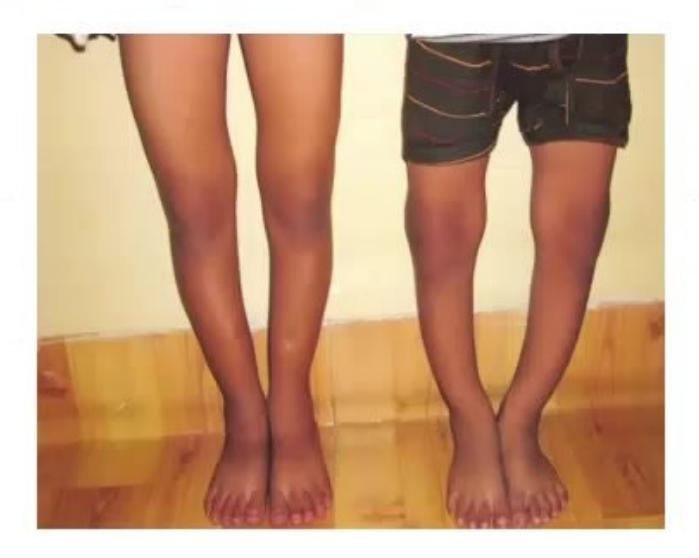
- What 1s the diagnosis?
- Whatis the mheritance?
- Is it due to mutation of which gene?
- What.s the treatment?
- Write four endocrinal causes of short stature
Answer
No model answer in source material.
MNJ20-010
- 4, What are the other charts used for this purpose?
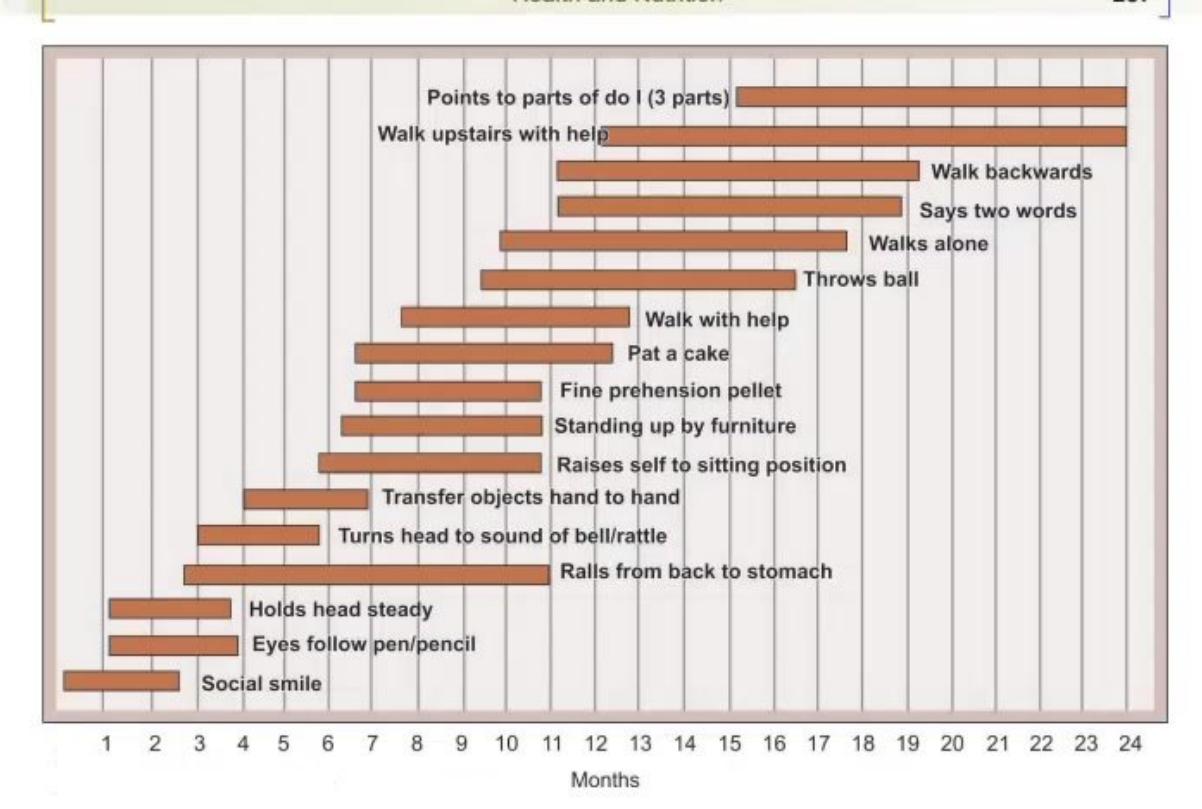
- What 1s the graph?
- What are its uses?
- How do you use if?
Answer
- Tnvandrum Development Screening Chart
-
- Development assessment up to 24 months
-
- SAT hospital, Trivandrum. A vertical line is drawn or pencil 1s kept vertically at level age at child being tested, 1f child fails to achieve any 1tem that falls short on left side of vertical hne child had developmental delay.
-
- DDST, DST, BSID
MNJ20-011
- Write Mosteller's formula
- Using above formula calculate dose of prednisone for a child (weight 12 kg and height 80 cm) with nephrotic syndrome (MCNS) who has completed his initial 6 weeks of therapy.
- ½ isotonic saline contains _____ mEq/L of sodium, ____ mEq/L of bicarb and _____ calorie/L.
- Glucose 50% solution contains _____ g/ml.
- Calcium gluconate 10% contains _____ mEq/ml of elemental calcium.
- Mannitol 20% contains _____ mEq/L of sodium, ____ mEq/L of bicarb and ____ calorie/L
Answer
- (Weight in kg* height in cm) divided by 3600 and square root it
-
- BSA = 0.52* 40 (mg/ m7) = 20 mg single alternate day
-
- 77 mEq/L of sodium, 0 mEq/L of bicarb and 0 calorie/L.
-
- 0.5 g/ml
-
- 0.465 mEq/ml of elemental calcrum.
-
- 0 mEq/L of sodium, 0 mEq/L of bicarb and 0 calorie/L.
MNJ20-012
As per IMNCI clinical guidelines:
- a. Pink b. Yellow c. Green
- What are the six steps of case management process in INMCI?
- How will you categorize children based on age group?
- What are the following colour codings stand for?
a. Pink b. Yellow c. Green - What will you advise for a child presenting with "some palmar pallor"?
Answer
No model answer in source material.
MNJ20-013
Match the following:
1. Protective factors in breast milk
-
Bile salt stimulated lipase
-
ii. Para-aminobenzoic acid
-
iii. Bifidus factor
-
iv. Lactoferrin
-
a Inhibits E coli
-
b CNS growth factor
2. Trace element deficiency
v. Human beta casomorphin e. Promotes lactobacıllı
c. Kills Amoeba and Giardia
d. Protects against malaria
Answer
No model answer in source material.
MNJ20-014
Match the following:
- The Sharda Act b. NRHM
3 Kishor Shakthi Yojana ce. Child trafficking
1, Copper a, Hyperglycerma
h. Seleruum b Central scotoma
in. Chromium c. Cardiomyopathy
iv. Molybdenum d. Reddening of hair
1 Ujawala a. Safe Motherhood Services
4 ASHA d. Child marriage prevention
5 Vandemataram Scheme e. Adolescent girl health.
Answer
- Ujjawala c. Child trafficking
-
Acrodermatitis enteropathica
- Autosomal recessive
- Plasma zinc levels
-
ii Bifidus factor e. Promotes lactobacilli
-
iv. Lactoferrm a Inhibits E coli
-
i Copper e. Refractory
-
ii. Selemmum c. Cardiomyopathy
-
ii Chromium a. Hyperglycemia
-
iv. Molybdenum b. Central scotoma
-
v Manganese d Reddening of hair
-
- The Sharda Act d. Child marriage prevention
- Kishori Shakthi Yojana e. Adolescent girl health.
- ASHA b. NRHM
- Vandemataram Scheme a. Safe Motherhood Services
-
. 1-3 mg/kg of elemental zinc/ day in 2-3 divided doses and Zn rch diet once the supplementation 1s stopped
-
Nutritional tremor syndrome
- . P/S: Megaloblastic anemia, CT head—cerebral atrophy
- . Liver biopsy Fatty changes
- . Carbamazepine and propranolol
MNJ20-015
A 10-month-old female child Neerja is brought to the OPD with complaints of dry scaly skin around the thigh and stomach, on palms along with reddish tint of the hairs for the last 2 months. Lesions are increasing in severity since then. He was exclusively breastfed up to6 months of life, now on top feeding (cows milk). His weight is 6.2 kg (birth wt was 3.0 kg) and length is 67 cm. On examination he is found to have conjunctivitis, blepharitis, glossitis and stomatitis.
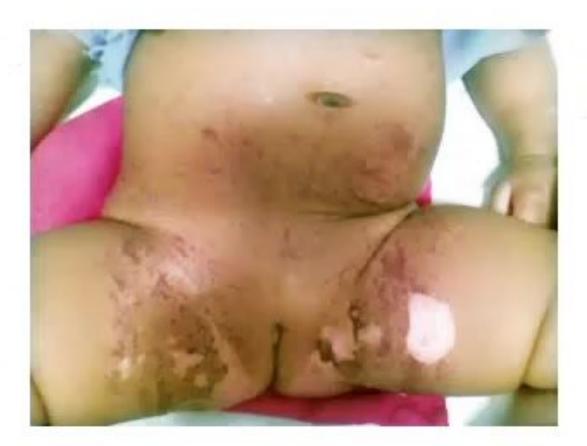
- What 1s the most likely diagnosis?
- What 1s the mode of inheritance?
- Lab investigation, which clinches the diagnosis?
- Treatment.
Answer
No model answer in source material.
MNJ20-016
A 16-month-old child male Bhupesh admitted with rhythmic involuntary movements (distal > proximal) of the upper limbs, tremulous cry and generalized hypotonia since one month. He has got brownish hairs, reticular pigmentation of the skin particularly of the dorsum of the hands and having loose stools for the last 7-8 days. He is pale and found to have regression of motor milestones in the last 4 months. He has mild hepatosplenomegaly. The involuntary movement stops once patient sleeps. CT brain of this child given below:
- 4, Treatment for involuntary movements.
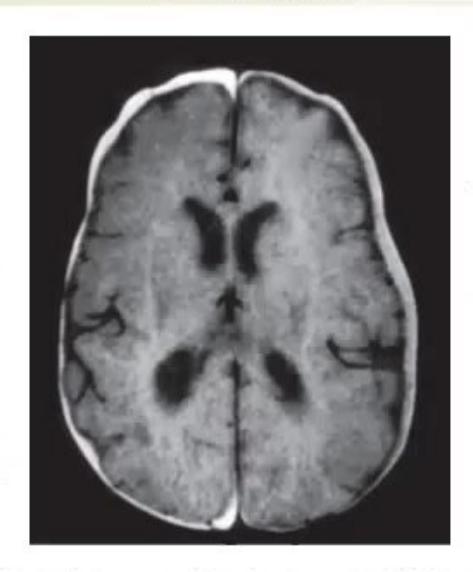
- Whats the diagnosis?
- What do you except in peripheral smear and CT head for this patient?
- Changes 1n liver if you go for liver biopsy
Answer
No model answer in source material.
MNJ20-017
A 9-month-old female child Sapna admitted with complaints of failure to thrive. On examination, she is found to have an anthropometric examination of—weight: 5.5 kg, height is 39 cm, length is 72 cm and a mid-arm circumference of 8.5 cm:
- Calculate the Kanawati index, Rao index and Shakir's measure and give your final impression about the anthropometry.
- Give 5 indications for admussion in PEM.
Answer
- Kanawati Index: MAC /HC (normal is 0.31-).33, if <0.25 suggestive of severe PEM), 8.0/40 = 0.20
Rao Index
(Normal 1s 0.14 to 0.16, 1f <0.14—severe PEM)
Shakir's Measure = MAC in cm (if <12.5 cm, suggestive of severe PEM)
All there indices suggestive of severe PEM
- . Children weighing <60% for age with any of the above
- * Age <1 year
- * Bilirubin level >6 mg%
- * Dehydration/dyselectrolyterma
- * Edema, failure to thrive
- * Growth failure
- * Hypothermia of hypoglycemia infection
- * S. albumin level >1 g%o
- * S. sodium <120 mEq/L
Ans. 18. 1. Kwashiorkor
- . Retarded growth, psychomotor changes and edema
- . a. Classical theory of protein and energy deficiency Marasmus: Energy deficiency > protein
Kwashiorkor: Protein defiaency > energy
- b. Gopalan's theory of dys-adaptation Nutritional stress — adaptation mechanism by increasing cortisol and the resultant marasmus. In kwashiorkor—patient fails to adapt
- c. Golden's theory of free radicals
-
- Magnesium, zinc and copper
MNJ20-018
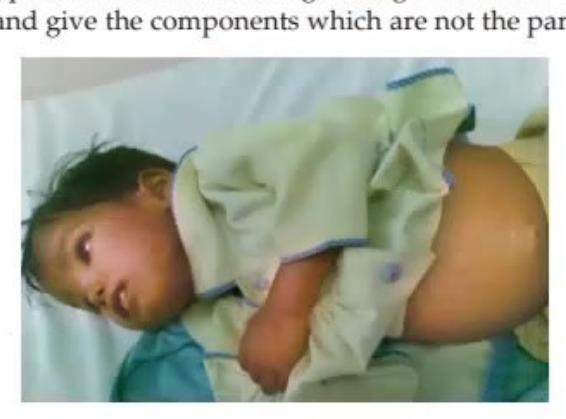
- Identify the problem of this child shown in figure
- Give its essential features of this disorder
- Name the various hypothesis used in defining etiologies in PEM
- Elaborate ReSoMal and give the components which are not the part of standard ORS
Answer
No model answer in source material.
MNJ20-019
- * One chapatti or one bread
- * One biscuit
- * One ege
- * One TSF mashed potato
- * 1 TSF cooked dal
2. Answer the following questions:
- · Dextrose content of 1 liter Ringer lactate
- Na+ content of one ml of 3% NaCl
- Na+ content of one ml of 0 9% of NaCl
- · Elemental Ca in 1 ml of 10% calcium gluconate
- · K+ content of 1 liter of isolyte-P
- Give the nutritional value (calories and protein) of following cooked items:
Answer
,1. One chapatt or one bread (70 calories and 2 ¢ protein)
- * One biscuit (20 calones and 0.5 g protem)
- * One egg (80 calories and 6 g protem)
- * One TSF mashed potato (40 calories and no protein)
- * 1 TSF cooked dal (10 calories and 0.5 g protein)
- . Dextrose content of 1 ter Ringer lactate 1s zero
- * Na* content of one ml of 3% NaCl is 0.5 mEq
- * Na* content of one ml of 0.9% of NaCl is 0.15 mEq
- * Elemental Ca m 1 ml of 10% calcium gluconate is 9 mg
- * K* content of 1 liter of isolyte-P is 20 mEq/L
Ans. 20. 1. Ground glass appearance of bone
- * Penal thinned cortex
- * Periosteal calcification
- * White line of Frankel (well calcified cartilage)
- * Wimberger's sign (white rng)
- * Pelkan spur
-
- Vit C 100-200 meg / day and dietary therapy
Ans. 71. 1. a. Grade IT PEM
- b. Under nutntion
- c. Grade I malnutrition
- d. Normal
- Gomez
Weight-for-age: Normal >90%
I degree malnutrition 75-90%
II degree malnutrition 60-75%
I degree malnutrition <60%
Waterlow classification
Height-for-age: Normal >95%
I degree stunting 90=95%0
II degree stunting 85-900
Il degree stunting <85%
Weight-for-height
Normal >90% of expected
I degree wasting 80-90%
II degree wasting 70-80%
Il degree wasting <70%
MNJ20-020
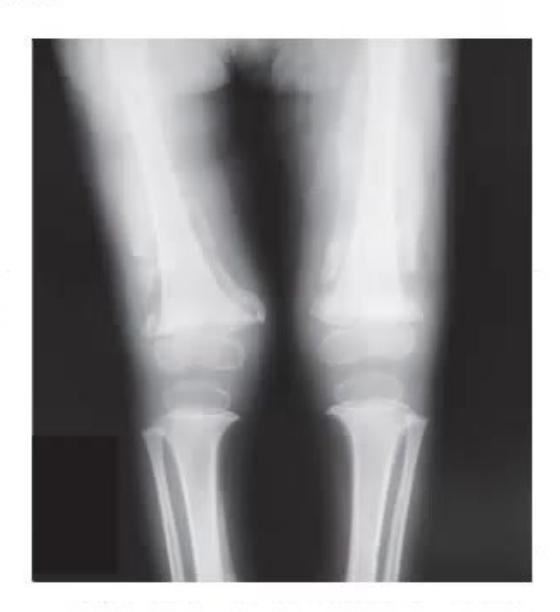
- Give five radiological findings.
- What is the management?
Answer
No model answer in source material.
MNJ20-021
A one-year-old child has a weight of 6.4 kg, length of 70 cm, there is no edema:
- a. IAP classification
- b. Wellcome classification
- c. Gomez classification
- d. Waterlow classification
- What is the nutritional status of the child as per?
a. IAP classification
b. Wellcome classification
c. Gomez classification
d. Waterlow classification - Write details of Gomez and Waterlow classification.
Answer
No model answer in source material.
MNJ20-022
A mother of 8-month-old child Neeraj came to your clinic to know about how to prevent allergic reaction for her child. She want to know that she heared somewhere that food intolerance and food hypersensitivity are two different types of allergic reaction. In the following classify category of food intolerance (a) and food hypersensitivity (b):
- Lactose intolerance
- Abdominal migraine
- Urticaria
- Heiner syndrome
- Celiac disease
- Irritable bowel syndrome
Answer
- a, 2a, 3:b, 4b, 5 b, 6 a
MNJ20-023
1. Match the following:
2. What is the ideal age for introducing the following foods:
a. Cows milk
b. Egg
c. Peanut and seafood
Answer
- a. 4, b.3, ¢.2, dl
¥ a.lyear, b.14to2 year, c.3 years
MNJ20-024
,
1. A child with rickets has following laboratory findings:
- Sr Ca: 9 mg/dl, Sr. phos: 1.5 mg/dl, ALP 2000 units
2. Another child with rickets has the following findings:
Sr. Ca; 7 mg/dl, Sr. phos: 1.7 mg/dl, ALP. 5000 units This child has got alopecia
a. What is the diagnosis?
b. What is the mode of inheritance?
c. What is the first clinical manifestation?
a. What is the diagnosis?
b. What is the type of inheritance?
c. What is the Rx of choice and the dose?
Answer
- a. Familial hypophosphatemua or vit D resistant ricke
- b. X-linked dominant
- c. Bowing of lower extremities
- a. Vit D dependent rickets
or
Hypocalcemic rickets type-II
- b. Autosomal recessive
- ec 1,25-dihydroxy vit D,
50-60 pg/24 hours
MNJ20-025
- Name two manifestations of vit E deficiency in preterm babies.
- Useful effect of vit E is by virtue of which chermcal property?
- Normal daily requirements of vit E in preterm babies
- Vit E deficiency 1S diagnosed by a serum ratio of alpha-tocopherol: Lipid is less than?
- 1 ml of "Evion" contains how many International Units of tocopherol.
Answer
, 1. Hemolytic anemia, thrombocytosis, edema
-
. Anthoxidant
-
. 5-25 1U/ day.
-
- 0.8 mg/g
-
- 50 IU
Ans. 26.1. Rickets
-
- Vitamin D deficiency
-
- Craniotabes
-
- Appearance of provisional zone of classification
-
- Supplement of 400 IU of vitamin D
-
- Generalized aminoaciduria
- Glycosuria
- Phosphaturia
- · Elevated urinary citrate
- · Impaired renal acidification
Ans. 27.1. Cows milk-iron deficiency
-
- Goat's milk-folate deficiency
-
- Prolonged EBF-iron deficiency
Ans. 28. 1. 5, 2. 50, 3. 40 IU
- Oral calcium 30–75 mg/kg/day in 3 divided doses for 1–2 weeks. Half the dose and continue till PTH and vit D reach normal.
-
- a. Sr. Phosphorus, b. Sr. calcium, c. PTH, d Sr. alkaline phosphatase (last)
MNJ20-026
| 262 OSCE Clinical Pediatrics
- 5, How could this have been prevented?
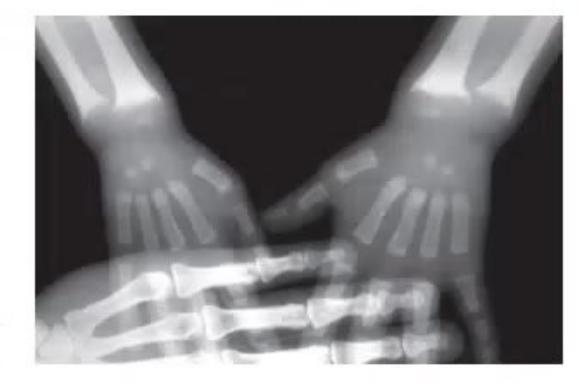
- What 1s the diagnosis?
- This infant 1s 8 months old, what is the most likely type?
- Whats the earliest sign of this disorder?
- What 1s the first radiological change that occurs in response to specific therapy?
- What are the non-specific urinary findings in this disorder (at least 2)?
Answer
No model answer in source material.
MNJ20-027
Mention the nutritional deficiency that is commonly associated with following:
- I. Cows milk
i. Cows milk
2. Goat's milk
3. Prolonged exclusive breastfeeding
Answer
No model answer in source material.
MNJ20-028
- . At risk toxicity level for vit D is more than ng/ml.
- He i fo lpgofvitDis____ units of vit D.
- Write dose and duration of calc1um for treatment of asymptomatic hypocalcemia due to vit D deficiency:
- Mention the order in which the following will normalize (on starting treatment of nutritional rickets)
- Sr. calcium, Sr. phosphorus, 5r. alkaline phosphatase, PTH.
- Severe vit D deficiency 1s less than ng/ml.
Answer
No model answer in source material.
MNJ20-029
What is the developmental age at which the following milestones are achieved?
-
Differentiate between morning and afternoon
-
Say which line 1s longer of two lines
-
. Build tower of nine
- Unbutton shirt
-
Picks up ball without falling
- Uses 'Tl', "Me' and "You'
-
Kneels without support
- Likes to take off shoes
- Can tie shoelaces
- Can button up clothes
Answer
- 5 years: Can tie shoelaces, differentiate between morning and afternoon
-
- 4 years: Can button up clothes, say which line is longer of two lines
-
- 3 years: Build tower of nine, unbutton shirt
-
- 2 years: Picks up ball without falling, uses 'I', 'Me' and 'You'
-
- 15 months: Kneels without support, likes to take off shoes 3. 40
Ans. 30. 1. Lead posioning
-
- CaNa2 EDTA (calcium versanate) and BAL in symptomatic child
-
- If lead levels >45 μg% (N <10 μg%)
-
- Urine—increased zinc protoporphyrin
Ans. 31. 1. Hyderabad Mix
| Whole wheat | 40 g |
|---|---|
| Bengal gram | 16 g |
| Groundnut | 10 g |
| Jiggery | 20 g |
| 330 cal/86 gm, 11 3 g/86 g |
- Shaktı Ahar-390 cal/100, 11.4/100
| Dittituti 1 11 ttt 0 70 cttt/ 100/ 11/1/ 1 | 00 |
|---|---|
| Roasted wheat | 40 4 |
| Roasted gram | 20 g |
| Roasted peanut | 10 g |
| Jaggery | 30 g |
MNJ20-030
A 5-year-old male child Rajender brought with a history of developmental delay. He found to have mild mental retardation and sensory neuropathy. He is from low SE group and his father is a laborer. X-ray is shown here:
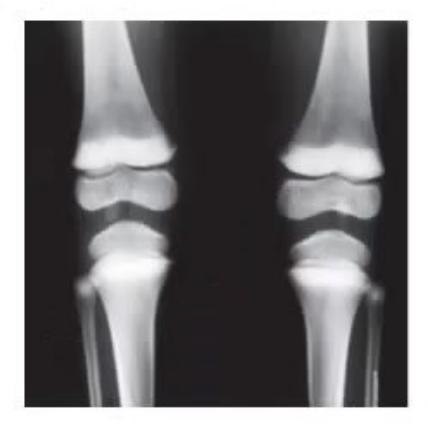
- Most probable diagnosis
- Treatment options
- Indication for treatment
- Urine investigation.
Answer
No model answer in source material.
MNJ20-031
Provide ingredients and calories/100 g and protein/100 g of following food items:
- Hyderabad Mix
- Shakh Ahar
Answer
No model answer in source material.
MNJ20-032
What are the motor, adaptive, language and social milestones at one year age.
Answer
- Motor Walks with one hand held, rises independently, Knobloch
-
- Adaptive: Releases object to other person on request
-
- Language: A few words besides mama, dada
-
- Social: Plays simple ball games, makes postural adjustment to dressing
MNJ20-033
Give the approximate age of the following children based on the clinical scenario:
- A child is asked to copy figures. She can successfully draw a square and a triangle. But has difficulty in copying a diamond.
- A mother is concerned that her child not talking yet. He walks around furniture and can stand alone for a few seconds. He holds an object in pincer grasp.
- Achild asked to copy figures can copy a aarcle, can climb stairs one foot per step and builds a tower of 9 cubes.
- A mother is concerned that her child is not walking yet. He is sitting unsupported and is babbling contentedly. He holds a biscuit and can transfer it to the other hand and also put it in his mouth.
Answer
- 6 years
-
- 12 months
-
- 3 years
-
- 9 months
Ans. 34.1. 30 months
- · Makes tower of 7 cube
- Circular scribbling
- · Imitates vertical stroke
- · Dumps pellets from bottle
-
- 48 months
- · Hops on one foot
- · Throws ball menhead
- Uses scissors to cut out pictures
- · Climbs well
Ans. 35. Warning signs of language problems at 2 years
-
- No word combinations by 24 months
-
- Speech is difficult for parents to understand by 24-36 months
-
- Speech is difficult for others to understand by 36-48 months
-
- Child avoids talking situations
-
- Stuttering of more than tension-free, whole-word repetition
-
- Any regression in language or social skills at any age
- Ans. 36. 1. 3/4/<6/4 = age 4 months
Ans. 37.1. Rickets
-
- a. Cupping
- b. Widening of distal end of metaphysis
- c Fraying
-
- Calcium, phosphorus, alkaline phosphatase
-
- Injection vitamin D6 lac unit IM stat PO calcium
MNJ20-034
- a. What would be your assessment of the age of this child?
-
b. Name 2 adaptive milestones specific for this age
-
a. What would be the child's probable age?
-
b. Mention 2 specific motor milestones for this age
-
- Child A—walks up and down stairs one leg at a time, climbs on furniture and jumps
a. What would be your assessment of the age of this child?
b. Name 2 adaptive milestones specific for this age - Child B—copies cross and square—imitates construction of "gate" of 5 cubes
a. What would be the child's probable age?
b. Mention 2 specific motor milestones for this age
Answer
No model answer in source material.
MNJ20-035
What are the warning signs while screening a 2-year-old child for language problems (any 6)? 0.36. What is the developmental age of a child having these skills:
- Brings hands in midline
- Reaches for objects
- No babble
- Stares at own hand
Answer
No model answer in source material.
MNJ20-036
| 264 OSCE Clinical Pediatrics
- 4, What 1s the treatment of the condition?
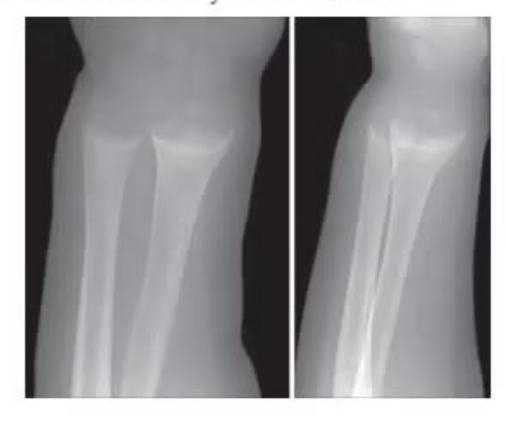
- What 1s the diagnosis?
- Describe three features seen on the X-ray of the disease.
- What biochemical test would help clinch the diagnosis?
Answer
No model answer in source material.
MNJ20-037
1. Child 'A' walks up and downstairs with alternating legs:
2. Child B—copies cross and square
Imitates construction of "gate" of 5 cubes
3. Match the following
a. What would be your assessment of the age of this child?
b. Name 2 adaptive milestones specific for this age
a. What would be the child's probable age?
b. Mention 2 specific motor milestones for this age
a. Palmar grasp gone—§ months
b. Transfers object from hand-to-hand to 4 months
c. Turn pages of book—5.5 months
d. Thumb finger grasp—12 months
Answer
- a. 30 months
- Makes tower of 9 cubes makes vertical and horizontal strokes, but generally will not join them to make cross; imitates circular stroke, forming closed figure
-
- a. 48 months
- b. Hops on one foot
- · Throws ball overhand
- · Uses scissors to cut out pictures
- · Climbs well
-
- a. 4 months
- b. 55 months
- c 12 months
- d. 8 months
MNJ20-038
A 2-year-old child is brought for toe walking:
- What is the commonest cause?
- Whats the differential diagnosis?
- Up to what age is 1t normal?
Answer
- Normal children
- Cerebral palsy, Duchenne muscular dystrophy, tethered cord, congenital tendo-Achilles contracture, leg-length discrepancy, CDH and habitual
-
- 3 years
MNJ20-039
Mid-day meal program
- What are the principles?
- Write a model menu.
Answer
- Meal—a supplement, not a substitute to home diet should supply 1/3 of total energy, ½ of protein cost low easily cookable in school use locally available foods change menu frequently
-
- Cereals and and millets: 75 g
Pulses 30
Oil and fat: 8
Leafy vegetable: 30
Non-leafy 30
Ans. 41. 1
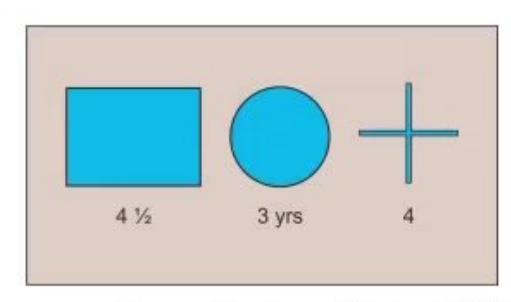
Autism, Asperger syndrome, Rett's syndrome, childhood integrative disorder, PDD—otherwise not specified.
MNJ20-040
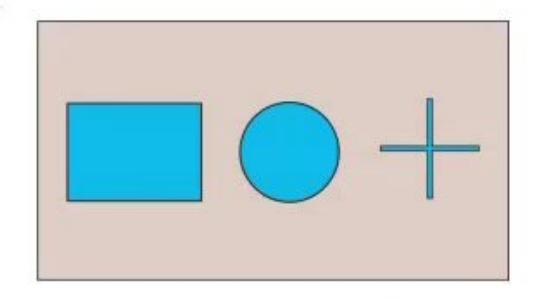
- At what age would you expect a child to copy the below shapes correctly?
- Name the pervasive developmental disorders
Answer
No model answer in source material.