MNJ23-001
- Site for primary focus in congenital tuberculosis
- Management plan for a child born to a mother (diagnosed in 3rd trimester) as per IAP.
Answer
No model answer in source material.
MNJ23-002
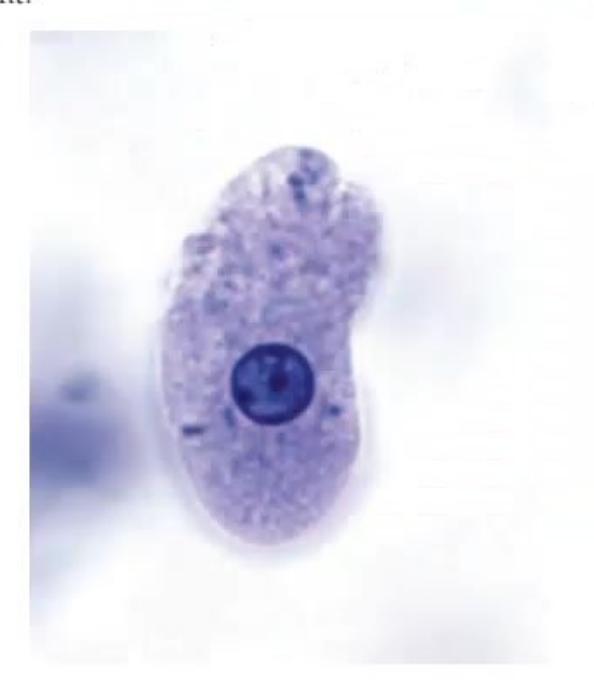
A 6-year-old child Ravi, resident of Bihar, is admitted with the fever of 10 days, loss of appetite 10 days and hepatosplenomegaly. His peripheral smear is shown below:
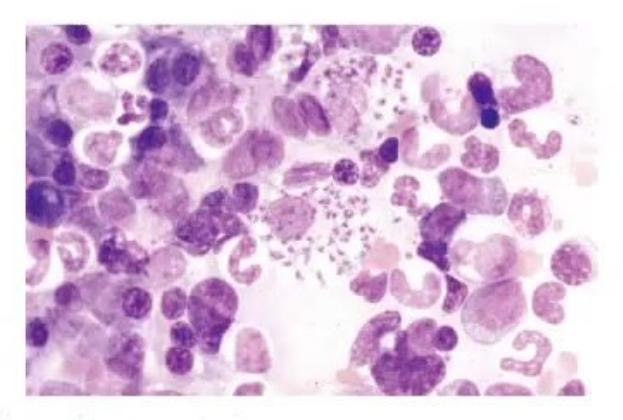
- See the PBF and give the finding with form of parasite.
- Name of the culture media use for diagnosis
- Drugs used to treat resistant cases of this disease.
Answer
No model answer in source material.
MNJ23-003
Name direct and indirect evidences for lab diagnosis of kala-azar (2 each).
Answer
No model answer in source material.
MNJ23-004
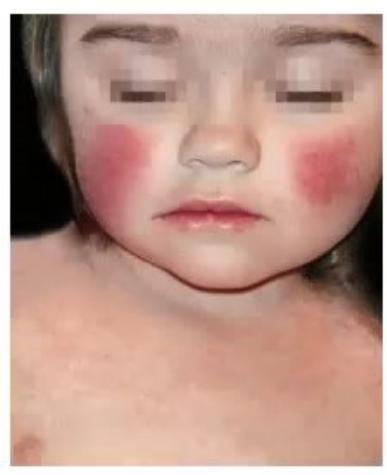
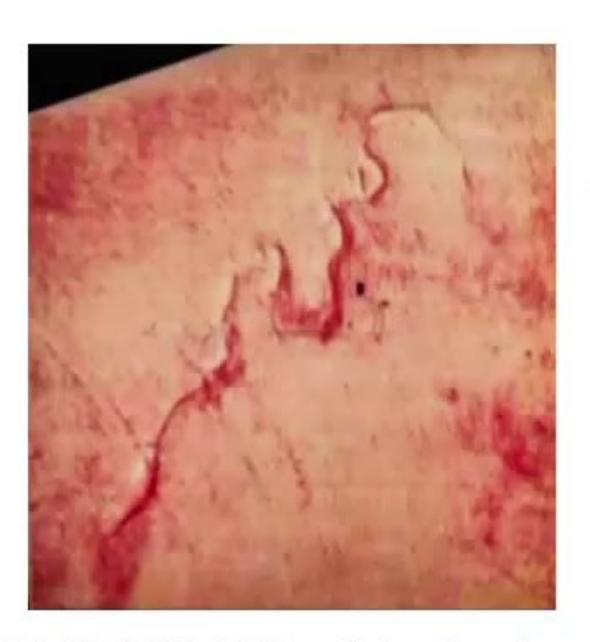
Study this picture of a 7 month infant who developed a rash during the declining phase of fever starting with the cheeks (image):
- What is the most probable diagnosis?
- What is the causative organism?
- Name two situations where infection with this organism may be life-threatening.
Answer
1 . Erythema infectiosum / fifth disease
- 2 . Parvovirus By,
-
- a. Aplastic crisis in hemolytic anemia
- b. Non-immune hydrops fetalis in fetal infection
MNJ23-005
- Define treatment failure as per RNTCP
- Define contact and give its treatment.
- Treatment for BCG adenitis
Answer
1 . Contact: Any child who is living in a household with an adult taking ATT or has taken ATT in past 2 years; Treatment is 6 HR.
- 2 . Treatment failure: A smear positive, begins treatment—who either remains smear positive or becomes smear positive again at 12 weeks 1m spite of continuous treatment.
- 3 . Treatment: No active intervention whatsoever.
MNJ23-006
- Define malarial resistance.
- What 1s premunition?
Answer
1 . Treatment failure/drug resistance: After treatment patient 1s considered cured 1f he/she does not have fever or parasiterma till day 28
Early treatment failure (ETF)
Development of danger signs or severe malaria on day 1, 2 or 3, in the presence of parasiterma, parasitenua on day 2 higher than on day 0, irrespective of axillary temperature; parasitemia on day 3 with axillary temperature <37.5°C; and parasitemia on day 3—25% of count on day 0
Late clinical failure (LCF)
Development of danger signs or severe malaria in the presence of parasitemia on any day between day 4 and day 28 (day 42) in patients who did not previously meet any of the criteria of early treatment failure; and presence of parasitemia on any day between day 4 and day 28 (day 42) with axillary temperature <37.5°C in patients who did not previously meet any of the criteria of early treatment failure.
Late parasitological failure (LPF)
Presence of parasitemia on any day between day 7 and day 28 with axillary temperature <37.5°C in patents who did not previously meet any of the criteria of early treatment failure or late clinical failure.
Premunition: In an endemic area there is less production of cytokines for a given dose of parasite; Person protected from severe illness.
MNJ23-007
- Name the drugs used for chronic Hep B infection.
- Favorable predictors for treatment of chrome HBV.
- What are the end points for therapy?
Answer
- Hep B infection—INF-α 2b and lamivudine
-
- High HBV DNA, high SGPT, ↑ age
- Undetectable HBV DNA (DNA positivity indicates mutation) resolution of liver histology loss of HBeAg with presence of anti-HBeAb.
MNJ23-008
- Management plan for acute HBV contact (intimate contacts only) in children.
- Management plan for Hep B prophylaxis ina patient of nephrotic syndrome on hemodialysis.
Answer
- Vaccine (10 μg) at 0, 1, 6 months + Ig 0.06 ml/kg.
-
- Vaccine (40 µg) at 0, 1, 6 months and no immunoglobulins.
MNJ23-009
- 4, What is the minimal age after which IPV can be given and why?
- Give criteria to define polio eradication in an area.
- Whatis the incidence of VAPP after 1st dose?
- Whatis the effectiveness of IPV vaccine after 3 doses (8 weeks apart)?
Answer
- No case of paralytic polio due to wild virus in last 3 years Routine vaccination coverage should be ≥80%. A good serological and clinical surveillance system. Certification by WHO (not needed nowadays).
-
- 1/2.8 million after 1st dose.
-
- Near 100%
-
- At or after 8 weeks, once the peak of maternal antibodies declines.
- Ans. 10. 1. IgM antibody in serum/CSF four-fold rise in IgG levels in paired sera virus isolation in brain tissue Ag detection by immunofluorescence/PCR.
-
- Culex tritanirynchus/Culex vishnui
-
- Panda sign
-
MNJ23-010
-
OQ. 11. A 12-year-old male child presented with complaints of worsening school performances, altered behavior and sleep pattern with some brief abnormal movements. Physical examination is normal. No past history of any medical illness except a febrile rash at the age of 7-8 months:
-
4, Available specific treatment, if any.
- Give the WHO definition of a confirmed case of Japanese encephalitis
- Name of the agent who transmits disease in India (MC agent/agents).
- Name of the sign which if present on MRI clinches the diagnosis.
- What 1s the most probable diagnosis?
- Give its stages.
- Diagnostic modalities.
Answer
No model answer in source material.
MNJ23-011
A 2-year-old male child presented to emergency department with complaints of low grade fever for last 2-3 weeks, headache and vomiting for last 2 weeks, spillage of milk while drinking for the last 1 week and altered sensorium with focal seizures of left half of body at the time of admission. The only past history that is found is a follow-up case of cyanotic CHD (operated at 3 months of age), rest everything is normal:
- QO. 13. A pregnant woman 26 weeks' gestation does not have varicella immunization status. Her 5-year-old son has been diagnosed with varicella a day prior. What will you advice the mother?
- What is the most probable diagnosis?
- What is the etiological agent expected?
- Diagnostic modalities.
- Imtal treatment
- Indications for surgical interventions
Answer
- Brain abscess
-
- Group A streptococcus (congenital cyanotic CHD)
- IV crystalline penicillin + metronidazole with chloramphenicol phenytoin for seizures
-
- CE CT head or MRI head
-
- Large easily accessible abscess with impending herniation or impending rupture
Ans. 13. • If results of VZIG are available within 72 hours
- Wait for VZIG status report. If positive no immune prophylaxis is required
- If negative give VZIG 125 units/10 kg (625 units)
- If testing is not possible may give VZIG
Ans. 14. 1
-
Zidovudine + lamivudine (3TC) + efavirenz or
-
· Stavudine+ lamivudine + efavirenz or
-
· Zidovudine + lamivudine + nelfinavir or
-
Zidovudine + lamivudine + ritonavir/Lopinavir
-
ZDV: 90 to 150 mg/m2/dose 6 hourly
-
3TC: 4 mg/kg/dose BID
-
Efavirenz-after 3 yrs 10 kg-200 mg (bed time)
-
2
-
Hb, TLC, DLC, Plt, ESR
-
BUN/Cr
-
Na* K*
-
SGOT, SGPT
-
Sr amylase / lipase
-
* Lactate (optional)
MNJ23-012
Plan antiretroviral therapy regimen for a 3-year-old child who has recently been diagnosed with HIV infection with complaints of failure to thrive, hepatomegaly, thrombocytopenia, CD4 <25% and viral load 10° copies/ml:
- Write the drug regimen, dosage.
- What are the tests to be ordered prior to initiation and after 15-30 days of treatment?
Answer
No model answer in source material.
MNJ23-013
Mark True/False regarding osteomyelitis statements:
- Staph aureus is the most common organism
- The ESR and CRP are usually elevated
- Blood cultures are positive in over 75% of all cases of osteomyelitis
- Plain films of bone may be normal in the first 1-2 weeks of the course
- Treatment usually requires a total tme of antibiotics (IV and PO) is 4-6 weeks.
Answer
.lrue, 2 True, 3.True, 4.True, 5. True
MNJ23-014
A 15-year-old female presents with fever for past 24 hours. Feveris high grade associated with sweating. For past 2 hours patient is complaining of ghabrahat, chakkar, headache, vomiting. On examination—toxic looking, drowsy with Glasgow Coma Scale of 10. Blood pressure systolic: 70 mm Hg, pulse rate: 140 min, capillary refill time: 4 seconds, RR: 30/min. There is rash (petechial) over abdomen, limbs:
- 4, What drug you would like to give in dopamine refractory shock?
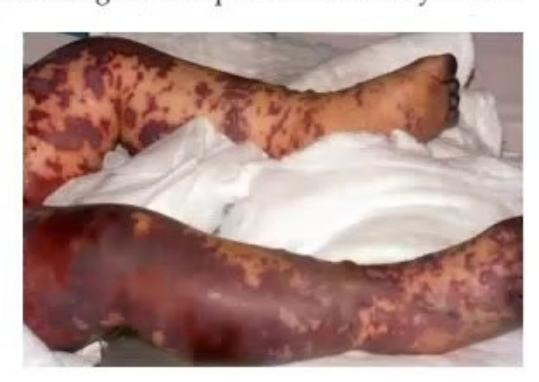
- Probable diagnosis of this given condition.
- First step in management other than airway and breathing.
- What class of antibiotic you would like to give to this patient?
Answer
Meningococcemia
- Management of shock, fluid boluses
- Ceftriaxone
- Steroids
MNJ23-015
A9-day-old male child Raju was brought to your clinic with complaints of difficulty in feeding, crying excessively, and seizure. Parents of baby were labourers by occupation. Mother had not received any ANC care. Baby was born at home, had moderate cry, was well till day 8. AF—at level, sutures—normal. Tone—increased in all 4 limbs with neck retraction, intermittent seizures, worsened with stimulus:
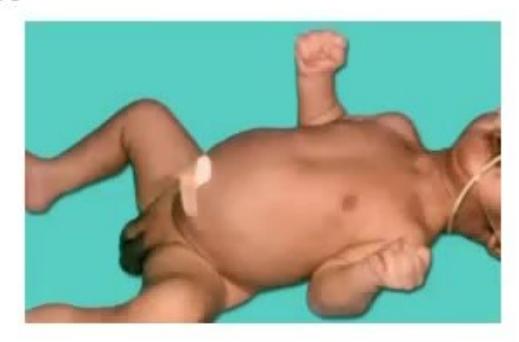
- Whats the diagnosis of this baby?
- Whats the treatment?
- Whats the usual cause of death in this condition?
- What are the various types?
Answer
Neonatal tetanus
- Penicillin, tetglob, muscle relaxants—diazepam, baclofen.
- Recurrent seizure causing airway obstruction.
- Neonatal, localized, generalized, cephalic.
MNJ23-016
A10-year-old child Rohan came to you with complaints of fever for 5 days and bodyache and decrease oral intake. Mother notice small water filled lesion on trunk and back:
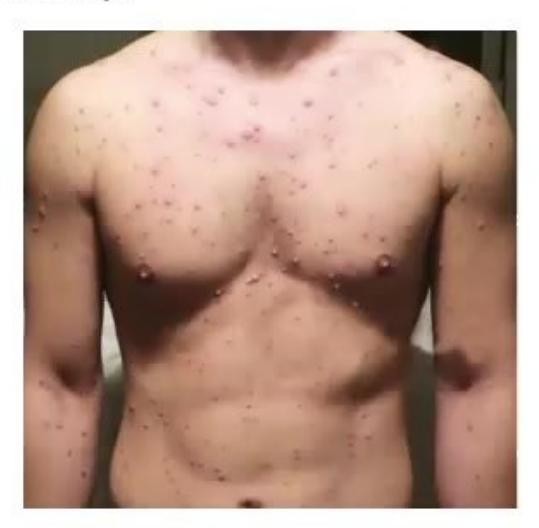
- Whats the diagnosis of this given condition?
- Name three complications can be occur in this child.
- What is the penod of infectivity?
Answer
Chickenpox
- Pneumonia, encephalitis, ataxia, ADEM
- Aarbone or direct contact: Contagious 2 days before and till all lesions are dry.
MNJ23-017
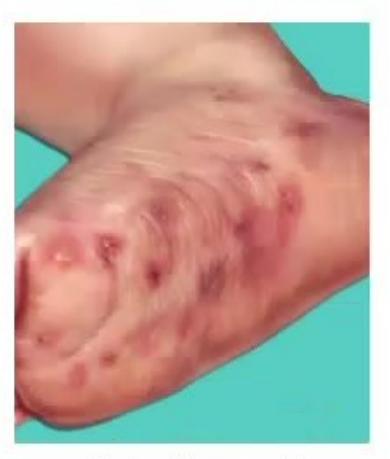
A 2-year-girl Neha presents with severe pruritus especially during night and after taking bath with warm water. Pruritus is most significant in web spaces of hands and toes. Her family member also complaining:
- Diagnosis of this given condition
- What is causative organism?
- What is topical treatment?
- Whats oral treatment?
Answer
Scabies
- Sarcoptes scahie
- Permethrin 5%
- Ivermectin
MNJ23-018
A health care worker is reported with percutaneous scratch with a solid needle contaminated with blood of a patient with primary HIV infection and a low CD4 count:
- Whatis the recommended regimen of post-exposure prophylaxis? Drugs, dose and duration of treatment.
- Which 1s the test at which HIV testing and counseling are done?
Answer
Expanded regime
- * AZT: 300 mg/twice a day for 4 weeks
- * 3TC (lamivudine) 150 mg BD for 4 weeks
- * Indinavir: 800 mg/thrice a day for 4 weeks
- . As per the followimg schedule
- * Baseline HIV test—at time of exposure
- * Repeat HIV test—at 6 weeks following exposure
- * 2nd repeat HIV test—at 12 weeks following exposure
MNJ23-019
A 4-year-old boy Amir came with fever 10 days, cough, pain at lower back and this clinical finding of lesion in armpit area:
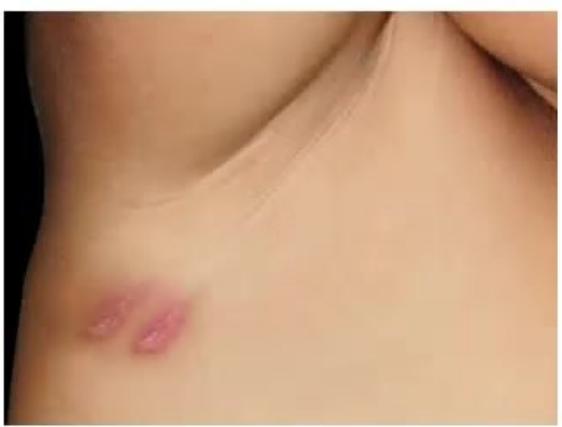
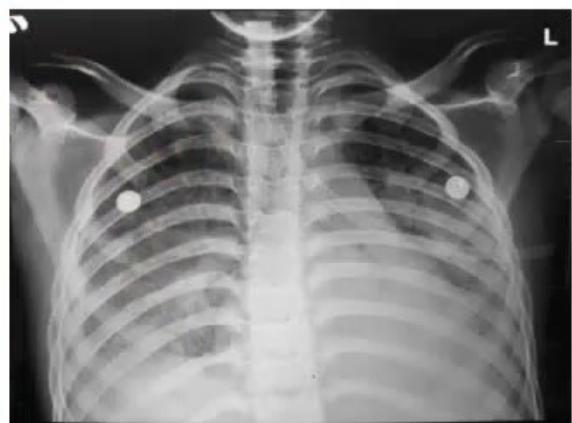
- Describe the lesion given in this image.
- What is the diagnosis of this condition?
- What is causative organism?
- This disease is transmitted by
- Write down any 3 complications.
- Write down two treatment available.
Answer
, Diagnosis: Eschar in scrub typhus
- Lesion: Necrotc area, like the skin burn of cigarette butt, but painless erythematous rim, lymphadenopathy
- Orientia tsutsugamushi
- Trombiculid mite
- Complications: Meningoencephalitc, ARF, myocarditis
- Treatment: IV azithromycin, oral doxycycline
MNJ23-020
A 10-year-old boy Karzan Khan who has presented with fatigue, fever, and malaise of 8 days in duration. On examination, he has generalized lymphadenopathy, splenomegaly and hepatomegaly. His throat examination and PBF shown below:
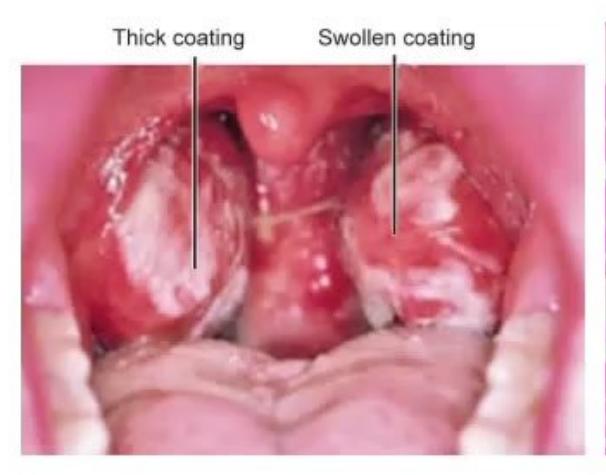
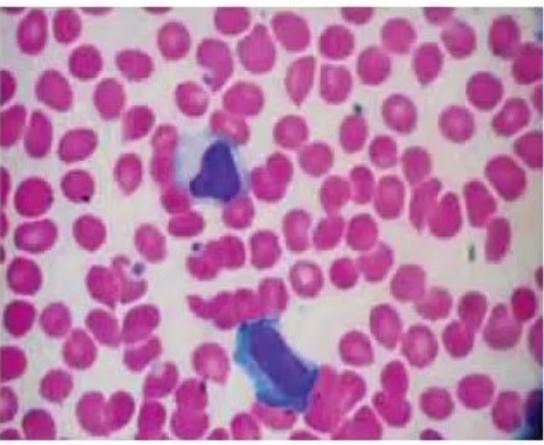
- Describe the main features in each image.
- What is the diagnosis this condition?
- Write 3 complications that may occur in future.
- What medication is contraindicated in this disease?
- What is the treatment available?
Answer
Pee & Picture 1 shows tonsillihs with membrane formaton, picture 2 shows atypical mononuclear cells which are enlarged with irregular nuclei and basophilic pleomorphic cytoplasm
- Infectious mononucleosis
- . Splenic hemorrhage/ splenic rupture /airway obstruction causing drooling / stridor and respiratory distress / thrombocytopenia /Coombs' positive hemolytic anemia/ GBS/Reye's syndrome.
- . Ampicillin and amoxycillin.
- Rest and symptomatic treatment/ avoidance of contact sports or strenuous athletic activities during the first 2-3 weeks of illness or while splenomegaly 1s present.
- Meningococcal infechon
- . Drug treatment and dose (See Table in Nelson)
- . Rifampicin
- E Meningococccal vaccine ACWY, single dose
MNJ23-021
A12-year-old boy Dharmender, developed throat pain two days back. He returned with his elder sister from his boarding school in Tripura to Kolkata. His temperature was 36°C. Heart rate and blood pressure was normal. He had also developed a rash and his swab grew the following:
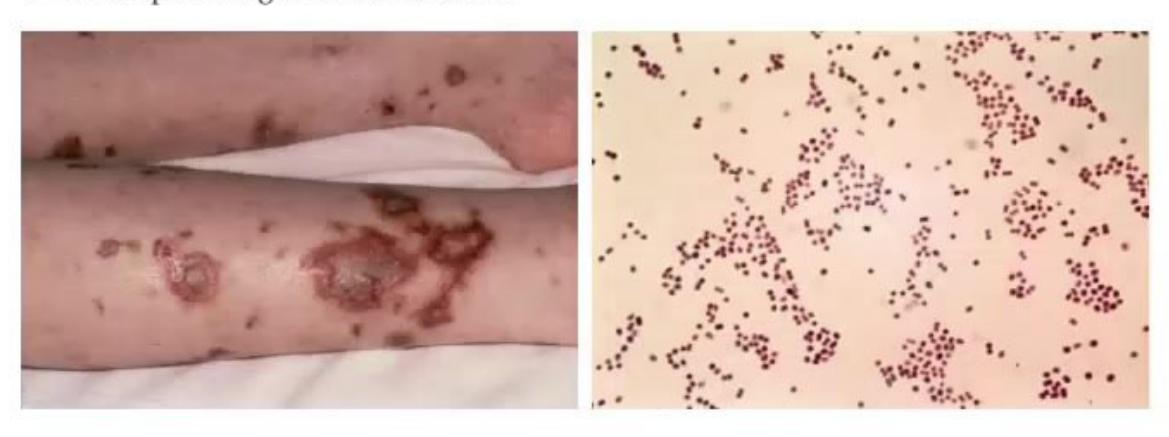
- Diagnosis of this condition.
- Drug treatment and dose.
- What treatment you will advise for his sister?
- How to protect against this condition?
Answer
No model answer in source material.
MNJ23-022
- 2, Name the condition in which it is seen.
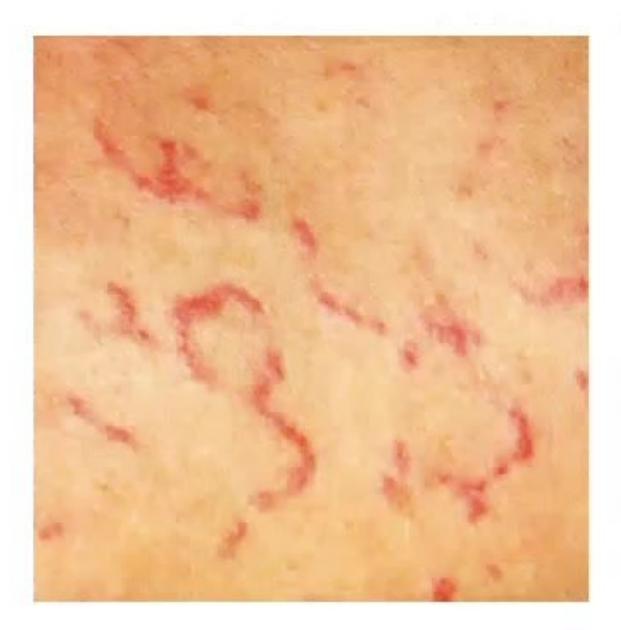
- Identify the rash seen in image of a 10-year-old child
Answer
, 1. Erythema marginatum
-
- Rheumatic fever
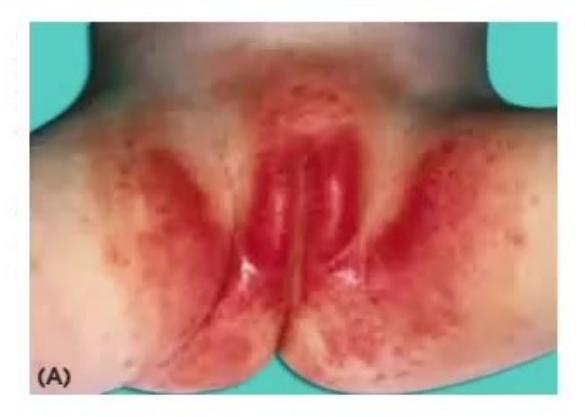
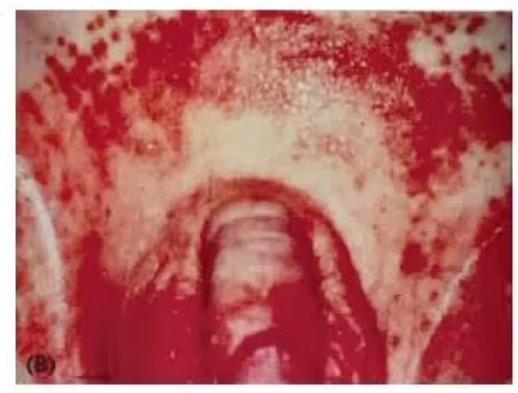
Ans. 25. Image A:
- Irntant /ammorniacal diaper dermatitis
- Involvement of convex surfaces and sparing of intertriginous creases
Image B:
- Candidal diaper dermatitis
- Pinpoint satellite papules / pustules, and
- Involvement of intertrigimous creases
- Pneumocystis carinii pneumonia
- . Perihilar densities with apical sparing
- . Bronchoalveolar lavage
- . a. Grocott-Gomori
- b. Toluidine blue
- c Fluorescein labeled monoclonal stains
- Steven-Johnson syndrome
- . Severe bullous lesions, target lesions, mucosal involvement (eye, oral, genital)
- . Mycoplasma and Herpes simplex Sulphonamides, carbamazepine
- . Antibiotics for secondary infection, topical steroids for eyes, saline compresses for denuded skin, mouthwashes IVIg and steroids in some cases
-
- Corneal ulcer, anterior uveitis, myocarditis, hepatitis, acute tubular
MNJ23-023
Two children A and B came to your clinic complaints of rash over perianal area, child A is 20 days old and always wear diper but mother of child B uses diper only in night time. Give diagnosis of A and B:
See the papule
Answer
No model answer in source material.
MNJ23-024
A 9-year-girl Kareena Sharma on long-term steroids and mycophenolate mofetil presents with acute onset cough, breathlessness and tremulousness. Evaluation reveals normal temp, 5pO,: 90% on room air; no rales or rhonchi on auscultation:
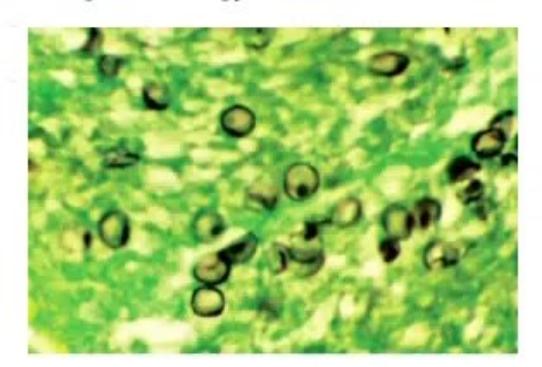
- Whats the most likely diagnosis?
- Whatis the likely finding in chest X-ray?
- Which 1s best for diagnosis?
- Name 2 stains for confirming the etiology.
Answer
No model answer in source material.
MNJ23-025
A 9-year-old child Akshay came to you with these lesion over face, eyes, lips that was progressed in last 3 days, before that he was on antibiotic treatment for cough and cold and suddenly he developed these lesions:
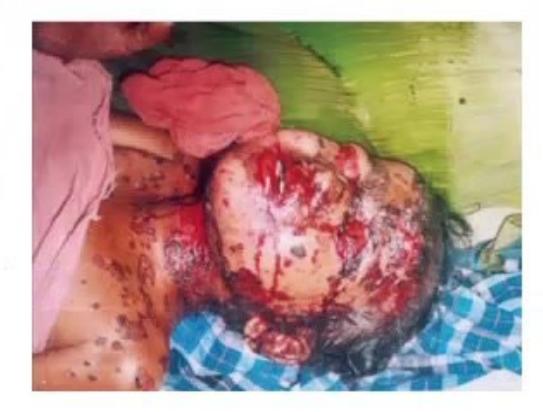
- Diagnosis of this condition.
- Describe the lesion shown 1n the figure.
- Causes: Two infections /two drugs.
- Management plan of this condition.
- Name two complications.
Answer
No model answer in source material.
MNJ23-026
A 4-year-old child came to you with complaints of fever with rash on face with:
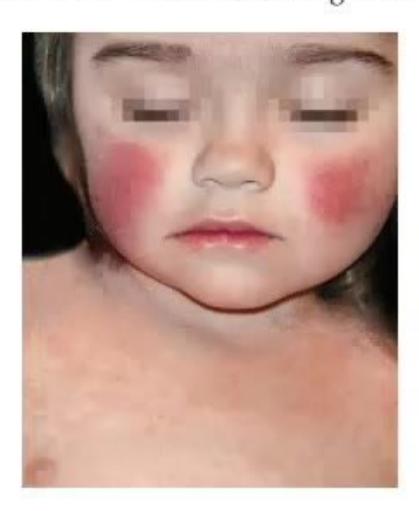
- What 1s the diagnosis?
- What is the causative orgarism?
- Name one serious hematological complication in this disease
- Name one orthopedic complication.
- Name one cause for intrauterme fetal demuse.
- What treatment is recommended for severe hematological complications?
Answer
- Erythema infection or fifth disease
-
. Parvovirus By
-
. Transient aplastic crisis
-
. Arthropathy
-
. Non-immune fetal hydrops
-
. IVIg necrosis, osteomyelitis
-
Erythema nodosum
- . TB, Streptococcus
- Sulfa, phenytoin, oral contraceptives
- . IBD, spondyloarthropathy, sarcoidosis
- . TB, Streptococcus
-
Strongyloides stercoralis larvae
- . Skin
- . HIV/immunosuppression, PEM, MR, autoummune disease
- . Eosinophila
-
ay Ivermectin 200 pg/kg OD for 1-2 days
-
- Hyperinfection syndrome
MNJ23-027
A 6-year-old female child Rani came to your clinic with her mother to concern about the red lesions on her shin area and mother told that these lesions are tender:
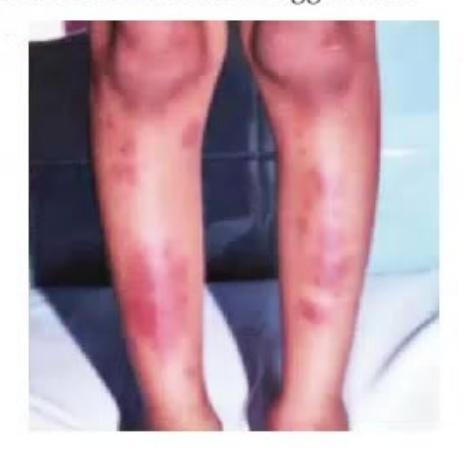
- What 1s the diagnosis?
- What 2 common infections and drugs can trigger this?
- What 2 non-infectious systemic disorders can trigger this?
Answer
No model answer in source material.
MNJ23-028
- Identify this.
- What 1s the route of entry of this organism?
- Name 2 conditions that are high-risk for this infection.
- What hematological clue will occur?
- Drug of chaice.
- One complication
Answer
No model answer in source material.
MNJ23-029
A17-month-old irritable child had high grade fever for 6 days and redness over palm and sole. She also has redness over eyes:
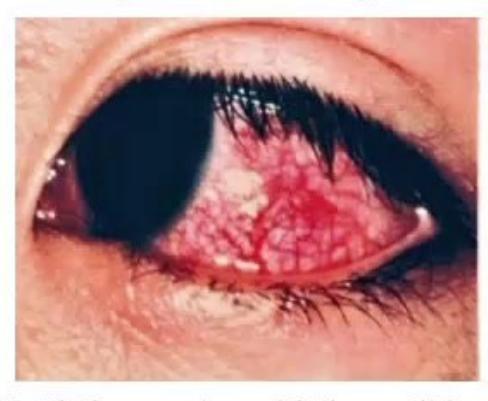
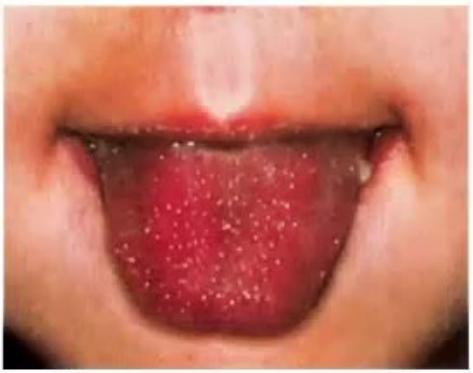
- Whats the most probable diagnosis of this condition?
- What are the predictors of severity of this disease?
Answer
- Strawberry tongue and conjunctival congestion.
Kawasaki disease
- 2 Predictors of severe outcome
- * Male gender, age <1 year,
- * Prolonged fever, recrudescence of fever after an afebrile period,
- * Laboratory values at presentation,
- * Low hemoglobin or platelet levels,
- * Migh neutrophil and band counts,
- * Hyponatremia, and
- * Low album and age-adjusted serum IgG levels.
MNJ23-030
Match the organism with the condition associated:
- Legionella micdadet —
- Mehodosis a HHV-8
- Oroya fever c Corona virus
- Pontiac fever b Coxsackievirus
- Swimmung pool granuloma d_ Bartonella bacillifomis
- Ecthyma gangrenosum f Aspergillus fumigatus
- Kaposi sarcoma
- Bornholm disease e Treponema pallidum
- Condyloma lata g Mycobacterium marinum
- Malt workers lung h. Pseudomonas aeruginosa
- SARS 1. Burkholderia pseudomallei
Answer
ok 2} bad te BD BE Fe BE Big Thea
MNJ23-031
HIV infection in newborn:
-
1, Mother has HIV infection and if baby is PCR positive within 48 hrs. What does it imply?
-
4, When do you label a newborn as HIV infected?
- Another baby born of HIV +ve mother tests negative for PCR at 48 hrs but PCR turned positive within 7-90 days What does it imply?
- How early can P24 antigen test be done?
- After what age 1s HIV ELISA considered the best test for diagnosis and what is its sensitivity and specificity.
Answer
. Itimplies in utero infection and rapidly progressive disease
- . Itimphes postnatal transmission and slowly progressive disease
- . After 1 month of age (as false positive rates are higher if done before 6 weeks)
- . Iftwo positive virologic tests (PCR/ culture P24 antigen) are obtained from different blood samples.
-
-
18 months of age—it 1s almost 100% specificity sensitive.
-
MNJ23-032
-
ii. used injection needle
-
in. amikacin injection with expiry
-
iv. blood soaked cotton swab
-
vi. incinerated ash
- i. What is treatment?

- blood agar media
v. LV set -
- Identify the organism.
i. What is treatment?
- Identify the organism.
Answer
- i yellow/red
- ii blue/ white
- ui. black
- iv. yellow/red
- v blue/white/red
- wi black
- iE. histolytica
- u. Metronidazole, chloroquine
MNJ23-033
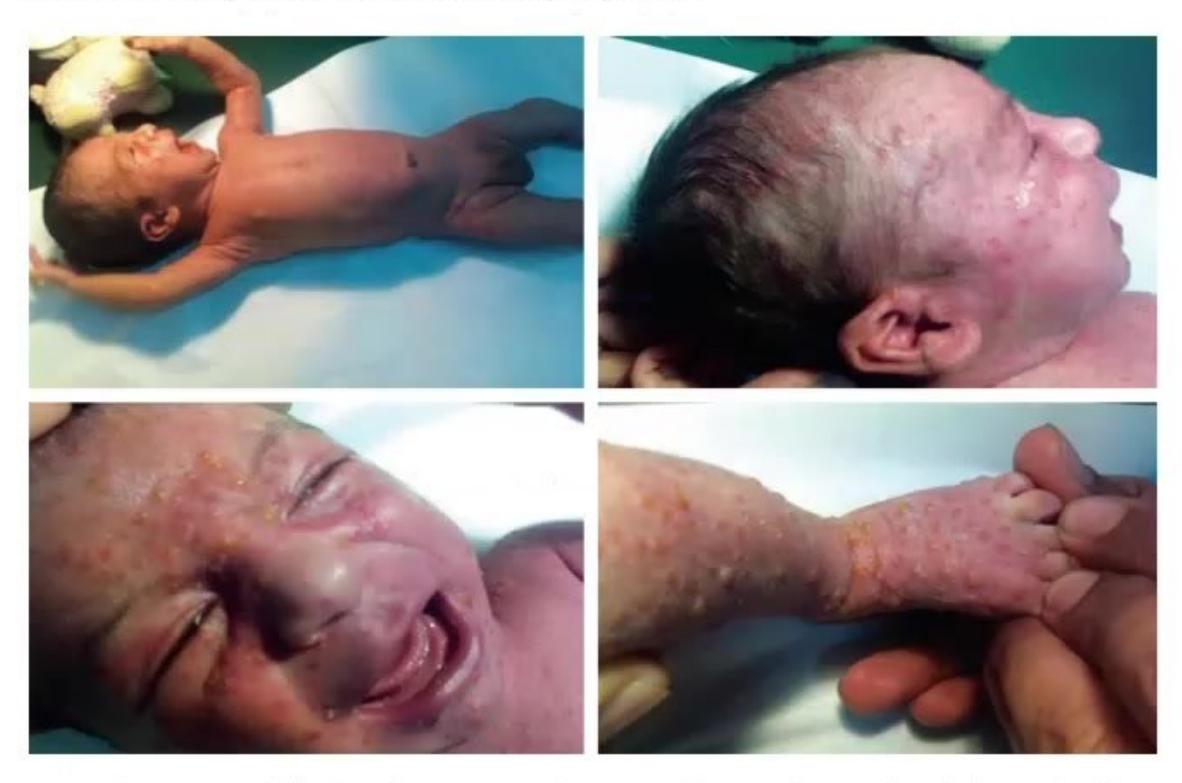
- Diagnose the condition in a¥ days old child.
- What are complications of this (write any 4 systems)
Answer
- Neonatal varicella
- . Blood complications: ITP, purpura fulmunans
CNS: Encephalitis, transverse myelitis, GBS
Liver- Reye syndrome, hepatitis
Eyes: Keratitis
MNJ23-034
Three-year-old boy sachin presented to you with complaints of with fever, drooling, stridor, respiratory distress. Child look toxic on examination.
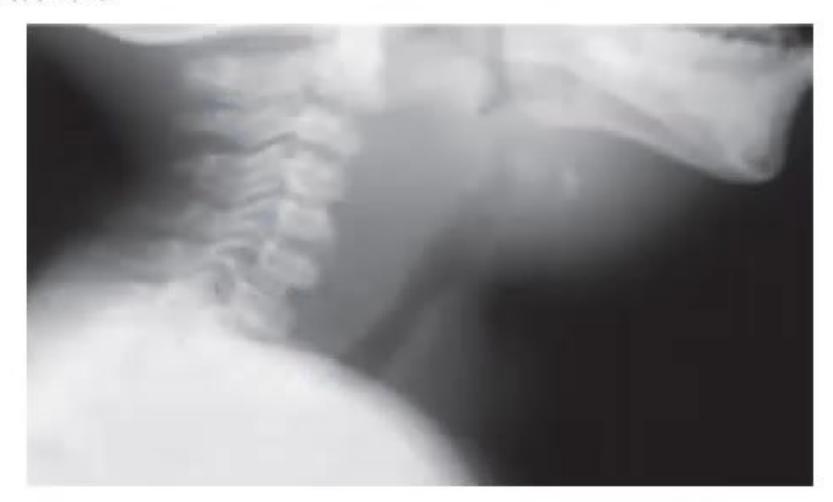
- Whats X-ray finding?
- Whats possible diagnosis?
- What 1s treatment?
Answer
- X-ray suggestive of soft tissue swelling of retropharangeal area
- . Retropharangeal abscess
- . IV antibiotics
- . Marked erythema and bulging of tympanic membrane
- . Acute otitis media (AOQM)
- . Eustachian tube dysfunction, fluid accumulation in middle ear, microbial growth
- . Low social economic group, frequent URI, bottle feeding.
- . Alagille syndrome
- . Congenital viral infection (TORCH), bacterial sepsis, galactosaemmia
- . Total serum bilirubin (direct and indirect), liver biopsy, ECHO, eye examination (for posterior embroyotoxin), DNA analysis (JAG 1 gene mutation)
- . Deficiency of fat-soluble vitamins (ADEK).
MNJ23-035
An 18-month-old kid presented to OPD with complaints of high fever, cough and intense irritation. On examination you found red throat along. When you examine the ear with otoscope you observe this picture.
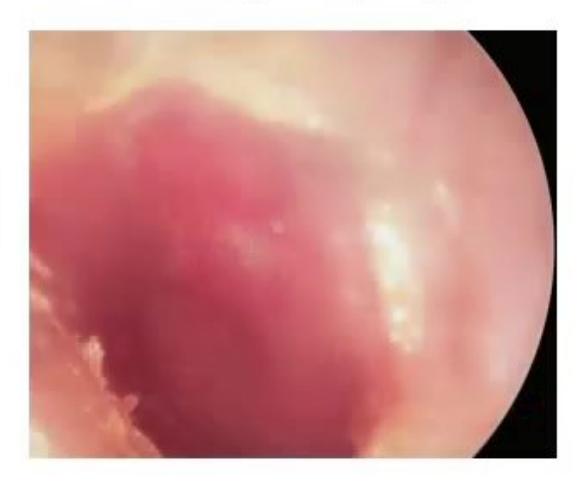
- What are the finding in ear picture with otoscope? (any 2)
- What 1s the diagnosis on the basis of history and otoscope findings?
- What 1s pathogenesis behind this?
- What are risk factors for this in babies 6 years or younger?
Answer
No model answer in source material.
MNJ23-036
A female neonate after normal delivery developed respiratory distress after birth and final diagnosis of PPHN (persistent pulmonary hypertension of neonates) was made after ECHO and treated with iNo and HFO ventilator. He was extubated at day 4 and commenced on oral feeds. She developed progressive jaundice at day 10 of life. Other examination include broad forehead, pointed nose, deep set eyes and soft systolic murmur and hepatospenomegaly.
- Whats the possible diagnosis?
- What are differential diagnoses?
- What test you will process in this child?
- At what deficiency is this child at risk and how will you prevent that.
Answer
No model answer in source material.