MNJ35-001
Obtain history from a mother who has brought her 6-year-old child with history of unprovoked seizures in emergency.
Answer
- Introduces and establishes rapport.
-
- When seizure occur. How long, bladder bowel involvement/ tongue bite/any drug given/ partial or generalized.
-
- Asks for the time of occurrence of seizures.
-
- Asks for frequency, asks for precipitating factor like fever.
-
- Asks for personality change/school problem /intellectual deterioration.
-
- Asks her to act out or re-create a seizure to see type of seizure.
-
- Asks for aura and automatism.
-
- Asks about headache and vomiting.
-
- Asks history of failure to thrive.
-
- Asks for details of medications used that may precipitate seizure.
-
- Asks for details of anticonvulsant therapy, asks for compliance if given in past
-
- Asks for family history
-
- Asks for developmental history.
-
- Asks for birth and neonatal problem.
-
- Any thing more you want to tell more than it about this abnormal movement of child.
-
- Thanks.
MNJ35-002
A 6-year-old girl brought to ER with episode of wheezing. She was diagnosed outside as asthma a few months earlier. What relevant history would you like to obtain from her mother?
Answer
- Introduction, rapport, language in which parent want to talk.
-
- Present history
-
- When did the present attack start and if the child 1s getting better/worse/no improvement?
-
- Does the child have rapid breathing / difficulty in talking or feeding?
-
- Any factors that triggered the present attack like dusting, playing in park.
-
- What medications has she been administered for the present attack at what dose and frequency?
-
- If associated with fever or not
Past history
-
- How long has she been a wheezer /has frequent and for how many days the episode last/seasonal/how often symptomatic at mght/how often absent from school?
-
- If child is on long-term medications—if she has been complamnt and if using MDI, if she follows the nght technique.
-
- How often she has to use reliever MDI/get nebulized
-
- History of previous hospitalization and if she needed Parenteral or oral steroids/TV medications
-
- Frequency of visits to ER
-
- Any admission to ICU and if so, 1f mother has been told about warmmg signs
-
- History of exposure to passive smoking/pets and other triggers
-
- If wheeze is exercise induced.
-
- History regarding comorbid conditions like sinusitis /GER/ other allergies
-
- History of asthma or atopy in family
- . Thanks
Observe OSCE 483
MNJ35-003
A 9-year-old child presents to emergency department with history of blood in vomiting. Take the history of the child from mother.
Answer
- Introduces himself and tries to make mother comfortable.
-
- How much blood vomit—small/large (if large mean full of cup of hand)?
-
- Duration of symptoms and whether its 1st time.
-
- What is the volume and color (coffee brown/red)?
-
- Bleeding from any other site/easy bruisability.
- Associated symptoms—fever/vomiting/jaundice/edema/abdominal distension/ blood in stool
-
- Associated seizure/mood change/sleep pattern change.
-
- History of drug intake, NSAIDs
-
- Any family history of bleeding.
-
- History of associated epigastric or retrosternal pain.
-
- Past history of jaundice/blood transfusion.
-
- Thanks.
MNJ35-004
Take relevant history from this parent whose daughter is suspected to have UTI for the first time. She is 3 years old now.
Answer
- Introduces himself, rapport, explain problem in brief
-
- History of any kidney related problem in antenatal USG.
-
- History of fever/chills
-
- History of constipation.
-
- History of urgency/frequncy
-
- History of malodorous urine.
-
- History of suprapubic pain, loin pain.
-
- Details of toilet training—very early.
-
- Wiping from back to front.
-
- History of incontinence
-
- History of threadworm infection
-
- Family history of renal disease/stones
-
- Family history of UTI/VUR.
-
- Thanks.
MNJ35-005
A 4-year-old child presents to emergency department with red-colored urine. Take the history child from mother and father.
Answer
- Introduces himself and tries to make the mother comfortable.
-
- Asks about duration of onset.
-
- History of blood in urine-bright red blood or cola color
-
- History of associated symptoms: Fever, pain abdomen, jaundice.
-
- History of swelling on feet or periorbital edema.
- History of associated pallor.
-
- History of bleeding from anywhere else.
-
- History of sore throat or skin infections in recent past.
-
- History of headache/ırrıtabılity/seizures.
-
- History of oliguria.
-
- Diet history: beetroot ingestion.
-
- History of similar episodes in past
-
- History of hearing loss or family history of hearing loss.
-
- History of pain at loin/pass stone.
-
- Any other you want to tell.
-
- Thanks.
MNJ35-006
, A 2-year-old child presents to emergency department with severe pallor. Take the history of the child from mother.
Answer
- Introduces himself and tries to make the mother comfortable.
-
- Asks onset sudden or gradual.
-
- History of bleeding or bluish spots.
-
- History of associated symptoms: Fever, failure to thrive
-
- History of duration of exclusive breastfeeding
-
- Recurrent blood transfusions
-
- History of associated jaundice.
-
- Where are you from (area)? What is community?
-
- History of worm infestation, recurrent diarrhea, pneumonias, TB.
-
- Birth history (term/preterm/NICU stay/exchange transfusion).
-
- Community and religion and history of consanguinity
-
- Dietary history, pica.
-
- Family history of blood transfusion, gallstone, splenctomy.
-
- Drug history (antiepileptics), methyldopa, penicillin.
-
- History of goat milk ingestion.
-
- History of abdomen distension/knuckle pigmentation/glossitis, stomatitis.
-
- Thanks
Ans. 7. 1st think ...... for 30 sec .... what you going to deal? Seizure/syncope/hysteria/ dehydration/cardiac disease/...... any other DDs. Keep in mind all differential diagnosis:
-
- Introduce, develops rapport.
-
- When and where did it happen?
- For how long did the episode last and treatment given/when regain consciousness.
- Ask for abnormal movements and tries to find exact type of movement, i.e. whether convulsions, tremors, etc. if convulsions type—clonic, tonic, tonic-clonic, etc. whether localized/generalized.
- Associated symptoms like tongue bite, frothing, fever, vomiting, neurodeficit, postictal state
-
- Whether first attack, if not how many times?
-
- History of fasting/not took water for long time/playing in afternoon sun.
-
- History of cardiac disease, past history of heart disease treatment, cyanosis.
-
- Family history of similar illness.
-
- Development and birth history.
-
- Any problem in school, peer, exam stress.
-
- Anything you want to tell me.
-
- Thanks
Ans. 8. 1. Introduction, rapport, language.
-
Simple bedwetting: Normal pattern of micturition—absence of dribbling, hesitation and good stream occasional dry nights
-
- Complex bedwetting—dribbling, pain during micturition
-
- Family history of bedwetting (which resolved) in a 1st degree relative
-
- History of development (normal or delayed).
-
- History of polyuria or polydipsia.
-
- Presence/absence of hematuria, dysuria
-
- Frequency of symptoms.
-
[S
-
- History of stress factors: At school (like study pressure or peer group pressure), at home (parental quarrels, arrival of a new baby in home).
-
- History of any lesions on the back (swelling or tuft of hair).
-
- Thanks
MNJ35-007
A 6-year-old has a history of sudden loss of consciousness. Elicit the history from the mother.
Answer
No model answer in source material.
MNJ35-008
This 6-year-old has been brought to you as the parents are concerned that the child bed wets. Kindle elicit an appropriate history.
Answer
No model answer in source material.
MNJ35-009
A 4-year-old male child brought to you with complaints of acute onset limping left leg, take the appropriate history.
Answer
- Introduces/explains.
-
- Rapport, ask for language.
-
- Which limb/joint?
-
- Swelling of the joint/redness/tenderness
-
- Onset, duration/progression.
-
- Fever/constitutional symptoms/weight loss/rash.
-
- Restriction of movements
-
- History of trauma, bite of insect, ingestion of honey.
-
- History of vaccination/injection.
-
- Other limbs/joints.
-
- Cardiac symptoms.
-
- History of Koch's contact
-
- History of gastro/sickle/hemophilia/HSP.
-
- Thank you
MNJ35-010
A 12 -month-old infant is brought to you cyanosis, crying and seizures elicitappropriate history and comment on the your probable diagnosis.
Answer
- Introduces and establishes rapport.
-
- Enquires about duration of seizures.
-
- Enquires whether cyanois—intermittent/persistent.
-
- Ask about feeding difficulty/dyspnea.
-
- Clarifies chronology of events.
-
- Ask about past history of cyanotic/breath-holding spells.
-
- Ask about precipitating factors for spells.
-
- Weight gain of child, growth of child, recurrent respiratory infection.
-
- Any history of poisoning substance ingestion.
-
- thanks to mother.
-
- Say to examiner, probable diagnosis is:
- Cyanotic spell
- Breath holding spell
- Seizures
MNJ35-011
A 9-year-old child presents to you in OPD with anemia and recurrent pain abdomen. There are no worm infestations. How would you take the environmental history?
Answer
- Introduces himself and tries to make parents comfortable.
-
- Enquiry into present and past home location—industrial area/river
-
- Age of house and condition of home for lead exposure
-
- Recent renovation or remodelling done—lead dust hazard window peeling.
-
- Window well contains solid material.
-
- Lead glazed pottery used in kitchen/wash fruits and vegetables.
- Parents workplace dose child stay or play in factory child labor and place of workexposure to lead battery
- Hobbies—painting, sculpturing, woodwork/history of pica ingestion, dietary supplement.
-
- Ayurvedic medicine, heavy metal ingestion.
-
- Thanks
OSCE Clinical Pediatrics ]
Introduces himself.
- i Explains about asthma as hyperactive airway disease and not infective
- Explains that there 1s no curative treatment and treatment reduces the severity and complications and child can hive a better symptoms free hfe.
- Explains how to use MDI, its dose, duration, when to buy new
- Explains prevenhve strategies at home about allergic component.
- Explains danger signs / warning signs of acute attack.
- Tells the treatment at home and reach nearest hospital Tells difference between Rescue and prophylactic inhalers
- Explains other alternatives, and ask for any doubts and clears it.
- Need for regular follow-up.
- . Give phone number for emergency.
- . Thanks
. Introduction
- Explain the nature of disease.
- Explain that this disease 1s not due to fault of parents
- Tell about current problems (jomt bleed ) or any other bleed.
- Treatment drug/dosage/ side effect to watch factor VIII/cryo/FFP.
- On discharge—precautions at home
- Precautions at school/play. Helmet/knee/ elbow
- To inform about condition in case of any future medical mtervention
- Counsel for future preg/possibility of prenatal diagnosis for her and others in family.
- . Investigate other relevant members
- . Future cure/ vaccination may come up.
- . When to follow-up regular in hemato OPD for height, weight.
- . When to come in emergency? Bleed, bruise, hematoma.
- . Ask if they have any more questons.
-
- Thank
. Introducton
- Explain the nature of disease.
- Removal of guilt from parents.
- Explain the problem of chronic nature of disease and regular follow up.
- Need to confirm explained—second test/ PCR, ete.
- Need investigate others 1n family.
- Treatment drug /dosage/side effect of main drug.
- Availability of drug (ART center) /cost/free
- Regular mvestigation
- PCP prophylaxis (where indicated in HIV).
- . Vaccination
- . No discrimination in eating, kissing, share the towel.
- . School/play as routine children.
Observe OSCE 487 |
-
-
- Future cure/ vaccination may come up.
-
- Advice to come for follow-up regularly.
-
- Ask if they have any more questions.
-
- Thanks the mother
-
Ans. 15. (A) ORT
- Introduces himself
- Explains that the main treatment is ORT and explains the need for rehydration.
- Explains correctly the preparation of ORT whole packet in 1 liter of water
- Advises feeding by spoon discourages bottle feeding
(B) Mother asks what to do if the baby vomits
- Stop ORT for 5-10 minutes and restart feed, give slowly spoonful every 2-3 minutes
- Advise giving small amount of 5-10 ml each time.
- Explains the danger signs of dehydration and explains when she should seek medical attention
- Consult agai if does not become better m 3 days or develops danger signs (seizure / unconscious/rapid breathing, etc.)
- Encourage continuance of breastfeeds/normal feeds/home available feeds.
- Ask, whether the mother has understood or not.
- Ask the mother whether there 1s any doubt
- Thanks
Ans. 16. Introduces self/ puts the child and attendant at ease
-
Explains the disease in simple words
-
Explains the medicaton (prednisolone)
- * Dose at initial and continuation phase with total duration
- * Frequency—OD or BD
- * Relationship with meals (steroid cause gastritis so should be given after meal
-
Explains side effects
- * GIT
- * Steroid effect—BP, gatritis, osteopenia, cataract, adrenal suppression
-
3g Explains monitoring of response
- * Uninary output
- * Body weight
-
Asks for queries if any.
-
. Advises to report back if any problems like complication ot nephrotc syndrome
-
i Regular vit D and calcrum supplement, vaccination
-
. Any think you want to ask
-
. Thanks
-
Ensures the presence of husband.
- . Introduces self/ puts the couple at ease
- . Explains the disease in simple words.
- . Explaims the incidence and modes of perinatal transmission:
- * 20-30%
-
Prenatal
-
Intranatal
-
Breastfeeding
-
- Explains modalities of reducing rate of transmission
ART to mother and child
LSCS versus vaginal delivery
Breastfeeding versus top feeding
- Explains effect of measures—reduction by LSCS—50%.
-
- Explains screening of the infant.
-
- Explains safety of cuddling, petting and kissing.
-
- Asks for queries if any.
-
- Advises to report back if any problems.
-
- Thanks
MNJ35-012
A7 years old Rajan, who is being discharged from your hospital following acute severe asthma, council the mother regarding the nature of disease and care of child
Answer
No model answer in source material.
MNJ35-013
Counsel the mother, whose child has been diagnosed with Haemophilia A.
Answer
No model answer in source material.
MNJ35-014
Counsel the mother, whose 6 months old child has tested positive first time for HIV (ELISA).
Answer
No model answer in source material.
MNJ35-015
(A) You are asked to counsel a mother whose 9 months of infant has acute diarrhea regarding oral rehydration therapy, (B) Mother asks what to doif the baby vomits.
Answer
No model answer in source material.
MNJ35-016
Drug counseling: A 4-year-old boy weighing 15 kg, diagnosed as nephrotic syndrome to be started on steroids.
Answer
No model answer in source material.
MNJ35-017
A 28-year-old lady diagnosed as HIV+ at 35 weeks of gestation. Counsel regarding perinatal transmission and follow up.
Answer
No model answer in source material.
MNJ35-018
A 4-year-old child (15 kg), a case of generalised tonic-clonic seizures has been advised syr carbamazepine (100 mg/5 ml). Counsel the mother regarding administration.
Answer
- Introduces self and puts child and attendant at ease.
-
- Explains the problem in brief.
-
- Familiarizes the attendant with the drug and dispenser.
-
- Explains dose (75 mg 3.5 ml), in 3-divided doses
-
- Advises not to miss the dose
-
- Increase to (150 mg 7 5 ml).
-
- Explains side effects.
-
- Calls for blood counts weekly.
-
- Calls for serum levels of the drug.
-
- Advises to report in case of doubt.
-
- Thanks
Ans. 19.1. Introduces rapport
-
- Enquires about urination, adequacy of weight gain, about let down
-
- Reassures about adequacy of breastfeeds
-
- Questions whether baby is feeding in correct position.
-
- Explains that frequent sucking and confidence help breastfeeding.
- Counsels correctly regarding expression and storing of BM 8 hours in room temp, 24 hrs in refrigerator
-
- Advice mother to delay if possible to join work till 4-6 month.
- Advice her to demand with employer about provide the feeding room at workplace.
-
- Grandmother should know well about feeing of baby-ensure.
-
- Explain merit of breastfeeding of baby.
-
- Any think mother want to ask.
Ans. 20. **Very important
Material required
-
- Two vials of insulin marked long-acting and short-acting
-
- Insulin syringes
-
- Spirit swabs
-
- Two chairs—one for the examiner and one for the candidate
Methodology for the student
-
- Introduction
-
- Explain procedure (painless, need to take daily)
Observe OSCE 48
-
- Tells about the two insulins (milky and plain) and insulin syringe
-
- Remove half an hour before from fridge and shake lightly.
- To give 15–30 minutes before food.
- Select areas—mark them for everyday → thigh and site rotation.
-
- Swab the top of the vial with spirit swab provided.
- Takes 4U air in a syringe puts it in insulatard vial (keeping the vial upright) and then takes 6U air in a syringe puts it in actrapid vial (vial upright).
- Inverts the bottle withdraws 6U actrapid then withdraws syringe inserts in insulatard and withdraws up to 10U, i.e. 4U.
-
- Cleans area with spirit
-
- Allows it to dry
- Pinches the subcutaneous area—inserts the needle at 45 degree angle and injects then withdraws needle with syringe and slowly releases pinch, no rubbing massaging.
-
- Syringe reusable/disposal in sharp: Biomedical waste is very important.
-
- Can use same needle for 2-3 times.
-
- Keep insulin in fridge.
-
- Explain the symptoms of hypoglycemia
-
- Thank you
Ans. 21. Material required
- Insulin syringes
-
- Dummy/patient
-
- BCG vial
-
- Cutter
-
- Saline ampoules
Methodology for the student
- Amount of vaccine (0.1 ml = 0.1 mg of reconstituted vaccine) and load into syringe (breakage of vial).
- Selection of area (left deltoid just above its insertion).
-
- Do not clean the area with spirit.
- Keep the beveled end of needle up and technique of insertion.
- Do not rub the area.
-
- Advice to wait for 30 mins to see any acute reaction.
-
- Allow breastfeed if baby demand in between.
-
- Advice for next date of vaccination
-
- Any think mother want to ask.
-
- Thanks
Ans. 22. 1. Introduce yourself
-
- Explain, what a simple febrile and a complex febrile seizure is?
-
- Ask for family history febrile convulsions.
-
- Ask for past history of seizures.
-
- Ask for history of neurodevelopment.
-
- Use of antipyretics, antibiotic.
-
- Any history of loose stool, vomiting
-
- Use of hydrotherapy
-
- Prophylaxis intermittent, antipyretics, diazepam, clobazam.
-
- Management of a seizure at home—midazolam nasal spray
-
- 1% risk of future epilepsy
-
- Thanks
MNJ35-019
Counsel the mother who has a 2 month old infant . She has to report to work next week and will be away from home between 9.00 AM and 4.00 PM.
- She feels she does not have adequate breast milk. Advice her about feeding the child and regarding storage of BM.
Answer
No model answer in source material.
MNJ35-020
An 8-year-old child is known case of IDDM for last 1 year. He requires 6 units of long acting insulin and 4 units of short-acting insulin for his day. Kindly load the syringe with both types of insulin.
Answer
No model answer in source material.
MNJ35-021
Give intradermal BCG vaccine.
Answer
No model answer in source material.
MNJ35-022
Counsel the mother who has brought her 2-year-old male child with the first episode of simple febrile convulsion.
Answer
No model answer in source material.
MNJ35-023
23.7** Preterm child is being discharged after 1 month of NICU stay under you, counsel mother.
Answer
No model answer in source material.
MNJ35-024
Explain to this patient about the use of this instrument.
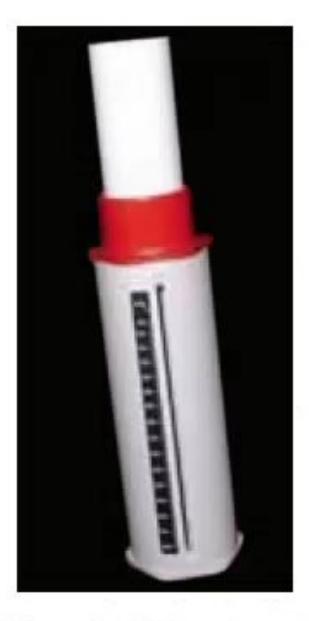
Answer
No model answer in source material.
MNJ35-025
Take history in a 12-year-old female child with complaints of recurrent headaches.
Answer
- Introduce yourself, tell about nature of headaches, what provokes them and makes them better
- Like a constriction band—tension—type headache.
- Unilateral, aura, throbbing, gastrointestinal or visual or neurological disturbance, lies in the dark, family history—migraine
- Worse lying down morning vomiting, change in mood or personality—raised intracranial pressure.
-
- Triggers-stress, relaxation, food, menses
Observe OSCE 491 |
- Emotional or behavioral problems at home or school—may cause or exacerbate tension headaches.
- Medications—side effect
- Sinus problems, nasal congestion—sinusitis
- Worse on chewing—temporomandibular joint
- Vision checked—refractive error
- . Head trauma
- . Alcohol or solvent or drug abuse
- . Thanks
- . Introduces self and puts child and attendant at ease.
- Explains the problem in brief.
- Famuliarizes the attendant with the drug, the syringe and the catheter.
- Explains dose (3 mg), and loading of the syringe.
- Explains the position of the child (lateral)
- Explains introduction of the catheter (lubrication, and length of introduction).
- Explains pushing the drug
- Advises pinching of the buttocks together after pushing the drug
- Withdrawing the catheter
- Advises one repetition after 15 mts
- . Explains side effects
- . Thanks
. Introduction
- Explains the meaning dyslexia—problem with recogrizing letter
- Explains the causes of dyslexia—50% have history of parents
- Explains agewise approach
- Approach to include 5 parts of speech, i.e phonemic awareness, phonics, fluency, vocabulary, and comprehension strategies.
- Accommodation techniques: Extra time for exam, laptops with spell checkers, recorded books, lecture notes.
- Explain parents that these children are usually better 1n other field.
- . Non-use routine performance test for assessment.
- . Help groups
- . Role of medicines
- . Gives positive encouragement
-
- Thanks
MNJ35-026
A 1.5- year-old child weighing 10 kg is being discharged as diagnosis for febrile seizure. Counsel the mother regarding domiciliary management of seizure with rectal diazepam.
Answer
No model answer in source material.
MNJ35-027
* Counsel a parent whose child has been diagnosed with dyslexia.
Answer
No model answer in source material.
MNJ35-028
A 24-month-old boy presented with fever with rash from last 4 days. Take the appropriate history.
Answer
- Introduction and rapport with parents
- Onset—sudden / insidious
- Timing and pattern of fever, pattern and distribution of rash.
- History of associated symptoms—jomt pain swelling, conjunctivitis
- History of travel, mosquito bite, anmmal exposure, season of the year.
- History of medications, lab testing
- Famuly history
492 OSCE Clinical Pediatrics
-
- Immunization-measles, MMR
-
- Thank parents
MNJ35-029
A 28 weeks male 1.2 kg delivered just now, developed grunting. Counsel the father about the immediate treatment plan hospital stay and future prognosis.
Answer
- Introduces, asks language, establishes rapport with father
- Importance of early CPAP and surfactant replacement therapy, need for mechanical ventilation and may need oxygen for longer period.
- Frequent blood gases, X-rays and relevant blood testing and cultures and other blood testing.
- Monitor for expected complications—air leaks, pulmonary hemorrhage, apnea, septicemia, NEC
-
- Need for long hospital stay till child accepts orally tolerates, euthermic, weighs at least 1.5 kg, discharge check with screen for congenital anomalies, ROP, hearing
- Prognosis: Prolonged oxygen requirement (BPD), ROP, neurodevelopment, impairment.
-
- Asks for doubts
-
- Thanks
Ans. 30. 1. Introduction, rapport
-
- Gross motor
- · Walks up and down stairs by alternate feet
- · Hops on one feet
- · Throws ball overhead
-
- Fine motor:
- · Draws a man with 2-4 parts besides head
- Copies a square
- · Cube-make bridge
-
- Language
- Tells a story
- · Knows three colors
-
- Social:
- Gives an account of recent experience and events
- · Washes face, feet and brushes teeth.
-
- Age of this child is around 4 years always tell the examiner
MNJ35-030
** Kindly do the developmental assessment of this boy (4 years). Age of child is not given in exam ***you should tell the examiner at last.
©.31. Explain the use of MDI with spacer to mother of child diagnosis as a case of asthma.
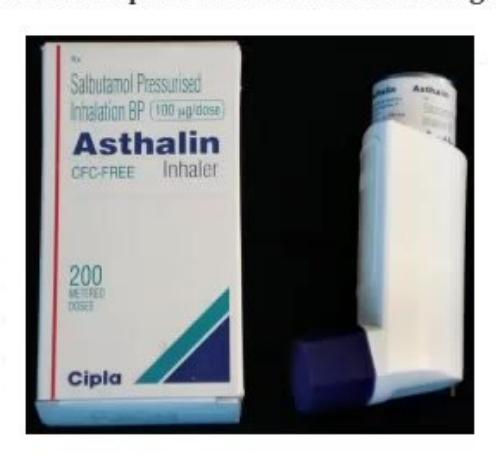
Answer
No model answer in source material.
MNJ35-031
Give dietary advice to a 3-year-old child's parents came to you who is suffering from celiac disease.
Answer
- Introduction, rapport.
-
2 Explain in brief about the nature of disease—child cannot eat wheat product for whole hfe, along with oat and barley—rot, maida, halwa, khichdi, noodle, bread, biscuit.
-
- If countinue to eat it can cause adverse effect on GIT, CNS, growth, blood
-
What to eat—rice, maize, bajra, jawar, sago.
-
Tell the parents that the nutritive value of these items 1s not less than wheat.
-
Nowadays many store available that provide food for cehac child.
-
Effect of diet you will see after 3 months.
-
All other family members to support child to eat the same food
-
Other family members / siblings need to be tested.
-
Any other you want to ask
-
. Thanks
. Introduction, rapport
- . Deseribe the epilepsy in brief
- . Some restriction on driving and swimmung are necessary, a seizure-free period of at least 6 months require to allow for these activity.
- . Swimming in deep water is prohibited, but child can swim in swimming pool under observation
- . Inparticipation of athletic activity, proper medical management, supervision is needed.
- High diving, dangerous fall should be avoided.
- Hockey, basketball, football can child play with supervision of trainer who know about the child condition.
- . Regular psychological evaluation for any learning disability, stress is needed.
- . Describe some about side effect of AED lke weight gain so regular physical activity needed.
- . Donot miss the dose of child and do regular weight so dose may need to be increase.
- . Anything other you want to ask
-
- Thanks
Ans. 34. 1. Introduction, rapport
- z Describe the GH deficiency 1n brief.
-
- This hormone is secreted by somatotrops m pituitary gland
- . Growth of child 1s mamly depends on GH along with nutrition, environment and sex steroid at puberty.
- It is advisable to start GH def as early as possible because if skeletal maturation complete than it will not be useful.
- Dose will be 0.3 mg/kg /week initially with SC injection 6-7 iny per week.
- Pen device and prefilled syringe available for use, usually painless
- If response 1s poor we will increase to 07 mg/kg /week.
- After this therapy child will attain normal pubertal growth and adolescent height
- A good response will be 4-6 cm increase / year.
- . When child will attain his/her target height or growth is <2cm/yr or skeletal maturation completed than we will stop the therapy.
- . Cost of this therapy 1s around % 200-300/ unit (1 unit = 3 microgm) (30 microgm/ kg /day)
- . GH therapy is safe with excellent safety record. Reported side effect 1s 0.023 adverse event/patemt/ year.
Observe OSCE 495 |
-
- Side effects Fluid retention, glucose intolerance, slipped capital femoral epiphysis, kyphosis.
-
- Anything you want to ask
-
- Thanks
MNJ35-032
A 10-year-old child diagnoses as a case of epilepsy and put on 2 drugs advice parents about the daily routine activity of child.
Answer
No model answer in source material.
MNJ35-033
- A6-year-old child Rahul, diagnose as a case of growth hormone deficiency short stature council parents about growth hormone therapy
- Write down the uses of growth hormone therapy other than growth hormone deficiency short stature.
Answer
No model answer in source material.
MNJ35-034
A newborn deliver as a case of ambiguous genitalia, you just attend the delivery father is waiting for you outside the labor room, council him.
Answer
- Introduction, rapport, keep the father and other family members on ease.
-
- Describe the problem in brief. After careful examination of child, I want to discuss about the sex of child
- Till now Iam unable to assign the child sex. This problem is called ambiguous genitaha.
- First you have to delay registration of birth of child.
- For the further management of child, we need multidiscrplinary approach.
- 7 oe "eM After decision of team, we will send karyotyping of child and daywise we will do some blood test of child. We also need some imaging for child like USG, MRI
- Right now I am unable to promise about future aspect about fertility of child.
- We will try to find a cause for this and will give you advice for next pregnancy also.
- Anything you want to ask
-
- Thank you
MNJ35-035
Take the history of child with recurrent pain abdomen?
Answer
- Introduces, explains the purpose
-
- Asks for duration
- Asks, what is the first symptom or how did the illness start?
- Asks for site of pain in abdomen
- noe 2a Asks for fever diarrhea, dysuria vomiting, constipation, abdominal distension, localized fullness or mass
- Asks for simular episodes 1 the past
- Asks for treatment details
- Elicits history of pain while playing /riding /jumping
- Elicits initial pain and progress (same, better or worse)
-
- History of anorexia
-
- Whether the pain 1s constant or mtermittent
-
- Bilious vormting +
-
- Elicits symptoms of dehydration like oliguria, lethargy, acidosis (fast breathing)
-
- Elicits history of migration of pain—periumbulical to right iliac fossa
-
- Elicits history of hunching forward /limping/avoid movements due to fear of aggravating pain.
-
- Thanks
MNJ35-036
- Write down the stages of wakefulness of a neonate
- In which stage best to examine the baby?
Answer
- Brazelton scale—stages of wakefulness in newborn
- * Stage 1: Deep sleep with regular respirations
- * Stage 2. Light sleep with eyes closed—REM sleep with irregular respirations, occasional movements of eyelids, lips, fingers, etc.
- * Stage 3: Eyes open with no gross body movements (quiet wakefulness)
- * Stage 4 Eyes open with gross body movements
- « Eyes open or closed and crying
- . Best stage to examine the baby 1s stage 3
MNJ35-037
Council the parents of baby born with diagnosis of Turner syndrom.
Answer
- Introduce, rapport
- Clinical-physical exam, blood test, karyology, all after suggest your daughter is tumor syndrome
-
- 1:5000 live birth
-
- Occur due to sex chromosome problem one X is missing
-
- This is not due to parents (no blame)
- These basis usually low birth weight, edema of limb and low set ear, neck (webbed), low posterior hairline.
-
- Growth is usually low need. Therapy for growth
- Body also may have cardiac defect and bone problem like cubitus valgus 4th metacarpal, short, wide separated nipple and problem in ovary.
-
- We have to regular scan for the USA and renal system
-
- For CNS regular follow-up
-
- Most of baby have (N) IQ but some may have MR
-
- No breast develop and amenorrhea
-
- Treatment need cardiologist, endocrinologist support
-
- Estrogen, GH oxandrolone, need for treatment
-
- Any quarry
-
- Thanks
MNJ35-038
Council the parents of baby born with CTEV.
Answer
- Due to malignant of calcaneonavicular bone
-
- 1:100 live birth
-
- Risk is 1/4 in next pregnancy when both particularly one sibling affected
-
- More common in males (2.1) and is 50% cases
-
- May be positional but can be a part of serious problem:
- · Spinal dysraphism
- Arthogryposis
- SMA
- We need complete physical and neurological exams for co-existing neuromuscular/ musculoskeletal spinal exam is must
Radiology: X-ray of AP and lateral of foot needed
-
- Tx start at birth—manipulation teaching to mother
- · Casting and surgical release 3 to 12 months
- Order of correction (CAVE)
- · Weekly cast change usually 5 to 10 casts required
-
- Anything more you want to ask.
-
- Thanks
MNJ35-039
Explain the use of device rotahaler to parents of a child Rohan, diagnose as a case of asthma in your hospital.
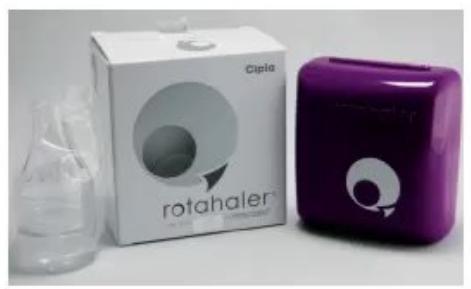
Answer
- Establishes rapport, introduces himself.
- Takes the rotahaler device and dismantles it Shows the parts to the child and shows how to reassemble it (kindly see video on internet also).
- Takes one rotacapsule and places it with the clear end downwards in the slot provided.
- Shows the child how to rotate the upper part of the rotahaler so that the capsule breaks and disperse
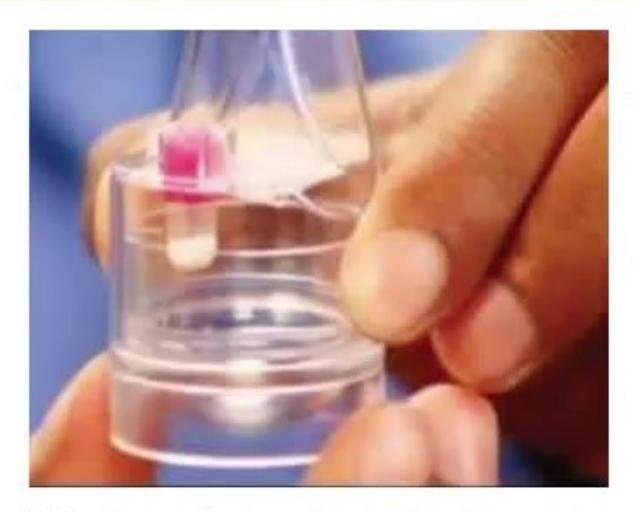
- Asks the child to let out his breath and place the mouthpiece of the rotahaler in his mouth with good seal ensuring that the lips are closed around the mouthpiece.
- Asks him to take a deep breath through the mouth and hold the breath for a count of five.
- Asks the child to check that no dry powder remains 1n the lower chamber of the rotahaler Dismantles the rotahaler and removes the upper and lower parts of the rotacapsule.
- . Tells the child that must gargle his mouth and throat with plain water after having taken the dose this will decrease the side effect of the drug
- . Asks if child has any doubts and encourages him to ask questions.
- . Wishes the child and offers a telephone number where she can have her queries answered.
-
- Thanks.
Ans. 41.1. Establishes rapport, introduces himself
-
- States that based on history, examination and investigations, as diagnosis of thalassemia major has been made.
-
- Explains the need forevery 3rd weekly blood transfusions and hepatitis vaccinations for the infant and need to maintain the Hb above 9 g/dL.
- . Explams that permanent cure can be achueved by bone marrow transplantation from a sibling if available and matched.
- . Explains to them that prenatal testing for this disease 1s available in the next pregnancy
- . Suggests the role for cord blood collection from the next child, which can be used for stem cell transplantahon to this infant. But this treatment option us also not best established.
- Asks if mother has any doubts and encourages her to ask questions.
- . Wishes mother and offers a telephone number where she can have any other queries answered.
- . Tell mother about free treatment and blood transfusion of thalassemia children in India and about to regis ter in thalasemua society.
-
- Thanks
OSCE Clinical Pediatrics ]
- Establishes rapport, introduces himself
- States that based on history, examination and investigations, a diagnosis of meningomyelocele has been made
- This problem is treatable with multidisciplinary approach.
- We need to do MRI of spine and bram also.
- Explains about the possibility of recurrence in the next pregnancy up to 16% chance.
- Explains that the recurrence can be prevented by use of folic acid tab
- Advises that folic acid should be started on month preceding conception in the dose of 4 mg OD and continued thereafter till 3 months of pregnancy
- Ask mother about history of diabetes, radiation exposure and his BMI (obesity can cause).
- . Asks if mother has any doubts and encourages her to ask questions.
- . Wishes mother and offers a telephone number where she can have her queries answered.
- . Thanks
- . Establishes rapport, introduces himself.
- . Explams mother that based on the history and investigations, the child has problem of breath-holding spells.
- . Explains that breath-holding spells are a benign disorder that occurs in toddler (6 month-5 years) as are usually predictable and are usually precipitated by scolding or upsetting the child
- . Reassures the mother that the spells are not life-threatening and do not signify an underlying illness and episode will decrease with increase in age.
- . Advises the mother that if undue attention is paid to the spells, the spells will persist or increase Advises the mother that the way to reduce the frequency of the spells is to pay as little attention to them as possible
- . States that if the child becomes unconscious during a spell, she should place him in a safe (on bed) location 1n a sidelying position so that he does not aspirate his secretions.
- After the child becomes conscious, the mother and other famuly members should leave the child alone for some time and not pay undue attention by refusing to cuddle, play, or hold the child for a given period of time until recovery 1s complete. This will increase the problern.
- . Asks the mother if she has any doubts and encourages her to ask questions.
- . Give telephone number in emergency.
- . Thank you.
MNJ35-040
A7-month-old child Ravi, diagnose as a case of thalassemia major. Council the parents about nature of disease, the future management plan.
Answer
No model answer in source material.
MNJ35-041
A newborn baby delivered as a case of swelling at back and doctor told that this is meningomylocele. Advice the parents about this problem and future pregnancy plan and recurrence of disease.
Answer
No model answer in source material.
MNJ35-042
You admitted a 14-month-old child Gourav, diagnose as a case of breath holding spell. Council the mother about the disease.
Answer
No model answer in source material.
MNJ35-043
Take the history from the parents of a child Rajesh with wheezing 6-8 episode/year.
Answer
- Establishes rapport, introduces himself.
-
. When the present attack started and what is the progression of the attack? Was acute?
-
. History of rapid breathing and subcostal retraction
-
. Asks for any factors that tiggered the present attack and about medications taken for the attack.
-
. Asks for history of associated fever and any other symptoms like change invoice.
-
. Asks about how long the patient has been wheezing and about frequency, seasonality, nocturnal symptoms and school absence
-
E C
-
Asks about long-term therapy, drug compliance and about correctness of use of MDI.
-
Asks about frequency of acute attacks, frequency of use of reliever medications/ nebulization/hospitalization.
-
- History of precipitating factors, presence of pets, passive smoking in the house.
-
- Associated allergies, sinusitis, gastroesophageal reflux.
-
- Asks about family history of atopy, skin allergy.
-
- Anything else you want to tell.
-
- Thank you.
MNJ35-044
Write your dietary advice for child with
- Child of CKD
- Child with diabetes mellitus type I
Answer
Answer this question like in exam yourself or see nutrition book of Dr. Elizabeth.
MNJ35-045
Mother of § years old child rajesh, came to your clinic for consultation about how to handle her child after end of her marriage because her husband already filed for divorce.
Answer
- Greet, introduce and ask for language
- Briefly-as divorce is a matter between two adults but it has great impact of children This is a setback to family as we know, but for a child his entire world will be change
- Despite all happen, I want a counseling session with you and your husband, because this may help for future of rajesh
- If nothing happen as we want than please tell rajesh about your divorce together, not alone
-
- Tell rajesh in simple word, keeping your ugly experience away in talk
- Tell him that this is not comfortable for us to live together and after all discussion we decided to live apart
- Reassure rajesh again and again that this is not happen because of you, as we love you as before
-
- Inform in rajesh school about this
- He may have problem in his daily routine but as each day pass he will make his new routine
-
- You both should be with him whenever he need
-
- Tell rajesh that he is free to express his feeling openly
- Never talk bad thing about your partner in front of rajesh, never force him to take a side, don't use him as a messenger,
-
- Spend time with him as much as possible and help him as before
-
- We are always here to help you and rajesh when needed
-
- Any thing you want to ask more
-
- Thanks
MNJ35-046
A 4 and half years old boy came with her mother with complaints of involuntary passage of stool. Mother told that child is well trained for toilet but from last 6 month this is happening. Council the mother regarding the medical condition of child.
-
- O.48. Parents of 7 years old girl Poonam came to you that since last 15 days she just refused to go school daily in morning. Council the mother.
- 0.49. Mother of 2 years old child Gaurav garg came to your office about her child problem that he eat anything which are not supposed to be eaten. Council mother about the problem of Gaurav.
- 0.50. Mother of 3 years old child rahul came to you about her concern about delayed speech. Antenatal and perintal period were uneventful and his motor development milestones are normal for age.
- 0.51. You are posted in NICU of your hospital. A new nurse Reena is with you for a baby who was ventilated 30 minutes before and you decided to send a blood gas. Your consultant told you to teach the nurse about blood gas sampling. Tell the practical tips to the nurse about blood gas.
- 0.52. 6 years old boy presented to you with Hyperactive behavior. Counsel him/parent regarding management and prognosis.
- 0.53. A 14-year boy treated for attempted suicide, now getting discharged, you have been asked to counsel.
Answer
- Introduce, greet, and ask about the language
- Brief about the problem-this is a behavioral problem and we called it encopresis. This is associated with constipation. In this hard fecal material remain impact in colon and child soil the stool frequently and involuntary
- Emotional disturbance and early and strict toilet training may be the cause and this further cause distress to child
-
- Most of child get out with this problem after treatment
-
- Support the child emotionally and find out some stressor
-
- In medical management we first use laxative or enema to clear the colon
-
- Ensure painless and regular bowel movement
| 500 OSCE Clinical Pediatrics ]
- . Ensure regular siting of child on toilet seat at same time as a try for 10-15 min
- . Reduce constipating dairy foods and increase high fiber diet like fruit and vegetables
- . Limit milk to child up to 16 ounces per day, never totally eliminate the milk from diet
- . Inform teacher in school about the problem
- . Most children respond well
- . Any think more you want to ask
- . Thanks