VVK03-001
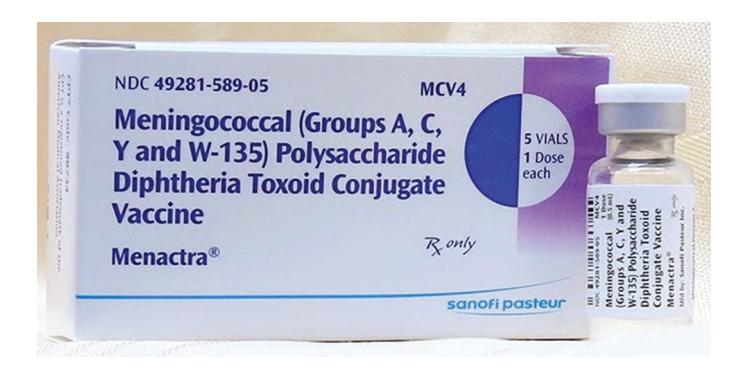
a. What is the usage of above drug?
b. What is the preferred route of administration?
c. What is the dose?
d. What is the minimum safe age?
e. What is the limitation?
Answer
- • Immunization to prevent invasive meningococcal disease caused by
- • N meningitidis serogroups A, C, Y and W-135
- • Intramuscular injections
- • 0.5 ML
- • 9 months (in case of outbreaks; usually given after 2 year age)
- • Menactra vaccine does not prevent N meningitidis serogroup B disease.
VVK03-002
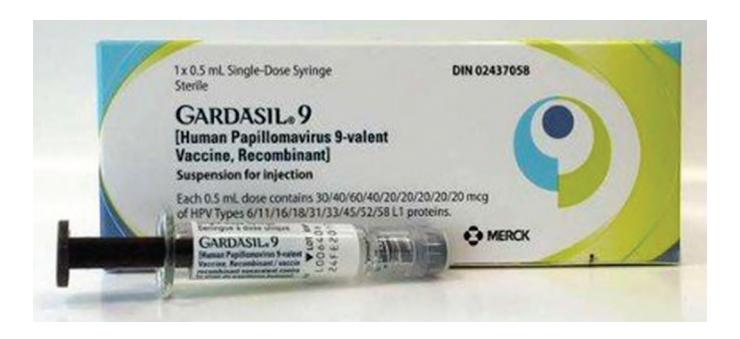
a. What is the usage of above drug?
b. What is the preferred route of administration?
c. What is the dose?
d. What is the minimum safe age?
Answer
-
- GARDASIL is a human papilloma virus (HPV) vaccine that helps protect against 4 types of HPV- type 6,11,16,18.
-
- Intramuscular injection
-
- 0.5 mL GARDASIL should be administered in 3 separate occasions over 6 months (0, 2, 6 months)
-
- 9 years.
VVK03-003
A mother was worried that her newborn baby did not receive polio drops along with BCG before discharge from hospital.
a. What is the role of zero dose polio?
b. What is the content of oral polio vaccine per dose?
c. Unlike other live vaccines which are administered as single doses, why multiple dose of OPV are recommended?
d. What specific instruction has to be given to the mother after OPV administration?
Answer
a.
- • Uptake is said to be better in neonatal period as there is no gut flora to interfere.
- • Transplacental transfer of maternal antibodies against poliomyelitis does not interfere with the seroconversion.
- • As it is the first contact period between the baby and the health care provider, it enables logistic ease of administration.
- b. Each dose of OPV contains:
Type 1: 3 lacsTCID50
Type 2: 1 lacs TCID50
Type 3: 3 lacs TCID50 (Park's Textbook of PSM)
- c. Multiple doses of OPV are needed for satisfactory seroconversion. The seroconversion with OPV is affected by poor antigenicity of the vaccine, thermal lability requiring stringent cold chain maintenance and interference by enteroviruses in the gut for proper uptake of the oral vaccine. Each time only one subtype of polio virus can cause antigenicity, hence more doses are required.
- d. The mother need not be given any specific instructions after OPV, except that she has to report for subsequent immunizations regularly.
VVK03-004
DRUG: METHYLENE BLUE.
a. Name two conditions where it can be used.
b. Name two contraindications for its use.
c. What is the color of urine when a patient is given methylene blue?
Answer
- a. Antidote for cyanide poisoning and for drug-induced methemoglobinemia.
- b. Avoid in G6PD deficiency and in renal insufficiency.
- c. Urine and feces turn blue-green.
VVK03-005
DRUG: PARACETAMOL.
a. What are the indications for its usage? Name the different routes and dose to be given.
b. How frequently can you give this drug and what is the maximum dose limit?
c. What can be done to prevent toxicity?
d. What is the antidote for paracetamol toxicity? What dose of the antidote should be given?
Answer
a. Analgesic and antipyretic. Oral/rectal; dose 10–15 mg/kg/dose. Intramuscular dose—5 mg/kg/dose.
- b. 4–6 hourly; 1 g/dose or 60–90 mg/kg/day.
- c. Toxicity is described with chronic usage in normal range. If chronic use is required, consider reducing dose to lower end of the range.
- d. N-acetyl cysteine. 150 mg/kg iv over 15 minutes followed by 50 mg/kg iv over next 4 hours then 100 mg/kg iv over next 16 hours.
VVK03-006
Answer the following questions.
a. What vaccination schedule would you offer to a newborn baby born to a HbsAg +ve mother and when?
b. Which vaccine would you advise a thalassemic patient who is undergoing a splenectomy?
c. What is the minimum duration advised between vaccination and splenectomy?
d. Write the vaccination schedule for a person who has been bitten by a dog 3 hours back. The patient had been bitten by the same animal 1year back and has received a full course of vaccinations at that time.
Answer
- a. HBIG and hepatitis B vaccine to be given within 24 hours of birth at different sites, followed by hepatitis B vaccination at 6 and 14 weeks or at birth, 6weeks and 6 months. If HBIG is not available, HB vaccine may be given at 0, 1, and 2 months with an additional dose between 9–12 months.
- b. Hib, pneumococcal, meningococcal, typhoid.
- c. 2 weeks.
- d. 2 doses of the vaccine are recommended on day 0 and 3 only. Antirabies antibody titers > 0.5 IU/mL are considered protective.
VVK03-007
DRUG: ADRENALINE.
a. What is the strength (in terms of mg/mL) of the commercially available adrenaline ampoule?
b. What are the indications for its usage in NRP?
c. Name the route and dose to be given in NRP.
d. How frequently can it be given?
e. Give 3 noncardiac uses of this drug.
f. Give 3 cardiac and 3 noncardiac side effects of this drug.
g. Give 3 conditions where use of adrenaline is relatively contraindicated.
Answer
- a. 1 mg/mL (1:1000 preparation).
- b. Heart rate below 60 despite 30 seconds of effective ventilation and chest compression.
- c. IV (0.1–0.3 mL/kg/dose of 1:10,000 dilution) and intratracheal (0.3–1 mL/ kg/dose of 1:10,000 solution).
- d. 3 to 5 minutes.
- e. Used in anaphylaxis, bronchial asthma, securing hemostasis and in some cases of hypoglycemia.
- f. Cardiac—palpitations, arrhythmias, hypertension. Noncardiac—pallor, tremors, headache.
- g. Hypertension, hyperthyroidism, patients of angina, during anesthesia with halothane and to patients on beta blockers.
VVK03-008
DRUG: AMPHOTERICIN B.
a. Mention one indication other than as an antifungal agent.
b. What is the maximum iv dose (mg/kg/day)?
c. Amphotericin B can be gives through oral route. Write true/false.
d. Most common side affect of amphotericin B therapy (name the system affected).
e. Which of the following is not the side effect of amphotericin B?
i. Hypokalemia
Answer
- a. Leishmaniasis/Echinococcus multilocularis.
- b. 1.2 mg/kg/day.
- c. True.
- d. Renal.
- e. Hypermagnesemia.
VVK03-009
RABIES VACCINE.
a. A pet vaccinated dog has bitten a child on his left leg. In this incident, the child got an abrasion of 1.5 cm with slight oozing of blood. What class of rabies exposure is this?
b. Which of the following is most essential in rabies postexposure prophylaxis?
c. What is dose and route of equine rabies immunoglobulin administration?
d. A five-year-old child has received full postexposure prophylaxis for rabies 3 years back. Now this child has been bitten by stray dog and got class III bite. Which schedule will you use?
Answer
- a. Class III.
- b. Local wound irrigation with soap and water.
- c. 40 IU/kg, 100% at wound site if possible.
- d. Only 2 doses at day 0 and day 3.
VVK03-010
DRUG: INDOMETHACIN.
a. Write the dose and schedule of indomethacin given for the closure of PDA in a newborn who is less than 48 hours old.
b. Name another condition which can be prevented by administration of indomethacin in a preterm newborn.
c. Mention four main contraindications to the use of indomethacin.
Answer
- a. 200 microgram stat followed by 100 microgram followed by 100microgram at 12 to 24 hours interval.
- b. Intracranial hemorrhage.
- c. Poor renal function, thrombocytopenia, NEC, sepsis.
VVK03-011
DRUG: SODIUM NITROPRUSSIDE.
a. What is the indication for the use of sodium nitroprusside?
b. What is its mechanism of action?
c. What two specific precautions will you take while administering it?
Answer
- a. Hypertensive crisis.
- b. Vasodilator.
- c. Protect the iv tubing from light and discard if color changes from pale orange to dark brown or blue.
VVK03-012
Match the drug with the organism against which it is most effective.
a. Ceftazidime 1. Mycoplasma
c. Crystalline penicillin 3. Cl. difficile
b. Cotrimoxazole 2. Pneumocystis carinii
d. Vancomycin 4. Pseudomonas
e. Clarithromycin 5. C. diphtheriae
Answer
a. Ceftazidime Pseudomonas b. Cotrimoxazole Pneumocystis carinii c. Crystalline penicillin C. diphtheria d. Vancomycin Cl. difficile e. Clarithromycin Mycoplasma
VVK03-013
Answer the following questions with regard to storage of vaccines.
a. What is a cold chain?
b. What is a vaccine carrier?
c. How long can you keep vaccines in a vaccine carrier?
d. What are the other factors which damage vaccines?
Answer
- a. It is a system of transporting, distributing and storing vaccines under refrigeration using any convenient methods, from the manufacturer right up to the point of use.
- b. A vaccine carrier is a thick-walled, insulated box with a tight lid with removable ice packs, used for carrying small quantities of vaccines to the peripheral clinics and fields for use.
- c. Vaccines can be kept safely in the desired temperature, generally for 1working day in vaccine carriers.
- d. Heat, sunlight and freezing are other factors which damage vaccines.
VVK03-014
DRUG: IVIG.
a. What is the dose for management of acute idiopathic thrombocytopenia with intracranial bleed?
b. What are the adverse effects? (Give at least 4)
c. Name 2 other alternative drugs in management of acute ITP with significant bleeds?
Answer
- a. 0.8–1 g/kg/day × 2 days.
- b. Nausea, vomiting, headache, allergic reaction, renal failure, blood transmittable disease, anaphylaxis in IgA deficient individuals.
- c. Prednisolone, methyl prednisolone, dexamethasone, anti-D, dapsone.
VVK03-015
List two absolute and two relative contraindications to the use of DTP vaccine.
Answer
- a. Absolute—encephalopathy, anaphylaxis.
- b. Relative.
- i. Temperature of >40.5°C or more within 48 hours.
- ii. Collapse or shock like state present within 48 hours.
- iii. Persistent or inconsolable cry lasting 3 hours or more within 48 hours.
- iv. Convulsions within 3 days, with or without fever.
VVK03-016
Answer the following questions.
a. What is lyophilization?
b. Name 3 lyophilized vaccines.
a. What is the dose and strain of the vaccine?
b. Above what age are 2 doses recommended and at what intervals?
c. For postexposure prophylaxis within what period after exposure, should the vaccine be administered?
d. How long can the vaccine be used after reconstitution?
e. What is the indication for giving varicella zoster immunoglobulin in newborn?
f. What is the route of administration for the vaccine and immunoglobulin?
Answer
- a. Live vaccines in powder form (freeze-dried) requiring reconstitution before usage.
- b. Measles, BCG, MMR and oral typhoid vaccine.
VVK03-017
MANTOUX SKIN TEST.
a. What is the composition of tuberculin used?
b. After what duration does it become reactive following TB infection?
c. Mention 4 host-related factors, which can depress the skin test in a child infected with Mycobacterium tuberculosis.
d. When can a tuberculin reaction of > 5 mm be taken as positive? (Mention 2 conditions).
Answer
- a. 0.1 mL contains 1 TU of PPD stabilized with tween 80.
- b. 3 weeks to 3 months (most often between 4–8 weeks).
- c. i. Malnutrition.
- ii. Immune suppression by measles, mumps, varicella, influenza.
- iii. Vaccination with live virus vaccine.
- iv. Immunosuppression by drugs.
- d. i. Disseminated TB/military TB.
- ii. Children with immunosuppressive conditions—HIV/organ transplantation or on corticosteroids > 15 mg/24 hours for > 1 month.
- iii. Malnutrition.
VVK03-018
A baby born to a HBsAg positive mother receives HBIG and HBV soon after delivery and at 1 and 6 months.
a.
i. When would you recommend postvaccination testing for HBsAg and anti-HBS?
b. What is the strength of the HBV vaccine used at different ages and for the immune suppressed?
c. What would be the vaccination schedule for a 2-year-old child who has received only two doses of HBV vaccine at 1½ and 2½ months of age?
Answer
a.
i. 9–15 months of age.
ii.
-
- If positive for anti-HBS—immune to HBV.
-
- If negative for HBsAg and anti-HBS—give a second complete HBV series of vaccination followed by retesting.
-
- If positive for HBsAg the parent should be counselled.
- b. • 0–10 years 0.5 mL or 10 microgram
- • >10 years 1 mL or 20 microgram
- • Immunosuppressed 2 mL or 40 microgram
- c. Give only one dose of HBV to complete the schedule.
- d. To start HBV vaccination and administer the 1st dose simultaneously with MMR at a different site.
VVK03-019
A 1½-years-old child is admitted and treated for HAV infection. Child has not received any immunization so far as he comes from a tribal area.
a. What will be the immunizations you would advise for this child and at what schedule?
b. Is HAV vaccine required for this child?
Answer
- a. As many vaccines as possible can be administered to this child simultaneously following the IAP schedule and administering optional vaccines as per the mother's request
- b. No need for HAV vaccine.
VVK03-020
STORAGE OF VACCINES.
Vaccines are stored in the refrigerator in your clinic. Mention the correct place of storage of the following:
a. BCG
b. OPV
c. Measles
d. DPT/DT/TT
e. Varicella
f. Hepatitis-B
g. Hepatitis-A
h. Typhoid
i. Diluent
j. Ice cubes
k. Ice packs
l. Dial thermometer
m. Water bottles
Answer
- a. Top shelf.
- b. Freezing compartment.
- c. Top shelf .
- d. Middle shelf.
- e. Middle shelf.
- f. Middle shelf.
- g. Middle shelf.
- h. Middle shelf.
- i. Lower shelf.
- j. Freezer.
- k. Freezer.
- l. Top shelf.
- m. Side door.
VVK03-021
UIP.
a. What are the objectives of UIP other than the immunization?
b. Name the vaccines used in UIP.
c. What are the immunization targets in the UIP?
Answer
- a. Objectives:
- i. Self-sufficiency in vaccine production.
- ii. Establishment of a functional cold chain system.
- iii. Introduction of district level monitoring.
- b. BCG, DTP, OPV and measles for infants and TT for pregnant women.
- c. Target:
- • BCG, OPV, DPT and measles in age <1st year and TT in pregnant women.
- • 100% coverage for pregnant women and at least 85% for infants.
VVK03-022
A 5-year-old boy is brought to pediatric emergency room by his father after being struck by a car. Examination shows a lethargic but responsive child with a large frontal hematoma and bilateral hemotympanum. No other injuries are identified. A computed tomography (CT) scans of the head without contrast is ordered. The child becomes very agitated and frightened when taken to the CT scanner.
a. Which one of the following drugs would you prefer to sedate this child for CT scan of head?
b. What is the dose of the drug used for this purpose?
c. What is the dose of midazolam if used intranasally in children <12 years old?
a. What will be the most appropriate advice?
i. No need to give TT at present.
b. What is the schedule of boosters for TT?
c. What is the content of toxoid in single dose of TT?
a. Name five drugs/poison which can cause miosis in the child.
b. Which of the following is used as an antidote for acute INH toxicity?
i. N-acetyl cysteine.
c. What is the antidote for heparin?
a. What is the dose of cyclosporine in this scenario?
b. What are the common adverse effects? (at least 4)
c. Name one drug that inhibits hepatic metabolism of cyclosporine leading to toxicity?
a. What is the strength of elemental calcium in the commonly available preparation?
b. Mention any 3 uses of this drug.
c. Mention 3 side effects of this drug.
d. What is the dose in treatment of hypocalcemic crisis?
e. Mention 3 important treatment options for hypercalcemia.
a. Give the pharmacological names of vitamin
b. Name vitamin K dependent coagulation factors.
c. Give 2 tests to diagnose deficiency of vitamin K.
d. Define early, classical and late hemorrhagic disease of newborn.
Answer
- a. Midazolam.
- b. For sedation—iv loading dose of 0.05–0.2 mg/kg, then either same dose q 1–2 hour or continuous infusion of 1–2 microgram/kg/min.
- c. 2.5 mg (0.5 mL) in each naris (total 5 mg) using 5 mg/mL injection.
VVK03-023
Match the following:
| Type of antigen | Examples |
|---|---|
| • Live bacteria, attenuated |
OPV, MMR, varicella |
| • Live virus, attenuated |
HBsAg |
| • Inactivated bacteria |
BCG, Ty 21a |
| • Inactivated virus |
Acellular pertussis |
| • Toxoid |
IPV, rabies, HAV |
| • Capsular polysaccharide |
DT, TT, Td |
| • Viral subunit |
Pertussis, whole cell killed typhoid |
| • Bacterial subunit |
Typhoid Vi, Hib, meningococcal, |
| pneumococcal |
Answer
No model answer in source material.
VVK03-024
DRUG: KETAMINE.
a. What is the dose for anesthesia for short procedure?
b. What are the adverse effects? (At least 4) .
c. What type of anesthesia does it cause and which part of the brain does the drug act on?
Answer
No model answer in source material.
VVK03-025
Answer the following questions.
a. What is GAIN?
b. For AFP surveillance a rate of >1/100,000 population in children aged less than 15 years is the best indicator for good surveillance system (true/false).
c. Palivizumab (monoclonal antibody) is used to treat infection with which virus?
Answer
- a. Global alliance for improved nutrition.
- b. True.
- c. RSV infection in children less than 24 months with chronic lung disease.