VVK04-001
Match each action listed below with the appropriate enzyme
a. Adenylcyclase 1. Is activated by LH
b. 5 reductase 2. Converts androstenedione to testosterone
c. 17 a hydroxylase 3. Converts testosterone to dihydrotestosterone
d. 20 b hydroxylase 4. Catalyzes the first step in the production of hormonal steroids from cholesterol
e. 21 dehydroxylase. 5. Cause massive adrenal enlargement when congenitally deficient, is associated with poor survival of the affected infants, and can lead to the formation of female genitalia in genotypic ally male infants
Answer
No model answer in source material.
VVK04-002
Match the following
a. Menorrhagia a. Bleeding between menstrual periods
b. Metrorrhagia (hypermenorrhea) b. Excessive amount of blood or duration
c. Menometrorrhagia c. Excessive amount of blood at irregular frequencies
d. Hypermenorrhea d. Menstrual periods >35 day apart
e. Oligomenorrhea e. Menstrual periods <21 day apart
f. Polymenorrhea. f. Menorrhagia
Answer
No model answer in source material.
VVK04-003
Match the urine odor with IEM
a. Sweaty feet 1. PKU
b. Cabbage 2. Tyrosinemia
c. Musty smell 3. Isovaleric aciduria
d. Syrup 4. Maple syrup urine diseases.
Answer
No model answer in source material.
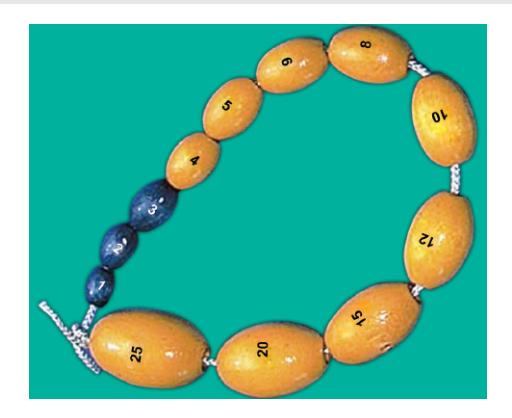
VVK04-004
:
a. What is the device called?
b. What is its use?
c. What is the significance of change in color?
d. What does number indicate?
Answer
No model answer in source material.
VVK04-005
: An infant is being evaluated for DSD. You find clitoral hypertrophy and other signs of virilization. On investigations serum cortisol levels are low. ACTH and PRA are markedly elevated. ACTH stimulation test reveals markedly increased 17–OH progesterone. Serum testosterone is also elevated. Child also has severe hyponatremia.
a. What is your diagnosis?
b. What is the mode of inheritance?
c. What is the treatment for this baby?
Answer
No model answer in source material.
VVK04-006
: A 9-year-old boy is brought because his mother feels he is short for his age. His height is 80 cm. His father's height is 160 cm and mother's height is 148 cm. His US/LS ratio is 1. 5: 1
a. What type of short stature does this child have?
b. What is the mid parental height of this child?
c. Name 3 causes for the short stature in this child?
d. What is the normal US/LS ratio at this age?
e. Name 3 conditions in which there is advanced US/LS ratio?
Answer
No model answer in source material.
VVK04-007
: An infant is evaluated for seizure. The following are the lab reports. Serum Calcium: 6.6 mg%
Po4: 9.3 mg%
SAP: 500 units
Mg: 3 mg%
a. What is the likely diagnosis?
b. What would be the levels of PTH and 1, 25(OH2) D3?
c. The same infant is also noted to be dark and having mucocutaneous candidiasis. What is the likely diagnosis?
d. CT brain is carried out. What finding do you expect in CT brain?
Answer
No model answer in source material.
VVK04-008
A 6-year-old girl was evaluated for excessive body weight. On examination she had weight of 35 kg and height of 110 cm. She had hyperpigmentation of axilla, groin and neck regions.
a. What is the body mass index of the child? If the BMI of the child comes at the 87th percentile, how would you classify her?
b. What does pigmentation denote? What investigation would you do for the same.
c. What musculoskeletal problems can this girl suffer?
Answer
No model answer in source material.
VVK04-009
A 15-year-old girl with normal breast development was brought with primary amenorrhea. External genitalia showed the presence of a firm labial swelling suggestive of a gonad. The vaginal examination revealed a blind ending vaginal pouch. On ultrasound scanning, uterus and ovaries were not detected.
a. What is the likely diagnosis?
b. What do you expect the karyotype to be?
c. What hormonal tests would you do and what results do you expect?
d. Should the gonadal mass be removed? If so why?
Answer
No model answer in source material.
VVK04-010
A 14-year-old female child complained of continuous abdominal pain since 10 days with bouts of diarrhea and vomiting for past 3 days. Since 24 hours, she has also developed weakness of both lower limbs and is unable to walk. Clinically, the child is restless, afebrile with pulse rate of 126/min, blood pressure 188/102 mmHg, diminished tone, power and reflexes in both lower limbs. Deep tendon jerks are not elicitable.
a. Give two possible differential diagnosis.
b. Investigations revealed Na—112 mEq/L, K 4.2 mEq/L, SGPT 37 IU/L. The patient is passing high colored urine—What is the probable diagnosis?
c. Suggest one investigation for diagnosis.
d. What is the treatment for this condition?
Answer
No model answer in source material.
VVK04-011
A 2½-year-old boy was brought with history of bowing of lower limbs and wrist widening. With the clinical diagnosis of rickets and investigations reports revealing total serum calcium of 7.6 mg/dL, serum phosphate of 3.1 mg/dL and alkaline phosphatase of 3000 IU/L, the child received a doses of vitamin D (6 lac units) along with calcium supplements. The dose of vitamin D was repeated after six weeks due to poor response in clinical, radiological and biochemical features. Further investigations show: 25 OH vitamin D 30 ng/ml (N-10-50), 1, 25 di (OH) vitamin D: 300 pg/mL (N-20-60).
a. What is the child suffering from?
b. What associated skin findings would you expect?
c. How would you treat this child?
d. What laboratory tests would you perform to monitor this child (Laboratory investigations).
Answer
No model answer in source material.
VVK04-012
An asymptomatic 11-year-old girl is brought by her mother with the concern that she is short and not growing. She estimates that the child has grown less than 2 cm in the past six months. There is no significant past medical illness or family history of disease. She is scholastically above average and is psychologically well adjusted to family and school. Her father's height is 170 cm and her mother is 160 cm tall. Physical examination reveals the child to be in B1, PH1, and no clinical abnormality is detected. Her height is 123 cm (< 5th percentile for age), and her weight is 28 kg (25th percentile).
a. Calculate the target height for the child.
b. What are the basic investigations you would like to order in this child to identify the cause of short stature?
c. Is there a role for growth hormone treatment in this child?
d. Had this been growth hormone deficiency, what clinical findings would you have looked for?
a. What is the US/LS ratio. What is the expected US: LS ratio at this age?
b. What is the likely diagnosis?
c. What hand abnormality is seen in this condition?
d. What pelvic abnormality is seen on X-ray?
a. Show calculations of regular and lente insulin therapy she should receive.
b. What counseling would you give regarding possible complication of insulin therapy?
c. This child was advised a diet having low glycemic index. What is glycemic index of a food?
d. What base line investigations would you do at start of treatment?
a. Describe the metabolic condition.
b. Calculate the expected CO2 level for the given HCO2 level.
c. Calculate anion gap.
d. Name two conditions with similar anion gap as above.
Answer
No model answer in source material.
VVK04-013
A 3-year-old girl presents with history of vaginal bleeding (2 episodes over the past 4 months). There are no features of trauma or local inflammation. On physical examination, breast development is at Tanner stage I. There is a café au lait spot measuring 8 cm × 3 cm over the abdomen. Similar spots are seen over the face, chest and abdomen.
a. What is the diagnosis?
b. What investigations will you do in this child?
c. What is the cause of the menstrual bleeding?
d. What are some other features you may see in this condition?
Answer
No model answer in source material.
VVK04-014
A 3-year-old boy presents with history of progressive penile enlargement and pubic hair growth over the last 6 months. The child is otherwise asymptomatic and of normal intelligence. Physical examination shows: pubic hair Tanner stage III, stretched penile length is 6.6 cm, testicular volume is 8 mL bilaterally. Other examination is normal.
a. What is your diagnosis?
b. What is the probable underlying cause?
c. What tests will you do to diagnose this condition?
d. What treatment will you offer?
Answer
No model answer in source material.
VVK04-015
A 4½-year-old girl is admitted with history of fever, vomiting and abdominal pain since 2 days. Clinically, the child is sleepy, dehydrated and tachypneic, with a heart rate of 122/min and blood pressure of 90/48 mmHg. Her blood sugar is 480 mg%.
a. What is the likely diagnosis?
b. The immediate treatment would be (tick the correct answer):
i. IV normal saline.
c. What investigations from following list will guide you in immediate treatment? (you may select more than one answer).
i. Blood gas.
v. C-peptide levels.
d. What CNS complication can you encounter during treatment?
Answer
No model answer in source material.
VVK04-016
Home monitoring of blood sugar in a diabetic child taking insulin prebreakfast and predinner, mixed split regimen (regular and NPH) reveals following:
| Pre breakfast | Before lunch | Pre dinner Before sleeping |
|||
|---|---|---|---|---|---|
| 11 pm | 3 am | ||||
| Day 1 | 266 | 164 | 294 | 110 | 58 |
| Day 2 | 284 | 168 | 278 | 118 | 72 |
| Day 3 | 226 | 148 | 264 | 88 | 54 |
| Contd.. | |||||
| Contd | |||||
| ------- | ----- | ----- | ----- | ----- | ---- |
| Day 4 | 258 | 204 | 274 | 146 | 76 |
| Day 5 | 300 | 172 | 198 | 136 | 62 |
| Day 6 | 248 | 182 | 212 | 140 | 78 |
a. What is the reason for morning hyperglycemia?
b. What changes would you make in insulin therapy?
c. When should the parents test for urine ketones?
Answer
No model answer in source material.
VVK04-017
Match the physical finding with the etiology:
| Physical finding | Etiology | |
|---|---|---|
| 1. | a. | |
| Disproportionate short stature | Growth hormone deficiency | |
| 2. | b. | |
| Round head, small nose, | Achondroplasia | |
| small genitals, fine scalp hair | ||
| 3. | c. | |
| Round face, short 4th | Cushing syndrome | |
| metacarpal, mental retardation | ||
| 4. | d. | |
| Central obesity, striae, | Pseudohypoparathyroidism | |
| proximal weakness |
Answer
No model answer in source material.
VVK04-018
A 13-year-old child came to the OPD with complaints of gradual loss of vision. On examination he had ataxia, intention tremors, loss of vibration and position sense. He had history of chronic diarrhea with passage of bulky frothy stools. His plasma cholesterol was 28 mg/dL and his serum triglycerides were 12 mg/dL.
a. What is the diagnosis?
b. What is the characteristic finding on peripheral smear of this patient?
c. What is the visual problem?
d. What is the mode of inheritance of this disease?
e. What is the most common differential diagnosis for this?
Answer
No model answer in source material.
VVK04-019
An infant comes to you for a 6-month well-baby visit. The mother says that the baby is very well behaved, hardly cries much and sleeps most of the time. She reports that during his first two weeks after birth, the baby had difficulty feeding and had many choking spells while nursing, which has now improved. Clinically, the baby has poor head control, no babbling, and is not yet reaching for objects. Physical examination shows a dull, sleepy infant with mild pallor and no teeth. The skin is dry and the muscles are hypotonic. The rest of the physical examination is normal.
a. What is your assessment?
b. What is the most common cause for this disease?
c. What is the risk if this condition is overtreated?
Answer
No model answer in source material.
VVK04-020
A 7-year-old boy is brought into the OPD because his father noted the presence of pubic hair. He is otherwise a healthy, active boy and family history and past medical history is unremarkable. On physical examination the child's height is at the 90th percentile and his weight is at the 70th percentile. He has moderate sebaceous activity on his forehead and nose and axillary hair. His pubic hair and phallus are Tanner stage III. His testes are 14 cc in volume. The examination is otherwise normal.
Review of his growth curve indicates that his height has increased from the 50th percentile at age five to its present level.
a. What is the most likely diagnosis?
b. What points from the history and physical examination are the most significant?
c. What diagnostic studies are indicated?
a. What is the cut off age limit for diagnosis of primary amenorrhea?
b. Which is the commonest CNS tumor responsible for primary amenorrhoea?
c. If FSH and LH levels are elevated, what is the etiology for primary amenorrhea?
d. At what SMR stage, majority of girls reach menarche?
e. A girl with primary amenorrhea presents with recurrent abdominal pain. What is the commonest cause?
f. Name one psychological disorder that can cause primary amenorrhea?
a. What are the earliest signs in children with Graves disease?
b. What cardiovascular complications would you anticipate in this child?
c. Name 2 drugs used in the treatment of graves disease and mention three severe reactions they can cause.
a. What is the most likely defect leading to inborn error of metabolism?
b. Give 4 examples of disorders in this group.
c. List 5 drugs used in treatment.
d. Which of these disorders affect males more severely?
e. Which is the most common form of these disorders?
a. What is the diagnosis?
b. What is the most probable etiology for this diagnosis?
c. What additional investigations you would ask for?
d. What is the treatment option available?
Answer
No model answer in source material.
VVK04-021
An 8-months-old male child is brought to the OPD with complaints of dry scaly skin around the oral cavity and on palms along with reddish tint of the hairs for the last 2 months. Lesions are increasing in severity since then. He was exclusively breast fed up to 6 months of life, now his is on top feeding (cows milk). His weight is 6 kg (Birth weight was 3.2 kg) and length is 68 cm. On examination he is found to have conjunctivitis, blepharitis, glossitis and stomatitis.
a. What is the most probable diagnosis?
b. What is the mode of inheritance?
c. What lab investigation will clinch the diagnosis?
d. What treatment will you advise to this child?
Answer
No model answer in source material.
VVK04-022
Fill the correct figures in the question given below.
| Age | Upper: lower segment | |
|---|---|---|
| Birth | ||
| 1 year | ||
| 3 years | ||
| 5 years | ||
| 10 years |
Answer
No model answer in source material.
VVK04-023
Match the table of bone age vs chronological age.
| Findings | Diagnosis | ||
|---|---|---|---|
| 1. | Height age = bone age > chronological age |
a. | Growth hormone deficiency |
| 2. | Height age = bone age < chronological age |
b. | Familial short stature |
| 3. | Height age < bone age = chronological age |
c. | Simple virilizing congenital adrenal hyperplasia |
| 4. | Height age < bone age < chronological age |
d. | Constitutional delay in growth |
Answer
No model answer in source material.
VVK04-024
A male neonate aged 17 days was brought to the hospital with complaints of excessive urination. Clinically, the neonate appeared dehydrated, with 22% weight loss since birth. Observation and investigations in hospital revealed the following.
Weight : 2.8 kg
Urine output : 479 mL/24 hours ( >7 mL/kg/hour)
Serum Na : 156 mEq/L Serum K : 4.2 mEq/L
BUN : 14 mg/dL (5 mMol/L) Serum glucose : 108 mg/dL (6 mMol/L)
Urine osmolality : 97 mOsm/L
Administration of a hormonal preparation failed to produce decrease in the urine output or change in urinary or serum osmolality.
a. What is the diagnosis?
b. Give the formula for calculation of serum osmolality. What is the serum osmolality in this case?
c. What is the treatment for this condition?
a. Is activated by LH
b. Converts androstenedione to testosterone
c. Converts testosterone to dihydrotestosterone
d. Catalyzes the first step in the production of hormonal steroids from cholesterol
e. Cause massive adrenal enlargement when congenitally deficient, is associated with poor survival of the affected infants, and can lead to the formation of female genitalia in genotypic ally male infants.
a. Orchidometer
b. Measurement of testicular volume
c. Prepubertal
d. Volume in milliliter
a. Congenital adrenal hyperplasia due to 21 hydroxylase deficiency
b. Autosomal recessive
c. Hydrocortisone
a. Dysproportionate dwarfism
b. 160 cm.
c. Achondroplasia, cretinism, short limb dwarfism
d. 1.1:1
e. Arachnodactyl, chondrodystrophy, spinal deformity and eunuchoidism.
a. Hypoparathyroidism
b. Both low
c. Type I polyendocrinopathy (with Addison's)
d. Basal ganglia calcification.
a. 28.92 kg/sq.m, 85th to 94th percentile: "at risk for overweight"
b. Acanthosis nigricans, glucose tolerance test
c. Tibia vara (Blount disease), slipped capital femoral epiphysis, genu valgum.
a. Complete androgen insensitivity syndrome
b. 46 XY
c. Testosterone levels. HCG stimulation test with FSH, LH; high testosterone with elevated LH
d. Yes; gonadal malignancy.
a. GBS/Ac intermittent porphyria/hypokalemia
b. Ac. intermittent porphyria
c. Urine for porphyrins
d. Glucose/hemin.
a. Vitamin D dependent rickets type II (calcitriol resistance)
b. Alopecia
c. Calcitriol in high doses (12.5–20 mcg/d)
d. Periodic serum Ca, P, ALP and urinary Ca excretion.
b. Hemogram with ESR, blood gas, LFT/RFT, stool and urine R/E, bone age, thyroid profile, celiac serology, USG abdomen
c. No growth hormone is required at this time
d. Fine facial features, truncal obesity, central incisor, midfacial anomalies (cleft lip, cleft palate).
a. 1.66: 1. Expected at three years of age: 1.3:1
b. Achondroplasia
c. Trident hand with short fingers
d. Short and round iliac bones, flat superior acetabular roof.
a. Total insulin dose:
b. Counsel for hypoglycemia and its treatment.
c. Glycemic index is a measure of rise of blood sugar after a particular type of food is eaten in comparison with glucose which is 100.
d. Base line investigations-fundus examination, serum lipid profile, thyroid function tests, KFT.
a. Mixed metabolic and respiratory acidosis.
b. Expected
c. Anion gap =
d. Lactic acidosis (shock, severe anemia, hypoxemia), diabetic ketoacidosis, starvation, alcoholic ketoacidosis, renal failure, inborn errors of metabolism, poisoning with methanol, salicylate.
a. McCune-Albright syndrome.
b. Serum levels of estradiol (elevated), luteinizing hormone (low), and follicle stimulating hormone (low).
c. Autonomous activation of gonads.
d. Autonomous hyperactivity of other glands like anterior pituitary adrenals, thyroid, parathyroids, phosphaturia, rickets, hepatic and cardiac involvement, fibrous dysplasia of skeletal system.
a. Central precocious puberty.
b. Hypothalamic hamartoma.
c. GnRH stimulation test and MRI brain.
d. GnRH agonists.
a. Diabetic ketoacidosis.
b. (i) iv normal saline.
c. (i, iii, iv)—blood gas, serum insulin and serum electrolytes.
d. Cerebral edema.
a. Somogyi phenomenon due to production of counter regulatory hormones in the night due to hypoglycemia.
b. Increase pre-breakfast lente and decrease pre-dinner lente.
c. When the blood sugar is
a. Abetalipoproteinemia.
b. Acanthocytes.
c. Retinitis pigmentosa.
d. Autosomal recessive.
e. Friedrich's ataxia.
a. Hypothyroidism.
b. Thyroid dysgenesis (aplasia, hypoplasia or ectopic gland).
c. Craniosynostosis and temperament problems.
a. Central precocious puberty-most likely with an identifiable CNS lesion.
b. Acceleration in linear growth, increased testicular volume in the patient.
c. Bone age, T4 and TSH, testosterone, LHRH stimulation test, head MRI.
a. 16 years.
b. Craniopharyngioma.
c. Primary gonadal failure.
d. SMR 4 (90%) SMR 5(100%).
e. Imperforate hymen/hematocolpos.
f. Anorexia nervosa.
a. Emotional disturbances with motor hyperactivity/irritability/emotional lability.
b. Cardiomegaly and failure, atrial fibrillation, mitral regurgitation due to papillary muscle dysfunction.
c. Propylthiouracil and methimazole. Severe reactions: Agranulocytosis, hepatic failure, glomerulonephritis and vasculitis.
a. Urea cycle defect.
b. i. Carbamyl phosphate synthetase (CPS).
v. Arginase.
c. i. Sodium benzoate.
v. Neomycin. vi. Citruline.
d. OTC deficiency.
e. OTC defects.
a. Biochemical rickets.
b. Renal tubular acidosis.
c. Urine pH, urine anion gap and X-rays of wrist (left usually) for radiological evidence.
d. Treatment for RTA (bicarbonate replacement) and vitamin D (~400 IU/ day) along with calcium.
a. Acrodermatitis enteropathica.
b. Autosomal recessive.
c. Plasma zinc levels—low levels.
d. 25–50 mg of elemental zinc/day in 2–3 divided doses and Zn rich diet once the supplementation is stopped.
a. Nephrogenic diabetes insipidus.
b. (2 × Na) + (BUN mg/dL/2.8) + (glucose mg/dL/18) = 312 + 5 + 6 = 323 mOsmol/L.
c. Hydrochlorthiazide, amiloride, indomethacin, potassium supplementation.
Answer
No model answer in source material.