VVK19-001
Metabolic compensation of respiratory disorders.
| Disorder | |
|---|---|
| Acute respiratory acidosis | (HCO3 – ) increase by for each increase in (PCO2) |
| Chronic respiratory acidosis | (HCO3 – ) increase by for each increase in (PCO2) |
| Acute respiratory alkalosis | (HCO3 – ) decrease by for each decrease in (PCO2) |
| Chronic respiratory alkalosis | (HCO3 – ) decrease by for each decrease in (PCO2) |
Answer
No model answer in source material.
VVK19-002
You receive KUB ultrasound report of a 4-year-old child. His height is 100 cm and weight is 22 kg. His serum creatinine is 1.
a. What is his approximate bladder capacity?
b. What is the volume considered to be significant for post void urine?
c. You suspect a renal tract abnormality, what is the investigation of choice to rule out scarring?
d. Calculate his GFR using Schwartz formula.
Answer
No model answer in source material.
VVK19-003
Fractional excretion of sodium. Give below is the serum and urinary electrolyte report of a 6-year-old child.
| UNa+ | 100 |
|---|---|
| UCr | 90 |
| UCL- | 90 |
| UK+ | 25 |
| S Na+ | 135 |
| SCr | 1 |
| SCL- | 100 |
| S K+ | 4 |
a. Calculate FeNa
b. FeNa is_________than 1% with acute tubular necrosis.
c. FeNa is_________than 1% with severe obstruction of the urinary drainage of both kidneys.
d. FeNa is_________than 1% with acute glomerulonephritis.
e. FeNa is_________than 1% with hepatorenal syndrome.
f. FeNa is_________than 1% with states of prerenal azotemia such as congestive heart failure or dehydration.
Answer
No model answer in source material.
VVK19-004
Serum osmolality. Attached are serum reports of a 7 year old.
S Na+ 140 mEq/L
S Cr 1
SCL- 100 mEq/L S K+ 4 mEq/L S Glucose 90 mg/dL BUN 14 mg/dL
a. Calculate his serum osmolality?
b. What is the normal range?
Answer
No model answer in source material.
VVK19-005
Serum Na-136, Cl-102 and Hco3 -10
a. What is the anion gap?
b. What is the normal anion gap?
c. What is the likely anion gap in following (normal or increased)?
i. Diarrhea
v. RTA
x. Post hypocapnea.
Answer
No model answer in source material.
VVK19-006
A 9-month-old male infant is admitted in PICU with bacterial meningitis. His mean BP is 38 mm Hg. His laboratory reports are as follows.
Serum sodium : 126 meq/L Serum potassium : 4.2 meq/L Urine output : 4.7 mL/kg/h Urinary sodium : 151 meq/L
a. What is the cause of hyponatremia in this child?
b. List 2 investigations which will help in confirming the diagnosis.
c. How will you correct the electrolyte imbalance?
d. List two symptoms of hyponatremia.
Answer
No model answer in source material.
VVK19-007
Given below are the reports of a 4-year-old male child admitted with a diagnosis of severe pneumonia. He is neurologically normal and has a urine output of 1.2 mL/kg/hr. His laboratory reports are as follows.
Serum sodium : 129 meq/L Serum potassium : 4.1 meq/L Urinary sodium : 31 meq/L Urinary potassium : 12 meq/L
a. What is most likely condition causing this electrolyte abnormality?
b. List 4 causes other than pneumonia which can lead into this condition.
c. How will you treat this condition?
Answer
No model answer in source material.
VVK19-008
3-year-old male child presented in pediatric OPD with a history of 1episode of abnormal movement 2 hours back. Parents also give history of oliguria and irritability for past 36 hours. He also has a 3-day history of bloody stools which stopped 3 days back. Parents were giving ORS for past 3 days. On examination, he is pale, edematous, hepatomegaly, and has petchiae all over the body. His HR is 140/min, BP is 100/60 mm Hg. His arterial blood gas shows mild metabolic acidosis.
a. What is the most likely diagnosis?
b. What is the most likely etiology/pathogen involved in the above diagnosis?
c. List two differential diagnoses.
d. List 2 electrolyte abnormalities which can be associated with this diagnosis.
Answer
No model answer in source material.
VVK19-009
Study the DTPA scan shown below and answer the questions.
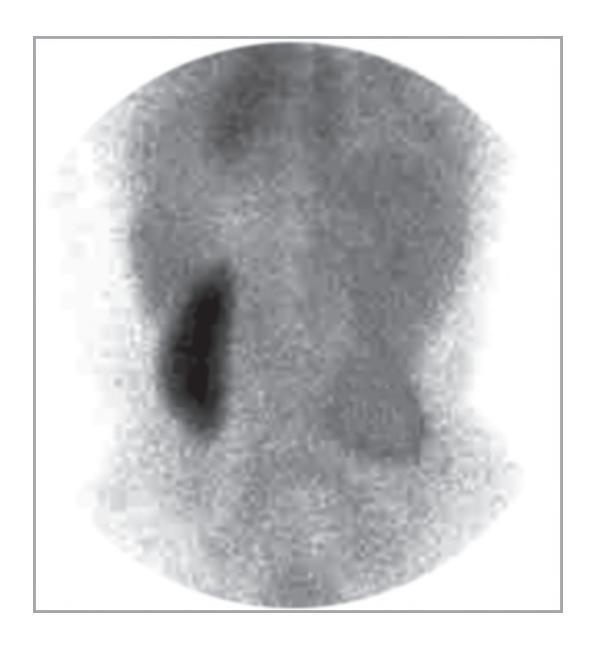
a. What is the diagnosis on this DTPA scan?
b. What do the DTPA and DMSA stand for?
Answer
No model answer in source material.
VVK19-010
A 12-year-old boy is brought to the clinic with recurrent cramps. On examination, his growth is normal. He is normotensive and has no evidence of rickets. His systemic examination is normal. His laboratory reports are as follows.
Hb : 12.1 g/dL BUN : 8 mg/dL Serum creatinine : 0.4 mg/dL Serum sodium : 141 meq/L Serum potassium : 2.5 meq/L Serum chloride : 90 meq/L
Serum magnesium : 0.5 mmol/L (low)
Urinary chloride : 35 meq/L
Blood gas
pH : 7.52 HCO3 : 30 meq/l
a. What is the most probable diagnosis?
b. What is the mode of inheritance?
c. What is the treatment?
Answer
No model answer in source material.
VVK19-011
Match the following.
Histology Glomerular pathology a. Diffuse mesangial proliferative 1. Alport syndrome b. Focal segmental 2. IGA nephropathy c. With crescents 3. RPGN d. Foam cells 4. Poststreptococcal
Answer
No model answer in source material.
VVK19-012
A 16-year-old female, known case of SLE presents to pediatric OPD with intermittent hemoptysis and hematuria. On examination, she is noted to be pale and hypertensive. On investigation, her complement levels were normal. Further investigation revealed antibodies to lung and glomerular basement membrane.
a. What is the most likely diagnosis?
b. What is the most likely cause of hemoptysis in this patient?
c. List 2 treatment options.
Answer
No model answer in source material.
VVK19-013
A 3-year-old female child is reviewed in pediatric OPD for failing to thrive and abdominal pain. Her investigation revealed Hb 10 g/dL, serum sodium of 136 meq/L, serum potassium of 2.9 meq/L and metabolic acidosis. Her urinary pH was 6.1. On further evaluation, she is diagnosed to have renal stones.
a. What is the most likely diagnosis including the subtype of the pathology?
b. What is the underlying pathogenesis?
c. What is the treatment?
Answer
No model answer in source material.
VVK19-014
A 2-year-old female child is reviewed in pediatric OPD for short stature. She also complains of polyuria and polydipsia. Her examination revealed signs of rickets. Her investigation showed serum sodium of
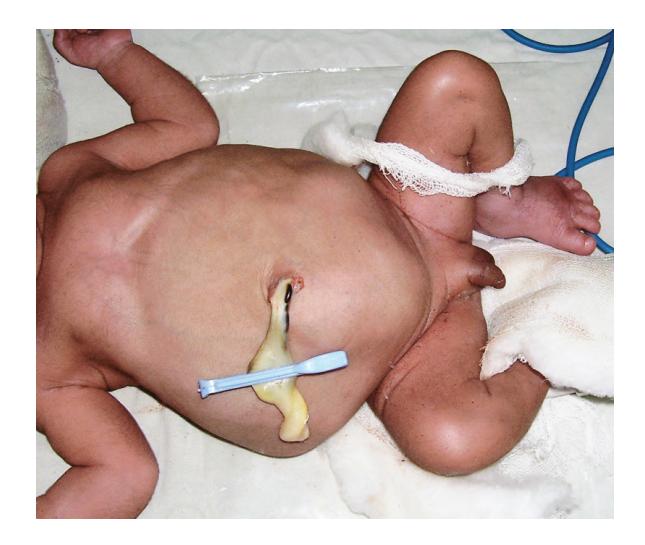
a. What is the most likely diagnosis including the subtype of the pathology?
b. What is the underlying pathogenesis?
c. What is the treatment?
a. What is the diagnosis?
b. What are the associated urinary tract abnormalities with this condition?
c. Give 1 pulmonary complication associated with this condition.
a. What is the diagnosis?
b. How would you confirm the diagnosis?
c. What is the most likely cause/pathogen/organism for the same?
d. What is the immediate treatment?
a. What is your interpretation of the ABG?
b. List 4 clinical conditions in which this ABG finding can be seen. On further investigation, he was noted to have hypokalemia.
c. List 2 possible diagnoses. His urine shows hypercalciuria.
d. What is the diagnosis?
e. How do you treat this patient?
Answer
No model answer in source material.
VVK19-015
A 3-year-old female presented to pediatric OPD with complaint of irritability and lethargy. On examination, she appears pale. On further questioning mother gave history of URTI 1 week back for which she consulted a local physician who conservatively treated it as viral URI. She also gave history of decreased urine output. After a week of the above illness, she became irritable and lethargic. Childs blood investigations revealed a BUN of 81 mg/dL and serum creatinine of 4.2 mg/dL. Her blood gas shows pH of 7.18 and serum K of 5.6 mmol/dL with tall T waves in the ECG. Her platelet count is 85,000/mm.
a. What is the diagnosis?
b. What are the possible findings on the peripheral smear of this child?
c. What is the most common organism associated with this disease?
d. List 2 indications of dialysis in this child.
Answer
No model answer in source material.
VVK19-016
Given below is the picture of a 6-year-old boy presenting in OPD with complaint of severe abdominal pain of 1 day duration. On examination, he is noted to have similar rash over buttocks and thighs. His CBC and clotting profile is normal.
316 OSCE in Pediatrics
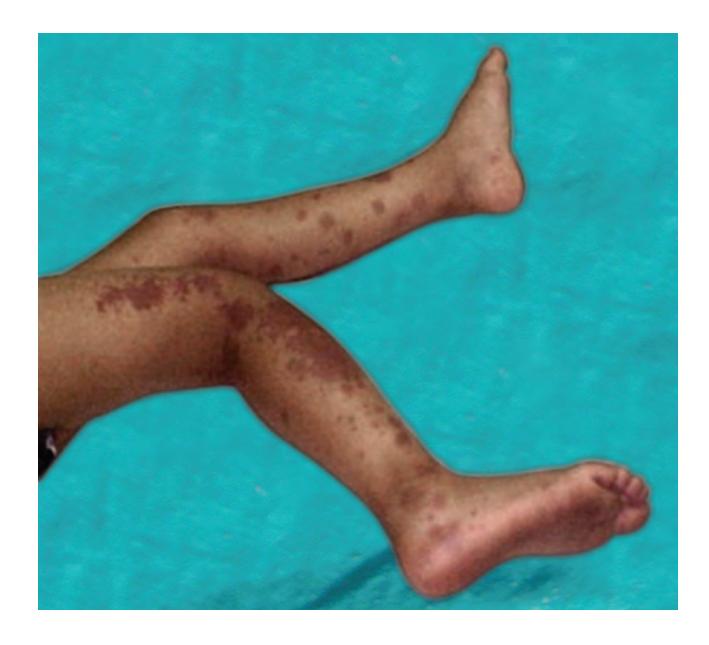
a. What is the most likely diagnosis?
b. What is the prognosis?
c. What are the factors associated with worst prognosis?
d. List 2 possible long-term complications.
Answer
No model answer in source material.
VVK19-017
What is the dietary requirement for a child with acute renal failure in terms of:
a. Calorie requirement.
b. Protein requirement.
c. Sodium requirement.
d. Potassium intake.
e. Phosphorus.
c. DMSA
d. 0.55 × Ht (cm) Serum Creatinine 0.55 × 100 1 55 mL/min per 1.73 m2
b. Greater
c. Greater
d. Less
e. Less
f. Less.
a. (136) (102 + 10) = 24
b. 8–16
i. Diarrhea—normal
v. RTA—normal
x. Post hypocapnea—normal.
a. Cerebral salt wasting.
b. Serum uric acid, serum vasopressin level.
c. 3% NaCl.
a. SIADH.
b. 1. Excessive administration of vasopressin in the treatment of central diabetes insipidus
c. Fluid restriction
a. Hemolytic uremic syndrome.
b. *E. coli—*0157: H7.
c. 1. Acute glomerulonephritis
d. Hyponatremia/hypernatremia/hyperkalemia.
a. Gitelman's syndrome.
b. Autosomal recessive.
c. Potassium and magnesium supplements.
a. Goodpasture disease.
b. Pulmonary hemorrhage.
c. Pulsed methylprednisolone Immunosuppression-cyclophosphamide Plasmapheresis.
a. Type I or distal RTA.
b. Impaired distal urinary acidification/H+ ion secretion.
c. Bicarbonate supplementation, thiazide diuretics.
a. Type II or proximal RTA.
b. Impaired distal urinary acidification/H+ ion secretion.
c. Bicarbonate supplementation.
a. Prune-Belly syndrome (Eagle-Barrett syndrome).
b. Dilated ureter (megaureter), megalourethra Large bladder.
c. Pulmonary hypoplasia.
a. Spontaneous bacterial peritonitis.
b. Ascitic tap-PMN >250 cells/µL, with PMNs > 50%, is presumptive evidence of SBP.
c. Pneumococci.
d. Parenteral antibiotic therapy with cefotaxime and an aminoglycoside.
a. Metabolic alkalosis uncompensated.
b. Gastric losses (emesis or nasogastric suction)
c. Gitelman syndrome
d. Bartter syndrome.
e. Potassium supplementation, adequate hydration, nutritional supplementation. Indomethacin might be used.
a. Hemolytic-uremic syndrome atypical presentation: More commonly presents following gastroenteritis but occasionally can be following URI.
b. Peripheral smear: Burr cell, helmet cell, fragmented RBCs, leucocytosis, thrombocytopenia.
c. E. coli 0157: H7 (~70–80% of HUS).
d. Seizures
a. Henöch-Schonlein purpura.
b. Generally favorable 97–98%.
c. Acute nephritic and/or nephrotic syndrome.
d. Hypertension
a. Calories-maximized—at least the daily requirement of 100 kcal/kg/day.
b. Protein—restrict moderately.
c. Sodium—restrict, restrict salt—no added salt.
d. Potassium—restrict, avoid K containing food.
e. Phosphorus—restrict.
Answer
No model answer in source material.