VVK12-001
Give position for postural drainage of both right middle lobe and lingula (left) (physiotherapy demonstration not required).
Answer
No model answer in source material.
VVK12-002
Respiratory compensation of metabolic disorders. What is the conversion factor (PCO2 ) with each change of (HCO3 – )?
Disorder
a. Metabolic acidosis
b. Metabolic alkalosis
Answer
No model answer in source material.
VVK12-003
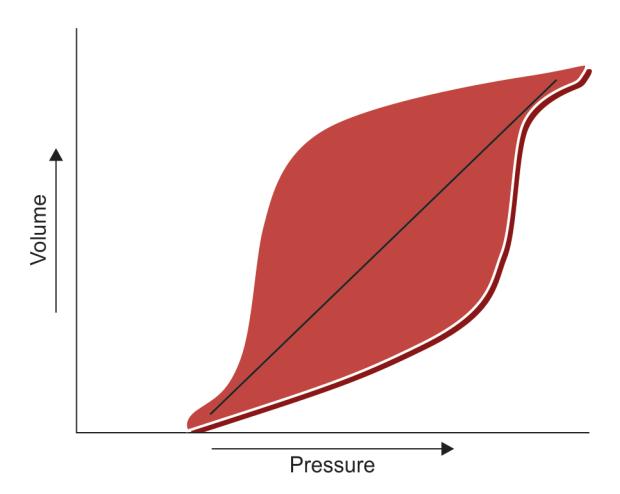
a. Describe the above loop.
b. What is your diagnosis?
c. What is the cause?
Answer
No model answer in source material.
VVK12-004
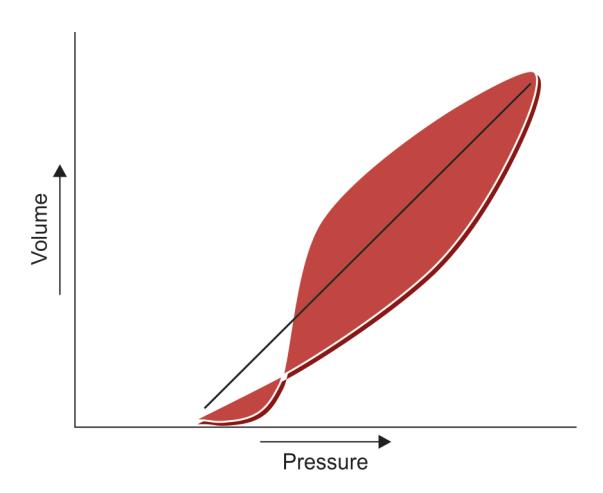
a. Describe above PV loop.
b. What is the commonest cause?
Answer
No model answer in source material.
VVK12-005
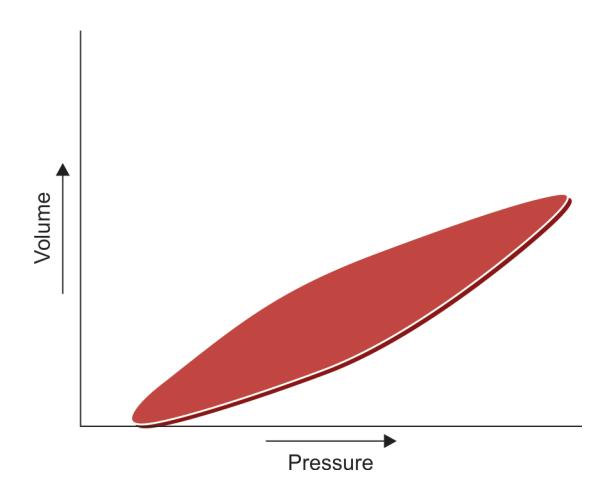
a. Describe the above PV loop.
b. What do you suspect?
c. Enlist 3 causes.
Answer
- a. There is slow rising inspiratory limb. Change in volume is little as compared to change in pressure that is dynamic compliance is less
- b. Decreased Lung compliance
- c. RDS, ARDS, Pneumothorax, Abdominal distension.
VVK12-006
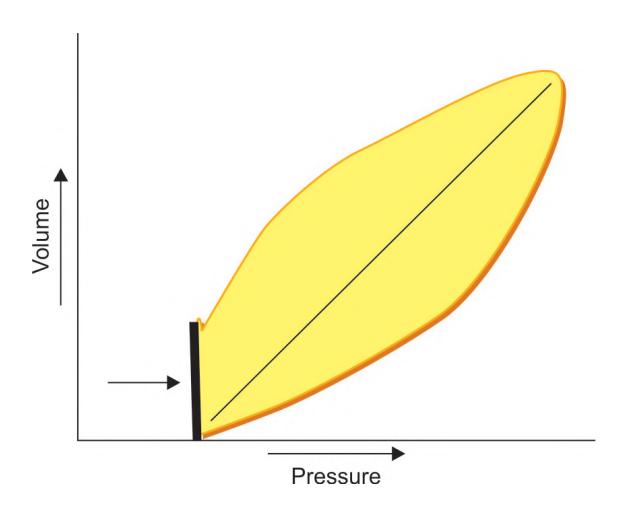
a. Describe the above changes.
b. What do you suspect?
c. Enlist 3 causes.
Answer
- a. Pressure-Volume loop fails to close, Tidal volume waveform dose not reach baseline at end-expiration
- b. Air Leak
- c. ET Leak, Small size, wrong placement, tubing detached, water seal detached, sensor not in place.
VVK12-007
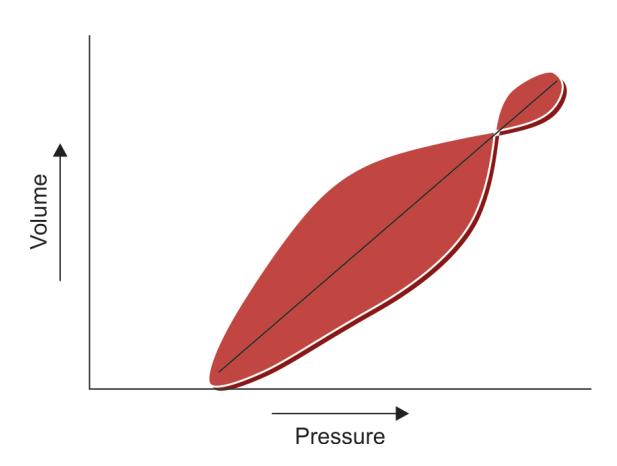
a. Mention what do you suspect in above PV graph.
Answer
a. Low minute volume, Inadequate flow, trigger set to high, little separation between inflation and deflation limbs of PV loop.
VVK12-008
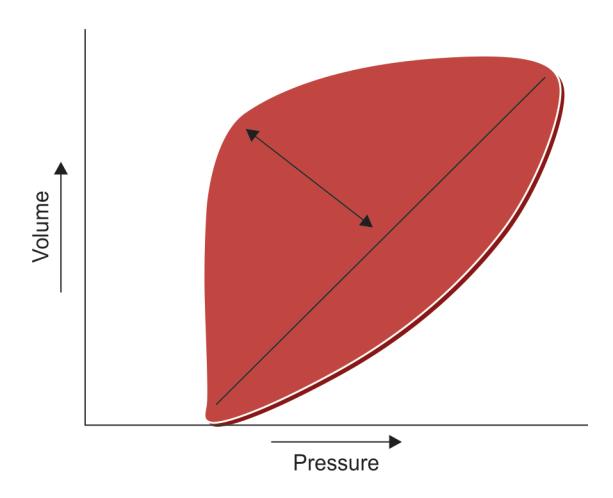
a. Describes the changes of above graph.
b. What pathology can be associated with above changes?
c. Mention 3 common cause of above pathology.
Answer
- a. Increased expiratory resistive work
- b. Obstructive air way diseases
- c. Meconium aspiration syndrome Bronchopulmonary dysplesia
VVK12-009
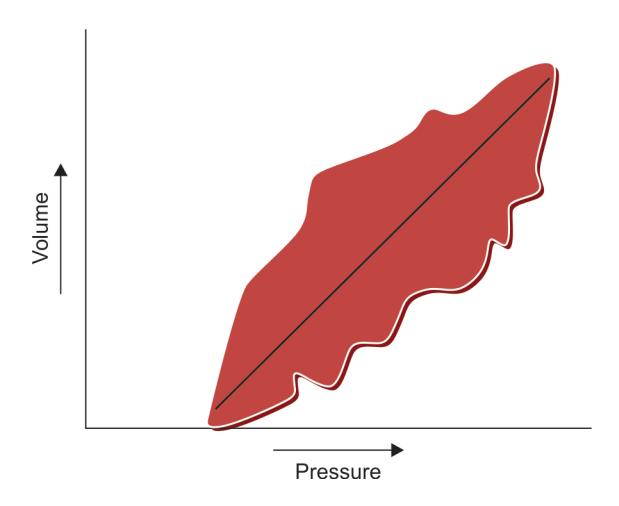
a. Describe above PV loop.
b. Enlist 2 causes.
Answer
- a. Noisy signals on both loops
- b. Turbulence due to
- i. Water in circuit
- ii. Airway Secretions.
VVK12-010
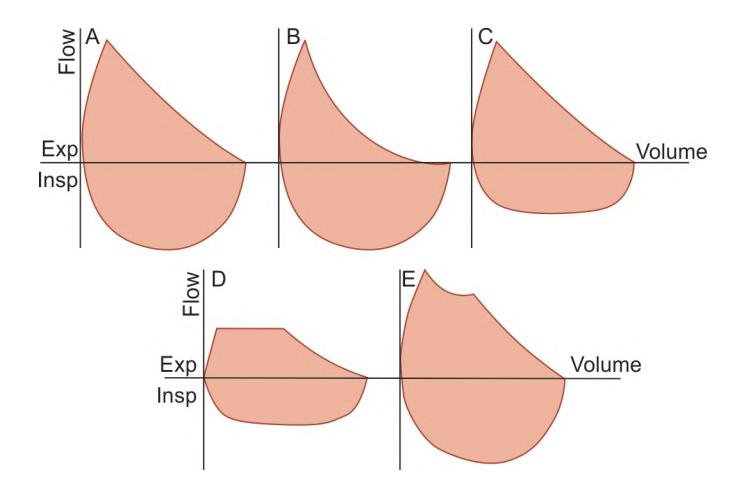
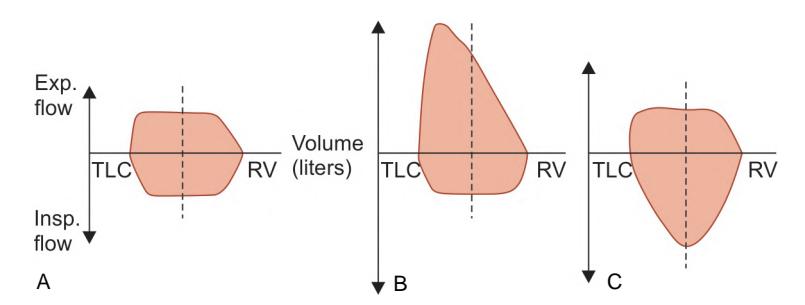
Following are representatives of flow-volume curve, here by convention, flow is represented on the Y-axis, volume on the X-axis, expiration as an upward deflection and inspiration as a downward deflection. Name the flow volume curves.
Answer
- a. NORMAL
- b. Intrathoracic peripheral airway obstruction
- c. Variable extrathoracic airway obstruction
- d. Fixed airway obstruction
- e. Variable extrathoracic central airway obstruction.
VVK12-011
Following are constructed from spirometric data, please use them to locate the site of air way obstruction.
Answer
- a. Fixed obstruction intra or extra thoracic
- b. Extrathoracic obstruction (variable)
- c. Intra thoracic obstruction (variable)
VVK12-012
Intranasal mass
Match the following- can choose more than 1 option
b. Encephalocoele b. Pulsatile
a. Polyp a. Always intranasal never extranasal
c. Glioma c. Trans-illuminable
d. Dermoid d. Always defect in skull
e. None of the above
Answer
- a. A
- b. BCD
- c. E
- d. E.
VVK12-013
A 6-week-old infant is presented with on/off history of noisy breathing; on examination you diagnose it as stridor. Baby is otherwise stable with no other clinical concern.
a. What is most likely diagnosis?
b. How do you confirm the diagnosis from history or examination?
c. Enlist 3 causes each of
i. Persistent causes of stridor
Answer
- a. Laryngomalacia
- b. Stridor disappears when the child lies prone
Persistent causes of stridor Acute cause of stridor
Subglottic stenosis Acute epiglottitis Vascular ring Acute angioneurotic oedema Laryngeal Web/cleft Diphtheria
Cysts of the aryepiglottic folds.
Laryngomalacia Acute laryngotracheobronchitis
Vocal cord palsy Foreign body or inhaled hot gas
Cysts of the posterior tongue Expanding mediastinal mass
VVK12-014
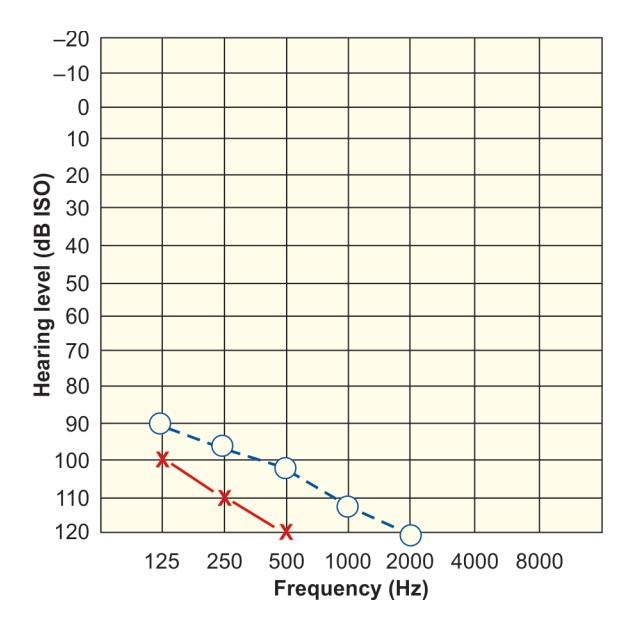
a. What is the audiometric abnormality?
b. Define
Answer
- a. Bilateral Profound hearing loss
- b. Mild 25–35 Db Moderate 40–60 Db Severe 60–90 Db Profound > 90 Db.
VVK12-015
Attached is the audiogram of a 3 year old
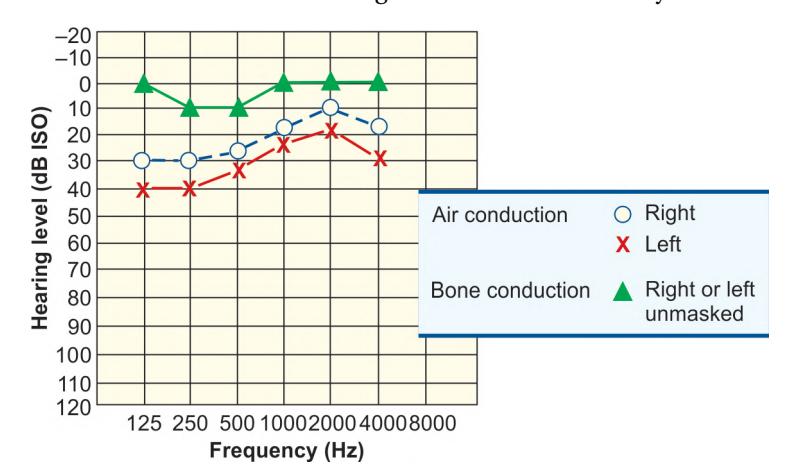
a. What is the audiometric abnormality?
b. Enlist 3 common reasons leading in to above abnormality?
a. Name the clinical signs which are recommended for assessment of a case of suspected respiratory tract infection under ARI program.
b. A working family has been using a servant maid to care for their 8-month-old child while they go for work. The maid is diagnosed with smear positive pulmonary tuberculosis. PPD test of the 8-month-old is negative. What will you do for this baby?
a. Give the complete ABG diagnosis and possible cause of the abnormality.
b. Name the most appropriate corrective measure for this child.
c. Calculate the predicted carbon dioxide level for this level of bicarbonate.
a. Interpret this blood gas.
b. What is the normal PaO2 level expected if a child is breathing at room air with normal lungs?
c. Above mentioned ABG was taken when patient was inspiring 60%
a. What is the interpretation of this ABG?
b. Calculate oxygenation index.
c. What are the indications for extracorporeal membrane oxygenation (ECMO) in terms of:
i. AaDO2
a. What are the differences between safe and unsafe CSOM? Give three differences
b. How would you treat safe and unsafe CSOM?
a. What is your diagnosis?
b. If the baby's Hb is 10 g/dL and SpO2 is 100%, calculate CaO2 of the blood.
c. Name one change in ventilator setting that will normalize the blood gas.
a. Interpret this blood gas.
b. What change in bicarbonate you expect if there is rise in PaCO2 by 10 mm (process is chronic)?
c. What change in bicarbonate you expect if there is rise in PaCO2 by 10 mm (process is acute)?
a. Classify the severity of the disease according to IMNCI.
b. What is the choice of antibiotics?
a. What is the diagnosis?
b. Which associated anomalies should be looked for?
a. Identify the complication.
b. Name two conditions that can give rise to this complication.
a. What is the acid base disorder?
b. Is it a simple disorder or mixed?
c. Is it a compensated disorder?
d. What is most likely intervention that will correct the abnormality?
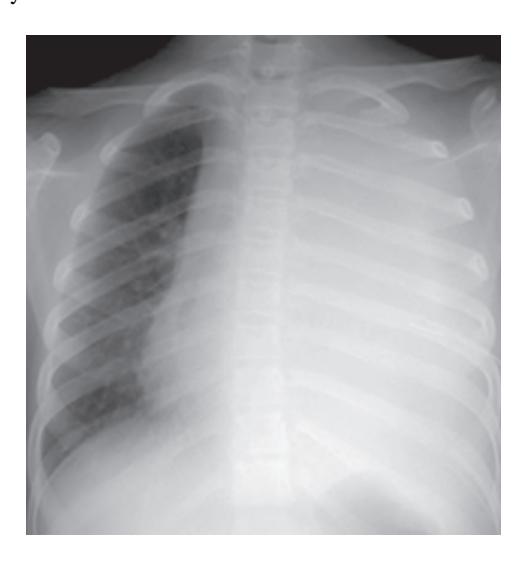
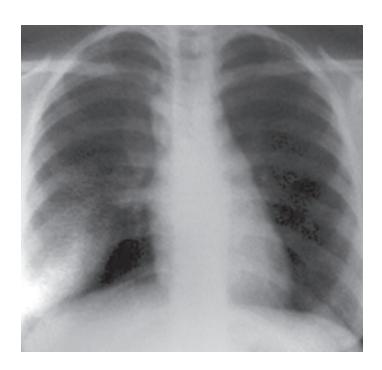
a. What are your findings on this chest X-ray?
b. What is your likely diagnosis based on chest X-ray and clinical findings?
c. How would you confirm?
a. List the findings.
b. She was investigated and had PPD
i. Category of the disease (WHO-RNTP).
c. At the end of treatment, the patient is afebrile, asymptomatic and weighs 33 kg. Her repeat chest X-ray shows 20% residual disease. The repeat PPD ordered by the doctor is 20 × 20 mm.
i. What is the relevance of the increase in the PPD?
Answer
a. A .Bilateral conductive hearing loss
b.
- • Cerumen (earwax)
- • Otitis externa (ear infection
- • Acute otitis media
- • Serous otitis media.
VVK12-016
Answer the following questions on asthma.
a. What is the grade of asthma severity in a child having?
b. What would be the pulmonary score/severity of asthma exacerbation in a 7 year old child with a respiratory rate of 35, terminal expiratory wheeze and mild increase in work of breathing?
Answer
- a. Moderate persistent.
- b. 3 (mild).
VVK12-017
Answer the following questions.
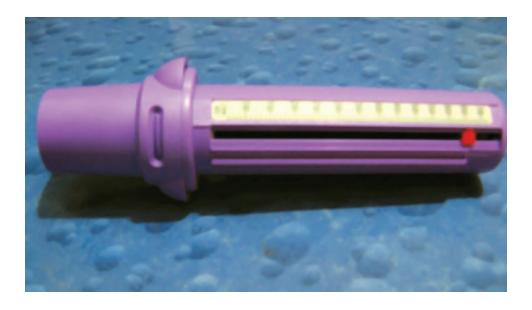
b. What would be the approximate normal value of PEFR of a subject standing 120 cm tall?
c. What does spirometer measures?
Answer
- a. Peak flow meter
- b. 200 liters/min
Formula for approximate normal PEFR for a given height: PEFR ( L/min) = [ ht. ( in cm) – 80] × 5.
c. Vital capacity and its subdivisions and expiratory (orinspiratory) flow rate.
VVK12-018
Answer the following questions on pneumonia.
a. Resistance to penicillin in streptococcal pneumonia is mediated by________.
b. The most important indirect marker of PCP (P. carinii) pneumonia is _.
c. Chest radiograph findings typical of PCP pneumonia is __________.
a. What is your most likely diagnosis?
b. What characteristic posture does a child usually adopt to find some relief in such a case?
c. How do you confirm the diagnosis in this case and what precautions will you take?
d. What characteristic sign is seen on X-ray?
e. What immediate management is warranted if such a child collapses suddenly?
a. What is your likely diagnosis?
b. What is the main causative organism for this ? Give 2 other causative organisms.
c. What is the mainstay of treatment?
d. Which babies are prone to this disease and how do you prevent disease in them?
a. What is your likely diagnosis?
b. Mention 3 other respiratory manifestations of this disease.
c. Mention 2 endocrine manifestations of this disease.
d. Give common organisms that colonise the airways in this disease.
e. What is the standard diagnostic test for this condition?
a. What is your most likely diagnosis?
b. What do you expect in chest X-ray of this patient?
c. What is the most common preceding event for this condition?
d. Give 2 ways that help to reduce the frequency of such episodes.
a. What possibility do you suspect in this baby?
b. What two most relevant investigations will you send?
c. The child was discharged from the ward 4 days later. She was reviewed in clinic 4 weeks after discharge. Her mother is very concerned that she is still coughing. How do you convince the mother?
d. What complications are expected in untreated cases?
a. What is your most likely diagnosis?
b. Pleural effusion is said to be purulent when leukocytes are ————
c. Give 4 diagnostic features on pleural fluid examination to call it as empyema.
a. What is the most likely diagnosis causing this "secondary pneumonia"?
b. What other presentations could a child with this diagnosis have?
c. What bronchus is most likely to be affected?
d. How do you make the diagnosis and how do you confirm it?
e. What is the most common age of presentation for this?
a. A child is getting ventilated by "pressure limited' ventilator whose ABG shows PaCO2 value of 70 mm Hg with normal oxygenation. Which of the following is the best change in the ventilator settings to achieve normocapnea?
b. A patient is breathing spontaneously on a ventilator, which delivers a pressure of 5 cm of H2 O throughout his respiration. What is this mode of ventilation called?
c. What is the expiratory time in a ventilatory setting of pressure control ventilation with I : E ratio of 1 : 2 with 10% pause at the rate of 20 breaths per minute?
d. In a volume flow curve, a child of age 4 years is intubated with an ET tube of 4 mm size. The inspiratory tidal volume is 12 ml but expiratory tidal volume is only 4 ml. What does this indicate?
e. What should be the ventilator strategy in a child with acute severe asthma?
a. What is your likely diagnosis?
b. What will be your immediate and most effective intervention?
c. Give 2 conditions commonly associated with this entity.
a. What is the most likely diagnosis?
b. What is the best therapy?
c. What is the most common causative organism for this?
Answer
- a. Penicillin binding proteins with altered affinity for penicillin
- b. Hypoxemia (i.e., PaO2 < 80 mm Hg in room air)
- c. Interstitial infiltrates beginning in the perihilar region and spreading to the periphery. Apices spared until later in the disease.