MNJ14-001
A 13 years old girl Reema came to your hospital with complaints of acute onset painful swelling below her knee joint till ankle. She recently visited her school camp for 3 days and where she share room with her batchmates. On examination you found painful nodular lesion and throat is also red.
- What 1s most likely diagnosis of these lesion?
- What are infectious causes of these lesion (write 4)?
- Which drugs can be responsible for these?
Answer
No model answer in source material.
MNJ14-002
See the image of 2 neonate and answer the following questions
Dermatology 195 |
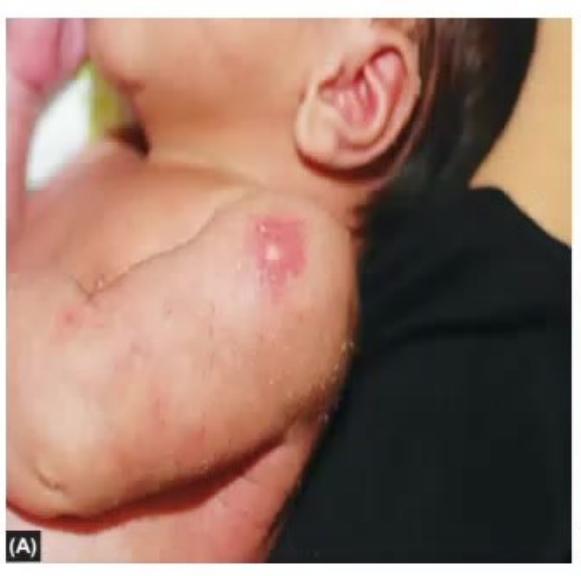
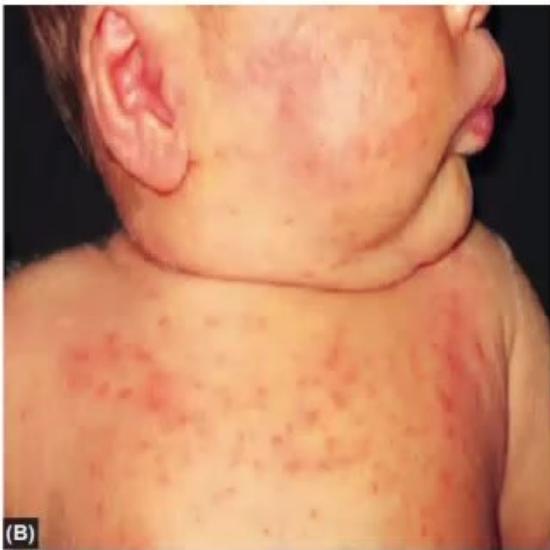
- What is diagnosis of image A and B?
- Till how much time these can be persist in a normal neonate?
- In which subgroup of gestation these two are more common?
- What 1s treatment option for A and B?
Answer
No model answer in source material.
MNJ14-003
See the image and answer the following questions
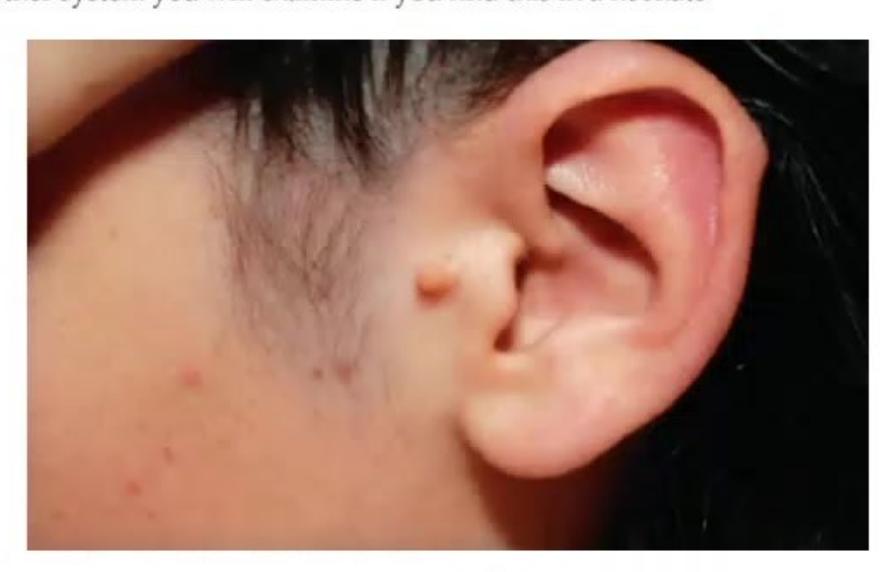
- Whats finding in this picture?
- What 1s pathophysiology for this?
- What are differential diagnosis (write 2)?
- What 1s its course ma child?
- What other system you will examine if you find this in a neonate?
Answer
No model answer in source material.
MNJ14-004
A6 years old child came to you for fever and cough. During chest examination you found something unusual finding. See the image and answer the following questions.
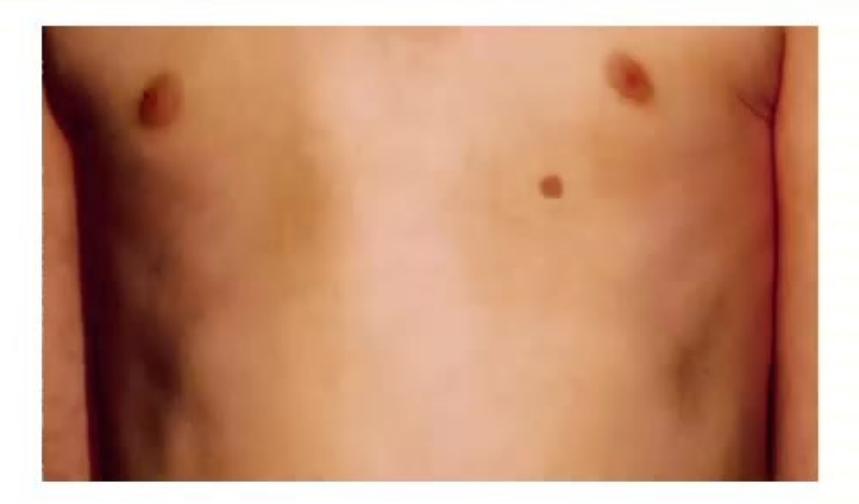
- Whats clinical finding in this picture?
- What is milk line?
- What 1s its gender ratio as a finding?
Answer
No model answer in source material.
MNJ14-005
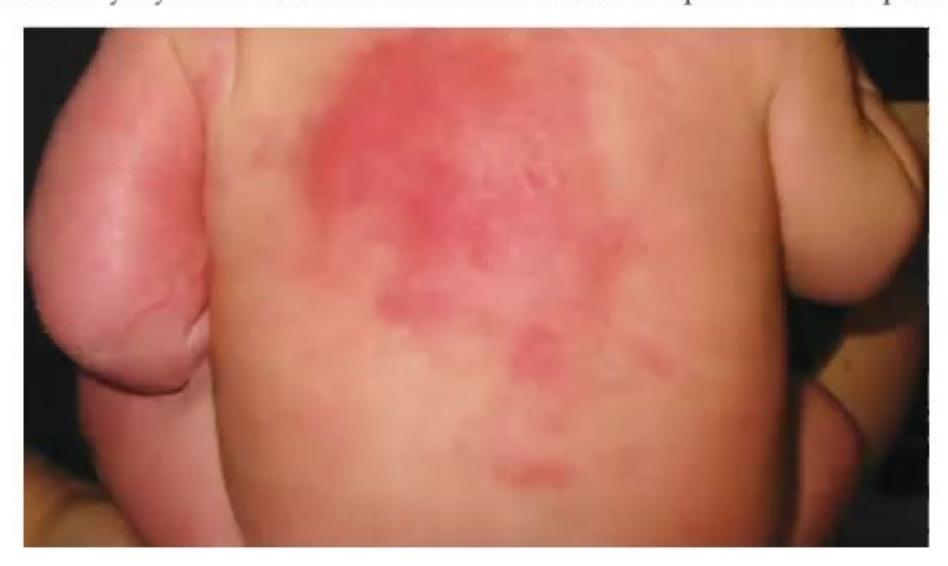
- What 1s diagnosis?
- What are causes in a neonate? whe
- What 1s patho-physiology for this finding?
- What 1s course?
- What 1s treatment? nue
- What electrolyte you will monitor in this case and what complication can be present?
Answer
No model answer in source material.
MNJ14-006
A 13 years old child Rajeev is a known case of atopic dermatitis came to your clinic with these new lesions. He told that these lesion started in month of December and in next one month increased in size. He is on his regular medicine for atopic dermatitis and not went for any trip in last 2 months.
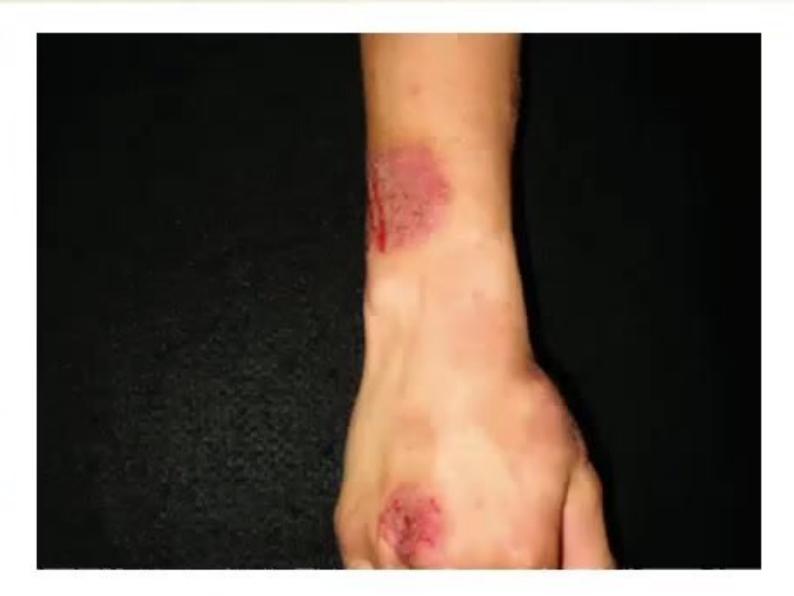
- Whats diagnosis of this condition?
- What are possible differential diagnosis?
- How will you manage these lesion?
Answer
No model answer in source material.
MNJ14-007
These 2 patients came to you at different time in a month. You made the same diagnosis of these two. Patient A is admitted in a hospital for prolonged period and nurse applied adhesive tape over his abdomen and patient B uses his belt regularly and not remove even in night.
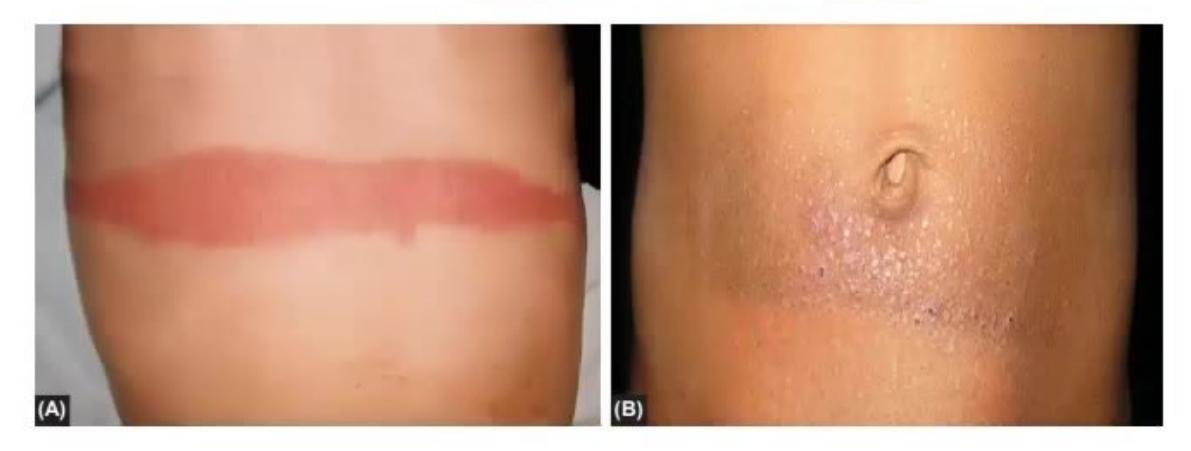
- Whatis the diagnosis of image A? Are these two (images A and B) really have same problem?
- Which type of allergic reaction 1s this?
- What treatment can you offer for these two?
Answer
No model answer in source material.
MNJ14-008
A 7 days old neonate came to your hospital with complaints of development of skin lesion as mother or any other family member rub the baby and even after clothing. See the given image below and answer the following questions.
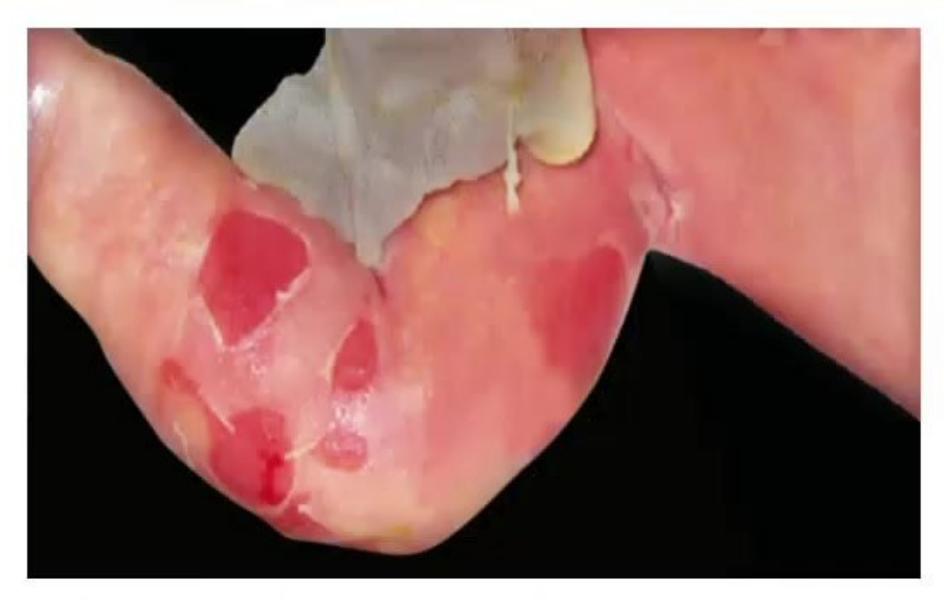
- What 1s possible diagnosis?
- Mother wants to know about recurrence rate in future pregnancy.
- What 1s patho-physiology and which chromosome 1s affected?
- Mother wants to know about course of disease.
Answer
No model answer in source material.
MNJ14-009
A 4 months old boy Rahul admitted in your hospital with some skin lesion in his legs that is mild itchy also.
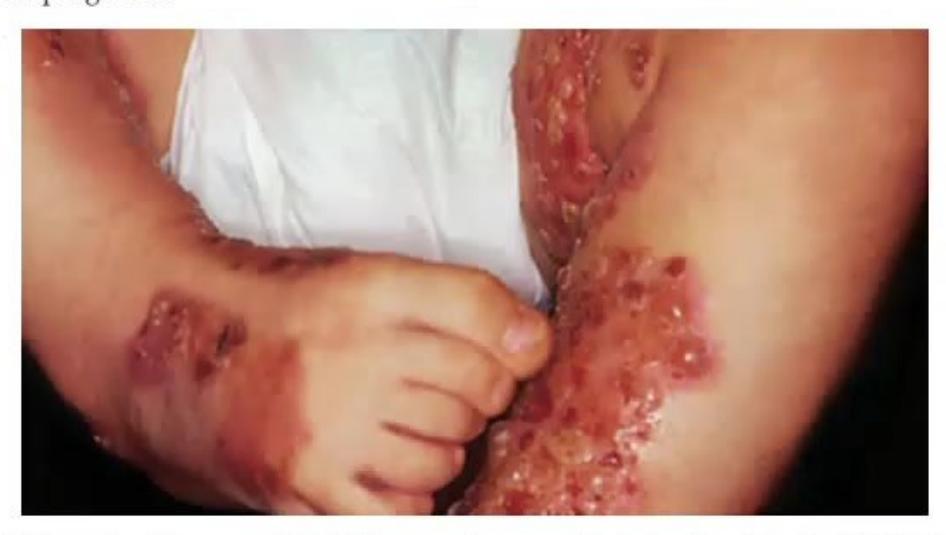
- What is likely diagnosis?
- What 1s famous name of these lesion pattern?
- What 1s finding of electron microscopy?
- What is prognosis?
Answer
No model answer in source material.
MNJ14-010
Mother of a 13 years old child came to your clinic for treatment of URI. She also shows you the abnormal lesion on her child neck region. She told that initially it was brown color but since last 6 months it became more dark. See the image given below and answer the following question.
[ Dermatology 199 |
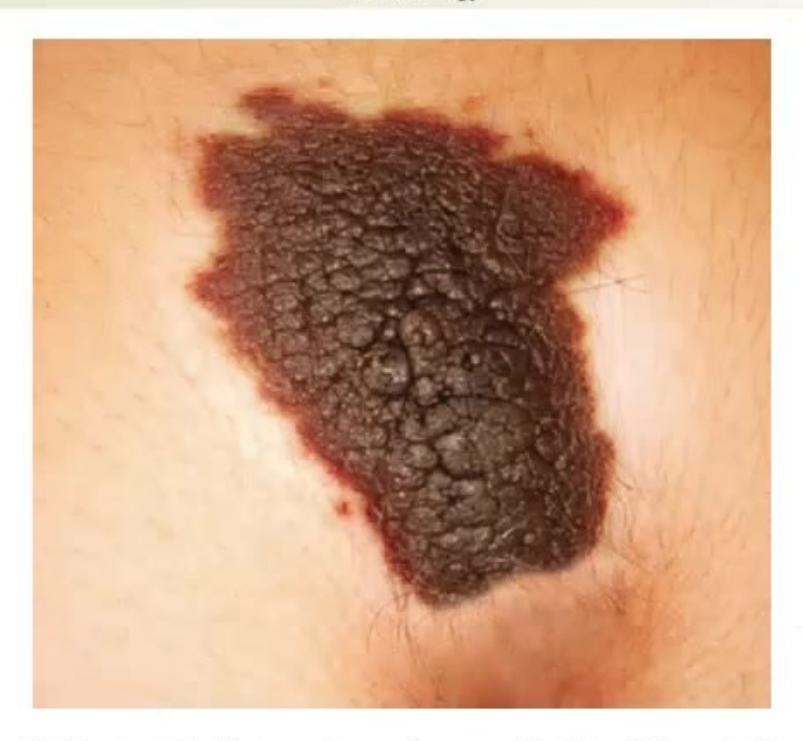
- What is likely diagnosis of this?
- What are possible differential diagnosis (write 4)?
- What you advice to the mother about to observe in future?
Answer
No model answer in source material.
MNJ14-011
Mother of a5 years of girl came to you for consultation of these lesion on her back. She told that these lesion present since birth. Growth of child is not also good and she recently diagnosed for poor hearing and now planning for hearing aids. She admitted 2 times before in hospital and during Echo cardiologist found some heart lesion also. See the image given below and answer the following questions.
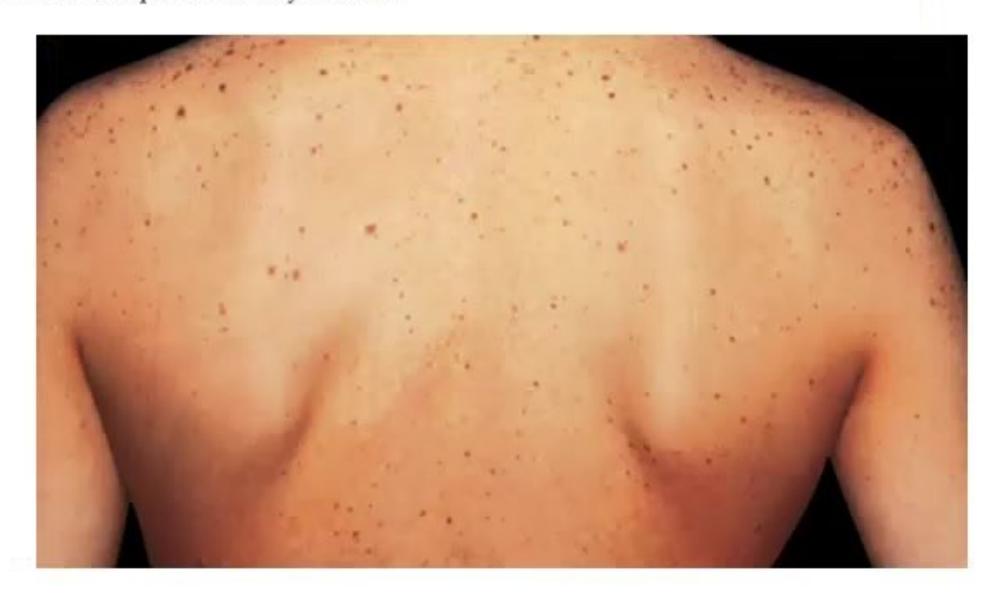
- What are these lesion called?
- What 1s associate syndrome with this?
- What are components of syndrome?
Answer
No model answer in source material.
MNJ14-012
A neonate admitted in your NICU for sugar monitoring because she is baby of a diabetic mother. Some initial sugar level was low on breastfeeding so baby shifted in NICU for supervised feeding and sugar monitoring. After 24 hours baby is stable and Nurse called you that while changing diaper she found something on her leg. See the image below and answer the following question.
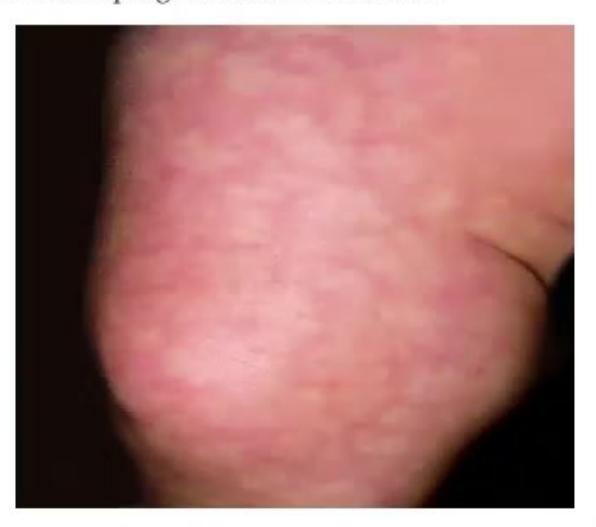
- Whatis likely diagnosis of this condition?
- What 1s cause for this?
- Mother want to know about prognosis of the condition.
Answer
No model answer in source material.
MNJ14-013
See the image given below and answer the following question
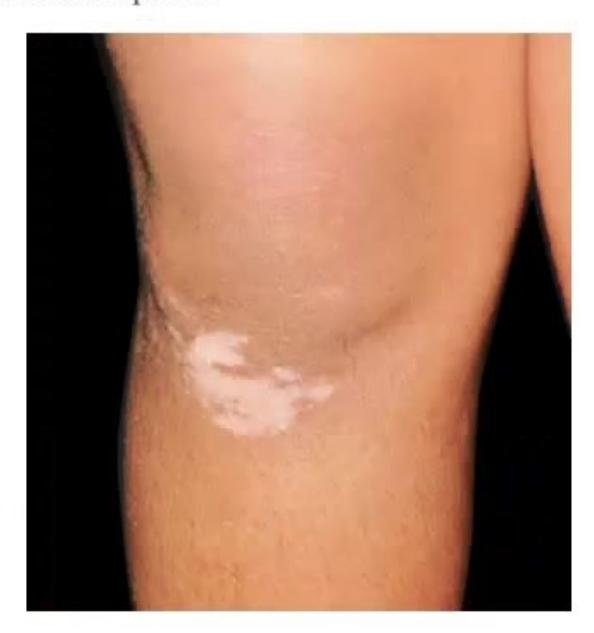
- What 1s diagnosis for this lesion?
- What endocrine test will you order for this child?
- What are possible treatment options?
Answer
No model answer in source material.
MNJ14-014
A child present with acute onset fever and respiratory distress. At the time of admission you noticed that he is in shock with these lesion given below. Blood report showed derange coagulation profile.
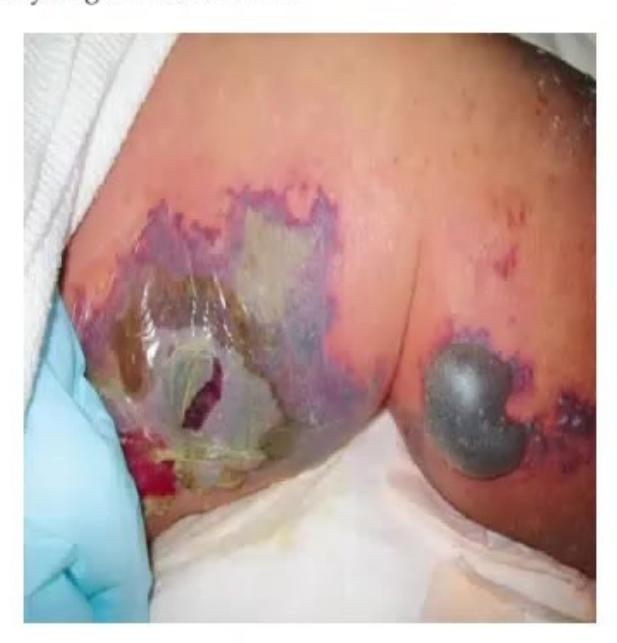
- Whats diagnosis of this condition?
- Whats etiology (write 4)?
- You order D-dimer, fibrin degradation products and fibrinogen level in lab, what will be the expected result?
- What treatment will you give to this child?
Answer
No model answer in source material.
MNJ14-015
A5 years old boy Pankaj Gulati presented with 1 week history of widespread painful and pruritic lesion with some crusting around. Evaluate the picture below and answer the following:
ANSWERS
- Ans. 1. 1. Erythema nodosum
-
- Streptococcal, mycoplasma, salmonella, TB, EBV
-
- Drugs-penicillin, sulphonamide, OCP
-
- Ans. 2. 1. Image A-Erythema toxicum neonatorum Image B-Acne Neonatorum
- Erythema toxicum can persist for 7–10 days but Ance neonatorum can persist till 8 months
-
- Both are common in term babies
-
- For A-No treatment For B-self limiting, 2% ketoconazole cream
- Ans. 3. 1. Preauricular skin tag.
- Accessory tragi is caused by first or second branchial arch fusion abnormality during embryonic development.
- Differential diagnosis includes epidermal inclusion cyst, fibroma, adnexal tumor, or lipoma
- Accessory tragi are typically asymptomatic but persist for life, occasionally becoming inflamed
- Renal system
- Ans. 4. 1. Accessory nipple-brown papule along the milkline on the chest
-
- Imaginary line drawn from the midaxilla to the inguinal area.
-
- M:F
- Accessory nipples do not need treatment. Surgical removal can be performed for cosmetic purpose.
-
- Ans. 5. 1. Subcutaneous fat necrosis-erythematous, well-demarcated subcutaneous nodules of fat on the back of a newborn
-
- Cold injury, trauma at delivery, asphyxia, ischemia
- The fat of neonates contain more saturated fatty acids, which have a higher melting point than adult fatty acids. Once the temperature of the skin drops below the melting point of the fat, crystallization occurs with subsequent necrosis and granulomatous inflammatory response.
- Lesions evolve slowly over weeks-to-months from red nodules, to bruiselike discoloration
-
- No treatment is necessary for these self-resolving lesions in general.
- The calcium level should be monitored at least biweekly in these infants as the skin lesions resolve, hypercalcemia can be present.
-
- Ans. 6. 1. Nummular eczema-Lichenified coin-shaped plaques, present in winter month in patients of atopic dermatitis
-
- Tinea corporis, contact dermatitis, and psoriasis.
- Mild soap-free cleansers for washing, followed by frequent moisturization and Topical corticosteroids.
-
- Ans. 7. 1. Contact dermatitis, child A because of adhesive tape and B because of belt.
-
- Type 4 delayed hypersensitivity reaction
-
- Topical corticosteroids
-
Dermatology 203 |
- . Epidermolysis bullosa
- Autosomal dominant disorder so 50% chance in every child to be affected
- Mutations in the genes encoding keratin 5 (chromosome 12q)
- Most forms of EB improve with age, and blister formation can be limited by decreasing traumatic activities
- Linear IgA bullous disease of childhood
- . String of pearls
- . Linear deposits of IgA in the basement membrane zone
- . Most cases of linear IgA bullous disease of childhood are self-limuted in 2-4 years.
- Congerutal melanocytic nevus
- . Mongolian spot, nevus of Ota, congerutal blue nevus, neurofibroma,
- . Malignant transformation can occur im some patients—observe for changes im shape, irregular borders, color change
- Scattered brown macular spots—multiple lentigines
- . Leopard syndrome
- L = Lentigines
- E = EKG abnormalities
- © Ocular hypertelorism
- P —- Pulmonary stenosis
- A = Abnormal genitaha
- R Retardation of growth
- D —- Deafness
- Cutis marmorata,
- . Normal finding in a neonate
- . This has short-lived, transient course. Will disappear with time.
- Vitligo
- . Autormmune thyroid disorders—thyroid profile, hyper- or hypothyroidism is present in up to 30% of patients with vitiligo.
- . Phototherapy (narrowband UVB > PUVA) is useful.
- Topical steroids
- Topical tacrolimus 0.1%
- Purpura fulminans
- . Severe infection, massive tissue destruction, transfusion reaction, HELLP syndrome
- . Reduced plasma fibrinogen; elevated fibrin degradation products (D-dimer and FDPs)
- . Antibiotics, clotting factors, platelet replacement, vitamin K replacement.
- Chronic bullous dermatitis
- . String or pearls or cluster of jewel
- . IgA
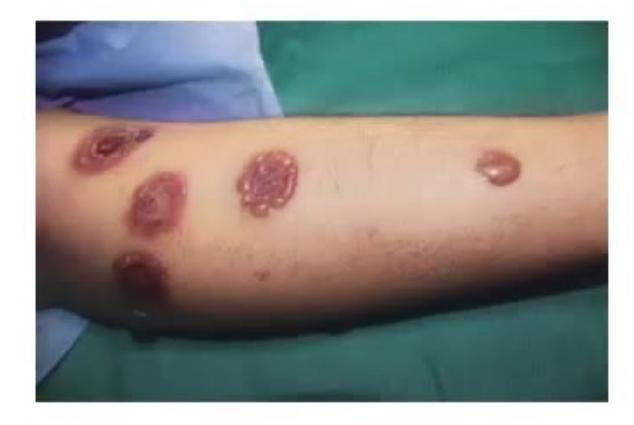
- Whats possible diagnosis?
- What 1s name of this special pattern of lesions?
- Which immunoglobulin 1s classically present m biopsy?
- Streptococcal, mycoplasma, salmonella, TB, EBV
- Drugs-penicillin, sulphonamide, OCP
- Both are common in term babies
- For A-No treatment For B-self limiting, 2% ketoconazole cream
- Imaginary line drawn from the midaxilla to the inguinal area.
- M:F
- Cold injury, trauma at delivery, asphyxia, ischemia
- No treatment is necessary for these self-resolving lesions in general.
- Tinea corporis, contact dermatitis, and psoriasis.
- Type 4 delayed hypersensitivity reaction
- Topical corticosteroids
Answer
No model answer in source material.