THG29-001
Hospital waste management
a. Choose the appropriate color bin for the disposal of below said items:
i. Blood bag
v. Metallic implant
b. Name any three methods of waste treatment and disposal.
c. If there is large amount of blood spill in your ward floor, what solution you would advise to clean the floor?
Answer
a. i. Yellow
| ii. | Red |
| iii. | White |
| iv. | Yellow |
| v. | Blue |
| vi. | Yellow |
| b. | Incineration, autoclaving, and plasma pyrolysis |
| c. | 10% sodium hypochlorite |
THG29-002
Indicators of child health
a. Define neonatal mortality rate (NMR), infant mortality rate (IMR), under 5 mortality rate (U5MR).
b. Enumerate two most common (m/c) causes each for the same.
Answer
a and b
| Indicators of child health | Definition | | |
| NMR | | | |
| • | Number of neonatal deaths + 1,000 live births in the same year | |
| • | M/c cause: Prematurity, infections, birth asphyxia | |
| | | |
| IMR | | | |
| • | Number of neonatal deaths + 1,000 live births in the same year | |
| • | M/c cause: Pneumonia, diarrhea | |
| | | |
| U5MR | | | |
| • | Number of children aged <5 years deaths + 1,000 live births in the same year | |
| • | M/c cause: Pneumonia, diarrhea | |
| | | |
THG29-003
Community workers
a. Expand ASHA, AWW, and ANM.
b. Mention one specific role of each worker in this grassroot team for child health.
c. What are the age and education criteria for ASHA?
d. True or False: ASHA supervises ANM and AWW in newborn and child care.
Answer
a and b
| Worker | Abbreviation | Role |
|---|---|---|
| ASHA | Accredited social health activist | Mobilizing pregnant mother for AN checkup and delivery, home-based newborn care |
| AWW | Anganwadi worker | Provision of nutrition supplements to pregnant mother, growth monitoring of children |
| ANM | Auxiliary nurse midwife | Facilitates AN checks and deliveries, supervises ASH and ANM |
| c. | Primarily a woman resident of the village, aged 25–45 years with minimum 8th standard pass qualification |
| d. | False. ANM > AWW > ASHA. |
THG29-004
Oral polio vaccine
a. In relevance to oral polio vaccine (OPV), when is the National Switch Day?
b. What does it mean?
c. Why it was done?
d. What is the advantage of bivalent oral polio vaccine (bOPV)?
Answer
| a. | April 2016 |
| b. | Trivalent oral polio vaccine (tOPV) replaced with bOPV |
| c. | To eliminate the risk of type 2 circulating vaccine-derived poliovirus (cVDPV) |
| d. | Enhances both individual and population immunity simultaneously |
THG29-005
Adoption
a. Define adoption.
b. Name two acts in India enacting adoption.
c. True or False: A husband can adopt without the consent of living wife.
d. What is the role of a pediatrician in adoption?
Answer
| a. | Legal process that provides a new family for a child when birth family is unable to parent. |
| b. | Hindu adoption maintenance act and juvenile justice Act |
| c. | False |
| d. | Discourage illegal adoption, does a comprehensive medical evaluation, and supporting the adopting family. |
THG29-006
Answer the following questions regarding the national program implied.

a. What does this logo imply?
b. Mention any two objectives of this program.
c. Mention any two principles of the program.
Answer
| a. | Midday meal program |
| b. | To enhance enrollment of children in schools and to improve nutritional status of school going children |
| c. | Meal should supply one-third of the calorie and half of the protein needed and meal should be a supplement, not a substitute. |
THG29-007
Human milk bank
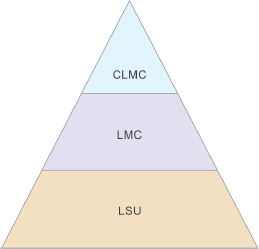
a. Expand the abbreviations given in the pyramid in the context of milk banking.
b. Where is this each body located at?
Answer
a and b
| Center | Expansion | Location |
|---|---|---|
| CLMC | Comprehensive Lactation Management Center | Medical colleges and district hospitals |
| LMU | Lactation Management Units | Large subdistrict hospitals with functioning sick neonatal intensive care units (NICUs) |
| LSU | Lactation Support Units | At all delivery points |
THG29-008
Child abuse
a. Expand POCSO
b. When it was enacted?
c. What is the objective of this act?
d. What is the role of a pediatrician?
e. What is the punishment period as per the act?
Answer
| a. | Protection of Children from Sexual Offences Act |
| b. | 2012 |
| c. | To deter perpetrators and ensuring safe and secured childhood |
| d. | To examine and treat the victim, to report to police, to protect the privacy of the child until justice |
| e. | Imprisonment not <20 years |
THG29-009
Severe acute malnutrition
a. What is NRC?
b. What is the one tool which is used to identify severe acute malnutrition (SAM) children in the community?
c. Name the SAM criteria for children <6 months of age.
d. Name any three discharge criteria for SAM children.
Answer
| a. | Nutritional rehabilitation center—a health facility where SAM children are admitted and managed |
| b. | Mid-upper arm circumference (MUAC) tape |
| c. | Infant is too weak to suckle and/or, weight/length <–3 standard deviation (SD) and/or, bilateral pitting edema and/or, visible severe wasting |
| d. | ≥15% weight gain from admission, edema has resolved, no medical complications, child is provided with micronutrients, immunization is updated. |
THG29-010
DEIC
a. Expand DEIC?
b. DEIC comes under which national program?
c. What is the purpose of DEIC?
d. DEIC supports children until which age group?
e. Name four Ds, DEIC target at?
Answer
| a. | District Early Intervention Center |
| b. | Rashtriya Bal Swasthya Karyakram/National Health Mission |
| c. | Provide referral support to children detected with health conditions during screening |
| d. | 6 years |
| e. | Defects at birth, Deficiencies, Diseases, Developmental delays |
THG29-011
Answer the following regarding radiation exposure
a. What is the imaging modality that exposes to maximum radiation dose in a single procedure?
b. What are the four syndromes associated with exposure to ionizing radiation?
c. Name the radiopharmaceutical whose use needs cessation of breastfeeding.
d. What are the imaging modalities that do not involve ionizing radiation?
Answer
| a. | Positron emission tomography-computed tomography (PET-CT) |
| b. | Ataxia telangiectasia, Fanconi syndrome, Gardner syndrome, and Cockayne syndrome |
| c. | Iodine 131 |
| d. | Ultrasound and magnetic resonance imaging (MRI) |
THG29-012
Answer the below mentioned questions related to radiotherapy
a. List four systemic side effects of radiotherapy in pediatric population.
b. Match specific treatment modalities for internal radiation contamination.
Answer
a. i. Musculoskeletal—muscular hypoplasia
| ii. | Neuroendocrine—impaired growth hormone (GH) and adrenocorticotropic hormone (ACTH) secretion |
| iii. | Gonadal failure |
| iv. | Pulmonary fibrosis |
b.
| Tritium | Dilution therapy |
| Iodine 131 | Blockage therapy |
| Plutonium | Chelation therapy |
| Cesium | Prussian blue decontamination |
THG29-013
List the possible effect of these chemical pollutants on children
a. Asbestos
b. Tobacco smoke
c. Lead
d. Trichloroethylene
Answer
| a. | Asbestos—mesothelioma |
| b. | Tobacco smoke—asthma |
| c. | Lead—neurodevelopmental delay |
| d. | Trichloroethylene—acute lymphocytic leukemia (ALL) |
THG29-014
Arsenic poisoning
a. Name the most toxic form of arsenic.
b. Mention the acceptable blood level of arsenic.
c. What is the lethal dose?
d. What is the single investigation for definitive diagnosis?
e. List four systemic complications associated with toxicity.
Answer
| a. | Arsenite |
| b. | <5 µg/L |
| c. | 5–50 mg/kg |
| d. | 24 hours urine arsenic |
e. i. Gastrointestinal (GI)—hematemesis
| ii. | Cardiovascular systems (CVS)—QT prolongation |
| iii. | Kidney—acute tubular necrosis |
| iv. | Central nervous system (CNS)—toxic encephalopathy |
THG29-015
A 5-year-old boy whose father works in a smelting industry was brought to outpatient department (OPD) with tremors, irritability, headache, and anorexia. Tremors disappearing during sleeping hours.
a. Point out the suspected chronic toxicity.
b. What is the acceptable blood level for the same?
c. Name the idiosyncratic hypersensitivity reaction to powdered form of this compound.
d. What is the definitive management of this category of toxins?
Answer
| a. | Mercury |
| b. | <10 µg/L |
| c. | Acrodynia |
| d. | Chelation therapy |
THG29-016
Lead poisoning
a. Blood lead level above which chelation is recommended?
b. List four agents used for definitive treatment of lead poisoning.
c. List three systemic complications.
Answer
| a. | >45 µg/dL |
| b. | Chelation therapy—BAL, EDTA, d-penicillamine, and succimer |
c. i. CNS—raised intracranial temperature (ICT)
| ii. | Hematology—anemia |
| iii. | Renal—acute tubular necrosis (ATN) |
THG29-017
Chemical and biological warfare
a. List two chemical agents used in warfare which cause sudden onset respiratory compromise.
b. Name two biological agents in warfare.
c. What is wool sorters disease?
d. Name biological agent that cause symmetric descending paralysis.
e. What is the mechanism of toxicity in cyanide poisoning?
Answer
| a. | Phosgene and chlorine |
| b. | Anthrax and plague |
| c. | Inhaled anthrax |
| d. | Botulism |
| e. | Cytochrome oxidase inhibition |
THG29-018
An 8-year-old boy was walking home from school through a paddy field. Few hours after reaching home, mother noticed lethargy, difficulty to speak and swallow, and drooping of eyelids. His limb was immobilized and was rushed to the pediatric emergency room (ER).
a. Explain single bedside investigation and its interpretation.
b. Polyvalent snake venom available in India is used against the “big four”. List them
c. What is the dosage of antivenom as per national snakebite protocol?
d. What is the indication for repeating anti‐snakebite venom (ASV)?
Answer
| a. | 20 minutes whole blood clotting time, 2 mL fresh venous blood in a new/heat treated glass vial, left undisturbed for 20 minutes. If unclotted after 20 minutes, it is suggestive of hypofibrinogenemia |
| b. | King cobra, krait, Russell’s viper, and saw-scaled viper |
| c. | 8–10 vials, irrespective of child’s age or weight, reconstituted in 5–10 mL/kg of isotonic fluid over 1 hour |
d. i. Deteriorating neurotoxic/CVS sign even after 1–2 hours of first dose
| ii. | Delayed clotting screen time after 6 hours/bleeding after 1–2 hours of first dose |
THG29-019
Answer the following questions regarding scorpion bite
a. Describe the grading of severity in scorpion bite.
b. List four systemic involvements.
c. Describe the initial management of scorpion bite.
d. Specific treatment
Answer
| a. | Grading of scorpion bite severity: |
| Grade I: Isolated pain | |
| Grade II: Hypertension, sweating, vomiting, and priapism | |
| Grade III: Cardiogenic shock and pulmonary edema | |
| Grade IV: Tachycardia, hypotension, and pulmonary edema | |
| b. | Systemic involvement: |
| i. | Kidney—acute renal failure |
| ii. | Liver—necrosis |
| iii. | Lung—pulmonary edema |
| iv. | Pancreatitis |
| c. | Management of scorpion bite: |
| i. | Symptomatic: |
| ◆ | Paracetamol 15 mg/kg |
| ◆ | Icepacks and xylocaine |
| ◆ | Midazolam/diazepam |
| ii. | Hemodynamic monitoring |
| d. | Specific management: Prazosin 30 µg/kg/dose, repeat prazosin after 3 hours of first dose as per clinical response. |