MNJ18-001
A 10 years male referred for autoimmune hemolytic anemia, frequent diarrhea, normal tonsils, father is a diagnosed case having low IgA levels. His IgM level is normal but IgA and IgG levels are low.
- Whats the immunodeficiency type will you suspect?
- How will you treat the patient?
- What 1s mode of inheritance?
- Whats future nsk of these children?
Answer
No model answer in source material.
MNJ18-002
A 6-year-old child was admitted for treatment of LRTL This was his 6th episode of severe pneumonia apart from 4 episodes of severe diarrhea in past. He was transfused blood in view of anemia (Hb: 8.5 gm%) but developed severe transfusion reactions:
- a. IVIG admumstration is not useful as treatment.
- b. These patient have Ab against cow milk
- c. This defeciency may evolve in CVID
©.3. A 1.5-year-old male came with breathlessness, fever and poor feeding. He was a wasted and stunted child with absent tonsils and thymus. 5a0, was 60%. X-ray showed reticulonodular pattern especially at base. BAL identified incriminating organism. Serum IgG and IgA were low but serum IgM was high:
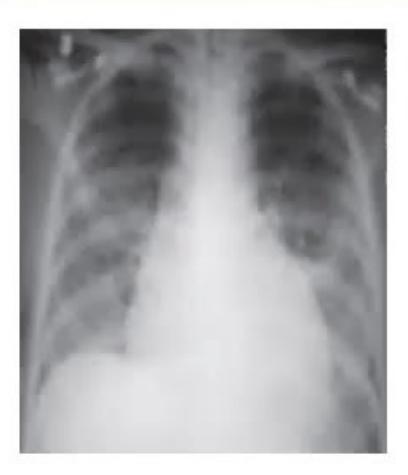
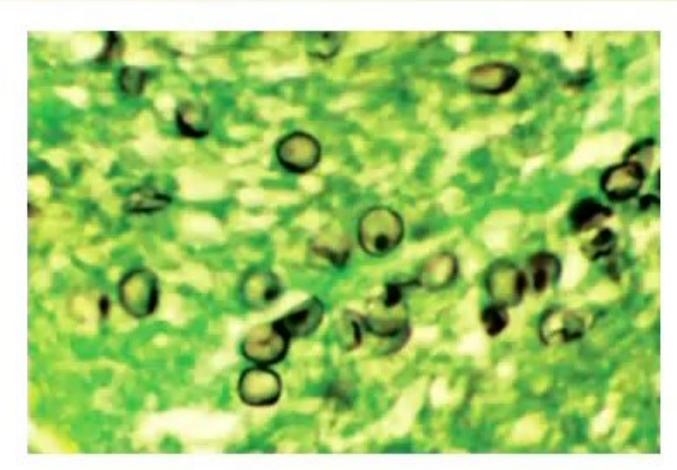
- What immunological defect is likely?
- Whats critical serum level to make diagnosis of?
- Discontinuation of which drug leads to this deficiency?
- True/ False:
a. IVIG admumstration is not useful as treatment.
b. These patient have Ab against cow milk
c. This defeciency may evolve in CVID - How will you treat the same?
- What 1s common GI orgarusm associated with this defect?
- Identify the organism.
- Whats the likely diagnosis.
- Mention the 4 molecular defects identified.
Answer
No model answer in source material.
MNJ18-003
Adysmorphic newborn with receding chin was admitted with hypocalcemic seizures, a CCF with cardiac murmur and bifid uvula. X-ray revealed absent thymus:
- Identify the syndrome.
- Identify the defective embryologic stage.
- Which chromosome is involve?
- What 1s treatment?
Answer
No model answer in source material.
MNJ18-004
A 4-month-old infant exclusively breastfed presented with severe illness. He had severe oral thrush, perianal dermatitis and fever. He was diagnosed to have Klebsiella septicemia. During course of admission he developed brain abscesses. He was transfused platelets for treatment of DIC. He later developed skin rash and bloody diarrhea and elevated liver enzymes. Patient succumbed to fungal meningitis. Lymph nodes/tonsils were absent. On admission his Hb: 9 gm%, WBC: 2400, P: 85, L: 10, M: 2, E: 3, CXR: absent thymus:
- Identify the phenotype.
- What care 1s needed 1n transfusing these infants?
- How are they cured?
- What advice you will give to parents about vaccination?
Answer
No model answer in source material.
MNJ18-005
An 8 year female had difficulty in walking, had 5 episodes of sinusitis, and 2 episodes of pneumonias, skin and eyes showed abnormal vessels:
- 4, What are 5 systems involve m this disease?
- Whats the likely diagnosis?
- Whats the genetic defect?
- Which immunoglobulin level will you find low?
Answer
No model answer in source material.
MNJ18-006
A 6 months male had skin lesions and gum bleeds, WBC: 9500, P: 40, L: 45, E: 15, Plt: 56000/u1. MPV: 4.5 fl, child also have history of bloody diarrhea patient face and PBF is given below:
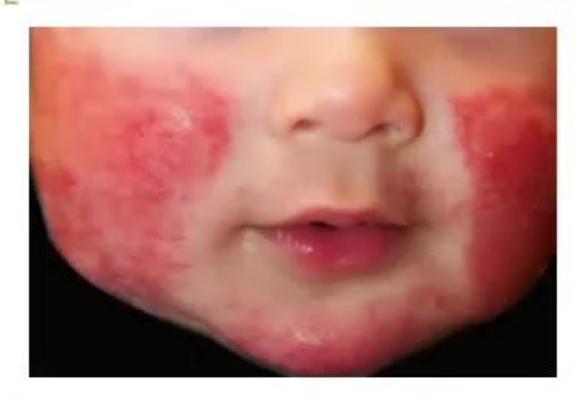
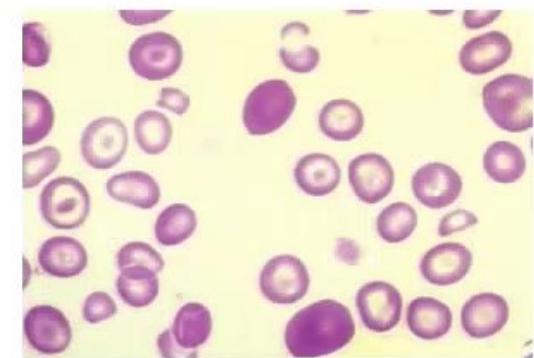
- What diagnosis will you suspect?
- Whats serum Ig level?
- How will you treat the patient?
Answer
No model answer in source material.
MNJ18-007
A 3 months male referred for fever, umbilical sepsis and persistently elevated WBC counts (WBC: 75000, P: 92, L: 6, M: 2), not responding to therapy, child has history of delayed umbilical cord detachment.
- Which immunodeficiency will you suspect?
- How will you prove the same?
- What 1s the definitive therapy?
Answer
No model answer in source material.
MNJ18-008
A fair appearing child that was mentally retarded, was brought with infections recurrent fevers, otitis media, gingivitis, and septicemia. His peripheral smear lead to diagnosis of the condition. Skin biopsy showed giant melanosomes:
Courtesy: Dr Pravesh Vyas
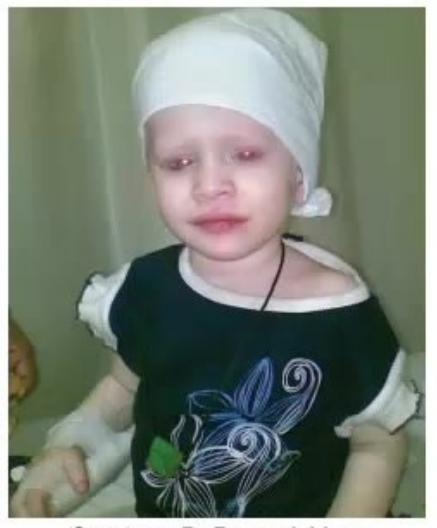
- Name the disorder.
- Name the genetic defect
Answer
No model answer in source material.
MNJ18-009
A 6-year-old boy is evaluated for recurrent pneumonia and osteomyelitis of multiple sites. On examination, he had anemia, malnutrition and cervical lymphadenitis. He also had folliculitis and multiple cutaneous granulomas:
- What 1s the possible diagnosis?
- Whats the closest differential diagnosis?
- What are the gastrointestinal complications of this condition?
- What is the recent diagnostic test for this condition?
- Name 3 drugs used in the management.
Answer
No model answer in source material.
MNJ18-010
A 2-year-old with episodes of otitis media, eczematous dermatitis and thrombocytopenia. Bloody stool:
- What is diagnosis of this condition and what is size of megakaryocyte in this?
- What is the inheritance pattern?
- What are the common organisms causing infection in this condition?
Answer
No model answer in source material.
MNJ18-011
A 2 years child presents with the following:
- · 5 episodes of abscesses in 6 months
- · Photosensitivity
- · Light skin and silvery hair
- · Peripheral smear shows large inclusions in all nucleated blood cells
- What is the diagnosis?
- What is the cause for the lighten hair?
- What is the mode of inheritance?
- Name one life-threatening hematological complications.
- What is the neurological manifestation?
- Which drug is indicated?
Answer
No model answer in source material.
MNJ18-012
-
2-year-old with recurrent cutaneous and/or systemic staphylococcal abscesses, coarse facial features.
-
Mention screening tests B cell deficiency.
- 6-month-old boy with bloody stools, draining ears, eczema and normal IgA
- Oculocutaneous albinism and primary immunodeficiency
- Failure to thrive, protracted diarrhea, extensive mucocutaneous candidiasis What cell line is likely to be compromised?
- Absolute lymphocyte count on screening for immunodeficiency rules out which cell line defect?
- What is the first screening test for complement deficiency?
- What is the inheritance pattern of Bruton syndrome (agammaglobulinemia)?
- What is the difference between allogeneic and autologous hematopoietic stem cells?
- Mention two fungal and two viral infections common in post stem cell transplant.
Answer
No model answer in source material.
MNJ18-013
- Write (any two) screening tests for B cell primary immunodeficiency.
- Write screening tests for complement deficiency
- Give (any 4) indications for hematopoietic stem cell transplant in treatment of congenital disease.
Answer
No model answer in source material.
MNJ18-014
A 14-month-old male child presents with fever with AFP following polio vaccine, CSF was done to rule out possibility of GBS but report show positive enterovirus from CSF. On physical examination, there is absence of tonsil and no palpable lymph node:
ANSWERS
-
Ans. 1. 1. Common variable immunodeficiency
- ** IgA deficiency occur commonly in pedigrees having CVID
-
- IVIg therapy, septran prophylaxis
-
- AD
- 438 time increase risk of lymphoma in future (see Nelson for all explanation)
-
Ans. 2. 1. Selective IgA deficiency
-
- <10 mg/dl
-
- Phenytoin
-
- T, T, T
-
- Avoid blood products, use product that has been depleted of IgA
-
- Giardia
-
-
Ans. 3. 1. Pneumocystis carinii pneumonia
-
- Hyper IgM syndrome
- Caused by mutations in CD40 ligand and NEMO genes (X-chromosome) or AID gene on chromosome 12 and CD40 gene on chromosome 20
-
-
Ans. 4. 1. DiGeorge syndrome
-
- Dysmorphogenesis of the 3rd and 4th pharyngeal pouches
-
- Chromosome 22
-
- Thymic tissue transplant, HLA matched BMT
-
-
Ans. 5. 1. SCID
-
- To give irradiated blood
-
- Bone marrow transplant-immunologic reconstitution
-
- No vaccination
-
-
Ans. 6. 1. Ataxia-telangiectasia
-
- ATM gene defect at long arm of chromosome 11
-
- IgA level is low
-
- Immune system, CNS, endocrine, hepatic, cutaneous
-
-
Ans. 7. 1. Wiskott-Aldrich syndrome
-
- Low level of IgM, high level of IgA, IgE
- Long-term administration of therapeutic doses of a penicillinase-resistant antistaphylococcal antibiotic, intravenous immunoglobulin (IVIg) in antibody-deficient patients, surgery for superinfected pneumatoceles or those persisting beyond 6 months. Bone marrow transplant
-
-
Ans. 8. 1. Leucocyte adhesion defect
-
- CD11c, CD18 estimation, Rebuck's skin window test
-
- Bone marrow transplantation
-
-
Ans. 9. 1. Chédiak-Higashi syndrome
-
- Mutations in the lysosomal trafficking regulator (LYST) gene on chromosome 1
-
-
Ans. 10.1. Chronic granulomatous disease.
- G6PD deficiency.
- Pyloric outlet obstruction, rectal fistulae and granulomatous colitis simulating Crohn's disease.
-
. Flow cytometry using dihydrorhodamine 123 (DHR) to measure oxidant production.
-
. Drugs used in management:
- * Daily trimethoprim—sulfamethoxazole and itraconazole for prophylaxis of bacterial and fungal infections.
- * Corticosteroids—for treatment of antral obstruction or severe granulomas.
- * Interferon ~—reduces number of serious infections.
-
Ans. 11. Wiskott-Aldrich syndrome—normal megakaryocyte but small platelet.
- X-linked recessive disorder
- Streptococcus pneumoniae, capsulated organism P. carinii and herpes viruses.
-
Ans. 12. Chédiak-Higashi syndrome
- Melanosomes or melanocytes are oversized. Failure to properly disperse the giant melanosomes to keratinocytes and hair follicles.
- Autosomal recessive
- Accelerated phase of a lymphoma-like syndrome characterized by pancytopema.
- Peripheral neuropathy and ataxia motor sensory
- St ee High-dose ascorbic acid 200 mg /24 hrs for infants 2,000 mg /24 hrs for adults (2 g)
Ans. 13. Wiskott-Aldrich syndrome
-
Hyper-IgE syndrome
-
Oculocutaneous albinism, Chédiak-Higashi syndrome
-
Failure to thrive, protracted diarrhea, extensive mucocutaneous candidiasis. Predominant T cell defect bacteria' Mycobacteria
-
Absolute lymphocyte count (normal result rules against T cell defect
-
Screening test for complement deficiency CH50
-
Screening tests B cell deficiency IgA measurement; if abnormal, IgG and IgM measurement, isoagglutinin titers, antibody response to vaccine antigens (e.g. tetanus, diphtheria, rubeola, Haemophilus influenzae)
-
. Inheritance of Bruton syndrome (agammaglobulinemia) X linked.
-
. Allogeneic (other perosn) or autologous (from the same individual) hematopoietic stem cells
-
Ans. 14.1. IgA measurement; if abnormal, IgG and IgM measurement Isohemagglutinins
Antibody titers to tetanus, diphthena, Haemophilus influenzae, and pneumococcus
-
* CH50
-
* Thalassemia major * Sickle cell
- * Diamond-Blackfan * Fanconi anemia
-
* SCID * Hyper-lgM
-
X-linked agammaglobulinemia (Bruton tyrosine kinase defeciency)
- . X-linked
- . Bell absence in flow cytometry

- What is possible diagnosis?
- What is inheritance?
- What will you found in flow cytometry?
- IVIg therapy, septran prophylaxis
- AD
- time increase risk of lymphoma in future (see Nelson for all explanation)
- <10 mg/dl
- Phenytoin
- T, T, T
- Avoid blood products, use product that has been depleted of IgA
- Giardia
- Hyper IgM syndrome
- Dysmorphogenesis of the 3rd and 4th pharyngeal pouches
- Chromosome 22
- Thymic tissue transplant, HLA matched BMT
- To give irradiated blood
- Bone marrow transplant-immunologic reconstitution
- No vaccination
- ATM gene defect at long arm of chromosome 11
- IgA level is low
- Immune system, CNS, endocrine, hepatic, cutaneous
- Low level of IgM, high level of IgA, IgE
- CD11c, CD18 estimation, Rebuck's skin window test
- Bone marrow transplantation
- Mutations in the lysosomal trafficking regulator (LYST) gene on chromosome 1
- Candida/aspergillosis and CMV /EBV are two fungal and viral infections post stem cell transplant.
Answer
No model answer in source material.