THG39-001
Match the following:
a. Lactoferrin |
b. Bile salt-stimulated lipase (BSSL) |
c. Para-aminobenzoic acid (PABA) |
d. Peroxidases |
Answer
| Escherichia coli | |||
| a. | Lactoferrin | ||
| Amoeba, Giardia | |||
| b. | BSSL | ||
| Malaria | |||
| c. | PABA | ||
| Bacteria | |||
| d. | Peroxidases | ||
THG39-002
True or False
a. Phosphorous calcium ratio of breast milk is >2.
b. Human milk contains whey protein (80%) and casein (20%).
c. Alpha casein and lactoglobulin are present in human milk.
d. Human milk can be stored in room temperature for 8 hours.
e. Thawed breast milk can be used up to 36 hours.
Answer
| a. | False |
| b. | False |
| c. | False |
| d. | False |
| e. | False |
Other points to know:
| ■ | Lactalbumin—rich in tryptophan, neurotransmitter |
| ■ | Lactoferrin—absorption of iron and zinc, bacteriostatic |
| ■ | Comparison of cow’s milk and human milk |
| ■ | Bifidus factor—promotes growth of lactobacilli |
| ■ | Amino acids—specific for brain development |
THG39-003
Q39.3
a. What is IMS Act?
b. When was it passed?
c. Enumerate the five important points.
Answer
| a. | Infant Milk Substitutes Act |
| b. | 1992 |
| c. | Five points are: |
| i. | No person shall use healthcare system or placards or posters— promotion of use or sale of infant milk substitutes |
| ii. | No means of advertisements of infant food or formula |
| iii. | No display of artificial infant feeing products in healthcare facilities/no free samples |
| iv. | Company marketing personnel, no matter what should not have direct contact with mothers |
| v. | Only parents who need to give artificial feeds should be instructed—to be provided by healthcare personnel (HCP). It should include details on the superiority of breast milk and hazards of artificial feed. |
THG39-004
Q39.4
a. Heartbeat |
b. Circulation |
c. Meconium |
d. Surfactant |
e. Fetal movement |
f. External genitalia |
g. Early sucking |
h. Bile secretion |
i. Phonation |
j. Respiration |
Answer
| Fetal growth events | | | |
| | | | 4 weeks |
| a. | Heartbeat | |
| | | |
| | | | 8 weeks |
| b. | Circulation | |
| | | |
| | | | 16 weeks |
| c. | Meconium | |
| | | |
| | | | 20 weeks |
| d. | Surfactant | |
| | | |
| | | | 14 weeks |
| e. | Fetal movement | |
| | | |
| | | | 10-12 weeks |
| f. | External genitalia | |
| | | |
| | | | 28 weeks |
| g. | Early sucking | |
| | | |
| | | | 12 weeks |
| h. | Bile secretion | |
| | | |
| | | | 22 weeks |
| i. | Phonation | |
| | | |
| | | | 18 weeks |
| j. | Respiration | |
| | | |
THG39-005
A 7-year-old girl was brought to the outpatient department for concerns of overweight. Her height is 100 cm and weight is 40 kg.
a. What is the formula to calculate body mass index (BMI)?
b. What is the interpretation of the BMI of the index child?
c. What are the other measurements which are used as an indicator for obesity/adiposity?
d. How will be the bone age in (i) constitutional obesity and (ii) pathological obesity?
e. Name four syndromes associated with pathological obesity (0.25 × 4 = 1).
Answer
| a. | Body mass index: Weight (kg)/Height (m2) |
| b. | Obese |
| c. | Weight/height, skinfold thickness, and waist circumference |
| d. | (i) Constitutional—advanced and (ii) Pathological—retarded |
| e. | Prader–Willi, Laurence–Moon-Biedl–Bardet, Beckwith–Wiedemann, Cushing’s |
Other points:
| ■ | Know about anthropometry |
| ■ | Age independent anthropometric indicators—Bangle test, Shakir’s tape, Quac stick, modified Quac stick, BMI, Quetelet index, and Nabarro thinness chart |
| ■ | Classification of malnutrition |
THG39-006
| 0 | | | | Calorie | Protein |
| | | | | | |
| 1. | Apple | |
| | | |
| | | | | | |
| 2. | Ragi 100 g | |
| | | |
| | | | | | |
| 3. | Groundnut 100 g | |
| | | |
| | | | | | |
| 4. | Two good day biscuits | |
| | | |
| | | | | | |
| 5. | Sugar 3 tsp | |
| | | |
| | | | | | |
| 6. | Boiled egg | |
| | | |
| | | | | | |
| 7. | Egg flip | |
| | | |
| | | | | | |
| 8. | Vada 2 numbers | |
| | | |
| | | | | | |
| 9. | SAT mix | |
| | | |
| | | | | | |
| | 10. | Chapati | |
| | | | |
Answer
| 0 | | | | Calorie | Protein |
| | | | | 59 | 0.2 |
| 1. | Apple 100 g | |
| | | |
| | | | | 320 | 7.2 |
| 2. | Ragi 100 g | |
| | | |
| | | | | 560 | 25 |
| 3. | Groundnut 100 g | |
| | | |
| | | | | 40 | 1 |
| 4. | Two biscuits | |
| | | |
| | | | | 60 | - |
| 5. | Sugar 3 tsp | |
| | | |
| | | | | 80 | 6 |
| 6. | Boiled egg | |
| | | |
| | | | | 200 | 10 |
| 7. | Egg flip | |
| | | |
| | | | | 100 | 2 |
| 8. | Vada 2 numbers | |
| | | |
| | | | | 125 | 2.5 |
| 9. | SAT mix 6 tsp | |
| | | |
| | | | | 70 | 2 |
| | 10. | Chappati (1) | |
| | | | |
THG39-007
Q39.7
a. Enumerate the eye manifestations of vitamin A deficiency.
b. What is the daily requirement?
c. What is the treatment in case of deficiency?
d. What is the first symptom?
e. What is the treatment of Xerophthalmia?
Answer
| a. | Stages: |
| X1A | Xerosis conjunctiva |
| X1B | Bitot’s spots |
| X2 | Xerosis cornea |
| X3A | Corneal ulceration |
| X3B | Keratomalacia |
| XN | Night blindness |
| XS | Corneal scarring |
| XF | Fundoscopic changes |
| b. | Daily requirement—1,500 IU (500 mg) |
c. • <1 year—100,000 IU and >1 year—200,000 IU
| • | Immediately, next day, after 2–4 weeks |
| • | In severe protein energy malnutrition (PEM), repeat monthly till PEM resolves |
| d. | First symptom—delayed dark adaptation |
| e. | Xerophthalmia is treated by giving 1500 mg/kg vitamin A orally for 5 days followed by intramuscular injection of 7500 mg of vitamin A in oil, until recovery. |
THG39-008
A 1-year-old child was brought by mother with deformity in both lower limbs (shown in below image). Investigations showed serum calcium—9 mg/dL, serum phosphorous—2 mg/dL, alkaline phosphatase—500 µ/L, and 25-hydroxy vitamin D—8 IU/L.
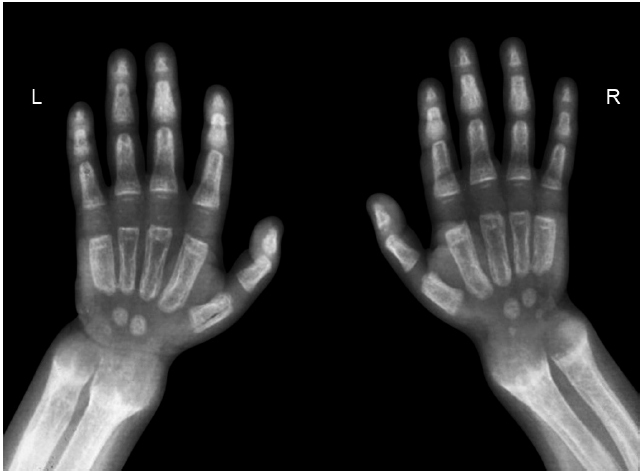
a. What is the diagnosis?
b. What are the radiological features?
c. How to treat?
d. If the child has alopecia, what will you suspect?
e. What is your management in that case?
Answer
| a. | Vitamin D deficiency rickets |
| b. | Cupping, fraying, widening of distal end of metaphysis, rachitic rosary, coarse trabeculation of diaphysis, and generalized rarefaction |
| c. | 60,000 IU fortnightly (after every 2 weeks) for 5 doses with oral calcium supplementation. |
| d. | Vitamin D-dependent rickets type 2 |
| e. | Treatment: High-dose vitamin D and calcium |
| Initial dose of 1,25 D should be 2 µg/day, some patients require as high as 50–60 µg/day | |
| Calcium doses are 1,000–3,000 mg/day |
Other points to know:
| ■ | Vitamin D metabolism |
| ■ | Know about deficiency, insufficiency, and sufficiency |
| ■ | What is level of vitamin D toxicity? |
| ■ | Relation between calcium and vitamin D—1 g% reduction in serum albumin will reduce serum calcium by 0.8 mg% |
| ■ | Stoss therapy—600,000 IU oral or IM |
| ■ | Know about Chvostek, Trousseau, and Erb signs |
THG39-009
Identify the deficient vitamins.
a. An obese adolescent underwent bariatric surgery and subsequently developed triad of ophthalmoplegia, mental changes, and ataxia
b. Individual with visual field defects/hyporeflexia and ataxia/strabismus/muscle weakness
c. Tetrad of dermatitis/alopecia/neurological defects/conjunctivitis
d. Burning feet syndrome
e. Diarrhea/dermatitis/dementia
Answer
| a. | Thiamine |
| b. | Vitamin E |
| c. | Biotin/vitamin H |
| d. | Vitamin B5/Pantothenic acid |
| e. | Niacin |
THG39-010
Q39.10
a. Expand MAA.
b. What is the goal?
c. What are the objectives?
d. What are the key components of the program?
Answer
| a. | Mothers’ absolute affection |
| b. | Promotion, protection, and support of breastfeeding through healthcare system to achieve higher rates |
| c. | Build an enabling environment for breastfeeding, reinforce lactation support, and incentives for health systems that attain higher rates of breastfeeding |
| d. | Communication, training of nurses, ANM, and ASHA |
THG39-011
Q39.11
a. Expand RBSK.
b. What is the age group covered?
c. What is the objective?
d. It is under the care of which ministry?
e. Enumerate the four D’s?
Answer
| a. | Rashtriya Bal Swasthya Karyakram |
| b. | Birth to 18 years |
| c. | Early identification and early intervention for children from birth to 18 years to cover 4 D’s—Defects at birth, Diseases in children, Deficiency conditions, Developmental delays including disability |
| d. | Ministry of Health and Family Welfare |
e.
| Defects at birth | | | Deficiencies | | |
| | | | | | |
| • | Neural tube defect | | • | Anemia, especially severe | |
| • | Down syndrome | | • | Vitamin A deficiency (Bitot’s spots) | |
| • | Cleft lip and palate/cleft palate alone | | • | Vitamin D deficiency (rickets) | |
| • | Talipes (club foot) | | • | Severe acute malnutrition | |
| • | Developmental dysplasia of the hip | | • | Goiter | |
| • | Congenital cataract | | | | |
| • | Congenital deafness | |
| • | Congenital heart diseases | |
| • | Retinopathy of prematurity | |
| | | |
| Diseases in childhood | | | Developmental delays and disabilities | | |
| | | | | | |
| • | Skin conditions (scabies, fungal infection, and eczema) | | • | Vision impairment | |
| • | Otitis media | | • | Hearing impairment | |
| • | Rheumatic heart disease | | • | Neuromotor impairment | |
| • | Reactive airway disease | | • | Motor delay | |
| • | Dental conditions | | • | Cognitive delay | |
| | | | • | Language delay | |
| | | |
THG39-012
Ayushman Bharat Yojana
a. When and by whom was it launched?
b. What are the two components?
c. It is a part of which policy?
d. What are health and wellness centers?
e. What are the benefits of Pradhan Mantri Jan Arogya Yojana (PM-JAY)?
Answer
| a. | Prime Minister Narendra Modi, 2018 |
| b. | Establishment of Health and Wellness Centers, Pradhan Mantri Jan Arogya Yojana |
| c. | National Health Policy, 2017 |
| d. | To produce comprehensive primary health care including maternal and child health services, noncommunicable disease, free essential drugs, and diagnostic services |
| e. | Health benefits to poor, vulnerable families. Cashless benefits, free treatment at public and private hospitals at times of need |
THG39-013
Q39.13
a. What is supplementary suckling technique?
b. What is the indication?
c. Explain the procedure.
Answer
| a. | It is a technique used to initiate relactation in mothers who have developed lactation failure |
| b. | A nasogastric tube (NGT) 8 size (5 size NGT can be used but the milk should be strained to remove the small particles that block the tube). The appropriate amount of supplemental suckling milk is put in the cup. The mother or assistant holds it. |
| c. | The end of the tube is put in the cup. The tip of the tube is plastered over the breast at the nipple and the infant is offered the breast in the normal way so that the infant attaches properly. |
At first, the cup should be placed about 5–10 cm below the level of nipples so the SS milk can be taken with little effort by a weak infant. It must never be placed above the level of nipple, as it may flow quickly into the infant’s mouth and cause risk of inhalation.
THG39-014
Q39.14
a. Expand LATCH score.
b. What is it used for.
c. How will you score it?
Answer
| a. | “L” is for the infant’s ability to latch onto the breast. “A” is for the presence of audible swallowing of the infant at the breast. “T” is for the mother’s nipple type. “C” is for the mother’s sense of comfort. “H” is for holding, or the breastfeeding position used by the mother, and the amount of help the mother requires in holding the infant. |
| b. | It provides an assessment of the breastfeeding and to identify the areas that require intervention and serves as a communication tool among caregivers |
| c. | A score of 0–2 for each assessment, minimum—0 and maximum—10 |
THG39-015
Expand
a. CLMC
b. LMU
c. DC
d. RDA
e. SDA
f. EAR
g. NPU
h. BV
i. DRI
j. JUNCS
Answer
| a. | CLMC: Comprehensive Lactation Management Centre |
| b. | LMU: Lactation Management Units |
| c. | DC: Digestibility coefficient |
| d. | RDA: Recommended dietary allowance |
| e. | SDA: Specific dynamic action |
| f. | EAR: Estimated Average Requirement |
| g. | NPU: Net protein utilization |
| h. | BV: Biological value |
| i. | DRI: Dietary reference intake |
| j. | JUNCS: J—junk foods (foods high in fats, especially saturated and trans fats, sugars and salts, and foods lacking in micronutrients/minerals); U: Ultra-processed foods (as defined in the fourth category of NOVA classification); N: Nutritionally inappropriate foods. Homemade foods can also qualify to be nutritionally inappropriate if prepared in recycled oil, or contain high amount of sugar, fat, or salt; C: Caffeinated/colored/carbonated beverages; S: Sugar-sweetened beverages. |
Recommended dietary allowance (RDA): Average daily intake of a nutrient sufficient to meet the requirement of nearly all healthy in a particular stage or gender
Specific dynamic action (SDA)/Thermic effect of food (TEF): Energy used for digestion
Estimated average requirement (EAR): Average daily intake of a nutrient sufficient to meet the requirement of half of healthy individuals in a particular stage or gender
Net protein utilization (NPU): Amount of retained nitrogen compared to nitrogen present in food
Biological value (BV): Amount of retained nitrogen compared to absorbed nitrogen
Protein efficiency ratio (PER): Gain in the weight of experimental animal per unit weight of protein consumed
THG39-016
A 3-year-old child was presented with irritability, refusal to walk, and limp. There was no fever or trauma. There was tenderness and restriction of movement of knees with no effusion. She is picky eater who used to refuse common food items. The initial investigations of complete blood count (CBC), C-reactive protein (CRP), erythrocyte sedimentation rate (ESR), and peripheral smear study normal. X-ray showed periosteal detachment of upper ends of both tibias.
a. What is the unusual, but treatable diagnosis, one can suspect?
b. What are the radiological features?
c. What are the risk factors for this condition?
d. What is the treatment?
Answer
| a. | Scurvy |
| b. | Pencil outline of diaphysis and epiphysis, white line of Frenkel |
| • | Epiphyseal ossification centers—ground glass appearance with surrounding sclerotic ring |
| • | Trummerfeld zone—zone of rarefaction under the white line at metaphysis |
| • | Pelkan spur |
| • | Subperiosteal hemorrhages |
| c. | Children on heat-treated milk or unfortified formulas, not receiving fruits or vegetables, total parenteral nutrition (TPN) |
| d. | Vitamin C supplements: 100–200 mg/day orally for a period of 4–6 weeks or still the symptoms resolve. Treatment may need to be continued upto 3 months. |
THG39-017
Q39.17
a. What are probiotics?
b. What are prebiotics?
c. What are synbiotics?
d. What are type I and type II nutrients? Enumerate with examples.
Answer
| a. | Nutritional supplements containing one or more cultures of living organisms (typically bacteria or yeast) that when introduced into a human or animal have beneficial impact by improving the endogenous microflora, e.g., Lactobacillus GG and Bifidobacterium lactis |
| b. | Foods that promote the growth of probiotic stains of bacteria—lactulose, lactitol, and inulin. They are neither hydrolyzed or absorbed from the GI tract and are usually fermented by the beneficial bacteria in the colon. |
| c. | Synbiotics are mixture of probiotics and prebiotics as one concoction. Prebiotic + probiotic—lactobacilli with lactitol, Bifidobacterium with fructooligosaccharides (FOS) |
| d. | Type I | Type II |
|---|---|---|
| Has body store | Little or no store | |
| Reduces in concentration in deficiency | Stable concentration | |
| Specific signs of deficiency | No | |
| Growth failure not a feature | Predominant feature | |
| Variable in breast milk | Stable | |
| Iron, iodine, and copper | N2, essential amino acid (AA), K, and Mg |
THG39-018
Calculate fluid requirement of 28 weeks baby with weight of 1.8 kg, who is diagnosed with duodenal atresia and planned for surgery. Start the baby on antibiotics preoperatively.
Answer
| ■ | Fluids: 60 mL/kg/day = 60 × 1.8 = 108 mL |
| ■ | Smoff 20% = 2 g/kg/day = 3.6 g/day = 3.6/20 × 100 = 18 mL/day = 0.75 mL/hour |
| ■ | Net IVF = 108 mL − 18 mL (Smoff) – 5 mL (antibiotics, to be considered if the baby is on any IV antibiotic) = 85 mL |
| ■ | Aminoven (10%) = 1.5 g/kg/day = 2.7 g/day = 2.7/10 × 100 = 27 mL |
| ■ | 10% D = 85–27 mL = 58 mL |
| ■ | Aminoven + 10 D @ 3.5 mL/hour |
| ■ | GIR = mL/kg/day × %d/144 = 4 mg/kg/min |
| ■ | Final TPN order |
| ■ | Smoff 20% @ 0.75 mL/hour |
| ■ | Dextrose + Aminoven @ 3.5 mL/hour |
Other points:
| ■ | Indications of parenteral nutrition <1500 g, <31 weeks gestation, critical illness or surgery where feeds may not be started for upto 3–5 days |
| ■ | Schedule for monitoring while on parenteral nutrition: |
| Levels | 0 |
|---|---|
| Electrolytes | Daily till stable |
| Triglyceride (TGL) | During initiation and/or advancement for low gestational age infants receiving lipids |
| Ca, PO4, and ALK PO4 | After 14 days of initiation and as clinically indicated |
| Alanine aminotransferase (ALT) and direct bilirubin | After 14 days of initiation and as clinically indicated |
Complications associated with parenteral nutrition (PN):
| • | Cholestasis |
| • | Metabolic bone disease |
| • | Metabolic abnormalities—azotemia, hyperammonemia, and hyperchloremic metabolic acidosis |
• Hyperlipidemia/hypertriglyceridemia
| • | Indirect hyperbilirubinemia |
| • | Sepsis |
THG39-019
A 2-year-old toddler girl was brought with fever and difficulty in breathing. On examination, child was lethargic, respiratory rate (RR)—52 breaths/min, intercostal retracrtions+, subcostal retractions+, heart rate (HR)—146 beats/min, febrile, bilateral (B/L) air entry + with B/L wheeze. Classify according to Integrated Management of Childhood Illness (IMNCI).
a. What are the general danger signs?
b. How will you treat?
c. If the same child is not lethargic, is able to drink, and has no vomiting, what is the grade?
d. How will you treat now?
Answer
| a. | Very severe disease/pink |
| b. | General danger signs: |
| • | ASK: Is the child able to drink or breastfeed? Has the child had vomiting? Is the child having convulsions? |
| • | LOOK: See if the child is lethargic or unconscious or having convulsions now. |
| c. | Complete assessment immediately |
| • | Give first dose of antibiotic and treat wheezing |
| • | Treat to prevent low blood sugar |
| • | Refer urgently to hospital |
| d. | Pneumonia/yellow |
THG39-020
Anemia Mukt Bharat
a. What is the objective?
b. What are the six interventions?
c. Who are the target group and dose of iron and folic acid (IFA) prophylaxis?
d. Discuss the deworming.
Answer
| a. | To reduce anemia by 3% per year among children, adolescents, and women in the reproductive age group (15–49 years between the year 2018 and 2022) |
| b. | Interventions: |
| • | Prophylactic iron and folic acid supplementation |
| • | Deworming |
| • | Intensified year-round behavioral change communication |
| • | Testing of anemia using digital methods and point-of-care (POC) treatment |
| • | Mandatory provision of iron and folic acid in fortified foods in health programs |
| • | Addressing non-nutritional causes of anemia in endemic pockets—malaria and hemoglobinopathies |
| c. | Age group | | | 0 |
| | 6-59 months | | | Biweekly 20 mg of elemental iron and 100 ng of folic acid |
| | 5-9 years | | | Weekly 45 mg of elemental iron and 400 ng of folic acid, sugar coated, pink color |
| | | | | Each tablet containing 60 mg elemental iron + 500 ng of folic acid, sugar coated, blue color |
| • | School going adolescent girls and boys (10-19 years) | |
| • | Out of school adolescents (10-19 years) | |
| | | |
| | Women of reproductive age group, nonpregnant, nonlactating (20-49 years) | | | Each tablet containing 60 mg elemental iron + 500 ng of folic acid, sugar coated, red color |
| | Pregnant and lactating mothers (0-6 months old) | | | Daily 60 mg of elemental iron + 500 ng of folic acid, sugar coated, red color |
| d. | Age group | | | 0 |
| | 6-59 months | | | Biannual dose of 400 mg albendazole (1/2 tablet to children 12-24 months and 1 tablet to children 24-59 months) |
| | 5-9 years | | | Biannual dose of 400 mg albendazole 1 tablet |
| | | | | Biannual dose of 400 mg albendazole 1 tablet |
| • | School going adolescent girls and boys (10-19 years) | |
| • | Out of school adolescents (10-19 years) | |
| | | |
| | Women of reproductive age group, nonpregnant, nonlactating (20-49 years) | | | Biannual dose of 400 mg albendazole 1 tablet |
| | Pregnant and lactating mothers (0-6 months old) | | | One dose of albendazole 400 mg 1 tablet, after the first trimester, preferably during the second trimester |
THG39-021
Q39.21
a. Expand JSSK
b. It was formed by which ministry?
c. What is the main objective?
d. What are the interventions?
Answer
| a. | Janani Shishu Suraksha Karyakram |
| b. | Ministry of Health and Family Welfare |
| c. | To benefit pregnant women who access government facilities for their delivery |
| d. | Free and cashless delivery, free C-section, free drug consumables, free diagnostics, free diet, free provision of blood, free transport, and free drop back |
THG39-022
Q39.22
a. What is appetite test?
b. How should it be done?
c. What is the amount of therapeutic feed that a child with severe acute malnutrition (SAM) should take to pass the test?
d. What is the result?
Answer
| a. | Appetite test is an important criterion to differentiate a complicated from an uncomplicated SAM and decide on need for inpatient or outpatient management |
| b. | The appetite test should be conducted in a separate quiet area. |
| • | Explain to the mother/caregiver the purpose of the appetite test and how it will be carried out? |
| • | The mother/caregiver, where possible, should wash her/his hands. |
| • | The mother/caregiver should sit comfortably with the child on her/his lap and either offer the ready-to-use therapeutic food (RUTF) from the packet or put a small amount on her/his finger and give it to the child. |
| • | The mother/caregiver should offer the child the RUTF gently, encouraging the child all the time. If the child refuses, then the mother/caregiver should continue to quietly encourage the child and take time over the test. The test usually takes a short time but may take up to 1 hour. The child must not be forced to take the RUTF. |
| • | The child needs to be offered plenty of water to drink from a cup as he/she is taking the RUTF. |
| c. | Body weight (kg) | Minimum amount of RUTF to be consumed for passing the appetite test (mL or g) |
|---|---|---|
| >4 | 15 | |
| 4-6.9 | 25 | |
| 7-9.9 | 35 | |
| 10-14.9 | 50 |
| d. | A child, not consuming the minimum recommended amount of RUTF, is labeled as failed “appetite test” and is referred for inpatient care. |
THG39-023
Q39.23
a. What is food fortification?
b. What is food supplementation?
c. What are the advantages of fortification over supplementation?
d. What are the criteria for selection of food vehicle?
e. What is Ultra Rice?
Answer
| a. | It is a process where nutrients are added to foods in small quantities to maintain or improve the quality of diet of group/community/population |
| b. | Measure to correct or prevent nutritional deficiency or restore the nutrients lost during processing |
| c. | No change in dietary pattern of population, no need for individual compliance, multiple micronutrients can be given in a continuous basis as per RDA, can be included in existing food production and distribution system |
| d. | Should be consumed in high proportion by population, locally available foods, unrelated to social or economic status, low potential for excessive intake, and no change in consumers acceptability |
| e. | Name given for reconstituted vitamin A or iron fortified rice with 11.4 g of vitamin A palmitate blended with unfortified rice in ratio of 1:100 or 1:200 to provide appropriate dietary level of micronutrients. |
THG39-024
Q39.24
a. What is Poshan Abhiyaan?
b. What is the objective?
c. What are all the programs covered?
Answer
| a. | POSHAN Abhiyaan is an overarching umbrella scheme. It aims to improve the nutritional outcomes for children, pregnant women, and lactating mothers by holistically addressing the multiple determinants of malnutrition and attempts to prioritize the efforts of all stakeholders on a comprehensive package of intervention and services targeted on the first 1,000 days of a child’s life. |
| b. | The objective is to ensure access to quality services across the continuum of care to every woman and child; particularly during the first 1,000 days of the child’s life. |
| c. | ICDS, PMMVY, NHM (with its subcomponents, such as JSY, MCP card, Anemia Mukt Bharat, RBSK, IDCF, HBNC, HBYC, Take Home Rations), Swachh Bharat Mission, National Drinking Water Mission, and NRLM. |
THG39-025
Rashtriya Kishor Swasthya Karyakram
a. When was it launched?
b. What is the vision?
c. What is the target age group?
d. What are the objectives?
Answer
| a. | 7th January 2014 |
| b. | The strategy envisions that all adolescents in India can realize their full potential by making informed and responsible decisions related to their health and well-being by accessing the services and support they need to do so. |
| c. | Target group: 10–14 years and 15–19 years |
| d. | Objectives: |
| i. | Improve nutrition: |
| ◆ | Reduce the prevalence of malnutrition among adolescent girls and boys |
| ◆ | Reduce the prevalence of iron-deficiency anemia (IDA) among adolescent girls and boys |
| ii. | Improve sexual and reproductive health (SRH): |
| ◆ | Improve knowledge, attitudes, and behavior, in relation to SRH |
| ◆ | Reduce teenage pregnancies |
| ◆ | Improve birth preparedness, complication readiness, and provide early parenting support for adolescent parents |
| iii. | Enhance mental health: Address mental health concerns of adolescents |
| iv. | Prevent injuries and violence: Promote favorable attitudes for preventing injuries and violence [including gender-based violence (GBV)] among adolescents |
| v. | Prevent substance misuse: Increase adolescents’ awareness of the adverse effects and consequences of substance misuse |
| vi. | Address noncommunicable diseases (NCDs): Promote behavior change in adolescents to prevent NCDs such as hypertension, stroke, cardiovascular diseases, and diabetes |
THG39-026
Q39.26
a. What is the other name for Adolescent Girl Empowerment Scheme?
b. What are the objectives?
c. What is the target age group?
d. Which ministry is it under?
e. What are the two components?
Answer
| a. | Kishori Shakti Yojana |
| b. | Objectives: |
| • | Enable the adolescent girls for self-development and empowerment |
| • | Improve their nutrition and health status |
| • | Promote awareness about health, hygiene, and nutrition |
| • | Support out of school adolescent girl to successfully transition back to formal schooling or bridge learning/skill training |
| • | Upgrade their home-based skills and life skills |
| • | Provide information/guidance about existing public services, such as Primary Health Centers, Rural Hospitals/CHCs, Post Office, Bank, Police Station, etc. |
| c. | Target age group: 11–14 years |
| d. | Ministry of Health and Family Welfare |
| e. | Nutritional and nonnutritional component |
| • | Nutritional component: Take home ration or hot cooked meal for 11–14 years |
| Out of school girls: Nutrition provision is Rs. 9.50 per day (600 calories; 18–20 g of protein, and recommended daily intake of micronutrients per day for 300 days in a year). The financial norms will be Rs. 9.50 per beneficiary per day for 300 days in a year. This would be inclusive of the cost of micronutrient fortification. | |
| • | Nonnutritional: For out of school adolescent girls |
| ◆ | IFA supplementation |
| ◆ | Health check‐up and referral services |
| ◆ | Nutrition and Health Education (NHE) |
| ◆ | Counseling/Guidance on family welfare/ARSH, child care practices |
| ◆ | Life skill education and accessing public services. |
THG39-027
Match the following:
a. Fluoride |
b. Iodine |
c. Copper |
d. Chromium |
e. Manganese |
f. Selenium |
g. Zinc |
h. Iron |
i. Molybdenum |
Answer
| Dental caries | |||
| a. | Fluoride | ||
| Hypothyroidism | |||
| b. | Iodine | ||
| Microcytic anemia and depigmentation of hair and skin | |||
| c. | Copper | ||
| Impaired glucose tolerance and peripheral neuropathy | |||
| d. | Chromium | ||
| Hypercholesterolemia | |||
| e. | Manganese | ||
| Keshan disease | |||
| f. | Selenium | ||
| Dermatitis around orifices and extremities | |||
| g. | Zinc | ||
| Behavioral changes and anemia | |||
| h. | Iron | ||
| Tachycardia, tachypnea, and night blindness | |||
| i. | Molybdenum | ||
THG39-028
Q39.28
a. What is breastfeeding jaundice?
b. What is breast milk jaundice?
c. Name the factor responsible for breast milk jaundice?
d. Urine urobilinogen will be absent in which type of jaundice? (hemolytic/hepatocellular/cholestatic jaundice)
e. Name two syndromes which present with conjugated hyperbilirubinemia.
f. What type of jaundice does Crigler–Najjar syndrome present with?
Answer
| a. | Occurs in first week of life. Mainly due to starvation and dehydration caused by inadequate feeding |
| b. | Occurs during second week of life. Due to breast milk |
| c. | Beta glucuronidase |
| d. | Cholestatic jaundice |
| e. | Dubin–Johnson syndrome and Rotor syndrome |
| f. | Unconjugated hyperbilirubinemia. |
THG39-029
Q39.29
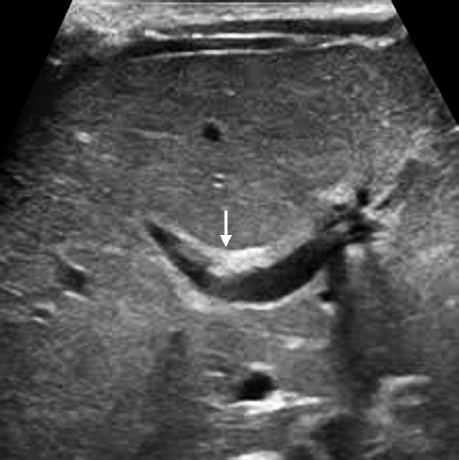
a. Name the sign in ultrasonography (USG).
b. What is the diagnosis?
c. What are the clinical symptoms of such diagnosis in a newborn?
d. What type of jaundice occurs in these newborns?
e. What is BASM?
f. What is the surgical management preferred for these babies?
Answer
| a. | Triangular cord sign |
| b. | Biliary atresia |
| c. | Hyperbilirubinemia—direct, high-colored urine, and clay-colored stools |
| d. | Conjugated hyperbilirubinemia |
| e. | BASM—biliary atresia and splenic malformation |
| f. | Kasai procedure |
THG39-030
Q39.30
a. What is portal hypertension?
b. Name the two veins which unite to form portal vein. Where does the formation occur?
c. What is EHPVO?
d. Most common cause of EHPVO?
e. What is the most common symptom?
f. What is Cruveilhier–Baumgarten murmur?
g. What is Budd–Chiari syndrome?
Answer
| a. | Elevation of portal pressure above 7–10 mm Hg or >4 mm above inferior vena caval pressure |
| b. | Union of superior mesenteric vein and splenic vein. Forms behind the neck of pancreas at L2. |
| c. | Extra hepatic portal venous obstruction |
| d. | Umbilical sepsis |
| e. | Upper gastrointestinal tract (GIT) bleeding and splenomegaly |
| f. | Continuous murmur from low to high pitch heard between umbilicus and lower sternum |
| g. | Obstruction of hepatic venous outflow may be thrombotic or non- thrombotic. |
THG39-031
Q39.31
a. What is the toxic dose of paracetamol for children in a single dose and cumulative dose?
b. What is the mechanism of action of toxicity?
c. What is the nomogram used to assess the toxicity?
d. What is the treatment of choice?
e. What is fulminant hepatic failure?
f. What is the O’Grady’s criteria for liver transplant in a child with paracetamol-induced liver failure?
Answer
| a. | Single dose: 200 mg/kg |
| Cumulative dose: 90 mg/kg |
| b. | Paracetamol is metabolized by formation of n-acetyl-p-benzoquinone imine (NAPQI) which combines with glutathione and forms a nontoxic product. In overdose, glutathione gets saturated and hence NAPQI causes hepatocellular necrosis. |
| c. | Rumack–Matthew nomogram |
| d. | Supportive management, N-acetyl cysteine |
| e. | Coagulopathy and encephalopathy occurs within 8 weeks of onset of liver disease in a patient without previous liver disease |
| f. | Ph <7.3 (irrespective of grade of encephalopathy) or prothrombin time (PT) >100 seconds, serum creatinine > 300 µmol/L (grade 3 or 4) |
THG39-032
A 2-week-old newborn, term baby, with birth weight of 2.3 kg on direct breastfeeds was brought to emergency room (ER) with lethargy, poor feeding, reduced activity, and vomiting.
a. What do you suspect?
b. What enzyme is deficient in the above diagnosis?
c. What metabolite is responsible for brain damage in this diagnosis?
d. What is the specific ocular manifestation?
e. What is the treatment?
f. What is the endocrinological manifestation in female children?
Answer
| a. | Galactosemia |
| b. | Galactose-1-phosphate uridyltransferase |
| c. | Galactitol |
| d. | Oil drop cataract |
| e. | Stopping all galactose-containing foods |
| f. | Hypergonadotropic hypogonadism |
THG39-033
Q39.33
a. What is the mode of inheritance of Wilson’s disease?
b. Name the chromosome and the gene involved.
c. Mention two ophthalmological findings in Wilson’s disease.
d. What are the investigations done and what is suggestive of Wilson’s disease?
e. What is the value of urinary copper suggestive of Wilson’s disease?
f. What are all the available pharmacological therapies for Wilson’s disease?
Answer
| a. | Autosomal recessive |
| b. | ATP7B and chromosome 13 |
| c. | Kayser–Fleischer ring and sunflower cataract |
| d. | Low serum ceruloplasmin <20 mg% and urine copper >100 µg |
| e. | Urine copper >100 µg |
| f. | D-penicillamine, trientine, zinc, and ammonium tetramolybdate |
THG39-034
Q39.34
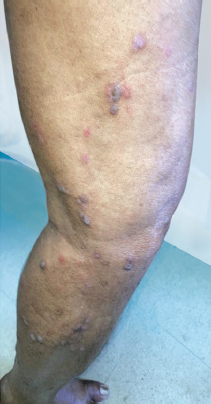
a. What is this skin condition called?
b. What are the histological findings in celiac disease?
c. What is the malignancy commonly associated with celiac disease?
d. Which primary immunodeficiency disorder is associated with increased risk of celiac disease?
e. What is MARSH histological criteria for celiac disease?
f. What are the foods that can be included and what are the foods to be avoided?
g. What is the basic blood investigation done to diagnose celiac disease?
Answer
| a. | Dermatitis herpetiformis |
| b. | Villous atrophy, crypt hyperplasia, and intraepithelial lymphocytosis |
| c. | Enteropathy-associated T-cell lymphoma |
| d. | Selective immunoglobulin A (IgA) deficiency |
| e. | MARSH criteria: |
| Type 0: Normal mucosa | |
| Type 1: Normal mucosa with increase in intraepithelial lymphocytes | |
| Type 2: Type 1 + hyperplastic crypts | |
| Type 3: Type 2 + villous atrophy | |
| Type 4: Total villous atrophy and hypoplastic crypts | |
| f. | Foods to be given—rice, corn, bajra, ragi, and sago; foods to be avoided—wheat, oats, rye, and barley |
| g. | IgA antibody to tissue transglutaminase |
THG39-035
Match the following:
a. Lead pipe colon on barium X-ray |
b. Anti-Saccharomyces cerevisiae antibody (ASCA) positive |
c. Periodic-acid Schiff (PAS) positive foamy macrophages in intestinal lamina propria |
d. Target sign on USG |
e. Coffee bean sign on X-ray |
f. Absence of ganglion cells |
Answer
| Ulcerative colitis | |||
| a. | Lead pipe colon on barium X-ray | ||
| Crohn’s disease | |||
| b. | ASCA positive | ||
| Whipple disease | |||
| c. | PAS positive foamy macrophages in intestinal lamina propria | ||
| Intussusception | |||
| d. | Target sign on USG | ||
| Sigmoid volvulus | |||
| e. | Coffee bean sign on X-ray | ||
| Hirschsprung’s disease | |||
| f. | Absence of ganglion cells | ||
THG39-036
Q39.36
a. Expand IHPS
b. What is the most common symptom associated with the above condition?
c. What is the metabolic derangement seen in the above condition?
d. What are the steps of management?
e. What is the surgical management?
f. What is the drug given for medical management?
Answer
| a. | Infantile hypertrophic pyloric stenosis |
| b. | Nonbilious vomiting |
| c. | Hypochloremic and hypokalemic metabolic alkalosis |
| d. | Correction of alkalosis and correction of acid–base balance |
| e. | Pyloromyotomy—Ramstedt operation |
| f. | Atropine |
THG39-037
A 9-month-old female baby, Aadhya, was brought to ER with complaints of incessant cry and refusal to take feeds. She has visited ER for the same complaints 2 days back, now brought with same complaints along with continuous episodes of vomiting and blood in stool.
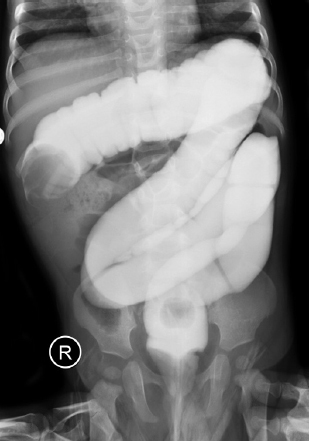
a. What do you suspect?
b. What is the next investigation you will advise?
c. Triad of symptoms? Mention few lead points.
d. What sign is this?
e. What is the treatment of choice which is commonly used?
f. What is the complication that arises out of this treatment?
Answer
| a. | Intussusception |
| b. | Ultrasound abdomen |
| c. | Pain, palpable sausage-shaped abdominal mass, and currant jelly stool; Meckel’s diverticulum, enterostomy tube, and hemangioma |
| d. | Coiled-spring sign |
| e. | Hydrostatic reduction under USG guidance |
| f. | Recurrence of intussusception and bowel perforation |
THG39-038
Q39.38
a. From which embryological structure does the pancreas develop?
b. What is an annular pancreas?
c. What is pancreatic divisum?
d. At what gestational age do exocrine and endocrine cells appear?
e. Name one syndrome associated with pancreatic insufficiency.
Answer
| a. | Ventral and dorsal domains of primitive duodenal endoderm |
| b. | Annular pancreas results from incomplete rotation of ventral pancreatic anlage |
| c. | Pancreatic divisum occurs as a result of failure of fusion of dorsal and ventral pancreatic anlagen. Thus, the tail, body, and part of head of pancreas drain through small accessory duct of santorini. |
| d. | 13th week |
| e. | Shwachman–Diamond syndrome |
THG39-039
Q39.39
a. What is the definition of constipation as per NASPGHAN for Indian children?
b. What is defined as chronic constipation?
c. What is refractory constipation?
d. What is rule of 1 for toilet training in children?
e. Name two osmotic laxatives that are used routinely?
Answer
| a. | Duration of >4 weeks with presence of more than two factors. |
| • | Defecation less than two times per week |
| • | Fecal incontinence greater than one episode per week, after acquiring toilet skills |
| • | History of excessive retention |
| • | Painful or hard bowel movements |
| • | Presence of large mass per abdomen on examination |
| • | Large diameter stools that may obstruct the toilet |
| b. | Duration >4 weeks |
| c. | Constipation not responding to conventional treatment for 3 months |
| d. | Rule of 1 should be done by 1 person: |
| • | One routine |
| • | One place |
| • | One word |
| e. | Polyethylene glycol and lactulose |
THG39-040
A 10-year-old developmentally normal girl child from Kerala was brought to ER with complaints of abdominal pain, severe, around the umbilicus, and radiating to back. She also had multiple episodes of vomiting. Signs of some dehydration was present. Hemodynamically stable without any features of shock. Ultrasound abdomen was done suspecting appendicitis, but appendix was normal.
a. What do you suspect?
b. What is the criteria for diagnosis?
c. What are Cullen’s sign and Grey turner’s sign?
d. What is the most specific test for diagnosis of the above condition?
e. Name three genetic mutations associated with the above diagnosis?
f. Name two complications of the above diagnosis?
g. What is the management?
Answer
| a. | Acute pancreatitis |
| b. | Criteria: When two out three occurs—abdominal pain, serum amylase, or lipase at least three times greater than upper limit of normal, imaging characteristic of or compatible with pancreatitis. |
| c. | Cullen’s sign: In acute pancreatitis, intraperitoneal hemorrhage is seen as bluish discoloration around periumbilical area. |
| Grey Turner’s sign: Bluish discoloration seen in the loin in intraperitoneal hemorrhage | |
| d. | Serum lipase levels |
| e. | Cationic trypsinogen gene |
| i. | Chymotrypsin c gene |
| ii. | Cystic fibrosis gene |
| iii. | Trypsin inhibitor gene |
| f. | (i) Pancreatic pseudocyst and (ii) Necrosis |
| g. | Symptomatic management with intravenous fluids, nil per oral; Adequate analgesia. No role for prophylactic antibiotics. |
THG39-041
Q39.41
a. What is its osmolarity of standard oral rehydration solution (ORS)?
b. What is low osmolar ORS?
c. What is ReSoMal?
d. What is the difference between low osmolarity ORS and ReSoMal?
e. Mention the constituents and composition of ORS.
Answer
| a. | Oral rehydration solution, Standard ORS—311 mOsm /L |
| b. | Low osmolarity ORS—245 mOsm/L |
| c. | Rehydration solution for malnutrition |
| d. | ReSoMal contains less amount of sodium when compared to low osmolarity ORS. |
e. • Glucose: 75 mmol/L
| • | Sodium: 75 mmol/L |
| • | Potassium: 20 mmol/L |
| • | Chloride: 65 mmol/L |
| • | Citrate: 10 mmol/L |
Annexure
OSCE Sample Topics
(Prepared by students, Pediatric Consultant, Special thanks to Dr Vigneshwari Raja, Rainbow Hospital, Chennai)
■OBSERVED STATIONS
| ■ | Pediatric advanced life support (ALS), basic life support (BLS)—(single/double rescuer) |
| ■ | Neonatal resuscitation protocol—(meconium aspiration syndrome, preterm, twins, and MR SOPA acronym to remind resuscitators to initiate ventilation corrective steps: M (mask adjustment), R (reposition airway), S (suction mouth and nose), O (open mouth), P (pressure increase), A (alternate airway) |
| ■ | Development milestones |
| ■ | Procedures—(nebulization, intraosseous vascular access, handwashing technique, lumbar puncture, bone marrow aspiration, administering insulin, metered dose inhaler usage, measuring peak expiratory flow rate, cardioversion, and defibrillation) |
| ■ | Counselling of parents—(prenatal counselling, febrile seizure, hemophilia, Down’s syndrome, thalassemia, migraine, constipation, breastfeeding, and nutrition) |
| ■ | History taking in chronological and systemic manner |
| ■ | Clinical examination—[focused examination, systemic examination, and pGALS (pediatric gait, arms, legs, and spine) examination] |
■UNOBSERVED STATIONS
| ■ | Equipment and devices—[bag and mask ventilation, nebulizer, Rotahaler, high-flow nasal cannula device, bilevel positive airway pressure (BiPAP), nasogastric tube, endotracheal tube, oxygen delivery devices, and pulse oximetry] |
| ■ | Procedures—(intraosseous infusion and chest tube insertion) |
| ■ | Research and biostatistics—(sensitivity, specificity, positive predictive value, odds ratio, forest plot, chi-square test, and student’s t-test) |
| ■ | Infectious diseases—(measles, scrub typhus, dengue fever, viral hepatitis, Epstein–Barr virus, and malaria) |
| ■ | Metabolic disorders—(glycogen and lysosomal storage disorders and disorders of urea cycle) |
| ■ | Rheumatology—(juvenile idiopathic arthritis, vasculitis, Kawasaki disease, systemic lupus erythematosus, and sequelae) |
| ■ | National health programs—[Janani Shishu Suraksha Karyakram (JSSK), Rashtriya Bal Swasthya Karyakram (RBSK), India Newborn Action Plan (INAP), Integrated Management of Neonatal and Childhood Illness (IMNCI), Baby-Friendly Hospital Initiative (BFHI), Vitamin A Prophylaxis, and Anaemia Mukt Bharath] |
| ■ | Ear, nose, and throat (ENT) and ophthalmology—(cherry red spot in fundus, retinopathy of prematurity, strabismus, retinitis pigmentosa, otitis media and externa, brainstem evoked response audiometry, acute tonsillitis, and choanal atresia) |
| ■ | Dermatology—(café-au-lait spots, ash-leaf macule, dermatophytoses, strawberry angioma, staphylococcal scalded skin syndrome, and acrodermatitis] |
| ■ | Gastroenterology—(diarrhea, gastroesophageal reflux disease, oral rehydration solution, malabsorption syndromes, and inflammatory bowel disease) |
| ■ | Cardiology—(heart sounds and murmurs, congenital heart disease, and cardiomyopathy) |
| ■ | Growth and development—(growth charts and developmental delay) |
| ■ | Endocrinology—(diabetes insipidus, diabetes mellitus, cerebral salt wasting, and technetium-99m labeled radioactive nuclide scans) |
| ■ | Pulmonology—(bronchial asthma, bronchopneumonia, bronchiolitis, and chronic lung disease) |
| ■ | Hemato-oncology—(peripheral smears, hemolytic anemia, disorders of coagulation, acute lymphoblastic leukemia, acute myeloid leukemia, and tumor lysis syndrome) |
| ■ | Nephrology—(nephrotic syndrome, nephritic syndrome, complete urinalysis, micturating cystourethrogram, dimercaptosuccinic acid scan, urinary tract infection, and chronic kidney disease) |
| ■ | Neurology—[seizure disorders and antiepileptics, cerebral palsy, and hydrocephalus, neurofibromatosis, Guillain–Barré syndrome, tuberous sclerosis, migraine, electroencephalogram (EEG), computed tomography (CT), magnetic resonance imaging (MRI)] |
| ■ | Neonatology—(jaundice, hypothermia, vitamin K deficiency, respiratory distress syndrome, meconium aspiration syndrome, preterm, kangaroo mother care, and breastfeeding) |
| ■ | Pediatric surgery—(posterior urethral valve, omphalocele, congenital diaphragmatic hernia, congenital hypertrophic pyloric stenosis, malrotation of gut, intussusception, congenital inguinal hernia and hydrocele, hypospadias, epispadias, cryptorchidism, tracheoesophageal fistula, and Hirschsprung’s disease) |
| ■ | Emergency room (ER) and intensive care unit (ICU)—(shock, diabetic ketoacidosis, traumatic brain injury, status asthmaticus, status epilepticus, snake bites, scorpion bites, drug overdose, and poisoning) |
| ■ | Disorders of arterial blood gases and dyselectrolytemia |
| ■ | Capnography |
| ■ | Toxicology—[beta blocker, tricyclic antidepressant (TCA), iron, salicylates, and organophosphates] |
| ■ | Drugs—(adrenaline, adenosine, amiodarone, lignocaine, magnesium sulfate, and atropine) |
| ■ | Neuroimaging—(CT/MRI, subdural hemorrhage, extradural hemorrhage, acute disseminated encephalomyelitis, neurofibromatosis, and neuronal migration) |
| ■ | X-ray—(rickets, lead poisoning, pneumothorax, pleural effusion, bronchopneumonia, obstructive emphysema, and mucopolysaccharidoses) |
| ■ | Electrocardiogram—(supraventricular tachycardia, ventricular tachycardia, ventricular fibrillation/flutter, atrial fibrillation/flutter, torsades de pointes, heart blocks, and Wolff–Parkinson–White syndrome) |
| ■ | Electroencephalogram—(absence seizures, Lennox–Gastaut syndrome, and herpes encephalitis) |
| ■ | Genetics and syndromes—(pedigree analysis, X-linked diseases, autosomal dominant, autosomal recessive disorders, mitochondrial genetic disorders, trisomy 21, Klinefelter syndrome, Turner syndrome, DiGeorge syndrome, and achondroplasia) |
| ■ | Nutrition—(vitamin A, zinc, iron, iodine, and breast milk) |
| ■ | Immunization—(National Immunization Schedules, Indian Academy of Pediatrics Immunization Schedule, vaccine strain, catch-up immunizations, and adverse effects following immunization) |
■FINAL PIECE OF ADVICE
| ■ | Those within brackets are only examples, but the list is very long. |
| ■ | Have a deep look at all images and tables of Nelson Textbook of Pediatrics and PG Textbook of Pediatrics. |
| ■ | Read compulsorily last 5-year examination papers of OSCE. |
| ■ | Be thorough with basics. |
| ■ | Need not panic, only 50% needed to pass. |
| ■ | Unobserved stations will contain 4–5 videos, 4–5 pictures, and 2–3 tables. |
| ■ | Finally, the secret ingredient is Practice, Practice, Practice!!! |
A
clinical examination of 3
protuberant 160
Abdominal distension 184, 274, 371, 386, 408, 568, 633
Abdominal pain 261, 299, 369, 403, 731
recurrent episodes of 300
Abetalipoproteinemia 469
intestinal 87
Abscess
multiple 626
parapharyngeal 512
retropharyngeal 512
Academic pressure 228
Acanthocytes 469
Accidental poisoning 603
Accredited Social Health Activist 583, 597
Acetazolamide, oral 469
Achalasia cardia 304
Achromic pityriasis versicolor 529, 530
Acidemia
isovaleric 167
methylmalonic 162
organic 169
propionic 162
metabolic 79, 155, 160, 174, 186, 621, 622
respiratory 622
simple metabolic 621
Acne
lesions, multiple 225
rosacea 532
Acneiform eruption 532
Actinobacteria 65
Activated partial thromboplastin time 375
Acute respiratory distress syndrome 719
Addison’s disease 334
Adenoid hypertrophy, chronic 228
Adenomyosis 230
Adenopathy
mediastinal 322
paratracheal 263
supraclavicular 401
antagonist 208
receptor 362
Adenotonsillectomy 329
Adenoviral infection, severe 258
Adenovirus 363
Adequate pain management 392
Adolescent body image satisfaction scale 227
Adolescent Friendly Health Clinics 231
Adoption 579
Adrenal crisis, acute 442
Adrenal function tests 230
Adrenal hyperplasia, congenital 430, 441, 442
Adrenal insufficiency, acute 442
Adrenaline 751
dose of 97
infusion 117
intramuscular 239
Adrenoleukodystrophy 436
X-linked 474
Adrogué-Madias formula 86
Adverse event following immunization 280
severe 292
Aflibercept 219
Air bronchograms 217
Airway 357
difficult 109
disease, reactive 736
exchange catheter 126
malformation, congenital pulmonary 217
Alagille syndrome 154
Albendazole 275
Albinism, oculocutaneous 489, 501
secretion 81
Alkaline phosphatase 70, 76, 641, 723
Alkalosis
hypokalemic metabolic 208
respiratory 623
Alkaptonuria 174
Allen test, modified 619
Allergic bronchopulmonary aspergillosis 327
Allergic rhinitis 235, 239, 511
Allergy 233
Alloimmune thrombocytopenia 400
Alloisoleucine 166
Alpha 1-antitrypsin deficiency 400
Alport syndrome 427
Alveolar arterial oxygen 614
Alveolar gas equation 134
Ambulatory blood pressure monitoring 426
Amebiasis, invasive 261
Amegakaryocytic thrombocytopenia, congenital 400
Amino acids 733
Aminoadipic semialdehyde 158
Amiodarone 751
Amniotic band syndrome 216
Amniotic index 562
clavulanic acid 635
Ampicillin 255
Anabolic steroids 227
Anaerobes 499
Analgesics 469
Anaphylaxis 102
Anasarca 408
Anechoic collection 212
Anemia Mukt Bharat 726
aplastic 721
chronic hemolytic 270
hemolytic 490
isoimmune hemolytic 206
macrocytic 474
megaloblastic 393
microangiopathic hemolytic 101
microcytic hypochromic 392
prevalence 595
severe 365
Anencephaly 153
Anesthesia, total intravenous 130
Anganwadi worker 583
Angelman syndrome 154
Angioedema 64
hereditary 240
Angiofibroma, palpebral conjunctival 659
Angiomas 536
facial 659
Angiomyolipoma 659
Angiotensin-converting enzyme inhibitors 227, 423
Angiotensin-receptor blockers 80, 423
Animal scabies 528
Aniridia 500
Ankle sprains 545
Ankyrin 394
Anorexia 581
nervosa 58
Anosmia 229
Anthrax 586
Antibiotics 392
choice of 637
Anticonvulsants, multiple 158, 159
Antidepressants, atypical 229
Antidotes, appropriate 601
drugs 602
Antigen assay 395
Antihistamines, second-generation 240
Antihistone antibodies 422
Antihyperkalemia 396
Antimalarials 396
Antinuclear antibody 245
Anti-rabies immunoglobulin 95
Anti-saccharomyces cerevisiae antibody 730
Antiscabicidal agents 529
Antisnake venom 602
Anti-tubercular drugs 323
Anti-tubercular therapy 240, 324, 400, 480
Antiviral agent 258
Anuria 369
Anxiety 228
situational 229
Anxiolytic agents 229
Aortic outflow blood velocity 124
Aortic valve 120
Aphasia 461
caffeine for 208
Apnea-hypopnea index 513
Appetite 509
loss of 315
suppression 49
test 742
Applied behavioral analysis 59
Apricot 605
Aqueductal stenosis 660
Arachidonic acid 375
Arginase deficiency 175
Arginine vasopressin neurons 85
Argininosuccinic aciduria 168
Argon plasma coagulation therapy 305
cardiac 473
supraventricular 555
Arsenic 599
poisoning 581
Arsenite 585
Arterial blood gas 155, 182, 614
analysis 613
discoloration of 751
report 617
Arterial carbon dioxide, partial pressure of 614
Arteriovenous malformation 478
Arthralgia 427
Arthritis 427
juvenile idiopathic 749
Arthrogryposis 552
Artificial manual breathing unit bag 702
Arylsulfatase A 473
Ascariasis, intestinal 274
Ascites 2, 8, 108, 242, 299, 406
Ascitic fluid 331
Aspergillosis, invasive pulmonary 395
flavus 395
fumigatus 395
terreus 395
Asphyxia, perinatal 400
Aspiration, pulmonary 609
acute severe 711
bronchial 527
global initiative for 327
persistent 312
Atmospheric pressure 209
Atopic dermatitis 233, 238, 530
infantile phase of 543
Atrial natriuretic peptide 86
Atrioventricular septal defect 350
Atrioventricular valves 350
Atropine 751
Attention deficit hyperactivity disorder 40, 55, 603
prevalence of 686
Audible systolic murmur 352
Autism spectrum disorder 59, 659
Autoimmune lymphoproliferative syndrome 394
Automated acoustic brainstem response 219
Autosomal dominant 151, 152, 213, 238, 240, 471, 472, 554
pattern 149
Autosomal recessive 48, 174, 395, 469, 470, 473, 474, 501, 503, 554, 746
disorder 717
polycystic kidney disease 419
Auxiliary nurse midwife 583
Awake phase disorder 228
Axillary artery 137
Axonal injury, diffuse 657
Ayushman Bharat Yojana 724
Azacitidine 397
Azathioprine 238
Azelaic acid 529
Azithromycin 263
Azoles 397
B
Bacillus Calmette-Guérin 243
vaccination 279
vaccine 324
Bacteria, gram-positive 255
Bacteroides 499
Bardet-Biedl syndrome 426
Barium
enema 305
study 329
Barsoum-Levine formula 86
Bartonella henselae 269
Bartter syndrome 79
classical 422
Basal bolus regimen 436
Basal crackles 7
Basal ganglia, symmetrical 451
Basal meningeal enhancement 332
Basal skull fracture, signs of 12
Baseline metabolic testing 146
Basic communication skills 670
Basophilic stippling 601
Bayley-Pinneau table 34
Beckwith-Wiedemann syndrome 426
Beclomethasone 327
Bedaquiline 336
Bell’s palsy 478
Benzodiazepine 601
Beta-glucocerebrosidase 474
Beta-spectrin deficiency 394
Beta-thalassemia 258
trait 394
Bevacizumab 219
Bicuspid aortic valve 33
Bifid thumb 373
Bifidobacterium lactis 739
Bifidus factor 733
Bilateral ballotable kidneys 407
Bilateral maxillary sinusitis, diagnosis of 317, 318
Bilirubin, serum 259
Binet Kamat test 61
Biochemically fentanyl 129
Biopterin disorders, treatment of 167
Biotin 162
trial of 159
Biotinidase deficiency 169, 470
Birth
defects 62
injuries 216
weight 351
Bitot spots 497
Bladder
bowel dysfunction 576
outlet obstruction 573
Bland-Altman plot 691
Blast cells 710
Blastomycosis 338
Bleeding
bite marks 260
disorders 230
excessive 721
family history of 375
per rectum 556
Blepharospasm 488
Blink reflex 10
Blood
bank 376
counts reveal anemia 381
capillary 75, 103, 351, 352, 437, 603
pressure 2, 229, 406, 600, 729
noninvasive 352
reports 243
stained stools 625
sugar 193
transfusion 219
Blue sclera 554
Body
pains, severe 385
Bone
age 22
dysplasias 540
marrow 384
failure syndrome 398
studies 380
transplantation 176, 330, 394, 554
window 655
Bony deformities 407
Bovine milk 69
Bowel habits normal 560
Brachial pulses 411
Bradyarrhythmias 98
Brain
abscess 661
computed tomography of 647, 655-657, 662
magnetic resonance imaging of 150, 159
tumor 539
Brainstem T2 hyperintensities 451
Branchial sinus 575
Branchio-oto-renal syndrome 216
Breast
buds, development of 227
milk, composition of 591
stage 429
tissue size 223
excessive 589
Breath
holding spells 60
sounds 6
normal 351
types of 17
Breathing 214
fast 616
paradoxical 602
periodic 6
rapid 616
sleep disordered 329
Breathlessness 624, 628, 630, 631
Breech presentation 553
Bronchial breath sounds 558
Bronchial compression 334
Bronchial secretions, retained 328
Bronchiectasis 17
Bronchiolitis 272
Bronchoalveolar lavage
fluid 395
procedure 317
Bronchodilators, inhaled 624
Bronchopulmonary segments 5, 16
Bronchoscope, flexible 317
Bronchoscopy 510
Bronchus 328
Brucellosis, classical sign of 255
Bruising, periorbital 12
Bubble continuous positive airway pressure 708
Burkholderia pseudomallei 269
Burkitt’s lymphoma 396
Burning sensation 237
Burns
chemical 104
electrical 104
surface area, assessment of 105
Burosumab 421
Burst suppression pattern 158
C
Cafe-au-lait
macules 472
multiple 380
Caffey disease 553
Calcineurin inhibitor 424
Calcium 447
gluconate 215
ionized 193
Calf atrophy 462
Callus formation 554
Calorie, low 70
Camphor 88
Campylobacter jejuni 269
Canavan’s disease 474
Cancer, endometrial 228
Candida albicans 264
Candidiasis 264
Cantwell’s criteria, modified 337
Capillary refill time 260, 729
Capillary wedge pressure 102
Caput succedaneum 210
Carbamazepine 471, 609, 699, 711
Carbapenem 127
Carbon
dioxide, partial pressure of 209
monoxide 601
poisoning 611
Cardiac chambers, dilated 217
Cardiac failure, features of congestive 411
Cardiology 339
Cardiomegaly 339, 348, 355, 362, 639
Cardiomyopathy 356
Cardiopulmonary failure 626
Cardiovascular system 1, 91, 351
examination of 224
Caroli’s disease 419
Carotids 411
Cartilage, congenital absence of 328
Cataract, congenital 489, 501, 736
Cationic trypsinogen gene 748
Cavernoma, portal 304
Cavernous sinus thrombosis 9
Cefazolin 539
Cefoperazone 254
Cefotaxime 255
Ceftazidime 127
Ceftriaxone 255
Celiac disease 69, 87, 304, 400
increased risk of 730
Centor criteria, modified 327
Central nervous system 55, 351
acute 75
stimulants 49
Central venous catheter 127
Central venous pressure 102
Centrilobular nodules 331
Cephalohematoma 210
Cephalosporins 392
Cerebellar ataxia 14
progressive 501
Cerebral function monitoring 222
Cerebral salt wasting syndrome 133
Cerebrospinal fluid
analysis 616
examination 158
Ceruloplasmin, serum 470, 501, 717
Cervical adenopathy 401
Cervical spine immobilization 96
Cervicitis 230
Chédiak-Higashi syndrome 397
Cheilitis 543
Chemical
burns 104
pollutants 580
multiagent 401
Cherry red spot 494
Chest
computed tomography of 313, 624
injuries, life-threatening 99
measure expansion of 14
posteroanterior view 358
retractions 260
wall 134
Chiari crisis 475
Chickenpox 259
Chikungunya 597
Child abuse 580
Chloramphenicol 254
Chloride levels, normal 212
Chlorine 586
Choledochal cyst 306
classification of 306
Cholestasis
evaluation, part of 147
syndrome, neonatal 305
Choreoathetoid, persistent 156
Choroidal nodules 539
Christmas tree appearance 426
Chromatography mass spectrometry 146
Chromosomal microarray 150
Chromosomal syndromes 552
Chylothorax 212
Chylous ascites 8
Chylous fluid 212
Cidofovir 258
Cimetidine 227
Ciprofloxacin 254
Clarithromycin 267
Clavicular hypoplasia 152
Clean wounds 295
Cleft lip 145
Cleidocranial dysostosis 152
Clitoromegaly 442
Clobazam 471
Clofazimine 537
Clostridial sepsis 394
Clotrimazole, topical 264
Clotting factor deficiencies 230
Club foot 736
Coagulation profile 230
Coarse facies 47
Cobalamine deficiency 424
Coffin-lid appearance 421
Cognitive behavioral therapy 58, 60
Colonoscopy 301
Colostrum, feeding of 596
Comatose 466
Complete blood count 360, 380, 725
maternal 387
Compression injury 643
high-resolution 374
Conduct disorder 60
Congenital diaphragmatic hernia 210, 570, 720
antenatal predictors of 210
Conjunctiva, palpebral 240
Conjunctivitis, recurrent 543
Connective tissue disorder 326
maternal 356
Consciousness 353
depressed 617
sudden loss of 353
Constipation 300
severe 432
Constriction ring syndrome 216
Continuous glucose monitoring system 447
Continuous positive airway pressure 135, 178
Contraceptive pills, oral 227
Convection 122
Convulsions, afebrile 628
Coombs test, monospecific 373
Copious sputum, expectoration of 313
Copper 727
Corbevax 290
Coronavirus disease infection 330
Corticosteroid
inhaled 327
Cortisol deficiency 32
Corynebacterium diphtheriae 269
Coryza 352
Cotrimoxazole 417
activity-induced 310
chronic 326
frequent 309
paroxysms of 252
syrup 558
Coup d’Ongle sign 530
Covaxin 290
COVID vaccine 280
Covovax 290
Cow’s milk protein allergy 307
Cramps 274
Cranial nerve examination 4
Craniofacial abnormality 153
C-reactive protein 360, 385, 725
Criminal behavior 60
Crisis, hypertensive 127
Crochetage sign 357
Crohn’s disease 305
Croup, episodes of 510
Crying, excessive 507
Crypt hyperplasia 304
Cryptococcal meningitis 332
Cryptococcus 9
Cutibacterium acnes 231
colonization of 532
Cyanide antidote package 612
Cyanosis 118
Cyanotic spell, management of 358
Cyclophosphamide 400
ovarian 576
pulmonary 659
renal 659
Cystathionine beta-synthase 166
Cystic fibrosis 69, 327, 330, 400, 511
Cystic hygroma 570
Cytarabine 393
low-dose 399
congenital 258
Cytotoxic edema 166
D
D’Espine’s sign 18
Datura 601
Daunorubicin 393
Daytime sleepiness, excessive 228
Deafness
congenital 736
early 554
Deep basophilic cytoplasm 376
Deferiprone 392
Deferoxamine 607
Deformation 139
severe 67
Dehydrocholesterol 147
Delusional disorder 229
Demyelination, evidence of 159
Deoxyhemoglobin 99
Deoxyribonucleic acid 290
Dermatitis herpetiformis 746
Dermatomyositis 250
juvenile 249
Dextrocardia 364
Diabetes insipidus 444
central 133
nephrogenic 133
Diabetes mellitus 429
Diamond-Blackfan anemia 397
Diamond-shaped crystal 406
Diapers, use of 13
chronic 63
management of 75
Dicarboxylic acid 529
Diethylenetriamine pentaacetate 417
Diffusion-weighted imaging 475
specific fab fragments 608
Dihydrorhodamine 397
Dimercaptosuccinic acid scan 575
Diphtheria-tetanus-pertussis vaccine 283
Diphyllobothrium latum 393
Disseminated intravascular coagulation 400
Disulfiram 254
Diuretic renogram 417
Dobutamine infusion 101
Doll’s eye 9
Dorsalis pedis pulse 352
Double bubble sign 211
Double-track sign 208
Down’s syndrome 40, 211, 376, 393, 736, 749
D-penicillamine 304
Dravet syndrome 471
Drooling 600
Drowsiness 509
sudden onset of 605
Drug-resistant tuberculosis treatment 323
Dry mouth 509
Duckett’s syndrome 574
Dumbbell-shaped crystal 406
Dwarfism 30
Dyes 136
Dynamic renal scintigraphy 417
Dysarthria 602
Dysdiadochokinesia 602
Dyshemoglobinemias 136
Dyslipidemia 228
Dysostosis multiplex features 50
Dysphagia 506
Dysplasia 139
bronchopulmonary 207
renal 573
Dysreflexia, autonomic 478
Dystonia 460
Dystonic movements 156
E
Ear
canal, edema of 508
examination of 18
low set 162
nose, and throat, treatment of 228
Eating attitudes test 227
Ebstein anomaly 357
Ecchymoses, multiple 387
Eculizumab 424
Eczema
bilateral pedal 301
cerebral 86
endogenous 530
nummular 541
pedal 406
sacral 7
Eisenmenger syndrome 362
Electrocardiogram 91, 353, 751
Electroencephalogram 158, 454, 751
formal 143
disorders 98
disturbances, correction of 606
free water clearance 86
Elfin-like facies 142
Embryotoxon, posterior 154
Emergency
hypertensive 109
lower segment cesarean section 351, 708
medicine 88
Emphysema, congenital lobar 214, 328
Enalaprilat 127
Encephalitis 270
Encephalomyelitis, acute disseminated 479
Encephalopathy, acute 157, 616
Endocardial cushion defect 149
Endocarditis, infective 360
Endocrinology 428
pediatric 440
Endotoxins 265
Endotracheal tube 211, 627, 715
Entamoeba
dispar 261
histolytica 363
infection 261
Enterococcus 255
faecalis 661
Enterocolitis, necrotizing 209, 400
Enteroenteric circulation 609
Enzyme
activity, increase of 168
analysis 175
replacement therapy 175
Epiglottitis 646
Epilepsy 35
self-limiting childhood 471
Epiphyseal fragmentation 553
Episcleritis 305
Epistaxis, acute 368
Epithelial sodium channel 79
infection 398
Erosions 523
Erythema 508
infectiosum 270
toxicum 206
Erythematous nodules, multiple 189
Erythroblastopenia, transient 397
Erythrocyte sedimentation rate 242, 360, 411, 725
Erythrogenic toxins 265
Escherichia coli 363, 661, 666
Esmolol 127
Esophageal manometry 297
Esophagus, gross dilatation of 329
Ethosuximide 471
Ethylene
dicysteine 417
glycol 606
Etoposide 397
Exome sequencing 148, 151, 154, 173
Exonic deletion 151
Extracorporeal toxin removal 168
Extractable nuclear antigen profile 245
Extrahepatic portal venous obstruction 304
Extremities sparing palms 254
Eye 3
changes 536
conditions 489
deep-set 147
disorders 489
inflammation 241
movements, abnormal 386
of tiger sign 470
Eyeball 486
Eyelid squeezing 488
F
Face, pallor of 543
Facial nerve palsy 216
Facies 12
Fagan’s nomogram 691
Falciparum malaria, rings of 393
Falcon’s tube 264
Fat necrosis, subcutaneous 213
Fatigability 371
Fatty acid
low free 214
oxidation defect 169, 172, 174
Fatty food, avoidance of 223
Feeding difficulty 260
Fenoldopam 127
Fetal
ailment 561
alcohol syndrome 153
hemoglobin, elevated 380
hydantoin syndrome 153
methotrexate syndrome 153
urine
assessment 188
values, normal 212
valproate syndrome 152
Fever 10, 109, 368, 369, 382, 466, 507
persistent 330
prodrome of 539
provoked focal seizures 454
recurrent 324
spikes 242
deficiencies 400
Fibrinopurulent stage 138
Figure rating scale 227
Fine needle aspiration cytology 390
Fingers, discoloration of 377
Firmicutes 65
First trimester combined screening tests 150
Fistulizing type 305
Flat nose 145
Flexible laryngoscopy 513
Fludrocortisone 442
calculation 717
intravenous 74
resuscitation 121
thrill 8
Flu-like illness 254
Flumazenil 607
Fluorescent in situ hybridization 149
Fluoxetine 60
Flutamide 227
Fluticasone 713
Focal neurological signs 11
Folate supplementation 66
Folic acid, role of 62
Follicles 485
stimulating hormone 229
Food
allergy 69
hypersensitivity 235
Foot pain 545
Forceps delivery 194
Forehead 221
Foremilk 596
Formoterol 327
Formula feeds 302
Fracture management 646
Fragile bones 554
Fragile X syndrome 50, 58, 153
Freeze sensitivity 285
Fresh frozen plasma 91
Friedreich’s ataxia 469
Fructose intolerance, hereditary 170, 173
Fundus 494
Fusobacteria 65
G
Gait 449
hemiparetic 14
limping 548
Galactorrhea 229
Galactose-1-phosphate uridyl transferase enzyme 171
classical 171
Galen malformation vein 217, 478
Ganciclovir 258
Ganglion cells 730
Gardnerella 230
Gastric
biopsy 307
decompression 210
volvulus 639
Gastroenteritis, acute 76
Gastroesophageal varices 419
Gastrointestinal irritation 119
Gaucher’s disease 175, 394, 474
Gender-based growth charts 210
Gene
panel testing 151
therapy 151
Generalized anxiety disorder 58, 229
counseling 536
Genital examination 430
Genital herpes simplex virus, primary 258
Gentamicin 254
Germinal matrix hemorrhage 217, 669
assessment 183
Giant metamyelocytes 393
Giant myelocytes 393
Giddiness 617
Gitelman syndrome 79
Glabellar tap 10
Glandular breast tissue 227
Glanzmann thrombasthenia 395
Glasgow coma scale 11, 106, 124, 463
score 605
infantile 500
Glenn shunt 122
Gliomas, optic 539
Glomerulonephritis, postinfectious 419
Glucocerebrosidase 394
Glucocorticoids 398
Glucose
6-phosphate dehydrogenase deficiency 206, 392, 393, 606
intolerance 228
transporter 170
deficiency 471
protein 71
Glutamate, low 161
Glutaric aciduria 162, 167, 472
Glutarylcarnitine, elevated 167
Glycemic response 215
Glycerol kinase deficiency 174
Glycogen storage disease, types of 308
Glycosylation, congenital disorder of 170
Goldenhar syndrome 216
Gonadal dysgenesis 229
Gonadotropin
deficiency 32
releasing hormone analog stimulation 429
Goodenough draw-A-man test 50
Gradual motor neuroregression 458
Graft-versus-host disease, transfusion related 397
Graves’ disease 443
Gray baby syndrome 254
Griseofulvin 542
charts, plotting of 229
hormone 21
parameters 24
velocity 32
Guanidoacetate levels, high 160
Guided self-help methods 60
Gum
bleed 368
elastic bougie 126
hypertrophy 370
H
Haemophilus influenzae 330, 363, 498, 499
B 476
infection 255
nontypeable 269
Hair
changes 229
hypopigmented 381
Halo sign 374
Hamman’s mediastinal crunch 18
Hands, developed edema of 243
Handwashing technique 749
Harrison’s sulcus 17
Hartmann’s solution 446
Harvesting stem cells 398
Head
and neck surgery 640
circumference 59
Headache 4, 253, 466, 581, 654, 714
Healthcare personnel 733
Hearing loss 506
bilateral conductive 513
Hearing milestone 505
Heart
blocks 751
disease
rheumatic 736
failure
clinical signs of 355
high-output congestive 217
optimizing 124
rhythm, irregular 355
Heartbeat 722
Heat
intolerance 431
sensitivity 285
Hebra circle 516
Helicobacter pylori 307
infection 256
Heller’s cardiomyotomy 329
HELLP syndrome 160
Helmet cells 393
congenital subglottic 513
Hemarthrosis, acute right 375
Hematochezia 193
Hematocrit 256
Hematology 586
Hematoma 704
scalp 657
subgaleal 210
Hematopoietic stem cell transplant 396, 401
Hemithorax 558
deoxygenated 399
Hemoglobinuria, paroxysmal cold 394
Hemolytic anemia 490
diagnostic of 102
Hemolytic uremic syndrome 101, 393, 424
secondary 424
Hemophilia
A 395
mild 395
moderate 395
Hemorrhage 485
fetal 219
neonatal intraventricular 477
subperiosteal 738
Hemorrhagic disease 400
Hemotympanum 12
Henoch-Schönlein purpura 427
Hepatic disease 419
Hepatitis 400
A infection 278
doses 287
vaccine 278
C, chronic 258
viral infection 171
Hepatolenticular degeneration 717
Hepatomegaly 7, 160, 298, 299, 303, 347, 729
Hepatosplenomegaly 147, 253, 368, 379, 384, 548
isolated 373
Heřmanský-Pudlák syndrome 397
Hernia, congenital diaphragmatic 210, 570, 720
Herpes simplex
encephalitis 271
virus 463
infection, neonatal 270
Herpes zoster ophthalmicus 498
Hexagonal-shaped crystal 406
High anion gap metabolic acidosis 612
High-flow nasal cannula, heated humidified 131
High-frequency oscillatory ventilation 209
Hinman syndrome 426
Hip
developmental dysplasia of 552, 736
limited abduction of 546
Hirschsprung’s disease 213
Hirsutism 441
Histoplasmosis 338
Hodgkin’s lymphoma 401
Holliday-Segar formula 83
Holocarboxylase deficiency 175
Holoprosencephaly 153
Homocystinuria 162
classical 166
Hormonal pills 395
Hormone, adrenocorticotropic 400
Horseshoe kidney 33
Hospital waste management 578
Hour-specific bilirubin chart 206
Howell-Jolly bodies 393
Human chorionic gonadotropin 228
Human herpesvirus 528
Human immunodeficiency virus 363, 394
Human milk bank 579
Human papillomavirus vaccine 282
Humerus deformity 554
Hunter’s angle 663
Hyaline 530
Hydration 208
Hydrocephalus 212, 217, 332, 479, 554
communicating 661
noncommunicating 660
obstructive 660
posthemorrhagic 207
Hydrochlorothiazide 426
Hydrofluoroalkane 713
Hydronephrosis
transient 572
unilateral 572
Hydropneumothorax 16
Hydroureteronephrosis, bilateral 562
Hydroxocobalamin 612
Hyperactivity disorder, evaluation of 142
mild 161
transient 174
Hyperbilirubinemia, conjugated 159
Hypercalciuria 420
Hyperdiploidy 393
treatment of 82
Hyperleukocytosis 398
Hypernatremia, hypovolemic 86
Hyperornithinemia-hyperammonemia-homocitrullinuria syndrome 170
Hyperoxaluria, primary 406, 419
Hyperparasitemia 275
Hyperpigmentation, generalized 373
Hyperprolactinemia 230
acute severe 101
persistent pulmonary 147
portal 728
pulmonary 217
risk of 685
triad of 79
Hypertensive lower esophageal sphincter pressure 304
Hyperthyroidism 443
Hypertrophic pyloric stenosis 208
Hypertrophy, biventricular 355
Hyperuricemia 393
Hyperventilation 471
Hypocalcemia 86, 193, 215, 393
refractory 711
Hypochloremia 318
Hypochondrium 300
Hypodiploidy 393
episodes of 161
hyperinsulinemic 214
hypoketotic 160
classification of 78
evaluation of 81
moderate 78
severe 79
severity of 80
Hypomagnesemia 711
Hyponasal speech 509
Hyponatremia 318
acute 86
hypovolemic 86
Hyponatremic hypokalemic hypochloremic metabolic alkalosis 569
Hypopigmentation 529
Hypopnea 329
Hypothermia 98
therapeutic 187
Hypothyroidism 33
Hypotonia, central 459
fluids 84
Hypotrophy
cortical 159
subcortical 159
Hypoventilation 719
Hypoxemia, exchange transfusion for 392
Hypoxia 686
respiratory 115
severe 125
I
Ice pack, conditioning of 291
Immune
check point inhibitors 538
deficiency 330
disorder 338
thrombocytopenia 393
Immunofluorescence assay 245
Immunoglobulin
vasculitis 247
Immunosuppression 330
Imperforate hymen 229
Implantable cardioverter defibrillator 138
Imprinting disorder 154
Inappropriate antidiuretic hormone, syndrome of 133
Incontinentia pigmenti 473, 534
Incubator 395
Infections 171, 230, 252, 338, 393, 394, 720
antenatal 13
disseminated 270
Infectious diseases 749
Inflammatory disorder 338
Infliximab 249
Influenza
infection 261
vaccine 261
Inhalation therapy 312
Inhaled nitric oxide delivery system 221
Injury, thermal 394
Insomnia, psychophysiological 228
Inspired oxygen, fraction of 614
Institutional Ethics Committee 688
Insulin 215
carbohydrate ratio 438
dextrose infusion 398
resistance 228
Integrated child development services
project 588
scheme 588
Intellectual disability 59, 473
Intercostal chest tube drainage 215, 626
Interhemispheric fissure, widening of 658
Intermittent bleeding per rectum 301
Intermittent explosive disorder 60
Intestinal loops 568
Intra-articular steroid injections 251
Intracranial bleed 86
Intracranial hypertension, idiopathic 469
Intracranial pressure 106
Intractable seizures, types of 159
Intrahepatic bile ducts, cystic dilatation of 419
Intraosseous vascular access 749
Intrauterine death 341
Iris 500
deficiency anemia 590
reduce prevalence of 743
parenteral 394
Irritability 259, 300, 386, 431, 507, 581, 653
Isavuconazole 395
Isoleucine 166
Isotretinoin embryopathy 153
Itchy skin lesions 515, 525, 527
J
Janani Shishu Suraksha Karyakram 741
Janus kinase inhibitor 235
Japanese encephalitis 479, 597
vaccine 282
Jaundice
neonatal 388
persistent 371
Jervell syndrome 364
Jitteriness, repeated episodes of 193
Joint
attention 50
hypermobility, moderate 140
Joubert syndrome 426
Jugular venous pressure 8, 366
Juvenile idiopathic arthritis, systemic-onset 247, 711
K
Kala-azar 597
Kallmann syndrome 229
Kappa coefficient 691
Kasabach-Merritt syndrome 400, 571
Kasai portoenterostomy 305
Katz-Wachtel phenomenon 355
Kawasaki disease 248, 249, 711, 749
Kayser-Fleischer ring 304, 470
K-bind polystyrene sulfonate 398
Kearns-Sayre syndrome 436
Keratinization, abnormal 532
Keratinocyte death 538
Keratoconus 240
Keratosis pilaris 543
Kerion-bacterial abscess 542
Kernig’s sign 237
Kerosene 88
Ketogenic diet 71
Ketone 155
Ketonuria 155
Ketorolac 119
Kidney
disease 412
chronic 73, 104, 371, 412, 465
function tests 228
injury, acute 412
Kishori Shakti Yojana 744
pneumoniae 645
Knee
jerks 629
Knuckle hyperpigmentation 367, 474
Kostmann agranulocytosis 127
Kronig’s isthmus 17
Kyphosis 540
L
Lactalbumin 733
Lactate 155
normal 155
Lactic acidosis, moderate 161
Lactobacillus 739
Lactoferrin 733
Lactulose 747
Lamina propria 304
Lange-Nielsen syndrome 364
Language
disorders 59
Laparotomy, emergency 437
Laryngeal mask airway 125
Laryngomalacia 513
Laryngoscopy, direct 109
Latch scoring system 590
Laxatives 305
Lead 599
Legg-Calvé-Perthes disease 553
Legs, anteromedial bowing of 540
Leigh’s disease 470
Leiomyoma 338
Lennox-Gastaut syndrome 472
Lesion 531
hypopigmented 520
multicystic 643
Leukemia
juvenile myelomonocytic 397
Leukocoria 500
Leukodystrophy, metachromatic 473
Leukoerythroblastic blood picture 396
Leukomalacia, bilateral cystic periventricular 667
Leuprolide acetate 441
Levene index 217
Levofloxacin 335
mechanism of action of 111
L-glutamine 392
Liddle syndrome 79
Light transmission aggregometry 375
Lignocaine 751
jelly 606
Lip swelling, episodic attacks of 237
Lipoprotein lipase gene 163
Liposomal amphotericin B 395
Lithium 606
Live hepatitis A, single dose of 286
Liver
cell failure 159
acute 490
causes for infantile 171
enzymes, elevated 160
span 303
transplant, King’s criteria for 608
Loeffler’s syndrome 275
Long QT syndrome 356
Low platelets syndrome 160
Lower segment cesarean section 147
Lower urinary tract symptoms 575
Luliconazole 541
needle 714
Lung 338
disease
chronic 219
occupational 338
maturation 671
ultrasound pictures 196
Lupus
anticoagulant 394
nephritis 101
Luspatercept 392
Luteinizing hormone levels 228
Lymph node 331
enlargement, multiple 329
Lymphadenitis, postauricular 258
Lymphadenopathy 229, 253, 257, 379
intrathoracic 331
necrotic mediastinal 331
Lymphangioleiomyomatosis 659
Lymphangioma 570
Lymphatic filariasis 597
Lymphocyte 394
infiltrate 304
intraepithelial 304
Lymphohistiocytosis, hemophagocytic 171, 395
Lymphoma, gastrointestinal 305
Lymphopenia 330
Lytic skull lesion 379
M
Macrocephaly 459
Macrocytes 393
Macrolides 392
Macroovalocytes 393
Macrophage activation syndrome 247
Macula 502
Macules, hypomelanotic 480
Magnesium sulfate 751
Magnetic resonance
venography 448
Major depressive disorder 58
cerebral 275
appearance 530
furfur 529
globosa 529
restricta 529
sympodialis 529
Malformation 139
congenital 153
hematological 394
Malignant disorders 338
Malin’s intelligence scale 61
chronic 63
Mantoux test, positive 322
Maple syrup urine disease 162, 166, 169
Marfan syndrome 555
Marrow, carcinomatous infiltration of 721
Mayer-Rokitansky-Küster-Hauser syndrome 229
McArdle disease 174
McCune-Albright syndrome 444
Mean arterial pressure 102
low 712
Mean corpuscular
hemoglobin 371
mumps, and rubella vaccine 283
strains 288
Mechanical ventilation 191, 192, 208
Meckel-Gruber syndrome 426
Meconium 191
Mediastinal compression syndrome 334
Mediastinal shift 328
Megaureter, obstructive 573
Melanosomes 529
Melatonin 60
Melitensis 268
Menarche 435
Meningeal irritation, signs of 463
Meningitis
background of 85
tuberculous 334
Meningomyelocele, lumbosacral 145, 475
Menstrual
bleeding 230
hygiene scheme 231
Mental
confusion 617
health 743
Mentzer index 718
Mercaptoacetyltriglycine 417
Mercaptopurine 397
Mercury 599
Mesothelioma 585
Metabolic syndrome 70
features of 228
Metabolism, inborn errors of 155, 622
Metacarpophalangeal joints 13
Metaphyseal widening 645
Metaphyses
broadening of 421
fraying of 421
Methanol 606
formation 612
Methemoglobinemia, acquired 396
Methotrexate 238
Methyl salicylate 88
Methylphenidate 60
Mevalonic aciduria 176
Miconazole cream 542
Microbials, spectrum of 701
Microcytes 371
Microsporum canis 542
Micturating cystourethrogram 405, 417
Midgut malrotation 571
Midprecordial leads 355
Miliary nodules 338
Miller-Dieker syndrome 150
Milrinone 121
Mineral bone disease 421
Minimal change nephrotic syndrome 75
Miosis 605
Mitochondrial disorders 170
Mitral valve 555
Mixed venous oxygen saturation 117
Mobius syndrome 216
Molluscum
contagiosum virus 536
pendulum 534
cofactor deficiency 170
Monoclonal antibody 399
Mood depression 604
Moraxella catarrhalis 268, 512
Moro reflex 10
Mounier-Kuhn syndrome 328
Mouth breathing 509
Moxifloxacin 335
Moyamoya disease 475
Mucopolysaccharidosis 30, 50, 165, 504
Mucor 330
Mucorales 395
Mucus impaction 328
Multibacillary leprosy 537
Multicystic dysplastic kidney 419, 426
Multidrug-resistant tuberculosis
management of 323
treatment 323
Multivitamin 602
Mumps 234
strains 288
view of 342
extraocular 482
tenderness 253
Muscular hypoplasia 585
Musculoskeletal system 175
Mutualistic gut microbiota 65
Myalgia 253
Mycobacterium tuberculosis 331, 332, 363
antigens 335
Mycophenolate mofetil 699, 711
pneumoniae 330
Myelodysplasia 552
Myelodysplastic syndrome 394
Myelofibrosis 721
Myelopoiesis, transient abnormal 396
Myocardial depression, lack of 130
Myocardial dysfunction 642
Myocarditis 356
Myoclonus 400
Myoglobinuria 163
Myositis antibodies 250
Myotonic dystrophy 216
N
Nail
hypoplastic 153
patella syndrome 328
Naloxone 607
Narcolepsy 228
Nasal
block 318
bridge, low 162
cannula 712
congestion, persistence of 330
flaring 558
septum, deviated 513
Nasogastric tube 210, 598, 737
feeding 84
Nasopharyngeal swab 466
National Family Health Survey 594
National Health Programs 588, 592, 750
National Immunization Schedules 751
National Iron Plus Initiative Programme 589, 593
National Nutritional Anemia Prophylaxis Programme 589, 593
National Tuberculosis Elimination Programme 263
National Vector Borne Disease Control Programme 597
Natriuresis 86
Neck
folds, anterior 543
swelling 431
webbing of 33
Necrosis, liquefactive 607
Needle aspiration 512
Neisseria 267
meningitidis 363
Neonatal growth charts 182
Neonatal intensive care unit 13, 39, 143, 186, 344, 407, 462
Nephrin gene 423
Nephritic syndrome 750
Nephritis 427
Nephrocalcinosis, medullary 407
Nephrology 403
Nephronophthisis 419
Nerve, optic 496
Net protein utilization 738
Neuritis, optic 502
Neurocysticercosis 658
Neurodegeneration 470
Neurofibromatosis 397, 472, 539, 540, 717
criteria for 540
Neuromuscular blockade 109
Neuronal migration disorder 150
Neuropathy
optic 254
peripheral 401
Neuroregression 460
Neurosurgery 640
Neurotransmitters, active 167
Neuro-Wilson disease 470
cyclic 127
febrile 127
profound 330
severe congenital 393
Neutrophilic predominance 350
Neutrophils 122
hypersegmented 474
Nevus achromicus 531
Nguyen-Kurtz equation 86
Night blindness 497
Nikshay App 324
Nitrites 396
Nivolumab 538
Nocardia 338
Nocturnal regurgitation, intermittent episodes of 297
Nonbreathing mask 713
Noncommunicable diseases 743
Non-Hodgkin lymphoma 398
Noninvasive prenatal testing 150
Nonopioid analgesic 107
Nonsteroidal anti-inflammatory drugs 80, 240, 539
Noradrenaline, indications of 701
Normochromic normocytic red cells 392
Nose, examination of 18
Nostrils 511
Nucleic acid amplification test 331
Nutritional rehabilitation center 584
Nystagmus, bilateral 602
O
Obesity 228
endocrine 34
non-nutritional 232
nutritional 232
Obsessive compulsive disorder 58, 229
Obstructive sleep apnea 228
Ocular albinism 501
Oculomotor nerve 8
Oleander poisoning 610
Oligemia, pulmonary 363
Oliguria 406
Olive mass 208
Omphalocele 222
Onasemnogene abeparvovec 478
Ophthalmology 481
Ophthalmoplegia, evidence of 486
analgesic 107
Opisthotonic posturing 455, 460
Oppositional defiant disorder 60
Opsoclonus 400
myoclonus ataxia syndrome 399
Optimum cerebral perfusion pressure 712
Oral rehydration solution 732
Orbital cellulitis 499
Organisms 330
Orientia tsutsugamushi 268
Ornithine
supplementation 172
transcarbamylase deficiency 168
Orotic acid 168
Orthopedics 544
Ortolani test 553
Osteogenesis imperfecta 554
Osteopenia, diffuse 49
malignant infantile 396
Osteoporosis, generalized 554
Ostium primum 350
Otitis media 736
chronic suppurative 661
Otoacoustic emission screening test 220
Otorhinolaryngology 505
Ototoxicity 254
Overweight, concerns of 723
Oxiconazole 541
Oxygen 392
analyzer 221
delivery 93
supplemental 358
Oxygenation index 209
Oxyhemoglobin 99
P
Pacemaker implantation 356
Pain 508
abdominal 261, 299, 369, 403, 416, 731
diffuse abdominal 416
foot 545
intensifies 560
management 94
severe acute abdominal 165
vague abdominal 706
Painless procedure 94
Pallister-Hall syndrome 436
Pallor, progressive 704
Palmar grasp reflex 10
Palms, hyperlinearity of 543
Palpation 14
Pancreas
annular 731
develop 731
Pancreatic enzyme replacement therapy 69
Pancreatitis
acute 748
chronic 304
Pancytopenia 165
Panencephalitis, subacute sclerosing 470
Panic disorder 229
Pantothenate kinase 470
Papilledema 502
dose of 728
Paradoxical respiratory movements 19
Parameter 696
renal 574
Paranasal sinuses, examination of 18
Parapharyngeal phlegmon 249
Parasternal heave 7
Parathyroid hormone, elevated 409
Parkland formula 100
Parotitis, recurrent bilateral 705
Partial androgen insensitivity syndrome 434
Passive leg raise 124
Patchy hair loss 542
Patent ductus arteriosus 211
Paucibacillary leprosy 537
Peak inspiratory pressure 182
Pectus deformity 540
Pediatric
advanced life support 749
gait, arms, legs, and spine examination, steps of 4
intensive care unit 75, 614, 626, 710
trauma score 89
components of 98
Peg interferon 258
Pegylated-adenosine deaminase 397
Pelvic organs 441
Pelvicalyceal dilatation, bilateral 406, 561
Pembrolizumab 538
Penicillin 646
Pericardiocentesis 640
Periorbital puffiness 408
Peripheral smear 256, 302, 369, 371, 375, 385, 393, 469
study 725
Peritoneal dialysis 413
acute 108
principles of 425
Peritonitis, bacterial 122
Peroxidase chemical reaction 421
Phenylalanine level 156
toxicity 609
Phobias 229
Phonophobia 448
Phosgene 586
Phosphodiesterase 121
Phosphokinase, creatine 165, 245
Phosphorus 87
levels 409
Phototherapy 238
Pierre Robin sequence 140, 153
Pigments 136
Pill esophagitis 254
Pilocytic astrocytomas 539
Pinna, manipulation of 508
Pityriasis
rosea 528
herald patch of 541
versicolor 530
Plague 586
Plantar
dermatosis, juvenile 543
flexion 552
grasp reflex 10
Plaques 189
Plasma
acylcarnitine profile 168
amino acid 168
levels 163
ammonia 167
osmolality of 83
total homocysteine levels 166
Plasmodium
falciparum, gametocyte of 275
vivax 275
gametocyte of 393
agitator 395
function assay 375
transfusions 395
Plethora 352
pulmonary 362
Plethysmography variability index 124
Pleural effusion 16
Pleural fluid 331
aspiration 570
Plexiform neurofibroma 539
Pneumococcal vaccine 282
necrotizing 328
severe 380
recurrent 659
Podocin gene 423
Point-of-care ultrasonography 640
diseases 419
Polycystic ovary 228
syndrome 428
psychogenic 133
Polyethylene glycol 747
Polymerase chain reaction 50, 263, 466
Polymorphic light eruption 530, 531
Polyostotic fibrous dysplasia 444
colonic 306
nasal 511
Polypectomy, endoscopic 306
Polysomnography 329
Polytrauma victim, examination of 98
Ponseti method 552
Pork tapeworm 659
Porphyria, acute intermittent 175
Portal vein, cavernomatous transformation of 304
Positive end-expiratory pressure 124, 708
Positron emission tomography 585
Posterior pharyngeal wall, cobblestone appearance of 240
Posterior superior iliac spine 398, 721
Postextubation 208
respiratory support 207
Posthemorrhagic ventricular dilation 212
Post-traumatic stress disorder 229
binding resins 398
sparing diuretics 80
supplements 423
Pott spine 332
Prader’s orchidometer 444
Prader-Willi syndrome 150
Pregnancy, ectopic 230
Prematurity, retinopathy of 504
Pressure overshoot 213
Preterm respiratory distress syndrome 207
Procalcitonin 385
Pronator sign 469
Propofol 110
lipid content of 110
mechanism of action of 110
Proptosis 486
Proseal laryngeal mask airway 329
Protamine sulfate 294
Protein 657
efficiency ratio 738
subunit vaccine 289
Proteinuria, orthostatic 418
Proteobacteria 65
Proteus 513
Prothrombin time 375
Pruritus 238
Pseudo-Bartter syndrome 330
Pseudohyperaldosteronism 79
Pseudohyponatremia 85
Pseudomembranous colitis 254
Pseudothrombocytopenia 268
Pseudotumor cerebri 469
Psoriasis 541
Psychiatric issues 229
Psychoeducation 60
Psychotherapy 229
Puberty 444
central precocious 441
precocious 34
Puddle sign 8
Puffiness, facial 406
Pulmonary alveolar microlithiasis 338
Pulmonary function test 326
Pulse
pressure variation 124
Purified protein derivative 252, 331
Purpura fulminans 399
neonatal 396
Pyelonephritis 404
Pyloric mass 569
Pyloromyotomy 208
Pyoderma gangrenosum 305
Pyopericardium 640
Pyranopterin monophosphate, cyclic 170
Pyrazinamide 333
Pyridoxamine 5’-phosphate oxidase deficiency 169
Pyridoxine 71, 162, 166, 169, 607
trial of 159
Pyruvate carboxylase deficiency 169, 174
Pyruvate dehydrogenase deficiency 169
Q
Quantitative polymerase chain reaction 151
Quantitative sweat chloride test 69
Quick sequential organ failure assessment score 109
Quotidian 247
R
Rabies vaccine 281
Rabishield 293
Raccoon eyes 12
Radiation 354
exposure 580
Radiofrequency ablation 361
Radionuclide scan 47
Radiotherapy 398
multiagent 401
Radius fractures 554
Raised intracranial pressure 466, 712
Ranibizumab 219
Rapamycin, mammalian target of 47, 480
Rapid diagnostic test 262
Rashtriya Bal Swasthya Karyakram 592, 736
Rashtriya Kishor Swasthya Karyakram 231, 727
Rectus
inferior 482
lateral 482
Red blood cells 256
Red man syndrome 254
Red reflex examination 500
Reed-Sternberg cells 401
Reference growth chart 210
Refractory iron deficiency anemia 372
Renal artery stenosis 79
bilateral 411
Renal function test 75, 230, 378, 414, 616
Renal Pathology Society 410
Renal tubular acidosis 79, 167
Renin, low 79
Replogle tube 221
Respiration, accessory muscles of 17
Respiratory acidosis 622
acute 623
Respiratory chain defect 169
Respiratory distress 7, 16, 93, 115, 118, 131, 183, 184, 186, 187, 189, 191-193, 197, 386, 407, 625, 631, 632, 636, 638
nonpulmonary systemic causes of 103
Respiratory infection, co-amoxiclav for 253
Respiratory rate 224
Respiratory support 196
noninvasive 199
Respiratory system 5, 91, 224, 238, 351
auscultation of 15
examination of 6
Respiratory tract infection, recurrent 37, 349
Restless leg syndrome 228
iron supplements for 228
Restless sleep 509
Resuscitation
program, neonatal 191
protocol, neonatal 749
Reticulocyte
hemoglobin concentration 394
index 718
Retinal achromatic patch 472
Retinal artery attenuation 457
Retinitis pigmentosa 489, 493, 501, 503
Retropharyngeal space 646
widening of 646
Rett syndrome 473
Rhabdomyoma 659
Rheumatoid factor 258
Rhinitis 258
chronic 509
purulent 318
Rhinosinusitis
acute bacterial 268
chronic 511
Ribavirin 258
Riboflavin 162
Ribs, bilateral beading of 641
Richmond agitation sedation scale 129
Rigors 253
Ringer’s lactate 446
Risdiplam 478
Risperidone 60
indications of 131
Road traffic accident 647, 649, 709
Romano-Ward syndrome 364
Rooting reflex 10
Rotterdam criteria 441
cytomegalovirus 411
vaccine 234
Rumack-Matthew nomogram 102, 745
S
Sacral dimple 216
Salbutamol 713
Salicylate 606
extracorporeal removal of 606
poisoning 606
Saline
boluses 352
compresses 543
Salivation, excessive 605
Salmonella isolates 255
Sanfilippo syndrome 50
Sapropterin 166
dihydrochloride 167
Scabies
crusted 529
infantile 529
Scarlatina toxins 265
Scimitar syndrome 360
Scorpion bite 582
management of 587
SCORTEN score 538
Scrotum, acute 569
Seasonal flu vaccine 280
Seborrheic dermatitis 530
Sebum production 532
Secundum atrial septal defect, moderate 145
Sedation assessment tool 129
Seizures 10, 169, 207, 217, 369, 460, 465, 654
active 649
afebrile 616
complex febrile 476
febrile 749
generalized 262
history of 55
hypoglycemic 160
metabolic 169
multifocal clonic 158
myoclonic 159
neonatal 222
tonic clonic 75, 159, 450, 451, 711
Selective serotonin reuptake inhibitors 229
Sensorineural deafness, mild high-tone 140
Sensory ataxia 14
Separation anxiety disorder 229
features of 385
neonatal 219
Septic arthritis 214
Septran 397
Serine synthesis defect 169
Serum biotinidase level 164, 175
Serum glutamate pyruvate transaminase 242
Serum glutamic oxaloacetic transaminase 242
Severe Anemia Public Health Programme 588
Severe continuous nighttime nasogastric feeds 308
Sexually transmitted
disease 230
infection 230
Shagreen patch 659
Shigella
dysenteriae 424
sonnei 269
Shock 616
anaphylactic 102
distributive 102
features of 731
hypotensive 117
management 109
obstructive types of 109
septic 712
types of 108
vasodilatory 712
Shwachman-Diamond syndrome 127, 393, 747
Sickle cell anemia 326
Signal extraction technology 220
Signet rings 328
Simple oxygen face mask 712
Single base-pair point mutation 399
Sinoatrial node 362
Sinus
arrhythmia 355
Sinusitis, chronic 511
Skin
changes 229
asymptomatic hypopigmented 516
Sleep
disorders, specific 229
walking 228
Small bowel
biopsy 306
resection 87
Smith-Lemli-Opitz syndrome 436
Smoke sign, puff of 475
Smooth philtrum 153
Snoring 226
disruptive 509
Snowman, head of 358
Social anxiety disorder 229
benzoate 167
therapy 168
calculate fractional excretion of 708
glucose cotransporter 1 protein 84
levels 718
nitrite 612
serum 74
thiosulfate 612
valproate 471
Soft systolic murmur 147
Solitary rectal ulcer syndrome 305
Somnambulism 228
Somogyi phenomenon 446
Sore throat 506
Spasticity signs 458
Specific learning
disability 53
Spectrophotometry 99
Sphenoid dysplasia 472
Spherocytosis, hereditary 394, 716
Spike-wave discharges 471
Spina ventosa 332
Spinal anomalies 575
Spinal cord compression 554
Spinal muscular atrophy 151, 464
Spine 461
Spirometry reading 311
Spironolactone 227
moderate 377
Splints 207
Split second heart sound 343
Spontaneous intestinal perforation 209
Spot calcium 415
Stabilize airway breathing 86
Staphylococcus aureus 138, 267, 274, 329, 498, 499, 513, 538, 552, 570, 646
methicillin resistant 380
methicillin-sensitive 636
Static renal scintigraphy 417
Sternum 221
medication 150
Stevens-Johnson syndrome 240
Stiripentol 471
Strabismus 460
Streptococcus
anginosus 499
pneumoniae 122, 138, 268, 269, 274, 329, 363, 424, 499, 512, 570, 645
pyogenes 138, 254, 265, 269, 329
Stress cytogenetics 394
Stridor 16
biphasic 510
String sign 208
Stroke
evaluation of 155
neonatal 212
volume 124
variation 124
Strongyloides 240
Sturge-Weber syndrome 473, 717
Subglottic stenosis, congenital 514
Substance
abuse 60
misuse 743
Suckling technique 725
Suicidal behavior 60
Sulfa drugs 396
Superior mediastinal syndrome 398
Superior vena cava oxygen saturation 124
Supportive therapy 305
Supracardiac total anomalous pulmonary venous connection 358
Suprasternal retractions 707
Supraventricular tachycardia 97, 101, 128, 555, 751
episodes of 345
Surfactant replacement therapy 719
pediatric 750
eyelid 486
foot 237
hands 237
leg 408
nontender 487
sudden onset 564
Swollen optic disc 502
Sydenham’s chorea 469
Synchronized intermittent mandatory ventilation 182
Syncope 59
lasting, episode of 349
vasovagal 238
Syphilis 400
congenital 423
Systemic lupus erythematosus 394, 525, 749
active 245
nephritis, diagnosis of 410
Systemic lupus international collaborating clinics 245
T
Tachycardia 7, 103, 196, 341, 350, 617
supraventricular 97, 101, 128, 555, 751
Tachypnea 6, 19, 252, 350, 558
transient 207
Tactile fremitus 14
Taenia solium 659
Takayasu arteritis 423
Talipes 736
equinovarus 552
Tandem mass spectrometry 146, 157
Technetium thyroid scintigraphy 442
Teicoplanin 267
ocular 48
Tenderness, metacarpophalangeal joints for 13
Tendon rupture 254
Testis
large 153
torsion 569
Testosterone 228
levels 230
Tethered cord syndrome 476
Thalassemia 749
major, transfusion-dependent 326
Theophylline 609
Thiazides 79
Throat, examination of 19
Thrombin 375
Thrombocytopenia 101, 381, 400, 571, 714
maternal autoimmune 400
Thrombocytopenic purpura, idiopathic 711
Thromboprophylaxis 392
Thrush, oral 264
Thumb sign 555
Thymic sail sign 638
Thyroid
function tests 228
palpation 229
Thyroxine deficiency 32
Tibial tuberosity, anteromedial 398
Timothy syndrome 364
Tinea
capitis, noninflammatory types of 542
corporis 540
Tinidazole 230
Tiredness 617
Tissue transglutaminase test 304
Toes, discoloration of 377
Tongue fasciculations 478
Tonic clonic seizures, generalized 75, 159, 450, 451, 711
Tonic neck reflex, asymmetric 10
Torsades de pointes 751
Tourette disorder 60
Toxic epidermal necrolysis 240, 537
Toxic metabolites, removal of 168
Toxic shock syndrome 291
Toxidromes 598
adsorption of 609
Tracheal deviation 14
Tracheoesophageal fistula 307
Traile’s sign 17
Tranexamic acid 395
Transaminases, elevated 160
Transfuse packed red blood cell 91
Transient aplastic crisis 270
Transpyloric line 8
Transtubular potassium gradient 81
Traube’s space 17
Traumatic brain injury 76
Tree-in-bud pattern 331
Trichomonas vaginalis 230
Trichophyton
mentagrophytes 542
rubrum 542
Tricuspid valve 555
Tricyclic antidepressants 88
Trientine 304
Triggers 307
Triglyceride 740
Triple A syndrome 436
Triple nucleotide repeat disorder 142
Triple phosphate 406
crystals 421
Trismus 506
Trivalent oral polio vaccine 584
Trivandrum Developmental Screening Chart 50
Trivial trauma 557
Truncus arteriosus 142
Trypsin, immunoreactive 330
Tubercular disease, severe 321
Tuberculin skin test 252
intestinal 305
preventive therapy 324
pulmonary 320
Tuberous sclerosis 47, 426, 472, 659
complex 533
Tubular necrosis, acute 586
Tumors 536
benign 536
cardiac 356
lysis syndrome 82, 396, 398, 406, 419
solid 394
Typhoid
multidrug-resistant 255
polysaccharide vaccine, dose of 276
Typhus 363
Tyrosinemia, classical 167
U
Ulcers
multiple 237
oral 305
Ulna fractures 554
Ultrasonogram, normal prenatal 420
hernia of 577
Umbilical sepsis 745
Unfortified human milk 208
Upper gastrointestinal tract bleeding 745
Upper motor neuron lesion 464
Upper respiratory
infection, self-limiting viral 464
system, examination of 18
tract infection 510
Urate oxidase 398
Urea cycle disorder 169
Ureaplasma 230
Uric acid, serum 158
Urinalysis, complete 750
Urinary tract infection 403
recurrent 406
febrile 417
Urine 75
alkalinization of 606
anion gap 420
arsenic 586
dipstick 408
discoloration of 557
gas chromatography mass spectrometry 160
ketones 436
microscopy 409
organic acids 168
osmolarity 75
output 413
potassium 80
pregnancy test 230
sodium 75
succinylacetone 167
sulfocysteine 170
Uterine
bleeding, abnormal 230
pathologies 230
V
Vaccine 276
carrier 285
inactivated 288
light sensitive 291
live 288
programs 280
storage 280
Vagal maneuvers 362
Vaginal delivery, normal 157
Vaginal discharge 225
Vague chest pain 624
Valganciclovir 258
Valine 166
Valves, unilateral reflux and dysplasia syndrome 420
Varicella 289
zoster
immunoglobulin 271
virus 498
Vasodilatation, pulmonary 222
Vasodilator therapy 120
Vaso-occlusive crisis 270
Vena cava, inferior 124
Venous blood gas 706
Venous blood, appearance of 605
Venous sinus thrombosis 86
Ventilation, noninvasive 115
Ventricular
dilatation 212
flutter 751
index 212
relaxation 121
closure of 389
tachycardia 110, 128, 357, 356, 630, 751
Venturi masks 103
Vernal keratoconjunctivitis 240
Vesicoureteral reflux 405, 572
unilateral 573
Vesicular skin lesions 259
Vesiculobullous lesions 536
Vessels 502
Vestibular schwannomas, bilateral 540
Vidarabine 258
Villi, flattening of 304
Vision
acuity of 481
defective 633
developmental milestones in 481
regression 460
Visual field defects 482
Visual loss 499
Vital signs 354
Vitamin 724
A
dose of 285
prophylaxis 276
supplementation 305
B12 162
deficiency 503
supplements 739
D 646
active 421
levels 70
metabolism 735
status 70
supplementation 305
deficiency, fat-soluble 154
E supplementation 305
K
antagonists 400
deficiency 400
supplementation 305
Vocal cord guide 715
Voice, hoarseness of 252
Volpe’s grading 217
Volume-pressure loop 218
Volumetric pumps 111
nonbilious 625
nonprojectile 648
persistent 615
bouts of 302
von Hippel-Lindau disease 717
von Willebrand
factor 395
Voriconazole 395
Voxelotor 392
Vulval edema 411
W
Waardenburg syndrome 213
Wangenstein-Rice invertogram 574
Wart, viral 537
Warty lesions 520
Water
deprivation test 133
vapor, partial pressure of 209
Wavelength 206
Weakness
neuromuscular 635
sudden onset 464
Weber test 511
Weight 28
Westley croup score 327
Wheeze
acute exacerbation of 72
recurrent acute 314
White-coat hypertension 426
Williams-Campbell syndromes 149, 328
Wilson’s disease 304, 501, 717
Winter’s formula 620
Wiskott-Aldrich syndrome 400
Wolff-Parkinson-White syndrome 110, 360, 751
Wolman syndrome 436
World Breastfeeding Week 589
Worsening nasal discharge 257
Wound
lacerated 647
minor 295
Wrist sign 555
X
Xeroderma pigmentosum 535
Xiphoid pointing 640
Y
Yellow eye discoloration 388
Yellow fever 288
Yellow nail syndrome 328
Young syndrome 328
Z
Zellweger spectrum disorder 174
Zellweger syndrome 426
Zireli’s sign 530
Zolgensma 478
