THG10-001
A term baby/appropriate for gestational age (AGA) discharged from hospital on day 3, admitted on day 6 with complaints of lethargy, encephalopathic, cyclical movements of upper limbs, and hypertonia of limbs. Baby had a typical odor of urine. You suspected inborn errors of metabolism (IEM). Baseline investigation glucose, ammonia, lactate, arterial blood gas, and ketone (GALAK) revealed normal blood glucose, normal ammonia, normal lactates, mild metabolic acidosis, and ketosis with ketonuria.
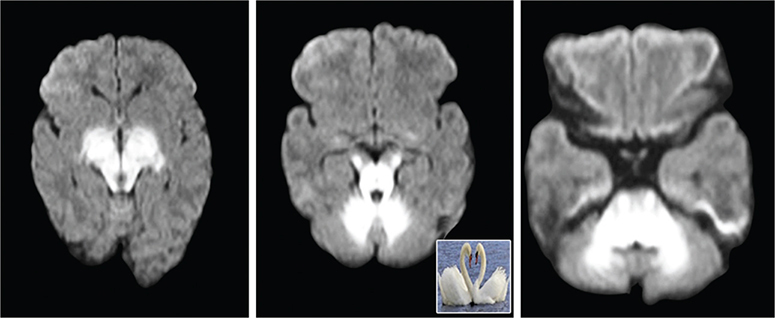
a. What is the likely diagnosis?
b. What diagnostic test would you like to do and what will it reveal?
c. What is the characteristic finding in MRI brain?
d. Which cofactor supplementation is required in this condition? Is it effective?
Answer
| a. | Maple syrup urine disease (MSUD) |
| b. | Plasma amino acid profile by high-performance liquid chromatography (HPLC)—marked elevation in leucine, isoleucine, valine, and alloisoleucine, tandem mass spectrophotometry (TMS)—marked elevation in leucine, isoleucine, and valine, urine gas chromatography-mass spectrometry—elevation of multiple alpha-keto acids. |
| c. | Cytotoxic edema of myelinated white matter involving brainstem and cerebellum producing characteristic double swan appearance |
| d. | Thiamine; however, in neonatal onset MSUD, thiamine is not effective. |
THG10-002
A 5-year-old boy referred to your outpatient department (OPD) for evaluation of stroke which he had a few months back. You noticed that the boy has Marfanoid habitus. Ophthalmological examination revealed ectopia lentis.
a. What is the likely diagnosis?
b. Which enzyme is deficient?
c. What tests will you do to establish diagnosis?
d. Which vitamin therapy might help these patients?
Answer
| a. | Classical homocystinuria |
| b. | Cystathionine beta-synthase (CBS) |
| c. | Plasma total homocysteine levels. Confirmatory tests by mutational analysis of the CBS gene. |
| d. | Pyridoxine |
THG10-003
A 2-week-old infant comes to OPD with an abnormal newborn metabolic screening test indicating high levels of phenylalanine (Phe).
a. How would you approach the baby considering high levels of Phe in newborn screening?
b. How will you confirm the diagnosis?
c. Name two differential diagnoses of high plasma Phe levels.
d. How will you treat it?
Answer
| a. | Initial assessment would include thorough medical history including pregnancy and birth history. Any clinical signs such as hypopigmentation, unusual odor, although neonates are usually asymptomatic, picked up in newborn screening. |
| b. | A positive screening result has to be confirmed by quantitative amino acid analysis in plasma. A Phe value of >120–240 µmol/L is considered positive. A Phe to tyrosine ratio >3 is positive in phenylketonuria (PKU). |
| c. | Classical PKU and pterin defects |
| d. | Phe restricted diet. Maintain blood Phe levels at 120–360 µmol/L throughout the lifespan. Periodic monitoring of Phe levels is important, and care must be taken to avoid low levels of blood Phe concentration as it is harmful for brain development and function. Breast milk contains low Phe levels; hence breastfed infants are given Phe free formulas in measured quantity followed by breastfeeding. Pterin defects are treated with biopterin (sapropterin). |
THG10-004
An 8-year-old child referred from neurodevelopmental clinic for worsening abnormal movements. Child was first born of consanguineous couple. Examination revealed microcephaly, no organomegaly, fair skin and persistent choreoathetoid and dystonic movements. Evaluation revealed high phenylalanine level of 220 µmol/L.
a. What would you do to rule out pterin defects in this child?
b. How would you confirm the diagnosis?
c. What is the specific therapy?
d. Which medication would help to control the abnormal movements and why?
Answer
| a. | CSF and urine neopterin and biopterin levels |
| b. | Molecular diagnosis/exome sequencing |
| c. | Starting on sapropterin (Kuvan) along with Phe restricted diet |
| d. | L-DOPA and serotonin; replacement of neurotransmitters as pterin acts as cofactor for conversion to active neurotransmitters. |
| Treatment of biopterin disorders. |
| Drug | DDSS |
|---|---|
| Phe-reduced diet | Adjust Phe restriction according to Phe levels in DBS or plasma |
| Sapropterin dihydrochloride | Initially 2-5 mg/kg/day increasing up to a max of 20 mg/kg/day |
| L-DOPA/DC (DOPA decarboxylase) inhibitor (carbidopa/benserazide) 4:1 | 1-2 mg/kg/day, increasing by 1-2 mg/kg/day every 4-5 days up to maintenance dose of 10-12 mg/kg/day |
| 5-hydroxytryptophan (5-HTP) | 1-2 mg/kg/day, increasing by 1-2 mg/kg/day every 4-5 days up to maintenance dose of 8-10 mg/kg/day |
| Folinic acid | 15 mg/day |
THG10-005
An 8-month-old child presented with failure to thrive, features of liver cell failure and rickets. His birth history was normal. Newborn screening report showed mildly elevated tyrosine and the parents did not opt for further investigations at that time point.
a. What is the likely diagnosis?
b. What is the reason for rickets?
c. Which biochemical investigation would confirm the diagnosis?
d. What is the specific drug used in this condition?
e. Name an alternate treatment.
Answer
| a. | Classical tyrosinemia |
| b. | Renal tubular acidosis |
| c. | Urine succinylacetone |
| d. | Nitisinone/NTBC (2-(2-nitro-4-trifluoromethylbenzoyl)-1, 3-cyclohexanedione) |
| e. | Liver transplantation |
THG10-006
A 6-month-old child presented with lethargy, poor feeding, and respiratory distress. She was treated as bronchiolitis and referred for further management. On evaluation she had severe metabolic acidosis out of proportion to her illness and found to have ketonuria and severe ketosis. Her blood glucose was normal on admission.
a. What other baseline investigation is essential at this point?
b. What are the next lines of investigation?
c. What is the likely diagnosis?
Answer
| a. | Plasma ammonia |
| b. | TMS, urine GCMS |
| c. | Organic acidemia |
THG10-007
A 12-day old neonate presented with worsening lethargy. She was born as second child out of third-degree consanguineous marriage. First child died in the immediate neonatal period due to unknown etiology. She had a typical sweaty feet odor. Her baseline investigations revealed severe metabolic acidosis, hyperammonemia, and ketosis. Tandem mass spectrometry (TMS) showed elevated C5 levels.
a. What is the likely diagnosis?
b. Sodium benzoate should not be used to treat hyperammonemia in this condition. State True or False.
c. Name two chelating agents used to remove toxic metabolites in this condition.
Answer
| a. | Isovaleric acidemia (IVA) |
| b. | True; sodium benzoate acts by combining with glycine and can deplete the glycine levels, whereas glycine acts as chelating agent in IVA |
| c. | Carnitine and glycine |
THG10-008
A 6-month-old boy presented with 1 week history of dystonia and dyskinesia. He had mild respiratory infection preceding his illness. He was born at term by normal vaginal delivery. No perinatal problems. His development was normal till date. His head size is >90th centile. His weight and length are within normal limits. He has a 5-year-old elderly sibling who is well. His parents are healthy and there is no family history of dystonia. On investigation his CT scan showed bilateral subdural effusion.
a. What is the likely diagnosis?
b. Which biochemical investigation will help in diagnosis?
c. State the line of management.
Answer
| a. | Glutaric aciduria type I |
| b. | TMS (elevated glutarylcarnitine) and urine GCMS (elevated 3-hydroxyglutaric aciduria and glutaricaciduria) |
| c. | Low protein diet with special formula devoid of offending amino acid |
THG10-009
A term, male baby born to a non-consanguineous couple presented on day 2 with poor feeding, and lethargy. On admission, the baby was encephalopathic, and developed seizures, and irregular respiration followed by apnea. Sepsis screen was negative. Mother’s sister’s son died in the neonatal period due to unknown etiology. IEM was suspected. Baseline metabolic investigations (GALAK) showed hyperammonemia (2,100 µmol/L).
a. What is the likely diagnosis?
b. What tests will you do to establish the diagnosis?
c. What urgent lifesaving procedure must be initiated?
d. Name the four main principles of management in such conditions.
Answer
| a. | Ornithine transcarbamylase (OTC) deficiency |
| b. | Plasma amino acids, plasma acylcarnitine profile and urine organic acids and orotic acid |
| c. | Extracorporeal (EC) toxin removal—hemodialysis or hemodiafiltration or peritoneal dialysis (less effective) |
| d. | The four main principles of management are: |
| 1. | Substrate reduction: Discontinue feeding immediately (substrate reduction), which is the main source of protein or lipid. Optimize the caloric intake by intravenous administration of dextrose with high glucose infusion rate with or without 20% intralipid. In organic acidemia (PA and MMA), metronidazole for 7 days in a month is used to reduce the formation of organic acid from odd chain fatty acids. |
| 2. | Provision of deficient metabolites: Pyridoxine (15–30 mg/kg/day) in pyridoxine-dependent epilepsy. |
| 3. | Removal of toxic metabolites: Sodium benzoate therapy (250–500 mg/kg in two or three divided doses) is used for mild hyperammonemia. |
Extracorporeal toxin removal becomes necessary, especially when there is rapid deterioration in order to remove ammonia or leucine or any acid.
| 4. | Increase in enzyme activity: In acute stage, supplementation of vitamins and cofactors through intravenous route helps in increasing the enzyme activity. In chronic stage, oral supplementation is continued. Liver transplantation and stem cell transplantation used in protein metabolic disorders provide the deficient enzyme. |
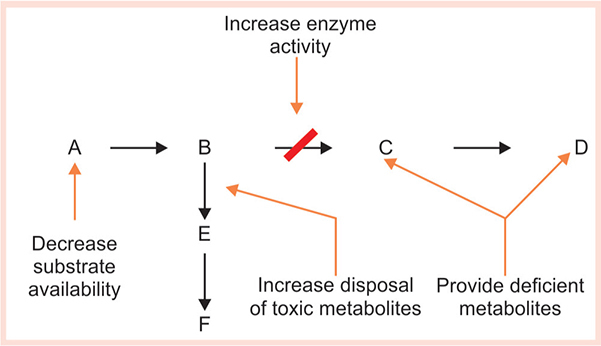
Four main principles of management in metabolic disorders.
THG10-010
A 6-day old neonate presented with acute encephalopathy. On evaluation her ammonia level is 1,000 mmol/L. She has respiratory alkalosis. Her plasma amino acid profile showed high citrulline and glutamine levels. Her argininosuccinic acid (ASA) quantification showed high ASA levels.
a. What is the diagnosis?
b. Quantified amount of breast milk should be started as part of her diet management along with special formula—True or False.
c. What is the hair change observed in this condition?
d. What is the curative treatment option available for this condition?
Answer
| a. | Argininosuccinic aciduria |
| b. | True |
| c. | Trichorrhexis nodosa |
| d. | Liver transplantation |
THG10-011
A 8-day-old neonate presented with refractory seizures not responding to multiple anticonvulsants. Electroencephalogram (EEG) shows burst suppression pattern.
a. Name a treatable condition presenting with refractory neonatal seizures.
b. How would you treat it?
c. What is the most important history to be elicited from the mother?
d. Which biochemical testing would clinch the diagnosis?
e. Enumerate two differential diagnoses for treatable refractory neonatal seizures.
Answer
| a. | Pyridoxine dependent seizures |
| b. | Intravenous pyridoxine 100 mg under EEG monitoring |
| c. | Increased fetal movements |
| d. | CSF and plasma α-AASA (Alpha aminoadipic semialdehyde) and pipecolic acid |
| e. | Pyridoxamine-5’-phosphate oxidase (PNPO) deficiency (treated with pyridoxal phosphate) and cerebral folate deficiency (treated with folinic acid) |
| Neurological presentations of IEM | | | | | | | | |
| Encephalopathy (predominantly) | | | Seizures (predominantly) | | | Hypotonia | | |
| | | | | | | | | |
| • | Urea cycle disorder | | • | Pyridoxine responsive seizures | | • | Mitochondrial diseases | |
| • | Maple syrup urine disease (MSUD) | | • | Pyridoxamine-5’- phosphate oxidase (PNPO) deficiency | | • | Zellweger spectrum disorder | |
| • | Organic acidemia | | • | Cerebral folate deficiency | | • | Nonketotic hyperglycinemia | |
| • | Fatty acid oxidation defects | | • | Biotinidase deficiency | | • | Urea cycle disorder | |
| • | Pyruvate dehydrogenase deficiency | | • | Sulphite oxidase deficiency | | | | |
| • | Pyruvate carboxylase deficiency | | • | Molybdenum cofactor deficiency | |
| • | Respiratory chain defect | | • | Nonketotic hyper¬glycinemia | |
| | | | | | |
| Treatable metabolic seizures | ||
| Conditions | Mechanism of seizures | Treatment |
| Pyridoxine-dependent seizures | Defect in neurotransmission | 100 mg IV under EEG monitoring; 15-30 mg/kg/day PO |
| PNPO deficiency | Defect in neurotransmission | Pyridoxal phosphate 30-50 mg/kg/day |
| Folinic acid responsive seizures | Defect in neurotransmission | 2-5 mg IV, 3-5 mg/kg/day |
| GLUT 1 deficiency | Energy deficiency | Ketogenic diet |
| Biotinidase deficiency | Disturbance in neuronal permeability | Biotin 10-20 mg/day |
| Serine synthesis defect | Substrate deficiency | Serine supplementation |
| Creatine deficiencies | Energy deficiency | Creatine supplementation |
THG10-012
A 45-day second born old male infant was brought with complaints of frequent seizures. Baby did not require resuscitation at birth, developed seizures at 8 hours of life, which was treated with three antiepileptics. Baby was discharged with oral antiepileptics. On 45th day of life baby developed multifocal clonic seizures and did not respond to multiple antiepileptic medication. Seizure did not get controlled with trials of pyridoxine (100 mg), biotin (10 mg/day), and folinic acid (3 mg/kg/day). Blood glucose and serum calcium was normal and sepsis screen was normal. Expanded newborn screening by TMS was negative. EEG showed burst suppression pattern. MRI showed multicystic encephalomalacia. Serum aminoadipic semialdehyde (AASA) and pipecolic acid was normal. Serum uric acid which was undetectable (<0.2 mg/dL). Urine Sulfite was 1,086.00 µmol/L (reference range 0–97).
a. What is the likely diagnosis? Any differential diagnosis?
b. What biochemical testing should be ordered at this stage?
c. How would you confirm the diagnosis?
d. Is there any specific treatment available?
e. What is the prognosis?
Answer
| a. | Molybdenum cofactor deficiency (MoCD); differential diagnosis—sulfite oxidase deficiency; low uric acid is suggestive of MoCD rather than sulfite oxidase deficiency |
| b. | Urine sulfocysteine |
| c. | Molecular analysis/exome sequencing |
| d. | Cyclic pyranopterin monophosphate (cPMP) for molybdenum cofactor deficiency type A (MoCD) |
| e. | Poor prognosis with high mortality |
THG10-013
A 13-month-old girl baby presented with delayed development and infantile spasms since 6 months of age which continued despite antiepileptic drug treatment. Although initial developmental milestones were normal, her development after the onset of seizures regressed to a 3-month-old level. On physical examination, microcephaly was noted. Her MRI was normal, and EEG showed hypsarrhythmia. Her metabolic screening test, including TMS, blood amino acid, lactic acid, pyruvic acid, and urine organic acid, were found to be normal. On cerebrospinal fluid (CSF) examination, her glucose level was low at 30 mg/dL compared to blood glucose at 103 mg/dL with normal protein and cell count.
a. What is the likely diagnosis?
b. How would you confirm the diagnosis?
c. What is the best available option to control her seizures?
d. Name the eye finding found associated with this condition.
Answer
| a. | GLUT 1 deficiency (glucose transporter); persistently low CSF glucose in the absence of other features of meningitis suggests GLUT 1 deficiency |
| b. | Molecular analysis/exome sequencing |
| c. | Ketogenic diet |
| d. | Paroxysmal eye head movement |
THG10-014
A 10-month-old boy was referred with severe psychomotor retardation and different types of intractable seizures including generalized tonic clonic, atonic, and myoclonic seizures not controlled with multiple anticonvulsants and trial of pyridoxine and biotin. He was the only child born to nonconsanguineous parents. The antenatal, perinatal, and neonatal periods were uneventful. EEG showed epileptic activity, and magnetic resonance imaging of the brain showed cortical and subcortical hypotrophy as well as evidence of demyelination. Blood glucose and serum calcium were normal and sepsis screen was negative. His amino acid profile revealed low serine levels.
a. What is the likely diagnosis?
b. Name the extreme form of this condition which can present in antenatal period itself.
c. How would you treat this condition?
Answer
| a. | Serine synthesis defect |
| b. | Neu-Laxova syndrome; maternal serine supplementation can be tried during the next pregnancy from first trimester onward |
| c. | Serine supplementation in the child |
THG10-015
A 2-month-old child born out of consanguineous marriage presented with progressively worsening liver function and ascites. Liver function test (LFT) showed elevated direct hyperbilirubinemia and elevated transaminases. Her plasma amino acid profile revealed elevated tyrosine and methionine and normal urine succinylacetone. Her galactosemia profile was normal and bile acid levels were normal. Surgical causes for cholestasis were ruled out. Previous sibling has died due to liver cell failure.
a. What is the likely diagnosis?
b. How would you confirm the diagnosis?
c. Liver transplantation is curative—True or False.
Answer
| a. | Mitochondrial DNA depletion disorder. Any liver dysfunction tyrosine can be elevated. |
| b. | Exome sequencing as this is nuclear inheritance. |
| c. | False as it tends to recur. |
| Hepatic presentations of IEM | | | | | | | | |
| Liver cell failure | | | Cholestasis | | | Hepatomegaly with hypoglycemia | | |
| | | | | | | | | |
| • | Mitochondrial disorders | | • | Bile acid synthesis defect | | • | Glycogen storage disorder I | |
| • | Galactosemia | | • | Niemann-Pick type C | | • | Gluconeogenesis defects | |
| • | Tyrosinemia type I | | • | Citrin deficiency | | | | |
| • | Hereditary fructose intolerance | | | | |
| • | Hyperornithinemia-hyperammonemia- homocitrullinuria (HHH) syndrome | |
| • | Congenital disorder of glycosylation (CDG) | |
| | | |
Causes of infantile liver cell failure are as follows:
| • | Gestational alloimmune liver disease (GALD) |
| • | IEM: |
| ◆ | Mitochondrial disorders |
| ◆ | Galactosemia |
| ◆ | Tyrosinemia type I |
| ◆ | Hereditary fructose intolerance |
| ◆ | HHH syndrome |
| ◆ | CDG |
| • | Infection: |
| ◆ | Hepatitis viral infection |
| ◆ | Other viral etiology—Epstein–Barr virus (EBV), herpes simplex virus (HSV), and parvovirus |
| • | Toxic: |
◆ Paracetamol poisoning
| • | Hemophagocytic lymphohistiocytosis (HLH) |
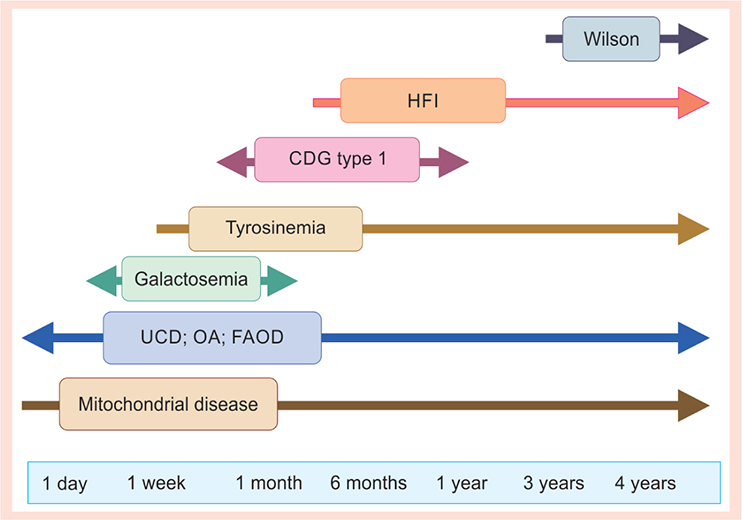
Metabolic etiology of liver cell failure in specified age groups.
(CDG: congenital disorder of glycosylation; FAOD: fatty acid oxidation defect; HFI: hereditary fructose intolerance; OA: organic acidemia; UCD: urea cycle disorders)
THG10-016
A 3-week-old girl baby is admitted with a 2 day history of poor feeding, fever, and vomiting. On examination, her temperature is 38.8°C and she is jaundiced, floppy, and sleepy. Examination reveals a 4 cm hepatomegaly, a full fontanelle, reduced tone in all four limbs but normal tendon reflexes. Blood culture shows no growth at 48 hours. CSF microscopy: coliforms 4 × 10⁵ organisms/mL. Baby remains drowsy in spite of appropriate antibiotics and has conjugated hyperbilirubinemia.
a. What is the most likely underlying diagnosis?
b. How do you confirm the diagnosis?
c. What is the bed-side clinical examination which helps in the diagnosis?
d. What is the specific treatment for this child?
e. What is the long-term complication anticipated in girl children?
Answer
| a. | Classical galactosemia |
| b. | Galactose-1-phosphate uridyl transferase (GALT) enzyme |
| c. | Red reflex—cataract |
| d. | Galactose free diet |
| e. | Premature ovarian failure |
THG10-017
A 12-year-old presented with intellectual disability, behavioral issues, and speech delay. Her MRI done at 7 years revealed cerebral atrophy. TMS and urine gas chromatography mass spectrometry (GCMS) was normal. Her plasma and urine creatinine levels were low with high guanidoacetate levels.
a. What is the diagnosis?
b. Which imaging study would have picked up the diagnosis at an earlier stage?
c. What is the treatment modality?
Answer
| a. | Creatine deficiency |
| b. | Any unexplained speech delay or unexplained seizures, MRS should be done to look for creatine peak |
| c. | Supplementation with creatine, low protein diet, and ornithine supplementation |
THG10-018
A 3-year-old girl, born to third degree consanguineous couple presented with seizures and encephalopathy following mild viral illness. She had transient hypoglycemia during the neonatal period, but she was not evaluated. During this admission, she was well grown, had a deep coma with tonic posturing, and continued to have seizures. Evaluation revealed hypoketotic hypoglycemia, hyperammonemia, elevated transaminases, and mild metabolic acidosis. CSF examination showed no evidence of meningitis.
a. What is the likely diagnosis?
b. Which biochemical investigation would help to confirm the diagnosis?
c. Name the preventive strategy to give during discharge advice.
Answer
| a. | Fatty acid oxidation defect |
| b. | TMS—elevated acyl carnitine profile |
| c. | Avoid fasting |
THG10-019
A 3-month-old baby born out of consanguineous marriage presented with history of poor feeding, fast breathing, and suck-rest-suck cycle. On examination, the baby had feeble pulses, hepatomegaly, cardiomegaly, and no murmur. Mother gave history of being diagnosed as hemolysis, elevated liver enzymes, and low platelets (HELLP) syndrome when she was pregnant with this baby. Echocardiogram showed poor cardiac contractility with no structural defect.
a. Which IEM presents with cardiomyopathy?
b. How will you confirm the diagnosis?
c. How will you treat it?
Answer
| a. | Long-chain 3-hydroxyacyl-CoA dehydrogenase (LCHAD) deficiency |
| b. | Plasma acyl carnitine assay including total and free carnitine levels |
| c. | Avoidance of prolonged fasting, aggressive treatment during illness, and maintaining constant energy supply by using simple carbohydrates. Low fat and high protein diet and supplementation of medium chain triglycerides (as a substrate of beta oxidation). |
THG10-020
A 6-month-old baby referred with history of hypoglycemic seizures. You noticed that the baby has doll facies, protuberant abdomen, and is short stature. She has hepatomegaly and renomegaly. Mother gives history of recurrent hospital infection.
a. What is the possible diagnosis?
b. What are the biochemical hallmarks of these disorders?
c. What are the long-term complications of this disease?
d. What is the main treatment modality?
e. Name the specific diet therapy in this condition.
Answer
| a. | Glycogen storage disorder GSD 1b |
| b. | The biochemical hallmarks are hypoglycemia, hyperlactatemia, hypertriglyceridemia, hyperuricemia, and hypoketonemia |
| c. | Hepatic adenomas with possibility of malignant transformation, pancreatitis, nephropathy, inflammatory bowel disease, osteoporosis, and polycystic ovaries in females |
| d. | Dietary treatment: Complex carbohydrate with high protein and low-fat diet |
| e. | Uncooked corn starch |
| Presentation of carbohydrate disorders with hypoglycemia | |||
| Presentation | Disorder | Presentation | Disorder |
| Ketotic hypoglycemia; hyperlipidemia; hepatomegaly; renomegaly; lactic acidosis; doll¬like face | GSD I | Hepatic dysfunction; hypoglycemia; cataract | Galactosemia |
| Both hepatic (hepatomegaly, hypoglycemia) and myopathy | GSD III | Hypoglycemia, lactic acidosis | F 1,6 DP def |
| Gastrointestinal discomfort and hypoglycemia on fructose intake | HFI | ||
| (F 1,6 DP def: fructose 1,6 diphosphatase deficiency; GSD: glycogen storage disorders; HFI: hereditary fructose intolerance) |
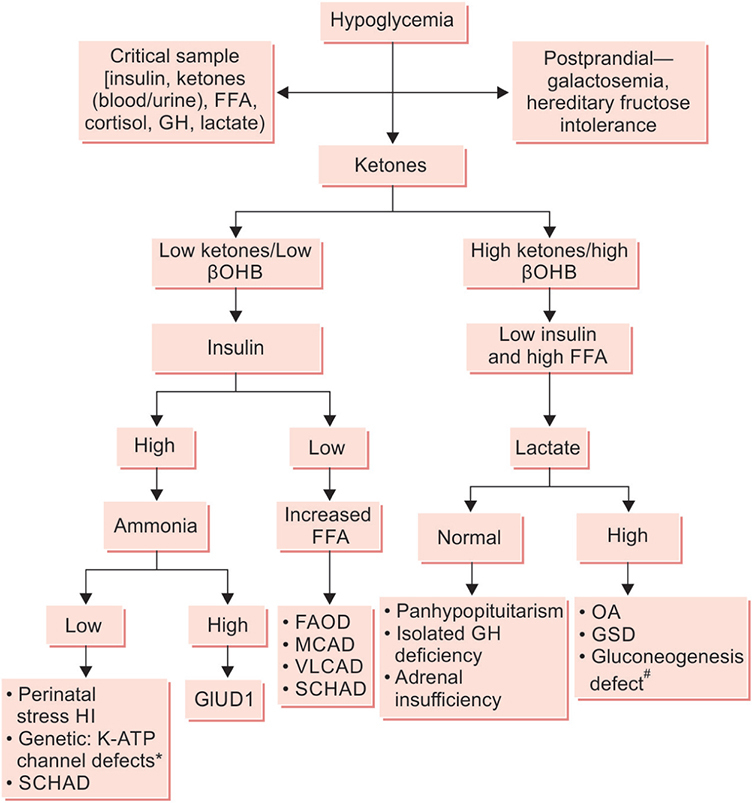
*Presents in neonatal period with persistent refractory hypoglycemia
#Fructose 1,6 diphosphatase deficiency
(βOHB: β-hydroxybutyrate; FFA: free fatty acids; FAOD: fatty acid oxidation defect; GH: growth hormone; GLUD1: glutamate dehydrogenase 1; GSD: glycogen storage disorder; HI: hyperinsulinism; MCAD: medium chain acyl-CoA dehydrogenase; SCHAD: short chain 3-hydroxyacyl CoA dehydrogenase; VLCAD: very long chain acyl-CoA dehydrogenase)
THG10-021
A 1-year-old boy presented with huge hepatomegaly and liver dysfunction. His birth history was uneventful. He developed repeated episodes of vomiting after starting on regular weaning diet from 6 months of age. None of these episodes were severe requiring hospital admission so far. Liver elastography showed grade 1 fibrosis. Particular food was removed from his diet after which he showed considerable improvement.
a. What is the likely diagnosis?
b. How would you confirm the diagnosis?
c. What is the likely diet modification?
d. What is the specific advice to be given for this condition while prescribing outpatient medicine?
e. Name the curative treatment option for this condition in case of worsening liver fibrosis.
Answer
| a. | Hereditary fructose intolerance/aldolase B deficiency |
| b. | Molecular testing/exome sequencing |
| c. | Fructose/sucrose/sugar/sorbitol free diet |
| d. | Avoid suspension/syrup form as they contain sorbitol |
| e. | Liver transplantation |
THG10-022
A 3-year-old girl presented with metabolic crisis with hypoglycemia, lactic acidosis, ketosis, and severe metabolic acidosis needing dialysis. She had past history of similar episodes since neonatal period. Her weight is on −1 Z score, her height is appropriate, and her development is appropriate for the age. In between episodes she remains well. Her TMS revealed elevated alanine and urine GCMS showed elevated glycerol.
a. What is the likely diagnosis?
b. How would you confirm the diagnosis?
c. Which other metabolic disorder can result in elevated glycerol in urine? What precaution should be taken for collecting urine in these children?
d. What is long-term outcome of this condition?
Answer
| a. | Fructose 1,6 diphosphatase deficiency |
| b. | Molecular testing/exome sequencing |
| c. | Glycerol kinase deficiency and essential fructosuria; avoid usage of glycerol containing soap before urine collection for GCMS analysis |
| d. | Normal development and intellect |
THG10-023
A 6-day-old term female neonate born out of nonconsanguineous marriage presented with lethargy, poor feeding, and found to be encephalopathic. Initial evaluation showed mild hyperammonemia and moderate lactic acidosis. There were no episodes of hypoglycemia. CSF lactate/pyruvate ratio was high. Neurosonogram shows cystic periventricular changes noticed soon after birth. TMS showed elevated citrulline with low glutamate.
a. What is the likely diagnosis? How would you confirm the diagnosis?
b. Name two differential diagnoses.
c. What is the likely outcome?
d. What is mode of inheritance?
e. Ketogenic diet is contraindicated. True or False
Answer
| a. | Pyruvate carboxylase deficiency; molecular testing/exome sequencing |
| b. | Pyruvate dehydrogenase deficiency, Krebs cycle disorders, and mitochondrial respiratory chain defects |
| c. | Poor prognosis: Type A (North American type), type B (French phenotype) both have uniformly poor prognosis. Type C has benign course and presents later in life. |
| d. | Autosomal recessive |
| e. | True. In pyruvate dehydrogenase deficiency, ketogenic diet is tried with variable success. |
THG10-024
A 6-day-old girl baby with normal perinatal transition presented with encephalopathy. Extensive evaluation was carried out. TMS and urine GCMS was inconclusive. With supportive therapy the baby was discharged home on day 17 of life. Later the molecular analysis revealed that the carbonic anhydrase VA (CAVA) deficiency.
a. Name the baseline biochemical abnormalities that can present in this child.
b. In which category were these disorders categorized before the advent of molecular diagnosis?
c. When initial metabolic crisis is managed well, these children generally do well. What is the reason behind it?
Answer
| a. | Hyperammonemia, metabolic acidosis, lactic acidosis, and normal ketones |
| b. | Transient hyperammonemia of neonates (THAN) |
| c. | Activation of carbonic anhydrase B enzyme |
THG10-025
A 1-month-old boy presented with failure to thrive, hypotonia and poor feeding. He was born at term by normal delivery. He has got high forehead, flat occiput, low nasal bridge, low set ears, micrognathia, and was floppy. He looks mildly jaundiced. His birth weight is 3.2 kg and his current weight is 2.9 kg. His investigations show altered LFTs and conjugated hyperbilirubinemia. X-ray revealed epiphyseal stippling. MRI was done.
a. What is the likely diagnosis?
b. What tests will you do to establish the diagnosis?
c. Name one antenatal finding associated with this condition.
d. What are the MRI findings seen in this condition?
Answer
| a. | Zellweger spectrum disorder |
| b. | Very long chain fatty acids (VLCFA) and plasmalogen levels |
| c. | Bilateral ventriculomegaly |
| d. | Ventriculomegaly and polymicrogyria |
THG10-026
Match the following.
| 1. | Methylmalonic acidemia | a. | Pyridoxine | ||
| 2. | Propionic acidemia | b. | Thiamine | ||
| 3. | Maple syrup urine disease | c. | Vitamin B12 | ||
| 4. | Glutaric aciduria type 1 | d. | Biotin | ||
| 5. | Homocystinuria | e. | Riboflavin | ||
Answer
1: c, 2: d, 3: b, 4: e, 5: a
THG10-027
Match the following antenatal ultrasound finding with the IEM condition.
| 1. | Nonimmune hydrops | a. | Chondrodysplasia punctata | ||
| 2. | Corpus callosal agenesis | b. | Glutaric aciduria type 2 | ||
| 3. | Renal cyst | c. | Zellweger syndrome | ||
| 4. | Epiphyseal stippling and binder phenotype | d. | Mucopolysaccharidosis type VII | ||
| 5. | Antenatal ventriculomegaly | e. | Mitochondrial respiratory chain defects | ||
| 6. | VACTERL association | f. | Pyridoxine-dependent seizures | ||
Answer
1: d, 2: f, 3: b, 4: a, 5: c, 6: e
THG10-028
A 16-year-old child presenting with myoglobinuria and rhabdomyolysis. Name the condition with the help of below clinical clue.
a. Precipitated by prolonged exercise after fasting and biochemical abnormality revealing hypoketotic hypoglycemia
b. Exhibiting second wind phenomenon
c. Unexplained recurrent myoglobinuria with normal acyl carnitine profile
d. Associated with persistent moderate lactic acidosis
Answer
| a. | Fatty acid oxidation defect—Carnitine palmitoyltransferase II (CPT II) deficiency and LCHAD |
| b. | McArdle disease/glycogen storage disorder type V |
| c. | Lipin-1 (LPIN 1) deficiency |
| d. | Mitochondrial respiratory chain defect |
THG10-029
A 2-year-old child otherwise asymptomatic presented with discoloration of urine color on exposure to air noticed since birth.
a. What is the likely diagnosis?
b. Which biochemical abnormality would confirm the diagnosis?
c. Which vitamin therapy should be started?
d. What is the definite medication which can modify the natural history?
e. Which system is involved in long-term and when does the clinical manifestation occur?
Answer
| a. | Alkaptonuria |
| b. | Elevated homogentisic acid in plasma and urine |
| c. | Vitamin C—prevents binding of homogentisic acid to cartilage |
| d. | NTBC/nitisinone |
| e. | Musculoskeletal system; clinical manifestation occurs in 3rd or 4th decade |
THG10-030
A 8-year-old child with uneventful antenatal history and normal perinatal transition presented with progressively worsening of spasticity of bilateral lower limbs. Plasma amino acid levels showed elevated arginine level.
a. What is the diagnosis?
b. What is the expected ammonia level?
c. What is the nutritional therapy recommended in this condition?
d. What is the curative therapy?
Answer
| a. | Arginase deficiency |
| b. | Mild elevation to normal ammonia |
| c. | Low protein diet |
| d. | Liver transplantation |
THG10-031
A 20-day-old neonate had accidentally detected lipemic serum. On further evaluation, serum triglyceride was >2,000 mg/dL. Molecular evaluation revealed a compound heterozygous variant in lipoprotein lipase (LPL) gene.
a. What is the diagnosis?
b. Name two complications in this condition.
c. Outline the treatment options.
Answer
| a. | Familial LPL deficiency |
| b. | Acute pancreatitis and tendon xanthoma |
| c. | Diet very low in fat (10–15%); special MCT formula with foremilk; and gemfibrozil/fibrates |
THG10-032
A 3-month-old child presented with seizures since 2 months of age. Hair appears sparse after tonsuring the head (shown in given image). TMS showed elevated C5OH levels and urine GCMS was normal.
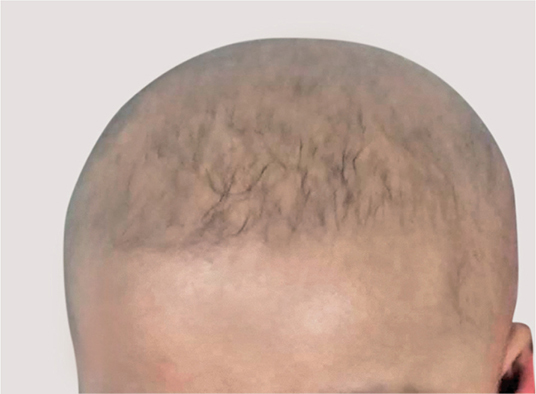
a. Which biochemical testing would help to confirm the diagnosis?
b. Name a differential diagnosis.
c. What is the treatment?
d. What is the likely prognosis?
e. What could have prevented this presentation?
Answer
| a. | Serum biotinidase level |
| b. | Holocarboxylase deficiency; urine GCMS usually shows elevated organic acids unlike biotinidase deficiency where urine organic acid elevation is inconsistent |
| c. | Oral biotin supplementation |
| d. | Earlier the treatment is instituted, better is the prognosis; residual intellectual impairment, hearing and visual impairment often noticed in those treated beyond neonatal period |
| e. | Neonatal screening and early biotin supplementation. |
THG10-033
A 7-month-old male infant, first born to non-consanguineous parents, presented with gray brittle hair since 3 months of age, reduced activity since 4 months of age and left-sided turning of head and facial twitching lasting for 10–15 minutes since 5 months of age (shown in given image). His serum biotinidase level was normal.
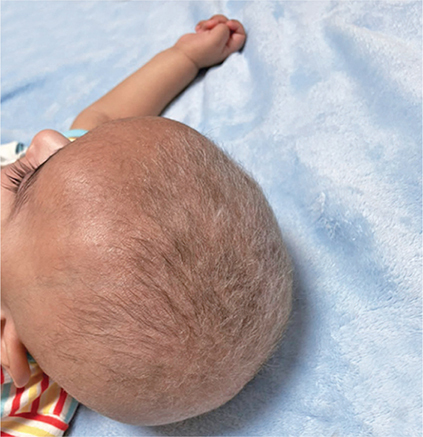
a. What is the next best step?
b. What is the likely diagnosis?
c. Which investigation modality supports the diagnosis and what is the specific finding?
d. What is the appropriate management?
Answer
| a. | Serum copper and ceruloplasmin |
| b. | Menkes kinky hair disease |
| c. | Either microscopy of hair which shows pili torti or MRI showing intracranial arterial tortuosity |
| d. | Parenteral copper histidine therapy |
THG10-034
A 15-year-old girl presented with severe acute abdominal pain not responding to routine analgesics. On examination, she was tachycardic and had hypertension. She previously had similar episodes requiring hospitalization and intravenous medication. She also had features of peripheral neuropathy. Her serum electrolytes showed hyponatremia. There is no history of toxin exposure.
a. What is the likely diagnosis?
b. What biochemical test would clinch the diagnosis?
c. Which therapy would help in acute stage?
d. What is the definitive treatment?
Answer
| a. | Acute intermittent porphyria |
| b. | Elevated urinary porphobilinogen. |
| c. | Intravenous hemin therapy |
| d. | Liver transplantation |
THG10-035
A 4-year-old child presented with progressively increasing spleen size with pancytopenia. Infectious etiology and malignancy had been ruled out. He also had mild supranuclear gaze palsy and exhibited oculomotor apraxia.
a. What is the likely diagnosis?
b. How would you confirm the diagnosis?
c. What is the specific therapy available for this condition?
Answer
| a. | Gaucher disease |
| b. | Enzyme analysis—reduced beta glucosidase activity |
| c. | Enzyme replacement therapy. Substrate reduction—miglustat |
THG10-036
A 9-month-old female child presented with history of recurrent infection, febrile episodes, recurrent diarrhea, and failure to thrive. On examination, she had anemia, hepatosplenomegaly, and lymphadenopathy. She had subtle dysmorphism, but her cognition was appropriate for age. She had been evaluated for immunodeficiency which showed elevated immunoglobulin D (IgD) levels. She had high creatine phosphokinase (CPK), low cholesterol, and altered LFT. Her urine GCMS showed elevated mevalonolactone levels.
a. What is the likely diagnosis? Name a differential diagnosis.
b. How would you confirm the diagnosis?
c. Name a treatment modality which might help in this condition.
Answer
| a. | Mevalonic aciduria; differential diagnosis—hyper IgD syndrome (HIDS) |
| b. | Molecular analysis |
| c. | Bone marrow transplantation/IL-1 receptor antagonist |
THG10-037
Match the following mucopolysaccharidosis based on the clinical features.
a. Normal intelligence with severe dysostosis with short stature |
b. Hyperactive disorder with hirsutism |
c. Coarse facial features with progressive intellectual disability with corneal clouding |
d. Coarse facial feature with normal intelligence with corneal clouding and normal height |
e. Coarse facial features with papular rash over the back in scapular region without corneal clouding |
Answer
A: iv, B: iii, C: i, D: v, E: ii