MNJ32-001
A 6-year-old child presents with fever and toxemia:
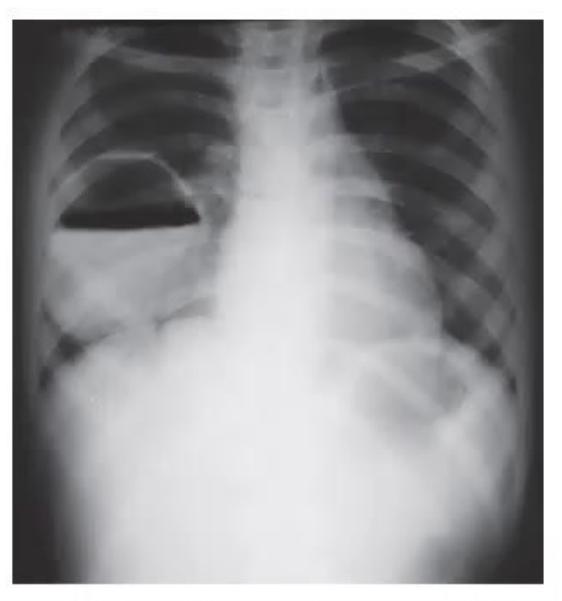
- Give three differential diagnosis for this X-ray picture.
- Give three modalities of management.
Answer
No model answer in source material.
MNJ32-002
See the X-ray image below and answer the following questions.
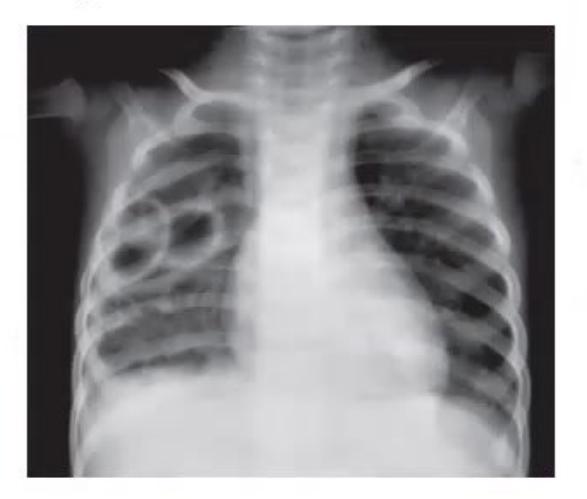
- What 1s the diagnosis?
- What are the likely two organisms?
Answer
Pneumatoceles
- Staphylococcus, Klebsiella
MNJ32-003
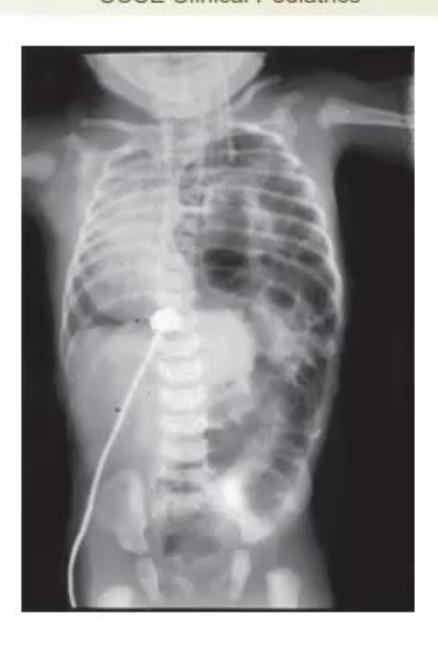
- What 1s the abnormality?
- What is the diagnosis?
- How 1s it suspected clinically?
- What 1s the management?
Answer
oper Reo Bowel loops 1m left hemithorax, mediastinal shift to right
- Congenital diaphragmatic hernia
- Respiratory distress
Mediastinal shift
Bowel sounds in the thorax
Scaphoid abdomen
. Avoid B and M ventilation
Prop up and decompress stomach
Ventilate
Treat PPHN
Surgical correction
Antenatal tracheal hgation
MNJ32-004
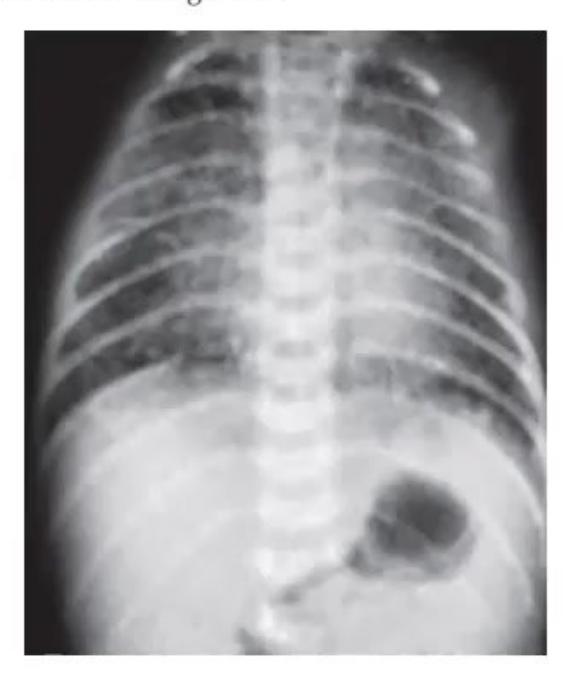
- Describe the X-ray in a neonate with difficult labour.
- Diagnosis.
- Give three recent advances in management.
Answer
. Hyperinflated lung fields with areas of atelectasis interspersed with areas of overinflation
- . MAS (Meconium aspiration syndrome)
- . Lung lavage
Surfactant instillation
HFOV (High frequency ventilation)
NO (Nitric oxide for PPHN)
Liquid ventilation
MNJ32-005
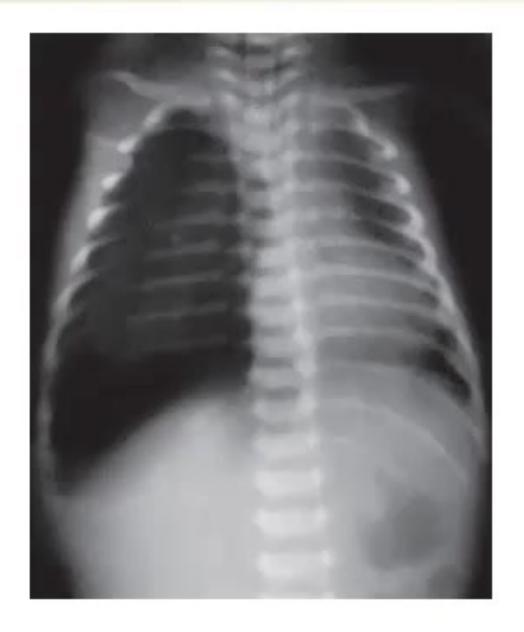
- What is the abnormality?
- Three high risk situations when this condition 1s imminent.
- Management
Answer
hme Tension pneumothorax
- . CDH (Congenital diaphragmatic hermia)
Ventilation
Post-surfactant ventilation
- Chest tube drainage
MNJ32-006
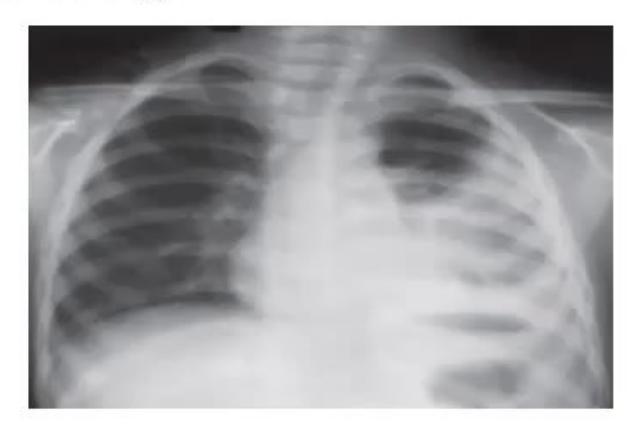
- Whats the X-ray suggestive of?
- Whats the likely organism?
- What are the complications?
- What ts the drug of choice?
- Whats the duration of therapy?
Answer
eR oe Lobar pneumomia
- Pnemococous /Staphylococcus
- Synpneumoruc effusion, empyema,
- Pemecillin for susceptible organism and cefotaxime/vancomycin for penicillin resistant organism
- 10-14 d
MNJ32-007
In an exudative pleural fluid
Proteins > ........
Cell count > | wu.
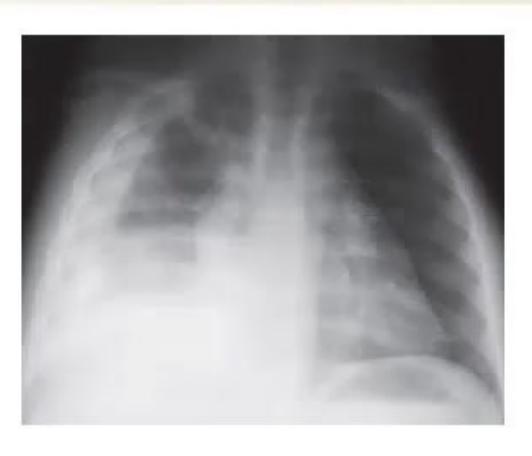
- What 1s the diagnosis?
- Fillin the blanks:
Answer
on Pleural effusion (mght)
-
- Fill m the blanks:
in an exudative pleural fhad
Proteins >3.0 g/dL
Pleural fluid LDH >200 IU/L
Fluid to serum LDH ratio >0.6
Cell count >1000
- Video assisted thoracoscopic surgery
- Miliary tuberculosis
- . 2HRZES +1HRZE + 5HRE
- . Differential diagnosis—chronic CHF, eosinophilic, staphylococcal pneumoma, hemosiderosis
- Pneumopericardium
- . Hamman''s sign
- Invasive ventilation with high pressure
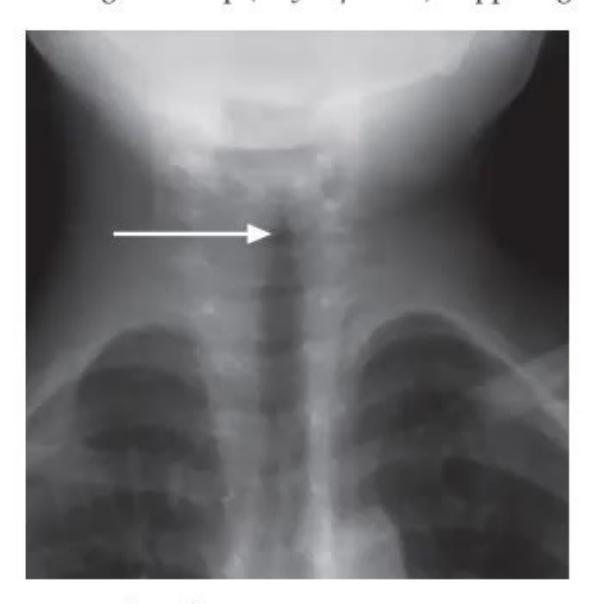
- Epiglottitis:- Thumb sign
- : Streptopneumonia
- . Cephalosporins /ampicillin/sulbactam
Note: Also see image of croup (very important) stepple sign.
MNJ32-008
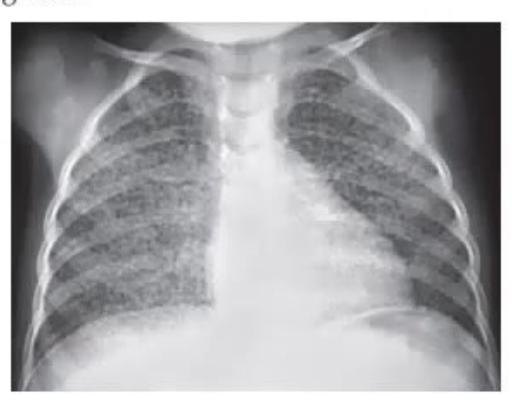
- Diagnosis.
- Whats the treatment (mention complete schedule)?
- Write 4 differential diagnosis
Answer
No model answer in source material.
MNJ32-009
- 3° Name one intervention which can lead to this.
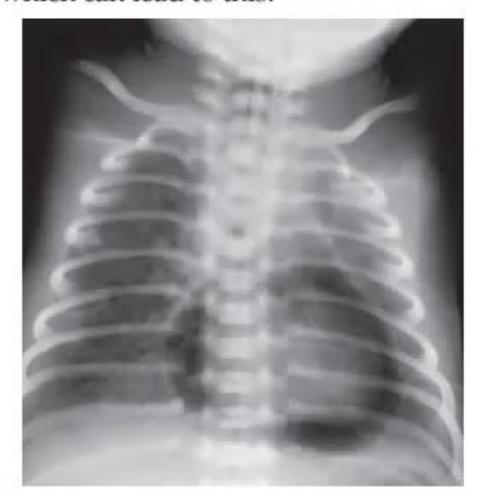
- What 1s the diagnosis?
- Whats the clinical sign for the diagnosis called?
Answer
No model answer in source material.
MNJ32-010
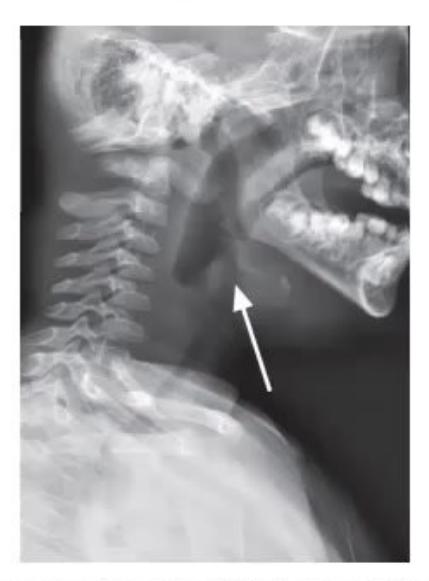
- What is the diagnosis?
- Which 1s the commonest organism implicated in this disease?
- What antibiotics are useful in this condition?
Answer
No model answer in source material.
MNJ32-011
A 16-year-old boy followed up in your clinic for several years. His latest lung function tests are:
| FVC | 85% |
|---|---|
| FEV1 | 57a |
| PEF | 53%o |
| FEV1/FVC | 67% |
- Diagnosis.
- Which of the above measurement is best for monitoring?
Answer
1 Asthma (severe persistent)
- 2, FEV1/FVC (67%)
MNJ32-012
Write changes in RNTCP guidelines in following aspects:
- Explain categorizations
- Definition of smear +ve
- Definition of TB suspect in HIV
- Drug in HIV
- XDRTB
Answer
1 Cat I: New cases irrespective 1f their status
- 2: Cat II: Previously treated case with treatment failure Smear +ve: Sputum samples collected are only "2" if one of two samples 1s positive
- TB suspect in HIV Any cough, fever, mght sweat, weight loss
- Drug in HIV: Rifabutin to be used
- XDR TB: XDR TB includes resistance to INH + rifampicin + injectables + fluoroquinolones
MNJ32-013
_A 11-year-old boy performed standard spirometry and produced the following results:
| Investigation | Actual | Predicted |
|---|---|---|
| FVC | 1.13 | 2.07 |
| FEV1 | 1.08 | 1.87 |
| FEV1/FVC | 95 | o7 |
| FEF 25-75% | 1.89 | 2.26 |
- What type of respiratory impairment is present?
- Give three possible causes for getting this result.
Answer
1 Restrnichve
- . Myasthenia gravis, fibrosing alveolitis, scoliosis 71
Ans. 14. 1. FEV1 Low
FEV1/FVC ratio <0.8
Improvement in FEV1 with inhaled B2 agonist 212%
Exercise challenge—worsering in FEV1 215%
. Morning to afternoon variation 220%
Ans. 15.1. Very severe pneumonia
. Central cyanosis
Inability to feed/drunk or vomited everything Become /lethargy
. IP (Indoor)
. Ampicillin + gentamicin IV for 5 days
or
Ceftriaxone IV for 5 days
Diagnosis: Meconium ileus
Primary disease: Cystic fibrosis
- . Mode of inhentance: Autosomal recessive
- . Confirmatory tests (any 2):
-
- Sweat chloride test
-
- Nasal potential difference
-
- Gene (mutational studies)
-
-
- Neonatal screening test: IRT (immunoreactive trypsinogen)
Ans. 17. 1. Retropharyngeal abscess.
-
- Group A Streptococcus, anerobic bacteria, Staphlyococcus aureus, H. influenzae
- ard generation cephalosporin + ampicilin: Sulbactam f clindamycin.
- Upper airway obstruction, aspiration pneumonia, mediastmuitis.
- Parapharyngeal abscess extending to cause septic thrombophlebitis of the internal jugular vein and embolic abscess in the lungs.
Ans. 18. 1. X-ray
- * Eventration of left dome of diaphragm
- * Shift of mediastinum
- * Tracheal shift
- * Fracture/operative resection of left clavicle with callus formation
- . Per operative damage to nerve fibers (C3—C4—C5)/phrenic nerve left brachial plexus leading to paralysis of left dome of diaphragm.
- . Erb's palsy: C5-C6
Klumpke's palsy: C8-T1
- . Horner's: Miosis + ptosis + enophthalmos + anhidrosis.
- X-ray showed opacification and low volume right lung, displaced mediastinum to nght side and over inflated left lung
- . Scimitar syndrome (anomalous pulmonary venous return with lung hypoplasia)
- . Superior and inferior pulmonary veins drain in to the IVF
- . Oligohydramnios

Weber-localization of sound to one side implies either conductive hearing loss on that side or sensorineural hearing loss on other side
Rinne-positive mean normal or SNHL, Negative means conductive loss
MNJ32-014
A spirometry is performed in an asthmatic child:
- * FEVI
- * FEV1/FVC
- * Improvement in FEV1
- * Exercise challenge
- What will be abnormalities in the following:
- What PEFR variation that 1s consistent with a diagnosis of asthma?
Answer
No model answer in source material.
MNJ32-015
An infant has cough and difficult breathing. The respiratory rate 70/min. The infant has severe respiratory distress (head nodding):
- What does the infant have as per ARI programme?
- What are other criteria for this status?
- Will you treat this infant as OP or IP?
- What is the antibiotic therapy regimen?
Answer
No model answer in source material.
MNJ32-016
A 3-day-old male child born of third degree consanguineous marriage as a full term normal delivery, 3 kg, history of cried immediately, brought on day 3 with abdominal distension, noticed since day 2 of life. Today, baby also had bilious vomiting. On examination, no congenital abnormality was detected. Vitals stable, anus patent, doughy abdomen. Pediatric surgeon advised conservative management and a barium enema. Post barium enema procedure large amount of meconium was passed. Also micro-colon was noted. Child gradually improved:
- Give diagnosis.
- Mode of mmheritance.
- Confirmatory tests (any 2).
- Neonatal screening test.
Answer
No model answer in source material.
MNJ32-017
3-year-old child with fever, irritability, poor feeding and drooling of saliva:
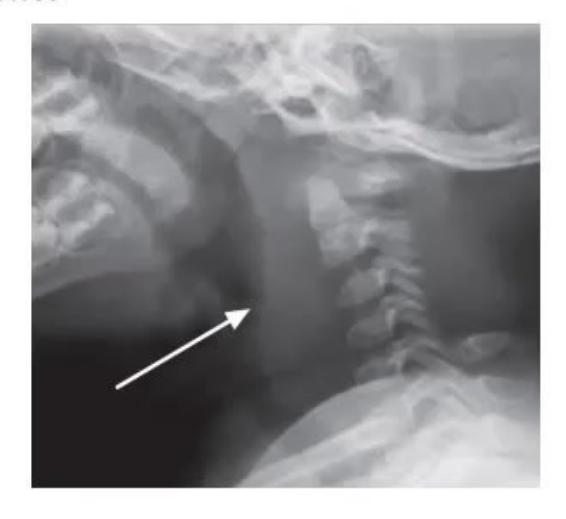
- What 1s the diagnosis?
- Name two most common micro-organisms associated
- Whats the drug of choice?
- Name two complicatons.
- What 1s Lemuerre disease?
Answer
No model answer in source material.
MNJ32-018
Full term vacuum delivery noticed to have inability to move left upper limb at all (C5-T1 injury). He was following regularly for management of the same. Corrective neurosurgical procedure was performed at 6 months of age. Now 8 months old, brought with history of breathlessness noticed since last 6 weeks, no fever:
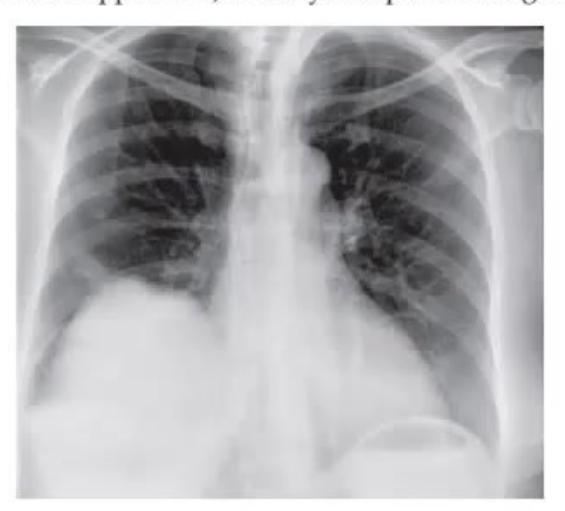
- Mention abnormalities on X-ray
- Possible reason for this situation.
- Mention nerve roots involved in Erb's and Klumpke's palsy.
- What other signs (other than upper limb) would you expect at the age of 4 months in this child?
Answer
No model answer in source material.
MNJ32-019
A 6 years old boy present with complaints of cough, fever and dyspnoea. On examination, he is tachypneic and her heart sound shifted to right side. Auscultation suggest decreased air entry to right side. His chest X-ray is given below.
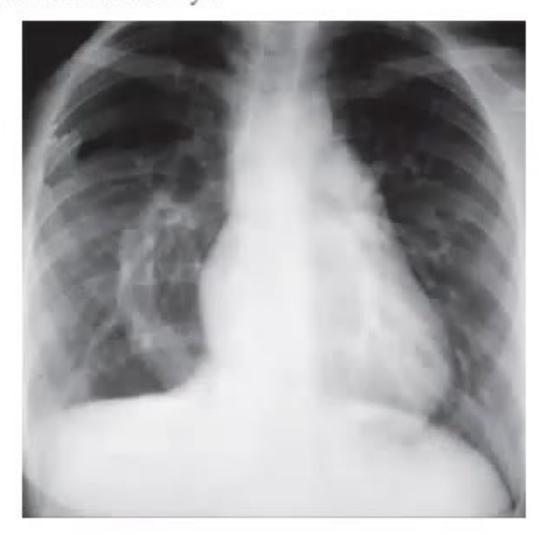
- Whats finding in this X-ray?
- What is diagnosis?
- What 1s basic vascular pathology behind this X-ray finding?
- What you will get in anetnatal history?
Answer
No model answer in source material.
MNJ32-020
-
Rinne-left ear positive, right ear negative
-
Rinne-left ear negative, right ear positive
-
Rinne-positive in both ears
-
Rinne-left ear negative, right ear positive
-
Rinne-left ear positive, right ear negative
-
-
a Conductive hearing loss of right ear
-
b Sensorineural hearing loss of left ear
- Weber-localizing to right ear
- Weber-localizing to right ear
- Weber-Equal
- Weber-localizing to left ear
- Weber-localizing to left ear
c. Normal hearing
d. Conductive hearing loss of left ear
e. Sensorineural hearing loss of right ear
Answer
No model answer in source material.
MNJ32-021
Sameer 12 years old boy has been admitted to the pediatric ward with respiratory problem. Lung function were performed
| Measured | Predicted | ||
|---|---|---|---|
| FVC FEV1 |
1.3 | 2.6 | |
| FEV1 | 1.1 | 2.3 | |
| FEV1/FCV% | 92 | 90 |
- What type of respiratory impairment he had according to these test result?
- What are 4 causes can present with similar lung picture?
- What respiratory impairment you will get in a cystic fibrosis child?
Answer
- Restrictive type
-
- Kyphoscoliosis, fibrosing alveolitis, Duchenne muscular dystrophy, GBS
-
- Restrictive type mainly but some time mixed
MNJ32-022
Match the vocal cord diseased with clinical conditions of
-
a. Vocal nodule
-
b Vocal cord dysfunction
-
d Unilateral vocal cord paralysis
-
e Bilateral vocal cord paralysis
- A 14 years known asthmatic boy present with complaints of recurrent wheeze during day and intermittent shortness of breathing that is associated with sensation of throat tightness. Some time when he get upset cough is associate with audible noise. These attacks no relived with his MDI therapy. On examination, you found inspiratory upper airway sound on auscultation. No other anomaly noted on examination.
- A 7 years old boy with pulmonary atresia and intact interventricular septum has just discharged from ICU after his surgery. His mother noticed that his voice sound is hoarse and weak. He also suffered from frequent chocking and coughing.
- 11 years old girl present to you for hoarseness of voice. She is part of school singing team and feel pain in throat while singing. Her mother told she started strenuous rehearsal for her school programme next month
a. Vocal nodule
c. Congenital laryngeal web
Answer
1 Vocal cord dysfunction—present with day tme wheezing Associated with asthma
-
- Unilateral vocal cord paralysis—vocal cord paralysis may occur after correction of cardiac surgery. Bilateral vocal cord paralysis present as stridor at rest.
-
- Vocal nodule—most common cause of chronic hoarseness m children. Present usually in singers.
MNJ32-023
A 4 years old boy known to be a patient of HIV positive is admitted with complaints of repsiratory distress. After 4 days of routine broad spectrum antibiotics and other management the condition deteriorated and he needed ventilation. On auscultation chest is clear but X-ray showed bilatral infiltrates with ground glass shadow.
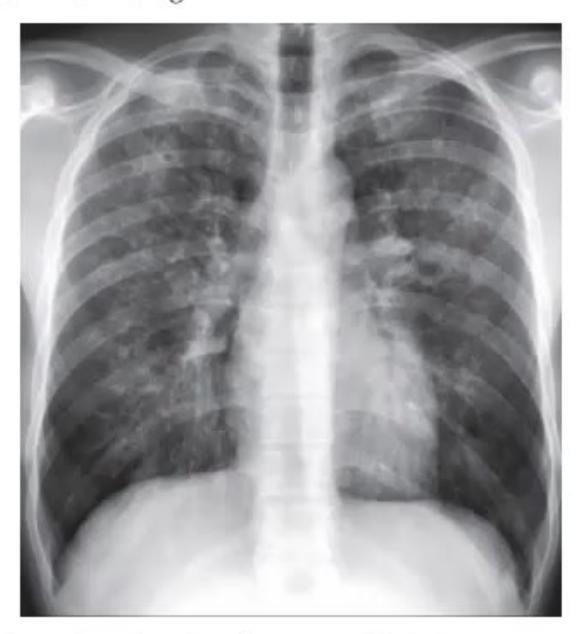
- Whats possible diagnosis
- Name two drugs that you will order immediately
- Name 2 another drugs that can be use for treatment
- What will be possible ABG finding
Answer
1 Pneumocystis jiroveci pneumonia
-
- High dose cotrimoxazole and stermd
-
- Pentamudine and dapsone
-
- Hypoxemia
MNJ32-024
Regarding cleft lip and palate (mark true and false)?
- Can be associated with Pierre Robin syndrome?
- The extent of cleft lp and palate can be readily visualized in 20 weeks scan.
- Folic acid supplementation in pregnancy has been shown to have some evidence to reduce this condition
- Never cause any reparatory problem.
- Common presentation in Edward syndrome
- Age of repair is 12 weeks for both
Answer
T, F, T, F, T, F
MNJ32-025
A 12 years old boy presented with complaints of high fever, cough and de-saturation. He needs oxygen to maintain his saturation. He was started on IV antibiotics and later on oral oseltamivir. He improved well after that and maintained saturation on room air. Serial X-rays showed right upper lobe collapse. CT scan was done (Image below). Answer the following questions as per CT scan observation.
- ii. What are other possible associated congerital anomalies?
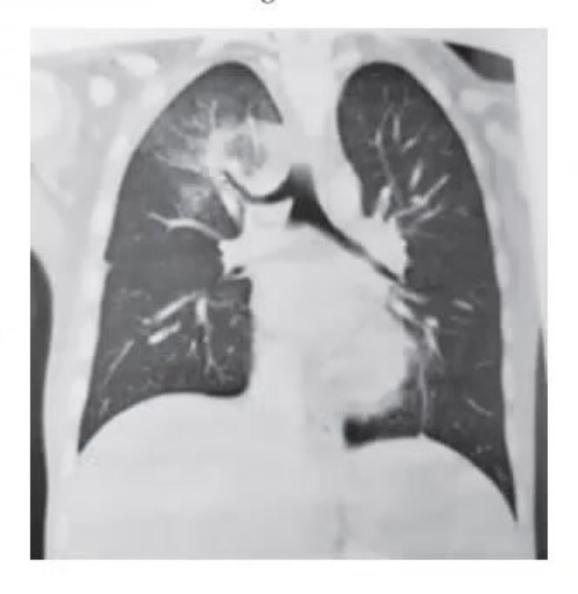
u. What are possible treatment options at this stage?
Answer
1 Aberrant tracheal bronchus supplying right upper lobe
-
- Physiotherapy, inhaled bronchodilator
-
- Tracheal esophageal fistula, VATER syndrome, trisomy 21