VVK07-001
A 5-year-old child has a massive GI bleed. He weighs 20 kg.
His clotting time is 13 minutes. His PT test is 42 secs, (control 15 secs) and aPTT test is 64 secs, (control is 29).
His Hb is 11 g and platelet count is 2.5 lakhs.
a. What blood product would you transfuse?
b. How much of above transfusion is required?
c. List 4 other indications for transfusion with this blood product.
Answer
No model answer in source material.
VVK07-002
11-year-old girl presents to ED with breathing difficulty since 1 day. She has been admitted with a similar condition 2 years back. This was associated with a bout of hemoptysis back then. She was found to have severe anemia and received 2 units of blood. She has been on iron therapy since due to persistently low Hb.
O/E she is very pale with not much chest findings.
Investigations revealed a Hb of 5, TLC and platelets are normal. Her MCV is 65, RDW is 21 and RBC count is 2 million with low MCH and MCHC.
Chest X-ray shows bilateral infiltrates.
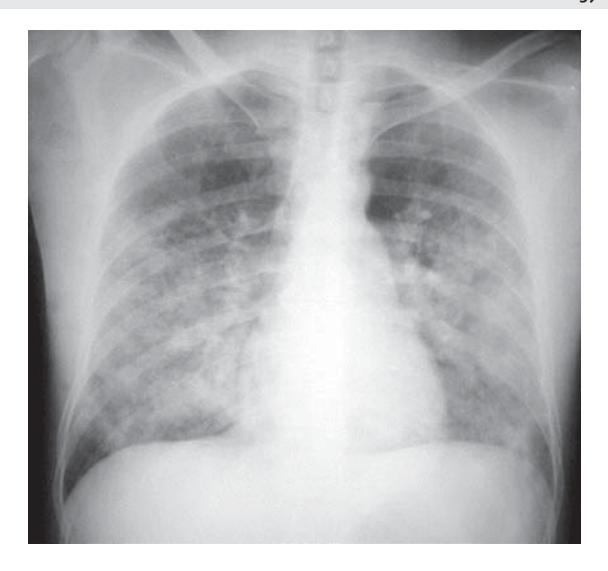
a. What is your diagnosis?
b. What are the various ways to confirm the diagnosis?
c. What is the drug commonly used to treat this?
Answer
No model answer in source material.
VVK07-003
A 13-year-old girl presents with fever since last 3 months. This is associated with night sweats. She has lost 10 kg weight in last 2 months. O/E she has supraclavicular node 3 × 3 cm, bilateral submandibular and jugulodigastric node 2 × 2 cm. No organomegaly is present. Biopsy of the lymph node shows.
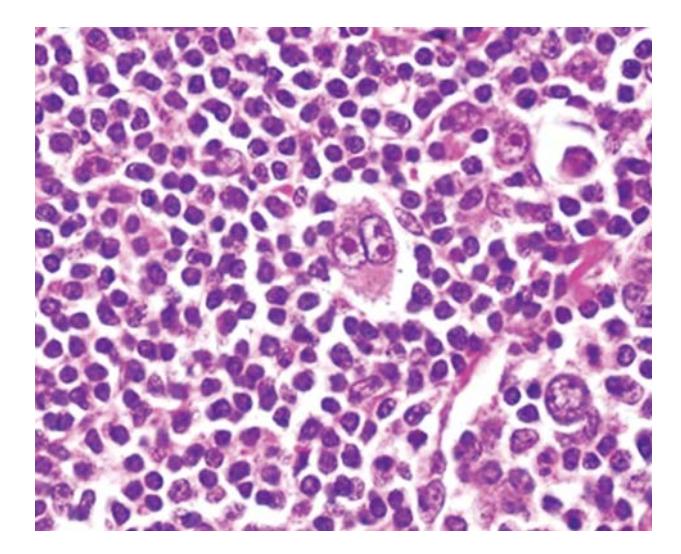
a. What is the diagnosis?
b. What is the classification?
c. What is the staging called?
d. Name 4 drugs commonly used to treat this condition.
Answer
No model answer in source material.
VVK07-004
A 2-years-old female child has fever and lymphadenopathy for 3 weeks
- r 0&IBTTQMFOPIFQBUPNFHBMZ
- r $#$ TIPXT)C
5-$
QMBUFMFUT /PJNNBUVSFDFMMTJO UIF smear. - r #POFNBSSPXTIPXTFYUFOTJWFIFNPQIBHPDZUPTJT
- r 'BUIFS TBZT UIBU UIFQSFWJPVTDIJMEEJFEBU ZFBSPGBHFXJUIB TJNJMBS illness. She too had a lack of blood formation and bleeding.
a. What is the likely diagnosis?
b. What are the other biochemical abnormalities that will lead to the diagnosis?
Answer
No model answer in source material.
VVK07-005
A 1.5-year-old boy presents with swelling in the right ankle after a trivial fall. He has history of easy bruisisng a prolonged bleeding from injection site. His maternal uncle died of a bleeding disorder.
a. Name a screening test to clinch the diagnosis.
c. Name the drug used to control bleeding in case he suffers another joint bleed.
Answer
No model answer in source material.
VVK07-006
A 6-month-old child is being evaluated for purpura. His low platelet count is 40000/cumm. He has been on various skin ointments for a nonresolving dermatitis. He has been given antibiotics twice for management of otitis media and LRTI.
a. What is the diagnosis?
b. Name two screening tests.
c. What is the treatment?
d. What are the long term risks?
Answer
No model answer in source material.
VVK07-007
A 4-year-old boy presents with fever for 10 days, lethargy, poor oral intake, abdominal distension and decreased urine output. He is sick looking and has diffuse tenderness in his abdomen. USG abdomen reveals multiple lymph nodal masses with hepatosplenomegaly. His CBC is normal with LDH of 12000 and urea of 120 and creat of 2.2. His uric acid is 12.5.
a. What is the likely diagnosis?
b. What is the treatment to be initiated at the primary care center?
c. What is the novel agent used to treat this complication?
d. What is the characteristic histological appearance of this condition?
e. What is the overall prognosis of this condition?
Answer
No model answer in source material.
VVK07-008
A 17-year-old boy presents with progressive lethargy, loss of appetite.
- r O/E Pallor, ecchymotic spots, no lymphadenopathy or organomegaly, no dysmorphology
- r Investigations
- m $#$
- Hb 7
- m 5-$
- m 1MBUFMFUDPVOU
- m %-$/-&.
- m .$7
- m 3#$
- m 3%8
- m 1FSJQIFSBMTNFBS1BODZUPQFOJB
/PJNNBUVSFDFMMT - m 3FUJDDPVOU
ǔFCPOFNBSSPXQJDUVSFPGUIJTQBUJFOUTTIPXT
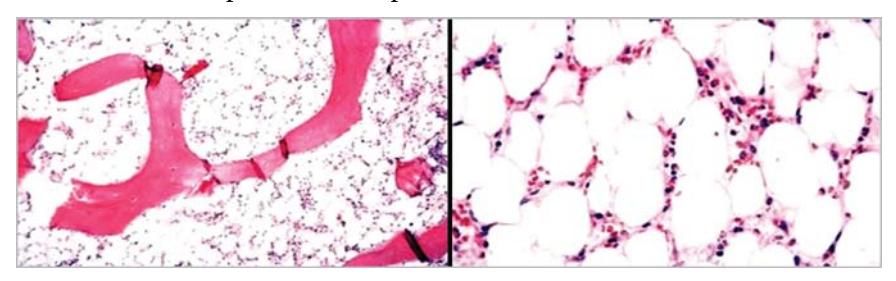
a. What is the diagnosis?
Answer
No model answer in source material.
VVK07-009
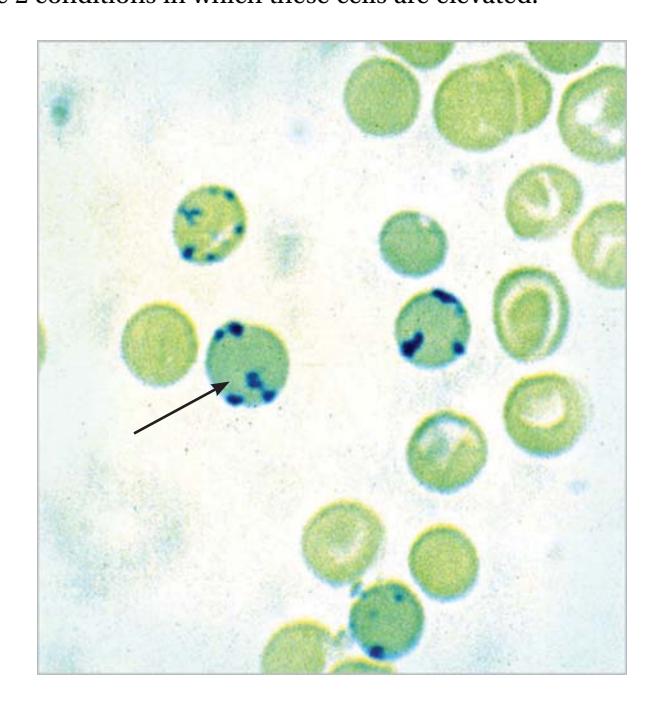
a. Name the cell marked by the arrow.
b. Name the dye used to stain the cell.
c. What is the normal value of this cell in a child?
Answer
No model answer in source material.
VVK07-010
A 12-year-old male presents with severe pancytopenia. His bone marrow biopsy confirms severe aplastic anemia. He is referred for a BMT to higher center. O/E: he is found to have the following.
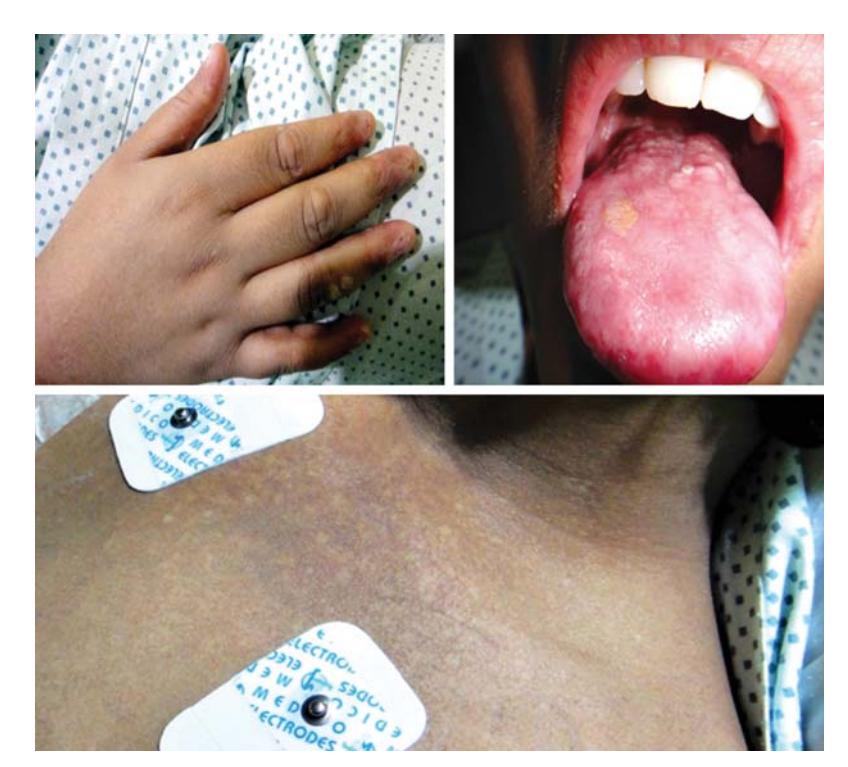
a. What is your diagnosis?
b. What is the basic pathophysiological defect in these patients?
c. How do you treat them?
d. What are other potential lethal complications?
Answer
No model answer in source material.
VVK07-011
A 7-year-old male child presents with fever, pallor and ecchymotic spots.
- r 0&QBMMPS
- r 4QMFFODN#-$.
- r -JWFSDN#3$.
- r 5FTUFTFOMBSHFE
- r $#$TIPXTQBODZUPQFOJB
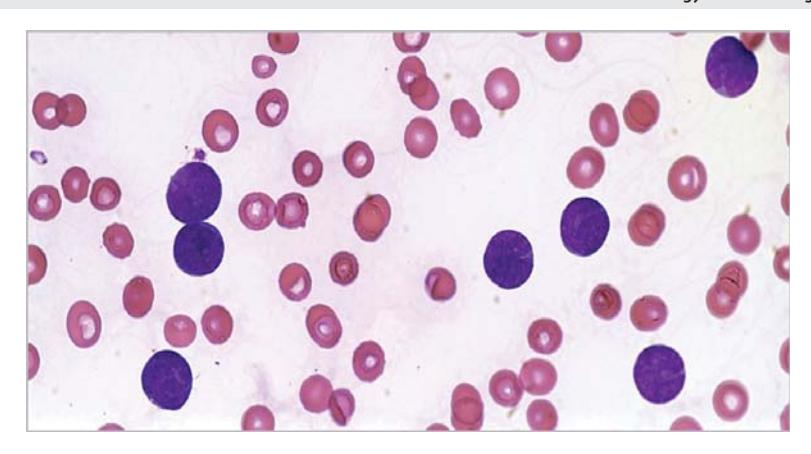
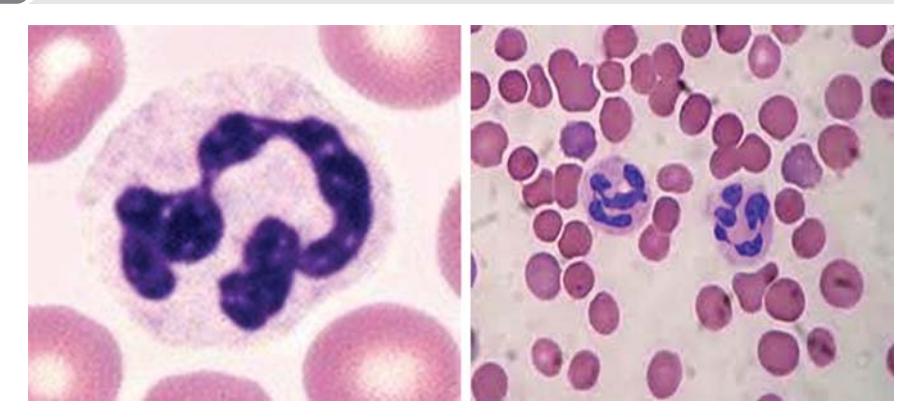
a. What is your diagnosis?
b. How to confirm the diagnosis?
c. Name 3 agents used to treat this?
d. What is the success rate of treatment with modern day regimens?
a. Name the cell seen in the smear
b. What is your diagnosis?
c. How do you treat such a patient?
Answer
No model answer in source material.
VVK07-012
A 6 years-old-boy being looked after a single mother as father died a year back of a chronic illness, excessive bruising for past 9 months platelets documented to be < 20,000 on many occasions, bone marrow showed megakaryocytic thrombocytopenia. Initially responded to steroids but recurs on tapering of steroids and significant weight loss in last 6 months
Examination
- r #SVJTFTCPUIMFHT
- r .JMEQBMMPS
- r #-DFSWJDBMMZNQIOPEFT
- r ǔSVTI
- r 4QMFFODNQBMQBCMF
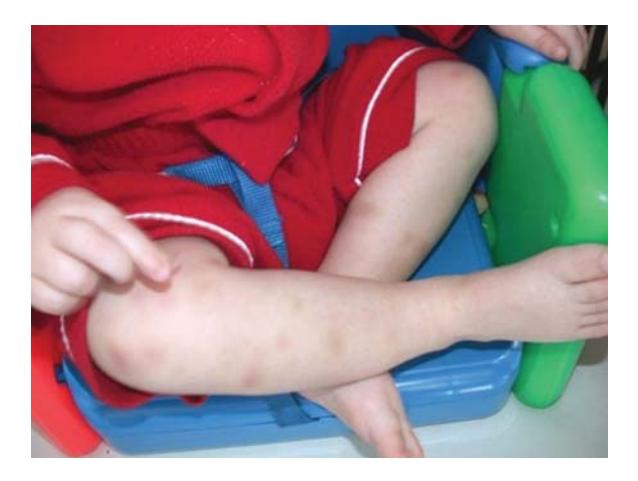
a. What is the most likely diagnosis?
b. What is the investigation of choice?
c. What agents are used to treat this condition?
Answer
No model answer in source material.
VVK07-013
4-year-old boy is under evaluation for mild anemia.
- r $#$TIPXTB)CH5-$QMBUFMFUMBLIT
- r .$7
- r 3#$
- r 3%8
- r 14TIPXTNJDSPDZUJDIZQPDISPNJDBOFNJB
a. What is the likely diagnosis?
c. What treatment will be given to this child?
Answer
No model answer in source material.
VVK07-014
A 2-year-old girl presented with fever of 1 month duration, difficulty in walking because of pain, multiple bony swelling on the skull and proptosis.
r 0&TIFJTQBMF
IZQFSUFOTJWFBOEBEJŀVTFBCEPNJOBMNBTTJTQBMQBCMF
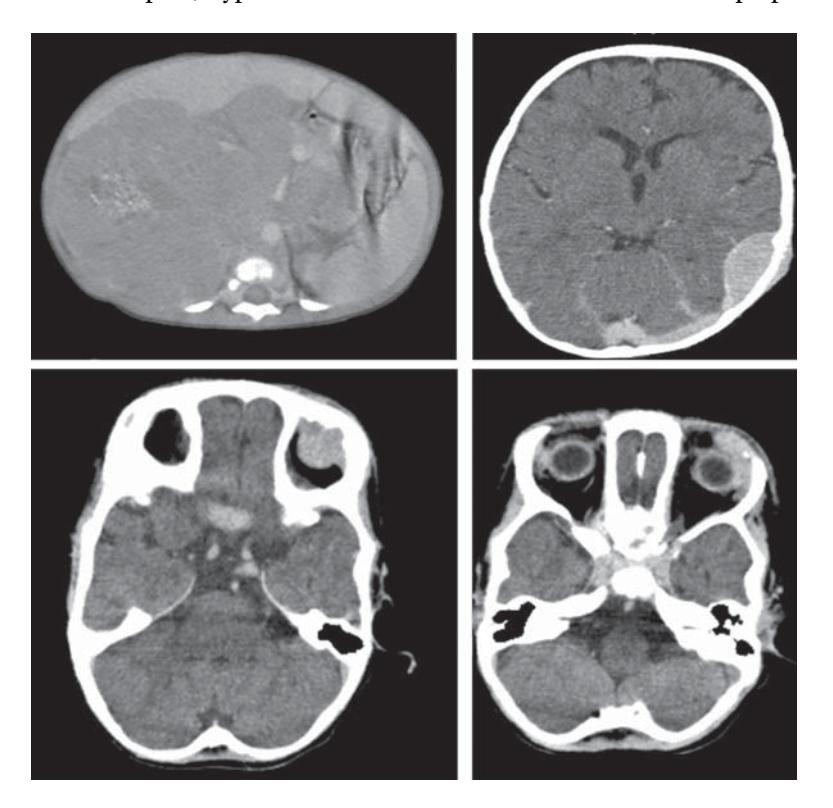
a. What is the likely diagnosis?
b. Name a noninvasive and an invasive test that can lead to a diagnosis.
c. What is the most likely site of origin of the disease?
Answer
No model answer in source material.
VVK07-015
A 2-year-old boy presents with a new onset unsteady gait. Mother has noticed roving movements in eyes. Local doctor has done a chest X-ray along with other routine work up which reveals a significant mediastinal shadow.
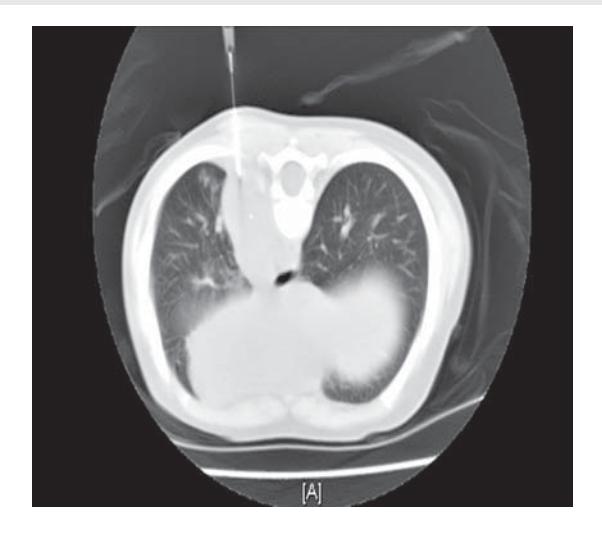
a. What is the likely diagnosis?
b. What is the treatment?
c. What is the prognosis of this condition?
Answer
No model answer in source material.
VVK07-016
A 14 year old boy presents with cough for 1 month and difficulty in breathing for last 2 weeks. He was given oral antibiotics after 1 week of illness. A local doctor did a Chest Xray which revealed a significant pleural effusion on the left side and empirically started him on ATT. However his condition worsened and he presented in the emergency with severe respiratory distress orthopnea and stridor. Chest Xray reveals complete opacification of left side. CBC is normal. Pleural fluid analysis reveals some abnormal cells. Scan done after pleural tap reveals a mediastinal mass compressing the trachea.
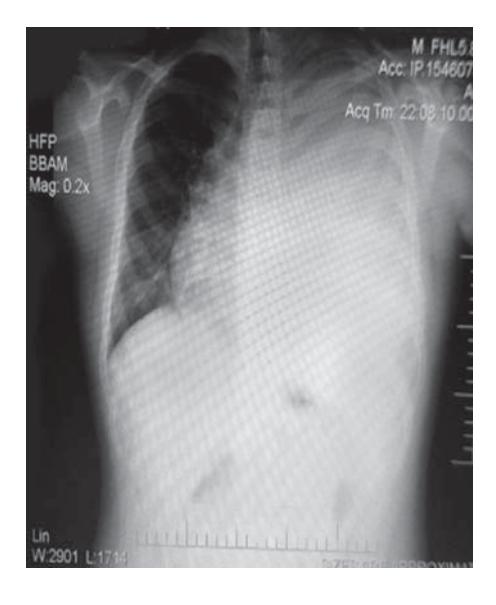
a. What is the most likely diagnosis?
b. What test will most easily clinch the diagnosis?
c. What are the precautions to be taken in this condition?
d. What is the life saving therapy in this condition?
Answer
No model answer in source material.
VVK07-017
A 12-year-old boy presents with fever of 2 weeks duration with swellings in the neck. His CBC shows a TLC of 2.9 Lakh/cumm. His serum K and creatinine is 6 and 1.2 respectively.
a. What is the likely diagnosis?
c. What management needs to be done before starting definitive therapy?
Answer
No model answer in source material.
VVK07-018
A 5-year-old boy presents with pallor and passing dark-colored urine. Three days prior the patient had low-grade fever and dry cough. Initial CBC revealed a hemoglobin level of 4.5 g/dL, a HCT of 14%, a WBC count of 9,100/mm3 , (Normal DLC) and a platelet count of 3,72,000/mm3 . In the past he has received 2 blood transfusions for fever and acute anemia at 18 months of age. Both parents are thalassemia carriers. Physical examination: Temperature–38.3°C, with marked pallor. CVS–Systolic ejection murmur grade II/VI at left upper sternum. Abdomen–Splenohepatomegaly is present. The Hb electrophoresis report is shown.
| ANALYTE | ID | % | TIME | AREA |
|---|---|---|---|---|
| Unknown Unknown P1 F P2 P3 Ao C-WINDOW |
1 2 3 | 11.9 1.5 5.7 2.1 3.5 3.7 3.4 67.2 0.9 TOTAL AREA |
0.013 0.31 0.64 0.97 1.26 1.42 1.78 2.88 5.07 |
531911 67705 254986 92438 158832 164718 151986 2997869 38296 4458732 |
| F | 3.5% | A2 | 0.0% |
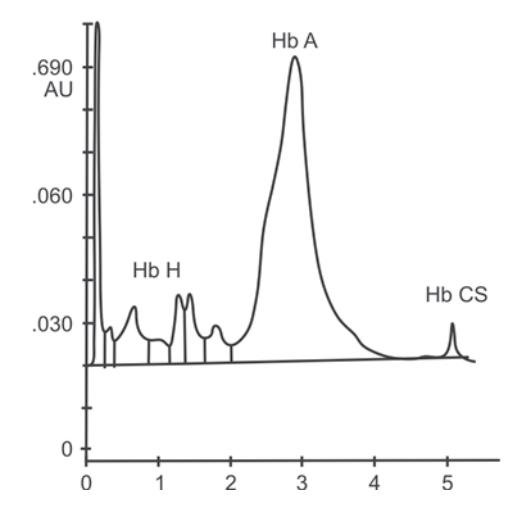
a. What is your diagnosis?
b. What may be the trigger for this crisis?
Answer
No model answer in source material.
VVK07-019
A 7-year-old child is admitted for LRTI. This is his 5th episode of severe pneumonia apart from 4 episodes of severe diarrhea in past. On transfusing blood in view of anemia (Hb 5.5 g%), he develops a severe transfusion reaction. He has never received a transfusion in the past and clerical errors of a blood group mismatch are excluded.
a. What immunological defect is most likely present?
b. What would you advise the parents of this child to prevent a recurrence of reaction?
Answer
No model answer in source material.
VVK07-020
A 5-year-old male child is recently diagnosed as a case of acute myeloid leukemia. He is clinically stable with a RR of 20/min, normal blood pressure and SpO2 of 95% in room air. His blood gas is as follows: pH–7.43; PaCO2 –34 mmHg; PaO2 –47.6 mmHg; HCO3 - –24 mEq/L.
- Further investigations show leucocytosis (TLC—60,000/cu mm) and a normal chest X-ray.
- B "OBMZ[FUIFCMPPEHBTSFQPSU
- C 8IBUTUFQXJMMZPVUBLFUPJNQSPWF1B0 in this patient?
Answer
No model answer in source material.
VVK07-021
Study the photograph of the peripheral smear provided and answer the questions.
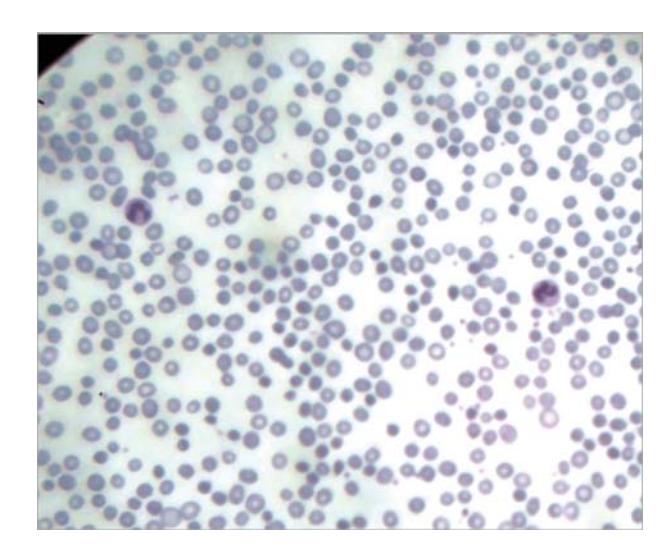
a. What is your diagnosis?
b. What is the drug used to treat this condition?
c. What is the first clinical evidence of improvement after starting the therapy?
Answer
No model answer in source material.
VVK07-022
Answer the given questions in relation to methemoglobinemia.
- B "UXIBUMFWFMPG.)HJTDZBOPTJTWJTJCMF
- C 8IBUJTUIFFYQFDUFEQVMTFPYJNFUSZTBUVSBUJPOJOTVDIBQBUJFOU
c. Name the drug used in the treatment of this condition and give its dose
d. In which scenario is this drug contraindicated?
Answer
No model answer in source material.
VVK07-023
A 1½-year-old male child presented with episodes of on and off fast breathing for the past 5 months, occasionally associated with cough . He is also having high-grade intermittent fever for last 2 weeks. Empirical antitubercular treatment for past 3 months has had no benefit. There is a past history of chronic otitis media with perforation and the child has been taken to the dentist twice for loose teeth and swollen gums. On examination, seborrheic dermatitis, pallor and hepatomegaly (5 cm below costal margin) are the salient positive findings.
a. What is your most probable diagnosis?
b. What is the characteristic lesion found on skeletal survey?
d. What is the characteristic electron microscopy finding?
Answer
No model answer in source material.
VVK07-024
Study the photomicrograph and answer the question.
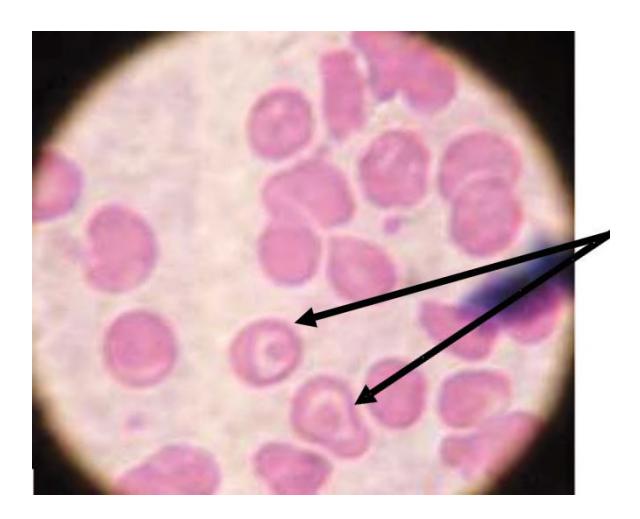
a. Identify the abnormality on peripheral smear.
b. Name 4 conditions where these cells can be seen.
Answer
No model answer in source material.
VVK07-025
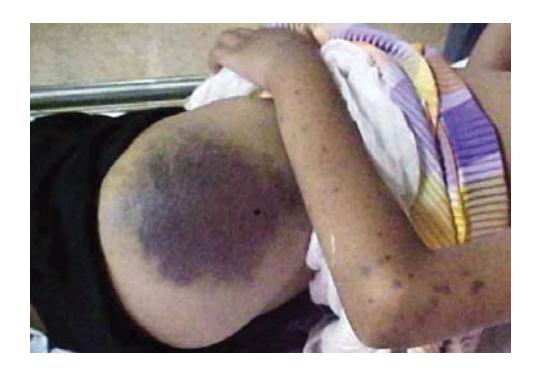
A 10-year-old girl, with ITP diagnosed since 6 months of age presents with ecchymotic patch on her waist (shown in the photograph) and has uncontrollable epistaxis. Her platelet count is 4000/mm3 . Answer the following questions.
- B 8IJDIJOWFTUJHBUJPOTXPVMEZPVBEWJTFJOIFS
- C 8IBUNFBTVSFTFJUIFSTJOHMZPSJODPNCJOBUJPODBOCFVTFEUPUSFBUMJGF UISFBUFOJOHIFNPSSIBHFJO*51
- D 8IBUJTUIFJOEJDBUJPOPGEPJOHCPOFNBSSPXFYBNJOBUJPOJOBTVTQFDUFE DBTFPG*51
- E 8IFOEPZPVDBMM*51UPCFDISPOJD
- F (JWFESVHTUIBUDBVTFUISPNCPDZUPQFOJB
Answer
No model answer in source material.
VVK07-026
This 3-year-old boy develops easy bruising over the body with hematoma formation even with minor trauma.
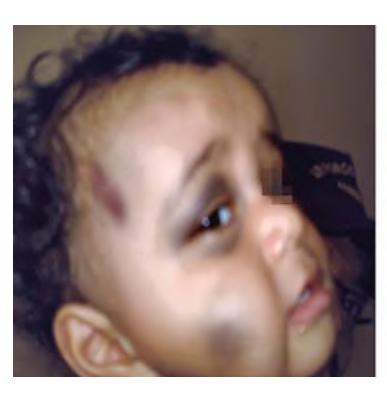
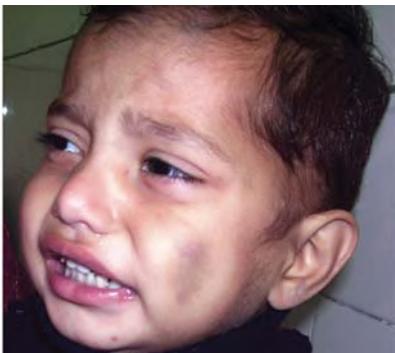
a. What is the most likely diagnosis?
b. Which one investigation would you advice?
c. What is the mode of inheritance?
Answer
No model answer in source material.
VVK07-027
A 12-year-old boy is tested for sickle cell disease. His father is known to have sickle cell trait. His lab results are as follows: Hb 10.1 g/dL, RBC–6 lacs/cu mm, MCV– 65 fl, MCH–21.1 pg, MCHC–30 g/dl, sickle test positive, HbS–71%, HbA–21.5%, HbA2–4.5%, HbF–3%, Serum ferritin–19 mcg/L.
a. What hemoglobinopathy does the boy have?
c. Which bacterial infections are more common in such patients?
Answer
No model answer in source material.
VVK07-028
Match the clinical diagnosis with the hematological findings.
- C "MQIBUIBMBTTFNJBNBKPS *ODSFBTFEGFUBM)C
- G )FSFEJUBSZTQIFSPDZUPTJT )ZESPQTGFUBMJT
- B ,BXBTBLJEJTFBTF 4QMFOPNFHBMZJOBZFBSPME
- D #FUBUIBMBTTFNJBNBKPS )ZQPTQMFOJTNJOBZFBSPME
d. Sickle cell disease 4. Thrombocytosis
Answer
No model answer in source material.
VVK07-029
A 4-year-old boy presents with severe pain in both of his legs. On physical examination, his temperature is 37.7°C (99.8 °F), blood pressure is 108/68 mmHg, pulse rate is 96/min, and respirations are 22/min. He is noted to have marked pallor on his lips and palpebral conjunctiva. Numerous purpura and petechiae are noted on his skin. There is bilateral cervical lymphadenopathy. His spleen is palpable 3 cm below his left costal margin. Laboratory evaluation reveals a white blood cell count of 1600/ mm3 ; hemoglobin, 6.1 g/dL; and platelets, 36,000/mm3 .
a. What is your most probable diagnosis?
c. What is the diagnostic investigation and what do you find?
Answer
No model answer in source material.
VVK07-030
On routine screening of a 12-month-old child, the hemoglobin was found to be 8 gm/dL.
a. What details in a nutritional history would be important?
Answer
No model answer in source material.
VVK07-031
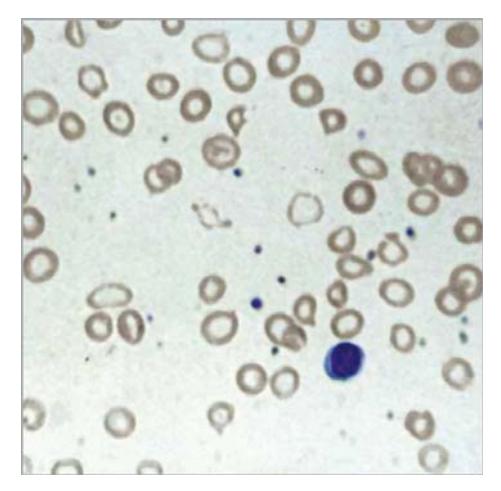
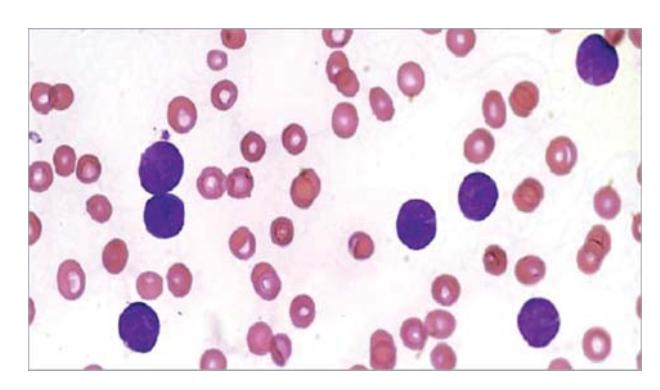
Study the peripheral smear shown below and answer the following questions.
- B $PNNFOUPOUIJTTNFBSPOBMMUIFDFMMMJOFT
- C .FOUJPOBUMFBTUEJŀFSFOUJBMTGPSUIJTTNFBS
c. What is the diagnostic test for confirmation?
i. Dermal manifestations.
c. Name three biochemical abnormalities seen in class II histiocytosis.
a. What is your diagnosis based on the smear shown above?
b. What other test would you like to do to confirm your diagnosis?
c. What possible differential diagnosis can you think of?
d. Do you need to screen the family if your suspicion comes out positive?
Answer
No model answer in source material.
VVK07-032
Study the smear shown below and answer the following questions.
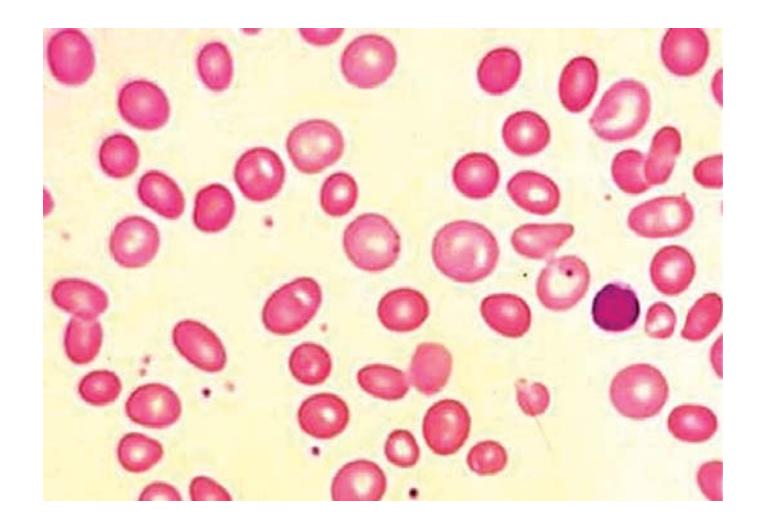
a. Identify the abnormality shown on the peripheral smear above.
b. Name four causes for this condition?
c. Name one drug which can cause this condition?
Answer
No model answer in source material.
VVK07-033
Study the smear shown below and answer the given questions.
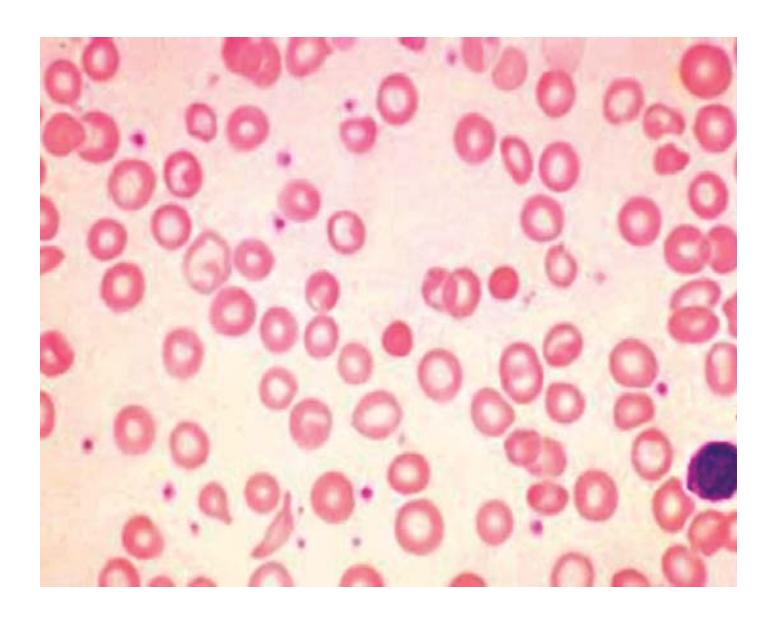
a. Name type of anemia seen on this peripheral smear.
c. What is RDW and RDW is increased in which of these anemias?
Answer
No model answer in source material.
VVK07-034
Study the smear below and answer the given questions.
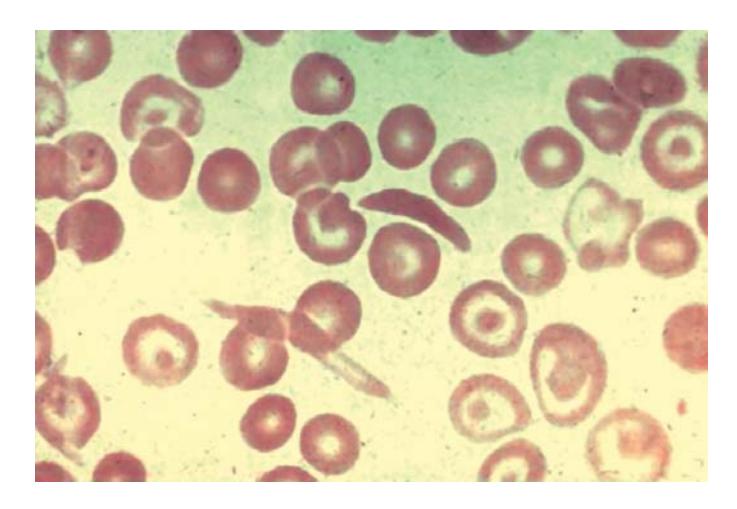
a. What are your findings on this smear?
b. What is the mutational change that leads to this?
c. Which viral infection posseses a unique threat for patients with this disease?
Answer
No model answer in source material.
VVK07-035
Study the smear below and answer the given questions.
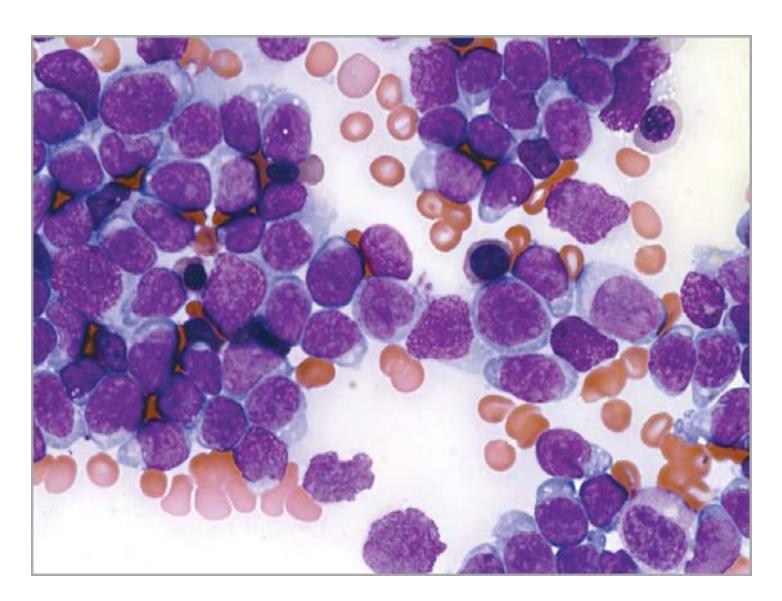
a. What are your findings on this smear?
b. What is your most probable diagnosis?
c. Name four diseases in which this condition can occur.
Answer
No model answer in source material.
VVK07-036
Study the smear below and answer the given questions.
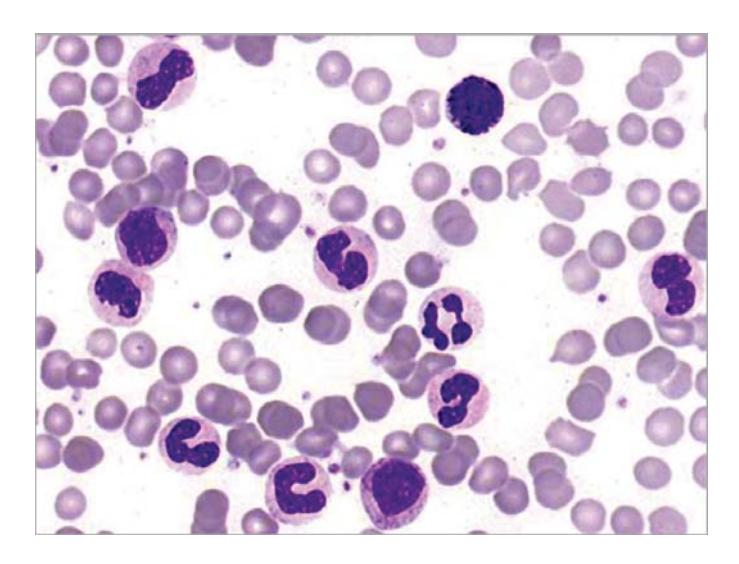
a. What are your findings on this smear?
Answer
No model answer in source material.
VVK07-037
A 3-month-old male child presented with diarrhea and ear discharge from the both ears for the last 15 days. Child is on exclusive breast milk. Since diarrhea he has lost 1 kg weight and his current weight is 3.5 kg. He was given BCG and hepatitis B at birth, BCG left no scar mark. Rest of the history including birth history is normal. On examination, he has mucocutaneous candidiasis and multiple pyaemic abscesses all over the body along with a eczematous rash at abdomen. There is mild hepatosplenomegaly and there are no other findings. His initial investigations revealed lymphopenia (<2000) and low IgA levels. His antibody levels against HBSAg (after 2 doses) are absent. On CT scan examination, he was found to have a very small thymus (< 1 gm) and very underdeveloped tonsils and adenoid tissue.
a. What is the most probable diagnosis?
c. What special precaution should be taken if the infant requires transfusion of a blood product and why?
Answer
No model answer in source material.
VVK07-038
A 2-month-old previously healthy full term female infant presents with fever, lethargy and poor feeding for 12 hours. Family history reveals that a male sibling died suddenly at the age of two months, prior to the birth of this child. There is h/o delayed cord fall. Physical examination reveals a lethargic child with RR–70/m, HR–185/m, BP–mean 25 mmHg, T–39.5°C and poor peripheral perfusion. Chest reveals retractions. Abdomen is soft and lab results reveal Hb of 9.8 gm, TLC 65000 (P-90%) and platelet count 1.4 lacs. P/S is normal and no organomegaly.
a. What is the most likely diagnosis?
c. What is the treatment of choice?
Answer
No model answer in source material.
VVK07-039
Match the following.
| Disease | Deficiencies | |
|---|---|---|
| B | -VQVTMJLFTZOESPNF | $ |
| C | 3FDVSSFOUOFJTTFSJBMJOGFDUJPOT | $ |
| D | 4FWFSFSFDVSSFOUQOFVNPDPDDBMJOGFDUJPO | $2 |
| E | 'BUBMNFOJOHPDPDDBMJOGFDUJPOTJONBMFT | $JOIJCJUPS |
| F | /POQJUUJOHFEFNB | 1SPQFSEJO |
Answer
No model answer in source material.
VVK07-040
Answer the following questions on thrombotic thrombocytopenic purpura (TTP).
- B (JWFUIFDIBSBDUFSJTUJDQFOUBEPG551
- C 8IBUJTUIFFUJPMPHZPGGBNJMJBM551
- D 8IBUUSFBUNFOUTUSBUFHZJTNPTUTVJUBCMFGPS551
d. What cells do you see on peripheral smear in this case?
Answer
No model answer in source material.
VVK07-041
A bone marrow aspirate of a 18-month-old child with features of delayed milestones, muscle hypertonia, recurrent aspiration pneumonia and hepatosplenomegaly is shown above.
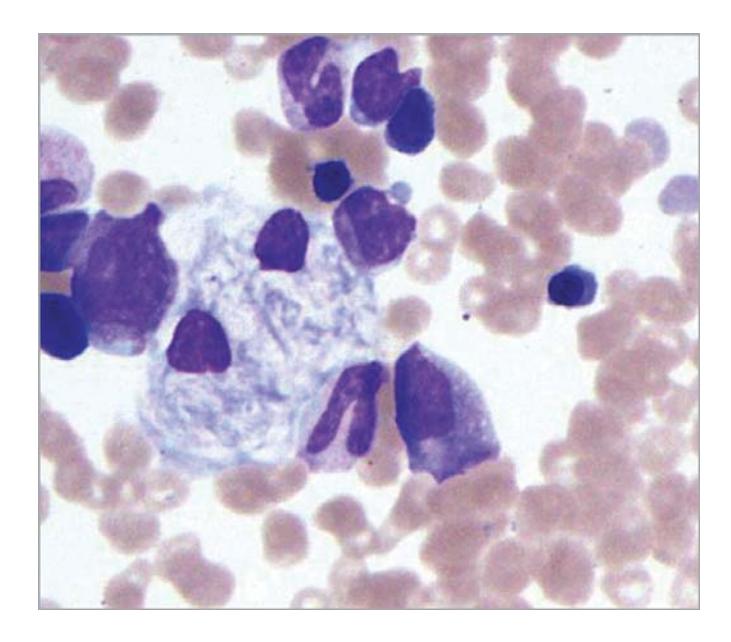
a. Describe the findings seen on the smear.
c. What management strategy is advised in such a case?
Answer
No model answer in source material.
VVK07-042
Study the smear shown below and answer the given questions.
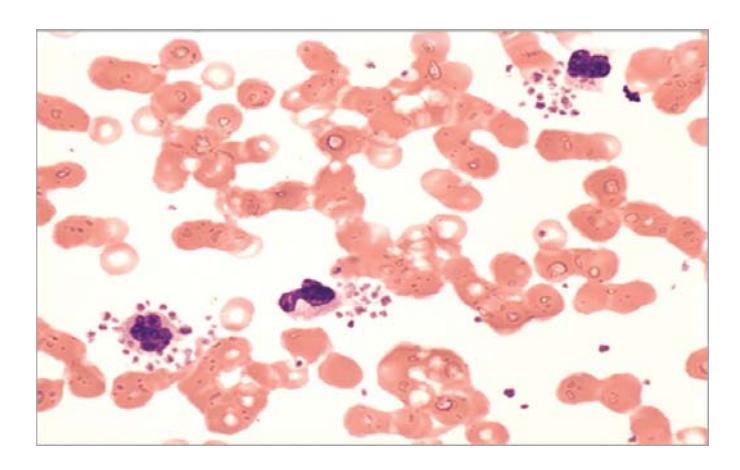
a. Describe platelet satellitism.
b. What is its clinical significance?
c. How do you take care of such a situation?
Answer
No model answer in source material.
VVK07-043
Answer the following questions.
B8IBUJTUIFFŀFDUPO15BOE155JOIFNPQIJMJB"
- C $BMDVMBUFUIFEPTFPGGBDUPS7***SFRVJSFE
UPJODSFBTFGBDUPS7***MFWFMTCZ JOBDIJMEXFJHIJOHLH - D (JWFUIFPUIFSOBNFGPSIFNPQIJMJB$
- E (JWFFYBNQMFTPGHFOFUIFSBQZCFJOHUSJFEGPSIFNPQIJMJB
Answer
No model answer in source material.
VVK07-044
A 5-year-old child presented with pallor and cutaneous markers at the back with an abnormal skeletal profile. Peripheral smear was consistent with macrocytic anemia and pancytopenia.
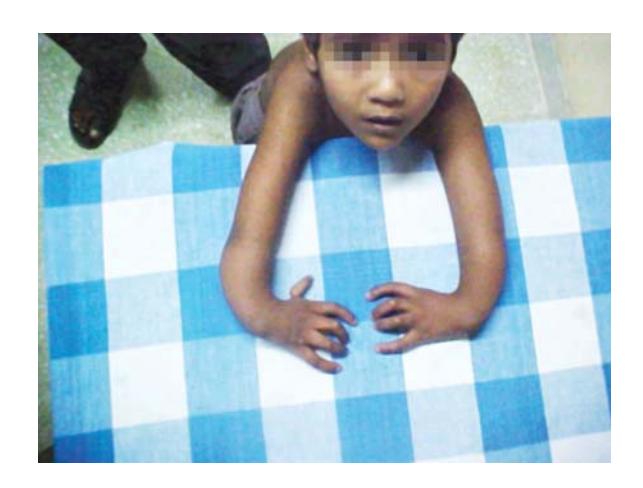
a. What is the most probable diagnosis?
b. Name the cutaneous marker.
Answer
No model answer in source material.
VVK07-045
A previously asymptomatic 5-year-old girl is referred with an abdominal mass found by her mother as she was undressing her. On examination, a mass arising from right renal angle is noted which extends medially almost up to midline and inferiorly 10 cm. Her BP is 160/110 mm Hg. Investigations show normal plasma urea, creatinine and electrolytes. Urine examination reveals hematuria but culture is sterile.
- B (JWFUIFNPTUMJLFMZEJŀFSFOUJBMEJBHOPTFT
b. What is the mechanism of raised blood pressure?
Answer
No model answer in source material.