MNJ13-001
Mother of a 14-day-old baby came to you to know about the polio vaccine:
- What is the meaning of polio drops at birth and what is its significance?
- What are the contents of OPV and what is the new name of OPV?
- Why are multiple doses of OPV recommended despite it being a live vaccine?
- What specific instruction has to be given to the mother after OPV administration?
Answer
- Zero dose polio drops: Polio drops given at birth are called "zero dose". It provides early mucosal immunity and results in better intestinal uptake because neonatal gut flora does not yet interfere with vaccine virus replication. Additionally, it serves as the first contact point with healthcare services.
- Contents:
- Type 1:
- Type 3:
(Type 2 component has been withdrawn globally; the current formulation is bivalent OPV or bOPV).
- Type 1:
- Reason for multiple doses: Thermal lability, interference by non-polio enteroviruses in the gut, and relatively lower mucosal take per dose require multiple doses to achieve satisfactory individual and herd seroconversion.
- Instructions: The mother does not need specific dietary/feeding restrictions (breastfeeding can continue), but must be instructed to bring the baby for subsequent scheduled vaccinations on time.
MNJ13-002
A 32-weeks pregnant lady found to be HBsAg positive gives birth to a 3 kg male baby:
- What is the risk of the baby getting hepatitis B infection from the mother?
- How do you protect the baby from getting this infection?
- Is there a possibility for the baby to be infected in spite of proper management?
- What is the prognosis in infected newborns?
Answer
- Risk of transmission: ~30% if mother is HBsAg positive alone; rises to 80–90% if mother is also HBeAg positive.
- Protection / Immunoprophylaxis:
- Hepatitis B vaccine: First dose (
IM) within 12 hours of birth. - Hepatitis B Immunoglobulin (HBIG):
IM administered simultaneously at a different anatomical site (other anterolateral thigh) within 12 hours. - Complete standard vaccination at 6, 10, 14 weeks (or 0, 1, 6 months) with post-vaccination serology testing at 9–12 months.
- Hepatitis B vaccine: First dose (
- Infection despite prophylaxis: Yes, if intra-uterine transplacental transmission has already occurred prior to delivery (~1–3%).
- Prognosis: ~90% of infected neonates become chronic carriers, and ~25% of chronic carriers eventually develop chronic active hepatitis, cirrhosis, or hepatocellular carcinoma in early adulthood.
MNJ13-003
All vaccines are susceptible to loss of potency when exposed to warm temperatures:
- What is the meaning of cold chain?
- What is a vaccine carrier?
- How long can you keep vaccines in a vaccine carrier when going into the field for vaccination?
Answer
- Cold chain: A system of storing, transporting, and distributing vaccines at recommended temperatures (
to for most vaccines, to for OPV) from the point of manufacture to the point of administration. - Vaccine carrier: An insulated, thick-walled container lined with 4 conditioned ice packs, used to carry small quantities of vaccines (6–8 vials) to outreach sessions and vaccination booths.
- Duration: Up to 1 working day (approx. 24–48 hours depending on ambient temperature and carrier specifications with conditioned ice packs).
MNJ13-004

Answer the following questions regarding MMR vaccine:
- What is the upper age limit for giving this vaccine in children?
- What is the dose and by which route is it given in children?
- Which of the following side effects may occur after MMR vaccination (True / False)?
- a. Rash immediately after giving the vaccine
- b. Parotid swelling
- c. Carditis
- What is the current schedule of MMR vaccine as per IAP?
Answer
- Upper age limit: No upper age limit; recommended for all non-immune adolescents and adults.
- Dose & Route:
, Subcutaneously (SC) in the anterolateral thigh or upper arm (deltoid). - Side effects:
- a. Rash immediately after giving the vaccine: False (Rash occurs after 5–12 days due to measles replication).
- b. Parotid swelling: True (Parotitis can occur 10–14 days post-vaccination due to mumps component).
- c. Carditis: False.
- Current IAP schedule: 3 doses — 1st dose at 9 months, 2nd dose at 15 months, and 3rd dose (booster) at 4–6 years of age.
MNJ13-005
Answer the following regarding UIP (Universal Immunization Programme):
- When was the programme initiated in India?
- What was the main aim of UIP?
- What are the objectives of UIP other than the immunization of children?
- Name the vaccines used in UIP in India.
- What are the immunization targets in the UIP?
Answer
- Initiation: 1985 (expanded from the Expanded Programme on Immunization [EPI] launched in 1978).
- Main aim: To immunize all infants (
coverage) before their 1st birthday against major vaccine-preventable diseases, and to achieve tetanus toxoid immunization in all pregnant women. - Other objectives:
- Self-sufficiency in vaccine production.
- Establishment of a reliable and functional cold chain network.
- Phased introduction of district-level monitoring and adverse event surveillance (AEFI).
- Vaccines used in UIP: BCG, bOPV, fIPV, Pentavalent (DTwP + HepB + Hib), Rotavirus, PCV, MR (Measles-Rubella), JE (in endemic districts), DPT boosters, and Td (tetanus-diphtheria).
- Targets: Rapidly achieve and sustain
full immunization coverage across all districts.
MNJ13-006
Many vaccines have been licensed for use in India (for routine office use):
- Name 1 live-attenuated bacterial vaccine used in India.
- Name 4 live-attenuated viral vaccines used in India.
- Name 2 killed bacterial vaccines used in India.
- Name 2 killed viral vaccines.
Answer
- Live-attenuated bacterial: BCG (Bacillus Calmette-Guérin), oral typhoid Ty21a.
- Live-attenuated viral: OPV, Measles / MMR, Varicella, Rotavirus (live), Yellow fever.
- Killed bacterial: Whole-cell Pertussis (wP), Cholera vaccine (killed oral).
- Killed / Inactivated viral: Inactivated Polio Vaccine (IPV), Inactivated Hepatitis A, Rabies vaccine (CCRV), Inactivated Influenza vaccine, Japanese Encephalitis killed (JENVAC).
MNJ13-007
Certain substances like aluminium salts are used in some vaccines as adjuvants:
- Name 2 vaccines in which adjuvants are used in India.
- Give 2 advantages of using adjuvants in various vaccines.
- Give 2 drawbacks of using adjuvants in vaccines.
- Name some newer adjuvants under trial/use.
Answer
- Vaccines using adjuvants: DPT, Hepatitis B, Hepatitis A (inactivated), Pneumococcal conjugate (PCV), HPV.
- Advantages:
- Enhance immunogenicity and prolong antigen exposure (depot effect).
- Induce higher and longer-lasting antibody titers with lower antigen doses (antigen sparing).
- Drawbacks:
- Local adverse reactions (sterile abscess, pain, tenderness, persistent nodule).
- Adjuvanted vaccines cannot be frozen (freezing precipitates aluminium salts, destroying potency and increasing reactogenicity).
- Primarily induce humoral, but poor cell-mediated, immunity.
- Newer adjuvants: Liposomes, squalene (MF59, AS03), AS04 (aluminium hydroxide + MPL), virosomes, bacterial toxins/products (CpG ODN, flagellin).
MNJ13-008
A 5-year-old well child has no BCG scar. According to the parents a definite scar was present initially, but after that it disappeared:
- What are the possibilities for the absence of a BCG scar?
- Do you need to re-vaccinate this child with BCG?
- Can you give BCG to this child along with OPV and DT as he is due for these vaccines?
- How should you clean the skin before giving BCG?
Answer
- Possibilities:
- Fading or disappearance of the scar over time (seen in up to 10–20% of vaccinated children).
- Faulty technique (subcutaneous instead of intradermal injection) or inadequate vaccine potency.
- Non-response / true lack of take.
- Re-vaccination: No revaccination is needed if reliable documentation of birth vaccination exists. If documentation is absent, perform a Mantoux test; revaccination is not routinely recommended after 5 years of age.
- Simultaneous administration: Yes, BCG can be given simultaneously with OPV and DT (at different anatomical sites).
- Skin preparation: Clean the skin with sterile water only. Do not use alcohol, spirit, or other chemical disinfectants because residual disinfectant kills the live-attenuated BCG bacilli.
MNJ13-009
A child has developed a painless nodule in the thigh following DPT injection given 2 months back:
- What needs to be done for this condition?
- What are the contents of a standard recommended dose (
) of DPT vaccine in children? - Can DPT vaccine be frozen when not in use?
- List absolute and relative contraindications to the use of DTP vaccine.
Answer
- Management: Reassure the parents; no intervention is required as a painless aluminium granuloma/nodule resolves spontaneously over several months. Incision and drainage or antibiotics should not be done.
- Contents per 0.5 ml:
- Diphtheria toxoid:
(standard ) - Tetanus toxoid:
- Pertussis:
( killed B. pertussis bacteria)
- Diphtheria toxoid:
- Freezing: No. DPT must never be frozen (stored at
to ). Freezing denatures the aluminium adjuvant. - Contraindications:
- Absolute:
- Anaphylaxis or immediate severe allergic reaction to a previous dose.
- Encephalopathy (e.g., coma, prolonged seizures) within 7 days of a previous pertussis dose not attributable to another identifiable cause.
- Relative / Precautions (switch to DTaP or DT):
- Temperature
within 48 hours not due to another cause. - Collapse or shock-like state (hypotonic-hyporesponsive episode [HHE]) within 48 hours.
- Persistent, inconsolable crying lasting
within 48 hours. - Convulsions with or without fever within 3 days.
- Progressive neurological disorder.
- Temperature
- Absolute:
MNJ13-010
A 13-year-old boy came to casualty for a dose of TT injection as he had sustained a trivial fall. He had received all his immunizations as per schedule and also had been taking TT after every fall in the last 3 years:
- Does he need a dose of TT now for this fall?
- Are there any hazards of taking repeated unnecessary doses of TT injections?
- What do you know about Td vaccine?
Answer
- Need for TT: No. For a clean, minor wound in a fully immunized person, tetanus booster is only needed if the last dose was
ago. For dirty/tetanus-prone wounds, a booster is given if have elapsed. - Hazards of hyperimmunization:
- High circulating tetanus antitoxin levels causing severe Arthus-type hypersensitivity reactions (local pain, swelling, induration, sterile necrosis).
- Risk of neuropathy, brachial neuritis, urticaria, amyloidosis.
- Td vaccine: Contains standard Tetanus toxoid (
) and reduced Diphtheria toxoid ( vs in DPT). It is recommended to replace TT in all children and adults to boost immunity against both tetanus and diphtheria without the reactogenicity of pediatric full-strength diphtheria toxoid.
MNJ13-011
A child developed parotid swelling 10 days after MMR vaccine given as per schedule:
- What is the likely cause of this parotid swelling?
- Can MMR be given to children who already have had mumps in the past?
- Should MMR be given only to girls?
- Should adolescent girls be given MMR vaccine if they have not received the vaccine in their childhood?
- What is the recent change in schedule of MMR vaccine in 2021?
Answer
- Likely cause: Transient vaccine-associated parotitis due to replication of the attenuated mumps virus strain (occurs typically 7–14 days post-vaccination in 1–2% of recipients; benign and self-limiting).
- Prior mumps: Yes. Clinical diagnosis of mumps is often inaccurate, prior mumps does not increase adverse events, and MMR is required to provide immunity against measles and rubella.
- Only to girls: No. It must be given to both boys and girls to prevent measles/mumps morbidity, orchitis, and to stop transmission of rubella (herd immunity) to protect pregnant females.
- Adolescent girls: Yes. Strongly recommended for adolescent girls and women of childbearing age (who are non-pregnant and agree to avoid pregnancy for 1 month) to prevent Congenital Rubella Syndrome (CRS).
- 2021 ACVIP/IAP update: 3-dose schedule: 1st dose at 9 months, 2nd dose at 15 months, and 3rd dose at 4–6 years of age.
MNJ13-012
A mother of 2 children is worried as her husband is down with typhoid for the last 4 days and she wants to immunize the children:
- Do you recommend the children be vaccinated against typhoid now?
- How long does it take before the protection becomes effective following vaccination?
- What other precautions would you advise the mother about typhoid?
- What typhoid vaccines are available?
- What are the recent changes (2021) in the typhoid vaccine recommendations?
Answer
- Recommendation: Yes, typhoid conjugate vaccine (TCV) can be given, though it will not protect against the immediate household incubation period if already exposed.
- Time to protection: 2–3 weeks following vaccination for protective antibody titers to develop.
- Other precautions: Strict food hygiene, drinking boiled/treated water, hand hygiene with soap and water after using the toilet and before preparing food, isolating household cooking from the index patient.
- Available vaccines:
- Typhoid Conjugate Vaccine (TCV - conjugated with TT or
, e.g., Typbar-TCV, Typhibev) - Vi Polysaccharide vaccine (unconjugated)
- Live oral Ty21a vaccine
- Typhoid Conjugate Vaccine (TCV - conjugated with TT or
- 2021 IAP changes:
- Single dose of Typhoid Conjugate Vaccine (TCV) starting at 6 months of age (licensed up to 45 years).
- No routine booster dose is required with TCV.
- Catch-up vaccination with TCV recommended throughout childhood, adolescence, and up to 45 years.
MNJ13-013
Blood banks refuse to take blood from donors with a history of jaundice a few days back:
- Does it mean that all cases of jaundice are due to hepatitis B?
- Can HAV or non-A non-B (HCV) hepatitis be transmitted through blood transfusion?
- Does vaccination against hepatitis B protect against hepatitis D also?
- What is the efficiency of transmission of hepatitis B via infected blood transfusion?
Answer
- Etiology: No, jaundice can be caused by HAV, HEV, HCV, malaria, hemolysis, drugs, or biliary tract disease. However, blood banks exclude donors to minimize HBV/HCV transmission.
- Transfusion transmission:
- HAV: Extremely rare (viremia is short-lived), though theoretically possible in acute pre-icteric phase.
- Non-A non-B (HCV / HDV): Yes, readily transmitted parenterally via blood and blood products.
- Protection against HDV: Yes. Hepatitis D (Delta agent) is a defective RNA virus that requires HBsAg coat for assembly and infection. Preventing HBV prevents HDV infection.
- Transmission efficiency: Extremely high (~90–100% chance of infection following transfusion of HBsAg-positive blood unit).
MNJ13-014
A pregnant lady presents with history of dog bite 3 hours back:
- Is rabies prophylaxis indicated for this lady?
- Is transplacental transmission of rabies to the fetus possible?
- Can a lactating mother be given rabies vaccine if a dog bite occurs?
- Can neonates be given rabies vaccine?
Answer
- Rabies PEP in pregnancy: Yes. Rabies is 100% fatal; pregnancy is NOT a contraindication to post-exposure prophylaxis (both cell-culture rabies vaccine and rabies immunoglobulins/monoclonal antibodies are safe and indicated).
- Transplacental transmission: No; rabies virus is not transmitted across an intact placenta.
- Lactating mother: Yes. Rabies vaccination is safe during lactation and does not affect the breastfed infant.
- Neonates: Yes. Neonates with animal exposures must receive the full PEP regimen at full pediatric doses.
MNJ13-015
A child presents with a history of questionable bite by a stray animal:
- Is rabies prophylaxis indicated in this child?
- What is the Essen protocol?
- Can a vaccinated dog transmit rabies to humans?
- What are the dog vaccines available against rabies and what is the commonly used schedule?
Answer
- Indication: Yes. Any questionable unprovoked bite or scratch by a stray mammal in an endemic region warrants full post-exposure prophylaxis.
- Essen protocol: 5-dose intramuscular regimen on Days 0, 3, 7, 14, and 28 (or Day 30) in the deltoid/anterolateral thigh (
per dose). (Note: WHO also endorses the 4-dose Zagreb IM schedule or 2-site ID Thai Red Cross schedule). - Transmission by vaccinated dog: Yes. A vaccinated dog may transmit rabies if the vaccine was degraded, improperly administered, expired, or if regular annual/3-yearly booster doses were missed.
- Dog rabies vaccines & schedule:
- Inactivated tissue-culture or live-attenuated veterinary rabies vaccines.
- Schedule in dogs: First dose at 3 months of age, booster at 1 year, and revaccination every 1 to 3 years thereafter.
MNJ13-016
A doctor would like to give Hib vaccine along with OPV, DPT, Hep B, and MMR to his patient at the same sitting:
- Can all these vaccines be given on the same day in a child?
- How many types of conjugate vaccines are available against Haemophilus influenzae type b?
- Why are Hib vaccines combined with a carrier protein?
Answer
- Simultaneous administration: Yes. All routine pediatric vaccines (live and inactivated) can be administered on the same day at separate anatomical injection sites with separate syringes.
- Types of conjugate vaccines:
- PRP-T (conjugated to Tetanus toxoid)
- PRP-OMP (conjugated to Outer Membrane Protein complex of N. meningitidis)
- PRP-CRM (conjugated to non-toxic mutant diphtheria toxin
) - PRP-D (conjugated to Diphtheria toxoid)
- Reason for protein conjugation: Polyribosylribitol phosphate (PRP) capsular polysaccharide is a T-cell independent antigen that induces poor immunity in infants
. Conjugation to a protein carrier converts it to a T-cell dependent antigen, stimulating immunological memory, affinity maturation, and high IgG antibody titers in young infants.
MNJ13-017
The parents of a 15-year-old teenager would like to protect her from chickenpox as her exams are nearing. According to them, she has never suffered from chickenpox earlier:
- What is the vaccine available for chickenpox?
- Would you like to vaccinate her now?
- If yes, what is the dose schedule?
- What is the protective efficacy?
- What is the change in the new schedule (2021)?
Answer
- Available vaccine: Live-attenuated Varicella zoster virus vaccine (Oka strain).
- Indication: Yes. Chickenpox in adolescents and adults is associated with significantly higher morbidity and complications (e.g., varicella pneumonia, encephalitis).
- Dose schedule: 2 doses of
Subcutaneously, given at an interval of 4–8 weeks (minimum 4 weeks). - Protective efficacy: ~95–98% against moderate-to-severe chickenpox and 80–90% against all forms of disease.
- 2021 IAP Update: 1st dose at 15 months, 2nd dose preferably 3–6 months after the 1st dose (can be given up to 4–6 years).
MNJ13-018

A baby born to an HIV-positive mother is brought for immunization at your clinic:
- Write down the IAP vaccine recommendations for this child.
- A 3-month-old baby develops axillary lymphadenitis after BCG vaccine. What will you advise for this?
Answer
-
IAP Recommendations for HIV-Exposed / Infected Children:
- BCG: Given at birth to asymptomatic infants; contraindicated in infants with symptomatic HIV / severe immunosuppression.
- Polio: IPV (Inactivated Polio Vaccine) is strongly preferred over OPV. OPV is contraindicated in severely immunocompromised children and their household contacts.
- DTwP / DTaP / Hib / HepB / PCV / Rotavirus: Administered according to routine schedule.
- MMR / Varicella: Given if child is not severely immunocompromised (
). - Influenza & Hepatitis A: Recommended routinely.
-
BCG Axillary Lymphadenitis:
- Management: Reassurance and watchful observation; most cases resolve spontaneously over several months without therapy.
- Do NOT give anti-tubercular therapy (ATT) or perform early incision and drainage (which risks sinus tract formation). If fluctuant, fine-needle aspiration can be performed.
MNJ13-019
An affluent mother would like to immunize her child against hepatitis A:
- How many types of vaccines have been licensed for use, and what are recent changes in 2021?
- Would you vaccinate this child for Hep A?
- Give two indications for administration of Hep A other than routine schedule.
- Give other important measures to reduce hepatitis A infection.
Answer
- Types & 2021 Changes:
- Live attenuated vaccine (e.g., Biovac-A): Single dose at
of age (no booster required). - Inactivated / Killed vaccine (e.g., Havrix, Avaxim): 2 doses (1st dose at 12 months, 2nd dose 6 months later at 18 months).
- Live attenuated vaccine (e.g., Biovac-A): Single dose at
- Decision: Yes, vaccination provides
seroconversion and long-term protection against hepatitis A. - Special indications:
- Patients with chronic liver disease or hepatitis B/C carriers.
- Travelers to high-endemicity areas.
- Persons with clotting-factor disorders receiving blood products.
- Laboratory personnel handling HAV.
- Outbreak control / post-exposure prophylaxis within 2 weeks of exposure.
- Other preventive measures: Safe potable drinking water supply, sanitary disposal of human excreta, and meticulous personal and food hand hygiene.
MNJ13-020
- Write the vaccination schedule for a child who has been bitten by a dog 3 hours back. The patient had been bitten by the same animal 10 months back and has received a full course of vaccination at that time.
- What are the classes of dog bite and what are the treatments recommended for them?
Answer
-
Re-exposure Rabies Schedule:
- For previously fully vaccinated individuals re-exposed within any time:
- Vaccine: 2 doses of rabies vaccine (
IM or ID) on Day 0 and Day 3. - Rabies Immunoglobulin (RIG): NOT indicated in previously documented fully vaccinated individuals.
- Immediate wound washing with soap and water for 15 minutes.
-
WHO Categorization of animal bite and management:
| Category | Type of Contact / Bite | Recommended Management |
|---|---|---|
| Category I | Touching/feeding animals, licks on intact skin | Wash exposed skin; no PEP needed |
| Category II | Minor scratches/abrasions without bleeding, nibbling of uncovered skin | Immediate wound washing + full Rabies Vaccine course |
| Category III | Single/multiple transdermal bites or scratches, licks on broken skin, mucosal contamination, bat exposures | Immediate wound washing + Rabies Immunoglobulin (RIG/RMAb) local infiltration + full Rabies Vaccine course |
MNJ13-021
Give the answer about vaccine preparation:
- What is the procedure called lyophilization?
- Name 3 lyophilized vaccines.
Answer
- Lyophilization: Freeze-drying process in which a vaccine is frozen and then the water is removed by sublimation under vacuum, producing a stable dry powder with enhanced shelf-life that requires reconstitution with a specific diluent prior to injection.
- Lyophilized vaccines: BCG, MMR, Measles, Varicella, Yellow Fever, Hib (certain brands), Live oral typhoid.
MNJ13-022
- What is the meaning of IPV?
- How many doses of IPV are needed in a child in the first 2 years of life as per IAP recommendations and what are the recent changes?
- What does VVM mean in context to a polio vaccine vial? And when should the vaccine NOT be used according to VVM?
- What is the average risk of vaccine-induced paralytic poliomyelitis (VAPP) with oral polio vaccine?
- Write down the contents of IPV.
Answer
- Meaning of IPV: Inactivated (Salk) Polio Vaccine (or enhanced-potency IPV [eIPV]).
- IAP Recommendations:
- Primary series: 3 doses at 6, 10, and 14 weeks.
- 1st Booster: 16–18 months.
- Recent change: A 2nd booster dose of IPV is now recommended at 4–6 years of age (along with DPT).
- VVM (Vaccine Vial Monitor):
- A heat-sensitive label on the vial showing cumulative heat exposure.
- When NOT to use: Do not use when the inner square is the same colour as, or darker than, the outer circle (VVM Stage 3 and Stage 4), or if the expiry date has passed.
- Risk of VAPP: 1 case in
doses (highest with 1st dose, ). - Contents of standard IPV per 0.5 ml:
- Type 1 (Mahoney strain): 40 D-antigen units
- Type 2 (MEF-1 strain): 8 D-antigen units
- Type 3 (Saukett strain): 32 D-antigen units
MNJ13-023
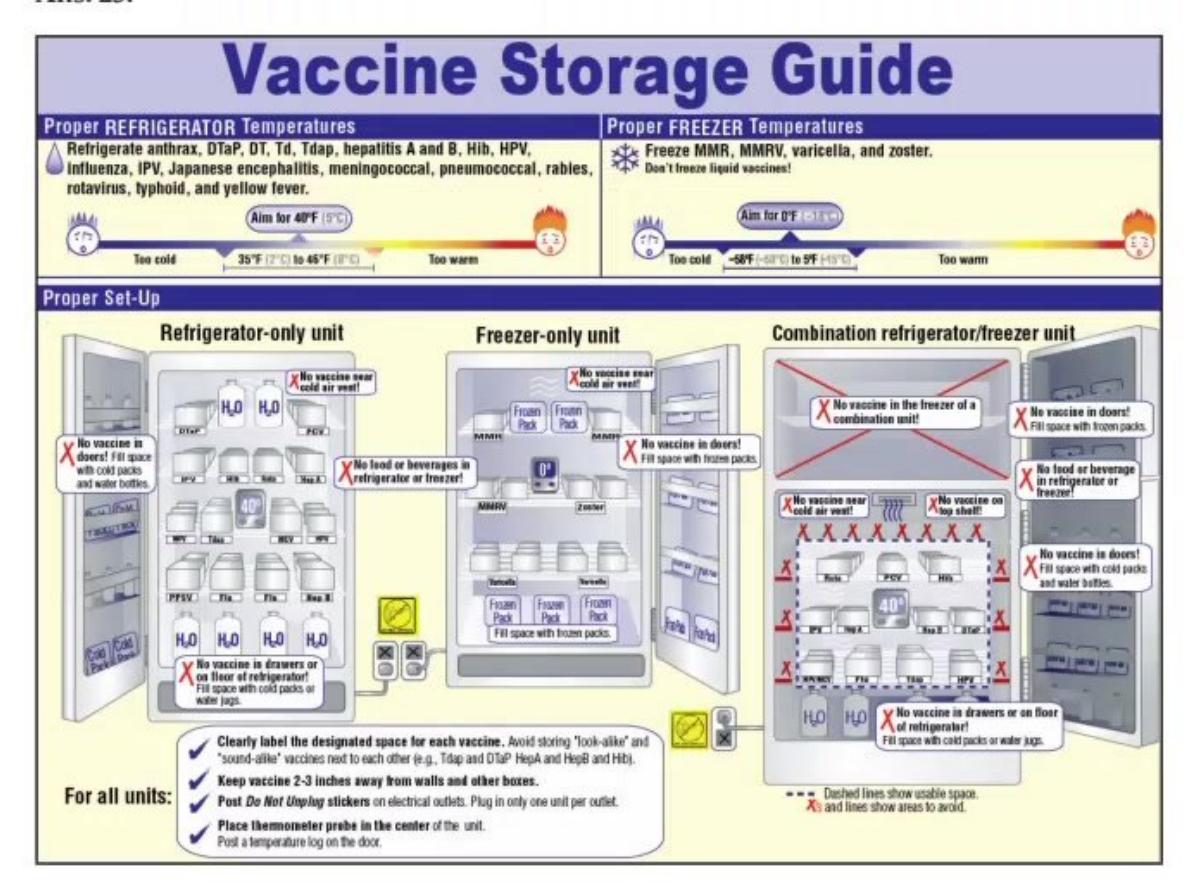

Describe the correct placement of vaccines and diluents in an Ice-Lined Refrigerator (ILR) / domestic refrigerator, and key monitoring principles.
Answer
- Top / Freezer / Coldest Zone (
to ): OPV, Measles, MMR, Varicella, BCG (freeze-resistant live vaccines). - Middle Shelves (
to ): BCG, MMR, PCV, Typhoid conjugate, Inactivated Influenza, IPV, Rotavirus. - Bottom Shelves / Warmer Zone (
to ): DPT, DT, Td, Tdap, Hepatitis B, Hepatitis A, Hib, and Rabies (Adsorbed vaccines — must NEVER touch freezer lining or be frozen). - Diluents: Kept on middle shelf or chilled at
to at least 24 hours before reconstitution. - Bottom bin / Door: Water bottles to maintain temperature during power outages (no vaccines in the door).
- Monitoring: Twice-daily temperature logging using calibrated digital thermometer / data logger.
MNJ13-024
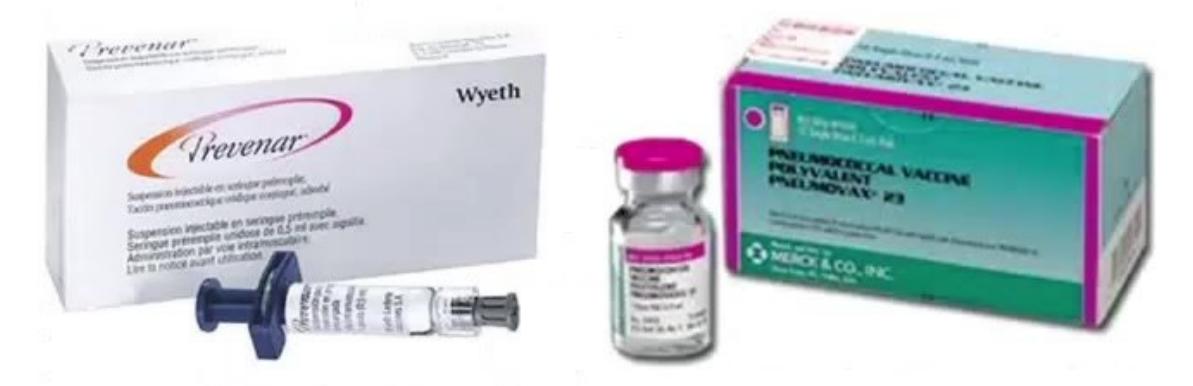
What is the dosage schedule of pneumococcal vaccine for a 4-year-old child who is suffering from sickle cell disease? Which new pneumococcal vaccine is available now?
Answer
- Sickle Cell Disease (Functional Asplenia) at 4 years:
- Should receive a single dose of Pneumococcal Conjugate Vaccine (PCV13 or PCV15 -
IM). - Followed 8 weeks later by a single dose of 23-valent Pneumococcal Polysaccharide Vaccine (PPSV23 -
IM/SC). - A booster dose of PPSV23 is given 5 years after the first PPSV23 dose.
- Should receive a single dose of Pneumococcal Conjugate Vaccine (PCV13 or PCV15 -
- New pneumococcal vaccines: PCV10 (Pneumosil), PCV14, PCV15, and PCV20.
MNJ13-025
A 3-year-old male child from UP is admitted as a case of Japanese encephalitis for the last 7 days. The father wants to know how he can protect his younger boy of age 17 months from this disease:
- What is the indication for this vaccine?
- Which vaccine of JE is recommended by IAP?
- What is the dose and schedule of JE vaccine?
Answer
- Indication: Children residing in or traveling to JE-endemic areas (e.g., Uttar Pradesh, Bihar, Assam, West Bengal, parts of South India).
- Recommended vaccines:
- Live attenuated SA 14-14-2 vaccine (CD-JEV).
- Inactivated Vero-cell-derived vaccine (JENVAC / JEEV).
- Dose & Schedule:
- Inactivated (JENVAC / JEEV): 2 doses (
IM for 1–3 years; for ) given 4 weeks apart starting at of age, with a booster dose at 1 year after the primary series. - Live SA 14-14-2 (in UIP): 1st dose at 9 months (with MR-1) and 2nd dose at 16–24 months (with MR-2).
- Inactivated (JENVAC / JEEV): 2 doses (
MNJ13-026
- Name strain/strains in cholera vaccines used in India.
- Name two contraindications (other than hypersensitivity) for use of cholera vaccine.
- Name the WHO-prequalified / approved available oral cholera vaccines.
- What is an available rapid test for diagnosis of cholera?
- Write two drugs for treatment above 9 years of age and two drugs below 9 years of age.
Answer
- Strains: Vibrio cholerae
(Inaba and Ogawa serotypes, classical and El Tor biotypes) and (Bengal strain). - Contraindications: Infants
of age, acute severe febrile or gastrointestinal illness, pregnancy (for certain live formulations). - WHO prequalified oral cholera vaccines (OCV): Shanchol, Euvichol / Euvichol-Plus, Dukoral.
- Rapid diagnostic test: Rapid immunochromatographic dipstick test (e.g., Crystal VC), and darkfield microscopy for darting motility inhibited by specific
antisera. - Antibiotic therapy:
- Above 9 years: Doxycycline (single dose
), Azithromycin, or Ciprofloxacin. - Below 9 years: Azithromycin (
single dose), Cotrimoxazole, or Erythromycin.
- Above 9 years: Doxycycline (single dose
MNJ13-027
Enumerate the adolescent immunization schedule (for a 12-year-old) according to IAP recommendations for a child who has received immunization as per EPI at a government hospital till 8 years:
Answer
- Tdap: Single dose of Tdap (preferred over Td) at 10–12 years, followed by Td every 10 years.
- HPV vaccine: 2 doses at 0 and 6 months (for females and males aged 9–14 years).
- MMR: 1–2 catch-up doses if missed earlier (at least 4 weeks apart).
- Hepatitis B: 3 doses at 0, 1, and 6 months if not vaccinated in infancy.
- Typhoid conjugate vaccine (TCV): Single dose if not previously received.
- Varicella vaccine: 2 doses given 4–8 weeks apart (if no reliable history of prior chickenpox).
- Hepatitis A vaccine: 2 doses of inactivated (0, 6 months) or 1 dose of live vaccine.
MNJ13-028
A mother brings her 14-year-old daughter Geeta for immunization advice. She has already received her 10-year Tdap and 2nd dose of MMR vaccine:
- What vaccine will you advise?
- Give information on the different types of this vaccine with respect to:
- a. Serotypes covered
- b. Schedule
- c. Disease protection
Answer
- Advised vaccine: HPV (Human Papillomavirus) Vaccine.
- Vaccine details:
| Feature | Quadrivalent HPV (Gardasil / Cervavac) | 9-Valent HPV (Gardasil 9) |
|---|---|---|
| Serotypes | HPV 6, 11, 16, 18 | HPV 6, 11, 16, 18, 31, 33, 45, 52, 58 |
| Schedule | - Age 9–14 years: 2 doses at 0 and 6 months - Age |
- Age 9–14 years: 2 doses at 0 and 6 months - Age |
| Protection | Cervical, vaginal, vulvar, and anal cancer (types 16, 18); genital warts / condylomata acuminata (types 6, 11) | Broader coverage: |
MNJ13-029
Match the following vaccines with their biological type:
- BCG
- OPV
- DPT
- Hib
- Hepatitis B vaccine
- Typhoid Vi
- Hepatitis A vaccine
- Acellular pertussis (aP)
Answer
- BCG
Live-attenuated bacteria - OPV
Live-attenuated virus - DPT
Toxoids (D, T) and killed bacteria (wP) - Hib
Capsular polysaccharide conjugated to protein carrier - Hepatitis B vaccine
Recombinant viral antigen (HBsAg) - Typhoid Vi
Capsular polysaccharide - Hepatitis A vaccine
Killed virus (inactivated) / Live-attenuated virus - Acellular pertussis (aP)
Bacterial subunit / purified antigens (PT, FHA, Pertactin, FIM)
MNJ13-030
Answer the following:
- What is the diluent used for BCG?
- What is the diluent used for MMR?
- How long can reconstituted BCG be used at a vaccine center?
- How long can reconstituted MMR be used at a vaccine center?
- Name 5 vaccines which should not be frozen under any circumstances.
- What does IAP recommend at 5 years (DPT / DT)?
Answer
- BCG diluent: Sterile Normal Saline (
). - MMR diluent: Sterile distilled water.
- Reconstituted BCG: Maximum 4 hours (discard thereafter; keep on ice and protect from light).
- Reconstituted MMR: Maximum 4 hours (keep on ice, protect from light).
- Vaccines that must NEVER be frozen: DPT, Pentavalent, Td / Tdap / TT, Hepatitis B, Hepatitis A (inactivated), Hib, PCV, Rabies, IPV.
- 5-year booster: IAP recommends DTwP or DTaP booster along with IPV (or combination DTaP-IPV / Tetraxim) and MMR-3.
MNJ13-031
Answer the following questions about rabies vaccine:
- What are Category III bites according to WHO?
- What is the standard schedule of post-exposure intramuscular vaccination in a previously unimmunized person?
- What is the indication for extended immunization (day 90)?
- What are the prerequisites for wound suturing in rabies bite cases?
Answer
- Category III bites: Single or multiple transdermal bites or scratches, contamination of mucous membranes with saliva (licks on broken skin or mucous membranes), and all exposures to bats.
- Schedule:
- Essen IM regimen: 5 doses on Days 0, 3, 7, 14, and 28.
- (Or Updated Thai Red Cross intradermal regimen: 2-site ID on Days 0, 3, 7, and 28).
- Extended immunization: Severe immunocompromise (e.g., advanced HIV, immunosuppressive therapy, malnutrition), where an additional 6th dose at Day 90 is recommended along with antibody titer checking.
- Prerequisites for suturing: Suturing should be avoided if possible. If inevitable for cosmetic/hemostatic reasons:
- Clean thoroughly with soap and water for 15 minutes.
- Infiltrate Rabies Immunoglobulin (RIG / RMAb) thoroughly into and around the wound edges.
- Wait at least 2 hours post-RIG infiltration before placing loose, non-occlusive sutures.
MNJ13-032
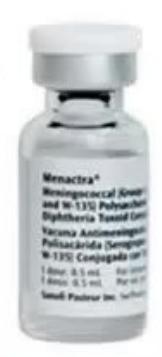

Answer the following questions about meningococcal conjugate vaccine (MCV):
- What is the dosage and administration route of MCV?
- What is the composition of MCV?
- What are the contraindications for MCV?
- What are the IAP recommendations for use (any 2) other than routine use?
- What are the two commercial MCV vaccines available?
Answer
- Dosage & Route:
Intramuscular (IM) injection. - Composition: Quadrivalent capsular polysaccharides of Neisseria meningitidis serogroups A, C, Y, and W-135 conjugated to diphtheria toxoid /
carrier protein. - Contraindications: Severe allergic reaction/anaphylaxis to a previous dose or to diphtheria toxoid carrier protein. History of Guillain-Barré Syndrome (precaution).
- Special indications:
- Anatomical or functional asplenia (sickle cell disease, splenectomy).
- Complement component deficiencies (C3, C5-C9, properdin) or use of complement inhibitors (eculizumab).
- Travel to hyperendemic/epidemic areas (African meningitis belt, Hajj/Umrah pilgrims).
- Laboratory personnel exposed to N. meningitidis.
- Community outbreak control.
- Available brands:
- Menactra (conjugated to diphtheria toxoid; 2 doses at 9 and 12 months, or 1 dose
). - Menveo (conjugated to
; approved as a single dose).
- Menactra (conjugated to diphtheria toxoid; 2 doses at 9 and 12 months, or 1 dose
MNJ13-033
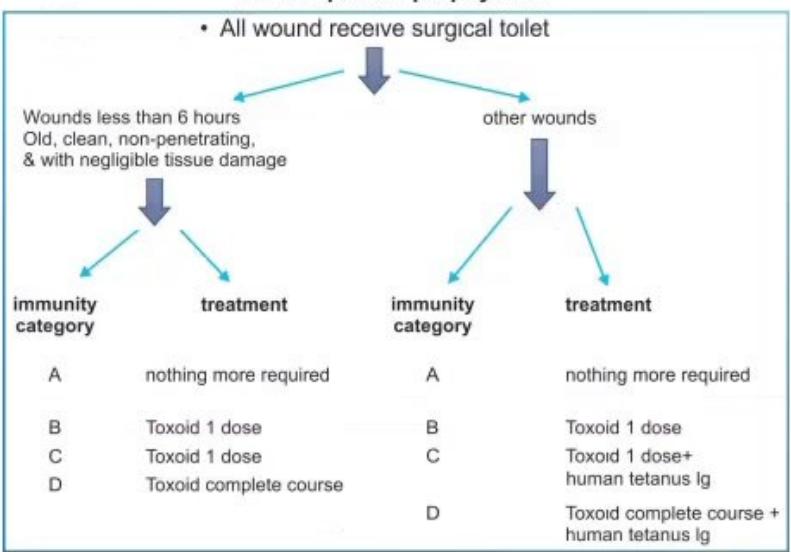
An 11-year-old boy Mahesh is brought with a penetrating crush injury with a compound fracture. His immunization status for tetanus is unknown according to the mother. Which of the following actions is correct with regard to tetanus prevention?
- a. Nothing is required
- b. Toxoid 1 dose
- c. Toxoid 1 dose + TIG
- d. Complete toxoid course + TIG
Answer
d. Complete toxoid course + TIG
Rationale:
For a dirty, tetanus-prone wound (crush injury, compound fracture) with unknown or incomplete immunization history (
- Administer Tetanus Toxoid / Td / Tdap immediately (Day 0) and complete the 3-dose course (at 0, 1, and 6 months).
- Administer Tetanus Immunoglobulin (TIG):
IM at a different anatomical site for immediate passive immunity.
MNJ13-034
His 5-year-old sister Ritu has multiple clean abrasions. She has earlier received 3 doses of DPT in the first year and 1 booster at
- a. Nothing
- b. TT 1 dose
- c. TT 1 dose + TIG
- d. Complete TT course + TIG
Answer
a. Nothing (or routine scheduled 5-year booster)
Rationale:
She has received 4 prior documented doses (3 primary + 1 booster). For clean minor wounds in individuals with
MNJ13-035
An 8-month-old child Tarun with history of egg allergy in the form of generalized urticaria is brought to your hospital:
- What advice will you give regarding skin testing and contraindications for: MMR, chickenpox vaccine, injectable influenza vaccine, intranasal influenza, and yellow fever vaccine?
- Which vaccines (any 2) are contraindicated in patients with severe allergy to neomycin?
- What Hepatitis B immunization instruction will you give for a
newborn born 2 hours back to a mother whose HBsAg status is unknown?
Answer
- Vaccines & Egg Allergy:
- MMR & Varicella: Can be administered safely without skin testing (measles/mumps viruses are grown in chick embryo fibroblast cultures and contain negligible ovalbumin). Observe the child for 30–60 minutes post-vaccination.
- Inactivated Influenza Vaccine: Can be given safely without prior skin testing.
- Intranasal Live Attenuated Influenza & Yellow Fever Vaccine: Contain higher amounts of egg protein; require caution, specialist consultation, or skin testing prior to administration.
- Neomycin allergy contraindications: MMR, Varicella, IPV, Inactivated Rabies vaccine.
- HBV regimen for
baby with unknown maternal HBsAg: - Administer 1st dose of Hepatitis B vaccine (
IM) within 12 hours of birth. - Immediately test maternal blood for HBsAg. If mother tests positive (or test results unavailable within 12 hours), administer HBIG (
IM) as soon as possible (within 7 days). - Because birth weight is
, the birth dose of HBV does not count towards the primary 3-dose series; give 3 additional doses at 1, 2, and 6 months (total 4 doses).
- Administer 1st dose of Hepatitis B vaccine (
MNJ13-036
- How will you immunize a child with a known bleeding disorder (e.g., severe hemophilia)?
- Name the vaccines that can be placed in the freezer compartment of the refrigerator.
- Write down the time limits for using the following vaccines after reconstitution:
- Varicella
- Measles / MMR
- Write the schedule of rabies vaccine for a person who has been bitten by a dog but has received 5 doses of rabies vaccine earlier.
Answer
- Immunization in bleeding disorders:
- Prefer Subcutaneous (SC) route whenever licensed and effective.
- For vaccines requiring Intramuscular (IM) administration (e.g., aluminium-adjuvanted vaccines):
- Administer immediately after factor replacement therapy.
- Use a fine-gauge needle (
or ). - Apply firm, continuous direct pressure to the injection site for at least 5 minutes without rubbing.
- Freezer compartment (
to ): OPV, Measles, MMR, Varicella, BCG. - Reconstitution time limits:
- Varicella: Within 30 minutes (protect from light).
- Measles / MMR: Within 4 hours (keep on ice, protect from light).
- Previously vaccinated rabies PEP schedule:
- 2 doses of rabies vaccine IM (
) or ID ( ) on Day 0 and Day 3. - Rabies immunoglobulin (RIG) is not needed.
- 2 doses of rabies vaccine IM (