THG38-001
What are the mechanisms of action of following drugs?
| Drug | Mechanism of Action |
|---|---|
| a. Canakinumab | |
| b. Mycophenolate mofetil | |
| c. Tocilizumab | |
| d. Abatacept | |
| e. Daclizumab | |
| f. Belimumab |
Answer
- a. Canakinumab: Interleukin-1
(IL-1 ) receptor antagonist / monoclonal antibody - b. Mycophenolate mofetil: Inosine monophosphate dehydrogenase (IMPDH) inhibitor (inhibits de novo purine synthesis in lymphocytes)
- c. Tocilizumab: Interleukin-6 (IL-6) receptor antagonist / monoclonal antibody
- d. Abatacept: CTLA-4-Ig fusion protein that binds to CD80 and CD86, blocking CD28 co-stimulation of T cells
- e. Daclizumab: Interleukin-2 (IL-2) receptor (
-chain / CD25) antagonist - f. Belimumab: B-lymphocyte stimulator (BLyS / BAFF) antagonist
THG38-002
What are the adverse effects of following drugs?
| Drug | Key Adverse Effect |
|---|---|
| a. Lamotrigine | |
| b. Valproate | |
| c. Carbamazepine | |
| d. Phenytoin | |
| e. Topiramate | |
| f. Vigabatrin |
Answer
- a. Lamotrigine: Stevens–Johnson syndrome (SJS) / Toxic Epidermal Necrolysis (TEN), rash
- b. Sodium Valproate: Acute pancreatitis, fulminant hepatotoxicity, weight gain, alopecia, hyperammonemia, and teratogenicity (neural tube defects)
- c. Carbamazepine: Agranulocytosis / aplastic anemia, hyponatremia (SIADH), hepatotoxicity
- d. Phenytoin: Pseudolymphoma, gingival hyperplasia, hirsutism, cerebellar ataxia, megaloblastic anemia
- e. Topiramate: Secondary angle-closure glaucoma, hypohidrosis / hyperthermia, nephrolithiasis, metabolic acidosis, weight loss
- f. Vigabatrin: Irreversible concentric visual field defects / retinal toxicity
THG38-003
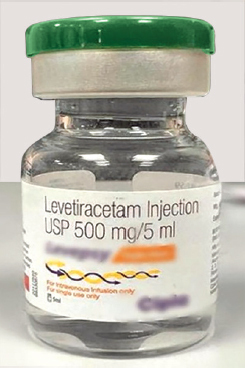
a. What is the mechanism of action of this drug?
b. What are the indications of the above mentioned drug?
c. Mention the dose of the above mentioned drug?
d. Mention few adverse drug reactions of the same?
Answer
- a. Levetiracetam: Binds selectively to the presynaptic vesicle glycoprotein SV2A, modulating synaptic vesicle exocytosis and neurotransmitter release.
- b. Indications: Focal-onset seizures, generalized tonic-clonic seizures (GTCS), myoclonic seizures (e.g., Juvenile Myoclonic Epilepsy), and status epilepticus second-line therapy.
- c. Dose:
- Loading for status epilepticus:
IV over 10–15 minutes. - Maintenance:
orally or IV divided in 2 doses.
- Loading for status epilepticus:
- d. Adverse effects: Behavioral disturbances (irritability, aggression, mood swings, hyperactivity), somnolence, fatigue, headache, dizziness.
THG38-004
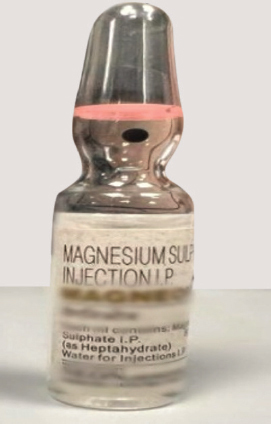
a. Mention three indications for
b. What is the dose and elemental content in 50%
c. What to monitor while administering?
d. What is the mechanism of action?
Answer
- a. Indications: Acute severe asthma (refractory bronchospasm), symptomatic hypomagnesemia, refractory hypocalcemia, Torsades de pointes, pulmonary hypertension of the newborn (PPHN), and eclampsia.
- b. Dose & Content:
- Dose in asthma:
IV infusion over 20–30 minutes (maximum ). - Elemental content: 50%
contains ( ).
- Dose in asthma:
- c. Monitoring: Continuous heart rate and ECG (bradycardia, heart block), blood pressure (hypotension), respiratory rate (respiratory depression), and deep tendon reflexes (loss of patellar reflex indicates toxicity).
- d. Mechanism: Competes with calcium channels on bronchial smooth muscle causing bronchodilation, inhibits acetylcholine release at motor nerve terminals, and stabilizes mast cell membranes reducing histamine release.
THG38-005
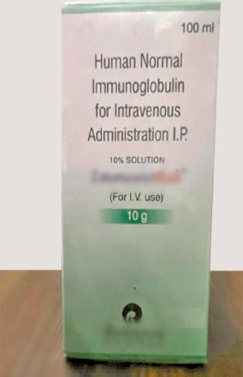
a. Mechanism of action of IV immunoglobulin.
b. Mention four clinical indications.
c. What are the adverse effects?
d. How is it prepared?
Answer
- a. Competitively blocks macrophage Fc receptors in the reticuloendothelial system (preventing phagocytosis of antibody-coated cells), neutralizes circulating autoantibodies and superantigens, suppresses pathogenic cytokine expression, and modulates regulatory T-cell function.
- b. Indications: Kawasaki disease, Immune Thrombocytopenia (ITP), Guillain–Barré syndrome (GBS), Primary Immunodeficiencies (e.g., X-linked agammaglobulinemia, SCID), Systemic-onset JIA (sJIA), and Toxic Shock Syndrome.
- c. Adverse effects: Anaphylaxis (especially in IgA-deficient patients), aseptic meningitis, headache, fever/chills, acute kidney injury (osmotic nephrosis from sucrose stabilizers), transfusion-related acute lung injury (TRALI), and thrombosis.
- d. Preparation: Sterile purified polyvalent immunoglobulin G (IgG
) fractionated and pooled from plasma of healthy human donors, treated with viral inactivation steps.
THG38-006
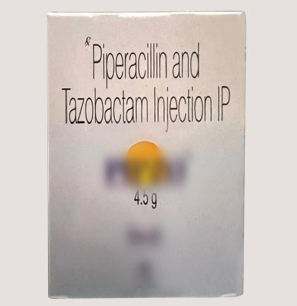
a. Mention the spectrum of microbials covered by this antibiotic.
b. What is the dose of the drug?
c. What are the side effects of the drug?
d. Which class does piperacillin and tazobactam belong to?
Answer
- a. Antimicrobial spectrum: Broad-spectrum coverage against Gram-negative bacilli including Pseudomonas aeruginosa, Klebsiella, E. coli, Enterobacter; Gram-positive bacteria including methicillin-susceptible Staphylococcus aureus (MSSA), Streptococcus pneumoniae, Enterococcus faecalis; and anaerobes including Bacteroides fragilis.
- b. Dose:
(based on piperacillin component) IV divided every 6 to 8 hours (maximum single dose ). - c. Adverse effects: Hypersensitivity/anaphylaxis, neutropenia/leukopenia (with prolonged therapy), thrombocytopenia, antibiotic-associated diarrhea / Clostridioides difficile colitis, hypokalemia, and elevated hepatic transaminases.
- d. Class: Antipseudomonal extended-spectrum penicillin (ureidopenicillin) combined with a
-lactamase inhibitor.
THG38-007
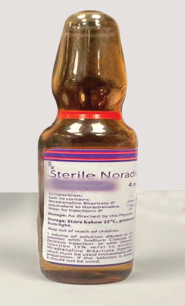
a. What are the indications of noradrenaline?
b. What are the target receptors of this drug?
c. Mention the dose range of noradrenaline infusion.
d. Mention few adverse drug reactions of noradrenaline?
Answer
- a. Indications: Vasodilatory / septic shock with low systemic vascular resistance (warm shock) refractory to fluid resuscitation, and neurogenic shock; neuro-intensive care to maintain Mean Arterial Pressure (MAP) and ensure adequate Cerebral Perfusion Pressure (CPP).
- b. Target receptors: Potent agonist at
and adrenergic receptors (producing intense vasoconstriction), with modest agonist activity at adrenergic receptors (mild positive inotropy). - c. Infusion dose:
(titrated to target MAP). - d. Adverse effects: Peripheral limb ischemia, extravasation tissue necrosis, reflex bradycardia, excessive hypertension, myocardial ischemia/arrhythmias, and increased cardiac afterload.
THG38-008
Name the devices shown in images A to C, their oxygen flow volume and FiO2 delivery, one advantage, and disadvantage of each.
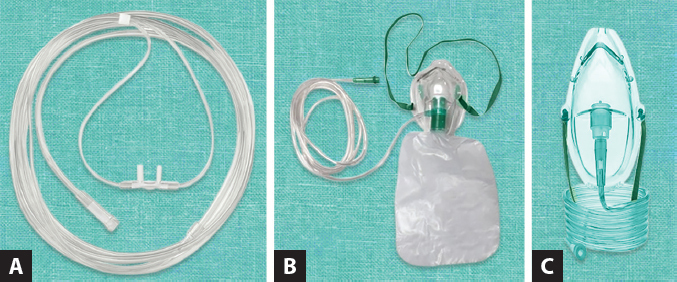
Answer
| Image | Device Name | Flow Rate | Delivered |
Advantages | Disadvantages |
|---|---|---|---|---|---|
| A | Nasal Cannula | Well tolerated in infants/children; allows feeding and vocalization; low cost. | Variable |
||
| B | Simple Face Mask | Easy to apply; higher |
Must maintain |
||
| C | Non-Rebreathing Mask (NRBM) | Delivers very high |
Requires tight seal; non-humidified; not suitable for prolonged long-term use. |
THG38-009
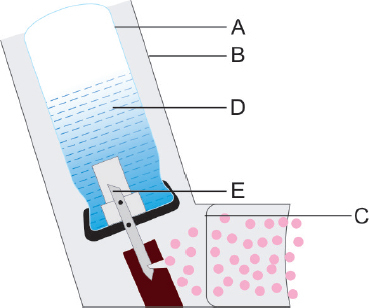
a. Name this device and label the marked parts.
b. What will you do for a younger age group who is not cooperative to use this device? If yes, why?
c. Name any two groups of drugs administered via this device.
d. Mention the advantages and disadvantages of this device.
Answer
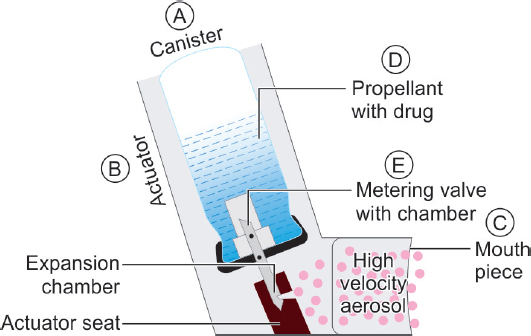
- a. Metered-Dose Inhaler (MDI): Compact pressurized canister containing micronized drug in propellant (e.g., Hydrofluoroalkane, HFA) and surfactant, seated in an actuator casing with metering valve and mouthpiece.
- b. Add a valved holding chamber / spacer with a silicone face mask. Young children cannot synchronize actuation with inspiration (lack hand-lung coordination); spacers eliminate coordination requirements, slow aerosol velocity, and decrease oropharyngeal deposition.
- c.
- Inhaled short-acting and long-acting
-agonists (Salbutamol, Formoterol, Salmeterol). - Inhaled corticosteroids (Budesonide, Fluticasone, Beclomethasone).
- Anticholinergics (Ipratropium bromide).
- Inhaled short-acting and long-acting
- d.
- Advantages: Compact, portable, multi-dose, no electricity required, rapid pulmonary delivery.
- Disadvantages: Requires precise actuation-inhalation coordination without spacer; high oropharyngeal impaction (risk of oral thrush / dysphonia); difficult in severe respiratory distress.
THG38-010
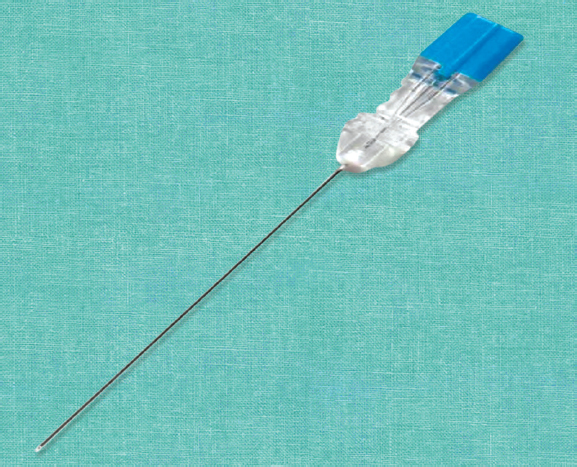
a. Name this device.
b. Mention two therapeutic and two diagnostic indications for using this device.
c. Mention four side effects.
d. Mention two contraindications for usage of this device.
Answer
- a. Lumbar Puncture (LP) Needle — Quincke type (with matched stylet and cutting bevel).
- b.
- Diagnostic indications: Evaluation of suspected meningitis/encephalitis, measurement of opening CSF pressure in idiopathic intracranial hypertension, and staging/evaluation of leukemic CNS infiltration.
- Therapeutic indications: Intrathecal chemotherapy (e.g., Methotrexate, Cytarabine), spinal anesthesia, and CSF drainage in benign intracranial hypertension.
- c. Side effects: Post-dural puncture headache (PDPH), local back pain, epidural hematoma / bleeding, introduction of infection (meningitis/discitis), and intraspinal epidermoid tumor (if performed without stylet).
- d. Contraindications: Signs of raised intracranial pressure with mass lesion/focal deficit (risk of uncal/tonsillar herniation), severe thrombocytopenia (
) or uncorrected coagulopathy, and local skin infection at the puncture site (L3–L5).
THG38-011
a. Name the labeled parts (A, B, C, and D) of artificial manual breathing unit (AMBU) bag.
b. What is the volume of bag to be used in different age group?
- i. Neonates
- ii. Infants and young children
- iii. Older children and adolescent
c. What is the use of labeled part A?
d. How to select appropriate size mask?
e. What is the use of reservoir?
f. Mention any two complications in AMBU usage.
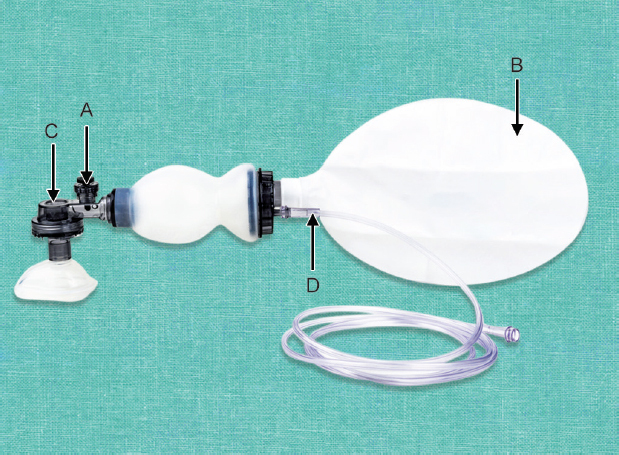
Answer
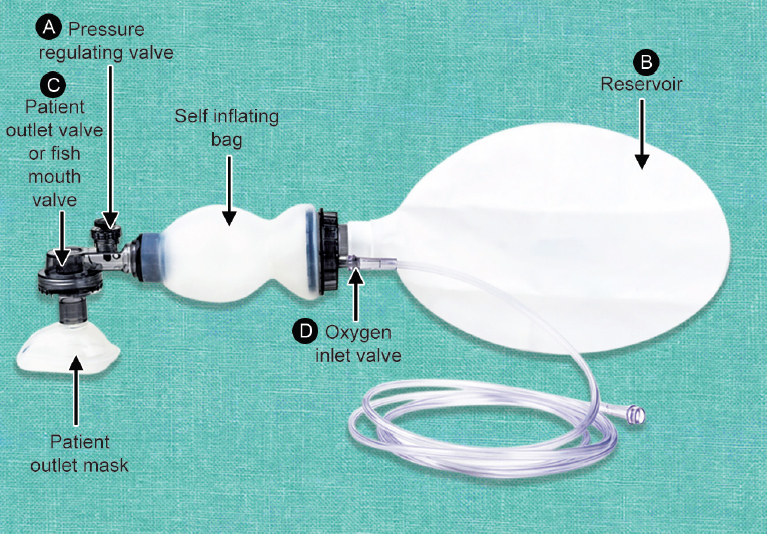
- a.
- A: Pressure-limiting pop-off valve / relief valve
- B: Non-rebreathing patient valve (duckbill/fish-mouth valve)
- C: Self-inflating silicone ventilation bag
- D: Oxygen reservoir bag with inlet tubing adapter
- b. Bag volumes:
- i. Neonates:
- ii. Infants and young children (1–8 years):
- iii. Older children and adolescents:
- i. Neonates:
- c. Pop-off valve (A): Opens at
to release excess pressure and protect pediatric lungs from pulmonary barotrauma. - d. Mask sizing: Must extend from the bridge of the nose to the cleft of the chin without covering the eyes or extending beyond the chin border, achieving an airtight seal.
- e. Reservoir bag: Increases delivered
from (room air entrainment) up to when oxygen flow is . - f. Complications: Pulmonary barotrauma/pneumothorax, gastric insufflation leading to vomiting and aspiration, and hypoventilation/hyperventilation.
THG38-012
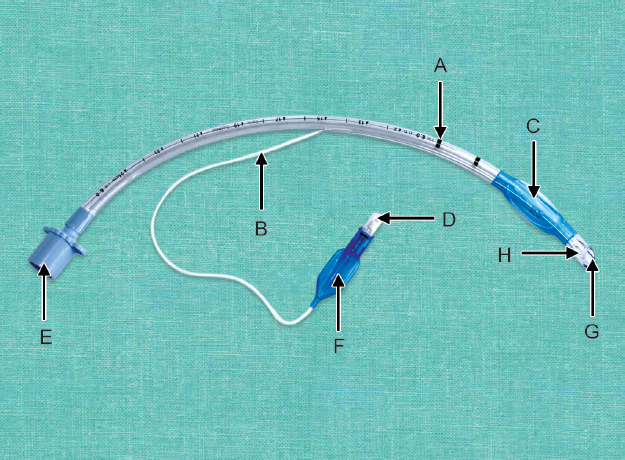
a. Identify this instrument and how do you select the size in different age group children?
b. Identify the marked part A, G, and H and mention its significance.
c. Identify the marked part C and mention its significance.
d. Identify the marked parts D and F and mention its significance.
e. How do you determine the depth of insertion?
f. What are the methods to confirm proper placement of this instrument and which among it is the gold standard?
Answer
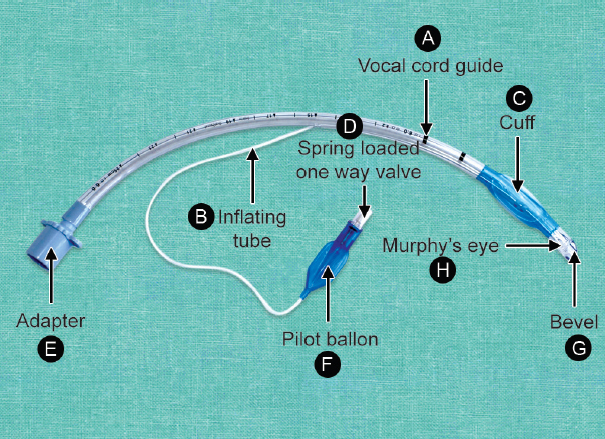
- a. Cuffed Endotracheal Tube (ETT):
- Size (Internal Diameter, ID in mm) selection formula:
- Size (Internal Diameter, ID in mm) selection formula:
- b.
- A (Vocal cord guide): Black line indicator positioned at the level of the vocal cords during laryngoscopy to ensure appropriate depth.
- G (Beveled tip): Angled opening allowing smooth passage through glottis with optimal visualization.
- H (Murphy’s eye): Side hole at distal tip providing an alternate airway channel if the primary bevel becomes occluded by secretions or the tracheal wall.
- c. C (Inflatable cuff): Provides an airtight low-pressure seal against the tracheal mucosa to prevent air leak and reduce microaspiration.
- d.
- D (Inflation line with spring-loaded one-way valve): Channel for injecting air to inflate the cuff.
- F (Pilot balloon): External indicator providing tactile and visual assessment of cuff inflation pressure (
).
- e. Depth of insertion:
- f. Confirmation methods: Continuous waveform capnography (
for breaths — Gold Standard), 5-point chest/epigastric auscultation, symmetric bilateral chest rise, tube misting, and confirmation on chest radiograph (tip at T2–T3).
THG38-013
A 1-month-old male child was brought by the mother with complaints of (c/o) progressive pallor noticed since the past 10 days. She has also noticed yellowish discoloration of the eyes, palms, and soles and decreased activity since last 4 days.
Complete blood count done showed:
- Hemoglobin (Hb): 4 g/dL
- Mean corpuscular volume (MCV): 100 fL
- Mean corpuscular hemoglobin concentration (MCHC): 40 g/dL
Ultrasonography (USG) of abdomen done showed a liver size of 5 cm with normal echogenicity and a spleen size of 5 cm. No mass lesions noticed in the USG.
a. What is your likely diagnosis?
b. What is the flow cytometry test performed in the disease?
c. What is the molecular defect associated with the disease?
d. What is the dreadful complication associated with a viral infection in the disease (name the complication and the virus causing it)?
e. What is the mode of inheritance of the disease?
Answer
- a. Hereditary Spherocytosis (HS) (suggested by neonatal hemolytic anemia, jaundice, splenomegaly, and high MCHC
). - b. Eosin-5-maleimide (EMA) binding test by flow cytometry (detects decreased fluorescence binding to Band 3 and Rh-related proteins).
- c. Mutations in erythrocyte membrane skeletal proteins: Ankyrin-1 (ANK1), Spectrin (
and ), Band 3 (SLC4A1), or Protein 4.2. - d. Transient Aplastic Crisis caused by Parvovirus B19 infection.
- e. Autosomal dominant in
of cases (autosomal recessive in 25%).
THG38-014
A 4-year-old developmentally normal female child brought by her parents with c/o vomiting and altered sensorium. She had a mild trauma 2 days back. Now presenting with a hematoma at the site of injury. On enquiring father had prolonged history of bleeding while undergoing a major surgery. Laboratory values included showed normal coagulation profile and normal platelet count.
a. What is your diagnosis leading to this present complication?
b. What is the confirmatory next step of investigation to arrive at your diagnosis?
c. How to manage this acute complication?
d. What are the extra-hematological manifestations of the above discussed diagnosis?
e. Treatment recommend for this condition and prophylaxis protocol followed?
Answer
- a. Factor XIII (Fibrin stabilizing factor) deficiency complicated by intracranial hemorrhage (normal PT, aPTT, and platelet count).
- b. Quantitative Factor XIII activity assay (or clot solubility test in 5M urea / 1% monochloroacetic acid).
- c. Emergency stabilization: Intracranial decompression, neuroprotective care, and immediate factor replacement with Factor XIII concentrate (
IV) or Cryoprecipitate / Fresh Frozen Plasma (FFP). - d. Delayed umbilical cord bleeding in neonates, poor wound healing with abnormal scar formation, and recurrent spontaneous miscarriages in females.
- e.
- Treatment for acute bleeding / surgery: FXIII concentrate
. - Routine secondary prophylaxis: FXIII concentrate
IV every 4 weeks (due to long half-life of 10–14 days) to maintain trough activity .
- Treatment for acute bleeding / surgery: FXIII concentrate
THG38-015
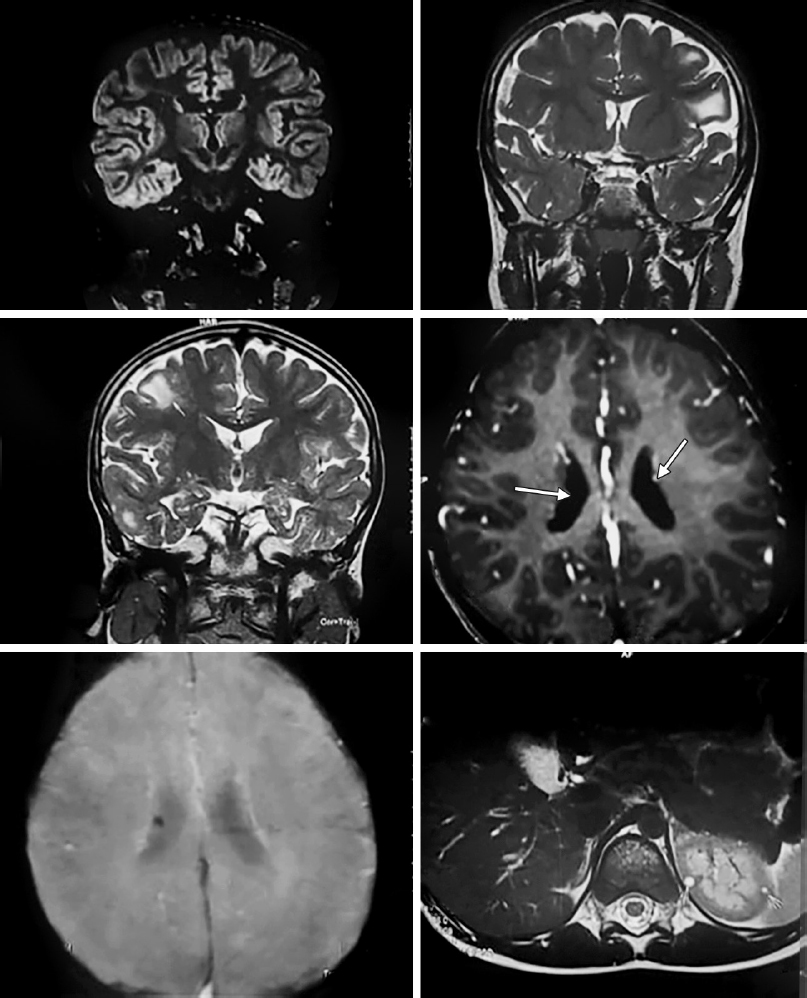
a. What does the magnetic resonance imaging (MRI) show and name the condition associated with it?
b. What are the genetic foci of the condition and its chromosomal location?
c. What are the other features of the disease (name any four)?
d. What are the differential diagnosis (DDs)?
e. What is the drug of choice when it is associated with West syndrome?
Answer
- a. Subependymal nodules (SENs) and cortical tubers associated with Tuberous Sclerosis Complex (TSC).
- b.
- TSC1 gene: Located on chromosome 9q34 (encodes Hamartin).
- TSC2 gene: Located on chromosome 16p13 (encodes Tuberin).
- c. Facial angiofibromas (adenoma sebaceum), hypomelanotic macules (ash-leaf spots), shagreen patch, cardiac rhabdomyoma, subependymal giant cell astrocytoma (SEGA), and renal angiomyolipoma.
- d. Neurofibromatosis type 1 (NF1), Sturge-Weber syndrome, Von Hippel-Lindau disease, and PHACE syndrome.
- e. Vigabatrin (GABA-transaminase inhibitor).
THG38-016
A 10-year-old male child was brought to the outpatient department (OPD) with c/o recurrent bilateral (B/L) parotitis since the last 6 months. He had completed three courses of oral antibiotics to which there was no response. There is no history of fever or any history of local trauma.
a. What is your likely diagnosis?
b. What is the gold standard procedure for the diagnosis of the disease?
c. What are the antibodies used for the diagnosis of the disease?
d. What are the other tests used for detection of the disease?
e. What are the other differentials of the disease?
Answer
- a. Primary Sjögren syndrome (or Juvenile Recurrent Parotitis).
- b. Minor salivary gland / labial lip biopsy showing focal lymphocytic sialadenitis (focus score
focus of 50 lymphocytes per ). - c. Anti-SSA (Ro) and Anti-SSB (La) antibodies (along with ANA and Rheumatoid Factor).
- d. Schirmer's test (
wetting in 5 minutes), Rose Bengal / fluorescein corneal staining, and salivary gland ultrasonography / sialometry. - e. Juvenile recurrent parotitis (JRP), viral parotitis (mumps, CMV, EBV, HIV), bacterial suppurative sialadenitis, and IgG4-related disease.
THG38-017
A 10-year-old girl child presents to the emergency room (ER) with c/o of vague abdominal pain over the past 4 weeks. Mother has noticed yellowish discoloration of the eyes and gross distension of the abdomen since the past 1 week. Her scholastic performance has recently showed a declining trend and she prefers to stay alone at home also.
a. What is your likely diagnosis? (please mention the other name also)
b. What is the genetic inheritance and the gene associated with the disease?
c. What are the two blood indices and the levels of the same used for the diagnosis of the disease?
d. What is the biochemical evidence of the disease?
e. What is the treatment of choice of the disease?
Answer
- a. Wilson’s disease (Hepatolenticular degeneration).
- b. Autosomal recessive; mutation in the ATP7B gene on chromosome 13q14.3.
- c.
- Low serum ceruloplasmin (
, normal 20–40 mg/dL). - 24-hour urinary copper excretion (
or ).
- Low serum ceruloplasmin (
- d. Hepatic copper concentration
dry weight on liver biopsy; presence of Kayser–Fleischer (KF) rings on slit-lamp examination. - e. Chelation therapy: D-Penicillamine (
) or Trientine ( ), followed by maintenance Zinc acetate/gluconate (which induces intestinal metallothionein).
THG38-018
A 13-year-old adolescent girl brought to ER with acute onset breathlessness, history of vomiting, and fever for 1 day. On examination, she is verbally responsive; Her heart rate (HR) is 124 beats/min, respiratory rate (RR)—32 breaths/min, effortless tachypnea was present, blood pressure (BP)—100/60 mm Hg, peripheral pulses well felt, and weight of the child is 35 kg.
Bedside investigations:
- Capillary blood glucose (CBG): 457 mg/dL
- Blood ketones: 4.6 mmol/L
- Venous blood gas (VBG): pH 7.005, pO2 103.0 mm Hg, pCO2 8.3 mm Hg, HCO3 2.0 mEq/L
- Serum electrolytes: Na 132 mEq/L, K 3.57 mEq/L, Cl 103 mEq/L, HCO3 2 mEq/L
a. What are the metabolic abnormalities noted here?
b. Calculate the fluid management to be given.
c. Calculate expected pCO2.
d. State the acid–base disorder noted.
e. Calculate delta anion gap, delta bicarbonate, and delta ratio.
f. Calculate corrected Na+ levels.
g. Write the formula for calculating plasma osmolarity.
Answer
- a. Hyperglycemia (
), hyperketonemia ( ), severe metabolic acidemia (pH 7.005), and severe bicarbonate depletion ( ) — Diabetic Ketoacidosis (DKA). - b. Fluid management:
- Initial resuscitation:
Normal Saline over 1 hour. - Deficit + Maintenance over 48 hours:
- Initial resuscitation:
- c. **Expected }\text{pCO}_2\text{ (Winter's formula):}
Actualis , indicating appropriate full respiratory compensation. - d. Severe High Anion Gap Metabolic Acidosis (HAGMA).
- e.
(HAGMA) (Mixed HAGMA + NAGMA)
- f. Corrected Sodium:
- g. Effective Serum Osmolality:
THG38-019
A 2-year-old child came with c/o fever for 2 days, c/o cough, and cold for 2 days. On examination, child is irritable, consolable, pallor present, HR—130 beats/min; RR—28 breaths/min; capillary refill time (CRT) <2 seconds, and pulses well felt. Blood investigations shows:
- Hb: 9.7 g% and PCV: 29.9%
- MCV: 69.7 fL, MCH: 22.6 pg, MCHC: 32.4 g/dL
- RDW: 18.4%, RBC: 4.28 million/mm3, WBC: 5,500 cells/mm3
- Differential: N54 / L34 / M7.5 / E3.0 / B0.7, Platelet: 3.31 lakh/mm3, MPV: 8.8 fL
a. Identify the abnormalities.
b. Calculate Mentzer index and give the interpretation.
c. Calculate the reticulocyte index when reticulocyte % is 4.0 and PCV is 29.0.
d. Calculate the absolute neutrophil count when % of bands is 3 and % of polymorphs is 22 and WBC count is 4,000; Interpret the result.
e. Calculate the corrected erythrocyte sedimentation rate (ESR) when ESR = 35 and hematocrit (HCT) = 29?
Answer
- a. Microcytic hypochromic anemia with high red cell distribution width (RDW
). - b. Mentzer Index:
: Suggestive of Iron Deficiency Anemia : Suggestive of -Thalassemia trait
- c. Reticulocyte Production Index (RPI):
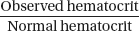
- d. Absolute Neutrophil Count (ANC):
Interpretation: Moderate neutropenia (normal ANC). - e. Corrected ESR:
THG38-020
A 12-year-old developmentally normal female child, known case of (k/c/o) wheezer diagnosed with asthma on irregular controller therapy visits ER with c/o cough and cold 1 week, fever for 1 day, and history of fast breathing for 2 hours. She was alert, barely speaks few words, and tachypneic. Her HR was 140 beats/min and RR— 44 breaths/min. Suprasternal and intercostal retractions were seen. SpO2 was 89% in room air; peripheral pulses felt; BP—100/70 mm Hg; RS—B/L wheeze+
VBG was taken and it shows pH—7.3, pCO2—50 mm Hg, PO2—68 mm Hg, and HCO3—28.
a. Calculate the alveolar arterial oxygen difference (AaDO2) gradient. Interpret the result.
b. Name two acute conditions with elevated AaDO2 gradient and respiratory acidosis.
c. What is oxygenation index calculation?
d. When is it considered as severe hypoxemic respiratory failure?
e. In what condition, AaDO2 gradient is normal in spite of hypoxemia?
Answer
- a. Alveolar-arterial Oxygen Gradient (
):
Interpretation: Elevatedgradient indicating ventilation-perfusion ( ) mismatch secondary to acute bronchospasm/airway obstruction. - b. Severe acute asthma exacerbation, foreign body aspiration, and severe pneumonia.
- c. Oxygenation Index (OI):
- d.
(or ). - e. Pure alveolar hypoventilation due to central respiratory depression (e.g., opioid intoxication, brainstem injury) or high altitude.
THG38-021
A 2-year-old boy admitted and treated for severe burns. He suddenly develops tachypnea and respiratory distress progressively worsens. Chest X-ray shows air bronchogram, pleural effusion, and atelectasis. Computed tomography (CT) shows ground glass opacification and air bronchogram. VBG shows paO2 = 41, pH = 7.4, pCO2 = 32 mm Hg, and HCO3 = 21; 2D echo did not show any major abnormalities.
a. What is the complication observed postburns here?
b. What is oxygenation criteria formula used to derive at the diagnosis of the above complication?
c. What are lung protective strategies to be followed if considering for mechanical ventilation?
d. With what value of oxygen index (OI), extracorporeal membrane oxygenation (ECMO) can be considered in such situation?
Answer
- a. Acute Respiratory Distress Syndrome (ARDS) / Pediatric ARDS (PARDS).
- b.
(P/F) ratio: - Severe PARDS:
or - Moderate PARDS:
or - Mild PARDS:
or
- Severe PARDS:
- c. Lung protective ventilation: Low tidal volume (
predicted body weight), permissive hypercapnia ( ), plateau pressure , and titrated optimal PEEP ( ). - d.
(or refractory hypoxemia / severe hypercapnic respiratory failure despite lung-protective ventilation and neuromuscular blockade/prone positioning).
THG38-022
A 7-month-old male infant recently weaned off to complementary food has come with c/o loose stools >20 episodes/day, vomiting >10 episodes/day, fever for 1 day, and bad child rearing practices present. On examination, child is lethargic, HR 150 beats/min, RR 24 breaths/min, peripheral pulses 1+. Moderate-to-severe dehydration signs present, BP—70/50 mm Hg, urine output <0.5 mL/kg/hour in 12 hours; his laboratory values show urea 155 mg/dL, serum creatinine 0.8 mg/dL, HCO3 – = 10 mEq/L, Na+—148 mEq/L, K+—3.4 mEq/L, Cl– = 110 mEq/L; urine sodium = 143 mEq/L, urine creatinine = 0.7 mEq/L; anthropometry: weight and height of the child was 7.0 kg and 66 cm respectively.
a. Calculate fractional excretion of sodium (FeNa)? Interpret the result?
b. Calculate estimated glomerular filtration rate (eGFR)?
c. How would you expect the urine osmolality to be in this scenario? Increased/normal/low?
d. Which stage of acute kidney injury (AKI) does this child fall according to kidney disease improving global outcomes (KDIGO) classification?
Answer



- a. Fractional Excretion of Sodium (
):
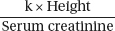
Interpretation:signifies Prerenal Acute Kidney Injury (hypovolemia/dehydration). - b. Estimated GFR (Updated Bedside Schwartz formula):
(Or using classical: ). - c. Increased (
due to maximal tubular water reabsorption). - d. KDIGO Stage 2 AKI (Urine output
for hours / baseline creatinine).
THG38-023
A 31-week-old baby boy delivered by emergency lower segment cesarean section (LSCS) cried immediately after birth. The baby had a respiratory distress syndrome (RDS) score of 6 and was started on bubble continuous positive airway pressure (CPAP). Chest X-ray showed ground glass appearance, was not improving even after 4 hours of CPAP [FiO2: 40% and positive end-expiratory pressure (PEEP): 6].
a. What is the next line of management?
b. What is this technique called? What are the newer modalities?
c. What are the indications for the above procedure?
d. What are the complications for the above procedure?
Answer
- a. Exogenous natural surfactant replacement therapy (e.g., Poractant alfa
or Beractant ). - b.
- INSURE technique: INtubate – SUrfactant – RExtubate to CPAP.
- Newer non-invasive modalities: LISA (Less Invasive Surfactant Administration) / MIST (Minimally Invasive Surfactant Therapy) using a thin vascular catheter or feeding tube while baby remains on spontaneous breathing CPAP; and aerosolized/nebulized surfactant.
- c. Neonatal RDS in preterm infants failing CPAP (
), meconium aspiration syndrome (MAS), severe neonatal pneumonia, and pulmonary hemorrhage. - d. Acute airway obstruction / desaturation, bradycardia, pulmonary hemorrhage, uneven distribution / localized air leak (pneumothorax), and rapid changes in cerebral blood flow.
THG38-024
A 7-month-old baby girl came to the ER with hypotensive shock. The intravenous (IV) line could not be secured after multiple attempts. The shock was managed after this procedure.
a. Identify this procedure.
b. What are the possible sites for this access?
c. What are the indications?
d. What are the contraindications?
e. What precautions will you take while administering fluid by this route?
Answer
- a. Intraosseous (IO) vascular access.
- b. Sites:
- Anteromedial surface of proximal tibia (
below and medial to tibial tuberosity — preferred). - Distal femur (
above external condyle). - Distal tibia (
proximal to medial malleolus). - Proximal humerus (greater tubercle).
- Anteromedial surface of proximal tibia (
- c. Emergency vascular access in cardiopulmonary arrest, decompensated shock, or status epilepticus when IV access cannot be established within 90 seconds / 3 attempts.
- d. Contraindications: Ipsilateral bone fracture, severe osteogenesis imperfecta / osteopetrosis, overlying cellulitis/burns, and previous failed IO attempt in the same bone.
- e. Confirm position (aspiration of bone marrow), administer pressurized rapid flushes (bone marrow offers high vascular resistance), use sterile technique, and remove within 24 hours once definitive venous access is secured.
THG38-025
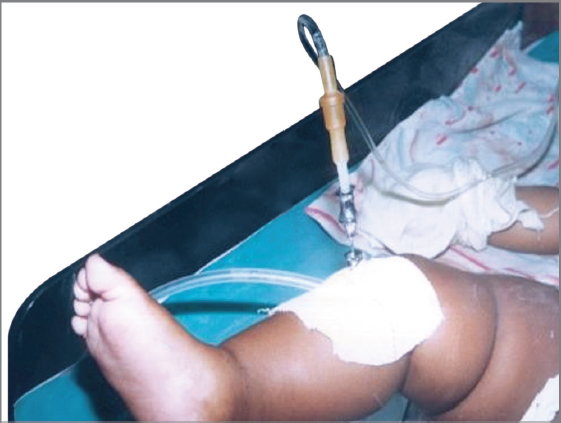
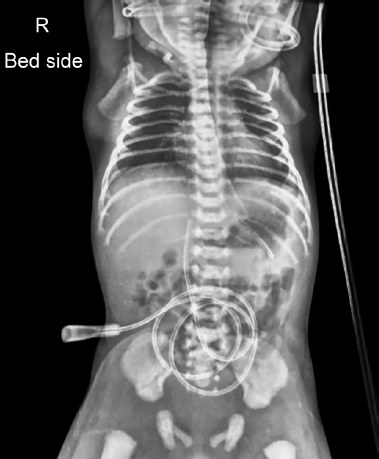
a. What is the catheter shown in the picture?
b. What are the indications for this procedure?
c. How long the tube can be placed?
d. Name any four complications.
Answer
- a. Umbilical Venous Catheter (UVC).
- b. Indications: Emergency vascular access during neonatal delivery room resuscitation, central venous pressure monitoring, exchange transfusion, administration of hyperosmolar solutions / TPN, inotropes, and blood products.
- c. Recommended maximum duration is 7 to 10 days (ideally
days). - d. Complications:
- Catheter-related bloodstream infections (sepsis), hepatic abscess.
- Catheter-related thrombosis (portal vein thrombosis, IVC thrombosis).
- Malposition complications: Cardiac arrhythmias, pericardial effusion / cardiac tamponade, pleural effusion.
- Extravasation into liver parenchyma causing hepatic necrosis.
THG38-026
A 7-year-old boy child presented to ER with alleged history of road traffic accident (RTA) due to two-wheeler collision. On arrival, he was pain responsive, had cold peripheries, BP 80/50 mm Hg, HR 150 beats/min, RR 10 breaths/min, SpO2 85% RA, air entry decreased over right axillary, and infrascapular region. IV line was secured and bolus was given. He was intubated and shifted to pediatric intensive care unit (PICU) for further management. X-ray chest was taken.
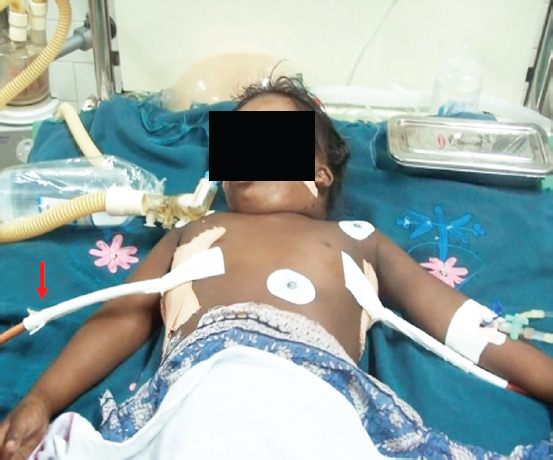
a. What is the probable diagnosis?
b. What bedside procedure has been done in this picture?
c. What are the indications for this procedure?
d. What are the contraindications of this procedure?
e. When will you discontinue this procedure?
Answer
- a. Traumatic hemothorax / pneumothorax with hemorrhagic shock and respiratory failure.
- b. Intercostal Drainage (ICD) / Tube Thoracostomy (inserted in the 4th/5th intercostal space, anterior to mid-axillary line in the "safe triangle").
- c. Pneumothorax (tension or large), hemothorax, large pleural effusion, empyema, and post-thoracotomy drainage.
- d. Diaphragmatic hernia, extensive pleural adhesions / fibrothorax, and uncorrected severe coagulopathy.
- e. Criteria for removal:
- Full lung re-expansion confirmed on chest radiograph.
- Absence of air leak for
hours on underwater seal. - Minimal non-purulent drainage (
).
THG38-027
A 5-year-old boy presents with fever for 3 days and severe fatigue. On physical examination, he was febrile with HR 122 beats/min, RR 32 breaths/min. He was noticed to have marked pallor on his lips and palpebral conjunctiva. He has B/L cervical lymphadenopathy. Per abdomen examination revealed a palpable spleen 3 cm below his left costal margin. Investigations revealed Hb 5 g/dL, platelet 30,000, and Tc 3,500. Peripheral smear showed the presence of blast cells.
a. What will be the investigative procedure? Name any two indications.
b. Mention the sites where this procedure can be performed.
c. What complications can you expect from the above procedure?
d. What is dry tap? Name any two conditions where this can be seen?
Answer
- a. Bone Marrow Aspiration and Biopsy.
- Indications: Evaluation of suspected acute leukemia / myelodysplasia, unexplained pancytopenia/bicytopenia, staging of lymphomas/solid tumors (neuroblastoma), and evaluation of storage disorders / pyrexia of unknown origin.
- b. Anatomical sites:
- Posterior superior iliac spine (PSIS) (preferred site in all pediatric age groups).
- Anterior iliac crest.
- Anteromedial surface of proximal tibia (infants
year). - Sternum (only in older adolescents
years).
- c. Bleeding / local hematoma, site infection, procedural pain, sedation-related complications, and rare bone fracture or retroperitoneal hemorrhage.
- d. Dry tap: Inability to aspirate bone marrow fluid despite proper needle placement.
- Causes: Myelofibrosis, packed bone marrow due to acute leukemia, aplastic anemia, metastatic neuroblastoma / solid tumor infiltration, and hairy cell leukemia.