THG18-001
A 7-year-old boy who presented with frequent cough was subjected to this investigation.
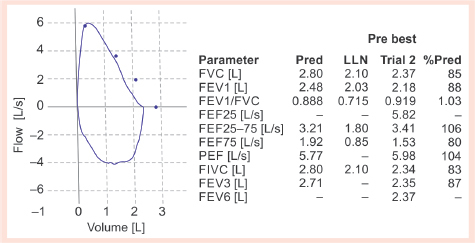
a. What is shown in the given image and table? What to look for in these?
b. Name any four indications of this test?
c. Name any four diseases where this type of lung function needs to be monitored.
d. Name any four contraindications for this test.
Answer
- a. Investigation: Flow volume loop (FVL) and pulmonary function test (PFT) / spirometry reading.
- Parameters to look for: Shape of the flow-volume loop (inspiratory and expiratory limbs), FEV1, FVC, FEV1/FVC ratio, FEF 25–75%, and PEFR.
- b. Indications: Chronic cough, recurrent/persistent wheeze, bronchial asthma, cystic fibrosis, and interstitial lung disease (ILD).
- c. Conditions requiring PFT monitoring: Transfusion-dependent thalassemia major, sickle cell anemia, connective tissue diseases/autoimmune lung disease, ataxia telangiectasia, and chest wall deformities (e.g., pectus excavatum, scoliosis).
- d. Contraindications: Massive hemoptysis of unknown origin, recent pneumothorax, recent eye/abdominal/thoracic surgery, thoracic/cerebral aneurysms, pulmonary embolism, and acute severe respiratory distress.
THG18-002
An 8-year-old child was referred for evaluation of activity-induced cough and cough on exposure to incense sticks.
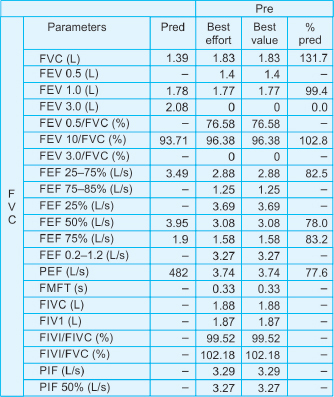
a. What could be the possible diagnosis in this child and what parameters one would look at in the given table?
b. What are forced expiratory volume in 1 second (FEV1) and forced expiratory flow between 25th–75th% of vital capacity (FEF 25–75) and their importance?
Answer
- a. Possible diagnosis: Bronchial asthma (cough-variant / exercise-induced).
- Parameters to assess: FEV1, FVC, FEV1/FVC ratio, FEF 25–75%, and PEFR.
- b.
- FEV1 (Forced Expiratory Volume in 1 second): The volume of air exhaled in the first second during a forced vital capacity maneuver. Normal is >80–90% of predicted. Decreased in obstructive and restrictive defects.
- FEF 25–75% (Maximal Mid-Expiratory Flow Rate): The average forced expiratory flow rate during the middle 50% of the FVC maneuver. It is a sensitive indicator of small airway obstruction.
THG18-003
Spirometry Interpretation.
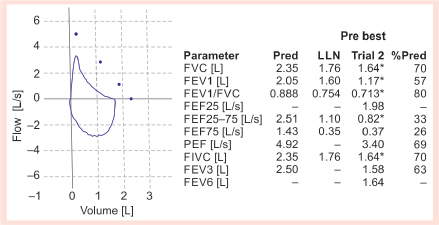
a. Interpret this spirometry.
b. What is the diagnosis?
c. What is the next step?
Answer
- a. Interpretation: Flow-volume loop shows a "scooped-out" (concave upward) appearance in the expiratory limb with decreased FEV1, FEV1/FVC ratio, FEF 25–75%, and PEFR.
- b. Diagnosis: Obstructive airway disease (likely bronchial asthma).
- c. Next step: Post-bronchodilator reversibility testing (spirometry repeated 15 minutes after administering 400 µg inhaled salbutamol; reversibility defined as ≥12% and ≥200 mL increase in FEV1).
THG18-004
Flow Volume Loop Analysis.
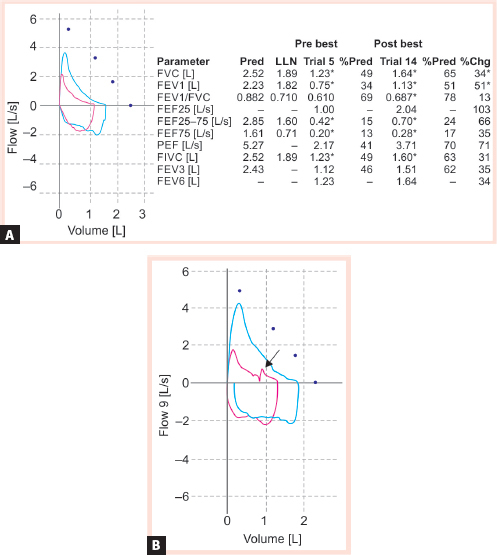
a. Interpretation of this spirometry reading—image A and arrive at a diagnosis.
b. What does the arrow point out in the inner FVL in image B?
Answer
- a. Interpretation: Expiratory limb shows concavity ("scooped-out" pattern). Pre- and post-bronchodilator values show significant improvement (FEV1 34% vs. 51%, FEF 25–75% 15% vs. 24%, PEF 41% vs. 70%) confirming significant bronchodilator reversibility (>12%). Diagnosis: Bronchial asthma.
- b. The arrow points to a sudden flow transient / dip caused by a cough artifact during the forced expiration maneuver.
THG18-005
Peak Flow Meter.
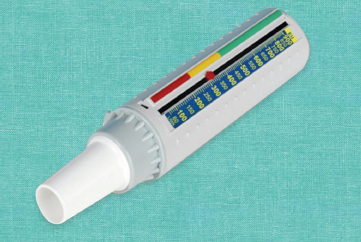
a. Identify the device?
b. What do green, yellow, and red zones indicate?
c. What is the next step after getting red zone in flow meter?
Answer
- a. Peak Expiratory Flow Meter (Wright's peak flow meter).
- b. Asthma action plan zones:
- Green zone (80–100% of personal best): Good asthma control; maintain regular controller therapy.
- Yellow zone (50–80% of personal best): Caution / worsening airway narrowing; initiate short-acting beta-2 agonist (SABA) rescue and adjust controller medication as per action plan.
- Red zone (<50% of personal best): Medical alert / severe obstruction; take inhaled rescue bronchodilator immediately and seek emergency medical care.
- c. Take rescue medication (SABA) right away and seek emergency medical attention.
THG18-006
A 7-year-old boy with recurrent cough and wheeze has been diagnosed to have persistent asthma. His pediatrician has planned to start inhalation therapy.
a. Expand these acronyms used in asthma—GINA, ICS, MART, and AIR.
b. What is the recent change in GINA guideline as far as management of children between 6 and 11 years with intermittent wheeze is concerned?
Answer
- a.
- GINA: Global Initiative for Asthma
- ICS: Inhaled Corticosteroid
- MART: Maintenance and Reliever Therapy
- AIR: Anti-inflammatory Reliever
- b. GINA recommends that children 6–11 years with mild/intermittent asthma should receive an inhaled corticosteroid (ICS) whenever a short-acting beta-2 agonist (SABA) is taken for symptom relief (concomitant SABA + low-dose ICS), rather than SABA alone.
THG18-007
A 7-year-old boy with recurrent cough and wheeze has been diagnosed to have persistent asthma. His pediatrician has planned to start inhalation therapy.
a. What are the drugs used in MART therapy?
b. What is the rationale behind it?
c. Ideal way to give inhaled corticosteroid medication in less than 3 years, 4–6 years and above 6 years.
Answer
- a. Combination of an Inhaled Corticosteroid (Budesonide or Beclomethasone) plus a rapid-onset Long-Acting Beta-2 Agonist (Formoterol) in a single inhaler device.
- b. Formoterol has both a rapid onset of action (within 1–3 minutes, comparable to salbutamol) and a long duration of action (12 hours). Using it as a reliever simultaneously delivers an anti-inflammatory dose of ICS, preventing severe exacerbations.
- c. Inhalation devices by age group:
- <3 years: Pressurized metered-dose inhaler (pMDI) + Valved holding chamber (spacer) + tight-fitting Face Mask (or nebulizer with mask).
- 4–6 years: pMDI + Spacer with Mouthpiece (± face mask if uncooperative).
- >6 years: pMDI + Spacer / Dry Powder Inhaler (DPI) / Breath-actuated pMDI.
THG18-008
A 7-year-old boy with recurrent cough and wheeze has been diagnosed to have persistent asthma. His pediatrician has planned to start inhalation therapy.
a. What is the composition of very low dose ICS-formoterol/low dose ICS-formoterol in MART therapy for relieving symptoms?
b. What is the maximum dose of ICS/formoterol in adolescent when used as reliever and in children 6–11 years?
Answer
- a.
- Very low-dose ICS-formoterol: Formoterol 6 µg + Budesonide 100 µg (or Beclomethasone 100 µg).
- Low-dose ICS-formoterol: Formoterol 6 µg + Budesonide 200 µg (or Beclomethasone 200 µg).
- b. Maximum daily reliever doses (total puffs/day including maintenance):
- Adolescents (≥12 years): Maximum 12 puffs per day (total 72 µg formoterol).
- Children (6–11 years): Maximum 8 puffs per day (total 48 µg formoterol).
THG18-009
Name and elaborate the components of scoring system for the following conditions:
a. Acute tonsillitis
b. Acute croup
Answer
- a. Modified Centor Score (McIsaac Score) for Streptococcal Pharyngitis:
- Fever >38°C (+1)
- Absence of cough (+1)
- Tonsillar exudates or swelling (+1)
- Tender anterior cervical lymphadenopathy (+1)
- Age: 3–14 years (+1), 15–44 years (0), ≥45 years (-1)
- b. Westley Croup Score:
- Inspiratory stridor (none=0, with agitation=1, at rest=2)
- Intercostal/chest retractions (none=0, mild=1, moderate=2, severe=3)
- Air entry (normal=0, decreased=1, severely decreased=2)
- Cyanosis (none=0, with agitation=4, at rest=5)
- Level of consciousness (normal=0, disoriented/depressed=5)
THG18-010
Expand these acronyms—CT, HRCT, MDCT, and CECT.
Answer
- CT: Computed Tomography
- HRCT: High-Resolution Computed Tomography
- MDCT: Multi-Detector Computed Tomography
- CECT: Contrast-Enhanced Computed Tomography
THG18-011
In CT chest, what etiology should one suspect if there is predominant involvement of:
a. Bilateral upper lobe
b. Unilateral upper lobe
c. Lower lobe
Answer
- a. Bilateral upper lobe: Cystic fibrosis, Allergic Bronchopulmonary Aspergillosis (ABPA), Sarcoidosis, Histiocytosis.
- b. Unilateral upper lobe: Pulmonary tuberculosis (post-primary TB).
- c. Lower lobe: Post-infectious bronchiectasis, aspiration pneumonia, congenital pulmonary airway malformation (CPAM), sequestration.
THG18-012
8-year-old girl has cough lasting for more than 6 months with increased severity on waking up with expectoration of copious sputum with occasional tinge of blood and referred for evaluation. The senior resident has made a diagnosis of bronchiectasis based on history and chest X-ray.
a. Name any four CT findings in bronchiectasis.
b. Name any four syndromes associated with bronchiectasis.
Answer
- a. CT findings in bronchiectasis:
- Increased bronchoarterial ratio >0.8–1.0 ("signet ring" sign)
- Lack of bronchial tapering towards periphery ("tram-track" sign)
- Visualization of airways within 1 cm of pleural surface
- Bronchial wall thickening
- Mucoid impaction / "tree-in-bud" appearance
- Mosaic attenuation / air trapping
- b. Syndromes associated with bronchiectasis:
- Young syndrome (sinusitis, bronchiectasis, obstructive azoospermia)
- Mounier-Kuhn syndrome (tracheobronchomegaly)
- Williams-Campbell syndrome (congenital deficiency of bronchial cartilage)
- Kartagener syndrome / Primary Ciliary Dyskinesia
- Yellow nail syndrome
THG18-013
8-year-old girl has cough lasting for more than 6 months with increased severity on waking up with expectoration of copious sputum with occasional tinge of blood and referred for evaluation. The senior resident has made a diagnosis of bronchiectasis based on history and chest X-ray.
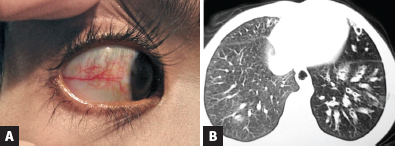
a. Identify the abnormality in the right eye and CT chest findings?
Answer
- Right eye finding: Ocular conjunctival telangiectasia (characteristic of Ataxia-Telangiectasia).
- CT Chest findings: Bronchiectasis with bronchial wall thickening, mucus impaction, and areas of air trapping in the left lung.
THG18-014
A 5-year-old girl was referred for recurrent cough and wheeze. Chest X-ray done as part of evaluation showed this finding necessitating further imaging.
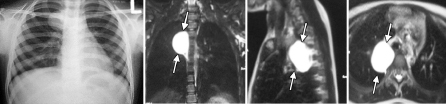
a. Identify the imaging procedure done.
b. What are the findings in this imaging?
Answer
- a. Magnetic Resonance Imaging (MRI) of the chest.
- b. Well-defined, hyperintense fluid-filled cystic lesion in the right superior-middle mediastinum with no communication with the esophageal lumen—Bronchogenic duplication cyst.
THG18-015
A 2-year-old boy referred for evaluation of recurrent respiratory tract infection. As the chest X-ray showed a small lung volume on the right side further imaging was done.
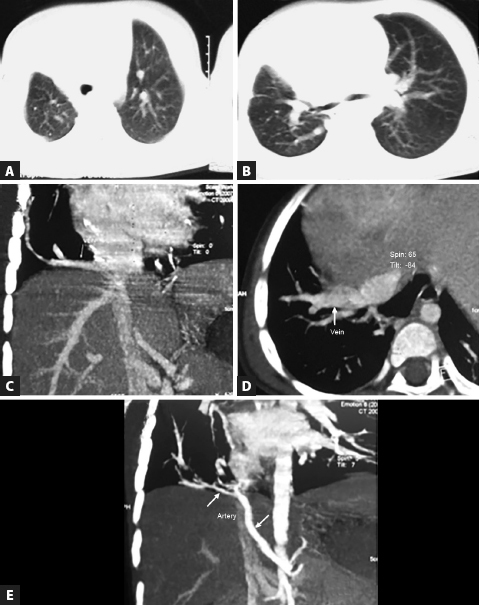
a. What is this imaging?
b. Mention one common finding in images A and B.
c. Where does the pulmonary vein drain into—image C and D?
d. Where does the lower lobe receive the arterial supply from—image E?
e. What is the diagnosis after looking at all the images of the same child?
Answer
- a. Contrast-enhanced CT Chest / CT Pulmonary Angiography.
- b. Hypoplastic / decreased right lung volume with mediastinal shift to the right.
- c. Anomalous right pulmonary vein draining into the inferior vena cava (IVC) below the diaphragm.
- d. Systemic arterial supply arising from the abdominal aorta / celiac axis.
- e. Diagnosis: Scimitar syndrome (Congenital venolobar syndrome / hypogenetic lung syndrome).
THG18-016
CT done for recurrent acute wheeze in a 1-year-old child is given in below images.
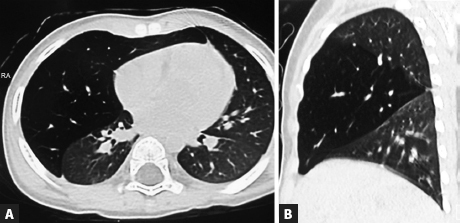
a. What are the findings?
b. What is the possible diagnosis?
Answer
- a. Hyperinflated, hyperlucent right middle lobe with attenuated vascularity, causing compression atelectasis of adjacent right upper and lower lobes and contralateral mediastinal shift.
- b. Diagnosis: Congenital Lobar Emphysema (CLE) / Congenital Lobar Overinflation of the right middle lobe.
THG18-017
A 4-year-old child admitted for pneumonia who on treatment with co-amoxyclav did not show response but deteriorated.
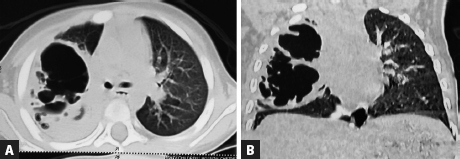
a. Mention four findings in this CT for a child admitted for pneumonia.
b. What is the diagnosis?
Answer
- a. CT findings:
- Large thick-walled cavity with air-fluid level
- Extensive consolidation and parenchymal necrosis
- Surrounding ground-glass opacities
- Absence of significant mediastinal shift
- b. Diagnosis: Necrotizing pneumonia (right upper lobe) with lung abscess.
THG18-018
Contrast CT chest of a 10-year-old child with fever and loss of appetite of 1 month duration is given in below images.
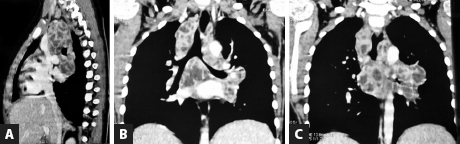
a. What are the findings?
b. What is the most probable diagnosis?
Answer
- a. Multiple enlarged mediastinal, paratracheal, subcarinal, and hilar lymph nodes showing central low attenuation (caseous necrosis) with peripheral rim enhancement.
- b. Diagnosis: Mediastinal tuberculous lymphadenitis (Tuberculosis).
THG18-019
An 8-month-old child admitted for recurrent episodes of pneumonia which resolves with intravenous antibiotics was evaluated further as child had recurrent vomiting.
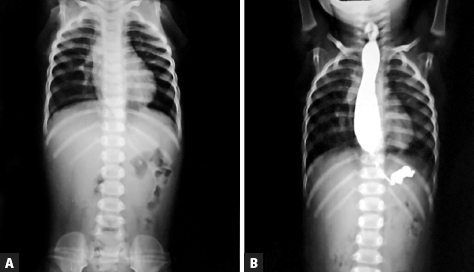
a. Name the investigation in Fig. B.
b. What are the findings?
c. What will be the common symptoms?
d. What is the treatment modality?
Answer
- a. Barium swallow / Esophagogram.
- b. Marked proximal esophageal dilatation with smooth, tapered distal narrowing ("bird-beak" appearance) at the gastroesophageal junction.
- c. Regurgitation of undigested food ingested hours earlier, nocturnal cough, aspiration pneumonia, dysphagia, and failure to thrive.
- d. Treatment: Laparoscopic Heller's cardiomyotomy with partial fundoplication (or pneumatic dilatation / POEM).
THG18-020
An 8-year-old child presented with increasing severity of snoring, sleep disturbance and difficult to wake up in the morning everyday and was evaluated.
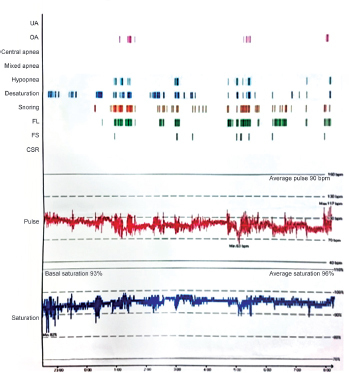
a. What is the investigation?
b. What are the parameters recorded (any four)?
c. What are the abnormalities?
d. What are the indications for this test?
e. What is the treatment for this problem?
Answer
- a. Overnight Polysomnography (Sleep Study).
- b. Parameters monitored:
- Electroencephalography (EEG)
- Electrooculography (EOG)
- Electromyography (EMG - chin and leg)
- Electrocardiography (ECG)
- Pulse oximetry (SpO2) and End-tidal CO2 (EtCO2)
- Nasal/oral airflow (thermistor/pressure transducer)
- Respiratory effort bands (chest and abdominal plethysmography)
- c. Obstructive apnea/hypopnea events with recurrent oxygen desaturation and sleep fragmentation.
- d. Indications: Suspected obstructive sleep apnea syndrome (OSAS), habitual snoring with daytime sleepiness, evaluation before/after craniofacial or upper airway surgery.
- e. Treatment: Adenotonsillectomy (first-line in children with adenotonsillar hypertrophy); CPAP/BiPAP for residual or non-surgical cases.
THG18-021
A 3-year-old child with persistent pneumonia was subjected for scopy. Under procedural sedation the flexible bronchoscope was passed through this tube for bronchoalveolar lavage procedure.
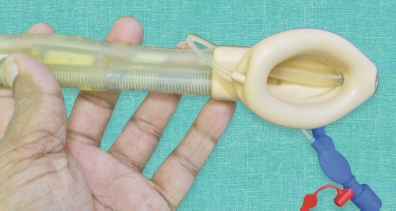
a. Name the device and what are the parts in the device?
b. When should one use it?
c. From which age it can be used?
Answer
- a. Device: ProSeal Laryngeal Mask Airway (ProSeal LMA).
- Parts: Airway tube, drain tube (for gastric decompression/NG tube insertion), inflatable silicone cuff, pilot balloon with one-way check valve, and integral bite block.
- b. Used for establishing and maintaining a secure supraglottic airway during general anesthesia, elective procedures (e.g., flexible bronchoscopy/BAL), and difficult airway rescue.
- c. Can be used in all age groups from neonates/infants (Size 1: <5 kg) to adults.
THG18-022
A 5-year-old child with fever for 7 days and worsening respiratory distress had tachypnea, decreased breath sounds on right side with few crackles. Chest X-ray taken showed pneumonia right lung with moderate pleural fluid right side.
a. Difference between uncomplicated and complicated parapneumonic effusion (PPE)?
b. What are the most common organisms associated with empyema?
c. What are the stages of empyema and the most appropriate management at each stage?
Answer
- a. Parapneumonic effusion classification:
| Parameter | Uncomplicated PPE (UPPE) | Complicated PPE / Empyema |
|---|---|---|
| Pleural fluid pH | >7.2 | <7.2 |
| Pleural fluid Glucose | >2.2 mmol/L (>40 mg/dL) | <2.2 mmol/L (<40 mg/dL) |
| Pleural fluid LDH | <1,000 IU/L | >1,000 IU/L |
| Gram stain & Culture | Negative | Often Positive |
| Appearance | Clear / serous | Turbid / Purulent (frank pus in empyema) |
- b. Common organisms: Streptococcus pneumoniae, Staphylococcus aureus (including MRSA), Streptococcus pyogenes (Group A Strep), Haemophilus influenzae, and Mycoplasma pneumoniae.
- c. Stages and management:
- Stage 1 (Exudative stage): IV Antibiotics alone ± simple thoracocentesis.
- Stage 2 (Fibrinopurulent stage): IV Antibiotics + Intercostal tube drainage with intrapleural fibrinolytics (Urokinase/Alteplase) OR early VATS (Video-Assisted Thoracoscopic Surgery).
- Stage 3 (Organizing stage): VATS debridement / Thoracotomy and formal decortication.
THG18-023
An 8-year-old child came with purulent rhinorrhea, nasal block for 10 days with increasing headache in the last 3 days had maxillary sinus tenderness on examination on both sides. A diagnosis of bilateral maxillary sinusitis was made.
a. Classify sinusitis by duration.
b. What is the initial therapy in uncomplicated mild to moderate acute bacterial sinusitis?
c. Name any four conditions wherein recurrent or chronic sinusitis occurs.
d. What are the indications for high-dose amoxicillin-clavulanate (80–90 mg/kg/day of amoxicillin) in sinusitis?
Answer
- a. Classification by duration:
- Acute: <30 days
- Subacute: 30–90 days (1–3 months)
- Chronic: >90 days (>3 months)
- Recurrent acute: ≥4 episodes per year with complete resolution between episodes
- b. Standard-dose Amoxicillin (45 mg/kg/day in 2 divided doses); for non-severe penicillin allergy: Cefdinir, Cefuroxime axetil, or Cefpodoxime.
- c. Conditions predisposing to recurrent/chronic sinusitis:
- Allergic rhinitis
- Cystic fibrosis
- Primary ciliary dyskinesia (Kartagener syndrome)
- Immunodeficiencies (IgA deficiency, IgG subclass deficiency, CVID)
- Anatomical abnormalities (adenoid hypertrophy, deviated nasal septum, choanal atresia, cleft palate)
- Gastroesophageal reflux disease (GERD)
- d. Indications for high-dose Amoxicillin-Clavulanate:
- Daycare attendance
- Age <2 years
- Prior antibiotic exposure in preceding 1–3 months
- Moderate-to-severe symptoms (fever ≥39°C with purulent discharge)
- Lack of response to initial amoxicillin within 72 hours
- Immunocompromised state
THG18-024
An 8-year-old child came with purulent rhinorrhea, nasal block for 10 days with increasing headache in the last 3 days had maxillary sinus tenderness on examination on both sides. A diagnosis of bilateral maxillary sinusitis was made.
a. What are the two distinct patterns suggestive of sinusitis?
b. What organism causes fungal sinusitis often with intracranial extension?
c. Name some predisposing factors.
Answer
- a. Clinical presentation patterns of acute bacterial sinusitis:
-
- Persistent illness: Nasal discharge (any quality) or daytime cough lasting ≥10 days without clinical improvement.
-
- Severe onset: High fever (≥39°C / 102°F) with purulent nasal discharge for ≥3 consecutive days.
-
- Worsening course ("Double sickening"): Typical viral URI symptoms that improve and then acutely worsen with new fever, increased discharge, or headache.
-
- b. Mucorales (Rhizopus, Mucor) causing invasive mucormycosis, and Aspergillus species.
- c. Predisposing factors: Severe neutropenia (hematologic malignancy, chemotherapy), hematopoietic stem cell transplant, poorly controlled diabetes mellitus / DKA, prolonged systemic corticosteroid therapy, and severe COVID-19 infection.
THG18-025
A 5-month-old child presents to ER with refusal to take feeds, vomiting, cough for >4 weeks, and increased frequency of urine. Examination reveals dehydration, malnutrition, hypokalemia, hyponatremia, hypochloremia, and metabolic alkalosis with a normal urine analysis.
a. What is this syndrome called?
b. What is the most probable etiology?
c. What body fluid is used for diagnosing this condition before genetic testing and what is the cutoff level of the electrolyte to suspect the disease?
d. Which newborn screening test can make one suspect this condition?
Answer
- a. Pseudo-Bartter syndrome (hypochloremic, hypokalemic metabolic alkalosis with hyponatremia).
- b. Cystic Fibrosis (due to massive salt loss in sweat).
- c. Sweat test (pilocarpine iontophoresis); sweat chloride ≥60 mEq/L is diagnostic of cystic fibrosis (30–59 mEq/L is intermediate).
- d. Immunoreactive Trypsinogen (IRT) on dried blood spot newborn screening.
THG18-026
A 4-year-old child comes with fever for 3 weeks and persistent cough a week after fever started. General examination reveals weight below 3rd centile with anemia. Paternal grandmother died due to tuberculosis one month ago.
a. What is presumptive pediatric tuberculosis (TB)?
b. Initial specific investigation?
Answer
- a. Presumptive pediatric TB criteria (NTEP):
- Persistent fever for >2 weeks without a known cause
- Unremitting cough for >2 weeks
- Weight loss (>5% in past 3 months) or failure to gain weight over the past 3 months despite nutritional advice
- History of close contact with a known pulmonary TB patient in the past 2 years
- b. Chest X-ray (CXR PA/AP view) and upfront rapid molecular testing (CBNAAT / Truenat on gastric aspirate or induced sputum).
THG18-027
A 4-year-old child comes with fever for 3 weeks and persistent cough a week after fever started. General examination reveals weight below 3rd centile with anemia. Paternal grandmother died due to tuberculosis one month ago. A chest X-ray was ordered.
a. In a child with presumptive TB, what CXR findings are considered suggestive?
- i. Highly suggestive of TB
- ii. Non-specific
b. In a child with presumptive TB which CT findings are highly suggestive of TB?
c. In a child with presumptive TB after CXR what will you do if: - CXR is highly suggestive
- CXR is non-specific
- CXR is normal
Answer
- a. CXR findings:
- i. Highly suggestive: Intrathoracic / hilar / paratracheal lymphadenopathy with or without parenchymal lesion, miliary shadows, chronic fibrocavitary lesions.
- ii. Non-specific: Segmental/lobar consolidation, patchy bronchopneumonic opacities, atelectasis.
- b. CT findings highly suggestive: Mediastinal lymphadenopathy with central low attenuation (caseous necrosis) and rim enhancement, centrilobular nodules with "tree-in-bud" pattern, cavities with surrounding satellite nodules.
- c. Management based on CXR:
- Highly suggestive: Perform rapid molecular testing (CBNAAT/Truenat on induced sputum/gastric aspirate) and initiate ATT.
- Non-specific: Treat with a course of broad-spectrum antibiotics (avoiding fluoroquinolones/linezolid/aminoglycosides) and reassess after 10–14 days.
- Normal: Look for extrapulmonary TB or alternative diagnoses; follow up clinically.
THG18-028
A 4-year-old child comes with fever for 3 weeks and persistent cough a week after fever started. General examination reveals weight below 3rd centile with anemia. Paternal grandmother died due to tuberculosis one month ago. Induced sputum sample was taken and sent for microbiological exam.
a. Fill up the blanks:
- i. Sample for microbiological testing for TB to be collected in ______
- ii. If delay in transport, sample should be stored in ______
- iii. Sample can be stored up to ______
b. How many numbers of bacilli can be detected with each of these methods and time taken for result?
c. What are the body fluids in which newer rapid NAAT tests perform very poorly compared to respiratory specimens?
Answer
- a.
- i. Sterile screw-capped 50 mL Falcon tube.
- ii. Refrigerator (at 2–8°C).
- iii. Up to 7 days.
- b. Diagnostic test limits and turnaround times:
| Diagnostic Method | Detection Limit (Bacillary Load) | Turnaround Time |
|---|---|---|
| Direct Smear (ZN / Auramine) | 5,000–10,000 bacilli/mL | 1–2 hours |
| MGIT Liquid Culture | 10–100 bacilli/mL | Up to 42 days |
| CBNAAT (GeneXpert MTB/RIF) | ~130 bacilli/mL | ~2 hours |
| CBNAAT Ultra (Xpert MTB/RIF Ultra) | ~16 bacilli/mL | ~2 hours |
- c. Pleural fluid, ascitic fluid, and pericardial fluid (pauci-bacillary nature leads to lower sensitivity compared to tissue biopsies or pus).
THG18-029
A 4-year-old child comes with fever for 3 weeks and persistent cough a week after fever started. General examination reveals weight below 3rd centile with anemia. Paternal grandmother died due to tuberculosis one month ago. Chest X-ray revealed consolidation in right upper lobe.
a. Tuberculin skin test (TST)—what is it?
b. What is recommended strength?
c. What is positive test in non-human immunodeficiency virus (HIV) children?
d. What is positive test in HIV affected children?
e. What is inference of positive test?
Answer
- a. Intradermal injection (Mantoux method) of Purified Protein Derivative (PPD) to assess cell-mediated delayed-type hypersensitivity (Type IV) to Mycobacterium tuberculosis antigens.
- b. 2 TU of PPD RT 23 with Tween 80 injected intradermally on the volar aspect of the forearm.
- c. Induration of ≥10 mm transverse diameter at 48–72 hours.
- d. Induration of ≥5 mm transverse diameter in HIV-infected or severely immunocompromised children.
- e. Indicates infection with M. tuberculosis (present or past); it does not differentiate between latent TB infection (LTBI) and active TB disease.
THG18-030
TB Skin Testing (C-Tb).
a. C-Tb test—what is it?
b. What is the size taken for cutoff for positive result?
c. What antigens are used?
d. Is it affected by Bacillus Calmette–Guérin (BCG) vaccination?
Answer
- a. Novel specific skin test (Cy-Tb / C-Tb) for detecting M. tuberculosis infection, combining the operational simplicity of TST with the high specificity of IGRA.
- b. ≥5 mm induration at 48–72 hours is the universal cutoff.
- c. Recombinant ESAT-6 (Early Secretory Antigenic Target-6) and CFP-10 (Culture Filtrate Protein-10) antigens.
- d. No, it is not affected by prior BCG vaccination or infection with non-tuberculous mycobacteria (NTM).
THG18-031
A 4-year-old child comes with fever for 3 weeks and persistent cough a week after fever started. General examination reveals weight below 3rd centile with anemia. Paternal grandmother died due to tuberculosis one month ago. Four days after admission child had was becoming more drowsy with vomiting and responding to voice calls only.
a. Mention contrast-enhanced computed tomography (CECT) findings in central nervous system (CNS TB)—any four.
b. Mention any four conditions mimicking imaging findings of CNS TB.
c. Mention cerebrospinal fluid (CSF) findings in CNS TB.
d. What are the differentiating features of tuberculoma from neurocysticercosis?
Answer
- a. CECT Brain findings in CNS TB:
- Basal meningeal enhancement
- Hydrocephalus (communicating > non-communicating)
- Periventricular / basal ganglia infarcts (due to tuberculous vasculitis)
- Ring-enhancing granulomatous lesions (tuberculomas)
- b. Differential diagnoses: Cryptococcal meningitis, toxoplasmosis, viral/bacterial meningitis, fungal granuloma, CNS lymphoma, neurosarcoidosis.
- c. CSF findings in TBM:
- Appearance: Clear or slightly turbid; cobweb/pellicle formation on standing
- Pleocytosis: 10–500 cells/mm³ (predominantly lymphocytes; neutrophils early)
- Protein: Markedly elevated (often 100–500 mg/dL or higher)
- Glucose: Low (<40 mg/dL or CSF/blood glucose ratio <0.5)
- Rapid NAAT (CBNAAT): Positive for M. tuberculosis
- d. Tuberculoma vs. Neurocysticercosis (NCC):
- Tuberculoma: Usually >2 cm, irregular thick rim enhancement, marked surrounding edema with midline shift, hypointense core on T2, MR spectroscopy shows high lipid peak.
- NCC: Usually <2 cm, thin smooth regular ring enhancement, mild perilesional edema, scolex seen as eccentric hyperdense nodule ("hole-with-dot" sign).
THG18-032
A 3-year-old child referred by family physician as child’s father was diagnosed to have microbiologically confirmed pulmonary TB a week earlier. Child had no symptoms. Investigations were normal.
a. What is TB preventive therapy in drug-susceptible TB (DS-TB)?
b. What are fixed-dose combination (FDC) composition of isoniazid (INH) and rifapentine?
Answer
- a. TPT Regimens for DS-TB contacts:
- 3HP: Once-weekly Isoniazid + Rifapentine for 12 weeks (3 months) in children ≥2 years.
- 6H: Daily Isoniazid monotherapy for 6 months (10 mg/kg/day for <10 years; 5 mg/kg/day for ≥10 years; max 300 mg/day).
- 3HR: Daily Isoniazid + Rifampicin for 3 months.
- b. FDC of INH + Rifapentine: Available as fixed-dose combination tablets containing 150 mg Isoniazid + 150 mg Rifapentine (or 300 mg/300 mg).
THG18-033
What are the imaging findings in abdominal TB-CT enterography/US abdomen (any 5)?
Answer
-
- Ileocecal region involvement with concentric circumferential bowel wall thickening.
-
- Contracted, pulled-up cecum with obtuse, distorted ileocecal angle.
-
- Multiple short strictures (<3 cm) in the ileum/jejunum.
-
- Necrotic mesenteric lymphadenopathy with peripheral rim enhancement and central hypodensity.
-
- High-attenuation loculated ascites with fine fibrinous septations.
-
- "Caked" or thickened omentum and peritoneal nodularity.
THG18-034
A 9-year-old boy comes with pain in the back of chest of 5 months duration with poor appetite. Examination reveals tenderness at D 10, 11, 12 spinous process. His younger brother 6 years old has a swelling in the middle phalanx of his index finger slowly increasing in size over 4 months.
a. Another name for dactylitis and spinal TB.
b. What are the common bones involved in dactylitis and spinal TB?
c. How much bone loss should be present to be seen in X-ray?
d. Which imaging investigation is most sensitive for picking up abnormalities?
e. Mention the MRI findings in spine TB.
Answer
- a.
- Tuberculous dactylitis: Spina ventosa
- Spinal tuberculosis: Pott's spine (tuberculous spondylodiscitis)
- b.
- Dactylitis: Short tubular bones of hands and feet (metacarpals, metatarsals, proximal/middle phalanges).
- Spinal TB: Lower thoracic and upper lumbar vertebrae.
- c. 30–50% bone mineral loss is required before visible on plain radiograph.
- d. Magnetic Resonance Imaging (MRI) of spine.
- e. MRI findings in Pott's spine:
- Vertebral body bone marrow edema (hypointense on T1, hyperintense on T2)
- Destruction and erosion of adjacent opposing vertebral endplates
- Loss of intervening intervertebral disc height with discitis
- Prevertebral, paravertebral, and epidural abscesses ("cold abscess") with subligamentous spread
- Cord compression / canal stenosis
THG18-035
A 4-year-old child comes with fever for 3 weeks and persistent cough a week after fever started. General examination reveals weight below 3rd centile with anemia. Paternal grandmother died due to tuberculosis one month ago. A chest X-ray reveals consolidation right lung while induced sputum showed positive result in CBNAAT.
a. What are the types of bacillary population present in every child with TB disease?
b. Antitubercular therapy (ATT) drugs—INH, RMP, and PZA act against which population of bacilli?
c. What is the standard treatment regimen for DS-TB?
d. What is the recommended duration of continuation phase (CP) in CNS and spinal TB?
Answer
- a. Four distinct bacillary subpopulations:
-
- Actively multiplying extracellular bacilli in cavity walls (rapid growers)
-
- Slowly multiplying intracellular bacilli within macrophages (acidic environment)
-
- Slowly multiplying extracellular bacilli in caseous necrotic tissue (neutral pH)
-
- Dormant / persister bacilli
-
- b. Drug actions on subpopulations:
- INH: Potent bactericidal action against rapidly multiplying extracellular bacilli.
- Rifampicin: Bactericidal against both rapidly multiplying and semi-dormant / spurting bacilli (sterilizing action).
- Pyrazinamide: Bactericidal against slowly multiplying intracellular bacilli in acidic environment within macrophages.
- c. Standard DS-TB regimen: 2 HRZE (Intensive Phase) + 4 HRE (Continuation Phase).
- d. Duration of CP: 10 months for CNS TB and Spinal TB (Total 12 months therapy: 2 HRZE + 10 HRE).
THG18-036
A 4-year-old child comes with fever for 3 weeks and persistent cough a week after fever started. General examination reveals weight below 3rd centile with anemia. Paternal grandmother died due to tuberculosis one month ago. A chest X-ray reveals consolidation right lung while induced sputum showed positive result in CBNAAT.
a. Why more drugs are given in the initial stage of TB?
b. Why ethambutol is added?
c. What is the aim of intensive phase (IP)?
d. What is the aim of CP?
Answer
- a. To rapidly kill the large initial bacillary population, rapidly render the patient non-infectious, and prevent the selection and emergence of drug-resistant mutant bacilli.
- b. Ethambutol protects against the emergence of drug resistance if initial isoniazid (INH) resistance is present (baseline primary INH resistance ~10–13%).
- c. Aim of Intensive Phase (IP): Rapid bactericidal reduction of bacillary load, clinical improvement, and prevention of acquired drug resistance.
- d. Aim of Continuation Phase (CP): Elimination of slow-growing and persisting bacilli to achieve cure and prevent relapse.
THG18-037
A 4-year-old child comes with fever for 3 weeks and persistent cough a week after fever started. General examination reveals weight below 3rd centile with anemia. Paternal grandmother died due to tuberculosis one month ago. A chest X-ray reveals consolidation right lung while induced sputum showed positive result in CBNAAT.
a. Name the first-line drugs, dose per kg, range, and maximum daily dose.
b. What does dispersible pediatric fixed drug combination contains?
c. What are the constituents of nondispersible adult fixed drug combination?
Answer
- a. First-line ATT drug dosages:
| Drug | Daily Dose (mg/kg/day) | Recommended Range (mg/kg) | Maximum Daily Dose (mg) |
|---|---|---|---|
| Isoniazid (H) | 10 | 7–15 | 300 |
| Rifampicin (R) | 15 | 10–20 | 600 |
| Pyrazinamide (Z) | 35 | 30–40 | 2,000 |
| Ethambutol (E) | 20 | 15–25 | 1,500 |
- b. Pediatric Dispersible FDC formulations:
- Intensive Phase (3-drug FDC): H 50 mg + R 75 mg + Z 150 mg (+ Ethambutol 100 mg separate dispersible tablet).
- Continuation Phase (2-drug FDC): H 50 mg + R 75 mg (+ Ethambutol 100 mg separate tablet).
- c. Adult Non-dispersible FDC formulations:
- Intensive Phase (4-drug FDC): H 75 mg + R 150 mg + Z 400 mg + E 275 mg.
- Continuation Phase (3-drug FDC): H 75 mg + R 150 mg + E 275 mg.
THG18-038
A 4-year-old child comes with fever for 3 weeks and persistent cough a week after fever started. General examination reveals weight below 3rd centile with anemia. Paternal grandmother died due to tuberculosis one month ago. A chest X-ray reveals consolidation right lung while induced sputum showed positive result in CBNAAT.
a. How many weight bands and drug treatment for the same?
b. Pyridoxine—why it is used and dose?
Answer
- a. Weight band dosing for pediatric DS-TB (P = Pediatric FDC [H50/R75/Z150], E = Ethambutol 100mg, A = Adult FDC [H75/R150/Z400/E275]):
| Weight Band (kg) | Intensive Phase Daily Dose | Continuation Phase Daily Dose |
|---|---|---|
| 4–7 kg | 1 P tablet + 1 E tablet | 1 (H+R) tablet + 1 E tablet |
| 8–11 kg | 2 P tablets + 2 E tablets | 2 (H+R) tablets + 2 E tablets |
| 12–15 kg | 3 P tablets + 3 E tablets | 3 (H+R) tablets + 3 E tablets |
| 16–24 kg | 4 P tablets + 4 E tablets | 4 (H+R) tablets + 4 E tablets |
| 25–29 kg | 3 P + 3 E + 1 Adult FDC | 3 (H+R) + 3 E + 1 Adult CP FDC |
| 30–39 kg | 2 P + 2 E + 2 Adult FDC | 2 (H+R) + 2 E + 2 Adult CP FDC |
| ≥40 kg | Adult dosing regimen | Adult dosing regimen |
- b. Pyridoxine (Vitamin B6): Added to prevent Isoniazid-induced peripheral neuropathy (INH interferes with pyridoxine metabolism); recommended dose is 10 mg/day (especially in malnourished children, exclusively breastfed infants, and HIV coinfection).
THG18-039
A 4-year-old child comes with fever for 3 weeks and persistent cough a week after fever started. General examination reveals weight below 3rd centile with anemia. Paternal grandmother died due to tuberculosis one month ago. A chest X-ray reveals consolidation right lung while induced sputum showed positive result in CBNAAT.
a. What are the indications of steroids in TB as per the National Tuberculosis Elimination Programme (NTEP)?
b. Name any four types of TB where steroids may be used.
c. What steroids can be used—what is the dose and duration?
Answer
- a. Indications of Corticosteroids in TB:
- Tuberculous meningitis (TBM)
- Tuberculous pericarditis with constriction/effusion
- Adrenal tuberculosis (Addison's disease)
- Miliary TB with acute respiratory failure / ARDS / alveolar-capillary block
- TB uveitis / choroiditis
- b. Other indications:
- Endobronchial TB with airway obstruction / atelectasis
- Mediastinal compression syndrome
- Severe massive tuberculous pleural effusion with dyspnea
- Paradoxical TB-IRIS
- c. Dosage and duration: Oral Prednisolone 1–2 mg/kg/day (or IV Dexamethasone 0.6 mg/kg/day) for 2–4 weeks, followed by gradual tapering over the subsequent 2–4 weeks (total duration 4–8 weeks).
THG18-040
When is it called severe TB disease? Mention any four scenarios.
Answer
-
- Presence of cavities or extensive bilateral disease on chest radiography.
-
- Severe forms of extrapulmonary TB (CNS TB / tuberculous meningitis, spinal TB / Pott's spine, miliary/disseminated TB, pericardial TB).
-
- TB in the presence of severe acute malnutrition (SAM) / advanced wasting.
-
- TB with advanced immunosuppression (severe HIV infection / CD4 <15%).
-
- Massive pleural effusion or acute airway obstruction.
THG18-041
A 4-year-old child comes with fever for 3 weeks and persistent cough a week after fever started. General examination reveals weight below 3rd centile with anemia. Paternal grandmother died due to tuberculosis one month ago. A chest X-ray reveals consolidation right lung while induced sputum showed positive result in CBNAAT. Anti TB drugs were started and after three months mother stopped treatment as child’s appetite improved.
a. How to manage treatment interruption in intensive phase and continuation phase?
Answer
- a. Management of Treatment Interruption:
- Interruption <4 weeks: Resume previous regimen and extend duration to complete the full planned doses.
- Interruption ≥4 weeks: Send sample for repeat microbiological testing and rapid DST (CBNAAT / LPA) to check for drug resistance (DR-TB).
- If Rifampicin-sensitive: Restart full DS-TB regimen from the beginning (test for INH mono-resistance).
- If Rifampicin-resistant: Initiate MDR-TB regimen.
THG18-042
A 10-year-child with microbiologically confirmed pulmonary TB with mediastinal adenopathy developed sudden onset of new onset neck swellings – lymphadenopathy bilaterally with breathlessness two months after starting treatment.
a. What are paradoxical upgrading reactions (PURs)?
b. When does it occur?
c. Mention manifestations of PUR—any four.
d. What is the treatment for PUR?
Answer
- a. Paradoxical Upgrading Reaction (PUR): Clinical or radiological worsening of pre-existing tuberculous lesions or the appearance of new lesions during appropriate and effective anti-TB treatment, after initial improvement.
- b. Typically occurs 3–12 weeks after initiating ATT (due to restored host cell-mediated immune response against released mycobacterial antigens).
- c. Manifestations:
- Enlargement of existing lymph nodes or appearance of fresh peripheral/mediastinal nodes
- Development of new pleural/pericardial effusion
- Appearance or worsening of pulmonary infiltrates
- Enlargement of tuberculomas or new hydrocephalus in CNS TB
- High spiking fever
- d. Treatment: Continue the ongoing ATT regimen without alteration. Reassure the family; add a short course of oral corticosteroids (prednisolone 1–2 mg/kg/day) for severe compression symptoms or CNS involvement. Aspirate fluctuant nodes if needed.
THG18-043
A 3-year-old child on evaluation for TB disease was found to have only a positive Mantoux test. Answer the following questions regarding TB infection.
a. What is the cutoff for underweight in TB?
b. What is tuberculosis infection (TBI)?
c. What is tuberculosis preventive treatment (TPT)?
Answer
- a. In children <10 years, weight-for-age < -2 Z-scores (underweight) or weight-for-height < -3 Z-scores (severe wasting). In adolescents/adults, BMI <18.5 kg/m².
- b. Tuberculosis Infection (TBI): A state of persistent immune response to stimulation by Mycobacterium tuberculosis antigens without clinical, microbiological, or radiological evidence of active TB disease.
- c. Tuberculosis Preventive Treatment (TPT): A course of one or more anti-TB drugs given to individuals with TB infection (or contacts at high risk) to prevent the development of active TB disease.
THG18-044
A 4-year-old child comes with fever for 3 weeks and persistent cough a week after fever started. General examination reveals weight below 3rd centile with anemia. Paternal grandmother died due to tuberculosis one month ago. A chest X-ray reveals consolidation right lung while induced sputum showed positive result in CBNAAT. Anti TB drugs were started and after three months mother stopped treatment as child’s appetite improved. Social worker was able to trace the child after 2 months and was brought for evaluation. Investigation reveals CBNAAT positive for M TB with rifampicin resistance detected.
a. What is second-line drug in TB?
b. Streptomycin: Is it a first-line or second-line drug?
c. When does one uses it?
d. Mention the dose and side effects?
Answer
- a. Anti-TB medications reserved specifically for the management of drug-resistant tuberculosis (DR-TB).
- b. Streptomycin is now classified as a second-line injectable anti-TB drug (Group C).
- c. Used only when amikacin is unavailable or when there is documented resistance to amikacin with proven susceptibility to streptomycin.
- d. Dose: 15–20 mg/kg/day IM (max 1,000 mg). Side effects: Ototoxicity (vestibular/cochlear damage) and nephrotoxicity.
THG18-045
Define the following drug-resistant tuberculosis categories:
a. Isoniazid-resistant TB (HR-TB)
b. Mono-resistant TB (MR-TB)
c. Multidrug-resistant TB (MDR-TB)
d. Extensively drug-resistant TB (XDR-TB)
e. Rifampicin-resistant TB (RR-TB)
Answer
- a. Isoniazid-resistant TB (HR-TB): Resistance to Isoniazid with documented susceptibility to Rifampicin.
- b. Mono-resistant TB (MR-TB): Resistance to only one first-line anti-TB drug.
- c. Multidrug-resistant TB (MDR-TB): Resistance to at least both Isoniazid and Rifampicin simultaneously.
- d. Extensively drug-resistant TB (XDR-TB): MDR/RR-TB that is additionally resistant to any fluoroquinolone (Levofloxacin or Moxifloxacin) AND at least one Group A drug (Bedaquiline or Linezolid).
- e. Rifampicin-resistant TB (RR-TB): Resistance to Rifampicin detected by phenotypic or genotypic methods, with or without resistance to other drugs.
THG18-046
A 4-year-old child with drug-resistant TB evaluation.
a. WHO and NTEP approved test to detect additional drug resistance in MDR-TB and XDR-TB patients—name the test.
b. What is prerequisite for using the test?
c. What is turnaround time?
d. Which drug resistance does it detect?
Answer
- a. Line Probe Assay (LPA) (GenoType MTBDRplus and MTBDRsl).
- b. Smear-positive sputum specimen or culture isolate of Mycobacterium tuberculosis.
- c. Approximately 48–72 hours.
- d.
- First-line LPA (MTBDRplus): Isoniazid (inhA, katG) and Rifampicin (rpoB).
- Second-line LPA (MTBDRsl): Fluoroquinolones (gyrA, gyrB) and Second-line injectables (rrs, eis).
THG18-047
For treating this MDR-TB child, second line drugs are used. How to classify them?
Answer
- Group A (Include all three):
- Levofloxacin or Moxifloxacin
- Bedaquiline
- Linezolid
- Group B (Add one or both):
- Clofazimine
- Cycloserine or Terizidone
- Group C (Add to complete regimen when Group A & B cannot be used):
- Ethambutol, Delamanid, Pyrazinamide, Imipenem-cilastatin/Meropenem, Amikacin/Streptomycin, Ethionamide/Prothionamide, p-aminosalicylic acid (PAS).
THG18-048
Mention doses of group A drugs in management of MDR TB in this child.
Answer
- Levofloxacin (Lfx):
- <5 years: 15–20 mg/kg/day divided twice daily
- ≥5 years: 10–15 mg/kg/day once daily (max 1,000 mg)
- Moxifloxacin (Mfx): 7.5–10 mg/kg/day once daily (high dose: 10–15 mg/kg/day).
- Linezolid (Lzd):
- <6 years: 10–12 mg/kg/day (once or divided bid)
- ≥6 years: 15 mg/kg once daily (max 600 mg)
- Bedaquiline (Bdq):
- For ≥5 years: 200 mg daily for 2 weeks, followed by 100 mg thrice weekly for 22 weeks (weight-adjusted in younger children).
THG18-049
Mention treatment of INH mono/poly DR-TB and dose.
Answer
- Regimen: 6 (Lfx - R - Z - E) (6 months of Levofloxacin, Rifampicin, Pyrazinamide, and Ethambutol; may extend up to 9 months in extensive disease).
- Dosages:
- Levofloxacin: 15–20 mg/kg/day (<5 yr) or 10–15 mg/kg/day (≥5 yr)
- Rifampicin: 15 mg/kg/day (10–20 mg/kg)
- Pyrazinamide: 35 mg/kg/day (30–40 mg/kg)
- Ethambutol: 20 mg/kg/day (15–25 mg/kg)
THG18-050
What is shorter oral bedaquiline containing regimen for MDR-TB/RR-TB—duration and drug regimen?
Answer
- Duration: 9–11 months (4–6 months Intensive Phase + 5 months Continuation Phase).
- Regimen formula:
- Initial Phase (4–6 months): 4–6 Bdq - Lfx - Cfz - Z - E - High-dose H - Eto
- Continuation Phase (5 months): 5 Lfx - Cfz - Z - E
(Bedaquiline given for total 6 months)
THG18-051
What is longer oral MDR/XDR TB treatment—duration and drug regimen?
Answer
- Duration: 18–20 months (all-oral regimen, without separate IP/CP).
- Regimen formula:
- 18–20 (Lfx/Mfx - Lzd - Cfz - Cs) + 6 Bdq
- Linezolid dose may be tapered to 10 mg/kg after 4–6 months / smear conversion to avoid myelosuppression/neuropathy.
THG18-052
ATT drugs with:
a. Prolonged QT
b. Hepatotoxicity
c. Ototoxicity
Answer
- a. QT Prolongation: Bedaquiline, Fluoroquinolones (Moxifloxacin > Levofloxacin), Clofazimine, Delamanid.
- b. Hepatotoxicity: Pyrazinamide > Isoniazid > Rifampicin, Ethionamide, PAS, Bedaquiline.
- c. Ototoxicity: Amikacin, Kanamycin, Streptomycin.
THG18-053
What is TB preventive therapy in MDR-TB and H-mono resistance?
Answer
- MDR-TB Contacts (FQ-susceptible source): Daily Levofloxacin for 6 months (6 Lfx).
- Isoniazid Mono-resistant Contacts (R-susceptible source): Daily Rifampicin for 4 months (4 R).
THG18-054
Can BCG vaccine given to:
a. HIV exposed infants at birth?
b. HIV infected older infants and children?
Answer
- a. Yes, administer BCG at birth to all HIV-exposed infants regardless of maternal status unless the infant has symptoms suggestive of HIV disease.
- b. No, contraindicated in confirmed HIV-infected children with significant immunodeficiency due to the risk of disseminated BCG infection (BCG-osis).
THG18-055
A 10-day-old neonate was referred as baby’s mother who had chronic cough (past 3 months) and recurrent fever on evaluation showed cavitory lesions on chest X-ray with CBNAAT positive for M TB.
a. Primary focus in perinatal TB in transplacental route: (i) ______, (ii) ______, or (iii) ______.
b. Which criteria used for congenital TB and components of the criteria?
c. What is treatment of perinatal TB?
Answer
- a. Transplacental transmission primary focus:
- i. Liver (primary hepatic complex / caseating granuloma)
- ii. Lungs
- iii. Gastrointestinal tract (GIT) / mesenteric lymph nodes
- b. Modified Cantwell Criteria for Congenital TB:
- Proven tuberculous lesion in the infant PLUS at least one of the following:
-
- Lesions occurring within the first week of life
-
- Primary hepatic complex or caseating hepatic granuloma on biopsy/autopsy
-
- Tuberculous infection of placenta or maternal genital tract
-
- Thorough contact investigation excluding postnatal transmission
-
- Proven tuberculous lesion in the infant PLUS at least one of the following:
- c. Treatment: 2 HRZE + 4 HRE for 6 months (extended to 12 months in CNS involvement).
THG18-056
A 10-day-old neonate was referred as baby’s mother who had chronic cough (past 3 months) and recurrent fever on evaluation showed cavitory lesions on chest X-ray with CBNAAT positive for M TB.
a. Can pulmonary TB mother breastfeed her child?
b. Can BCG vaccine given to baby if uninfected and is on TB preventive therapy?
Answer
- a. Yes, mother can safely breastfeed while wearing a surgical mask and practicing cough hygiene (anti-TB drugs excreted in breast milk are safe for the baby).
- b. BCG vaccine should be deferred while the infant is on TB Preventive Therapy (Isoniazid kills the live BCG strain). Administer BCG after completion of the TPT course.
THG18-057
List the treatment outcomes in TB as given in 'NIKSHAY' app.
Answer
-
- Cured: Smear/culture-negative in the last month of treatment and on at least one previous occasion.
-
- Treatment Completed: Completed treatment without evidence of failure but without documented negative smear/culture in the last month.
-
- Treatment Success: Sum of 'Cured' and 'Treatment Completed'.
-
- Treatment Failed: Smear or culture positive at month 5 or later during treatment.
-
- Died: Patient died from any cause during treatment.
-
- Lost to Follow-up (Defaulter): Treatment interrupted for 1 consecutive month or more.
-
- Not Evaluated: Transferred out or outcome unknown.
THG18-058
Mention the findings and treatment of the given images.
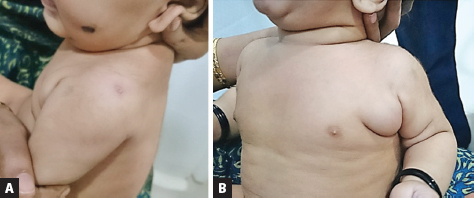
Answer
- Findings: Incorrectly placed high BCG scar and ipsilateral non-suppurative axillary lymphadenopathy (BCG lymphadenitis).
- Management:
- Reassurance; most cases resolve spontaneously over months.
- Do NOT perform incision and drainage or routine FNAC.
- No indication for anti-tubercular therapy (ATT) or antibiotics.
- If the node becomes large, fluctuant, and on the verge of spontaneous rupture, perform needle aspiration with a wide-bore needle (or surgical excision).
THG18-059
What is the name of the TB portal where TB patients are to be registered?
Answer
Ni-kshay (Web-based portal by NTEP: Ni = End, Kshay = Tuberculosis).
THG18-060
What are the findings in given CT and any five causes?
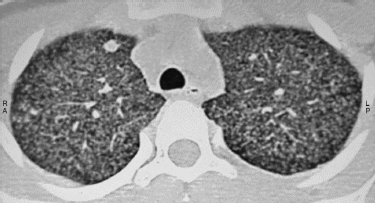
Answer
- CT finding: High-resolution CT shows widespread, randomly distributed 1–3 mm micronodules throughout both lungs (Miliary pattern).
- Causes:
- Infections: Miliary tuberculosis, fungal infections (histoplasmosis, blastomycosis, coccidioidomycosis), Mycoplasma, Nocardia.
- Immune/Inflammatory: Sarcoidosis, Langerhans cell histiocytosis (LCH), Hypersensitivity pneumonitis, Tropical pulmonary eosinophilia.
- Malignancy: Hematogenous pulmonary metastases (papillary thyroid carcinoma, renal cell carcinoma, melanoma), bronchioloalveolar carcinoma.
- Inhalational/Occupational: Silicosis, siderosis.
- Miscellaneous: Pulmonary alveolar microlithiasis.