THG22-001
A 17-year-old adolescent girl presents to the pediatrician with weight gain and irregular periods. An ultrasound abdomen done reveals polycystic ovaries. The girl raises a concern of unwanted facial hair for the past 1 year.
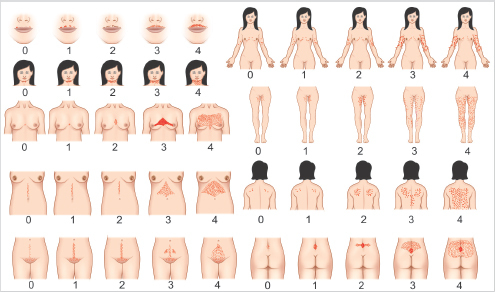
a. Identify the purpose of the scoring system depicted in the image in this clinical context.
b. Name two criteria that can be used to identify polycystic ovary syndrome (PCOS) in adolescent girls.
c. Define the specification for polycystic ovary on the ultrasound.
d. Mention two differential diagnoses one should consider in this girl.
e. Mention two conditions to rule out in this girl before making a diagnosis of PCOS.
Answer
- a. Hirsutism quantified by modified Ferriman–Gallwey score to assess extent and location of excessive male pattern hair growth
- b. Rotterdam criteria, Androgen Excess Society (AES) criteria, National Institutes of Health (NIH) criteria
- c. 12 or more follicles (2–9 mm in diameter) in a single ovary or ovarian volume of >10 mL (>10 cm³) in either ovary
- d. Congenital adrenal hyperplasia (late-onset / non-classical) and Cushing’s syndrome
- e. Hypothyroidism and hyperprolactinemia
THG22-002
A 5-year-old girl presents with features of early sexual maturation. The child has height at the 97th percentile and weight at the 25th percentile. Tanner stage: Breast stage 3 and pubic hair stage 2. A gonadotropin-releasing hormone (GnRH) analog stimulation is done with leuprolide as a stimulant. The results of the test are as below:
| Hormone | 0 hour (basal) | 4 hours (stimulated) | 24 hours |
|---|---|---|---|
| Luteinizing hormone (LH) | 0.2 IU/L | 9 IU/L | 6.3 IU/L |
| Follicle-stimulating hormone (FSH) | 2.3 IU/L | 7.4 IU/L | 1.1 IU/L |
| Estradiol | <5 pg/mL | — | 76 pg/mL |
a. Mention the interpretation of the GnRH analog stimulation test.
b. Mention any two reasons to support your interpretation.
c. What would be the findings in ultrasound abdomen?
d. What is the bone age expected?
e. Mention the next investigation that should be performed for the child.
f. Mention the drug, dose (4 weekly) and route of medication that can be administered for this condition.
Answer
- a. Central precocious puberty (gonadotropin-dependent precocious puberty)
- b. Stimulated LH >5 IU/L (here 9 IU/L), stimulated LH:FSH ratio >1 (9 / 7.4 = 1.2), and stimulated estradiol >50 pg/mL (here 76 pg/mL)
- c. Enlarged uterine length (>3.5–4 cm), endometrial echo enhancement, and increased ovarian volume (>1–2 mL) with visible follicles
- d. Advanced bone age (advanced by >2–3 SD beyond chronological age)
- e. Contrast MRI brain / hypothalamic-pituitary axis
- f. Depot Leuprolide acetate, 0.2–0.3 mg/kg (or 3.75–7.5 mg), intramuscularly / subcutaneously every 4 weeks
THG22-003
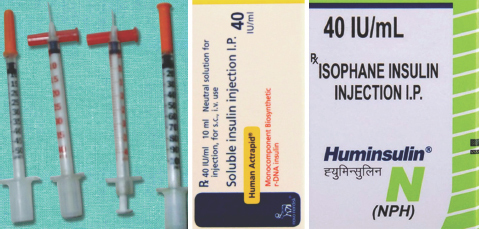
Master “R” is a child with type 1 diabetes mellitus (DM) for the past 2 years. Please administer 7 units regular and 14 units isophane (NPH) insulin to this child with type 1 DM for breakfast using a syringe. Recite all steps as you say.
Answer
- Preparation & Checks:
- Introduce yourself and build rapport; perform hand hygiene.
- Match syringe calibration with vial concentration (U-40 syringe for U-40 insulin; U-100 syringe for U-100 insulin).
- Ensure cold chain maintenance; inspect Regular insulin (clear) and NPH insulin (uniformly cloudy suspension).
- Check expiry dates; clean vial stoppers with alcohol swabs and let dry.
- Mixing Technique ("Clear before Cloudy"):
- Gently roll the NPH vial between palms 10–20 times to resuspend (do NOT shake vigorously).
- Draw 14 units of air into the syringe, inject into the NPH (cloudy) vial without touching liquid, and withdraw needle.
- Draw 7 units of air, inject into the Regular (clear) vial, invert vial, and withdraw exactly 7 units of Regular insulin.
- Re-insert needle into the NPH vial, invert carefully, and withdraw 14 units of NPH to reach a total volume mark of 21 units (7 + 14 = 21 U).
- Administration:
- Select and clean injection site (abdomen, anterolateral thigh, upper outer arm, or buttock), rotating sites systematically.
- Pinch skin fold, inject subcutaneously at a 90° (or 45°) angle.
- Count 6–10 seconds before withdrawing needle; do not massage the site.
- Advise meal consumption within 20–30 minutes to prevent hypoglycemia.
- Safely discard sharps into a puncture-proof container; store in-use vials at room temperature away from direct heat.
THG22-004
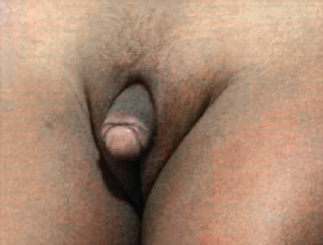
A 2-month-old “male” infant (weight 5 kg) presented with weight loss, lethargy, and refusal of feeds. Examination revealed that the child was lethargic, obtunded, hypotonic, and weak cry to a painful stimulus. Sugar checked in the emergency room (ER) was 23 mg/dL and genital examination revealed the following finding.
a. Name the likely medical emergency.
b. Name the likely underlying cause.
c. Name the life saving drug, dose, and route for this child.
d. Name two electrolyte abnormalities you would encounter in this child.
e. Identify the clinical finding in the given image.
f. Name two investigations to be taken as an emergency before medications.
g. How should the blood glucose of 23 mg/dL be corrected?
h. What is the ideal dose of fludrocortisone in the ER?
Answer
- a. Acute adrenal crisis / acute adrenal insufficiency
- b. Salt-wasting congenital adrenal hyperplasia (21-hydroxylase deficiency in a 46,XX infant with virilized genitalia)
- c. Hydrocortisone, 25 mg (or 50–100 mg/m²), IV/IM bolus
- d. Hyponatremia and hyperkalemia (with metabolic acidosis)
- e. Ambiguous genitalia / clitoromegaly with labioscrotal fusion and hyperpigmentation
- f. Serum 17-hydroxyprogesterone (17-OHP), serum cortisol, and serum electrolytes/blood gas
- g. 10% Dextrose bolus at 2–4 mL/kg (here 10–20 mL) IV over 5–10 minutes, followed by 10% Dextrose infusion
- h. Fludrocortisone is NOT needed in acute emergency resuscitation (high-dose hydrocortisone provides sufficient mineralocorticoid action; fludrocortisone is started during oral maintenance phase).
THG22-005
A healthy term neonate is screened for congenital adrenal hyperplasia (CAH) by heel prick method. The screening report comes as 108 nmol/L for heel prick 17-hydroxyprogesterone.
a. What is your interpretation of the screening report?
b. What are the next steps that can be planned based on screening report?
c. What is the disease that is aimed to be identified based on the screening test?
d. Mention two causes for false-positive screening result.
e. Mention one cause for false-negative screening result.
f. Mention two advantages of screening.
Answer
- a. Screen positive (heel prick 17-OHP >37.5 nmol/L or >20 ng/mL)
- b. Urgent clinical examination for ambiguous genitalia and dehydration; order serum electrolytes, venous 17-OHP, and repeat heel-prick sample; initiate pediatric endocrinology consult.
- c. Classical salt-wasting Congenital Adrenal Hyperplasia due to 21-hydroxylase deficiency (CYP21A2 mutation)
- d. False-positive causes: Prematurity, low birth weight, acute neonatal sickness/stress, or early sampling (<24–48 hours of life)
- e. False-negative cause: Antenatal maternal corticosteroid therapy
- f. Advantages: Prevention of fatal salt-wasting adrenal crisis/shock, and prevention of incorrect sex assignment in virilized 46,XX females.
THG22-006
A healthy term baby is screened for congenital hypothyroidism by heel prick method. The screening report comes as thyroid-stimulating hormone (TSH) of 66 mIU/L. A venous test is ordered which shows: TSH of 76 mIU/L, free T4 of 0.5 ng/dL, and total T4 of 4 µg/dL.
a. What is your interpretation of screening report?
b. What is your interpretation of the venous TSH?
c. What is your interpretation of venous T4?
d. What is your interpretation of free T4?
e. Name the drug and dose for this baby.
f. Mention two risk factors responsible for false-negative screening report.
g. Mention one cause for congenital hypothyroidism that cannot be identified by this screening test.
h. Name an alternative method to screen for primary congenital hypothyroidism.
Answer
- a. Screen positive for congenital hypothyroidism (screening heel-prick TSH ≥20 mIU/L as per ISPAE guidelines)
- b. Elevated venous TSH (venous TSH ≥20 mIU/L in first 2 weeks or ≥10 mIU/L beyond 2 weeks is elevated)
- c. Low total T4 (<10 µg/dL is abnormally low for a neonate)
- d. Low free T4 (<1.17 ng/dL is low)
- e. Oral Levothyroxine 10–15 µg/kg/day once daily on an empty stomach
- f. Preterm infants, sick neonates, multiple gestations (twins), and maternal antithyroid medications
- g. Central (hypothalamic-pituitary) hypothyroidism
- h. Cord blood TSH screening
THG22-007
Two children with congenital hypothyroidism underwent evaluation:
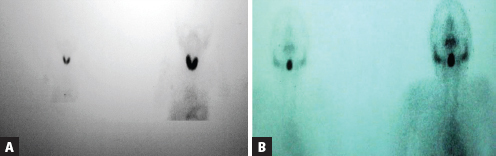
a. Name the scan that has been performed.
b. What is the purpose of this scan?
c. Identify findings in image A.
d. Identify the findings in image B.
e. What is the half-life of dye used in this scan?
f. Name an alternative to this scan.
Answer
- a. Technetium-99m (
) pertechnetate thyroid scintigraphy - b. To identify the underlying etiology of congenital hypothyroidism (thyroid dysgenesis vs dyshormonogenesis vs ectopia/athyreosis)
- c. Image A: Increased homogeneous uptake in an enlarged, normally located thyroid gland, suggestive of thyroid dyshormonogenesis.
- d. Image B: Absence of uptake in the normal thyroid bed with abnormal focal tracer uptake at the base of the tongue, suggestive of ectopic lingual thyroid.
- e. 6 hours (physical half-life of
) - f. Iodine-123 (
) thyroid scintigraphy or high-resolution thyroid ultrasonography
THG22-008
A 13-year-old adolescent boy presents with neck swelling, tremor, panic attacks, weight loss, irritability, and heat intolerance.
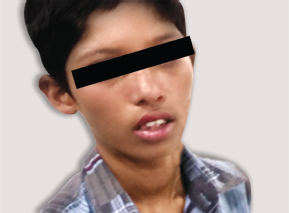
a. Identify one clinical finding in the given image.
b. What is the probable diagnosis?
c. Name the likely underlying etiology.
d. Mention the most important biochemical investigation to confirm the underlying etiology.
e. What is the first line of therapy for this boy?
f. What is the medical emergency to be considered in case the boy presents with fever and delirium?
g. What definitive therapy can be suggested that might be cost effective, but might worsen eye manifestations?
h. What definitive therapy can be offered in case of large goiter?
i. Name one pubertal abnormality encountered in girls with this condition.
Answer
- a. Diffuse neck swelling / Grade 2 goiter (WHO grading of goiter)
- b. Hyperthyroidism / Thyrotoxicosis
- c. Graves' disease
- d. Anti-TSH receptor antibodies (TRAb / TSI)
- e. Antithyroid drugs: Methimazole / Carbimazole (along with β-blockers like propranolol for symptom control)
- f. Thyroid storm (thyrotoxic crisis)
- g. Radioactive iodine therapy (
) - h. Total / near-total thyroidectomy
- i. Secondary amenorrhea / oligomenorrhea / delayed menarche
THG22-009
A 3-month-old baby presented in the pediatric Out Patient Department (OPD) with severe constipation, lethargy, and refusal of feeds.
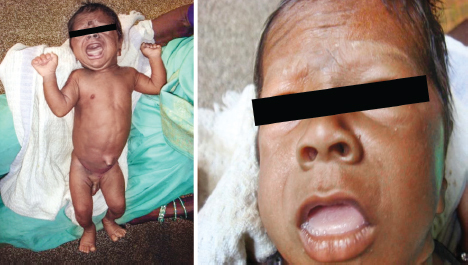
a. What is the likely diagnosis?
b. State whether the following statements are True or False about this child:
- i. Head size may be slightly small in this baby
- ii. Birth length is < −1 SD at birth in this baby
- iii. Posterior fontanelle may be palpable and >0.5 cm in this baby
- iv. Prolonged neonatal jaundice can be encountered due to delayed maturation of hepatic glucuronide conjugation in this baby
- v. Temperature is usually elevated in this baby
- vi. Microcytic anemia is commonly encountered in this baby
Answer
- a. Congenital hypothyroidism (Cretinism)
- b. True / False statements:
- i. False (head size is usually large/normal due to myxedema)
- ii. False (birth length is usually normal)
- iii. True (large posterior fontanelle >0.5 cm is a classical sign)
- iv. True (unconjugated hyperbilirubinemia is prolonged)
- v. False (hypothermia, temperature <35°C, is typical)
- vi. False (macrocytic or normocytic normochromic anemia is encountered)
THG22-010
Complete the following statements with normal, high, or low as applicable:
a. The intravascular volume status in cerebral salt wasting is _________
b. In syndrome of inappropriate antidiuretic hormone secretion (SIADH), the urine sodium is _________
c. Serum vasopressin level in central diabetes insipidus is _________
d. Urine sodium in pseudohyponatremia due to hypertriglyceridemia is ________
e. Serum sodium in cerebral salt wasting is ____________
f. Urine sodium in hypoaldosteronism is ___________
g. Serum sodium in SIADH is _____
h. Urine sodium in primary polydipsia is _____________
Answer
- a. Low (hypovolemia)
- b. High (>20–40 mEq/L)
- c. Low
- d. Normal
- e. Low (hyponatremia)
- f. High (salt wasting)
- g. Low (dilutional hyponatremia)
- h. Low / Normal (<20 mEq/L)
THG22-011
Fill in the blanks:
a. Anti-müllerian hormone (AMH), inhibin and activin belong to ______ family of growth factors.
b. AMH is secreted by ______ cells of the testes.
c. AMH causes regression of ______________ ducts (mesonephric ducts/paramesonephric ducts).
d. Inhibin is secreted by ___ cells of the ovary.
e. In males, hypogonadism in delayed puberty is identified by measuring ____.
f. _______ stimulates FSH secretion by the pituitary gland.
g. ________ binds activins and inhibits FSH secretion.
Answer
- a. Transforming growth factor-beta (
) - b. Sertoli cells
- c. Paramesonephric ducts (Müllerian ducts)
- d. Granulosa cells (and theca cells)
- e. Inhibin B
- f. Activin
- g. Follistatin
THG22-012
A 7-year-old boy weighing 27 kg with polydipsia underwent water deprivation test.
| Time | Heart rate (beats/min) | Blood pressure (mm Hg) | Weight (kg) | Urine volume (mL) | Serum osmolality (mOsm/kg) | Urine osmolality (mOsm/kg) | Action |
|---|---|---|---|---|---|---|---|
| 9 am | 90 | 120/80 | 27.0 | 300 | 290 | 50 | Water deprivation begun |
| 10 am | 100 | 120/80 | 26.5 | 450 | 292 | 60 | — |
| 11 am | 103 | 120/80 | 26.0 | 300 | 291 | 55 | — |
| 12 noon | 106 | 110/70 | 25.9 | 430 | 299 | 50 | — |
| 1 pm | 130 | 100/70 | 25.5 | 220 | 309 | 60 | Water deprivation stopped; Desmopressin 5 IU s/c given |
| 2 pm | 100 | 120/80 | 26.5 | 100 | 298 | 430 | — |
| 3 pm | 93 | 120/80 | 26.9 | 75 | 287 | 535 | — |
a. What is the diagnosis arrived at 1 PM?
b. Mention two reasons to support your answer.
c. What is your diagnosis at 3 PM?
d. Mention two reasons to support your answer.
e. Name the drug to treat this boy and its oral dose.
f. Mention two precautions before starting the procedure.
Answer
- a. Diabetes insipidus (inability to concentrate urine during water deprivation)
- b. Weight loss >5% (from 27 to 25.5 kg = 5.5%), serum osmolality >300 mOsm/kg (309 mOsm/kg), persistent low urine osmolality (<300 mOsm/kg), and tachycardia/hypotension.
- c. Central (neurogenic) diabetes insipidus
- d. Sharp rise in urine osmolality (>50% increase, from 60 to 535 mOsm/kg) and marked reduction in urine volume following subcutaneous vasopressin/desmopressin.
- e. Oral Desmopressin (DDAVP), 25–300 µg/day (or 0.1–0.4 mg/day divided 2–3 times daily)
- f. Precautions: Rule out secondary causes; ensure baseline normal cortisol and thyroid function; stop test immediately if weight loss exceeds 5% or child develops severe tachycardia/hypotension.
THG22-013
Use the following diagnoses to fill up the table below:
Diagnoses: WT-1 defect, SRY gene defect, HSD3B2 defect, CYP 21 A2 defect, partial androgen insensitivity syndrome, 5α-reductase deficiency, AMH defect, SF-1 defect
| Clinical Feature | Associated Gene Defect / Diagnosis |
|---|---|
| 46,XX DSD | |
| Renal abnormality | |
| Primary adrenal failure | |
| Dysgenetic testes | |
| Absent Müllerian structure |
Answer
| Clinical Feature | Associated Gene Defect / Diagnosis |
|---|---|
| 46,XX DSD | CYP21A2 defect |
| Renal abnormality | WT1 defect |
| Primary adrenal failure | SF1 defect, HSD3B2 defect, CYP21A2 defect |
| Dysgenetic testes | WT1 defect, SF1 defect, SRY gene defect |
| Absent Müllerian structure | Partial androgen insensitivity syndrome (PAIS), |
THG22-014
A clinical assessment tool is shown:
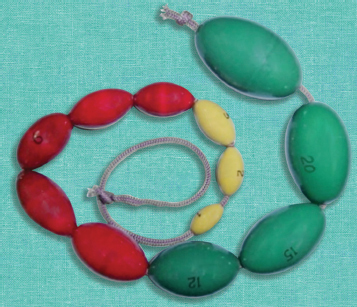
a. Name this tool.
b. What is the purpose of this tool?
c. How is this tool used to make a diagnosis of delayed puberty?
d. How is this tool used to make a diagnosis of precocious puberty?
e. How is this tool used to make a diagnosis of arrested puberty?
Answer
- a. Prader orchidometer
- b. Quantitative measurement of testicular volume and Tanner pubertal staging in boys
- c. Testicular volume <4 mL at or beyond 14 years of age
- d. Testicular volume ≥4 mL before 9 years of age
- e. Lack of progression in testicular volume for >2 years after pubertal onset
THG22-015
A 5-year-old girl presented with breast stage 3, pubic hair stage 1, and menarche. The child has the below skin lesion:
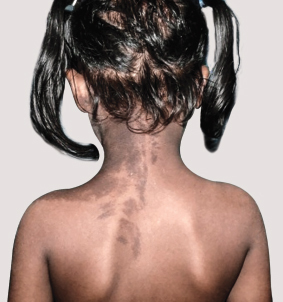
a. Identify the skin lesion.
b. Mention the probable diagnosis.
c. Mention the third component of the diagnosis.
d. Measurement of LH, FSH, and estradiol is performed, how are they expected to be?
e. Mention the likely genetic mutation involved.
f. Mention two endocrine disorders that can be associated with the disorder.
Answer
- a. Café-au-lait spots with irregular ragged borders ("Coast of Maine" appearance)
- b. McCune–Albright syndrome (peripheral precocious puberty)
- c. Polyostotic fibrous dysplasia of bone
- d. High estradiol level with suppressed/undetectable basal and stimulated LH and FSH (gonadotropin-independent)
- e. Somatic activating postzygotic missense mutation in GNAS1 gene (encoding Gs
protein) - f. Acromegaly / gigantism (GH excess), hyperthyroidism, Cushing syndrome (ACTH-independent), and hyperparathyroidism
THG22-016
A 13.5-year-old adolescent boy presented with the following finding:
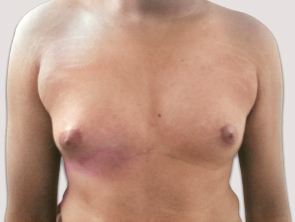
a. What is the likely diagnosis?
b. What is the peak age this phenomenon occurs?
c. What is the Tanner stage when this process occurs?
d. What is the testicular volume at which this process usually occurs?
e. Is tenderness associated with this diagnosis?
f. What is the likely course of this problem?
g. What is the cause of this problem?
h. What is the treatment of this condition?
Answer
- a. Pubertal gynecomastia (physiological)
- b. 13–14 years
- c. Tanner stage 3–4
- d. Testicular volume 5–10 mL
- e. Yes (tender subareolar breast disc)
- f. Spontaneous resolution within 1–2 years in >90% of cases
- g. Transient physiological imbalance between free estradiol and testosterone concentrations during mid-puberty
- h. Reassurance and observation; surgical reduction only if severe, cosmetically distressing, or persisting >2–3 years
THG22-017
Match the genetic conditions with their clinical features:
| No. | Gene / Condition | Code | Feature |
|---|---|---|---|
| 1 | SF-1 | A | Hepatosplenomegaly |
| 2 | Smith–Lemli–Opitz syndrome | B | Retinal degeneration |
| 3 | Triple A syndrome | C | Postaxial polydactyly |
| 4 | Wolman syndrome | D | Metaphyseal dysplasia |
| 5 | Kearns–Sayre syndrome | E | Craniofacial malformation |
| 6 | Pallister–Hall syndrome | F | Spasticity |
| 7 | IMAGe syndrome | G | Achalasia |
| 8 | Adrenoleukodystrophy | H | 46,XY sex reversal |
Answer
- 1 — H (SF-1: 46,XY sex reversal)
- 2 — E (Smith–Lemli–Opitz syndrome: Craniofacial malformation)
- 3 — G (Triple A syndrome: Achalasia)
- 4 — A (Wolman syndrome: Hepatosplenomegaly)
- 5 — B (Kearns–Sayre syndrome: Retinal degeneration)
- 6 — C (Pallister–Hall syndrome: Postaxial polydactyly)
- 7 — D (IMAGe syndrome: Metaphyseal dysplasia)
- 8 — F (Adrenoleukodystrophy: Spasticity)
THG22-018
Master “A”, aged 7 years and a known child with type 1 DM (weight = 20 kg) on insulin on basal bolus regimen. The child is currently on injection glargine 8 units subcutaneous at bedtime and injection aspart 4 units subcutaneous three times a day. Child develops enteric fever. The current blood glucose is 300 mg/dL and urine ketones are large as shown in given image.
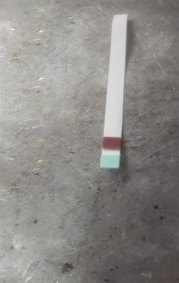
a. What is your advice on injection glargine?
b. How frequently should parents check blood glucose and administer correction doses?
c. Should the family give sugar free fluids or sugar containing fluids?
d. Mention three red flag signs that warrant the child to go to the ER.
e. Name one acute complication that should be prevented.
Answer
- a. Continue basal insulin (injection glargine) at the usual dose and timing—NEVER omit basal insulin during sick days.
- b. Monitor blood glucose and ketones every 1–2 hours; administer rapid-acting insulin correction doses (5–10% of total daily dose) every 2–4 hours as needed.
- c. Sugar-free fluids if blood glucose >250 mg/dL; switch to carbohydrate-containing fluids (juices/ORS) if blood glucose falls <180–200 mg/dL to allow continued insulin dosing.
- d. Red flag signs: Persistent vomiting/inability to tolerate oral fluids, altered sensorium/lethargy, Kussmaul breathing/air hunger, worsening ketosis, or persistent hypoglycemia.
- e. Diabetic ketoacidosis (DKA)
THG22-019
An 8-year-old boy presents to the ER (weight 30 kg) with history of weight loss, polydipsia, and polyuria. He was in compensated shock. Capillary blood glucose (CBG) measured in the ER is high (>600 mg/dL), urine ketones are large, blood ketone is 5.6 mmol/L, venous blood gas shows that pH is 7.0, and venous bicarbonate is 5 mEq/L. A diagnosis of severe diabetic ketoacidosis is made. Please give initial orders for the management of this child.
Answer
- Hour 1 Resuscitation (Volume Expansion):
- 0.9% Normal Saline bolus:
IV over 1 hour.
- 0.9% Normal Saline bolus:
- Hours 2–48 Fluid Therapy (Deficit + Maintenance - Bolus):
- Fluid deficit (severe DKA, 8.5% dehydration):
. - Minus 1-hour bolus:
. - Maintenance over 48 hours (Holliday–Segar:
): . - Total remaining fluid for 47 hours:
. - Infusion rate:
. - Fluid type: 0.9% Saline or 0.45% Saline with
Potassium (KCl / potassium phosphate) once urine output is confirmed. Add 5% dextrose when blood glucose drops below .
- Fluid deficit (severe DKA, 8.5% dehydration):
- Insulin Infusion:
- Prepare 50 units Regular Insulin in 50 mL Normal Saline (
); flush initial 25 mL through tubing. - Start at
( ) starting 1 hour AFTER initiating rehydration. NO IV insulin bolus.
- Prepare 50 units Regular Insulin in 50 mL Normal Saline (
- Monitoring:
- Hourly vitals, neurological checks (for cerebral edema), CBG, and strict intake-output charting.
THG22-020
Write the appropriate terminology for the following:
| Scenario | Terminology |
|---|---|
| HbA1c 6.9% | |
| Fasting blood sugar 116 mg/dL | |
| 2-hour plasma glucose after oral glucose tolerance test of 168 mg/dL | |
| Fasting plasma glucose 12 mmol/L | |
| HbA1c of 6% |
Answer
| Scenario | Terminology |
|---|---|
| HbA1c 6.9% | Diabetes mellitus ( |
| Fasting blood sugar 116 mg/dL | Impaired fasting glucose (100–125 mg/dL) |
| 2-hour OGTT plasma glucose of 168 mg/dL | Impaired glucose tolerance (140–199 mg/dL) |
| Fasting plasma glucose 12 mmol/L (216 mg/dL) | Diabetes mellitus ( |
| HbA1c of 6% | Prediabetes (5.7%–6.4%) |
THG22-021
A 5-year-old child (weight 10 kg) with type 1 DM on insulin therapy develops a blunt abdominal trauma following a road traffic accident. The child needs to be taken up for emergency laparotomy. The CBG measured in the ER is 310 mg/dL, blood ketones are measured which is shown in given image.
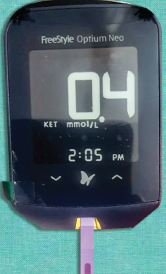
a. Can this child be taken up for surgery?
b. Name the fluid that you will start for this child.
c. What is the fluid rate of administration for this child in this situation?
d. What is the frequency of monitoring of blood glucose for this child?
e. What is the dose and route of insulin administration for this child in this situation?
f. Name two metabolic complications that should be anticipated and prevented.
Answer
- a. Yes (blood ketone 0.4 mmol/L is not significantly elevated; emergency surgery can proceed under strict monitoring).
- b. 0.45% Normal Saline in 5% Dextrose with 20 mEq/L Potassium chloride/acetate
- c. 60 mL/hour (1.5 times maintenance rate for 10 kg child:
) - d. Hourly capillary blood glucose monitoring perioperatively
- e. Intravenous Regular insulin infusion at 0.03–0.05 U/kg/hour (0.3–0.5 U/hour)
- f. Diabetic ketoacidosis and severe hypoglycemia
THG22-022
State whether the following statements are True or False about hypoglycemia in a child with type 1 DM:
a. Late night hyperglycemia followed by rebound morning hypoglycemia is called Dawn phenomenon.
b. Aggressive behavior in a child with type 1 DM should warrant consideration for hypoglycemia before referral to a child guidance clinic.
c. Dose of oral glucose for hypoglycemia correction in a child with type 1 DM weighing 30 kg is 15 g.
d. The dose of parenteral glucagon for a child who weighs 25 kg is 0.5 mg.
e. Reduced cognition owing to recurrent severe hypoglycemia is common in school going children.
f. Maximum dose of mini glucagon is 100 µg.
g. Epinephrine deficiency is contributory to hypoglycemia associated autonomic failure in young adults with autonomic neuropathy.
h. Severe exercise without insulin dose adjustment can be a triggering factor for occurrence of hypoglycemia.
Answer
- a. False (Early morning hyperglycemia due to nocturnal hypoglycemia is Somogyi phenomenon; Dawn phenomenon is morning hyperglycemia due to physiological growth hormone/cortisol surge without preceding hypoglycemia).
- b. True (Neuroglycopenic symptoms include agitation, aggression, and behavioral changes).
- c. True (Rule of 15: 15 g fast-acting carbohydrates).
- d. False (Glucagon dose is 0.5 mg for
and 1.0 mg for ). - e. False (Severe cognitive sequelae of hypoglycemia are most pronounced in toddlers/infants
years due to brain development). - f. False (Maximum dose of mini-dose glucagon is 150 µg).
- g. True
- h. True
THG22-023
A 7-year-old child presented with type 1 DM is on basal bolus regimen with injection glargine 9 units at bedtime and injection lispro at each with an insulin carbohydrate ratio of 1 unit for 15 g of carbohydrate for breakfast, lunch, and dinner.
Week 1:
| Day | Pre-breakfast | 2h post-breakfast | Pre-lunch | 2h post-lunch | Pre-dinner | 2h post-dinner | 2 am |
|---|---|---|---|---|---|---|---|
| Day 1 | 54 | 120 | 115 | 132 | 123 | 133 | 80 |
| Day 2 | 34 | 121 | 134 | 133 | 112 | 132 | 67 |
| Day 3 | 56 | 143 | 123 | 145 | 143 | 145 | 56 |
| Day 4 | 65 | 138 | 176 | 165 | 154 | 145 | 60 |
| Day 5 | 69 | 187 | 143 | 176 | 123 | 154 | 70 |
Week 2:
| Day | Pre-breakfast | 2h post-breakfast | Pre-lunch | 2h post-lunch | Pre-dinner | 2h post-dinner | 2 am |
|---|---|---|---|---|---|---|---|
| Day 1 | 123 | 345 | 124 | 133 | 129 | 132 | 120 |
| Day 2 | 134 | 234 | 135 | 156 | 136 | 123 | 110 |
| Day 3 | 154 | 435 | 129 | 138 | 118 | 145 | 120 |
| Day 4 | 141 | 267 | 118 | 125 | 110 | 139 | 121 |
| Day 5 | 139 | 366 | 106 | 134 | 140 | 118 | 134 |
Week 3:
| Day | Pre-breakfast | 2h post-breakfast | Pre-lunch | 2h post-lunch | Pre-dinner | 2h post-dinner | 2 am |
|---|---|---|---|---|---|---|---|
| Day 1 | 123 | 119 | 115 | 120 | 109 | 56 | 122 |
| Day 2 | 124 | 149 | 123 | 121 | 101 | 67 | 139 |
| Day 3 | 119 | 167 | 109 | 134 | 123 | 58 | 110 |
| Day 4 | 140 | 123 | 105 | 110 | 140 | 40 | 129 |
| Day 5 | 130 | 110 | 140 | 109 | 138 | 39 | 136 |
a. What is the action to be taken in week 1?
b. What is the action to be taken in week 2?
c. What is the action to be taken in week 3?
Answer
- a. Week 1 shows nocturnal and fasting hypoglycemia (pre-breakfast 34–69 mg/dL, 2 am 56–80 mg/dL): Reduce bedtime Glargine dose (by 10–20%).
- b. Week 2 shows post-breakfast hyperglycemia (234–435 mg/dL): Intensify breakfast bolus coverage by decreasing the insulin-to-carbohydrate ratio (e.g., from 1:15 to 1:10–1:12, thereby giving more insulin).
- c. Week 3 shows post-dinner hypoglycemia (39–67 mg/dL): Decrease dinner bolus coverage by increasing the insulin-to-carbohydrate ratio (e.g., from 1:15 to 1:20, thereby giving less insulin).
THG22-024
A child with type 1 DM comes with the following device:
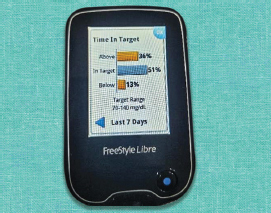
a. Name the monitoring tool
b. Where is the glucose monitored?
c. State True or False: Use of this tool eliminates need for glucometer
d. What is the interpretation of glycemic control?
Answer
- a. Continuous Glucose Monitoring System (CGMS) / Flash Glucose Monitor (FreeStyle Libre)
- b. Interstitial fluid (subcutaneous tissue)
- c. False (Capillary blood glucose fingerstick calibrations and confirmations are still required during rapid glucose fluctuations, hypoglycemia, or sensor errors).
- d. Suboptimal glycemic control (Time In Range [70–180 mg/dL] should ideally be >70% with Time Below Range <4%).
THG22-025
Important calculations in pediatric endocrinology:
| Clinical Scenario | Calculation Required | Interpretation Required |
|---|---|---|
| Glycosylated hemoglobin 10% in a child with type 1 DM | What is the estimated average glucose? | What is the interpretation? |
| Child with new-onset DM with measured sodium of 130 mEq/L and blood glucose of 500 mg/dL | What is the corrected sodium level? | What is the interpretation? |
| Child with nephrotic syndrome with measured serum calcium 6.5 mg/dL and serum albumin 1 g/dL | What is the corrected calcium level? | What is the interpretation? |
| Child with failure to thrive, persistent hyperkalemia and metabolic acidosis (serum K 6 mEq/L, spot urine K 3.6 mEq/L, serum osmolality 291 mOsm/kg, and urine osmolality 166 mOsm/kg) | What is the transtubular potassium gradient (TTKG)? | What is the interpretation? |
Answer
| Clinical Scenario | Calculation | Interpretation |
|---|---|---|
| HbA1c 10% in type 1 DM | Poor glycemic control | |
| New-onset DM, Na 130 mEq/L, glucose 500 mg/dL | Pseudohyponatremia (corrected sodium is normal) | |
| Nephrotic syndrome, Ca 6.5 mg/dL, Albumin 1.0 g/dL | Pseudohypocalcemia (corrected calcium is normal) | |
| Hyperkalemia (Serum K 6.0, Urine K 3.6, Serum Osm 291, Urine Osm 166) | Defective tubular action/deficiency of aldosterone ( |


- Formulae Reference:
(Normal: 4–10; low level during hyperkalemia indicates impaired mineralocorticoid action).