VVK17-001
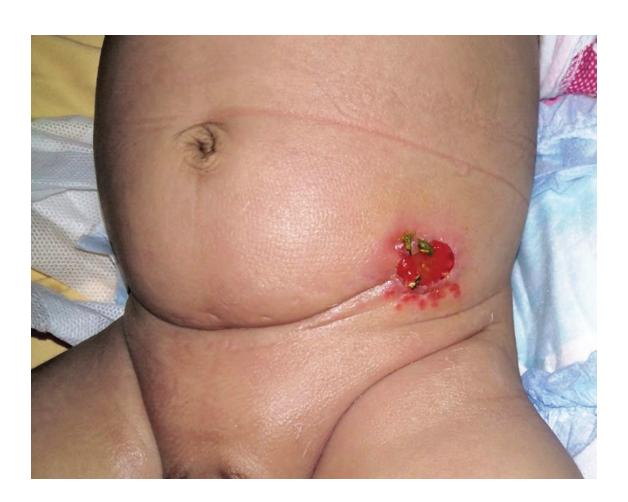
- a. What procedure has this patient undergone?
- b. Enlist the 2 indication for the procedure.
- c. Mention 3 common complications post procedure.
- d. What care does the patient need following procedure?
Answer
- a. Colostomy
- b. Anorectal malformation
Artesia-Anal
Atresia-Colon
Hirschsprung's diseases.
c. Skin excoriation
Prolapse of stoma
Bleeding (chronic blood loss)
Leakage
Blockade.
d. Colostomy care/ stoma care Hydration of site-paraffin, etc. Care of surrounding skin.
VVK17-002
Select the answers.
- a. Can lead to substantial elevations of serum bilirubin
- b. Most likely to induce acute hypovolemic shock
- c. Drainage is contraindicated
- d. Generally resolves by 48 hours of age
Options:
- i. Cephalhematoma
- ii. Caput succedaneum
- iii. Cephalhematoma and caput succedaneum
- iv. Subgaleal hematoma
- v. Cephalhematoma, caput succedaneum, and subgaleal hematoma
Answer
- a. v (Cephalhematoma, caput succedaneum, and subgaleal hematoma)
- b. iv (Subgaleal hematoma)
- c. v (Cephalhematoma, caput succedaneum, and subgaleal hematoma)
- d. ii (Caput succedaneum)
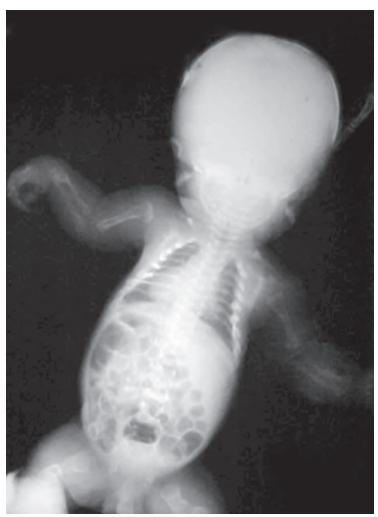
VVK17-003
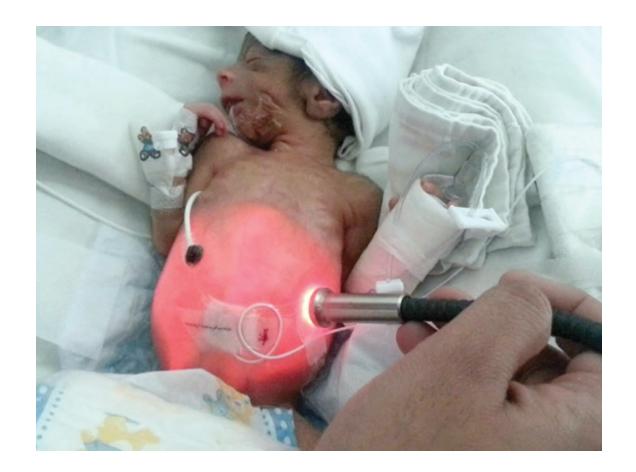
- a. What test is being performed in the baby?
- b. What is the finding in this baby?
- c. What does the finding suggest?
- d. What is the treatment?
- e. Where else can this test be performed?
- f. What can be another use of the equipment?
Answer
- a. Transillumination
- b. Positive-transillumination, free gas in the abdomen
- c. Suggestive of intestinal perforation
- d. NBM, Surgical intervention
- e. Chest- to rule out pneumothorax
- f. Identification of veins.
VVK17-004
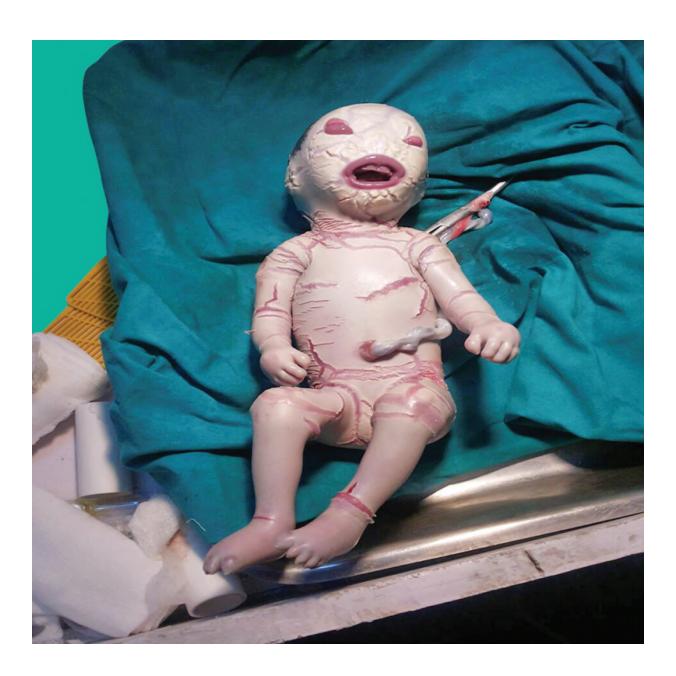
-
a. What is the diagnosis?
-
b. What is the incidence?
-
c. What is the cause?
-
d. What is the commonest inheritance pattern?
-
e. What are immediate and long-term complications?
-
f. What is the treatment?
Answer
- a. Colloidan baby
- b. Incidence 1 in 600,000
- c. Congenital ichthyosiform erythrodema
Self-healing collodion baby
Keratinization disorders ichthyosis vulgaris and trichothiodystrophy Other syndromes/disorder like Sjögren-Larsson syndrome, Netherton syndrome, Gaucher disease type 2, congenital hypothyroidism, Conradi syndrome, Dorfman-Chanarin syndrome, ketoadipiaciduria, koraxitrachitic syndrome, ichthyosis variegata and palmoplantar keratoderma with anogenital leukokeratosis.
- d. Autosomal recessive
- e. Immediate complications
Cutaneous infection
Aspiration pneumonia
Hypothermia
Hypernatremic dehydration
Long term complications
Overheating:
Eye problems:
Constriction bands
Hair loss:
f. Immediate treatment
Admission in NICU
Prevention of dehydration and heat loss-ambient humidity/incubator/emmolients
Prevention of infections
Symptomatic relief
- Moisturizers
- · Prevention of overheating
- Eye drops (to prevent the eyes from becoming dried out)
- Systemic retinoids
Psychological therapy
VVK17-005
1.2 kg, 7 day old, 28 week newborn is receiving protein at 3 g/kg/day, lipid at 2 g/kg/day and GIR of 6 mg/kg/min. Baby is nil by mouth.
Calculate.
- a. NPC/N
- b. Fluid rate of below to achieve above goals
- i. 10% protein
- ii. 20% lipid
- iii. 15% dextrose
- c. i. Total calorie intake.
- ii. What is the significance of NPC/N and optimal rate?
- d. What is the adequate calorie intake in such baby?
Answer
-
a. NPC/N Calculation:
- Non-Protein Calories = Lipid Calories + Dextrose Calories
- Lipid calories =
- Dextrose rate =
- Total non-protein calories =
- Nitrogen =
-
b. Fluid rates:
- i. 10% Protein:
- ii. 20% Lipid:
- iii. 15% Dextrose:
- i. 10% Protein:
-
c. Calorie Intake & Significance:
- i. Total calories = Protein (
) + Lipid (24) + Dextrose (36.29) = ( ) - ii. Optimal NPC/N is 100–150 for efficient protein utilization and tissue accretion.
- i. Total calories = Protein (
-
d. Adequate calorie intake: 90–120 kcal/kg/day.
VVK17-006
Match the following:
| Teratogens / Maternal Diseases | Potential Effects / Disorder |
|---|---|
| 1. Alcohol | A. Arthrogryposis |
| 2. Sodium valproate | B. Long philtrum |
| 3. Diabetes mellitus | C. Neural tube defects |
| 4. Lithium | D. Caudal regression syndrome |
| 5. Myasthenia gravis | E. Ebstein's anomaly |
Answer
| Teratogen / Maternal Disease | Effect / Disorder |
|---|---|
| 1. Alcohol | B. Long philtrum (smooth philtrum / FAS) |
| 2. Sodium valproate | C. Neural tube defects |
| 3. Diabetes mellitus | D. Caudal regression syndrome |
| 4. Lithium | E. Ebstein's anomaly |
| 5. Myasthenia gravis | A. Arthrogryposis (neonatal myasthenia / contractures) |
VVK17-007
Study the photograph and answer the questions.
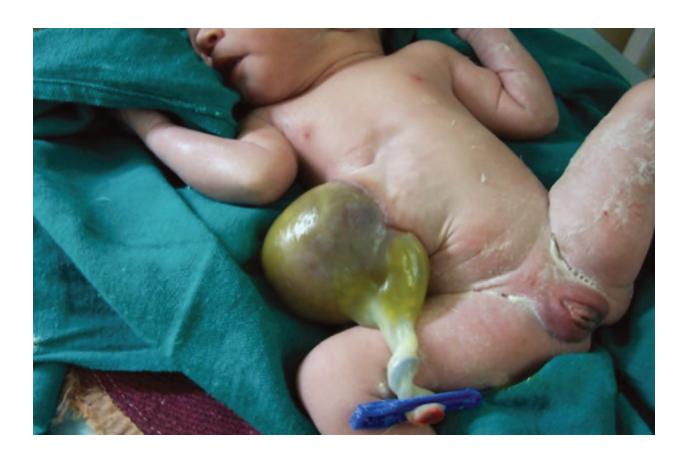
This female neonate was born with a large mass in relation to the umbilical cord:
- a. Identify the condition.
- b. Give three important aspects that you will take care of in the transport of such a neonate.
- c. List 3 anomalies associated with this condition.
- d. What is the definitive treatment for this condition?
Answer
- a. Exomphalos major/omphalocele.
- b. i. Transport supine with the hernia suspended by a string
- ii. Cover the omphalocele with a waterproof covering
- iii. Provide additional fluids
- iv. Maintain body temperature
- v. Place an orogastric tube.
- c. Beckwith Weidemann syndrome, cardiac anomalies e.g. TOF and ASD, chromosomal abnormalities e.g. various trisomies, genitourinary anomalies, diaphragmatic hernia.
- d. Surgical correction (usually non-urgent, staged closure).
VVK17-008
A term male baby weighing 3.6 kg presents on day 2 of life with seizures. Mother is gravida 4 with history of 2 neonatal deaths with one live child aged 3 years. He was born at home and mother had a history of greenish vaginal discharge just prior to delivery.
- a. Enlist 3 most likely causes of seizures in this baby.
- b. Write first 5 steps of management of the current episode of seizure in sequential order.
Answer
- a. HIE/perinatal asphyxia:
- Sepsis/meningitis.
- Inborn error of metabolism/pyridoxine deficiency.
- Birth trauma.
- b. i. Management of the airway, breathing and circulation.
- ii. Do the blood sugar; if < 40 mg%, give a bolus of 2 mL/kg of D 10%; If > 40 mg% proceed to next step.
- iii. Take sample for serum calcium; give IV calcium gluconate 2 mL/kg 1:1 diluted.
- iv. Give IV Phenobarbitone in a dose of 20 mg/kg as a slow iv injection.
- v. Repeat IV Phenobarbitone in a dose of 5–10 mg/kg up to maximum total dose of 40 mg/kg.
- vi. Phenytoin the usual second-line agent, is given as an initial loading dose of 20 mg/kg.
- vii. Benzodiazepines (e.g. Lorazepam, diazepam, and midazolam). For neonatal seizures that remain refractory to these measures, benzodiazepines may add further benefit.
VVK17-009
You are attending pediatrician of a 31 week preterm whose birth weight was 1400 g. He had an uneventful NICU stay except for 1 day of phototherapy for jaundice.
- a. List 3 criteria for discharge?
- b. Is this neonate a candidate for:
- i. ROP screening
- ii. Cranial USG
___________.
iii. Hearing screening.
Answer
-
a. i. Ability to maintain temperature in an open crib.
-
ii. Ability to take all feedings by bottle or breast without respiratory compromise.
-
iii. No apnea or bradycardia for 5 days.
-
iv. Steady weight gain.
-
b. i. Yes
-
ii. Yes
-
iii. Yes
VVK17-010
A HBsAg +ve woman is 20 weeks pregnant.
- a. What are the other relevant investigations you would request?
- b. The risk of perinatal transmission is maximum if mother is HBe Ag + and
- c. What is the advice to be given to the partner/husband?
- d. What is the ideal management of a preterm newborn after birth?
Answer
- a. HBeAg and anti HBe Ag.
- b. Anti HBs Ag +ve.
- c. Husband to get his HBs Ag status checked and to use barrier contraception during sexual intercourse.
- d. Give first dose of hepatitis B vaccine and HBIG concurrently at different sites within 12 hours of birth followed by hepatitis B vaccine at 1 and 6 months.
VVK17-011
A term baby is born to a mother via elective cesarian section. The mother is diagnosed to have HIV infection. The baby's test for HIV DNA PCR is positive within 48 hours.
- a. What does this positive PCR imply?
- b. How would you confirm the diagnosis?
- c. What are the drugs used to control? ( Name 3 subgroups with 1 example in each group).
Answer
- a. It implies in utero infection and possibly a rapidly progressive disease.
- b. By repeating the sample. A diagnosis of HIV infection can be made with 2 positive virologic test results obtained from different blood samples.
- c. i. Nucleoside/nucleotide reverse transcriptase inhibitors (NRTIS). Zidovudine, didanosine, tenofovir, stavudine, abacavir.
- ii. Non-nucleoside reverse transcriptase inhibitors (NNRTIS). Nevirapine, Efavirenz.
- iii. Protease inhibitors: Nelfinavir, amprenavir, atazanavir, darunavir, fosamprenavir, indinavir, lopinavir/ritonavir, saquinavir.
VVK17-012
A 5-day-old girl who was delivered at home has presented in emergency for bruising and gastrointestinal bleeding. There is no history of maternal drug or alcohol abuse during pregnancy. There is no family history of similar problems. Laboratory findings are given below.
Haemoglobin : 15.2 g/dL Platelet count : 290,000/mm3
INR : >2
APTT : >100 seconds Serum bilirubin : 3.5 mg/dL SGPT : 41 mg/dL SGOT : 28 mg/dL
-
a. What is the most likely diagnosis of this bleeding neonate?
-
b. Enlist 2 risk factors in a neonate admitted to NICU which can potentially lead into this problem.
-
c. How can you prevent the same?
-
d. How would you treat once the diagnosis is confirmed?
Answer
- a. Vitamin K deficiency (classical).
- b. Administration of total parentral alimentation.
Administration of parenteral antibiotics.
Prematurity.
- c. Parentral administration of vitamin K to all newborns at the time of birth.
- d. 1 mg IV or IM vitamin K.
VVK17-013
A term male infant is born via normal vaginal delivery. He is found to have choanal atresia, bilateral colobomas, ear anomalies, and cryptorchidism.
- a. What is the most likely diagnosis?
- b. What are the 2 problems which are likely to exist in this neonate on further evaluation or later on in the childhood?
- c. What is the most appropriate initial test to exclude any associated abnormalities?
- d. What is the treatment of choanal atresia in an otherwise stable child?
Answer
a. Charge:
C - Coloboma of the eye, central nervous system anomalies
H - Heart defects
A - Atresia of the choanae
R - Retardation of growth and/or development
G - Genital and/or urinary defects (hypogonadism)
E - Ear anomalies and/or deafness.
b. Heart defects
Retardation of growth and/or development.
- c. ECHO
- d. Transnasal repair.
VVK17-014
A term male newborn delivered at home is seen in the pediatric OPD on day 2 of life.
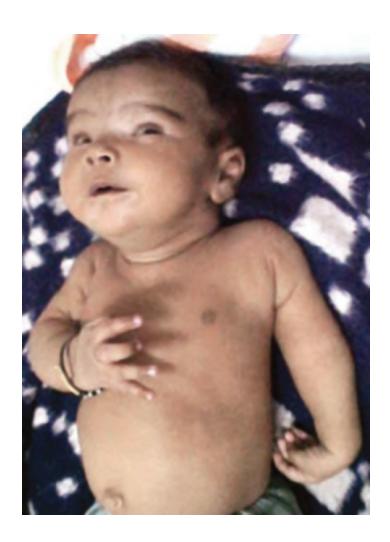
- a. What are abnormalities detected in the left arm of this baby?
- b. What is the likely diagnosis?
- c. What is the etiology?
- d. What is the most common associated complication?
Answer
-
a. Arm is held in adduction, elbow extended, internally rotated, forearm pronated and wrist flexed (Waiters tip position).
-
b. Erb palsy.
-
c. Injury to upper nerve roots of brachial plexus
. -
d. Phrenic nerve involvement—Ipsilateral diaphragmatic paralysis.
VVK17-015
Match the following.
In monozygotic twins what is the relationship between chorionicity, amnionicity and timing of division of egg:
| Type of chorion and amnion | Timing of division of egg |
|---|---|
| a. Monochorionic, monoamniotic | i. 0–3 days |
| b. Monochorionic, diamniotic | ii. 3–7 days |
| c. Dichorionic, diamniotic | iii. 7–14 days |
| d. Conjoint twins | iv. > 14 days |
Answer
| Type of Chorion and Amnion | Timing of Division |
|---|---|
| a. Monochorionic, monoamniotic | iii. 7–14 days |
| b. Monochorionic, diamniotic | ii. 3–7 days |
| c. Dichorionic, diamniotic | i. 0–3 days |
| d. Conjoint twins | iv. > 14 days |
VVK17-016
Given below is CT of an 1800 g term male neonate born to an unbooked primigravida mother.
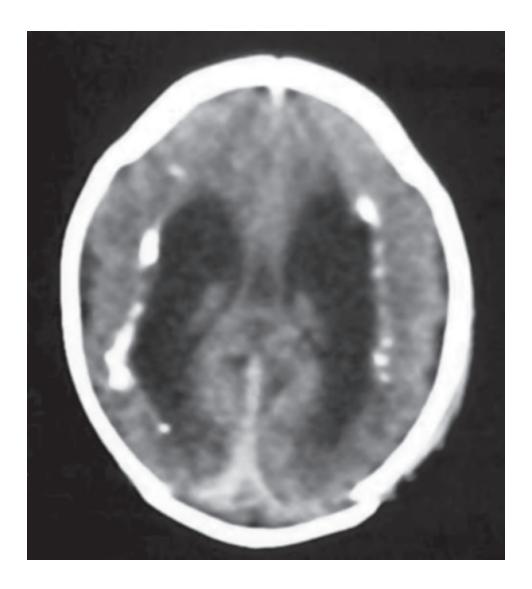
- a. List 2 positive findings on the CT.
- b. What is the most likely etiological diagnosis?
- c. List 2 possible clinical findings in the neonatal period which may accompany the likely diagnosis.
Answer
a. Periventricular calcifications.
Ventricular dilatation.
- b. Congenital CMV infection.
- c. Hepatosplenomegaly.
Sensorineural hearing loss.
Chorioretinitis.
Thrombocytopenia.
Encephalopathy.
VVK17-017
A 26 week male infant is born via emergency LSCS in view of absent end diastolic flow on umbilical arterial Doppler. The baby is now 3 hours old and has been intubated and ventilated. He has received 1 dose of surfactant. His ventilator settings are:
| Mode | CMV |
|---|---|
| PIP | 22 cm H2 O |
| PEEP | 5 cm H2 O |
| Rate | 40/min |
| FiO2 | 30% |
| Saturation | 95% |
| His arterial blood gas shows |
pH 7.18 pCO2 62 mm Hg pO2 78 mm Hg HCO3 – 24 mm Hg
- a. What are the blood gas findings?
- b. What change will you make in the ventilator settings to improve the blood gas?
- c. What is the optimal size of ETT for this neonate?
Answer
- a. Uncompensated respiratory acidosis.
- b. Increase the rate.
- c. Size 2.5.
VVK17-018
Given below is the blood gas of a 2 day old 28 week preterm neonate.
Her ventilator settings are:
| Parameter | Setting |
|---|---|
| Mode | SIMV |
| PIP | 21 cm H2O |
| PEEP | 5 cm H2O |
| Rate | 30/min |
| FiO2 | 21% |
| Saturation | 98% |
Arterial blood gas shows:
-
pH: 7.48
-
pCO2: 22 mm Hg
-
pO2: 99 mm Hg
-
HCO3-: 29 mEq/L
-
a. What are the blood gas findings?
-
b. What changes will you make in the ventilator settings to improve the blood gas?
-
c. List 2 most important risks/complications which can occur if you leave this baby on current ventilator settings?
Answer
- a. Partially compensated respiratory alkalosis with hyperoxia.
- b. Decrease PIP.
- c. Periventricular leucomalacia/intraventricular hemorrhage.
VVK17-019
You are an attending resident of a level 3 NICU and are asked to perform a partial exchange transfusion of a preterm female neonate. She is now 12 hours old and weighs 2 kg. Her hematocrit is 80% and desired is 50%.
- a. What is the formula for calculating volume of partial exchange transfusion?
- b. What is the volume required for this neonate?
- c. List 3 complications of polycythemia.
Answer
- a.
- b.
(using normal saline) - c. Complications of polycythemia:
- Hypoglycemia
- Thrombotic episodes / stroke
- Congestive cardiac failure
- Necrotizing enterocolitis (NEC)
- Thrombocytopenia
- DIC
- Hyperbilirubinemia
VVK17-020
You are an attending resident of a level 3 NICU and are asked to review blood gas of a term female infant. She is now 2 hours old and is diagnosed to have meconium aspiration syndrome.
Ventilator settings:
- Mode: CMV
- PIP: 26 cm H2O
- PEEP: 3.5 cm H2O
- Rate: 60/min
- FiO2: 100%
- IT: 0.5 sec
- Saturation: 81%
Arterial blood gas shows:
-
pH: 7.41
-
pCO2: 32 mm Hg
-
pO2: 51 mm Hg
-
HCO3-: 23 mEq/L
-
a. What is the blood gas finding?
-
b. What changes will you make in the ventilator settings to improve the blood gas?
-
c. What is alternate mode of ventilation you can use for this baby?
Answer
- a. Hypoxemia.
- b. Increase PEEP.
- c. HFOV.
VVK17-021
A term female infant is born via a difficult instrumental delivery. On examination she is noted to have a wrist drop and paralysis of small muscles of right hand. Her rest of the general and systemic examination is unremarkable.
- a. What is the likely diagnosis?
- b. What is the etiology?
- c. What is the most common associated complication?
Answer
- a. Klumpke palsy.
- b. Injury to lower nerve roots of brachial plexus C7 + C8 + T1.
- c. Horner syndrome.
VVK17-022
A 26-week-old male infant is born via emergency LSCS. Mother is a primigravida and had no risk factors for sepsis. The baby has been intubated, ventilated and has received 1 dose of surfactant. UAC, UVC and a peripheral cannula have been placed. He is started on IV fluids and IV antibiotics. His Hb is 18 g/dL, platelet is 250,000. His HR is 170/min, mean BP 23 mm Hg, saturation 92%.
Ventilator settings:
- Mode: CMV, PIP: 20 cm H2O, PEEP: 5 cm H2O, Rate: 40/min, FiO2: 30%
Arterial blood gas shows:
-
pH: 7.18, pCO2: 39 mm Hg, pO2: 78 mm Hg, HCO3-: 14 mEq/L
-
a. What are the blood gas findings?
-
b. What is the diagnosis?
-
c. What is the next step in treatment of this neonate?
Answer
- a. Uncompensated metabolic acidosis.
- b. Shock.
- c. IV Bolus of normal saline 10 mL/kg over 20–30 minutes.
VVK17-023
Management of cardiogenic shock.
A 12-hour-old 28 weeker is admitted in NICU. She is diagnosed to have respiratory distress syndrome. Her ventilator parameters are currently stable but the staff nurse is concerned about the blood pressure. Her CFT is 3 seconds, mean BP is 22 mm Hg and CVP is 8 mm Hg. You have already given a fluid bolus of normal saline 30 minutes back.
Arterial blood gas shows:
-
pH: 7.20
-
pCO2: 40 mm Hg
-
pO2: 68 mm Hg
-
HCO3-: 17 mEq/L
-
a. Enlist the 2 most important drugs you could use in treating hypotension in this patient.
-
b. What precaution will you take whilst measuring CVP of a baby on ventilator?
-
c. What is the normal range of CVP?
-
d. Where should be the tip of UVC to measure CVP?
-
e. What is the relationship of CVP and volume replacement in managing hypotension?
Answer
a. Dopamine.
Dobutamine.
- b. Disconnect from ventilator transiently at the time of measurement.
- c. 5 to 8 mm Hg.
- d. Intrathoracic inferior vena cava.
- e. Maintaining CVP at 5 to 8 mm Hg with volume infusions is associated with improved cardiac output. If CVP exceeds 5 to 8 mm Hg, additional volume will usually not be helpful.
VVK17-024
A 32-weeks-old male infant is born via normal vaginal delivery. He soon started having moderate respiratory distress with increasing oxygen requirement. A decision is made to start him on nasal CPAP.
- a. What is the ideal pressure to start CPAP in this neonate?
- b. Enlist three complications associated with nasal CPAP.
- c. Enlist two absolute contraindications of nasal CPAP.
Answer
- a. 4-6 cm H2 O.
- b. Pneumothorax.
Nasal septum injury.
Gastric distention.
Decrease venous return secondary to increased intrathoracic pressure.
c. Congenital diaphragmatic hernia.
Upper airway malformations like—Choanal atresia, cleft palate.
VVK17-025
A Sick term male infant is admitted in NICU. He is born to a primigravida mother with no significant antenatal concerns and no risk factors for sepsis. He was born via normal vaginal delivery and did not require any resuscitation. He developed significant respiratory distress soon after birth. He was intubated and ventilated at 2 hours age. He is persistently cyanosed at 4 hours of age. His blood report (including CBC, CRP), chest X-ray have been reported normal. He is currently on high frequency ventilator. His saturation in right lower limb is 76% and right upper limb is 92%. His mean BP is 42 mm Hg and HR is 180/min.
An ECHO has been performed and does not show any structural cardiac abnormality or cyanotic heart disease.
- a. What is the most likely diagnosis?
- b. What is the drug of choice?
- c. What is the best treatment modality if medical management fails?
- d. List 4 drugs which can be used in treating this condition.
Answer
- a. Persistent pulmonary hypertension of newborn.
- b. Nitric oxide.
- c. ECMO.
- d. Sildenafil, adenosine, magnesium sulfate, calcium channel blockers, inhaled prostacyclin, inhaled ethyl nitrite, and inhaled or intravenous tolazoline.
VVK17-026
A 34 week male infant is born via normal vaginal delivery. He is noted to be jittery and lethargic at 24 hours age. On examination, he is noted to be plethoric.
- a. What is the most likely diagnosis?
- b. How do you confirm the diagnosis? Give the age related values to confirm the diagnosis at 2 hours and thereafter.
- c. What is the treatment if the diagnosis is confirmed in this neonate?
Answer
- a. Polycythemia.
- b. Venous hematocrit of over 65%
Venous hematocrit of over 64% or more at 2 hours of age An umbilical venous or arterial hematocrit of over 63% or more.
c. Partial exchange transfusion.
VVK17-027
Given below is the picture of a 2 day old term newborn.
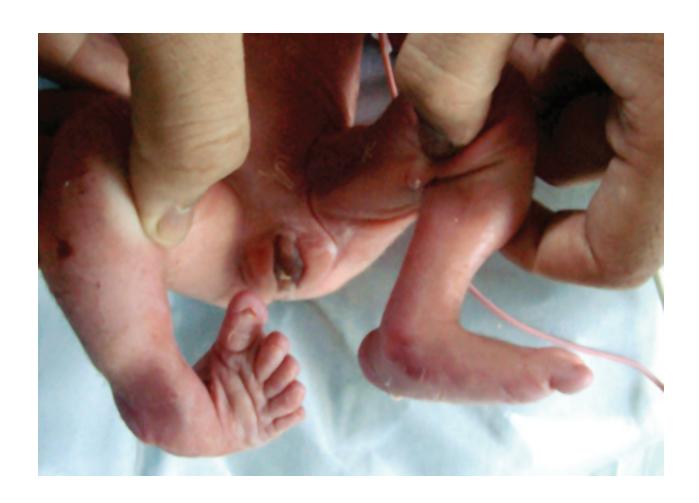
- a. What is the diagnosis?
- b. List any 2 common risk factors for this problem.
- c. List 3 components of this abnormality.
- d. What are the treatment options?
Answer
- a. Congenital clubfoot or talipes equinocavovarus with metatarsal adduction.
- b. First-degree relative suffering from the same condition:
Oligohydramnios
Neurologic dysfunction of the feet, e.g. spina bifida.
- c. Components:
- • Equinus position of foot
- • Cavus position of foot
- • Varus position of foot
- • Forefoot adduction (occasionally).
- d. Physical therapy and splinting. Manipulation and application of tapes, plaster or fiberglass casts.
Serial casting followed by heel cord tenotomy (Ponseti method of management).
VVK17-028
A term male infant was born via elective LSCS to a primigravida mother. He was shifted to NICU in view of hypoglycemia on day 1 of life. His examination revealed a microphallus. On further investigation his free T4 and TSH level were found to be 0.5** µ**g/dL (normal = 6.5–16.3µg/ dL) and 1.6 mU/L (normal = 1.7-9.1 mU/mL) respectively.
- a. What is the most likely diagnosis?
- b. List 2 investigations you would perform on this baby.
Answer
- a. Pan-hypopituitarism.
- b. • Cortisol and growth hormone
- • Magnetic resonance imaging to visualize the hypothalamus and pituitary.
VVK17-029
A term neonate is diagnosed to have hypothyroidism based on initial routine neonatal screening. He is investigated further and his BERA reveals bilateral sensorineural hearing loss.
- a. What is the most likely diagnosis?
- b. What is the mode of inheritance?
- c. What is the cause of hypothyroidism associated with this diagnosis?
- d. What is the finding on thyroid scan and thyroid ultrasound?
Answer
- a. Pendred syndrome.
- b. Autosomal recessive.
- c. Thyroid hormone synthetic defects.
- d. Normal thyroid seen.
VVK17-030
A term neonate was born in poor condition needing prolonged resuscitation. He was born via emergency LSCS for a non reactive NST. At birth he was cyanosed, limp, with HR< 60/min. His condition improved with IPPV. At 1 hour age he is lethargic with diminished spontaneous movements. On examination, he is noted to have mild hypotonia with a weak suck.
- a. What is the most likely diagnosis?
- b. What is the staging of the disease in this neonate?
- c. After what gestation can you use this staging?
- d. What is the likely outcome?
- e. In neonatal resuscitation—what is the order of recovery in the heart rate, color and tone in most neonates after the initial depression of vital signs?
Answer
- a. Hypoxic-ischemic encephalopathy.
- b. Stage 2 (moderate)—Sarnat and sarnat staging.
- c. 36 weeks.
- d. 80% normal; abnormal if symptoms more than 5 to 7 days.
- e. Improvement in heart rate followed by improvement in color followed by improvement in tone.
VVK17-031
Disorder of sexual development (DSD)
Match the following signs occurring in association with DSD with the diagnosis:
| Signs and Symptoms | Diagnosis |
|---|---|
| a. Hypotonia, obesity | i. Fetal hydantoin |
| b. Anosmia | ii. Cornelia De Lange |
| c. Retinitis pigmentosa | iii. Prader-Willi |
| d. Synophrys | iv. Bardet-Biedl |
| e. Hypoplasia of distal phalanges, growth failure | v. Kallman syndrome |
Answer
| Signs and Symptoms | Diagnosis |
|---|---|
| a. Hypotonia, obesity | • Prader-Willi (iii) |
| b. Anosmia | • Kallman syndrome (v) |
| c. Retinitis pigmentosa | • Bardet-Biedl (iv) |
| d. Synophrys | • Cornelia De Lange (ii) |
| e. Hypoplasia of distal phalanges, growth failure | • Fetal hydantoin (i) |
VVK17-032
Newborn rash Parents are anxious about this generalized rash on a 2-day-old neonate.
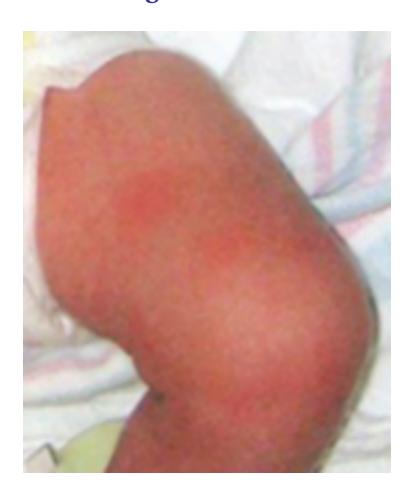
- a. What is the most likely diagnosis?
- b. What is the treatment and prognosis?
- c. What does the microscopic examination from the lesion reveal?
Answer
- a. Erythema toxicum neonatorum.
- b. Self limiting—no treatment required.
- c. Inflammatory cells with >90% eosinophils.
VVK17-033
Given below is the X-ray of a 5-day-old male neonate who presented with abdominal distension.
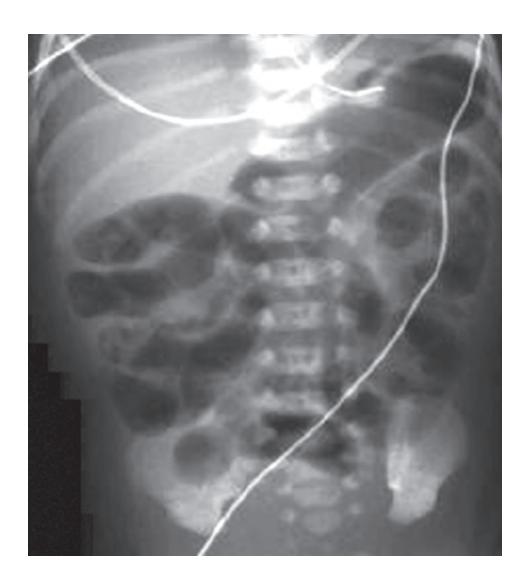
- a. What is the diagnosis?
- b. What are the predisposing factors?
- c. What is the diagnostic triad of this condition?
- d. Give details of classification used in accordance with severity of this disease.
Answer
- a. The diagnosis is NEC.
- b. Sepsis, prematurity, hypoxic or hemodynamic insult, etc.
- c. Acidosis, hyponatremia, thrombocytopenia.
d. Bell staging criteria.
Stage I (suspect): Clinical signs and symptoms, nondiagnostic radiographs. Stage II (definite) : Clinical signs and symptoms, pneumatosis intestinalis on radiograph:
- a Mildly ill
- b. Moderately ill with systemic toxicity.
Stage III (Advanced): Clinical signs and symptoms, pneumatosis intestinalis on radiograph, and critically ill:
- a. Impending intestinal perforation
- b. Proven intestinal perforation.
VVK17-034
Umbilical arterial line
After putting in a UA line, the right lower limb appears bluish-black.
- a. What is the next step in management?
- b. What is the level of the renal artery and celiac plexus in terms of vertebral levels?
- c. How do you maintain a UA line?
Answer
- a. Remove the UAC.
- b. L1 and T12.
- c. Continuous heparinised saline infusion.
VVK17-035
A full term, male child develops jaundice on day 3 of life, (serum bilirubin 34 mg/dL) and is planned to undergo an exchange transfusion. Answer the following questions.
- a. What is the complication likely to occur if left untreated?
- b. Where is the anatomical location of the feared complication?
- c. What are the long-term complications in this patient?
- d. List 2 investigations you would perform prior to or soon after discharge.
Answer
- a. Kernicterus/bilirubin encephalopathy.
- b. Globus pallidus, dentate nucleus, cerebellar vermis, cochlear nuclei.
- c. Choreoathetoid cerebral palsy, dystonic/dyskinetic CP, sensorineural deafness.
- d. Audiometry testing. MRI
VVK17-036
A 15-days-old male newborn is noticed to have sweating and poor feeding of sudden onset. On examination, his HR is >240/min with signs of poor perfusion. There is no history maternal drug or alcohol abuse during pregnancy. There is no family history of similar problems.
- a. What is the most likely diagnosis?
- b. What is the immediate management?
- c. Is DC shock the treatment of choice?
Answer
- a. Supraventricular tachycardia.
- b. Vagal stimulation followed by IV adenosine.
- c. No.
VVK17-037
Given below is the photograph of scalp of a well term neonate.
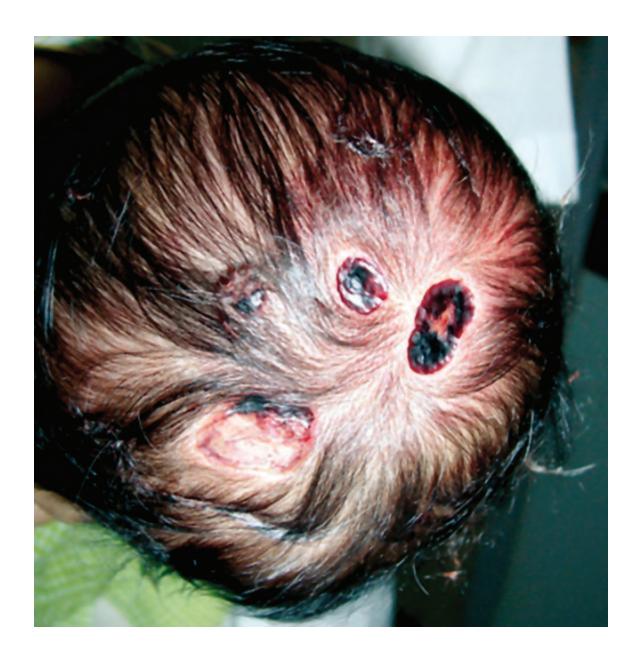
- a. What is the most likely diagnosis?
- b. What is the most common differential diagnosis of this condition?
- c. List 3 conditions which can be associated with this condition
Answer
- a. Aplasia cutis congenita
- Multiple, small, non-inflammatory, well-demarcated, oval ulcers.
- b. Traumatic skin injury from monitoring devices, e.g. scalp electrodes.
- c. Opitz syndrome:
Adams-Oliver syndrome Oculocerebrocutaneous syndrome Johanson-Blizzard syndrome 4p(-) microdeletion syndromes X-p22 microdeletion syndromes trisomy 13–15
VVK17-038
Given below is the image of a 30-week-old male neonate. He is diagnosed to have sepsis. He also has bleeding from the base of umbilical stump.
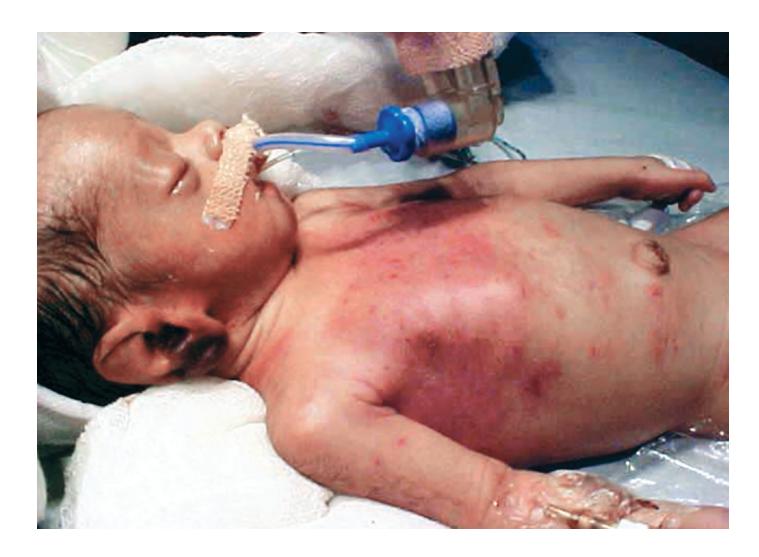
- a. What is most likely diagnosis? He has had frequent episode of apnea and desaturation in past 2 hours.
- b. List 2 most important investigations you will request in this neonate.
- c. What is the most likely cause of his deterioration?
Answer
- a. DIC.
- b. Clotting profile, cranial ultrasound.
Chromosome 16–18 defects.
c. IVH.
VVK17-039
A 29-week-old neonate has had sudden increase in ventilatory requirement.
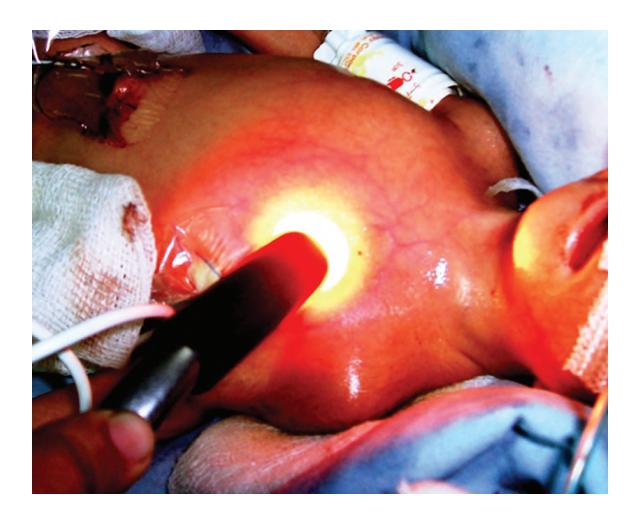
- a. What is the test being performed?
- b. What are the findings in a positive test performed above?
- c. What is the diagnosis if the test is positive?
Answer
- a. Transillumination.
- b. Hyperlucency in the affected area.
- c. Pneumothorax.
VVK17-040
Given below is a picture of a 2-day-old term neonate.
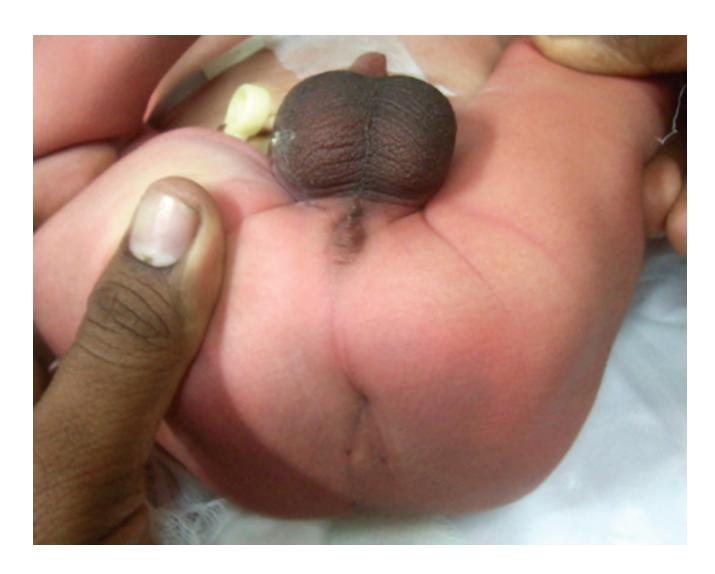
- a. What is the diagnosis?
- b. What is the definitive treatment?
- c. What can be the long-term problem after the treatment?
- d. List 4 associated malformations.
Answer
- a. Imperforate anus.
- b. Low—Surgical dilatation.
- High—Initial colostomy with a definitive repair at a later stage.
- c. Rectal inertia/constipation.
- d. Genitourinary: Vesicoureteric reflux, renal agenesis, renal dysplasia, ureteral duplication, cryptorchidism, hypospadias, bicornuate uterus, vaginal septums.
Vertebral: Spinal dysraphism, tethered chord, presacral masses, meningocele, lipoma, dermoid, teratoma.
Cardiovascular: Tetralogy of fallot, ventricular septal defect, transposition of the great vessels, hypoplastic left heart syndrome.
*Gastrointestinal:*Tracheoesophageal fistula, duodenal atresia, malrotation, Hirschsprung disease.
VVK17-041
This is a term female infant was born via normal vaginal delivery.
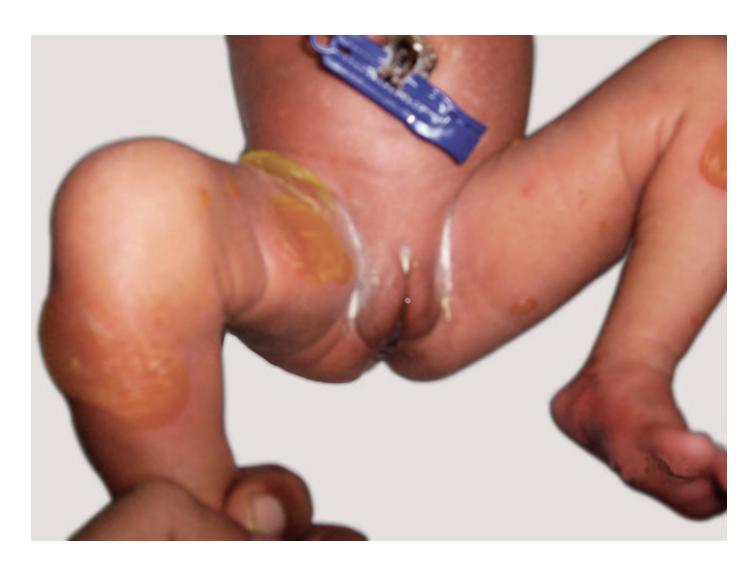
- a. Describe the rash seen in picture above.
- b. What is the most likely diagnosis?
- c. What is the most common etiology/causative organism?
- d. What is the treatment in this infant?
Answer
- a. Widespread honey colored bullae.
- b. Impetigo.
- c. Staph. aureus.
- d. Cloxacillin (antistaphylococcal antibiotics).
VVK17-042
Given below is a term male neonate born via elective LSCS. Baby was born in poor condition and did not respond to any resuscitation.
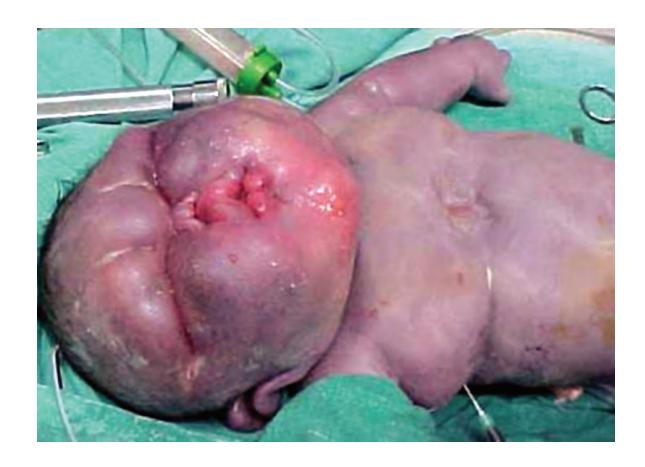
- a. What is the most likely diagnosis?
- b. List 1 pulmonary and 1 abdominal complication associated with this condition.
- c. List 5 causes of the diagnosis including 2 where anemia is not an associated finding.
Answer
- a. Hydrops fetalis.
- b. Pleural effusion and ascites.
- c. Associated with anemia:
- i. Haemolytic disease of newborn
- ii. Chronic twin to twin transfusion
- iii. Feto maternal haemorrhage
- iv. Parvo virus B19.
Anemia is not an associated finding:
- i. Cardiac failure, e.g. in SVT
- ii. Congenital nephrotic syndrome
- iii. Chromosomal abnormalities, e.g. Turners.
VVK17-043
Given below is a photograph of a term male infant.
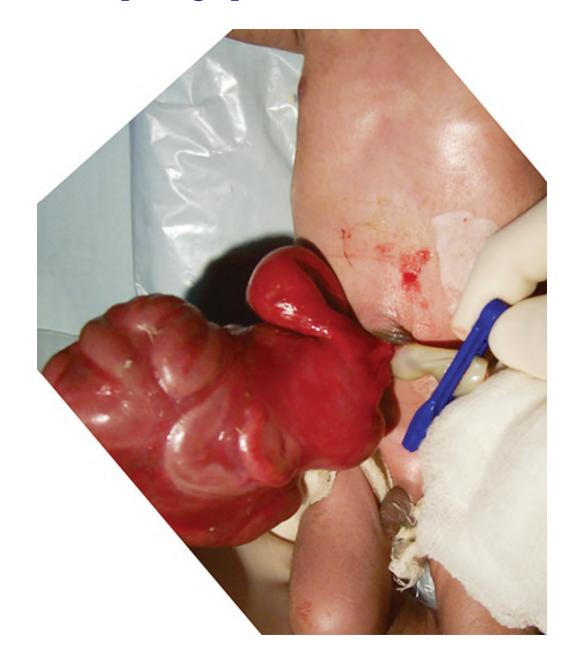
- a. What is the most likely diagnosis?
- b. What is the definitive treatment?
- c. What is the most common complication seen later in childhood?
Answer
- a. Gastroschisis.
- b. Surgery: Staged or primary closure.
- c. Short bowel syndrome.
VVK17-044
This term neonate is noted to have premature closure of sutures.
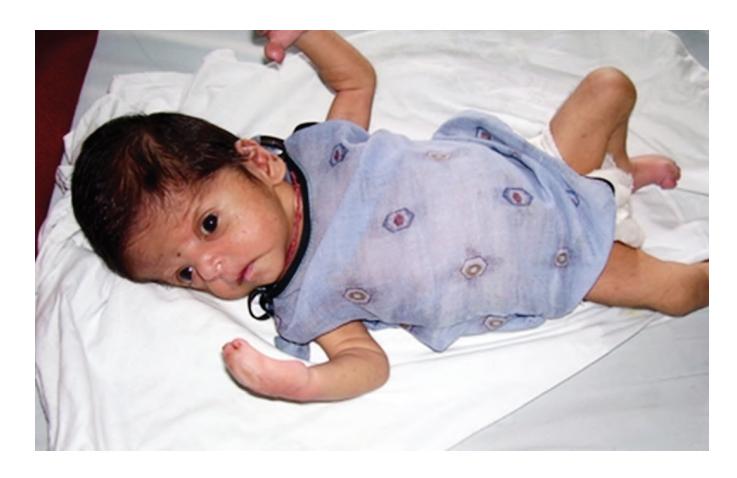
- a. What is the most likely diagnosis?
- b. List 2 clinical findings seen in this diagnosis.
- c. What is the long-term problem?
Answer
- a. Apert syndrome.
- b. Asymmetry of head shape—Premature fusion of multiple sutures. Syndactyly of the 2nd, 3rd, and 4th fingers. Congenital cataract.
- c. Progressive calcification and fusion of the bones of the hands, feet, and cervical spine.
VVK17-045
This is photograph of a 1-month-old term infant.
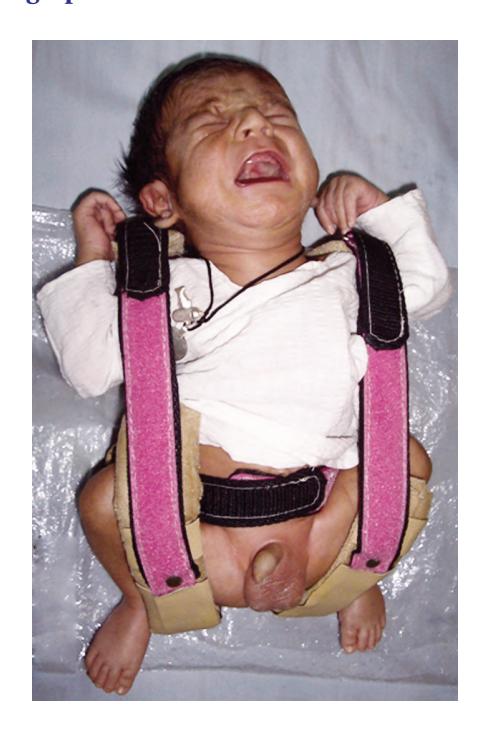
- a. What is the equipment used on this infant?
- b. What is the most likely problem with this infant?
- c. What is the ideal age of the infant when this procedure is most successful?
- d. What is the ideal duration of the total procedure?
Answer
- a. Pavlik harness.
- b. Developmental dysplasia of the hip.
- c. 1–6 months—success rate >95%.
- d. 6 weeks.
VVK17-046
This term neonate was born via normal vaginal delivery. He was initially covered with a tight glistening membrane.
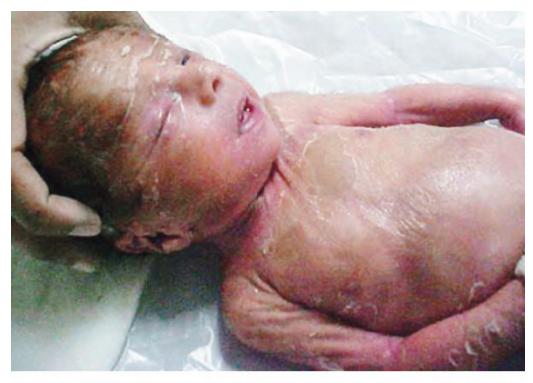
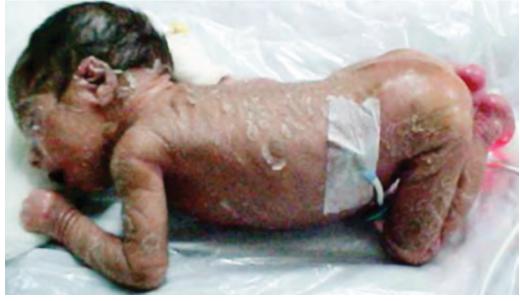
- a. What is the most likely diagnosis?
- b. List 2 possible immediate complications.
- c. What is the immediate treatment?
Answer
- a. Collodion baby.
- b. Skin infection/sepsis
Dehydration
Hypothermia.
c. Intensive care in a humidified environment
Regular application of oil
High fluid intake with careful electrolyte monitoring
Early recognition and treatment of sepsis.
VVK17-047
Given below is the picture of a term female neonate.
- a. What is the diagnosis?
- b. List 2 condition associated with this diagnosis.
- c. List 2 neonatal complication of this diagnosis.
Answer
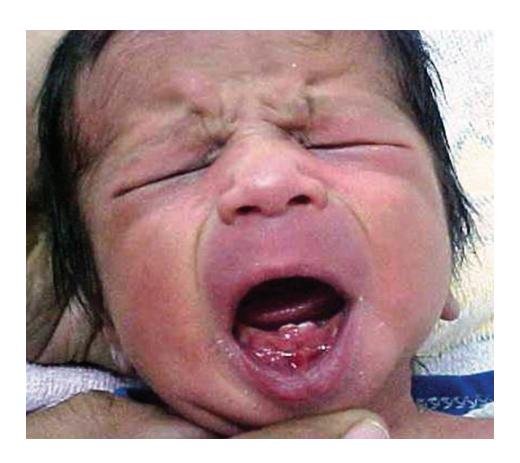
- a. Natal teeth.
- b. Cleft palate
Pierre-Robin syndrome
Ellis-van creveld syndrome
Hallermann-Streiff syndrome
Pachyonychia congenita.
c. Pain and refusal to feed
Maternal discomfort because of nipple abrasion
Detachment and aspiration of the tooth
Antenatal laceration or amputation of tongue (Riga-Fede disease).
VVK17-048
A term newborn was noted to have audible cranial bruit. Given below is the MRA of this neonate.
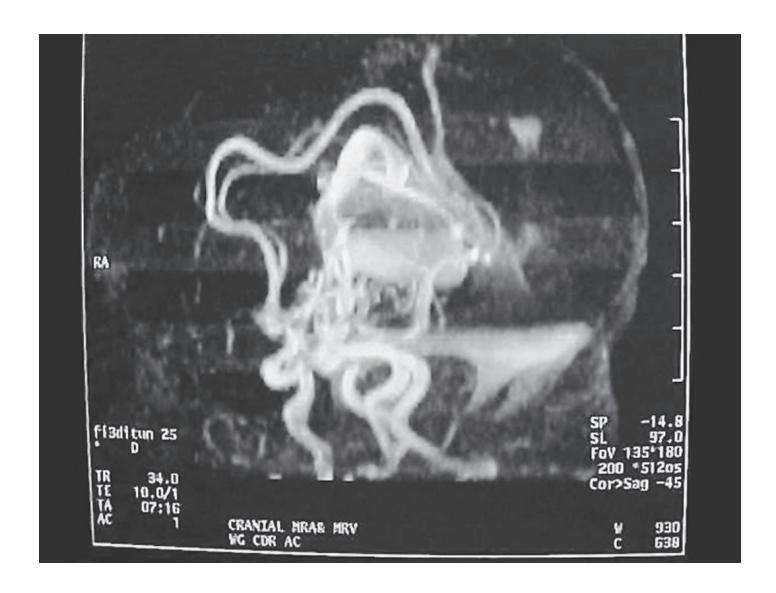
- a. What is the most likely diagnosis?
- b. List 2 most common complication associated with this condition.
- c. Name 1 treatment option.
Answer
- a. Vein of Galen malformation.
- b. Hydrocephalous
High output cardiac failure.
c. Coil embolisation.
VVK17-049
Given below is a picture of a 20-day-old term neonate.
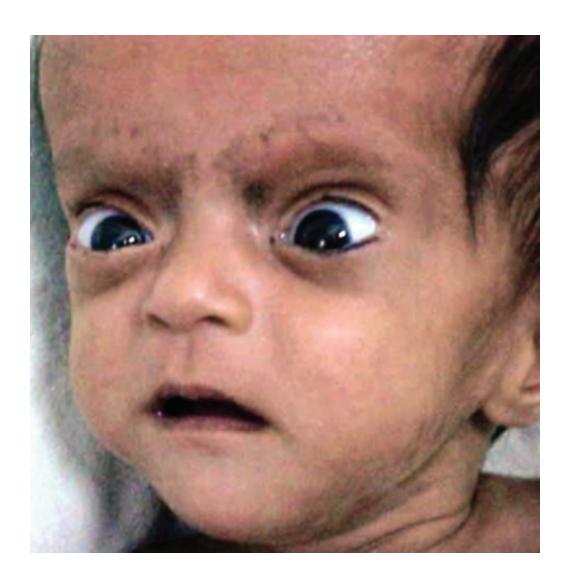
- a. What is the sign seen in this photo?
- b. What is the pathophysiology of this sign?
- c. What is the most likely cause of this sign?
Answer
- a. Sun setting sign—the eyes deviate downward.
- b. Impingement of the dilated suprapineal recess on the tectum.
- c. Hydrocephalous.
VVK17-050
An 8-month-old infant presented in paediatric OPD with severe seborrheic dermatitis and bilateral otitis media. There is history of recurrent fever and weight loss over past 2 months. On examination, he is noted to have axillary lymphadenopathy and hepatosplenomegaly. Given below is the X-ray of this infant.
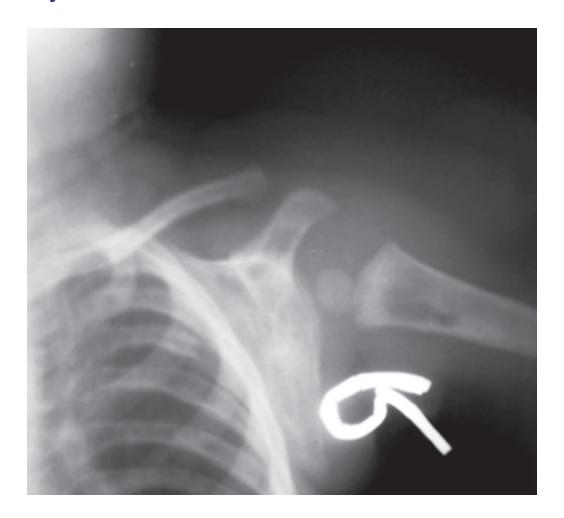
- a. What is the finding seen on the chest X-ray?
- b. What is the most likely diagnosis?
- c. What is the treatment in this patient?
Answer
- a. Multiple osteolytic bone lesions.
- b. Langerhans cell histiocytosis type 1.
- c. Chemotherapy in view of multisystem involvement.
VVK17-051
Given below is the X-ray of term neonate who was born via elective LSCS.
- a. List 3 findings seen on X-ray.
- b. What is the most likely diagnosis?
- c. What are the clinical findings likely to be seen in this neonate?
Answer
a. Multiple fractures.
Relative large head.
Flaring of thoracic cage.
Short extremities.
- b. Osteogenesis imperfecta.
- c. Blue sclera
Hearing loss
Orthopedic abnormalities
CVS abnormalities (mitral valve prolapse).
VVK17-052
A male newborn was born at 28 week gestation. He is now 4 weeks old and has needed 4 packed red cell transfusions. His current Hb is 6.8 mg/dL with low reticulocyte count. He is on full enteral feeds and iron (4 mg/kg/day) for past 10 days.
- a. What is the most likely diagnosis?
- b. What medication could have decreased the need for frequent blood transfusions in this neonate?
- c. Give one non-hematological advantage of this medication.
Answer
- a. Late anemia of prematurity.
- b. Erythropoietin.
- c. Decrease incidence of bronchopulmonary dysplasia.
VVK17-053
A term neonate is noted to have petechiae and purpura all over the body on day 2 of life. His platelet counts are noted to be 60,000/mm3 . Mother is a primigravida and known case of SLE. Her platelet counts are 70,000/mm3 .
- a. What is the most likely diagnosis in this newborn?
- b. Enlist 2 generally accepted criteria for platelet transfusion in case of neonatal thrombocytopenia.
- c. How do you define neonatal thrombocytopenia?
- d. What is the treatment?
Answer
- a. Autoimmune thrombocytopenia (automaternal ITP).
- b. Platelet count <20,000 Bleeding neonate.
- c. Platelet count <150,000.
- d. Platelet transfusion
IVIG
Steroid—Prednisolone 2 mg/kg/day.
VVK17-054
A 3 kg term ventilated neonate is nil by mouth. He is on 10% dextrose at rate of 9 mL/hr.
- a. What is formula for calculating glucose infusion rate (GIR)?
- b. Calculate the GIR for this baby.
- c. What is the minimum GIR requirement of a neonate?
Answer
- a.
- b. Here, Rate =
(for 3 kg baby) - c. Minimum GIR requirement in neonates is 4–6 mg/kg/min.
VVK17-055
A 30-week female infant is about to be delivered via emergency LSCS in view of severe oilgohydramnios. The serial scans since 20 weeks have shown oligohydramnios.
- a. Enlist 2 most common causes of oilgohydramnios.
- b. Give 1 serious complication which might be seen on delivery of this neonate.
Answer
- a. Amniotic fluid leak, e.g. ROM Renal dysgenesis or agenesis.
- b. Pulmonary hypoplasia Arthrogryposis/joint deformity.