THG07-001
Adrenaline
a. Mention five indications for this drug
b. Dose of administration
Answer
- a. Anaphylaxis, asthma, symptomatic bradycardia, croup, cardiac arrest, shock, toxins (β-blocker and calcium channel blocker)
- b. Dose of adrenaline and different routes of administration:
| Route | Dose |
|---|---|
| Intramuscular | 0.01 mL/kg of 1:1,000 dilution every 15 minutes pro re nata (PRN) |
| IV/IO | 0.1 mL/kg of 1:10,000 dilution |
| Subcutaneous | 0.01 mL/kg of 1:1,000 dilution |
| Nebulization for croup | 0.5 mL/kg of 1:1,000 dilution |
| Endotracheal (ET) tube | 0.1 mL/kg of 1:1,000 dilution |
THG07-002
Adenosine
a. Which class of drug it belongs to?
b. Indication
c. Dose administered
d. Action
e. Technique of administration
f. Side effects
Answer
- a. Antiarrhythmic
- b. Supraventricular tachycardia (SVT)
- c. Dose:
- i. 0.1 mg/kg maximum of 6 mg
- ii. 0.2 mg/kg maximum of 12 mg
- d. Transiently blocks atrioventricular (AV) node in the heart by stimulating adenosine receptors in the heart
- e. Double syringe rapid push technique
- f. Flushing, chest discomfort, dyspnea, facial flushing, headache, throat/neck/jaw discomfort, gastrointestinal discomfort, and light headedness
THG07-003
Match the following:
| Poison | Toxicity |
|---|---|
| 1. Kerosene | a. Seizures |
| 2. Chloroquine | b. Acute lung injury |
| 3. Camphor | c. Cardiac arrhythmias and hypokalemia |
| 4. Methyl salicylate | d. Hypotension, ventricular arrhythmia, and seizures |
| 5. Tricyclic antidepressants | e. Metabolic acidosis and respiratory alkalosis |
| 6. Beta-blocker | f. Hyperglycemia, bradycardia, and cardiogenic shock |
| 7. Caustics | g. Hypoglycemia and bradycardia |
| 8. Calcium-channel blockers (CCBs) | h. Airway burns |
Answer
- 1 – b (Kerosene – Acute lung injury)
- 2 – c (Chloroquine – Cardiac arrhythmias and hypokalemia)
- 3 – a (Camphor – Seizures)
- 4 – e (Methyl salicylate – Metabolic acidosis and respiratory alkalosis)
- 5 – d (Tricyclic antidepressants – Hypotension, ventricular arrhythmia, and seizures)
- 6 – g (Beta-blocker – Hypoglycemia and bradycardia)
- 7 – h (Caustics – Airway burns)
- 8 – f (Calcium-channel blockers – Hyperglycemia, bradycardia, and cardiogenic shock)
THG07-004
A 10-month-old infant was brought to emergency room (ER) when he was found drowned inside a bucket of water.
a. What is drowning?
b. Mention any four precautions you take during resuscitation.
c. Mention any four conditions contributing to myocardial insufficiency in drowned children.
d. Mention four rewarming measures in drowning children.
e. Mention the most frequent rhythm found during resuscitation.
Answer
- a. Drowning refers to the condition of respiratory impairment caused by being submerged/immersed in liquid
- b. Precautions taken during resuscitation:
-
- Initiate cardiopulmonary resuscitation (CPR) as early as possible with care of ABC
-
- Clear vomitus from the airway
-
- Avoid giving abdominal thrusts
-
- Recognition and treatment of arrhythmias by connecting to the monitor
-
- Recognition and treatment of hypothermia
-
- Avoid using hypotonic or glucose containing solutions for drowning victims
-
- c. On-going hypoxia, hypothermia, acidosis, alterations of intravascular volume, and electrolyte disorders.
- d. Damp clothing has to be taken off all drowning victims. Passive rewarming involves providing dry blankets, ensuring a warm environment and guarding against additional heat loss.
- If the patient is unconscious, start with external warming using blankets and a sleeping bag, wrapping them snugly. Inhalation of warm, moist air, or oxygen can also be used along with heating pads or thermal blankets.
- Active external warming: Apply heat to upper torso: chest, axilla, and back.
- Active internal warming: Warm saline infusion
- e. Bradyarrhythmias
THG07-005
Answer the following questions regarding pediatric trauma score.
a. Write the components of pediatric trauma score.
b. Mention the components of examination in a polytrauma victim.
c. Expand ABCDE as per while assessing a polytrauma victim.
d. Mention four life-threatening chest injuries in major trauma and management for each.
e. Briefly outline the fluid management in a child with shock in polytrauma.
Answer
- a. Components of pediatric trauma score:
| Components | +2 | +1 | -1 |
|---|---|---|---|
| Size | >20 kg | 10–20 kg | <10 kg |
| Airway | Normal | Maintainable | Unmaintainable |
| Systolic BP | >90 mm Hg | 50–90 mm Hg | <50 mm Hg |
| CNS | Awake | Obtunded/loss of consciousness | Coma/decerebrate posturing |
| Open wound | None | Minor | Major/penetrating |
| Skeletal fractures | None | Closed fracture | Open/multiple |
- b. Components of examination of polytrauma victim:
- Preparation
- Triage
- Primary survey (ABCDEs)
- Resuscitation
- Adjuncts to primary survey and resuscitation
- Consideration of the need for patient transfer
- Secondary survey (head-to-toe evaluation and patient history)
- Adjuncts to the secondary survey
- Continued post-resuscitation monitoring
- Reevaluation
- Definitive care
- c. ABCDE examination of polytrauma victim:
- Airway maintenance and cervical spine protection
- Breathing and ventilation
- Circulation with hemorrhage control
- Disability-assessing neurologic status
- Exposure/Environmental control
- d. Life-threatening chest injuries:
- Tension pneumothorax
- Open pneumothorax (sucking chest wound)
- Major flail chest
- Massive hemothorax
- Cardiac tamponade
- e. The fluid management in a child with shock in polytrauma: Rapid infusion of isotonic crystalloid solution in 20 mL/kg boluses up to 40–60 mL/kg followed by 10–15 mL/kg of crossmatched PRBCs if shock is not corrected.
THG07-006
Answer the following questions regarding monitoring devices.
a. What are the principles of use of pulse oximetry?
b. What are the principles of capnography?
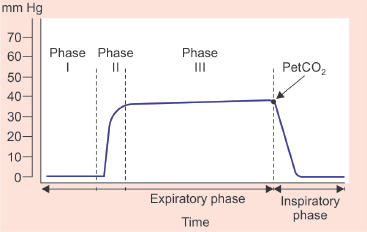
c. Explain the parts of given graph:
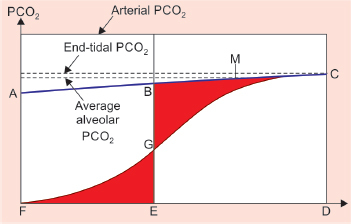
d. What is PaCO2 -PetCO2 gradient?
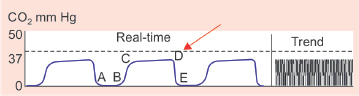
e. Identify the graphs given here.
Answer
- a. Pulse oximeter:
- Spectrophotometry
- Discriminate between oxyhemoglobin (oxyHb) and deoxyhemoglobin (deoxyHb) by the difference in light absorption at 660 nm and 940 nm
- Estimate heart rate by measuring cyclic changes in light transmission
- b. Capnography:
- Infrared spectrometry
- CO2 absorption takes place at 4.3 µm
- c. Capnogram phases:
- Phase I: Onset of exhalation, encompasses the anatomical dead space
- Phase II: The alveolar gas starts to intermix with the dead space gas, resulting in sudden increase in CO2. The anatomic dead space can be determined using Phase I and II.
- Phase III: Signifies the elimination of CO2 from the alveoli, often has a slight increase in the slope as “slow” alveoli empty. The “slow” alveoli characterized by a lower V/Q ratio and therefore have higher CO2 concentrations. In addition, diffusion of CO2 into the alveoli is greater during expiration. CO2 levels are measured at the maximal point of phase III.
- d. PetCO2 is usually 1–3 mm Hg lower than PaCO2. The difference between PetCO2 and PaCO2 is caused by V/Q mismatch. PaCO2 -PetCO2 gradient is usually <5 mm Hg.
- e. Time capnogram; Volume capnogram
THG07-007
A 6-year-old boy sustained injury in road traffic accident. Intubated outside and transported by manual ventilation. On arrival in ER, breath sounds diminished over right side, SpO2 93%, HR 170 and BP 80/50.
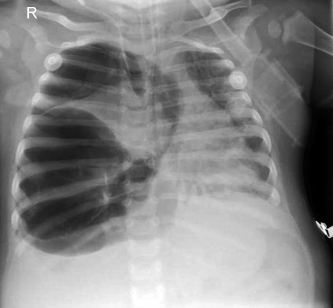
a. Identify the radiological diagnosis
b. Mention the immediate steps in the management
Answer
- a. Tension pneumothorax / obstructive shock / hypotensive shock
- b. Immediate steps in management:
- Identifies as tension pneumothorax/obstructive shock/hypotensive shock
- Gets ready for needle thoracocentesis
- Prepares a half-filled normal saline (NS) syringe
- Observes universal precautions
- Explains the procedure—inserts needle in second intercostal space (ICS) midclavicular line, upper border of lower rib
- Looks for appearance of air bubbles in the syringe
- Looks for the vital signs
- Prepares for intercostal drain (ICD) insertion
THG07-008
A child weighing 12 kg is admitted with 25% burns.
a. What is the fluid and volume of fluid required for resuscitation?
b. What is the duration for replacement?
c. How is it spaced?
d. Is colloid indicated in this child?
e. When is colloid indicated?
f. What are the indications for hospitalization for burns?
g. What is the percentage of albumin used and when is it used?
h. When would you transfuse packed red blood cell (PRBC)?
i. What are the indications for fresh frozen plasma (FFP)?
j. When is sodium supplementation needed and why?
Answer
- a to c. According to ATLS 2022:
- Parkland formula: 3 mL/kg/% BSA burnt + maintenance fluids, to be given over 24 hours.
- For the index case (12 kg, 25% burns):
- Administer in the 1st 24 hours: 3 × 25 × 12 = 900 mL in one line + maintenance in a separate line
- First 8 hours: 450 mL (50% of the calculated deficit) of RL over the first 8 hours + maintenance fluid 44 mL/hr of DNS + KCl (500 mL + 5 mL)
- Next 16 hours (9–24 hours): 450 mL (50% of the calculated deficit) of RL over the next 16 hours + maintenance fluid 44 mL/hr of DNS + KCl (500 mL + 5 mL)
- d. No
- e. Burns >85%, instituted 8–24 hours after the burns
- f. Indications for hospitalization:
- Burns affecting >10%
- Third-degree burns
- Electrical burns
- Chemical burns
- Inhalation injury
- Suspected child abuse
- Burns to the face, hands, feet, perineum, and genitals
- Associated injuries
- Burns in patients with preexisting medical illnesses
- g. 5% albumin, to maintain albumin of 2 g/dL
- h. If hematocrit (HCT) <24%
- i. Prothrombin time (PT) >1.5 times control and partial thromboplastin time (PTT) >1.5 times control
- j. Burns >20% and silver nitrate is used. Sodium losses are high with silver nitrate therapy (>350 mEq/m2 BSA burnt)
THG07-009
An 8-year-old boy is brought unresponsive to emergency department (ED). Verbalize as you perform/write the steps.
Answer
- Checks for responsiveness
- Activates code blue
- Checks pulse for at least 10 seconds
- Examiner says no pulse
- Calls for help
- Begins compressions 30:2
- Second rescuer will join and continue CPR
- Follows high quality CPR:
- Push hard (depth of 5 cm)
- Push fast
- Allows complete chest recoil
- Two breaths after 30 chest compressions, avoids hyperventilation
- Minimizes interruption
- Attaches monitor
- Calls for change over after 5 cycles/2 minutes
- Checks rhythm after 5 cycles/2 minutes
- Identification of shockable/nonshockable rhythm
- Knows to check reversible causes
- Knows about shock energy for defibrillation
- Calls out for epinephrine
THG07-010
A 10-month-old male infant was brought to the ER with complaints of inconsolable cry since past 1 hour while the child was playing in the backyard, followed by repeated episodes of vomiting and profuse sweating. On examination, child is irritable, pulse rate (PR)—86 beats/min; respiratory rate (RR)—34 breaths/min; blood pressure (BP)—80/50 mm Hg; cardiovascular system (CVS): normal heart sounds, no gallop; respiratory system (RS): normal vesicular breath sound heard, priapism present. Local examination showed local tenderness and sweating over the right big toe, no bite mark, and no other reactions.
a. What is the most probable diagnosis?
b. Write down the management (two drugs) with dose and mechanism of action.
c. What ECG changes you expect (any two)?
d. If the child develops S3 gallop and basal crepitations, how will you manage?
Answer
- a. Scorpion sting
- b. Prazosin—30 µg/kg/dose (0, 3, 6 hours till peripheries become warm); MOA—α1-blocker, phosphodiesterase inhibitor. Scorpion antivenom 30 mL (Fab 2 antibodies)
- c. T wave—peaked tall or tented T waves or T wave inversion, ST segment changes—ST depression
- d. Start dobutamine infusion, avoid diuretics
THG07-011
A 14-year-old boy was brought with complaints of palpitations. The electrocardiogram (ECG) taken is shown here.
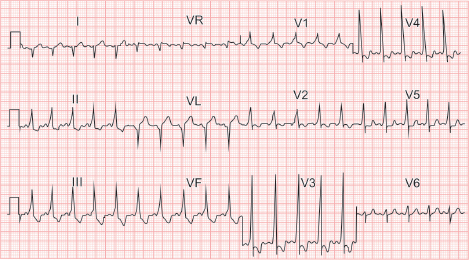
a. Write the abnormalities in the ECG.
b. What is your diagnosis?
c. Which drug is contraindicated in this condition?
d. What is the cause of this abnormality?
e. What risk or complication do you expect?
Answer
- a. Short PR (<lower limit of normal for age), delta wave (initial slurring of QRS), and wide QRS (>upper limit of normal)
- b. WPW (Wolff–Parkinson–White) syndrome
- c. Digoxin
- d. Preexcitation due to abnormal conduction pathway (bundle of Kent) connecting A and V.
- e. Supraventricular tachycardia
THG07-012
A 12-year-old adolescent girl has been hospitalized with the complaints of hematuria for 3 days. On examination, she is pale, edematous; BP is 130/80 mm Hg, and breathless. Her hemoglobin is 7g%, PCV21, TC is 8,900 cells/mm3, polymorphs are 60%, lymphocytes are 39%, and eosinophils are 1%. Her platelet count is 120,000. Serum creatinine is 3.2 mg/dL. Serum electrolytes are normal except for bicarbonate of 15 mEq/dL.
a. What are the differential diagnosis to be considered?
b. In which condition peripheral smear will be useful, mention the expected smear findings?
c. What terminology is used encompassing hypertensive emergency and urgency?
d. What other blood investigations can narrow down your differential diagnosis?
e. What drugs are used for treatment?
Answer
- a. Hemolytic uremic syndrome and Lupus nephritis
- b. Useful in hemolytic uremic syndrome where smear shows microangiopathic hemolytic anemia, schistocytes and thrombocytopenia
- c. Acute severe hypertension
- d. Elevated LDH and indirect bilirubin, as well as low haptoglobin and elevated plasma hemoglobin, are diagnostic of hemolytic anemia.
- e. Labetalol, nicardipine, and sodium nitroprusside
THG07-013
A 3-year-old boy was brought to the ER with history of swelling around the eyes and rashes all over the body following consumption of sea food.
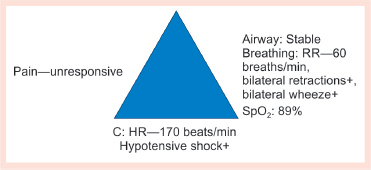
a. What is your diagnosis?
b. What is the management?
c. What is the definition?
d. Which type of shock it belongs to?
e. What happens to the following hemodynamic variables in this type of shock?
i. Cardiac output
ii. Systemic vascular resistance
iii. Mean arterial pressure
iv. Capillary wedge pressure
v. Central venous pressure
Answer
- a. Anaphylactic shock
- b. High-flow nasal oxygen, NS/RL 20 mL/kg over 5 to 10 minutes, pull push method, early administration of injection adrenaline 0.3 mg (0.01 mg/kg 1 in 1,000) deep IM stat. May be repeated at 5 to 15 minutes if no response or inadequate response.
- c. Anaphylaxis is a severe, life-threatening, generalized or systemic hypersensitivity reaction which is likely when both of the following criteria are met:
- Sudden onset and rapid progression of symptoms
- Life-threatening airway and/or breathing and/or circulation problems
- d. Distributive shock
- e. Hemodynamic variables:
- i. Cardiac output: Increased
- ii. Systemic vascular resistance: Decreased
- iii. Mean arterial pressure: Normal/decreased
- iv. Capillary wedge pressure: Normal/decreased
- v. Central venous pressure: Normal/decreased
THG07-014
A 1.5-year-old child weighing 10 kg was given 5 mL of paracetamol drops every 4 hours for the past 24 hours for fever of 1 day duration. Child presented with altered sensorium.
a. What is the toxic dose of paracetamol?
b. Name the nomogram used in above poisoning.
c. When the nomogram cannot be used?
d. How many classic stages of acetaminophen toxicity are described? What is the duration of the stages?
e. What is the antidote used and risks involved.
Answer
- a. Toxic dose:
- i. Single acute toxic dose >200 mg/kg in children and >7.5–10 g in adolescents and adults
- ii. Repeated supratherapeutic doses >90 mg/kg/day for consecutive days
- b. Rumack–Matthew nomogram
- c. Nomogram is not used:
- When there is co-ingestion of other drugs with paracetamol
- When there is supra therapeutic multi dose ingestion of paracetamol
- When the serum level is taken before 4 hours or after 24 hours
- When time of ingestion not known
- d. Four stages: Stage I: 0–24 hours, stage II: 24–48 hours, stage III: 3–5 days, and stage IV: 4 days to 2 weeks
- e. N-acetyl cysteine and anaphylactoid reactions
THG07-015
Answer the following questions regarding oxygen delivery:
a. How are the oxygen delivery devices classified?
b. On what basis the classification is done?
c. How is the delivered oxygen concentration determined?
d. Which device is used to provide controlled low to moderate inspired oxygen concentration?
Answer
- a. Variable flow devices and fixed flow devices
- b. The devices are classified based on the oxygen concentration delivered by the device and the inspiratory demands of the child.
- c. The delivered oxygen concentration is determined by the patient’s inspiratory flow rate and the gas flow delivery rate resulting in delivery of variable oxygen concentration.
- d. Venturi masks
THG07-016
Answer the following questions regarding approach to a child with respiratory distress
a. Fill in the cells with findings for localization for pulmonary pathology:
b. Name five systemic nonpulmonary causes of respiratory distress.
c. Write the formula for the estimation of the FiO2 during use of a nasal cannula in older children and adults
Answer
- a. Localization for pulmonary pathology:
| Level | Respiratory rate | Retractions | Audible sounds |
|---|---|---|---|
| Extrathoracic airway | Increased | More | Stridor |
| Intrathoracic extrapulmonary | Increased | Present | Wheeze |
| Intrathoracic intrapulmonary | Increased | Present | Wheeze |
| Alveolar-interstitial | Increased | Present | Grunt |
- b. Nonpulmonary systemic causes of respiratory distress: (1) cardiac, (2) CNS, (3) metabolic, (4) renal, and (5) sepsis
- c. Formula for an estimation of the FiO2 during use of a nasal cannula in older children and adults: FiO2 (as percentage) = 21% + [(Nasal cannula flow in L/min × 3)]
THG07-017
Fill in the blanks.
| Device | Flow (L/min) | FiO2 delivered |
|---|---|---|
| Nasal cannula | 0.1–6 | 0.21–0.4 |
| Simple face mask | 0.4–0.6 | |
| Nonrebreather | 0.7–0.95 | |
| Venturi mask | 5–10 | |
| Hood/tent | 7–12 | |
| High-flow systems | 1–40 |
Answer
| Device | Flow in L/min | FiO2 delivered |
|---|---|---|
| Nasal cannula | 0.1–6 | 21–40% |
| Simple face mask / Hudson mask | 5–10 | 40–60% |
| Nonrebreathing mask | 6–15 | 70–95% |
| Venturi mask | 5–10 | 25–50% |
| Hood/tent | 7–12 | 21–100% |
| High-flow systems | 1–40 | 21–100% |
THG07-018
A 18-month-old boy was brought to ED with complaints of 5–6 episodes of vomiting and 3–5 episodes of loose watery stools of 1 day duration. On examination: Airway stable, effortless tachypnea, tachycardia, no shock, normal liver-span, normal BP, voice responsive, and severe dehydration
a. Which clinical sign is indicative of intravascular volume depletion in this child?
b. What point-of-care test would you do?
c. Which electrolyte/s abnormality would you expect in this child?
d. What are the causes for metabolic acidosis in this child?
e. Which sequelae would you think if this child develops thrombocytopenia?
Answer
- a. Tachycardia
- b. Capillary blood glucose
- c. Hypo-/hypernatremia, hypo-/hyperkalemia, and metabolic acidosis
- d. Stool bicarbonate losses, secondary renal insufficiency, and lactic acidosis due to shock
- e. Renal vein thrombosis
THG07-019
Answer the following questions regarding osmolality:
a. While calculating osmolality what do the numbers 2, 18, and 2.8 denote?
b. What is the relationship between calculated and measured osmolality?
c. Where does disequilibrium syndrome occur?
d. Write the formula for effective osmolality and osmolar gap?
e. When is the osmolar gap said to be elevated?
Answer
- a. 18 and 2.8: Conversion of glucose and blood urea nitrogen (BUN) measurements from mg/dL to mmol, and multiplication of sodium by 2 accounts for accompanying anions (chloride and bicarbonate).
- b. Calculated osmolality is slightly lower than the measured osmolality.
- c. Children with chronic kidney disease (CKD) on hemodialysis
- d. Effective osmolality: 2 × sodium + glucose/18; Osmolar gap: Measured – calculated osmolality
- e. Measured osmolality >10 mOsm/kg
THG07-020
A 3-year-old reached the ER with a fall and deep laceration over scalp requiring sutures. The parents request a painless procedure.
a. Define conscious sedation.
b. How is it different from deep sedation?
c. Name the scores used for measuring recovery from sedation.
d. Name a sedative analgesic which can be given intramuscular (IM), subcutaneous (SC), nasal, or orally.
e. Name an opioid with very rapid onset and offset of action.
Answer
- a. Condition in which a child is sleepy, comfortable, and cooperative but maintains airway and ventilatory reflexes.
- b. The reflexes are affected/lost in deep sedation.
- c. Aldrete score and Steward score
- d. Ketamine
- e. Remifentanil
THG07-021
Answer the following questions regarding pain management:
a. What are the three pain categories?
b. What are the different pain assessment score?
c. Expand FLACC in FLACC scoring system. Where is it used?
d. What are the two classes of local anesthetic drugs?
e. Lidocaine belongs to which class of local anesthetic drugs?
Answer
- a. Somatic, visceral, and neuropathic
- b. Visual analog scale, Likert scale, Faces, and autonomic measures
- c. Face, Legs, Activity, Cry, and Consolability. It is used in preverbal, cognitive impaired, and mechanically ventilated children.
- d. Amides and esters
- e. Amides
THG07-022
A 2-year-old child sustained burns while his brother was bursting crackers.
a. What are the indications for hospitalization in burns?
b. What are the four phases of burn care?
c. When do you use the following in assessment of burn surface area (BSA)?
- i. Rule of palm
- ii. Rule of nine
d. Which chart is used for the measurement of BSA in children?
e. What do you do if there are intact blisters and ruptured blisters?
Answer
- a. Indications for hospitalization:
- Burns covering >10% of body surface area
- Burns covering 10–20% of BSA in adolescent/adult
- Third-degree burns
- Electrical burns caused from high-tension wires or lightning
- Chemical burns
- Inhalation injury, regardless of the amount of BSA involvement
- Inadequate home or social support
- Suspected case of child abuse or neglect
- Burns affecting the face, hands, feet, perineum, genitals, or major joints
- Burns occurring in patients with preexisting medical conditions complicating acute recovery phase
- Concurrent injuries like fractures
- Burns during pregnancy
- b. Four phases are:
- Phase 1—initial evaluation and resuscitation: 0–72 hours
- Phase 2—initial wound excision and biologic closure: 1–7 days
- Phase 3—definitive wound closure: 1–6 weeks
- Phase 4—Rehabilitation, reconstruction, and reintegration: day 1 to throughout
- c. Assessment of BSA:
- i. Rule of palm in <10% BSA burns
- ii. Rule of nine in children older than 14 years
- d. Lund and Browder chart used at the Shriners hospital for children in Boston
- e. Intact blisters treat with topical dressings and debridement for the ruptured blisters
THG07-023
A 6-year-old boy has come to ED with breathing difficulty. He has repeated h/o breathlessness which appears to have resolved with nebulizations on an outpatient basis. Here child has received two doses of short acting beta 2 agonist nebulizations.
a. Define status asthmaticus.
b. What is the first-line therapy in such patients? Why is it necessary?
c. What complications can happen during therapy in ED?
d. Name the injectable drugs used during treatment of asthma exacerbations beyond inhaled bronchodilators and steroids.
Answer
- a. A severe and potentially life-threatening exacerbation of asthma that does not respond to standard therapy is termed status asthmaticus.
- b. Oxygen. To prevent ventilation perfusion mismatch
- c. Atelectasis and air leak (pneumothorax and pneumomediastinum)
- d. Adrenaline SC/IM, terbutaline, aminophylline, and magnesium sulfate
THG07-024
A 10-year-old was brought to ED with sudden unresponsiveness following a witnessed snake bite.
a. Expand RIGHT in do it RIGHT.
b. What bedside test can be done in this child?
c. Write the procedure of the same.
d. How frequently would you repeat the test in a child?
- i. With no signs of envenomation
- ii. With signs of envenomation
e. If the test is positive, what would you do next after ABC (airway, breathing, and circulation) stabilization?
Answer
- a. Reassure, immobilize the limb, get to hospital immediately, and tell the doctor of systemic symptoms
- b. 20 minutes whole blood clotting test
- c. A small quantity (few milliliter) of freshly collected venous blood has to be placed in a clean and dry glass container (like test tube) and left at an ambient temperature for 20 minutes. The container is gently tilted (not to be shaken). If the blood does not clot after 20 minutes of being left undisturbed, then the sample of blood is incoagulable.
- d. Repeat test:
- i. Half hourly for 3 hours, every hour for next 3 hours, and 6 hourly for 24 hours
- ii. Every 6 hours till the test becomes normal.
- e. Antisnake venom 10 vials
THG07-025
A 13-year-old has come to ED with h/o dog bite. What would you do in the following situations?
a. Has not received any anti-rabies vaccine (ARV) earlier
b. Has taken preexposure prophylaxis
c. Has received intradermal injection two doses but came to your hospital for next dose
d. Has not received anti-rabies immunoglobulin (ARIg) for category 3 bite which has happened 48 hours earlier
e. Has completed ARIg and ARV 1 year back
Answer
- a. Class 2 bite: ARV alone, class 3 bite: rabies immunoglobulin (RIG)/rabies monoclonal antibody (RMcAb), and ARV
- b. Only two doses of vaccines on days 0 and 3 either by IM/ID. No RIG/RMAbs is indicated.
- c. Can take ID/IM vaccine, if such a change is unavoidable. Vaccine should be continued as per the schedule
- d. RIG should be given preferably at the initiation of PEP and not >7 days following the first rabies vaccine dose. Since the incubation period of Rabies is very long, RIG/RMcAB and vaccine can be started even if the child comes even weeks, months or years after the bite.
- e. Only two doses of vaccines on days 0 and 3 either by IM/ID. No RIG/RMAbs is indicated.
THG07-026
A 10-year-old boy reached ED with h/o fall from second floor. H/o bleeding from nose and ear is present. On examination: Airway—stabilized with manual inline cervical spine immobilization; Breathing—bradypnea C; HR—tachycardia; and Hypertension disability—pain responsive, pupils sluggishly reacting to light.
a. Name the methods of neurologic assessment done in ED.
b. Name the methods of intracranial pressure (ICP) monitoring other than the invasive ICP monitor.
c. What are the first and second tiers in the management of increased ICP
Answer
- a. Glasgow coma scale, Full Outline of UnResponsiveness (FOUR) score
- b. Methods to monitor ICP: Devices such as catheters for monitoring brain tissue oxygen levels, external probes that use near infrared light absorption to assess brain oxygenation by absorbance of near-infrared light (i.e., near-infrared spectroscopy), monitors of brain electrical activity [continuous electroencephalography (EEG) or response to stimuli], and cerebral blood flow monitors (transcranial Doppler, xenon CT, perfusion MRI, or tissue probes)
- c. Management of increased ICP:
- First tier:
- Intubation and controlled mechanical ventilation
- Head of bed elevation
- Sedation and analgesia
- Neuromuscular blockade
- Ventricular cerebrospinal fluid (CSF) drainage via external ventricular drain (EVD)
- Osmolar agents: Hypertonic saline and mannitol
- Second tier:
- Barbiturate infusion
- Decompressive craniectomy
- Mild hypothermia
- Hyperventilation
- Lumbar CSF drainage
- First tier: