THG39-001
Match the following:
| Component | Function / Target |
|---|---|
| a. Lactoferrin | 1. Malaria |
| b. Bile salt-stimulated lipase (BSSL) | 2. Escherichia coli |
| c. Para-aminobenzoic acid (PABA) deficiency | 3. Bacteria |
| d. Peroxidases | 4. Amoeba, Giardia |
Answer
- a: 2 (Escherichia coli — bacteriostatic via iron chelation)
- b: 4 (Amoeba, Giardia — kills protozoa)
- c: 1 (Malaria — low PABA in breast milk protects against malaria)
- d: 3 (Bacteria — kills bacteria by generating reactive oxygen species)
THG39-002
True or False:
a. Phosphorous:calcium ratio of breast milk is >2.
b. Human milk contains whey protein (80%) and casein (20%).
c. Alpha casein and lactoglobulin are present in human milk.
d. Human milk can be stored in room temperature for 8 hours.
e. Thawed breast milk can be used up to 36 hours.
Answer
- a. False (Ca:P ratio is 2:1 in human milk, whereas P:Ca ratio is < 1; in cow's milk Ca:P is 1.2:1).
- b. False (Mature human milk is 60% whey and 40% casein; colostrum is 80:20 whey:casein).
- c. False (
-lactoglobulin and -casein are absent in human milk; human milk contains -lactalbumin and -casein). - d. False (Safe at room temperature for 4–6 hours in clean containers).
- e. False (Thawed breast milk must be used within 24 hours).
Key nutritional points on human milk:
-Lactalbumin: Rich in tryptophan, essential for brain development and neurotransmitter synthesis. - Lactoferrin: Promotes absorption of iron and zinc; bacteriostatic.
- Bifidus factor: Promotes growth of Lactobacillus bifidus, inhibiting enteric pathogens.
- Taurine & Cysteine: Essential amino acids for neonatal retinal and brain development.
THG39-003
a. What is IMS Act?
b. When was it passed?
c. Enumerate the five important points.
Answer
- a. Infant Milk Substitutes, Feeding Bottles and Infant Foods (Regulation of Production, Supply and Distribution) Act.
- b. Enacted in 1992 (amended in 2003).
- c. Five core provisions:
-
- No person/company shall use the healthcare system, hospitals, or pharmacies for display of placards, posters, or promotion of infant milk substitutes (IMS).
-
- Total prohibition of all advertising and commercial promotion of infant formulas, milk substitutes, and feeding bottles to the public.
-
- Ban on free samples or subsidized supplies of infant formulas and feeding bottles to health facilities or families.
-
- Marketing personnel of baby food companies are strictly prohibited from having direct contact with pregnant women or mothers.
-
- Healthcare professionals shall provide feeding counseling, strictly highlighting the superiority of exclusive breastfeeding and hazards of artificial feeding.
-
THG39-004
Match the fetal developmental events with gestational age:
| Fetal Growth Event | Gestational Age |
|---|---|
| a. Heartbeat | 1. 4 weeks |
| b. Circulation | 2. 8 weeks |
| c. Meconium | 3. 10–12 weeks |
| d. Surfactant | 4. 12 weeks |
| e. Fetal movement | 5. 14 weeks |
| f. External genitalia differentiation | 6. 16 weeks |
| g. Early sucking | 7. 18 weeks |
| h. Bile secretion | 8. 20 weeks |
| i. Phonation | 9. 22 weeks |
| j. Respiration | 10. 28 weeks |
Answer
- a. Heartbeat
4 weeks - b. Circulation
8 weeks - c. Meconium formation
16 weeks - d. Surfactant production
20 weeks (type II pneumocytes) - e. Fetal movement (quickening)
14–18 weeks - f. External genitalia differentiation
10–12 weeks - g. Early sucking / swallowing
28 weeks (mature swallow-breathe coordination at 32–34 weeks) - h. Bile secretion
12 weeks - i. Phonation capability
22 weeks - j. Respiratory movements
18 weeks
THG39-005
A 7-year-old girl was brought to the outpatient department for concerns of overweight. Her height is 100 cm and weight is 40 kg.
a. What is the formula to calculate body mass index (BMI)?
b. What is the interpretation of the BMI of the index child?
c. What are the other measurements which are used as an indicator for obesity/adiposity?
d. How will be the bone age in (i) constitutional obesity and (ii) pathological obesity?
e. Name four syndromes associated with pathological obesity.
Answer
- a.
- b. Severe Obesity (
for age and sex). - c. Waist circumference, waist-to-height ratio (
), skinfold thickness (triceps, subscapular), and dual-energy X-ray absorptiometry (DEXA). - d.
- Constitutional (exogenous/nutritional) obesity: Advanced bone age (with tall stature).
- Pathological (endocrine/syndromic) obesity: Delayed / retarded bone age (with short stature).
- e. Syndromes with obesity: Prader–Willi syndrome, Bardet–Biedl syndrome, Cohen syndrome, Alström syndrome, Beckwith–Wiedemann syndrome, and Cushing syndrome.
THG39-006
Calorie and Protein content of common Indian food items:
| S. No. | Food Item (Quantity) | Calories (kcal) | Protein (g) |
|---|---|---|---|
| 1. | Apple (100 g) | ||
| 2. | Ragi (100 g) | ||
| 3. | Groundnut (100 g) | ||
| 4. | Glucose / Good Day Biscuits (2 biscuits) | ||
| 5. | Sugar (3 tsp / 15 g) | ||
| 6. | Boiled egg (1 whole) | ||
| 7. | Egg flip (Milk + Egg) | ||
| 8. | Medu Vada (2 pieces) | ||
| 9. | Sathu Maavu Mix (6 tsp / 30 g) | ||
| 10. | Chapati (1 medium) |
Answer
| S. No. | Food Item | Calories (kcal) | Protein (g) |
|---|---|---|---|
| 1. | Apple (100 g) | 59 kcal | 0.2 g |
| 2. | Ragi (100 g) | 320 kcal | 7.2 g |
| 3. | Groundnut (100 g) | 560 kcal | 25.0 g |
| 4. | Two biscuits | 40 kcal | 1.0 g |
| 5. | Sugar (3 tsp) | 60 kcal | 0 g |
| 6. | Boiled egg (1 whole) | 80 kcal | 6.0 g |
| 7. | Egg flip | 200 kcal | 10.0 g |
| 8. | Vada (2 numbers) | 100 kcal | 2.0 g |
| 9. | SAT mix (6 tsp) | 125 kcal | 2.5 g |
| 10. | Chapati (1 number) | 70 kcal | 2.0 g |
THG39-007
a. Enumerate the eye manifestations of vitamin A deficiency.
b. What is the daily requirement?
c. What is the treatment in case of deficiency?
d. What is the first symptom?
e. What is the treatment of Xerophthalmia?
Answer
- a. WHO Classification of Xerophthalmia:
- XN: Night blindness (Nyctalopia)
- X1A: Conjunctival xerosis
- X1B: Bitot's spots (foamy keratinized conjunctival plaques)
- X2: Corneal xerosis
- X3A: Corneal ulceration / keratomalacia involving
cornea - X3B: Corneal ulceration / keratomalacia involving
cornea - XS: Corneal scarring
- XF: Xerophthalmic fundus
- b. Daily requirement:
( retinol). - c. Treatment of clinical deficiency / Xerophthalmia: Oral Vitamin A:
- Schedule: 3 doses — Day 0 (immediately), Day 1 (next day), and Day 14–28 (2–4 weeks later).
- d. First functional symptom: Impaired dark adaptation / night blindness (XN); earliest clinical sign is conjunctival xerosis (X1A).
- e. High-dose oral vitamin A given on Day 0, Day 1, and Day 14–28, along with topical lubricating and antibiotic eye drops.
THG39-008
A 1-year-old child was brought by mother with deformity in both lower limbs (shown in below image). Investigations showed serum calcium—9 mg/dL, serum phosphorous—2 mg/dL, alkaline phosphatase—500 µ/L, and 25-hydroxy vitamin D—8 IU/L.
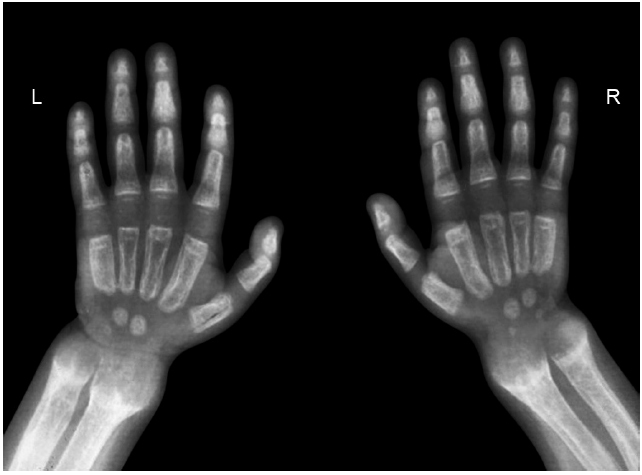
a. What is the diagnosis?
b. What are the radiological features?
c. How to treat?
d. If the child has alopecia, what will you suspect?
e. What is your management in that case?
Answer
- a. Active Nutritional Vitamin D Deficiency Rickets (hypophosphatemia, elevated ALP, low 25-OH-D).
- b. Metaphyseal cupping, fraying, widening/splaying of growth plates, cortical thinning, and rachitic rosary.
- c. Treatment: Cholecalciferol
orally weekly for 6 weeks (or fortnightly for 5 doses), along with elemental calcium for 3 months, followed by maintenance Vitamin D . - d. Vitamin D-Dependent Rickets Type 2 (VDDR-2) (hereditary 1,25-dihydroxyvitamin D resistance due to Vitamin D receptor mutation).
- e. High-dose calcitriol (
) and mega-dose oral/IV calcium infusions ( ).
THG39-009
Identify the deficient vitamins:
a. An obese adolescent underwent bariatric surgery and subsequently developed triad of ophthalmoplegia, mental changes, and ataxia.
b. Individual with visual field defects/hyporeflexia and ataxia/strabismus/muscle weakness.
c. Tetrad of dermatitis/alopecia/neurological defects/conjunctivitis.
d. Burning feet syndrome.
e. Diarrhea/dermatitis/dementia.
Answer
- a. Thiamine (Vitamin B1)
Wernicke encephalopathy - b. Vitamin E (Tocopherol)
Spinocerebellar ataxia and peripheral neuropathy - c. Biotin (Vitamin B7 / Vitamin H)
- d. Pantothenic Acid (Vitamin B5)
Gopalan's burning feet syndrome - e. Niacin (Vitamin B3)
Pellagra (3Ds: Diarrhea, Dermatitis, Dementia)
THG39-010
a. Expand MAA.
b. What is the goal?
c. What are the objectives?
d. What are the key components of the program?
Answer
- a. MAA: Mothers’ Absolute Affection program.
- b. Goal: Intensified nationwide program to promote, protect, and support optimal breastfeeding practices across all public healthcare facilities.
- c. Objectives: Build an enabling environment for early initiation within 1 hour, exclusive breastfeeding for 6 months, and continued breastfeeding up to 2 years with complementary feeding; reinforce lactation counseling support; and recognize health facilities delivering optimal breastfeeding services.
- d. Key components: Community awareness via ASHA/AWWs, capacity building of health personnel (nurses, ANMs, doctors), dedicated lactation support at delivery points, and monitoring/recognition of mother-baby friendly facilities.
THG39-011
a. Expand RBSK.
b. What is the age group covered?
c. What is the objective?
d. It is under the care of which ministry?
e. Enumerate the four D’s?
Answer
- a. Rashtriya Bal Swasthya Karyakram (RBSK).
- b. Age group covered: Birth to 18 years (0–6 years screened at Anganwadi centers; 6–18 years screened in schools).
- c. Objective: Early identification and early intervention for 30 selected health conditions to reduce out-of-pocket expenditure and improve child survival.
- d. Ministry of Health and Family Welfare (MoHFW), Government of India.
- e. The 4 D's Category:
| Category | Health Conditions Screened |
|---|---|
| 1. Defects at birth | Neural tube defects, Down syndrome, Cleft lip and palate, Talipes (club foot), Developmental dysplasia of the hip (DDH), Congenital cataract, Congenital deafness, Congenital heart diseases, Retinopathy of prematurity (ROP). |
| 2. Deficiencies | Anemia (severe), Vitamin A deficiency (Bitot's spots), Vitamin D deficiency (Rickets), Severe Acute Malnutrition (SAM), Goiter. |
| 3. Diseases in childhood | Skin conditions (scabies, fungal, eczema), Otitis media, Rheumatic heart disease (RHD), Reactive airway disease, Dental caries. |
| 4. Developmental delays & Disabilities | Vision impairment, Hearing impairment, Neuromotor impairment (Cerebral palsy), Motor delay, Cognitive delay, Language delay, Autism, ADHD. |
THG39-012
Ayushman Bharat Yojana:
a. When and by whom was it launched?
b. What are the two components?
c. It is a part of which policy?
d. What are health and wellness centers?
e. What are the benefits of Pradhan Mantri Jan Arogya Yojana (PM-JAY)?
Answer
- a. Launched in September 2018 by Prime Minister Narendra Modi.
- b. Two pillars:
-
- Ayushman Arogya Mandir (Health and Wellness Centers, HWCs).
-
- Pradhan Mantri Jan Arogya Yojana (PM-JAY).
-
- c. National Health Policy, 2017.
- d. Health and Wellness Centers (HWCs): Transformed Sub-centers and Primary Health Centers providing Comprehensive Primary Health Care (CPHC), maternal and child health services, noncommunicable disease screening, and free essential drugs and diagnostic tests.
- e. PM-JAY Benefits: Cashless secondary and tertiary health insurance coverage of up to Rs. 5 lakh per family per year for vulnerable and bottom 40% poor families across empaneled public and private hospitals nationwide.
THG39-013
a. What is supplementary suckling technique?
b. What is the indication?
c. Explain the procedure.
Answer
- a. A relactation technique designed to stimulate breast milk production while ensuring the infant receives supplemental nutrition at the breast.
- b. Indications: Relactation in mothers who developed lactation failure, adoptive nursing, or weak infants unable to extract sufficient milk.
- c. Procedure:
- A size 5–8 Fr nasogastric feeding tube is placed with its tip taped along the mother's nipple so that the infant latches onto both nipple and tube simultaneously.
- The other end of the tube is submerged into a cup containing expressed breast milk or formula.
- The cup is positioned
below breast level so milk flows only when the infant sucks actively (never above breast level to prevent rapid flooding and aspiration).
THG39-014
a. Expand LATCH score.
b. What is it used for.
c. How will you score it?
Answer
- a. LATCH Breastfeeding Assessment System:
- L: Latch (infant grasping breast)
- A: Audible swallowing
- T: Type of nipple (inverted, flat, everted)
- C: Comfort of breast and nipple
- H: Hold / positioning assistance needed
- b. Used by nurses and lactation consultants to systematically assess breastfeeding effectiveness, identify problems early, and monitor lactation interventions.
- c. Each of the 5 parameters is scored from 0 to 2 (Total score: 0 to 10; score
indicates successful breastfeeding).
THG39-015
Expand:
a. CLMC
b. LMU
c. DC
d. RDA
e. SDA
f. EAR
g. NPU
h. BV
i. DRI
j. JUNCS
Answer
- a. CLMC: Comprehensive Lactation Management Centre
- b. LMU: Lactation Management Unit
- c. DC: Digestibility Coefficient
- d. RDA: Recommended Dietary Allowance (daily nutrient intake meeting needs of
of healthy individuals) - e. SDA: Specific Dynamic Action / Thermic Effect of Food
- f. EAR: Estimated Average Requirement (intake meeting requirement of
of healthy individuals) - g. NPU: Net Protein Utilization (
) - h. BV: Biological Value (
) - i. DRI: Dietary Reference Intake
- j. JUNCS:
- J: Junk foods
- U: Ultra-processed foods (NOVA category 4)
- N: Nutritionally inappropriate foods
- C: Caffeinated / colored / carbonated beverages
- S: Sugar-sweetened beverages
THG39-016
A 3-year-old child was presented with irritability, refusal to walk, and limp. There was no fever or trauma. There was tenderness and restriction of movement of knees with no effusion. She is picky eater who used to refuse common food items. The initial investigations of complete blood count (CBC), C-reactive protein (CRP), erythrocyte sedimentation rate (ESR), and peripheral smear study normal. X-ray showed periosteal detachment of upper ends of both tibias.
a. What is the unusual, but treatable diagnosis, one can suspect?
b. What are the radiological features?
c. What are the risk factors for this condition?
d. What is the treatment?
Answer
- a. Scurvy (Vitamin C / Ascorbic acid deficiency).
- b. Radiological features:
- White line of Fraenkel: Dense, irregular zone of provisional calcification at metaphysis.
- Trümmerfeld zone: Radiotranslucent rarefied band underlying the white line.
- Pelkan spur: Lateral bony spurring extending from the metaphysis.
- Wimberger ring sign: Thin sclerotic cortical ring encircling a ground-glass demineralized epiphysis.
- Subperiosteal hematoma: Elevating the periosteum.
- c. Boiled/heat-treated cow's milk without fresh fruit supplementation, selective picky eating / autism food selectivity, unfortified formulas, and prolonged total parenteral nutrition.
- d. Treatment: Oral Vitamin C
for 4 to 6 weeks until full symptomatic and radiographic resolution.
THG39-017
a. What are probiotics?
b. What are prebiotics?
c. What are synbiotics?
d. What are type I and type II nutrients? Enumerate with examples.
Answer
- a. Probiotics: Live microorganisms (e.g., Lactobacillus rhamnosus GG, Bifidobacterium lactis, Saccharomyces boulardii) which when administered in adequate amounts confer a health benefit on the host.
- b. Prebiotics: Non-digestible dietary carbohydrates (e.g., inulin, fructooligosaccharides [FOS], lactulose) that selectively stimulate the growth and activity of beneficial colonic microbiota.
- c. Synbiotics: Synergistic combinations of probiotics and prebiotics (e.g., Lactobacillus + Inulin).
- d. Type I vs. Type II Nutrients:
| Feature | Type I Nutrients | Type II Nutrients |
|---|---|---|
| Body stores | Specific tissue stores present | No dedicated tissue stores |
| Serum level in deficiency | Decreases noticeably | Maintained normal at cost of tissue breakdown |
| Clinical signs | Specific clinical deficiency signs (e.g., Bitot spots, scurvy) | Non-specific growth arrest, wasting, anorexia |
| Growth faltering | Not an early feature | Early, primary cardinal feature |
| Examples | Iron, Iodine, Copper, Vitamin A, Vitamin C, Vitamin D | Zinc, Magnesium, Potassium, Sodium, Nitrogen/Essential Amino Acids |
THG39-018
Calculate fluid requirement of 28 weeks baby with weight of 1.8 kg, who is diagnosed with duodenal atresia and planned for surgery. Start the baby on antibiotics preoperatively.
Answer
- Total Fluid Requirement (Day 1):
- Lipid Emulsion (SMOFlipid 20%):
- Dose:
- Volume of 20% lipid:
- Dose:
- Net Aqueous IVF:
- Amino Acids (Aminoven 10%):
- Dose:
- Volume of 10% AA:
- Dose:
- 10% Dextrose Volume:
- Glucose Infusion Rate (GIR):
- Final TPN Order:
- SMOFlipid 20% @
via dedicated line. - Dextrose 10% + Aminoven 10% mixture @
.
- SMOFlipid 20% @
THG39-019
A 2-year-old toddler girl was brought with fever and difficulty in breathing. On examination, child was lethargic, respiratory rate (RR)—52 breaths/min, intercostal retracrtions+, subcostal retractions+, heart rate (HR)—146 beats/min, febrile, bilateral (B/L) air entry + with B/L wheeze. Classify according to Integrated Management of Childhood Illness (IMNCI).
a. What are the general danger signs?
b. How will you treat?
c. If the same child is not lethargic, is able to drink, and has no vomiting, what is the grade?
d. How will you treat now?
Answer
- a. General Danger Signs (IMNCI):
- Inability to drink or breastfeed
- Vomiting everything
- History of convulsions during present illness
- Lethargic or unconscious
- Convulsing now
- b. Classification & Treatment (Very Severe Disease / Pink):
- Urgent pre-referral stabilization: Give first dose of parenteral antibiotic (Ampicillin + Gentamicin or Ceftriaxone), nebulized rapid-acting bronchodilator for wheeze, treat/prevent hypoglycemia (oral 10% Dextrose), provide humidified oxygen, and refer urgently to hospital.
- c. Revised Grade (No danger signs, RR 52 breaths/min, chest indrawing): Classified as Pneumonia (Yellow).
- d. Treatment for Pneumonia (Yellow): Oral Amoxicillin (
BID for 5 days), inhaled bronchodilator if wheezing, home care advice, fever management with paracetamol, and follow-up in 2 days.
THG39-020
Anemia Mukt Bharat:
a. What is the objective?
b. What are the six interventions?
c. Who are the target group and dose of iron and folic acid (IFA) prophylaxis?
d. Discuss the deworming.
Answer
- a. Objective: Reduce anemia prevalence by 3 percentage points per year among children, adolescents, and reproductive-age women.
- b. 6 Interventions (6x6x6 strategy):
-
- Prophylactic Iron and Folic Acid (IFA) supplementation.
-
- Periodic deworming (Albendazole).
-
- Intensified year-round Behavior Change Communication (BCC).
-
- Point-of-care digital testing and treatment of anemia.
-
- Mandatory provision of IFA-fortified foods in public safety net programs.
-
- Addressing non-nutritional causes of anemia (malaria, hemoglobinopathies, fluorosis).
-
- c. Target Groups & IFA Doses:
| Age / Target Group | IFA Regimen | Tablet / Syrup Color |
|---|---|---|
| 6–59 months | Biweekly |
Iron syrup |
| 5–9 years | Weekly |
Pink tablet |
| 10–19 years (Adolescents) | Weekly |
Blue tablet |
| Women 20–49 years | Weekly |
Red tablet |
| Pregnant women | Daily |
Red tablet |
| Lactating mothers (0–6 mo) | Daily |
Red tablet |
- d. National Deworming Day (NDD): Biannual single-dose Albendazole (
for 12–24 months; for months).
THG39-021
a. Expand JSSK.
b. It was formed by which ministry?
c. What is the main objective?
d. What are the interventions?
Answer
- a. Janani Shishu Suraksha Karyakram (JSSK).
- b. Ministry of Health and Family Welfare (MoHFW), Government of India (launched in June 2011).
- c. Objective: Completely eliminate out-of-pocket expenses for pregnant women delivering in public health institutions and sick neonates up to 1 year of age.
- d. Entitlements / Interventions:
- Zero-expense cashless institutional delivery and C-section.
- Free drugs, consumables, diagnostics (blood, urine, USG).
- Free diet during hospital stay (up to 3 days for normal delivery, 7 days for C-section).
- Free provision of blood and blood components.
- Free transport from home to health facility, inter-facility transfer, and drop-back home.
THG39-022
a. What is appetite test?
b. How should it be done?
c. What is the amount of therapeutic feed that a child with severe acute malnutrition (SAM) should take to pass the test?
d. What is the result?
Answer
- a. Key clinical triage test to differentiate uncomplicated SAM (eligible for outpatient therapeutic care) from complicated SAM (requiring inpatient stabilization).
- b. Conducted in a calm environment; caregiver gently offers Ready-to-Use Therapeutic Food (RUTF) with clean hands and drinking water over a 30–60 minute observation period without force-feeding.
- c. Minimum RUTF intake to Pass Appetite Test:
| Weight of Child (kg) | Minimum RUTF Paste to Pass (g) |
|---|---|
| Inpatient care | |
- d. Passed: Eager consumption
Outpatient Management. Failed: Refusal or inadequate intake Immediate Inpatient Admission to Nutrition Rehabilitation Centre (NRC).
THG39-023
a. What is food fortification?
b. What is food supplementation?
c. What are the advantages of fortification over supplementation?
d. What are the criteria for selection of food vehicle?
e. What is Ultra Rice?
Answer
- a. Food Fortification: Practice of deliberately increasing the content of essential micronutrients in commonly consumed staple foods during processing to improve nutritional quality with minimal health risk.
- b. Food Supplementation: Direct administration of concentrated micronutrients (tablets, syrups, capsules) targeted to specific deficient individuals or high-risk populations.
- c. Advantages: Broad population coverage, does not require behavioral change or individual adherence, cost-effective, low risk of chronic toxicity, and utilizes existing food distribution channels.
- d. Food Vehicle Selection Criteria: Universally consumed in predictable amounts by all socioeconomic strata, stable during cooking/storage, does not alter food taste, odor, or color, and economically viable.
- e. Ultra Rice: Extruded manufactured rice grains made from rice flour enriched with Vitamin A, Iron, Zinc, and Folic Acid, blended with natural milled rice at a ratio of 1:100 to 1:200.
THG39-024
a. What is Poshan Abhiyaan?
b. What is the objective?
c. What are all the programs covered?
Answer
- a. POSHAN Abhiyaan (National Nutrition Mission): Flagship holistic multi-ministerial convergence program to improve nutritional outcomes for children, pregnant women, and lactating mothers focusing on the first 1,000 days of life.
- b. Objectives: Reduce stunting, undernutrition, and low birth weight by 2% per annum, and reduce anemia among children and women by 3% per annum.
- c. Convergent Schemes: ICDS (Anganwadi services), PMMVY, National Health Mission (JSY, JSSK, RBSK, Anemia Mukt Bharat), Swachh Bharat Mission, National Rural Drinking Water Mission, and NRLM.
THG39-025
Rashtriya Kishor Swasthya Karyakram:
a. When was it launched?
b. What is the vision?
c. What is the target age group?
d. What are the objectives?
Answer
- a. Launched on 7th January 2014 by MoHFW.
- b. Vision: Enable all adolescents in India to realize their full potential by making informed and responsible decisions regarding their health and well-being.
- c. Target age group: Adolescents aged 10 to 19 years (10–14 and 15–19 years, both in-school and out-of-school, married and unmarried).
- d. 6 Priority Thematic Areas:
-
- Improve nutrition (reduce IDA and malnutrition).
-
- Improve sexual and reproductive health (reduce teen pregnancies).
-
- Enhance mental health.
-
- Prevent injuries and violence (including gender-based violence).
-
- Prevent substance misuse.
-
- Address noncommunicable diseases (NCD lifestyle modifications).
-
THG39-026
a. What is the other name for Adolescent Girl Empowerment Scheme?
b. What are the objectives?
c. What is the target age group?
d. Which ministry is it under?
e. What are the two components?
Answer
- a. Kishori Shakti Yojana (KSY) / Scheme for Adolescent Girls (SAG - SABLA).
- b. Objectives: Empower adolescent girls with life skills, vocational training, literacy, and health education to facilitate transition back to schooling and improve health/nutrition.
- c. Target group: Out-of-school girls aged 11 to 14 years (expanded previously to 11–18).
- d. Ministry of Women and Child Development (MoWCD).
- e. Two components:
- 1. Nutrition component: Take-Home Rations or Hot Cooked Meals providing 600 kcal and 18–20 g protein per day for 300 days/year.
- 2. Non-nutrition component: Weekly IFA supplementation, health checkups, life skill education, and vocational counseling.
THG39-027
Match the trace elements with deficiency manifestations:
| Trace Element | Deficiency Manifestation |
|---|---|
| a. Fluoride | 1. Dental caries |
| b. Iodine | 2. Hypothyroidism / Goiter / Cretinism |
| c. Copper | 3. Microcytic anemia, neutropenia, depigmentation of hair |
| d. Chromium | 4. Impaired glucose tolerance and peripheral neuropathy |
| e. Manganese | 5. Hypercholesterolemia / impaired bone growth |
| f. Selenium | 6. Keshan disease (cardiomyopathy) |
| g. Zinc | 7. Acrodermatitis enteropathica, periorificial dermatitis |
| h. Iron | 8. Microcytic hypochromic anemia, cognitive deficits |
| i. Molybdenum | 9. Tachycardia, tachypnea, night blindness (sulfite oxidase deficiency) |
Answer
- a: 1 (Fluoride
Dental caries) - b: 2 (Iodine
Hypothyroidism / Goiter) - c: 3 (Copper
Microcytic anemia, depigmentation of hair/skin) - d: 4 (Chromium
Impaired glucose tolerance, neuropathy) - e: 5 (Manganese
Hypercholesterolemia, skeletal abnormalities) - f: 6 (Selenium
Keshan disease / Kaschin-Beck disease) - g: 7 (Zinc
Acrodermatitis enteropathica, delayed wound healing) - h: 8 (Iron
Behavioral changes, iron deficiency anemia) - i: 9 (Molybdenum
Tachycardia, tachypnea, night blindness)
THG39-028
a. What is breastfeeding jaundice?
b. What is breast milk jaundice?
c. Name the factor responsible for breast milk jaundice?
d. Urine urobilinogen will be absent in which type of jaundice? (hemolytic/hepatocellular/cholestatic jaundice)
e. Name two syndromes which present with conjugated hyperbilirubinemia.
f. What type of jaundice does Crigler–Najjar syndrome present with?
Answer
- a. Breastfeeding jaundice (Breastfeeding failure jaundice): Onset in the 1st week of life due to inadequate milk intake, mild dehydration, and increased enterohepatic circulation of bilirubin.
- b. Breast milk jaundice: Onset in the 2nd week of life (peaks at 10–14 days) in a thriving, well-fed infant with prolonged unconjugated hyperbilirubinemia.
- c.
-Glucuronidase and high concentrations of non-esterified fatty acids / pregnane-3 ,20 -diol in breast milk. - d. Cholestatic / Obstructive jaundice (due to complete biliary obstruction preventing bilirubin entry into gut).
- e. Dubin–Johnson syndrome and Rotor syndrome.
- f. Severe unconjugated hyperbilirubinemia (Type 1: absent UDPGT; Type 2: severe UDPGT deficiency).
THG39-029
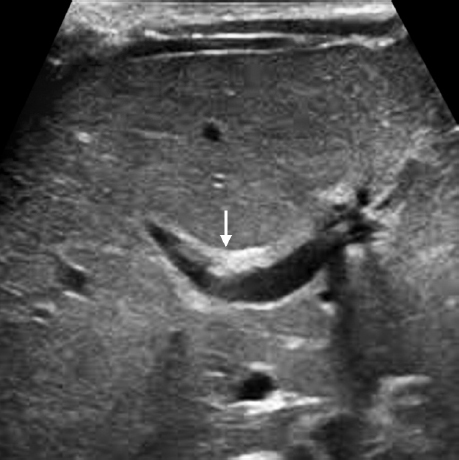
a. Name the sign in ultrasonography (USG).
b. What is the diagnosis?
c. What are the clinical symptoms of such diagnosis in a newborn?
d. What type of jaundice occurs in these newborns?
e. What is BASM?
f. What is the surgical management preferred for these babies?
Answer
- a. Triangular cord sign (thick triangular echogenic fibrous band anterior to portal vein bifurcations
). - b. Biliary Atresia.
- c. Progressive conjugated jaundice after 2 weeks of life, acholic (clay-colored / pale) stools, dark high-colored urine, and firm hepatosplenomegaly.
- d. Conjugated (direct) hyperbilirubinemia.
- e. BASM: Biliary Atresia Splenic Malformation syndrome (associated with polysplenia/asplenia, situs inversus, and preduodenal portal vein).
- f. Kasai Portoenterostomy (ideally performed before 60 days of life).
THG39-030
a. What is portal hypertension?
b. Name the two veins which unite to form portal vein. Where does the formation occur?
c. What is EHPVO?
d. Most common cause of EHPVO?
e. What is the most common symptom?
f. What is Cruveilhier–Baumgarten murmur?
g. What is Budd–Chiari syndrome?
Answer
- a. Portal venous pressure
(or hepatic venous pressure gradient ). - b. Formed by union of Superior Mesenteric Vein and Splenic Vein behind the neck of the pancreas at the level of L2 vertebra.
- c. Extrahepatic Portal Venous Obstruction (portal cavernoma transformation).
- d. Neonatal umbilical vein catheterization / umbilical sepsis (omphalitis).
- e. Recurrent upper gastrointestinal bleeding (hematemesis/melena from esophageal varices) with massive splenomegaly and normal liver function.
- f. Continuous venous hum heard over the epigastrium/umbilicus due to turbulent collateral flow in recanalized paraumbilical veins.
- g. Obstruction of hepatic venous outflow (hepatic veins to IVC junction).
THG39-031
a. What is the toxic dose of paracetamol for children in a single dose and cumulative dose?
b. What is the mechanism of action of toxicity?
c. What is the nomogram used to assess the toxicity?
d. What is the treatment of choice?
e. What is fulminant hepatic failure?
f. What is the O’Grady’s criteria for liver transplant in a child with paracetamol-induced liver failure?
Answer
- a.
- Single toxic dose:
- Cumulative supratherapeutic dose:
over several days
- Single toxic dose:
- b. Metabolism by CYP2E1 generates N-acetyl-p-benzoquinone imine (NAPQI), which exhausts hepatocellular glutathione stores and causes covalent binding to mitochondrial proteins leading to centrilobular hepatic necrosis.
- c. Rumack–Matthew nomogram (evaluating 4-hour to 24-hour post-ingestion serum paracetamol concentrations).
- d. Intravenous or oral N-acetylcysteine (NAC).
- e. Acute onset of severe liver injury with coagulopathy (
) and encephalopathy within 8 weeks in a patient without prior liver disease. - f. King's College / O'Grady criteria for liver transplant:
- Arterial
after fluid resuscitation (regardless of encephalopathy stage), OR - All 3 of: Grade III/IV encephalopathy, Prothrombin Time
( ), and Serum Creatinine ( ).
- Arterial
THG39-032
A 2-week-old newborn, term baby, with birth weight of 2.3 kg on direct breastfeeds was brought to emergency room (ER) with lethargy, poor feeding, reduced activity, and vomiting.
On examination, baby was lethargic, capillary blood glucose (CBG)—65 mg%, capillary refill time (CRT) >3 second, and HR— 190 beats/min. Blood pressure < 5th centile, icteric, hepatomegaly present, and blood culture grew E. coli.
a. What do you suspect?
b. What enzyme is deficient in the above diagnosis?
c. What metabolite is responsible for brain damage in this diagnosis?
d. What is the specific ocular manifestation?
e. What is the treatment?
f. What is the endocrinological manifestation in female children?
Answer
- a. Classic Galactosemia (fulminant neonatal liver disease with E. coli sepsis).
- b. Galactose-1-phosphate uridylyltransferase (GALT).
- c. Galactose-1-phosphate and Galactitol.
- d. Oil-drop cataract (nuclear cataract due to galactitol accumulation in the lens).
- e. Immediate cessation of all lactose/galactose-containing feeds (breast milk, standard cow's milk formula) and substitution with soy-based or elemental formula.
- f. Primary ovarian insufficiency / Hypergonadotropic hypogonadism.
THG39-033
a. What is the mode of inheritance of Wilson’s disease?
b. Name the chromosome and the gene involved.
c. Mention two ophthalmological findings in Wilson’s disease.
d. What are the investigations done and what is suggestive of Wilson’s disease?
e. What is the value of urinary copper suggestive of Wilson’s disease?
f. What are all the available pharmacological therapies for Wilson’s disease?
Answer
- a. Autosomal recessive.
- b. Chromosome 13q14.3; ATP7B gene.
- c. Kayser–Fleischer (KF) ring (copper deposition in Descemet's membrane) and Sunflower cataract (anterior subcapsular copper deposition).
- d. Low serum ceruloplasmin (
), elevated 24-hour urinary copper, high non-ceruloplasmin bound copper, and hepatic copper concentration dry weight on biopsy. - e. 24-hour urinary copper excretion
( ). - f. Chelators (D-Penicillamine, Trientine) and intestinal absorption blockers (Zinc acetate/gluconate, Ammonium tetrathiomolybdate).
THG39-034
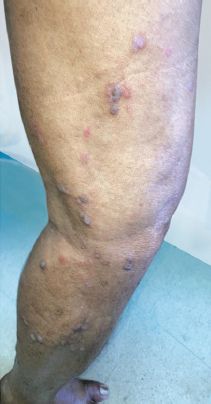
a. What is this skin condition called?
b. What are the histological findings in celiac disease?
c. What is the malignancy commonly associated with celiac disease?
d. Which primary immunodeficiency disorder is associated with increased risk of celiac disease?
e. What is MARSH histological criteria for celiac disease?
f. What are the foods that can be included and what are the foods to be avoided?
g. What is the basic blood investigation done to diagnose celiac disease?
Answer
- a. Dermatitis herpetiformis (pruritic vesiculopapular eruption on extensor surfaces).
- b. Intraepithelial lymphocytosis (
), crypt hyperplasia, and villous atrophy/blunting. - c. Enteropathy-associated T-cell lymphoma (EATL).
- d. Selective IgA deficiency.
- e. Modified Marsh Classification:
- Marsh 0: Normal mucosal architecture
- Marsh 1 (Infiltrative):
- Marsh 2 (Hyperplastic): Marsh 1
crypt hyperplasia - Marsh 3 (Destructive): Crypt hyperplasia
villous atrophy (3a: partial; 3b: subtotal; 3c: total)
- f.
- Safe (Gluten-free): Rice, maize/corn, ragi, bajra, jowar, soya, potato, sago.
- Avoid (Gluten-containing): Wheat, barley, rye, and oats (contaminated).
- g. Serum IgA tissue transglutaminase (anti-tTG IgA) antibody with total serum IgA.
THG39-035
Match the following:
| Pathognomonic Finding | Condition |
|---|---|
| a. Lead pipe colon on barium X-ray | 1. Ulcerative colitis |
| b. Anti-Saccharomyces cerevisiae antibody (ASCA) positive | 2. Crohn’s disease |
| c. Periodic-acid Schiff (PAS) positive macrophages in lamina propria | 3. Whipple disease |
| d. Target / Doughnut sign on USG | 4. Intussusception |
| e. Coffee bean sign on X-ray | 5. Sigmoid volvulus |
| f. Absence of ganglion cells in submucosal/myenteric plexus | 6. Hirschsprung’s disease |
Answer
- a: 1 (Lead pipe colon
Ulcerative colitis) - b: 2 (ASCA positive
Crohn’s disease) - c: 3 (PAS-positive foamy macrophages
Whipple disease) - d: 4 (Target sign on USG
Intussusception) - e: 5 (Coffee bean sign on X-ray
Sigmoid volvulus) - f: 6 (Absence of ganglion cells
Hirschsprung’s disease)
THG39-036
a. Expand IHPS.
b. What is the most common symptom associated with the above condition?
c. What is the metabolic derangement seen in the above condition?
d. What are the steps of management?
e. What is the surgical management?
f. What is the drug given for medical management?
Answer
- a. Infantile Hypertrophic Pyloric Stenosis.
- b. Non-bilious, projectile vomiting in an eager-feeding infant aged 3–6 weeks.
- c. Hypochloremic, hypokalemic metabolic alkalosis with paradoxical aciduria.
- d. Immediate resuscitation: Correct dehydration and acid-base derangement with IV 0.45% or 0.9% Normal Saline with 5% Dextrose and potassium chloride until
, , and urine output is established. - e. Ramstedt’s extramucosal pyloromyotomy.
- f. Oral / IV Atropine sulfate (rarely used for non-surgical medical trial).
THG39-037
A 9-month-old female baby, Aadhya, was brought to ER with complaints of incessant cry and refusal to take feeds. She has visited ER for the same complaints 2 days back, now brought with same complaints along with continuous episodes of vomiting and blood in stool.
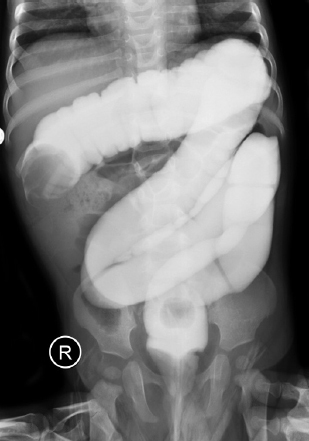
a. What do you suspect?
b. What is the next investigation you will advise?
c. Triad of symptoms? Mention few lead points.
d. What sign is this?
e. What is the treatment of choice which is commonly used?
f. What is the complication that arises out of this treatment?
Answer
- a. Ileocolic Intussusception.
- b. Abdominal Ultrasonography (detects target / doughnut sign on transverse view and pseudo-kidney sign on longitudinal view).
- c.
- Classic triad: Paroxysmal colicky abdominal pain (inconsolable crying with knee drawing), palpable sausage-shaped abdominal mass, and "red currant jelly" stools.
- Pathological lead points: Meckel's diverticulum, intestinal polyp, duplication cyst, Henoch–Schönlein purpura (IgA vasculitis) intramural hematoma, and lymphoma.
- d. Coiled-spring sign on contrast enema.
- e. Non-operative hydrostatic (saline) or pneumatic (air) enema reduction under real-time ultrasound or fluoroscopic guidance.
- f. Bowel perforation (requiring emergency laparotomy) and recurrence of intussusception (
).
THG39-038
a. From which embryological structure does the pancreas develop?
b. What is an annular pancreas?
c. What is pancreatic divisum?
d. At what gestational age do exocrine and endocrine cells appear?
e. Name one syndrome associated with pancreatic insufficiency.
Answer
- a. Ventral and dorsal pancreatic buds of the primitive foregut endoderm.
- b. Annular pancreas: Failure of proper rotation of the bifid ventral pancreatic bud, forming a ring of pancreatic tissue encircling the 2nd part of the duodenum and causing duodenal obstruction.
- c. Pancreas divisum: Failure of fusion of the dorsal and ventral pancreatic duct systems, causing the majority of pancreatic secretion to drain through the narrow minor papilla (Santorini duct).
- d. Endocrine islets and exocrine acini differentiate around the 12th to 14th week of gestation.
- e. Shwachman–Diamond syndrome (and Cystic Fibrosis).
THG39-039
a. What is the definition of constipation as per NASPGHAN for Indian children?
b. What is defined as chronic constipation?
c. What is refractory constipation?
d. What is rule of 1 for toilet training in children?
e. Name two osmotic laxatives that are used routinely?
Answer
- a. Functional constipation (Rome IV / NASPGHAN criteria): Presence of
of the following for month: defecations in the toilet per week episode of fecal incontinence per week (in toilet-trained child) - History of retentive posturing or excessive stool withholding
- History of painful or hard bowel movements
- Presence of a large fecal mass in the rectum
- History of large-diameter stools that may obstruct the toilet
- b. Constipation lasting for
. - c. Constipation that fails to respond to optimal conventional medical and behavioral therapy for
months. - d. Rule of 1 for toilet training:
- One routine (fixed time after meals)
- One place (designated toilet/potty)
- One word (consistent encouragement and terminology)
- e. Polyethylene Glycol (PEG 3350/4000) and Lactulose.
THG39-040
A 10-year-old developmentally normal girl child from Kerala was brought to ER with complaints of abdominal pain, severe, around the umbilicus, and radiating to back. She also had multiple episodes of vomiting. Signs of some dehydration was present. Hemodynamically stable without any features of shock. Ultrasound abdomen was done suspecting appendicitis, but appendix was normal.
a. What do you suspect?
b. What is the criteria for diagnosis?
c. What are Cullen’s sign and Grey turner’s sign?
d. What is the most specific test for diagnosis of the above condition?
e. Name three genetic mutations associated with the above diagnosis?
f. Name two complications of the above diagnosis?
g. What is the management?
Answer
- a. Acute Pancreatitis.
- b. INSPPIRE diagnostic criteria (requires
of the following 3): -
- Characteristic abdominal pain (epigastric/periumbilical radiating to back).
-
- Serum amylase or lipase
upper limit of normal.
- Serum amylase or lipase
-
- Imaging findings characteristic of acute pancreatitis (USG, CT, MRI).
-
- c.
- Cullen’s sign: Bluish periumbilical ecchymosis indicating retroperitoneal / intraperitoneal hemorrhage.
- Grey Turner’s sign: Flank / loin ecchymosis from retroperitoneal blood tracking.
- d. Serum Lipase (more sensitive and specific than amylase, remains elevated for 8–14 days).
- e. PRSS1 (Cationic trypsinogen), SPINK1 (Serine protease inhibitor Kazal-type 1), CFTR (Cystic fibrosis), and CTRC (Chymotrypsin C).
- f. Pancreatic pseudocyst, necrotizing pancreatitis / infected necrosis, splenic vein thrombosis, and systemic shock / multi-organ failure.
- g. Management: Early aggressive fluid resuscitation with balanced crystalloids (Ringer's Lactate), adequate multi-modal analgesia (opioids/paracetamol), early enteral nutrition as tolerated, and avoiding prophylactic antibiotics in uncomplicated pancreatitis.
THG39-041
a. What is its osmolarity of standard oral rehydration solution (ORS)?
b. What is low osmolar ORS?
c. What is ReSoMal?
d. What is the difference between low osmolarity ORS and ReSoMal?
e. Mention the constituents and composition of ORS.
Answer
- a. Standard WHO ORS osmolarity:
. - b. WHO Reduced / Low-Osmolarity ORS:
. - c. ReSoMal: Rehydration Solution for Malnutrition (specially formulated for children with Severe Acute Malnutrition, SAM).
- d. ReSoMal has lower sodium (
vs ), higher potassium ( vs ), higher sugar/sucrose content ( ), and added magnesium and zinc to prevent hypernatremic fluid overload and heart failure in SAM. - e. WHO Low-Osmolarity ORS Composition (per Liter):
| Component | Grams per Liter ( |
Molar Concentration ( |
|---|---|---|
| Sodium Chloride | ||
| Anhydrous Glucose | ||
| Potassium Chloride | ||
| Trisodium Citrate Dihydrate | ||
| Total | Total Osmolarity: |