VVK14-001
Designing of Pediatric ICU's in India - IAP Recommendations:
- a. What is the recommended noise level during daytime?
- b. What is the recommended noise level during nighttime?
- c. What is the recommended floor area per patient?
- d. What is the recommended minimal distance between two bed centers?
- e. What is the ideal bed strength for economic viability of each PICU?
- f. What is the ideal and minimal nurse to patient ratio?
Answer
- a. Should not exceed 40 dB
- b. Should not exceed 20 dB
- c. 200 sq feet per patient bed
- d. Minimum 3 meters
- e. 8–12 beds
- f. Ideal: 1:1, Minimal: 1:2
VVK14-002
Dental Injuries:
- a. How do you classify dental fractures?
- b. A child falls and knocks out his front tooth. How would the treatment differ in a 4-year-old and 14-year-old?
- c. Enlist 3 media to transport an avulsed tooth.
Answer
- a. Ellis Classification:
- Ellis Class 1: Fracture involving enamel only
- Ellis Class 2: Fracture involving enamel and dentin
- Ellis Class 3: Fracture involving enamel, dentin, and dental pulp
- b. Treatment difference:
- 4-year-old (Primary tooth): No attempt at reimplantation (to avoid damage to underlying permanent tooth germ).
- 14-year-old (Permanent tooth): Immediate reimplantation and splinting as soon as possible.
- c. Transport media:
- Hank's Balanced Salt Solution (HBSS)
- Cold pasteurized milk
- Saline
- Underneath patient's tongue (buccal vestibule) if child is cooperative and conscious (risk of aspiration).
VVK14-003
Prenatal Diagnostic Procedures:
| Procedure | Site of sample collection | Earliest gestational age to perform the test |
|---|---|---|
| CVS or CVB | ||
| Amniocentesis | ||
| Cordocentesis |
Answer
| Procedure | Site of sample collection | Earliest gestational age to perform the test |
|---|---|---|
| CVS / CVB | Chorionic villi (placental tissue) | 10–12 weeks (earliest 11 weeks) |
| Amniocentesis | Amniotic fluid | 15–18 weeks |
| Cordocentesis (PUBS) | Fetal umbilical cord blood | 18–20 weeks |
VVK14-004
Medical Ethics & Consent (Yes / No):
- a. In general, do minors have the right to give consent for their own treatment?
- b. In an emergency, is it necessary to obtain consent in order to treat a child?
- c. Can an emancipated minor (a child who lives away from home, is no longer subject to parental control, is economically self-supporting) give consent for medical care?
- d. Can a mature minor (a child who is sufficiently mature to understand the nature of his/her illness and the potential risks and benefits of proposed therapy) give or refuse consent to treatment?
- e. May Jehovah's Witness parents refuse lifesaving blood transfusion for their minor children?
Answer
- a. No
- b. No (Doctrine of emergency / implied consent applies)
- c. Yes (Emancipated minor)
- d. Yes (Mature minor rule)
- e. No (Courts / doctors act in best interest of child to preserve life)
VVK14-005
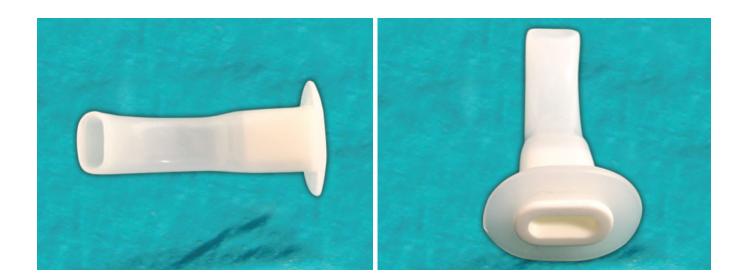
- a. What is the device shown?
- b. What is the usage of device?
- c. How is the correct size measured?
- d. How do you insert the device?
- e. Enlist 2 complications associated with the usage of the device.
Answer
- a. Guedel Oropharyngeal Airway.
- b. To maintain airway patency by preventing the tongue from falling back against the posterior pharyngeal wall.
- c. Measured from the corner of the mouth (or center of incisors) to the angle of the mandible (or tragus of ear).
- d. Insert with concavity pointing upward toward hard palate; once halfway or reaching posterior pharynx, rotate 180° into proper position over the tongue. (In infants, insert directly over tongue using tongue depressor without rotation).
- e. Complications: Laryngospasm/gagging/vomiting in conscious patient, airway trauma/dental injury, worsening obstruction if size is incorrect.
VVK14-006
A 2-year-child presents with:
- 5 episodes of recurrent cutaneous abscesses in 6 months
- Photosensitivity & photophobia
- Light skin (partial albinism) and silvery hair
Peripheral blood smear shows large giant azurophilic granules/inclusions in all nucleated blood cells (granulocytes).
- a. What is the diagnosis?
- b. What is the mode of inheritance and mutated gene?
- c. What is the neurological manifestation?
- d. What is the treatment?
Answer
- a. Chédiak–Higashi Syndrome.
- b. Autosomal recessive; Mutation in LYST / CHS1 gene (lysosomal trafficking regulator).
- c. Progressive peripheral neuropathy, ataxia, cranial neuropathies, intellectual disability, seizures.
- d. Allogeneic hematopoietic stem cell transplantation (HSCT) for curative treatment; high-dose Ascorbic acid (Vitamin C) for partial neutrophil function improvement, antibiotics for infections.
VVK14-007
Select the corresponding condition for each clinical description:
Options:
- Miliaria rubra
- Verruca vulgaris
- Condyloma acuminata
- Molluscum contagiosum
- Pityriasis rosea
- a. Small (pinhead to 1 cm), pearly papules with translucent tops and central umbilication containing waxy curd-like material, distributed on face and trunk.
- b. Soft, flesh-colored papular or pedunculated lesions around the genitalia and rectum.
- c. Oval, maculopapular lesions oriented with the long axis along skin tension lines ("Christmas tree" pattern) with peripheral collarette of scale.
- d. Characteristically pruritic eruption with a herald patch preceding secondary lesions.
Answer
- a. 4. Molluscum contagiosum
- b. 3. Condyloma acuminata
- c. 5. Pityriasis rosea
- d. 5. Pityriasis rosea
VVK14-008
Study the photograph shown below and answer the following questions:
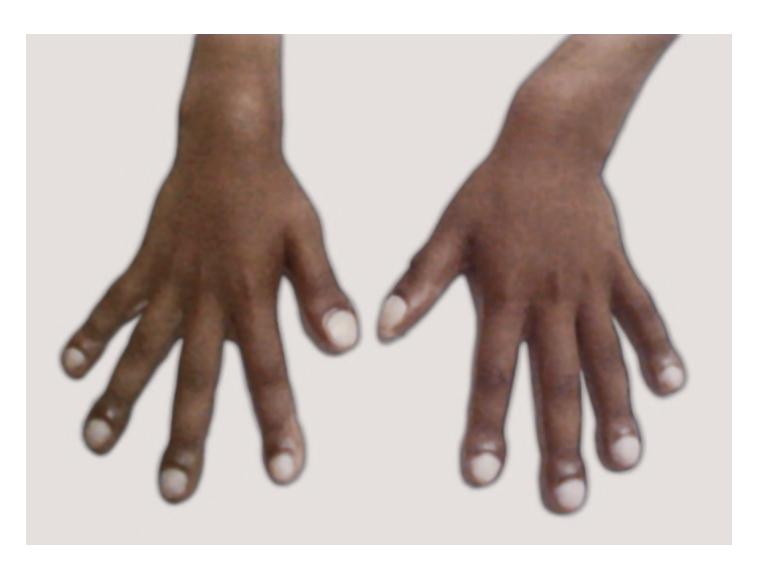
- a. Identify the sign and its grade.
- b. Give the grading of this condition.
Answer
- a. Clubbing of fingers (Grade 4).
- b. Grading of Clubbing:
- Grade 1: Increased softness and fluctuation of the nail bed (loss of Lovibond angle).
- Grade 2: Obliteration of the normal angle between the nail and nail fold (
). - Grade 3: Accentuated longitudinal curvature and convexity of the nail ("Parrot beak" / "drumstick" appearance).
- Grade 4: Broadened terminal pulp of digit with hypertrophic pulmonary osteoarthropathy (HPOA).
- Grade 5: Shiny, glossy changes of nail and adjacent skin with longitudinal striations.
VVK14-009
A 2-month-old girl is admitted with acute viral myocarditis. She is on dopamine, amrinone, ranitidine and cefotaxime. Her platelet count has reduced from 200,000 to 50,000/cu mm over the past 5 days.
- a. This thrombocytopenia is most likely due to which drug?
- b. On what two factors does the severity of thrombocytopenia depend upon in this case?
- c. What class of drug is this?
- d. What is the mechanism of action of this drug?
Answer
- a. Amrinone (Inamrinone).
- b. Dose (rate of infusion) and total duration of therapy.
- c. Phosphodiesterase-3 (PDE-3) inhibitor (Inodilator).
- d. Inhibits breakdown of cAMP in myocardium and vascular smooth muscle
increases intracellular cAMP increases cardiac inotropy and produces systemic/pulmonary vasodilation.
VVK14-010
Answer the following questions:
- a. A 7-month-old male baby has just returned from the OR after complete repair of Tetralogy of Fallot. He is mottled with cool extremities, CVP 6 cm, BP 64/40 mmHg, HR 165/min, Hb 12 g/dL,
. Most appropriate first step would be: - i. Give 10 mL/kg fluid
- ii. Begin epinephrine at 0.05 mic/kg/min
- iii. Decrease nitroglycerine
- iv. Increase dobutamine
- b. What is the commonest active ingredient in liquid mosquito repellants?
- c. Which of the following is not useful in acute methemoglobinemia?
- i. Oxygen therapy
- ii. Exchange transfusion
- iii. Methylene blue
- iv. Vitamin C
- d. Activated charcoal is effective for all of the following except:
- i. Phenobarbitone
- ii. Hydrocarbons
- iii. Theophylline
- iv. Carbamazepine
Answer
- a. i. Give 10 mL/kg fluid (low CVP indicating inadequate preload post-cardiopulmonary bypass).
- b. i. Pyrethroids (e.g. Transfluthrin, Prallethrin).
- c. i. Oxygen therapy (Oxygen cannot bind to ferric
heme; Methylene blue, Ascorbic acid, and Exchange transfusion are specific treatments). - d. ii. Hydrocarbons (and alcohols, metals like iron/lead/lithium, and strong acids/alkalis).
VVK14-011
A 4-year-old child is brought to ER 15 minutes after accidentally ingesting around one teaspoon of kerosene oil:
- a. Which of the following will you do?
- i. Gastric lavage and start antibiotics + steroids
- ii. Get an X-ray of chest done immediately
- iii. Observe the child for at least 6 hours
- iv. All of the above
- b. When do you order for X-ray chest in this case?
- c. What is the role of prophylactic antibiotics in kerosene poisoning?
- d. What is the most important complication of this condition?
Answer
- a. iii. Observe the child for at least 6 hours (Gastric lavage and emesis are strictly contraindicated due to high aspiration risk).
- b. Repeat chest X-ray at 6 hours post-ingestion (or earlier if respiratory symptoms/tachypnea develop).
- c. Prophylactic antibiotics have no proven role and are not recommended unless secondary bacterial infection is documented.
- d. Chemical Pneumonitis / Hydrocarbon aspiration pneumonia.
VVK14-012
Organophosphate Poisoning:
- a. Organophosphate poisoning is characterized by all of the following except:
- i. Miosis
- ii. Urinary retention
- iii. Emesis
- iv. Lacrimation
- b. Name two antidotes for treatment of this poisoning.
- c. What is the mechanism of organophosphate poisoning?
- d. Enlist four symptoms of cholinergic excess using a mnemonic.
Answer
- a. ii. Urinary retention (Urinary incontinence / frequency occurs due to bladder detrusor contraction).
- b. Antidotes:
- i. Atropine (Antimuscarinic agent to reverse muscarinic symptoms)
- ii. Pralidoxime (2-PAM) (Cholinesterase reactivator to reverse nicotinic effects)
- c. Irreversible inhibition of Acetylcholinesterase enzyme
accumulation of excess acetylcholine at muscarinic, nicotinic, and CNS synapses. - d. DUMBELS Mnemonic:
- D: Diarrhea / Defecation
- U: Urination
- M: Miosis
- B: Bronchorrhea, Bronchospasm, Bradycardia
- E: Emesis
- L: Lacrimation
- S: Salivation / Sweating
VVK14-013
A 7-year-old child has come to pediatric emergency room with bizarre behavior, vomiting and respiratory distress. On examination, child has lots of oral secretions, HR 60/min, BP 90/62 mmHg and pinpoint pupils.
- a. Which toxicity does this child probably have?
- b. Write two most common causes of this.
- c. What are the four most important steps in the management of this child?
- d. What is the commonest delayed complication?
Answer
- a. Cholinergic toxidrome / Organophosphate (OP) poisoning.
- b. Ingestion or dermal exposure to Organophosphates or Carbamate insecticides.
- c. Management steps:
-
- Decontamination (remove clothes, wash skin) + ABC resuscitation
-
- Intravenous Atropine titrated to clear chest secretions and achieve heart rate
- Intravenous Atropine titrated to clear chest secretions and achieve heart rate
-
- Pralidoxime (2-PAM) infusion
-
- Airway suctioning and ventilatory support
-
- d. Organophosphate-Induced Delayed Polyneuropathy (OPIDN) and Intermediate Syndrome.
VVK14-014
A 5-year-old child is caught in a house fire and brought to ER with 60% burns. His weight is around 16 kg.
- a. What most likely immediate complication is expected in this case and how will you identify this complication?
- b. What are the 4 most important steps in the management of this child?
- c. Write fluid therapy for first 24 hours for this child.
Answer
- a. Inhalational Airway Injury / Acute Airway Obstruction:
- Identified by: Singed nasal hairs/eyebrows, facial burns, carbonaceous sputum, hoarseness of voice, stridor, and wheezing.
- b. Management steps:
- i. Early endotracheal intubation to secure airway
- ii. 100% humidified oxygen (to manage carbon monoxide toxicity)
- iii. Aggressive IV fluid resuscitation via two wide-bore cannulae
- iv. Analgesia, prevention of hypothermia, and aseptic wound coverage
- c. Parkland Formula:
- First 8 hours: Give 50% (
) - Next 16 hours: Give remaining 50% (
) - In children: Add baseline maintenance fluids with
Dextrose.
- First 8 hours: Give 50% (
VVK14-015
A 2½-year-old child is evaluated by a neurologist because of difficulty in walking. Neurological examination documents ataxia and intellectual disability. The neurologist notes the presence of multiple telangiectasias involving the conjunctiva, ears and antecubital fossae. The child also has a history of multiple recurrent respiratory tract infections.
- a. What is the likely diagnosis?
- b. What is the mode of inheritance for this disease?
- c. Give 3 other clinical features of this disease.
- d. Immunoglobulin studies on the child would most likely demonstrate an absence of which immunoglobulin?
Answer
- a. Ataxia–Telangiectasia (Louis–Bar Syndrome).
- b. Autosomal recessive; mutation in ATM gene on chromosome 11q22.
- c. Oculomotor apraxia, choreoathetosis, dysarthria, cutaneous anergy, high incidence of lymphoreticular malignancies (leukemias/lymphomas), hypersensitivity to ionizing radiation.
- d. Marked deficiency or absence of IgA and IgE (with elevated serum alpha-fetoprotein / AFP).
VVK14-016
A child weighing 12 kg is admitted with 25% burns.
- a. What is the total volume of fluid and what fluid is required for resuscitation?
- b. What is the duration for replacement of this fluid?
- c. How is it spaced?
- d. Is colloid indicated in this child?
- e. When is colloid indicated?
Answer
- a. Parkland Fluid Calculation:
- b. 24 hours.
- c. 50% of resuscitation volume given in first 8 hours from time of injury; remaining 50% given over the next 16 hours.
- d. No (colloids are not indicated in the initial 24 hours for
BSA burns). - e. Colloids (albumin / FFP) are indicated after the initial 24 hours (or in massive burns
BSA after 8–24 hours) when capillary leak subsides.
VVK14-017
Match the Poison / Drug with its specific Antidote:
| Poison / Toxin | Antidote |
|---|---|
| a. Physostigmine | i. Lead |
| b. Pyridoxine | ii. Mushroom (Gyromitra), INH, Ethylene glycol |
| c. Diphenhydramine | iii. Acute dystonia |
| d. Dimercaptosuccinic acid (DMSA) | iv. Arsenic, Lead |
| e. Flumazenil | v. Benzodiazepines (Diazepam) |
| f. Naloxone | vi. Opioids / Clonidine |
| g. Calcium disodium EDTA | vii. Lead |
| h. Glucagon | viii. Beta-blockers |
Answer
- a. Physostigmine
Anticholinergic toxicity (Atropine, Datura) - b. Pyridoxine
INH, Gyromitra mushroom toxicity - c. Diphenhydramine
Drug-induced acute dystonic reactions - d. DMSA (Succimer)
Lead, Arsenic, Mercury - e. Flumazenil
Benzodiazepines (Diazepam) - f. Naloxone
Opioids, Clonidine - g. Calcium disodium EDTA
Lead poisoning - h. Glucagon
Beta-blocker overdose
VVK14-018
Answer the following questions on drowning:
- a. Define:
- i. Drowning
- ii. Near drowning
- b. List 2 electrolyte disturbances and 1 hematological complication of near drowning.
- c. What is the commonest radiological finding?
Answer
- a. Definitions:
- Drowning: Process of experiencing respiratory impairment from submersion or immersion in liquid (fatal or non-fatal).
- Near drowning: Survival for at least 24 hours after submersion in liquid.
- b. Complications:
- Electrolytes: Hyperkalemia, Hyponatremia (freshwater) or Hypernatremia (seawater), Metabolic acidosis.
- Hematological: Intravascular hemolysis and Disseminated Intravascular Coagulation (DIC).
- c. Non-cardiogenic pulmonary edema / Acute Respiratory Distress Syndrome (ARDS) (bilateral alveolar infiltrates).
VVK14-019
Answer the following questions:
- a. What is pulse oximetry?
- b. What is the principle behind it?
- c. Mention three limitations of its use.
- d. How does it correlate with
?
Answer
- a. Non-invasive spectrophotometric method to measure percentage oxygen saturation of arterial hemoglobin (
). - b. Spectrophotometry & Photoplethysmography: Deoxyhemoglobin absorbs more red light (
); Oxyhemoglobin absorbs more infrared light ( ). The ratio of pulsatile (AC) to non-pulsatile (DC) absorbance determines . - c. Limitations:
- i. Poor peripheral perfusion / hypothermia / shock
- ii. Dyshemoglobinemias (Carboxyhemoglobin reads falsely high ~95%, Methemoglobin reads fixed ~85%)
- iii. Motion artifacts, nail polish, ambient light interference
- d. Described by the Oxygen-Hemoglobin Dissociation Curve (sigmoid curve;
, ).
VVK14-020
A 6-year-old male child is rushed to casualty at night with chief complaint of altered sensorium and cold peripheries since evening (for last 5 hours). He suddenly complained of severe pain at the left dorsum of foot while playing in the garden. Child had to be intubated and was found to have tachycardia with frothy secretions in the endotracheal tube and shock. Liver was palpable 3.5 cm below RCM and bilateral crepitations were present.
- a. What is the most probable diagnosis?
- b. What management will you give for pain relief?
- c. What is the life-saving measure you will take in this patient?
- d. What is contraindicated as a treatment modality in this patient?
- e. What would be the inotrope/pressor agent of choice?
Answer
- a. Scorpion Envenomation (Red Scorpion - Mesobuthus tamulus) with autonomic storm and acute pulmonary edema.
- b. Local infiltration of
Lignocaine without adrenaline at the sting site and ice application. - c. Oral Prazosin (
stat, repeated at 3 hours then every 6 hours until peripheries are warm). - d. Digoxin, Atropine, and Beta-blockers are contraindicated.
- e. Dobutamine infusion (
) for cardiogenic pulmonary edema and myocardial dysfunction.
VVK14-021
Snakebite Protocol:
- a. What is "Do it RIGHT" mnemonic in national snakebite protocol?
- b. What is the standard bedside test for coagulopathy?
- c. What is the indication for Anti-Snake Venom (ASV) administration?
- d. What will be the initial dose of ASV in a child with severe systemic envenomation?
Answer
- a. Do it RIGHT:
- R: Reassure the patient (calm anxiety)
- I: Immobilize the bitten limb (like a fractured bone; do NOT use tourniquet)
- G H: Get to Hospital immediately
- T: Tell the doctor about any systemic symptoms (ptosis, bleeding, oliguria)
- b. 20-Minute Whole Blood Clotting Test (20WBCT) in a dry, clean glass tube.
- c. Systemic envenomation: Non-clotting blood (
on 20WBCT), spontaneous systemic bleeding, neurotoxicity (ptosis, dysphagia), or hemodynamic instability. - d. 10 vials of polyvalent ASV infused over 1 hour in dilution.
VVK14-022
Vascular Lesions:

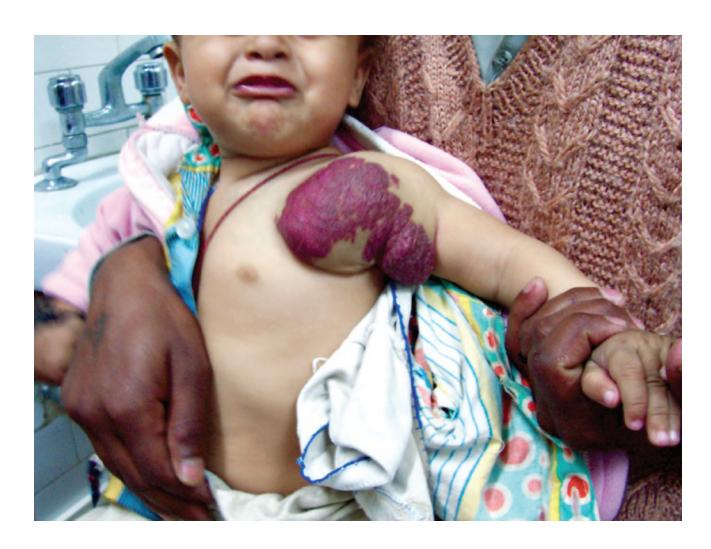
- a. What is the best description of this lesion?
- b. How do you classify these lesions?
- c. Name the immunohistochemical marker that separates infantile hemangiomas from other vascular malformations.
- d. Give two complications of this condition.
Answer
- a. Infantile (Strawberry) Hemangioma.
- b. Classification:
- By depth: Superficial, Deep, and Mixed (Compound)
- By biology (ISSVA): Vascular tumors (proliferating) vs Vascular malformations (structural).
- c. GLUT-1 (Glucose Transporter-1) positive in infantile hemangiomas.
- d. Complications: Ulceration, bleeding, secondary infection, visual axis obstruction / amblyopia (periorbital), airway obstruction (subglottic).
VVK14-023
Ocular Motor Palsies:
- a. Define and elaborate the nerve involved in:
- i. External ophthalmoplegia
- ii. Internal ophthalmoplegia
- b. Define internuclear ophthalmoplegia and name the tract involved.
Answer
- a. Definitions:
- i. External ophthalmoplegia: Paralysis of extraocular muscles supplied by 3rd (Oculomotor), 4th (Trochlear), and/or 6th (Abducens) cranial nerves with sparing of pupillary sphincter.
- ii. Internal ophthalmoplegia: Paralysis of intrinsic pupillary and ciliary muscles (Parasympathetic fibers of 3rd CN) leading to fixed dilated pupil and loss of accommodation.
- b. Internuclear Ophthalmoplegia (INO): Impairment of conjugate horizontal eye movement characterized by adduction deficit in ipsilateral eye and horizontal nystagmus of abducting contralateral eye; caused by a lesion in the Medial Longitudinal Fasciculus (MLF) in the brainstem.
VVK14-024
A 2-year-old boy swallowed a hearing aid battery 4 hours back. Chest X-ray done after 4 hours showed battery located in the upper third of the esophagus. Child is playful and stable hemodynamically with no clinical symptomatology. What will be next step in your management and why?
Answer
Emergency rigid/flexible endoscopic retrieval of the button battery from the esophagus.
Reason: Button batteries lodged in the esophagus cause rapid liquefaction necrosis and esophageal perforation within 2 to 4 hours due to generation of external electrical current, release of sodium hydroxide (alkali burn), and direct pressure necrosis.
VVK14-025
Dermatoglyphics:
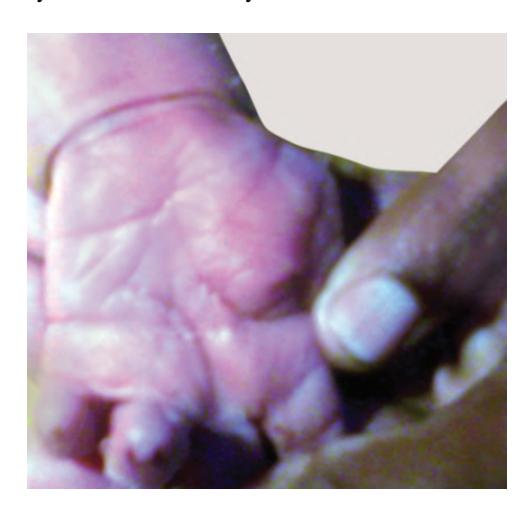
- a. What is dermatoglyphics?
- b. What are ulnar loops and what is their significance?
- c. What is a triradius and where is it formed?
- d. What is the normal 'atd' angle? What happens to the angle in Down's syndrome?
- e. What is Sydney line and Kennedy crease?
Answer
- a. The study of epidermal epidermal ridge patterns on the palmar and plantar surfaces of hands and feet.
- b. Ridge pattern that opens toward the ulnar side of the hand (most common pattern in normal individuals; high frequency of ulnar loops on all digits is characteristic of Down syndrome).
- c. A triradius is the confluence of three opposing ridge systems forming a Y-shape; normally found beneath each finger base (a, b, c, d) and at the proximal palm base (t).
- d. Normal atd angle:
. In Down syndrome, the axial triradius is displaced distally ( ), widening the atd angle to . - e. Creases:
- Sydney line: Extension of proximal transverse palmar crease completely across the palm to the ulnar border.
- Kennedy crease: Deep vertical crease between first and second toes on the sole (associated with Down syndrome).
VVK14-026
Answer the following questions on Horner syndrome:
- a. What are its four classical components?
- b. What is the anatomical cause for this diagnosis?
- c. How do you confirm your diagnosis pharmacologically?
Answer
- a. Classical Triad / Tetrad:
- i. Partial ptosis (paralysis of Müller's superior tarsal muscle)
- ii. Miosis (pupillary constriction due to unopposed parasympathetic tone)
- iii. Anhidrosis (loss of ipsilateral facial sweating)
- iv. Apparent enophthalmos (and heterochromia iridis if congenital /
years)
- b. Interruption of the 3-neuron sympathetic pathway supplying the eye (from hypothalamus
ciliospinal center of Budge C8-T2 superior cervical ganglion orbit). - c. Pharmacological tests:
- 4–10% Cocaine test: Normal pupil dilates; Horner pupil fails to dilate.
- 0.5–1.0% Apraclonidine test: Reversal of anisocoria (Horner pupil dilates due to denervation supersensitivity).
- 1% Hydroxyamphetamine test: Differentiates preganglionic from postganglionic lesion.
VVK14-027
Study the smear shown below and answer the following questions:
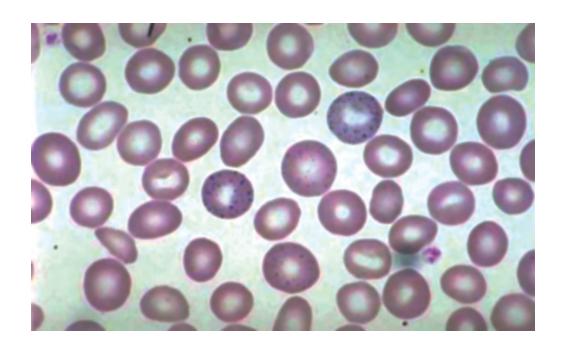
- a. Identify the abnormality shown in the smear.
- b. Give 2 differential diagnoses for this condition.
- c. Describe Porter Index.
Answer
- a. Basophilic Stippling (Punctate basophilia in erythrocytes due to ribosomal aggregation).
- b. Differential diagnoses:
- i. Lead Poisoning (Plumbism)
- ii. Thalassemia / Sideroblastic anemia
- iii. Pyrimidine 5'-nucleotidase deficiency
- c. Porter Index (Desferal Therapeutic Index):
Calculated to monitor chelation safety; index must be keptto prevent deferoxamine-induced ototoxicity and retinal toxicity.
VVK14-028
A 4-year-old male child is brought with a history of developmental delay, lethargy and constipation. He is found to have mild intellectual disability and sensory neuropathy. He is from low socioeconomic group and his father is a laborer in a battery recycling workshop.
- a. What is your most probable diagnosis?
- b. What test in urine will support the diagnosis?
- c. What treatment options are available for this condition?
- d. What is the blood lead level indication for chelation therapy?
Answer
- a. Lead Poisoning (Plumbism).
- b. Elevated urinary Coproporphyrin (CPU
) and urinary Delta-Aminolevulinic Acid (ALA-U ). - c. Chelation therapy:
- Oral DMSA (Succimer)
- Parenteral
+ Dimercaprol (BAL) for severe envenomation / lead encephalopathy
- d. Chelation is indicated if venous blood lead level is
(normal ).
VVK14-029
A 13-year-old, obese boy has been complaining of persistent knee pain and has developed a limp for several weeks. Physical examination of the knee is normal, but shows limited hip motion on the left. As the hip is flexed, the leg goes into obligatory external rotation.
- a. What is the most likely diagnosis?
- b. What characteristic sign is seen on X-ray of pelvis?
- c. Mention two most serious complications of this condition.
Answer
- a. Slipped Capital Femoral Epiphysis (SCFE).
- b. Radiological signs:
- Blanch sign of Steel (double density crescent from overlapping displaced metaphysis and epiphysis)
- Trethowan's sign / Klein's line fails to intersect lateral aspect of femoral head.
- c. Avascular Necrosis (AVN) / Osteonecrosis of femoral head and Chondrolysis.
VVK14-030
Study the photo below and answer the questions:
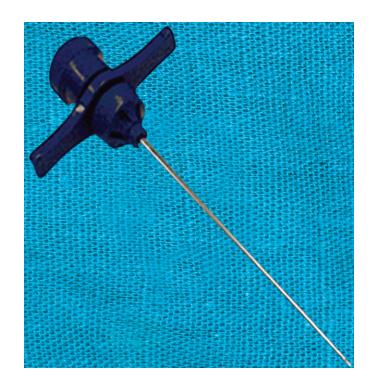
- a. What is this instrument?
- b. Name the procedure for which this instrument is used.
- c. What is the minimum platelet count to be kept prior to this procedure?
Answer
- a. Jamshidi Bone Marrow Biopsy Needle.
- b. Bone marrow trephine core biopsy.
- c. No absolute platelet cutoff is required (thrombocytopenia alone is not a contraindication; manual pressure is maintained post-procedure).
VVK14-031
You are working in the emergency department and a 4-year-old child with ALL on induction therapy (vincristine, L-asparaginase, prednisone) presents with severe abdominal/back pain, vomiting, guarding, serum
- a. What is your diagnosis for the acute presentation?
- b. How would you manage this child?
Answer
- a. L-asparaginase / steroid-induced Acute Pancreatitis complicated by Diabetic Ketoacidosis (DKA).
- b. Management:
- Immediately stop offending drugs (L-asparaginase and high-dose steroids).
- Treat DKA with IV fluid replacement, continuous regular insulin infusion (
), and potassium monitoring. - Bowel rest, IV analgesia (opioids), serum lipase/amylase monitoring, and abdominal ultrasound.
VVK14-032
This 7-year-old boy, born of a consanguineous marriage was brought with history of progressive darkening of the skin, nails and teeth, noted by the parents since infancy. The child was unable to tolerate exposure to sunlight due to pain on exposure. Clinically, he was pale, with brownish discoloration of the skin, sclera, teeth, and nails. Liver and spleen were palpable 6 cm and 5 cm below the costal margin. Investigations revealed a hemoglobin of 6 g/dL, with a serum bilirubin (indirect) of 1.8 mg/dL.
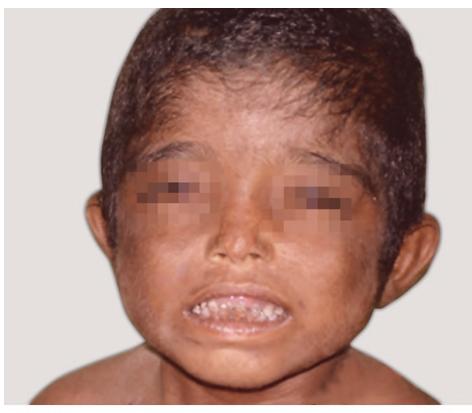
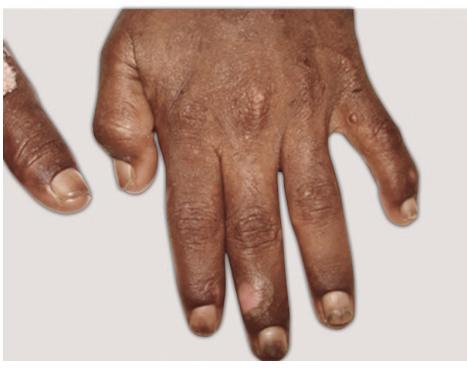
- a. What is the most probable diagnosis?
- b. What is the screening investigation that you will perform?
- c. Name three other causes of generalized skin darkening other than excessive sun exposure.
- d. Name three drugs that can cause an acute life-threatening crisis in this child.
Answer
- a. Congenital Erythropoietic Porphyria (Günther Disease) / Erythropoietic Protoporphyria.
- b. Wood's lamp examination of urine and teeth (erythrodontia showing pink-red fluorescence under UV light) and urinary/fecal porphyrin quantification.
- c. Causes of generalized hyperpigmentation: Addison's disease, Hemochromatosis, Niemann–Pick disease, Chronic renal failure, Phenothiazine / busulfan toxicity.
- d. Porphyrinogenic drugs: Barbiturates (Phenobarbitone), Sulfonamides, Carbamazepine, Phenytoin, Griseofulvin.
VVK14-033
A 10-year-old presents to pediatric OPD with these painful, hot, erythematous nodules on both shins:
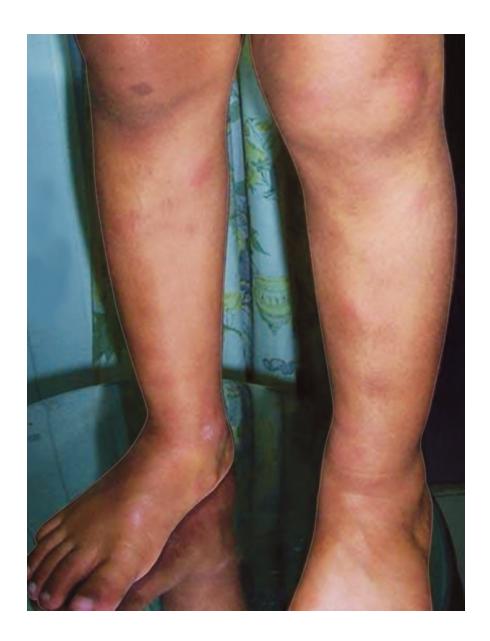
- a. What is the diagnosis?
- b. List 5 conditions which may be associated with this diagnosis.
Answer
- a. Erythema Nodosum (Septal Panniculitis).
- b. Associated conditions:
- i. Infections: Streptococcal pharyngitis (most common), Primary Tuberculosis, Salmonella, Yersinia, EBV, Histoplasmosis.
- ii. Inflammatory Bowel Disease: Crohn's disease, Ulcerative colitis.
- iii. Systemic diseases: Sarcoidosis (Löfgren syndrome), Behçet disease, SLE.
- iv. Drugs: Sulfonamides, Penicillins, Oral contraceptives.