MNJ34-001
A 5-year-old girl presented with complaints of recurrent ear-related problems. She also developed mild-to-moderate conductive hearing loss. She was managed with a surgical procedure due to non-response to medical management. See the otoscopic images below (Image A: Preoperative; Image B: Postoperative):
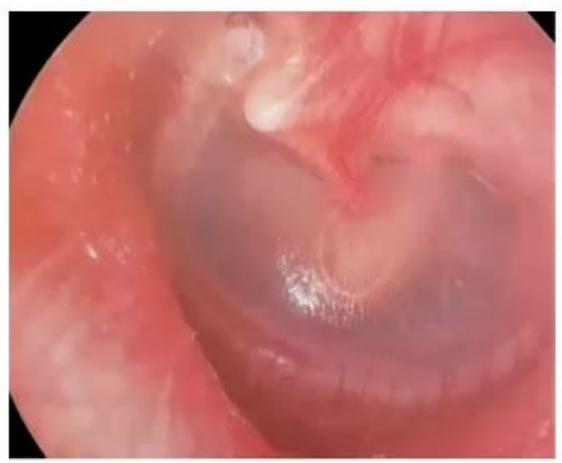
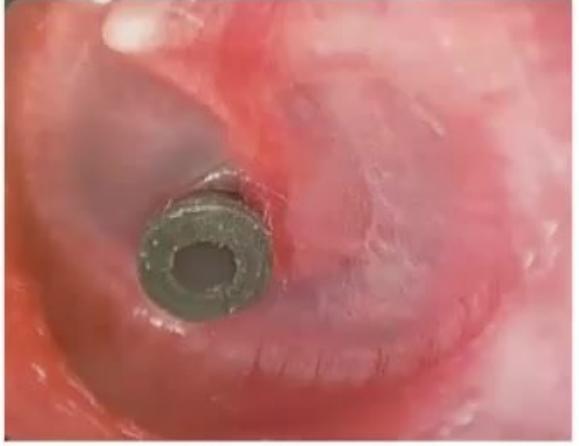
- What are the findings in Image A and Image B?
- What are the indications for this operative procedure in these cases?
- What are the possible complications after this procedure?
Answer
- Findings:
- Image A (Preoperative): Chronic tympanic membrane (TM) retraction with Otitis Media with Effusion (OME / glue ear).
- Image B (Postoperative): Myringotomy with tympanostomy / grommet tube placement (in situ, patent lumen).
- Indications for tympanostomy tube insertion:
- Persistent bilateral otitis media with effusion (OME) for ≥3 months with documented hearing impairment (≥20–30 dB threshold).
- Unilateral OME persisting for ≥6 months with symptoms/developmental risk.
- Recurrent acute otitis media (AOM) (≥3 episodes in 6 months or ≥4 episodes in 12 months with at least 1 in preceding 6 months).
- Persistent Eustachian tube dysfunction with severe retraction pocket / atelectasis of the tympanic membrane.
- Suppurative complications of acute otitis media (e.g., facial nerve palsy, mastoiditis).
- Complications of tympanostomy tube:
- Postoperative otorrhea / secondary infection
- Blockage / obstruction of tube lumen (cerumen/mucus)
- Premature extrusion of the tube
- Persistent tympanic membrane perforation (after tube extrusion)
- Tympanosclerosis / myringosclerosis
- Retained / non-extruding grommet tube requiring surgical removal
- Inward displacement / cholesteatoma formation (rare)