MNJ25-001
Oseltamivir:
- Indications for this drug.
- Mechanism of action.
- Dose and duration of therapy in pediatric H1N1 Influenza A infection.
- Which drug when co-administered improves the half-life of oseltamivir?
- Which vaccine is contraindicated within 48 hours of cessation of oseltamivir therapy?
Answer
-
Indications:
- Treatment of uncomplicated acute illness due to Influenza A and B infection in children
weeks of age who have been symptomatic for hours. - Post-exposure and seasonal chemoprophylaxis of Influenza A and B in children
year of age.
- Treatment of uncomplicated acute illness due to Influenza A and B infection in children
-
Mechanism of Action:
- Neuraminidase inhibitor: Competitively inhibits influenza viral neuraminidase enzyme, preventing the cleavage of sialic acid residues and thereby preventing the release and propagation of newly formed viral progeny from infected host respiratory epithelial cells.
-
Dose and duration of therapy for Influenza A (H1N1) (Duration: 5 days):
- Children
(by weight): : PO twice daily for 5 days : PO twice daily for 5 days : PO twice daily for 5 days : PO twice daily for 5 days
- Infants
: : (or ) PO twice daily for 5 days : PO twice daily for 5 days : PO twice daily for 5 days
- Children
-
Drug prolonging half-life:
- Probenecid (inhibits renal tubular secretion of the active metabolite oseltamivir carboxylate, approximately doubling its AUC and half-life).
-
Contraindicated vaccine:
- Live Attenuated Influenza Vaccine (LAIV - Intranasal vaccine) (antivirals inhibit replication of the vaccine virus, blunting efficacy; do not administer LAIV until 48 hours after stopping oseltamivir).
MNJ25-002
Mycophenolate Mofetil (MMF):
- Mechanism of action.
- Indications (any 4).
- Dosage in children.
- Serious adverse effects.
- Drug interactions (any 2).
Answer
-
Mechanism of Action:
- Prodrug of mycophenolic acid (MPA); acts as a potent, selective, uncompetitive, and reversible inhibitor of inosine monophosphate dehydrogenase (IMPDH), blocking the de novo pathway of guanosine nucleotide synthesis on which proliferating T and B lymphocytes strictly depend.
-
Indications (any 4):
- Prophylaxis of organ rejection in solid organ transplantation (Kidney, Liver, Heart)
- Steroid-dependent / frequently relapsing / steroid-resistant Nephrotic Syndrome
- Lupus Nephritis / Systemic Lupus Erythematosus (SLE)
- Autoimmune hepatitis
- Refractory Juvenile Idiopathic Arthritis (JIA) / Dermatomyositis
- Inflammatory Bowel Disease (Crohn's disease, Ulcerative colitis)
- Chronic refractory Immune Thrombocytopenia (ITP) / Myasthenia gravis.
-
Dosage:
PO divided in 2 doses (or in 2 divided doses; max ).
-
Serious adverse effects:
- Hematological / Bone marrow suppression: Leukopenia, neutropenia, pure red cell aplasia, thrombocytopenia.
- Gastrointestinal: Severe diarrhea, abdominal pain, GI ulceration, hemorrhage, and perforation.
- Infections: Increased susceptibility to opportunistic infections (CMV, PJP, BK virus).
- Teratogenicity: Congenital malformations (microtia, cleft lip/palate, cardiac defects) and spontaneous abortion.
-
Drug interactions (any 2):
- Antacids (Al/Mg hydroxide) & Cholestyramine: Decrease absorption and bioavailability of MMF.
- Cyclosporine: Decreases MPA levels via inhibition of MRP-2 biliary excretion.
- Acyclovir / Ganciclovir: Compete for tubular secretion, increasing levels of both drugs in renal impairment.
- Rifampicin / Norfloxacin / Metronidazole: Reduce MPA plasma concentrations.
MNJ25-003
Study the vial of Linezolid IV Injection (
- Which class does this antibiotic belong to?
- What is its antimicrobial spectrum?
- What is the dosage in children?
- What are its important clinical uses?
Answer
-
Class:
- Oxazolidinones (synthetic class of antibacterial agents).
-
Antimicrobial Spectrum:
- Gram-positive organisms: Methicillin-Resistant Staphylococcus aureus (MRSA), Vancomycin-Resistant Enterococcus (VRE - E. faecium and E. faecalis), Penicillin-Resistant Streptococcus pneumoniae (PRSP), Coagulase-negative Staphylococci (S. epidermidis).
- Gram-positive anaerobes: Clostridium perfringens, Peptostreptococcus.
- Mycobacteria: Mycobacterium tuberculosis (MDR-TB, XDR-TB) and atypical mycobacteria.
-
Dosage:
- Neonates
days: IV/PO every 12 hours. - Infants and Children
years: IV/PO every 8 hours (TID). - Children
years & Adults: IV/PO every 12 hours (BID).
- Neonates
-
Important Clinical Uses:
- Complicated skin and soft tissue infections caused by MRSA.
- Nosocomial / community-acquired pneumonia caused by MRSA or PRSP.
- Serious infections caused by Vancomycin-Resistant Enterococci (VRE bacteremia/endocarditis).
- Second-line treatment of Multi-Drug Resistant Tuberculosis (MDR/XDR-TB).
MNJ25-004
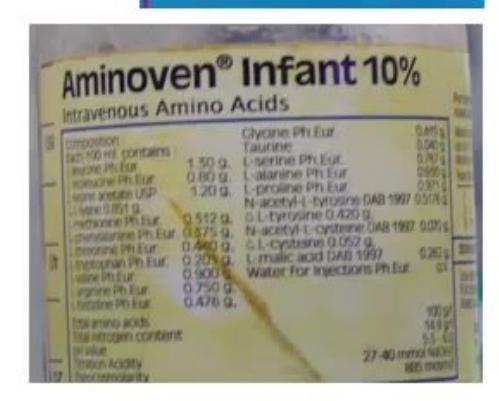
Total Parenteral Nutrition (TPN / Amino Acid Solution):
- Indications for use of parenteral nutrition solutions.
- What is the recommended amino acid dose in neonates/pediatrics?
- When should it be started?
- What are the complications/side effects of parenteral nutrition?
Answer
-
Indications:
- Inability to achieve adequate enteral nutrition for
days (term infants/children) or days (preterm ELBW/VLBW neonates). - Major gastrointestinal anomalies (Necrotizing Enterocolitis, Short Bowel Syndrome, Omphalocele/Gastroschisis, intestinal atresia, prolonged ileus, severe intractable diarrhea).
- Inability to achieve adequate enteral nutrition for
-
Dosage (Amino acids):
- Preterm / Neonates: Start at
on Day 1, advance by to a maximum of . - Older Children:
.
- Preterm / Neonates: Start at
-
When to start:
- Within the first 24–48 hours of life in VLBW/ELBW neonates or as soon as hemodynamic stability is achieved.
-
Complications of Total Parenteral Nutrition:
- Metabolic: Hyperglycemia / hypoglycemia, dyselectrolytemia (hypokalemia, hypophosphatemia, hypomagnesemia - refeeding syndrome), hypertriglyceridemia, azotemia, metabolic acidosis.
- Hepatic / Gastrointestinal: Parenteral Nutrition-Associated Liver Disease (PNALD) / cholestasis, cholelithiasis, gut mucosal atrophy.
- Infectious: Central line-associated bloodstream infections (CLABSI) — bacterial (S. aureus, CoNS, Gram-negative bacilli) or fungal (Candida).
- Vascular: Central venous catheter-related thrombosis, extravasation, embolism.
MNJ25-005
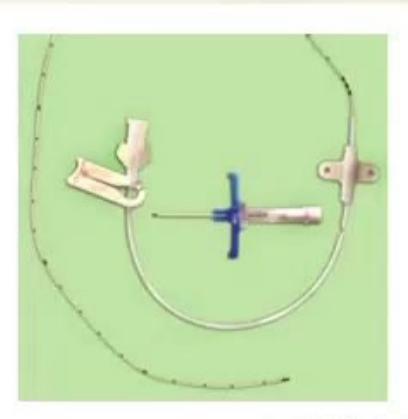
Study the device shown below:
- Identify the product.
- What are the advantages of its use?
- Enumerate five complications.
Answer
-
Identification:
- Peripherally Inserted Central Catheter (PICC line).
-
Advantages:
- Preserves peripheral veins from frequent venipunctures.
- Allows safe administration of hypertonic/irritant infusates (osmolarity
, high dextrose , TPN) and inotropes/vesicant drugs. - Permits long-term reliable central intravenous access (weeks to months).
- Lower risk of insertion complications (e.g. pneumothorax, hemothorax) compared to internal jugular or subclavian central lines.
-
Complications (any 5):
- Central line-associated bloodstream infection (CLABSI) / Catheter-related sepsis
- Catheter-related venous thrombosis / Deep vein thrombosis (DVT)
- Catheter occlusion / intraluminal clotting
- Catheter fracture and tip embolization
- Tip migration / accidental displacement
- Extravasation / phlebitis / chemical cellulitis
- Cardiac arrhythmias (if tip extends into the right atrium).
MNJ25-006
Study the neonatal resuscitation equipment shown below:
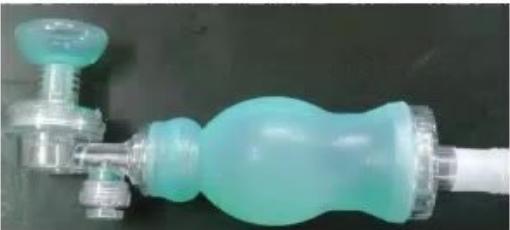
- What is the equipment?
- Identify its main parts.
- Enumerate indications for its use in delivery room.
- What are the contraindications?
- How do you clean and sterilize it?
Answer
-
Equipment:
- Self-inflating Resuscitation Bag (AMBU bag, pediatric/neonatal size:
).
- Self-inflating Resuscitation Bag (AMBU bag, pediatric/neonatal size:
-
Parts:
-
- Air/Oxygen inlet
-
- Oxygen reservoir bag/tubing attachment
-
- Self-inflating silicone bag body
-
- Patient outlet with unidirectional non-rebreathing valve assembly (duckbill/fishmouth valve)
-
- Pressure release / Pop-off safety valve (preset to
)
- Pressure release / Pop-off safety valve (preset to
-
- Pressure manometer attachment port.
-
-
Indications for Positive Pressure Ventilation (PPV):
- Apnea or gasping respirations in a newborn
- Heart rate
despite initial resuscitation steps - Persistent central cyanosis / oxygen saturation below target despite free-flow supplemental oxygen.
-
Contraindications:
- Suspected Congenital Diaphragmatic Hernia (CDH) (bag-and-mask ventilation will distend intrathoracic bowel loops; prompt endotracheal intubation required).
- Non-vigorous newborn with Meconium-Stained Amniotic Fluid (MSAF) prior to airway assessment.
-
Cleaning & Sterilization:
- Completely disassemble all parts; wash thoroughly with warm water and mild enzymatic detergent; rinse with clean water.
- Autoclaving (steam sterilization at
for 15–20 min if heat-resistant silicone) OR Ethylene oxide (EtO) sterilization OR high-level disinfection with glutaraldehyde solution for 20 minutes followed by sterile water rinse and complete air drying.
MNJ25-007
Study the surfactant replacement vial shown below:
- Identify the product.
- What is the dosage?
- What are the indications for use?
- Enumerate three precautions during administration.
Answer
-
Product:
- Exogenous Pulmonary Surfactant (e.g., Beractant / Survanta or Poractant alfa / Curosurf).
-
Dosage:
- Beractant (Survanta - Bovine):
( ) intratracheally. - Poractant alfa (Curosurf - Porcine): Initial dose
( ), followed by ( ) if needed. - Calfactant (Infasurf - Calf):
( ).
- Beractant (Survanta - Bovine):
-
Indications:
- Prophylaxis and rescue treatment of Respiratory Distress Syndrome (RDS) in premature neonates.
- Severe Meconium Aspiration Syndrome (MAS) with secondary surfactant inactivation.
- Persistent Pulmonary Hypertension of the Newborn (PPHN) associated with parenchymal lung disease.
-
Precautions:
- Warm the vial naturally to room temperature before administration; do not shake the vial (to prevent excessive foaming).
- Do not suction the infant for at least 1 hour after instillation unless signs of acute airway obstruction occur.
- Closely monitor lung compliance, chest rise, and
immediately after instillation; promptly wean and peak inspiratory pressure (PIP) to prevent alveolar rupture, pneumothorax, and hyperoxia.
MNJ25-008
Fill in the comparative details about commonly used pulmonary surfactants:
| Surfactant | Source | Dose | Dose Interval | Max Doses |
|---|---|---|---|---|
| Survanta (Beractant) | ||||
| Infasurf (Calfactant) | ||||
| Curosurf (Poractant alfa) | ||||
| Neosurf / Synthetic |
Answer
| Surfactant | Source | Dose | Dose Interval | Max Doses |
|---|---|---|---|---|
| Survanta (Beractant) | Modified Bovine (Cow lung extract) | Every 6 hours | Up to 4 doses | |
| Infasurf (Calfactant) | Calf lung extract (Bovine) | Every 12 hours | Up to 4 doses | |
| Curosurf (Poractant alfa) | Porcine (Pig lung extract) | Initial: |
Every 12 hours | Up to 3 doses |
| Neosurf / Synthetic (Lucinactant/Colfosceril) | Synthetic peptide-containing | Every 6 hours | Up to 3–4 doses |
MNJ25-009
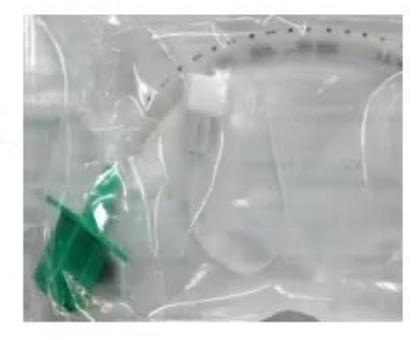
Study the specialized endotracheal tube shown below:

- What is the equipment?
- What are the indications for its use?
- What are the advantages?
Answer
-
Equipment:
- Double-lumen / Side-port Endotracheal Tube (or Closed Tracheal Suction & Instillation ET Tube).
-
Indications:
- Endotracheal administration of surfactant in ventilated neonates.
- Bronchoalveolar lavage (BAL) and diagnostic tracheal aspirate collection.
- Continuous airway pressure monitoring at the distal tracheal level.
-
Advantages:
- Allows precise, uniform intratracheal drug/surfactant instillation without interrupting positive pressure mechanical ventilation.
- Prevents loss of Positive End-Expiratory Pressure (PEEP) and lung derecruitment.
- Minimizes oxygen desaturation, bradycardia, and aerosolization of secretions during drug delivery.
MNJ25-010
Study the device shown in the picture:
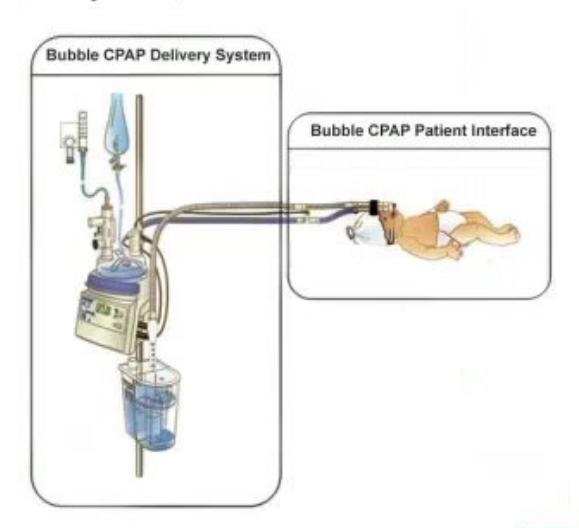
- Identify the equipment.
- Indications for usage.
- Complications (mention any three).
Answer
-
Identification:
- Bubble Continuous Positive Airway Pressure (Bubble CPAP) apparatus / circuit.
-
Indications:
- Respiratory Distress Syndrome (RDS) in preterm neonates (Silverman-Anderson score
). - Transient Tachypnea of the Newborn (TTN).
- Frequent or recurrent Apnea of Prematurity with hypoxemia.
- Post-extubation respiratory support following mechanical ventilation to prevent atelectasis.
- Meconium Aspiration Syndrome (mild-to-moderate) or congenital heart disease with pulmonary congestion.
- Respiratory Distress Syndrome (RDS) in preterm neonates (Silverman-Anderson score
-
Complications (any 3):
- Air leak syndromes: Pneumothorax, pneumomediastinum, pulmonary interstitial emphysema (PIE).
- Nasal trauma: Septal necrosis, columellar erosion, nasal blanching/ulceration.
- Gastric distension ("CPAP belly") leading to diaphragmatic splinting.
- Decreased venous return and reduction in cardiac output due to excessive positive intrathoracic pressure.
MNJ25-011
Study the antibiotic vial shown below:

Meropenem Injection IP:
- Which class does this antibiotic belong to?
- What is its antimicrobial spectrum?
- What is the dosage?
- What are two important side effects?
Answer
-
Class:
- Carbapenems (
-lactam antibiotic family).
- Carbapenems (
-
Antimicrobial Spectrum:
- Ultra-broad spectrum:
- Gram-negative bacilli: ESBL-producing Enterobacteriaceae (E. coli, Klebsiella pneumoniae, Enterobacter), Pseudomonas aeruginosa, Acinetobacter baumannii.
- Gram-positive cocci: Methicillin-sensitive Staphylococcus aureus (MSSA), Streptococcus pneumoniae, Group A and B Streptococci.
- Anaerobes: Bacteroides fragilis, Peptostreptococcus.
- (Inactive against MRSA, Enterococcus faecium, and Stenotrophomonas maltophilia).
- Ultra-broad spectrum:
-
Dosage:
- Standard pediatric dose:
IV every 8 hours. - Severe infections / Febrile neutropenia / Cystic fibrosis / Intra-abdominal infections:
IV every 8 hours. - Bacterial Meningitis:
IV every 8 hours (infused over 30 min to 3 hours).
- Standard pediatric dose:
-
Side Effects:
- Gastrointestinal distress (diarrhea, nausea, vomiting) and Clostridioides difficile colitis.
- Neurotoxicity / seizures (significantly lower risk compared to Imipenem, but can occur in renal impairment).
- Transient elevation of hepatic transaminases and bilirubin.
- Hematologic: Eosinophilia, leukopenia, thrombocytopenia, positive direct Coombs' test.
MNJ25-012
Caffeine Citrate:
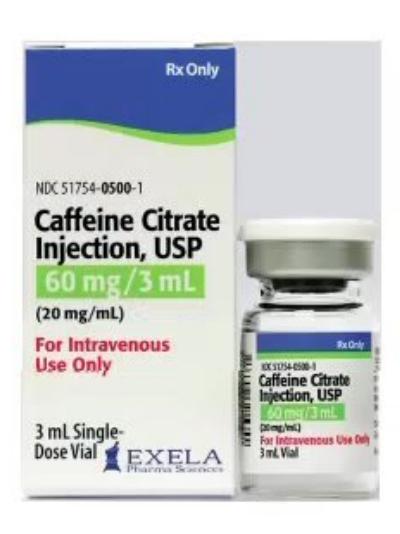

- Which pharmacological group does this drug belong to?
- What is its mechanism of action?
- What are the clinical indications?
- What are the dosages (loading and maintenance)?
- What are the side effects?
Answer
-
Pharmacological group:
- Methylxanthines (Central Nervous System / Respiratory stimulant).
-
Mechanism of Action:
- Non-selective competitive antagonism of central and peripheral Adenosine
and receptors. - Increases sensitivity of the medullary respiratory center to hypercapnia (
). - Phosphodiesterase inhibition leading to increased intracellular cAMP.
- Improves diaphragmatic contractility and muscle tone.
- Non-selective competitive antagonism of central and peripheral Adenosine
-
Indications:
- Prevention and treatment of Apnea of Prematurity (AOP) in preterm infants (
weeks' gestation). - Facilitation of extubation / prevention of extubation failure in mechanically ventilated VLBW neonates.
- CAP trial demonstrated reduction in Bronchopulmonary Dysplasia (BPD) and improved neurodevelopmental outcome.
- Prevention and treatment of Apnea of Prematurity (AOP) in preterm infants (
-
Dosages (Caffeine Citrate):
- Loading dose:
IV or PO single dose (equivalent to caffeine base). - Maintenance dose:
IV or PO once daily (equivalent to caffeine base), started 24 hours after loading dose.
- Loading dose:
-
Side Effects:
- Tachycardia / supraventricular arrhythmias
- Jitteriness, irritability, sleep disturbance, tremors
- Gastroesophageal reflux, vomiting, feeding intolerance, necrotizing enterocolitis
- Diuresis / mild electrolyte loss (hyponatremia).
MNJ25-013
Study the cardiovascular inotropic drug shown below:
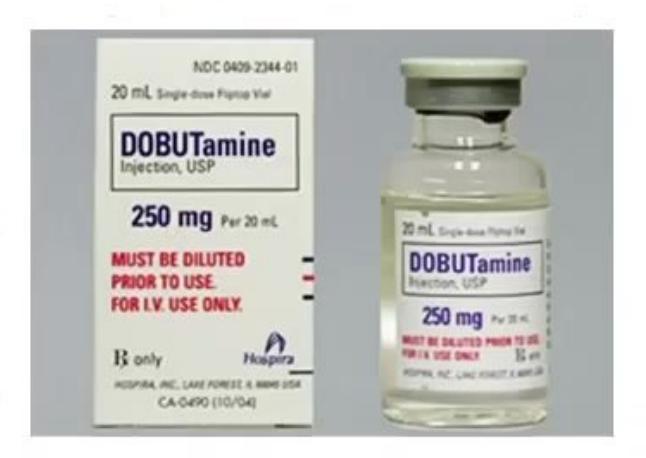
- What is the effect of this drug (Dobutamine) on pulmonary vascular resistance and blood flow?
- What will happen if it is used in a hypovolemic child?
- Predominant mechanism of action.
- Arrange
and adrenergic receptors in order of reducing affinity. - Advantage of this drug over other inotropes.
- Therapeutic dose range.
Answer
-
Effect on Pulmonary Circulation:
- Causes pulmonary vasodilation and decreases Pulmonary Vascular Resistance (PVR), attenuating hypoxic pulmonary vasoconstriction and increasing pulmonary blood flow and right ventricular stroke volume.
-
Effect in a hypovolemic child:
- Precipitates severe systemic hypotension and reflex tachycardia due to peripheral
-mediated vasodilation in the absence of adequate intravascular filling volume. (Always correct hypovolemia prior to starting Dobutamine).
- Precipitates severe systemic hypotension and reflex tachycardia due to peripheral
-
Mechanism of Action:
- Synthetic catecholamine that acts directly as a
-adrenergic receptor agonist, stimulating adenylate cyclase to increase cAMP and intracellular calcium in myocytes, markedly increasing myocardial contractility (positive inotropy) and stroke volume with mild positive chronotropic effects.
- Synthetic catecholamine that acts directly as a
-
Receptor Affinity Ranking:
-
Advantage:
- Potent inotrope with inodilator properties: increases cardiac output while decreasing systemic vascular resistance (afterload) and myocardial filling pressures (preload) with less oxygen consumption and less tachycardia compared to isoproterenol or dopamine.
-
Dose range:
- Continuous IV/IO infusion:
(standard starting dose: ).
- Continuous IV/IO infusion:
MNJ25-014
Rituximab:
- Mechanism of action.
- Indications in pediatrics (any 4).
- Method of administration and premedication.
- Name two important side effects.
Answer
-
Mechanism of Action:
- Genetically engineered chimeric murine/human monoclonal antibody directed against the CD20 antigen on pre-B and mature B lymphocytes. Induces B-cell lysis via complement-dependent cytotoxicity (CDC), antibody-dependent cellular cytotoxicity (ADCC), and induction of apoptosis.
-
Pediatric Indications (any 4):
- Non-Hodgkin Lymphoma (Burkitt's lymphoma, DLBCL) & B-ALL
- Refractory / Chronic Immune Thrombocytopenia (ITP) & Autoimmune Hemolytic Anemia (AIHA)
- Steroid-resistant / Frequent-relapsing Nephrotic Syndrome (especially with calcineurin inhibitor dependence)
- Severe refractory Systemic Lupus Erythematosus (Lupus nephritis)
- Refractory Polyarticular Juvenile Idiopathic Arthritis (JIA) / ANCA-associated vasculitis
- Post-Transplant Lymphoproliferative Disorder (PTLD).
-
Administration & Premedication:
- Premedication (30–60 min prior): Oral Paracetamol (
), IV Antihistamine (Diphenhydramine/Chlorpheniramine), and IV Corticosteroid (Hydrocortisone/Methylprednisolone). - Infusion: Dilute in
Normal Saline or Dextrose to a concentration of . Initiate infusion at ; in the absence of toxicity, increase rate by every 30 minutes up to a maximum rate of .
- Premedication (30–60 min prior): Oral Paracetamol (
-
Two Important Side Effects:
- Acute Infusion Reactions: Fever, chills, urticaria, bronchospasm, angioedema, hypotension.
- Severe Infections & Hypogammaglobulinemia: Prolonged B-cell depletion, opportunistic infections (e.g. Pneumocystis jirovecii, Progressive Multifocal Leukoencephalopathy / PML, Hepatitis B reactivation).
MNJ25-015
Prostaglandin
- What are the indications for administration in neonates?
- Mention four adverse effects of this drug.
- How do you monitor the newborn when the drug is given?
Answer
-
Indications:
- Maintenance of ductal patency in neonates with Ductal-Dependent Congenital Heart Diseases (CHD) until definitive surgery/intervention:
- Ductal-dependent pulmonary blood flow: Pulmonary atresia, critical pulmonary stenosis, severe Tetralogy of Fallot, Tricuspid atresia.
- Ductal-dependent systemic blood flow: Hypoplastic Left Heart Syndrome (HLHS), Interrupted Aortic Arch, Critical Coarctation of the Aorta, Critical Aortic Stenosis.
- Transposition of the Great Arteries (TGA): To promote bidirectional ductal shunting and improve mixing.
- Maintenance of ductal patency in neonates with Ductal-Dependent Congenital Heart Diseases (CHD) until definitive surgery/intervention:
-
Four Adverse Effects:
- Apnea (occurs in
of neonates, especially ELBW/VLBW) - Hypotension and systemic cutaneous vasodilation/flushing
- Hyperthermia / fever (temperature
) - Seizure-like motor activity / twitching
- Cortical hyperostosis / periosteal reaction of long bones (with prolonged infusions
days) - Hypokalemia and platelet aggregation inhibition (bleeding tendency).
- Apnea (occurs in
-
Monitoring during infusion:
- Continuous respiratory monitoring and pulse oximetry with immediate availability of bag-and-mask ventilation and intubation equipment at bedside.
- Continuous arterial blood pressure / non-invasive BP monitoring.
- Continuous heart rate and ECG monitoring.
- Temperature monitoring (watch for fever/hypothermia).
- Serial arterial blood gases (
) and serum electrolytes.
MNJ25-016
Vigabatrin:


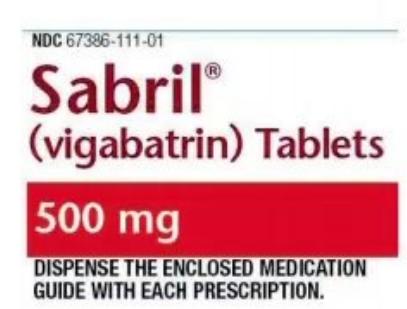

- Mode of action.
- Dosage in pediatrics.
- Important side effects.
- Mention important clinical uses.
Answer
-
Mode of Action:
- Irreversible "suicide" inhibitor of GABA transaminase (GABA-T), the enzyme responsible for catabolizing Gamma-Aminobutyric Acid (GABA), leading to a sustained, profound increase in synaptic and extracellular GABA concentrations in the brain.
-
Dosage:
- Infantile Spasms: Initial dose of
PO divided BID, titrated up by every 3–7 days to a target maintenance dose of (maximum ).
- Infantile Spasms: Initial dose of
-
Important Side Effects:
- Permanent bilateral concentric visual field constriction (retinal toxicity / visual field loss in 30–40% of chronically treated patients; requires baseline and regular visual field testing / electroretinography - ERG).
- Somnolence, sedation, fatigue, hypotonia.
- Transient MRI T2/DWI signal abnormalities in the thalamus, globus pallidus, and brainstem.
- Weight gain and behavioral changes.
-
Important Clinical Uses:
- First-line drug of choice for Infantile Spasms (West syndrome) associated with Tuberous Sclerosis Complex (TSC) (efficacy
). - Alternative first-line for cryptogenic/other etiologies of Infantile Spasms.
- Adjunctive therapy for refractory focal / partial seizures.
- First-line drug of choice for Infantile Spasms (West syndrome) associated with Tuberous Sclerosis Complex (TSC) (efficacy
MNJ25-017
Study the diagnostic and therapeutic equipment shown below:
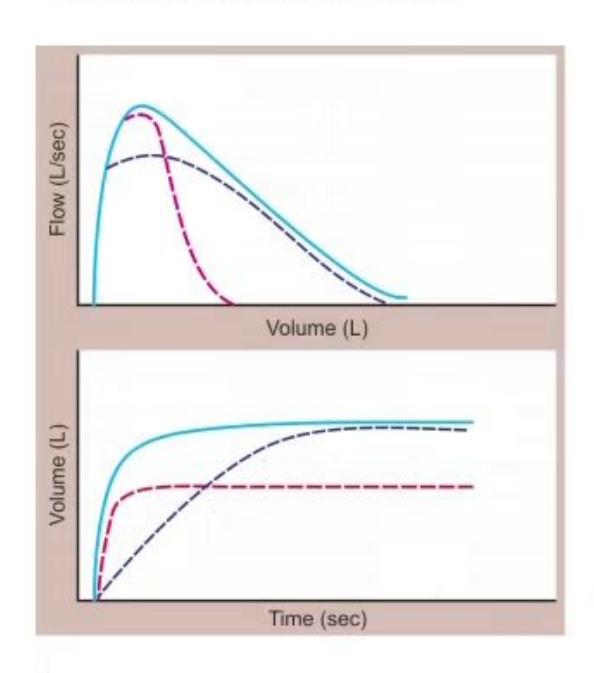
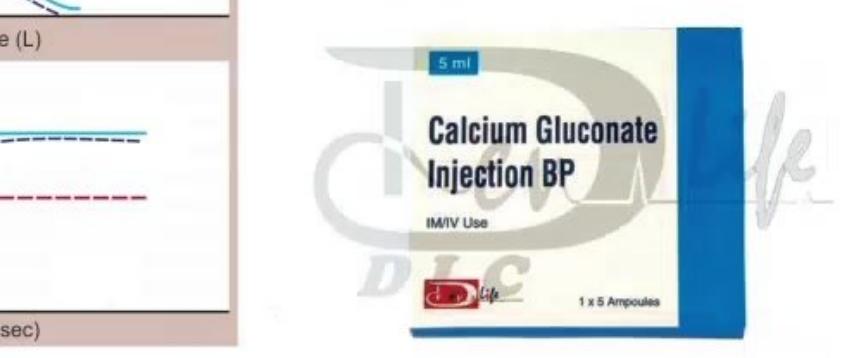
Part A (Diagnostic Graph - Figure 13):
- What test is performed?
- What are the clinical indications?
- What 2 important parameters does it measure?
- Based on these results, how do you differentiate respiratory disorders?
Part B (Drug Ampoule - Figure 14 - 10% Calcium Gluconate):
- What is the elemental calcium content of
of Calcium Gluconate? - Which intravenous solution is incompatible if mixed with this drug?
- Give 2 clinical indications for its use.
Answer
Part A: Spirometry (Pulmonary Function Test)
- Test performed: Spirometry (Flow-Volume Loop & Volume-Time Curve).
- Indications: Evaluation of chronic cough, wheezing, dyspnea; diagnosis and monitoring of Asthma and Cystic Fibrosis; differentiating obstructive from restrictive lung disease; assessing response to bronchodilators.
- Parameters measured:
- Forced Vital Capacity (FVC)
- Forced Expiratory Volume in 1 second (
) - Ratio of
.
- Pattern Differentiation:
- Obstructive Pattern (e.g. Asthma): Normal/reduced
, reduced , reduced , scooped out expiratory flow loop. Significant bronchodilator reversibility ( and increase in ). - Restrictive Pattern (e.g. Interstitial lung disease, chest wall deformities): Reduced
, reduced , normal or elevated . - Mixed Pattern: Reduced
, markedly reduced , reduced .
- Obstructive Pattern (e.g. Asthma): Normal/reduced
Part B: 10% Calcium Gluconate Injection
- Elemental Calcium Content:
. - (In contrast,
).
- Incompatible Solution:
- Sodium Bicarbonate (forms insoluble Calcium Carbonate precipitate) and Phosphate / Ceftriaxone solutions (forms fatal calcium-ceftriaxone crystal precipitates in lungs/kidneys).
- Indications (2):
- Acute symptomatic hypocalcemia (tetany, laryngospasm, hypocalcemic seizures).
- Cardioprotection / membrane stabilization in severe Hyperkalemia or Hypermagnesemia.
- Calcium channel blocker overdose.
MNJ25-018
Adenosine:
- Which class of drug is this?
- What are the mode of administration and doses (including maximum single dose)?
- Mode of action.
- What points should you keep in mind while administering this drug?
- Which drug reduces its effectiveness?
- What parameters will you monitor while giving this drug?
- What is the half-life of this drug?
- Mention common side effects.
- Mode of elimination / metabolism.
- What strength of injection is commercially available?
Answer
-
Class:
- Purinergic Antiarrhythmic agent (endogenous purine nucleoside).
-
Route and Doses:
- Route: Rapid IV push followed immediately by rapid flush of
normal saline. - First dose:
rapid IV push (maximum first dose: ). - Second dose (if SVT does not terminate in 1–2 min):
rapid IV push (maximum second dose: ).
- Route: Rapid IV push followed immediately by rapid flush of
-
Mechanism of Action:
- Agonist at myocardial and AV nodal Adenosine
receptors, coupled to proteins inhibits adenylate cyclase, activates inward-rectifying potassium channels ( ), and inhibits calcium influx hyperpolarizes cell membrane, slows AV nodal conduction velocity, and prolongs AV node refractory period, breaking re-entrant circuits involving the AV node.
- Agonist at myocardial and AV nodal Adenosine
-
Administration Precautions:
- Administer as a rapid bolus over 1–2 seconds into a large-bore proximal IV access (e.g. antecubital vein) via a three-way stopcock, followed immediately by a rapid
normal saline flush; elevate extremity. - Have emergency airway and resuscitation equipment with continuous ECG recording available.
- Administer as a rapid bolus over 1–2 seconds into a large-bore proximal IV access (e.g. antecubital vein) via a three-way stopcock, followed immediately by a rapid
-
Drug reducing effectiveness:
- Methylxanthines (Theophylline, Aminophylline, Caffeine) — act as competitive adenosine receptor antagonists.
-
Monitoring:
- Continuous ECG strip recording (anticipate brief transient sinus arrest, complete AV block, or ventricular ectopy at termination of SVT), continuous pulse oximetry, and blood pressure.
-
Half-life:
- Extremely short:
(eliminated in seconds).
- Extremely short:
-
Side effects:
- Facial flushing, lightheadedness, dyspnea / bronchospasm, transient chest pain / apprehension, transient bradycardia / asystole.
-
Elimination:
- Rapidly taken up into erythrocytes and vascular endothelial cells via nucleoside transporters, then rapidly deaminated by adenosine deaminase into inosine or phosphorylated into AMP.
-
Available strength:
vial ( ).
MNJ25-019
Amiodarone:
- Which class of antiarrhythmic drug is this?
- Clinical uses of this drug.
- Commercially available strength.
- Route and dose of administration.
- Side effects (acute and long-term).
- Contraindications.
Answer
-
Class:
- Class III Antiarrhythmic agent (Vaughan-Williams classification; possesses Class I sodium-channel blocking, Class II non-competitive
-blocking, Class III potassium-channel blocking, and Class IV calcium-channel blocking properties).
- Class III Antiarrhythmic agent (Vaughan-Williams classification; possesses Class I sodium-channel blocking, Class II non-competitive
-
Uses:
- Pulseless VT / Ventricular Fibrillation (VF) in cardiac arrest refractory to defibrillation.
- Hemodynamically stable Ventricular Tachycardia (VT with pulse).
- Supraventricular Tachycardia (SVT) / Atrial fibrillation/flutter refractory to adenosine and cardioversion.
- Junctional Ectopic Tachycardia (JET) post-cardiac surgery.
-
Available strength:
( ampoules).
-
Route and Dosage:
- Cardiac Arrest (Pulseless VT/VF):
rapid IV/IO push (max single dose ). - Perfusing Tachyarrhythmias (SVT/VT with pulse):
IV/IO infused over 20–60 minutes (max ); followed by continuous IV maintenance infusion of (maximum cumulative daily dose: or ).
- Cardiac Arrest (Pulseless VT/VF):
-
Side effects:
- Acute: Severe hypotension, bradycardia, AV block, phlebitis, prolonged QTc interval / Torsades de Pointes.
- Chronic: Pulmonary toxicity (interstitial pneumonitis / pulmonary fibrosis), thyroid dysfunction (hypothyroidism ~85%, hyperthyroidism), corneal microdeposits, hepatotoxicity / elevated transaminases, peripheral neuropathy, photosensitivity, blue-gray skin discoloration.
-
Contraindications:
- Severe sinus node dysfunction / sick sinus syndrome (without pacemaker)
- Second- or third-degree AV block (without functioning pacemaker)
- Cardiogenic shock
- Known severe iodine / amiodarone hypersensitivity.
MNJ25-020
Systemic Corticosteroids in Pediatrics:
- Write down two clinical indications for each:
- A. Dexamethasone
- B. Hydrocortisone
- C. Methylprednisolone
- What routes can each be administered?
- What is the peak onset of action for A and B?
- What are the recommended doses of Dexamethasone for Croup and Cerebral Edema?
Answer
-
Clinical Indications (2 each):
- A. Dexamethasone:
- Acute Laryngotracheobronchitis (Croup)
- Vasogenic Cerebral Edema (brain tumor, brain abscess)
- Bacterial Meningitis adjunct (H. influenzae / S. pneumoniae)
- Antiemetic for chemotherapy-induced nausea/vomiting.
- B. Hydrocortisone:
- Acute Adrenal Crisis / Primary or Secondary Adrenal Insufficiency
- Congenital Adrenal Hyperplasia (CAH)
- Vasopressor-refractory Septic Shock
- Acute severe Anaphylaxis (adjunct).
- C. Methylprednisolone:
- Acute Severe Asthma / Status Asthmaticus
- High-dose pulse therapy for Lupus Nephritis / Rapidly Progressive Glomerulonephritis
- Severe Acute Spinal Cord Injury
- IVIG-resistant Kawasaki Disease / Multisystem Inflammatory Syndrome in Children (MIS-C).
- A. Dexamethasone:
-
Routes of administration:
- Dexamethasone: Oral (PO), Intravenous (IV), Intramuscular (IM).
- Hydrocortisone: IV, IM, PO (topical formulations also exist).
- Methylprednisolone: IV, IM, PO.
-
Peak onset of action:
- Dexamethasone:
(Long-acting, biological half-life: ). - Hydrocortisone:
IV (Short-acting, biological half-life: ).
- Dexamethasone:
-
Dexamethasone Doses:
- Croup:
PO/IM/IV single dose (maximum dose: ). - Cerebral Edema: Loading dose of
IV, followed by divided every 6 hours (maximum: ).
- Croup:
MNJ25-021
Fill in the comparative table for emergency inotropic and vasopressor agents:
| Feature | Epinephrine (Adrenaline) | Dobutamine |
|---|---|---|
| 1. Class | ||
| 2. Indications | ||
| 3. Available formulation | ||
| 4. Doses | ||
| 5. Primary receptor action | ||
| 6. Maximum infusion rate |
Answer
| Feature | Epinephrine (Adrenaline) | Dobutamine |
|---|---|---|
| 1. Class | Natural catecholamine / Inotrope & potent vasopressor | Synthetic catecholamine / Inotrope with inodilator properties |
| 2. Indications | Cardiac arrest (NRP/PALS), Anaphylactic shock, Severe septic shock, Severe croup/stridor (nebulized) | Cardiogenic shock, Congestive heart failure, Septic shock with myocardial dysfunction |
| 3. Available formulation | ||
| 4. Doses | • Cardiac arrest: • Anaphylaxis: • Shock infusion: |
• Continuous IV/IO infusion: |
| 5. Primary receptor action | • Low dose ( • High dose ( |
• Potent myocardial inotropy ( |
| 6. Maximum infusion rate |