VVK04-001
Match each enzyme listed below with the appropriate action:
- a. Adenylyl cyclase
- b. 5
-reductase - c. 17
-hydroxylase - d. 20,22-desmolase (Cholesterol side-chain cleavage enzyme)
- e. 21-hydroxylase
Actions:
- Is activated by LH
- Converts androstenedione to testosterone
- Converts testosterone to dihydrotestosterone
- Catalyzes the first step in the production of hormonal steroids from cholesterol
- Causes massive adrenal enlargement when congenitally deficient, associated with salt wasting, and can lead to virilization of female external genitalia
Answer
- a. Adenylyl cyclase
1. Is activated by LH (via G-protein coupled receptor) - b. 5
-reductase 3. Converts testosterone to dihydrotestosterone - c. 17
-hydroxylase Converts pregnenolone/progesterone to 17-OH intermediates - d. 20,22-desmolase
4. Catalyzes the first step in steroidogenesis from cholesterol - e. 21-hydroxylase
5. Most common cause of Congenital Adrenal Hyperplasia (massive adrenal enlargement, virilization of 46,XX, salt wasting)
VVK04-002
Match the following menstrual terms with their definitions:
- a. Menorrhagia
- b. Metrorrhagia
- c. Menometrorrhagia
- d. Oligomenorrhea
- e. Polymenorrhea
- f. Hypomenorrhea
Definitions:
- Bleeding occurring irregularly between normal menstrual cycles
- Excessive amount (
) or prolonged duration ( ) of menstrual bleeding at regular intervals - Excessive amount of bleeding occurring at irregular frequencies/intervals
- Menstrual cycles occurring at intervals
- Menstrual cycles occurring at intervals
- Scanty or abnormally low volume of menstrual bleeding
Answer
- a. Menorrhagia (Hypermenorrhea)
2. Excessive amount ( ) or prolonged duration ( ) at regular intervals - b. Metrorrhagia
1. Bleeding occurring irregularly between normal menstrual cycles - c. Menometrorrhagia
3. Excessive bleeding at irregular, frequent intervals - d. Oligomenorrhea
4. Infrequent menstrual periods occurring apart - e. Polymenorrhea
5. Abnormally frequent menstrual periods occurring apart - f. Hypomenorrhea
6. Regular but abnormally light/scanty menstrual flow
VVK04-003
Match the characteristic urine odor with the Inborn Error of Metabolism (IEM):
- a. Sweaty feet / cheesy odor
- b. Boiled cabbage / rancid butter
- c. Musty / mousy odor
- d. Maple syrup / sweet caramel odor
Disorders:
- Phenylketonuria (PKU)
- Tyrosinemia type I
- Isovaleric acidemia / Glutaric aciduria type II
- Maple syrup urine disease (MSUD)
Answer
- a. Sweaty feet
3. Isovaleric acidemia / Glutaric aciduria type II - b. Boiled cabbage / rancid
2. Tyrosinemia type I - c. Musty / mousy odor
1. Phenylketonuria (PKU) - d. Maple syrup / burnt sugar
4. Maple syrup urine disease (MSUD)
VVK04-004
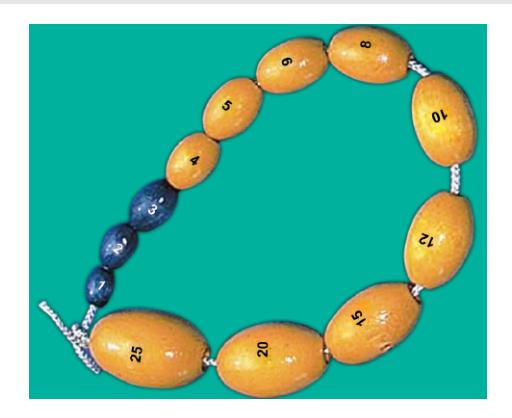
- a. What is the device called?
- b. What is its use?
- c. What is the significance of the change in color?
- d. What do the numbers indicate?
Answer
- a. Prader Orchidometer (Prader beads).
- b. Measurement of testicular volume in pediatric and adolescent clinical examination.
- c. Color coding distinguishes developmental stages:
- Yellow/light beads (1–3 mL): Prepubertal testes.
- Orange/intermediate beads (4–12 mL): Pubertal onset and mid-puberty (
defines onset of male puberty). - Red/dark beads (15–25 mL): Post-pubertal / adult testicular volume.
- d. Testicular volume in milliliters (mL or cc).
VVK04-005
An infant is being evaluated for Disorders of Sex Development (DSD). You find clitoral hypertrophy and other signs of virilization. On investigations, serum cortisol levels are low, while ACTH and Plasma Renin Activity (PRA) are markedly elevated. ACTH stimulation test reveals markedly increased 17-OH progesterone. Serum testosterone is also elevated. Child also has severe hyponatremia and hyperkalemia.
- a. What is your diagnosis?
- b. What is the mode of inheritance?
- c. What is the treatment for this baby?
Answer
- a. Congenital Adrenal Hyperplasia (CAH) due to 21-hydroxylase deficiency (Classic salt-wasting type in a 46,XX infant).
- b. Autosomal recessive.
- c. Management:
-
- Glucocorticoid replacement: Hydrocortisone (10–15 mg/m²/day in 3 divided doses).
-
- Mineralocorticoid replacement: Fludrocortisone (0.05–0.2 mg/day).
-
- Sodium chloride supplementation: 1–3 g/day (17–51 mEq/day) during infancy.
-
- Emergency treatment of adrenal crisis (IV normal saline bolus + IV hydrocortisone).
-
- Feminizing genitoplasty (clitoroplasty, vaginoplasty) in childhood.
-
VVK04-006
A 9-year-old boy is brought because his mother feels he is short for his age. His height is 80 cm. His father's height is 160 cm and mother's height is 148 cm. His Upper Segment to Lower Segment (US/LS) ratio is 1.5:1.
- a. What type of short stature does this child have?
- b. What is the mid-parental height of this child?
- c. Name 3 causes for the short stature in this child.
- d. What is the normal US/LS ratio at this age?
- e. Name 3 conditions in which there is advanced / abnormally increased US/LS ratio.
Answer
- a. Disproportionate short stature (short-limb dwarfism).
- b. Mid-parental height (MPH) for boys:
- c. Causes of short-limb disproportionate short stature:
-
- Achondroplasia / Hypochondroplasia
-
- Congenital hypothyroidism (Cretinism)
-
- Rickets / Skeletal dysplasias (e.g., Osteogenesis imperfecta)
-
- d. Normal US/LS ratio at 9–10 years: Approximately 1.0:1 (or 1.05:1).
- e. Conditions with abnormally increased US/LS ratio (trunk > limbs):
- Achondroplasia, untreated congenital hypothyroidism, Turner syndrome, and skeletal dysplasias.
VVK04-007
An infant is evaluated for seizures. The following are the laboratory reports:
-
Serum Calcium: 6.6 mg/dL
-
Serum Phosphorus (PO4): 9.3 mg/dL
-
Serum Alkaline Phosphatase (SAP): 500 IU/L (normal)
-
Serum Magnesium: 3.0 mg/dL
-
a. What is the likely diagnosis?
-
b. What would be the levels of PTH and 1,25(OH)2 D3?
-
c. The same infant is also noted to be dark and having mucocutaneous candidiasis. What is the likely diagnosis?
-
d. CT brain is carried out. What finding do you expect in CT brain?
Answer
- a. Hypoparathyroidism (characterized by hypocalcemia and hyperphosphatemia with normal ALP).
- b. Both serum Parathyroid Hormone (PTH) and 1,25-dihydroxyvitamin D3 (
) are low / inappropriately suppressed. - c. Autoimmune Polyglandular Syndrome Type 1 (APS-1 / APECED): Triad of chronic mucocutaneous candidiasis, hypoparathyroidism, and Addison's disease (due to AIRE gene mutation).
- d. Symmetrical bilateral basal ganglia calcification (and subcortical white matter calcification).
VVK04-008
A 6-year-old girl was evaluated for excessive body weight. On examination she had weight of 35 kg and height of 110 cm. She had hyperpigmentation of axilla, groin and neck regions.
- a. What is the body mass index (BMI) of the child? If the BMI of the child is at the 87th percentile, how would you classify her?
- b. What does pigmentation denote? What investigation would you do for the same?
- c. What musculoskeletal problems can this girl suffer?
Answer
- a.
. - Classification: BMI between 85th and 94th percentile is classified as Overweight (or "at risk of overweight"); BMI
th percentile is Obese.
- b. Acanthosis nigricans (denotes severe Insulin Resistance / Hyperinsulinemia). Investigation: Fasting lipid profile, fasting blood glucose, Oral Glucose Tolerance Test (OGTT), and fasting insulin / HOMA-IR.
- c. Musculoskeletal complications of childhood obesity:
-
- Slipped Capital Femoral Epiphysis (SCFE)
-
- Tibia vara (Blount disease)
-
- Genu valgum (knock knees), flat feet, and early osteoarthritis.
-
VVK04-009
A 15-year-old girl with normal breast development was brought with primary amenorrhea. External genitalia showed the presence of a firm labial swelling suggestive of a gonad. The vaginal examination revealed a blind ending vaginal pouch. On ultrasound scanning, uterus and ovaries were not detected.
- a. What is the likely diagnosis?
- b. What do you expect the karyotype to be?
- c. What hormonal tests would you do and what results do you expect?
- d. Should the gonadal mass be removed? If so why?
Answer
- a. Complete Androgen Insensitivity Syndrome (CAIS) (Testicular feminization syndrome).
- b. 46, XY.
- c. Hormonal tests:
- Serum Testosterone: normal or elevated male range.
- Serum LH: elevated (due to lack of androgen negative feedback).
- Serum FSH: normal to slightly elevated.
- Serum Estradiol: normal female follicular range (from peripheral aromatization).
- d. Yes, bilateral gonadectomy (orchiectomy) should be performed after puberty / breast completion to prevent malignant transformation (gonadoblastoma, seminoma / dysgerminoma; ~5–10% risk).
VVK04-010
A 14-year-old female child complained of continuous abdominal pain since 10 days with bouts of diarrhea and vomiting for past 3 days. Since 24 hours, she has also developed weakness of both lower limbs and is unable to walk. Clinically, the child is restless, afebrile with pulse rate of 126/min, blood pressure 188/102 mmHg, diminished tone, power and reflexes in both lower limbs. Deep tendon jerks are not elicitable.
- a. Give two possible differential diagnoses.
- b. Investigations revealed Na: 112 mEq/L, K: 4.2 mEq/L, SGPT: 37 IU/L. The patient is passing dark reddish-brown urine. What is the probable diagnosis?
- c. Suggest one investigation for diagnosis.
- d. What is the treatment for this condition?
Answer
- a. Guillain-Barré syndrome (GBS), Acute Intermittent Porphyria (AIP), and severe hypokalemic periodic paralysis.
- b. Acute Intermittent Porphyria (AIP) (neurovisceral crisis: colicky abdominal pain + autonomic hyperactivity/hypertension + peripheral motor neuropathy + hyponatremia due to SIADH + port-wine dark urine).
- c. Urinary porphobilinogen (PBG) and
-aminolevulinic acid (ALA) levels (Hoesch test / Watson-Schwartz test). - d. Treatment:
-
- High carbohydrate intake: IV 10% Dextrose infusion (300–500 g/day).
-
- IV Hemin / Hematin (heme arginate 3–4 mg/kg/day IV).
-
- Correction of severe hyponatremia with 3% hypertonic saline.
-
- Avoid porphyrogenic trigger drugs (e.g., barbiturates, phenytoin, sulfonamides).
-
VVK04-011
A 2½-year-old boy was brought with history of bowing of lower limbs and wrist widening. With the clinical diagnosis of rickets and investigations reports revealing total serum calcium of 7.6 mg/dL, serum phosphate of 3.1 mg/dL and alkaline phosphatase of 3000 IU/L, the child received a dose of vitamin D (6 lac units) along with calcium supplements. The dose of vitamin D was repeated after six weeks due to poor response in clinical, radiological and biochemical features. Further investigations show: 25-OH vitamin D: 30 ng/mL (N: 10–50), 1,25-(OH)2 vitamin D: 300 pg/mL (N: 20–60).
- a. What is the child suffering from?
- b. What associated skin findings would you expect?
- c. How would you treat this child?
- d. What laboratory tests would you perform to monitor this child?
Answer
- a. Vitamin D-Dependent Rickets Type II (VDDR-II / Hereditary 1,25-dihydroxyvitamin D-resistant rickets) (due to Vitamin D Receptor - VDR mutation).
- b. Alopecia totalis (or sparse scalp hair / universal alopecia, often with epidermal cysts).
- c. Treatment: Very high doses of oral Calcitriol (12.5–20 mcg/day) plus high-dose oral calcium; if refractory, long-term high-dose IV Calcium infusions via central line.
- d. Monitoring tests: Serum total and ionized Calcium, Phosphorus, Alkaline Phosphatase, PTH levels, and 24-hour urinary calcium/creatinine ratio (to avoid nephrocalcinosis).
VVK04-012
An asymptomatic 11-year-old girl is brought by her mother with the concern that she is short and not growing. She estimates that the child has grown less than 2 cm in the past six months. There is no significant past medical illness or family history of disease. She is scholastically above average and is psychologically well adjusted to family and school. Her father's height is 170 cm and her mother is 160 cm tall. Physical examination reveals the child to be in B1, PH1, and no clinical abnormality is detected. Her height is 123 cm (<5th percentile for age), and her weight is 28 kg (25th percentile).
- a. Calculate the target height for the child.
- b. What are the basic investigations you would like to order in this child to identify the cause of short stature?
- c. Is there a role for growth hormone treatment in this child?
- d. Had this been growth hormone deficiency, what clinical findings would you have looked for?
Answer
- a. Target height calculation:
(Target height range:, i.e., 152 to 165 cm). - b. Basic screening investigations:
- Complete hemogram with ESR, renal and liver function tests, serum electrolytes, blood gas.
- Bone age radiograph (left wrist and hand AP view).
- Thyroid profile (Free T4, TSH) and Celiac serology (anti-tTG IgA).
- Karyotype (to rule out Turner syndrome in any short girl).
- Serum IGF-1 and IGFBP-3; urine routine and stool for occult blood.
- c. Growth hormone is only indicated if GH stimulation tests prove Growth Hormone Deficiency or for specific approved indications (e.g., Turner syndrome, SGA with failed catch-up, chronic renal failure).
- d. Clinical features of Growth Hormone Deficiency:
- "Doll-like" cherubic facies, prominent forehead, midfacial hypoplasia.
- Truncal / abdominal adiposity with normal body proportions.
- Microphallus in boys, single central maxillary incisor, high-pitched voice, delayed dentition and delayed bone age.
VVK04-013
An otherwise asymptomatic 3-year-old male child is brought for evaluation of short stature. His height is 80 cm, the upper segment measures 50 cm and the head circumference is 51 cm. The proximal part of the upper and lower limbs are shortened in comparison to the distal parts. The face is mildly dysmorphic with mid-facial hypoplasia.
- a. What is the US/LS ratio? What is the expected US/LS ratio at this age?
- b. What is the likely diagnosis?
- c. What hand abnormality is seen in this condition?
- d. What pelvic abnormality is seen on X-ray?
Answer
- a.
- Lower segment (LS) =
. . - Expected normal US/LS ratio at 3 years: approximately 1.3:1.
- Lower segment (LS) =
- b. Achondroplasia (Rhizomelic disproportionate dwarfism due to FGFR3 mutation).
- c. Trident hand (short broad fingers with persistent separation between 3rd and 4th digits).
- d. Radiographic pelvic findings: Short, square iliac wings ("tombstone/elephant-ear" ilia), horizontal/flat acetabular roofs, and narrow sacrosciatic notches ("champagne glass" pelvic inlet).
VVK04-014
A 5-year-old girl weighing 13 kg has recently been diagnosed as having Type 1 diabetes. She has to be started on insulin at 0.7 U/kg/day.
- a. Show calculations of regular and lente/NPH insulin therapy she should receive (using a conventional split-mixed 2-dose regimen).
- b. What counseling would you give regarding possible complications of insulin therapy?
- c. This child was advised a diet having low glycemic index. What is the glycemic index of a food?
- d. What baseline investigations would you do at start of treatment?
Answer
- a. Total daily insulin dose =
. - Dose distribution (conventional 2/3 morning, 1/3 evening):
- Morning dose (2/3 of 9 U = 6 Units SC before breakfast):
- 2/3 intermediate (NPH/Lente) = 4 Units
- 1/3 short-acting (Regular) = 2 Units
- Evening dose (1/3 of 9 U = 3 Units SC before dinner):
- 2/3 intermediate (NPH/Lente) = 2 Units
- 1/3 short-acting (Regular) = 1 Unit
- Morning dose (2/3 of 9 U = 6 Units SC before breakfast):
- Dose distribution (conventional 2/3 morning, 1/3 evening):
- b. Complications of insulin: Hypoglycemia (symptoms, rule of 15, glucagon injection), lipodystrophy (lipoatrophy / lipohypertrophy - rotate injection sites), weight gain, and rare local allergy.
- c. Glycemic Index (GI): A numerical scale ranking carbohydrate foods based on how rapidly they raise post-prandial blood glucose compared to a reference food (pure glucose = 100). Low GI foods (
) produce slow, steady glycemic response. - d. Baseline investigations: HbA1c, fasting lipid profile, thyroid function tests (anti-TPO, Free T4, TSH), Celiac serology (anti-tTG IgA), renal function tests, and baseline ophthalmologic (dilated fundus) examination.
VVK04-015
A patient being treated in the ICU has the following arterial blood gas and electrolyte report:
Arterial Blood Gas:
Electrolytes:
-
-
-
-
a. Describe the acid-base disorder.
-
b. Calculate the expected
level for the given level (Winter's formula). -
c. Calculate the serum anion gap.
-
d. Name two conditions with a similar anion gap.
Answer
- a. Mixed High Anion Gap Metabolic Acidosis and Respiratory Acidosis (because
of 38.4 mmHg is inappropriately high for the degree of metabolic acidosis). - b. Winter's formula for expected compensation:
Since measured, there is concomitant respiratory acidosis (hypoventilation). - c. Anion gap calculation:
- d. High anion gap causes: Diabetic ketoacidosis (DKA), Lactic acidosis (shock/sepsis), Inborn Errors of Metabolism (organic acidemias), Uremia/renal failure, Toxic ingestions (methanol, ethylene glycol, salicylate).
VVK04-016
A 3-year-old girl presents with history of vaginal bleeding (2 episodes over the past 4 months). There are no features of trauma or local inflammation. On physical examination, breast development is at Tanner stage I. There is a café-au-lait spot measuring 8 cm × 3 cm with irregular borders over the abdomen. Similar spots are seen over the face, chest and abdomen.
- a. What is the diagnosis?
- b. What investigations will you do in this child?
- c. What is the cause of the menstrual bleeding?
- d. What are some other features you may see in this condition?
Answer
- a. McCune-Albright Syndrome (MAS) (peripheral precocious puberty due to postzygotic activating somatic mutation in GNAS1 gene).
- b. Investigations:
- Serum Estradiol (markedly elevated), baseline and GnRH-stimulated LH and FSH (suppressed / prepubertal).
- Pelvic ultrasound (unilateral large autonomous ovarian follicular cyst).
- Skeletal survey / bone scan (polyostotic fibrous dysplasia).
- Endocrine screen: thyroid profile (TSH, Free T4), serum GH/IGF-1, serum cortisol, serum phosphate and FGF-23.
- c. Autonomous, gonadotropin-independent estrogen secretion from recurrent large ovarian cysts, followed by estrogen-withdrawal bleeding upon cyst involution.
- d. Other triad and associated features:
- Polyostotic fibrous dysplasia (fractures, facial asymmetry).
- Large "coast-of-Maine" jagged café-au-lait macules.
- Endocrine hyperfunction: hyperthyroidism, GH excess (acromegaly/gigantism), Cushing syndrome, hypophosphatemic rickets.
VVK04-017
A 3-year-old boy presents with history of progressive penile enlargement and pubic hair growth over the last 6 months. The child is otherwise asymptomatic and of normal intelligence. Physical examination shows: pubic hair Tanner stage III, stretched penile length is 6.6 cm, testicular volume is 8 mL bilaterally. Other examination is normal.
- a. What is your diagnosis?
- b. What is the probable underlying cause?
- c. What tests will you do to diagnose this condition?
- d. What treatment will you offer?
Answer
- a. True / Central Precocious Puberty (Gonadotropin-dependent precocious puberty) (evidenced by bilateral testicular enlargement
). - b. Hypothalamic hamartoma (most common identifiable intracranial cause in young boys) or other CNS lesions (glioma, astrocytoma, hydrocephalus).
- c. Investigations:
-
- Contrast-enhanced MRI of Brain and Hypothalamic-Pituitary axis.
-
- GnRH (LHRH) stimulation test (pubertal LH peak
and LH/FSH ratio ).
- GnRH (LHRH) stimulation test (pubertal LH peak
-
- Serum Testosterone levels (pubertal range) and bone age radiograph.
-
- d. Long-acting GnRH analogs / agonists (e.g., Leuprolide depot or Triptorelin) to downregulate pituitary GnRH receptors, halt pubertal progression, and preserve adult height.
VVK04-018
A 4½-year-old girl is admitted with history of fever, vomiting and abdominal pain since 2 days. Clinically, the child is sleepy, dehydrated and tachypneic (Kussmaul breathing), with a heart rate of 122/min and blood pressure of 90/48 mmHg. Her blood sugar is 480 mg/dL.
- a. What is the likely diagnosis?
- b. The immediate fluid of choice for resuscitation would be:
- i. IV Normal Saline (0.9% NaCl)
- ii. 0.2% DNS
- iii. 3% Hypertonic Saline
- iv. 1/3 NS with potassium
- c. What investigations from the following list will guide you in immediate treatment? (Select all that apply)
- i. Blood gas
- ii. Urine examination for ketones
- iii. Serum insulin
- iv. Serum electrolytes
- v. C-peptide levels
- d. What life-threatening CNS complication can you encounter during treatment?
Answer
- a. Diabetic Ketoacidosis (DKA).
- b. i. IV Normal Saline (0.9% NaCl) (10–20 mL/kg over 1 hour to restore intravascular volume).
- c. i, ii, iv (Blood gas, urine ketones, and serum electrolytes are crucial for immediate resuscitation; insulin and C-peptide levels are not used to guide acute resuscitation).
- d. Cerebral Edema (manifesting as headache, bradycardia, worsening sensorium, pupillary changes; treated urgently with IV 3% Saline or Mannitol).
VVK04-019
Home monitoring of blood sugar in a diabetic child taking insulin pre-breakfast and pre-dinner (mixed split regimen: regular + NPH) reveals the following log:
| Day | Pre-breakfast (7 AM) | Pre-lunch (12 PM) | Pre-dinner (7 PM) | Bedtime (11 PM) | 3 AM |
|---|---|---|---|---|---|
| Day 1 | 266 | 164 | 294 | 110 | 58 |
| Day 2 | 284 | 168 | 278 | 118 | 72 |
| Day 3 | 226 | 148 | 264 | 88 | 54 |
| Day 4 | 258 | 204 | 274 | 146 | 76 |
| Day 5 | 300 | 172 | 198 | 136 | 62 |
| Day 6 | 248 | 182 | 212 | 140 | 78 |
- a. What is the reason for the marked morning (pre-breakfast) hyperglycemia?
- b. What changes would you make in insulin therapy?
- c. When should the parents test for urine ketones?
Answer
- a. Somogyi Phenomenon (Rebound hyperglycemia): Nocturnal hypoglycemia at 3 AM triggers counter-regulatory hormone surge (epinephrine, cortisol, glucagon, growth hormone), causing rebound morning hyperglycemia.
- b. Management adjustments:
-
- Decrease the evening/pre-dinner NPH/intermediate insulin dose (or shift NPH from dinner to bedtime).
-
- Provide a bedtime complex carbohydrate snack.
-
- Increase pre-breakfast NPH if daytime pre-dinner sugars remain elevated.
-
- c. Test urine ketones whenever blood glucose is
, or whenever the child is sick (fever, vomiting, abdominal pain).
VVK04-020
Match the physical finding with the corresponding etiology:
| Physical finding | Etiology |
|---|---|
| 1. Disproportionate short stature | a. Growth hormone deficiency |
| 2. Round head, small nose, small genitals, fine scalp hair | b. Achondroplasia |
| 3. Round face, short 4th metacarpal, developmental delay | c. Cushing syndrome |
| 4. Central obesity, violaceous striae, proximal muscle weakness | d. Pseudohypoparathyroidism (Albright hereditary osteodystrophy) |
Answer
| Physical finding | Etiology |
|---|---|
| 1. Disproportionate short stature | b. Achondroplasia |
| 2. Round head, small nose, small genitals, fine scalp hair | a. Growth hormone deficiency |
| 3. Round face, short 4th metacarpal, developmental delay | d. Pseudohypoparathyroidism |
| 4. Central obesity, violaceous striae, proximal muscle weakness | c. Cushing syndrome |
VVK04-021
A 13-year-old child came to the OPD with complaints of gradual loss of vision. On examination he had ataxia, intention tremors, loss of vibration and position sense. He had history of chronic diarrhea with passage of bulky frothy stools. His plasma cholesterol was 28 mg/dL and his serum triglycerides were 12 mg/dL.
- a. What is the diagnosis?
- b. What is the characteristic finding on peripheral blood smear of this patient?
- c. What is the visual problem?
- d. What is the mode of inheritance of this disease?
- e. What is the most common differential diagnosis for this?
Answer
- a. Abetalipoproteinemia (Bassen-Kornzweig syndrome) (due to microsomal triglyceride transfer protein - MTP gene mutation).
- b. Acanthocytes (spiculated "burr-like" red cells on peripheral smear).
- c. Retinitis pigmentosa (causing progressive night blindness and visual field constriction due to severe fat-soluble Vitamin A and E deficiency).
- d. Autosomal recessive.
- e. Friedreich's ataxia (presents similarly with progressive spinocerebellar ataxia, loss of dorsal column sensations, and absent deep tendon reflexes).
VVK04-022
An infant comes to you for a 6-month well-baby visit. The mother says that the baby is very well behaved, hardly cries much and sleeps most of the time. She reports that during his first two weeks after birth, the baby had difficulty feeding and had many choking spells while nursing, which has now improved. Clinically, the baby has poor head control, no babbling, and is not yet reaching for objects. Physical examination shows a dull, sleepy infant with mild pallor and no teeth. The skin is dry, the anterior fontanelle is wide, and the muscles are hypotonic. The rest of the physical examination is normal.
- a. What is your assessment?
- b. What is the most common cause for this disease?
- c. What is the risk if this condition is overtreated?
Answer
- a. Congenital Hypothyroidism (Cretinism).
- b. Thyroid dysgenesis (~85% of cases: thyroid aplasia, hypoplasia, or ectopic thyroid gland, usually lingual).
- c. Risks of overtreatment with levothyroxine:
-
- Premature craniosynostosis (early fusion of cranial sutures).
-
- Advanced bone age leading to early epiphyseal fusion and compromised final adult height.
-
- Behavioral and temperament disturbances (hyperactivity, insomnia, irritability).
-
VVK04-023
A 7-year-old boy is brought into the OPD because his father noted the presence of pubic hair. He is otherwise a healthy, active boy and family history and past medical history is unremarkable. On physical examination the child's height is at the 90th percentile and his weight is at the 70th percentile. He has moderate sebaceous activity on his forehead and nose and axillary hair. His pubic hair and phallus are Tanner stage III. His testes are 14 cc in volume bilaterally. Review of his growth curve indicates that his height has increased from the 50th percentile at age five to its present level.
- a. What is the most likely diagnosis?
- b. What points from the history and physical examination are the most significant?
- c. What diagnostic studies are indicated?
Answer
- a. Central (True) Precocious Puberty (Gonadotropin-dependent precocious puberty).
- b. Key clinical features:
- Bilateral testicular enlargement to pubertal/adult volume (14 cc;
proves central activation). - Significant growth acceleration (height crossing percentiles from 50th to 90th percentile).
- Advanced secondary sexual characteristics before age 9 in a boy.
- Bilateral testicular enlargement to pubertal/adult volume (14 cc;
- c. Diagnostic studies:
-
- Contrast-enhanced MRI of brain and hypothalamic-pituitary axis (mandatory in boys to rule out hamartoma, astrocytoma).
-
- GnRH stimulation test (pubertal LH surge
).
- GnRH stimulation test (pubertal LH surge
-
- Bone age radiograph (shows significantly advanced bone age).
-
- Serum Testosterone, TSH, Free T4.
-
VVK04-024
Answer the following questions regarding primary amenorrhea:
- a. What is the cutoff age limit for the diagnosis of primary amenorrhea?
- b. Which is the commonest CNS tumor responsible for primary amenorrhea?
- c. If FSH and LH levels are elevated, what is the etiology for primary amenorrhea?
- d. At what SMR / Tanner stage do the majority of girls reach menarche?
- e. A girl with primary amenorrhea presents with recurrent monthly lower abdominal pain. What is the commonest cause?
- f. Name one psychological / eating disorder that can cause primary amenorrhea.
Answer
- a. Age 15 years in the presence of secondary sexual characteristics (or age 13 years if no secondary sexual characteristics / breast development).
- b. Craniopharyngioma.
- c. Hypergonadotropic hypogonadism (Primary ovarian / gonadal failure, e.g., Turner syndrome 45,X or pure gonadal dysgenesis).
- d. Tanner Stage 4 (approx. 90% of girls achieve menarche in stage 4; remainder in stage 5).
- e. Imperforate hymen (causing hematocolpos / hematometra and cyclic cryptomenorrhea) or transverse vaginal septum.
- f. Anorexia nervosa (or severe functional hypothalamic amenorrhea from intense exercise/stress).
VVK04-025
A 13-year-old girl is diagnosed to have Graves' disease.
- a. What are the earliest signs in children with Graves' disease?
- b. What cardiovascular complications would you anticipate in this child?
- c. Name 2 drugs used in the treatment of Graves' disease and mention three severe reactions they can cause.
Answer
- a. Behavioral and emotional changes: emotional lability, irritability, nervousness, motor hyperactivity, shortened attention span, school performance decline, sleep disturbance, and fine hand tremors.
- b. Tachycardia, wide pulse pressure, systolic hypertension, cardiomegaly, high-output congestive heart failure, atrial fibrillation, and mitral regurgitation.
- c. Antithyroid drugs: Methimazole (drug of choice) and Propylthiouracil (PTU).
- Severe adverse reactions:
-
- Agranulocytosis / severe neutropenia (presents with sudden sore throat and high fever).
-
- Severe hepatotoxicity / acute fulminant liver failure (especially with PTU).
-
- ANCA-associated vasculitis and glomerulonephritis.
-
- Severe adverse reactions:
VVK04-026
An infant is being evaluated for a suspected inborn error of metabolism. The infant's reports are as follows:
-
Plasma
: -
Arterial Blood Gas:
, , (No metabolic acidosis, respiratory alkalosis) -
a. What is the most likely defect leading to this inborn error of metabolism?
-
b. Give 4 examples of disorders in this group.
-
c. List 5 drugs / agents used in treatment.
-
d. Which of these disorders affects males more severely?
-
e. Which is the most common form of these disorders?
Answer
- a. Urea Cycle Disorder (UCD) (characterized by severe hyperammonemia without anion gap metabolic acidosis).
- b. Examples of Urea Cycle Disorders:
-
- Ornithine Transcarbamylase (OTC) deficiency
-
- Carbamoyl Phosphate Synthetase I (CPS1) deficiency
-
- Argininosuccinate Synthetase deficiency (Citrullinemia Type I)
-
- Argininosuccinate Lyase deficiency (Argininosuccinic aciduria)
-
- Arginase deficiency (Argininemia)
-
- c. Pharmacological agents for treatment:
-
- IV Sodium benzoate (ammonia scavenger via hippurate pathway)
-
- IV Sodium phenylacetate / Phenylbutyrate (ammonia scavenger via phenylacetylglutamine)
-
- L-Arginine and L-Citrulline supplementation
-
- Oral Lactulose (reduces intestinal ammonia absorption)
-
- Hemodialysis / continuous renal replacement therapy (CRRT) for acute crisis
-
- d. OTC deficiency (X-linked dominant; severe neonatal presentation in hemizygous males).
- e. OTC deficiency is the most common urea cycle disorder.
VVK04-027
A 1-year-old male child, second in birth order, is brought to emergency department with chief complaints of vomiting and irritable behavior for the last 2 days and 3 episodes of focal seizures just before admission. Patient was given dextrose and calcium gluconate following which seizures subsided. Mother also says that her baby drinks liquids (including breast milk) very frequently and passes urine very frequently (polyuria and polydipsia). His weight is 4.5 kg and head circumference is 47 cm. His blood sugar is 78 mg/dL (sample taken prior to dextrose bolus) and he has pallor. His urine examination is positive for glucose (by Dextrostix), amino acids, and phosphates. His blood gas is consistent with normal anion gap metabolic acidosis. Ionized
- a. What is the diagnosis?
- b. What is the most probable etiology for this diagnosis?
- c. What additional investigations would you ask for?
- d. What treatment options are available?
Answer
- a. Renal Rickets secondary to Fanconi Syndrome (Renal Tubular Acidosis Type 2 / Proximal RTA) with Failure to Thrive.
- b. Generalized proximal tubular dysfunction leading to urinary loss of phosphate, glucose, amino acids, bicarbonate, and potassium (most commonly caused by Cystinosis, Galactosemia, Wilson disease, or idiopathic).
- c. Additional investigations:
-
- Slit lamp examination for corneal cystine crystals; leukocyte cystine levels.
-
- X-rays of left wrist and knees for rachitic changes (cupping, flaring, fraying).
-
- Urine pH, urinary fractional excretion of phosphate and bicarbonate.
-
- Serum PTH and 1,25-(OH)2 Vitamin D levels.
-
- d. Treatment:
-
- Bicarbonate/citrate replacement (Polycitra / Sodium bicarbonate 5–15 mEq/kg/day).
-
- Phosphate supplements (Joulie's solution) along with active Vitamin D (Calcitriol).
-
- High-calorie nutrition, adequate hydration, and specific therapy (Cysteamine for nephropathic cystinosis).
-
VVK04-028
An 8-month-old male child is brought to the OPD with complaints of dry scaly periorificial and acral skin lesions around the oral cavity, perineum, and on palms, along with reddish tint/thinning of the hairs for the last 2 months. Lesions are increasing in severity since weaning was started from exclusive breastfeeding to cow's milk. His weight is 6 kg (Birth weight 3.2 kg) and length is 68 cm. On examination he is found to have conjunctivitis, blepharitis, glossitis, stomatitis, and chronic diarrhea.
- a. What is the most probable diagnosis?
- b. What is the mode of inheritance?
- c. What lab investigation will clinch the diagnosis?
- d. What treatment will you advise to this child?
Answer
- a. Acrodermatitis Enteropathica (inherited severe zinc malabsorption due to SLC39A4 zinc transporter gene mutation).
- b. Autosomal recessive.
- c. Low fasting serum / plasma Zinc level (
) and low serum Alkaline Phosphatase (a zinc-dependent enzyme). - d. Lifelong oral elemental Zinc supplementation at 1–3 mg/kg/day (e.g., zinc sulfate, zinc acetate, or zinc gluconate), with dramatic clinical resolution within days to weeks.
VVK04-029
Fill in the normal Upper Segment to Lower Segment (US/LS) ratio for the respective ages:
| Age | Upper : Lower segment ratio |
|---|---|
| Birth | |
| 1 year | |
| 3 years | |
| 5 years | |
| 10 years |
Answer
| Age | Upper : Lower segment ratio |
|---|---|
| Birth | 1.7 : 1 |
| 1 year | 1.5 : 1 (1.5–1.6 : 1) |
| 3 years | 1.3 : 1 |
| 5 years | 1.1 : 1 (1.1–1.2 : 1) |
| 10 years | 1.0 : 1 (or 0.98–1.0 : 1; adult ratio reached) |
VVK04-030
Match the relationship of Bone Age (BA), Chronological Age (CA), and Height Age (HA) with the corresponding clinical diagnosis:
| Findings | Diagnosis |
|---|---|
| 1. Height Age |
a. Growth Hormone Deficiency / Hypothyroidism |
| 2. Height Age |
b. Familial (Genetic) Short Stature |
| 3. Height Age |
c. Simple Virilizing Congenital Adrenal Hyperplasia |
| 4. Height Age |
d. Constitutional Delay of Growth and Puberty (CDGP) |
Answer
| Findings | Diagnosis |
|---|---|
| 1. Height Age |
c. Precocious puberty / Congenital Adrenal Hyperplasia |
| 2. Height Age |
b. Familial (Genetic) Short Stature |
| 3. Height Age |
c. Simple virilizing CAH / early epiphyseal fusion |
| 4. Height Age |
d. Constitutional Delay of Growth and Puberty (CDGP) / a. GH Deficiency |
VVK04-031
A male neonate aged 17 days was brought to the hospital with complaints of excessive urination. Clinically, the neonate appeared dehydrated, with 22% weight loss since birth. Observation and investigations in hospital revealed the following:
-
Weight: 2.8 kg
-
Urine output: 479 mL/24 hours (
) -
Serum Na: 156 mEq/L, Serum K: 4.2 mEq/L
-
BUN: 14 mg/dL (
), Serum glucose: 108 mg/dL ( ) -
Urine osmolality: 97 mOsm/kg
-
Administration of exogenous DDAVP (desmopressin) failed to produce a decrease in urine output or an increase in urine osmolality.
-
a. What is the diagnosis?
-
b. Give the formula for calculation of serum osmolality. What is the serum osmolality in this case?
-
c. What is the treatment for this condition?
Answer
- a. Congenital Nephrogenic Diabetes Insipidus (NDI) (lack of renal V2 receptor response to ADH; most commonly X-linked AVPR2 mutation).
- b.
- Serum Osmolality Formula:
- Calculation:
- Serum Osmolality Formula:
- c. Treatment:
-
- Free, unrestricted access to water and low-solute / low-sodium diet.
-
- Thiazide diuretics (Hydrochlorothiazide 2–4 mg/kg/day) to induce mild volume depletion and increase proximal tubular water reabsorption.
-
- Amiloride (potassium-sparing diuretic) and/or Indomethacin (NSAID to decrease renal prostaglandins and reduce GFR).
-