MNJ20-001
Observe the clinical photograph below:
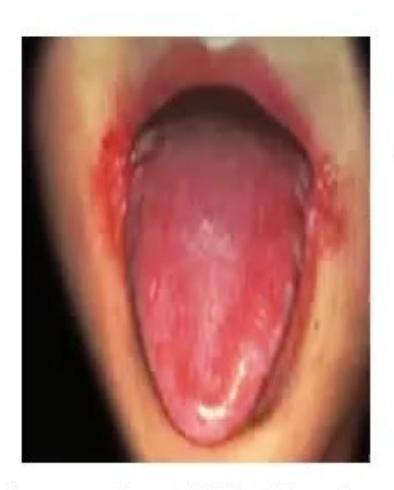
- Identify the lesions in the image and the underlying nutritional cause.
- Name any two other clinical features of this condition.
- Name two tests to confirm the underlying cause.
- What is the treatment?
Answer
- Lesions & Cause: Angular cheilitis / stomatitis and glossitis due to Riboflavin (Vitamin
) deficiency. - Other clinical features: Nasolabial dyssebacea (seborrheic dermatitis), magenta tongue, interstitial keratitis, photophobia, excessive lacrimation, corneal vascularization, normocytic normochromic anemia.
- Confirmatory tests:
- Erythrocyte glutathione reductase activity coefficient (EGRAC) (
indicates deficiency) - Urinary excretion of riboflavin (
).
- Erythrocyte glutathione reductase activity coefficient (EGRAC) (
- Treatment: Oral riboflavin
until complete recovery.
MNJ20-002
Write the recommended daily nutritional requirement for a child for each of the following nutrients:
- Vitamin A
- Folate
- Vitamin
- Biotin
- Riboflavin
- Vitamin E
- Niacin
- Thiamine
- Ascorbic acid (Vitamin C)
- Vitamin D
Answer
| Nutrient | Daily Requirement |
|---|---|
| Vitamin A | |
| Folate | |
| Vitamin |
|
| Biotin | |
| Riboflavin ( |
|
| Vitamin E | |
| Niacin ( |
|
| Thiamine ( |
|
| Ascorbic acid (Vitamin C) | |
| Vitamin D |
MNJ20-003
Write the approximate calorie and protein contents of the following food items per
- Rice
- Bengal gram
- Groundnut
- Fish
- Egg
- Dates
- Apple
- Almond
Answer
| Food Item ( |
Energy (kcal) | Protein (g) |
|---|---|---|
| Rice | ||
| Bengal gram | ||
| Groundnut | ||
| Fish | ||
| Egg (2 medium eggs) | ||
| Dates | ||
| Apple | ||
| Almond |
MNJ20-004
- Compare the composition (in mmol/L or mEq/L) of standard WHO-ORS and ReSoMal (Rehydration Solution for Malnutrition).
- Write the calorie and protein content of:
- One chapatti or one slice of bread
- One egg
- One teaspoon (tsp) mashed potato
- Fill in the blanks:
- Dextrose content of 1 liter Ringer's Lactate is _____
content of of is _____ mEq - Elemental Calcium in
of calcium gluconate is _____ mg content of 1 liter of Isolyte-P is _____ mEq/L
Answer
- WHO-ORS vs ReSoMal Composition:
- Sodium: WHO-ORS
vs ReSoMal - Potassium: WHO-ORS
vs ReSoMal - Glucose: WHO-ORS
vs ReSoMal - Osmolarity: WHO-ORS
vs ReSoMal
- Sodium: WHO-ORS
- Nutritional content:
- One chapatti / one bread slice
and protein - One egg
and protein - One tsp mashed potato
and protein
- One chapatti / one bread slice
- Fill in the blanks:
- Dextrose content of 1 liter Ringer's Lactate
(zero) content of of ( ) - Elemental Calcium in
of calcium gluconate ( or ) content of 1 liter of Isolyte-P
- Dextrose content of 1 liter Ringer's Lactate
MNJ20-005
- Describe the dosage and schedule of the National Vitamin A Prophylaxis Programme in India.
- What is the daily physiological requirement of Vitamin A in children?
- Name two manifestations of hypervitaminosis A.
Answer
- National Prophylaxis Schedule (total 9 doses from 9 months to 5 years):
- 1st dose:
( ) orally at 9 months of age (along with measles/MR vaccine) - 2nd to 9th doses:
( ) orally every 6 months up to 5 years of age.
- 1st dose:
- Daily requirement:
retinol ( ). - Manifestations of Hypervitaminosis A:
- Acute: Increased intracranial pressure (pseudotumor cerebri, bulging fontanelle), vomiting, irritability, headache.
- Chronic: Cortical hyperostosis/bone pain, dry scaly skin, alopecia, hepatomegaly, anorexia.
MNJ20-006
Match the rickets/bone disorders (1–6) with their characteristic biochemical profiles (A–F):
| Condition | Biochemical Profile |
|---|---|
| 1. Chronic renal failure | A. Ca |
| 2. Fanconi syndrome | B. Ca |
| 3. Hypophosphatemic rickets | C. Ca |
| 4. VDDR, type 1 | D. Ca |
| 5. VDDR, type 2 | E. Ca |
| 6. Vitamin D deficiency | F. Ca |
Answer
- 1 - B: Chronic renal failure (High Pi, Low
, High PTH, Low/Normal Ca) - 2 - F: Fanconi syndrome (Normal Ca, Low Pi due to renal wasting, Normal PTH, High ALP)
- 3 - E: X-linked Hypophosphatemic rickets (Normal Ca, Low Pi, Normal PTH, Low/inappropriately Normal
) - 4 - A: Vitamin D-Dependent Rickets Type 1 (Low
due to -hydroxylase defect) - 5 - C: Vitamin D-Dependent Rickets Type 2 (Markedly elevated
due to end-organ receptor resistance) - 6 - D: Nutritional Vitamin D Deficiency (Low/Normal Ca, Low Pi, High PTH, Variable
, Low )
MNJ20-007
A 3-year-old girl child, with a weight of 7 kg and height of 75 cm, is brought with complaints of difficulty in seeing and pain in left eye with discharge. The child also has history of recurrent episodes of loose stools and pneumonias. The examination findings are shown below:
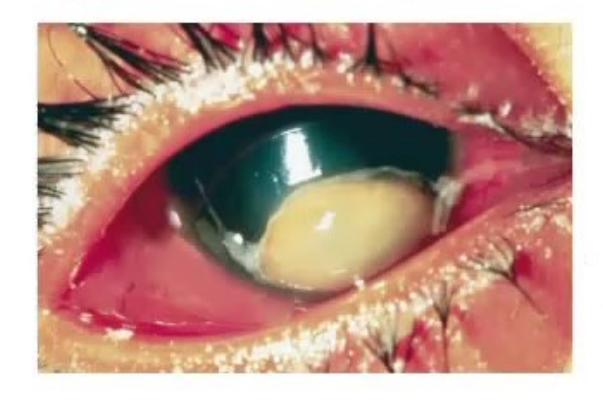
- What is the diagnosis?
- Enumerate the WHO classification of Xerophthalmia and mention what stage this child belongs to.
Answer
- Diagnosis: Severe Vitamin A Deficiency (Xerophthalmia) with Bitot's spot / keratomalacia in a child with severe acute malnutrition.
- WHO Staging of Xerophthalmia:
- XN: Night blindness
- X1A: Conjunctival xerosis
- X1B: Bitot's spots (triangular, pearly-white foamy plaques on bulbar conjunctiva)
- X2: Corneal xerosis
- X3A: Corneal ulceration / keratomalacia involving
of cornea - X3B: Corneal ulceration / keratomalacia involving
of cornea - XS: Corneal scars (secondary to healed keratomalacia)
- XF: Xerophthalmic fundus
- This child presents in stage X1B (Bitot's spot) progressing to corneal involvement.
MNJ20-008
- Write the content of key nutrients per standard sachet/dose of Human Milk Fortifier (HMF):
- Protein, Fat, Sodium, Calcium, Vitamin D, Thiamine, Vitamin
, Zinc
- Protein, Fat, Sodium, Calcium, Vitamin D, Thiamine, Vitamin
- Write the Biological Value (BV), Net Protein Utilization (NPU), and Protein Efficiency Ratio (PER) of:
- Meat, Egg, Bengal gram, Wheat
Answer
- Nutrient content per sachet (
or ) of HMF: - Protein:
- Fat:
- Sodium:
- Calcium:
- Vitamin D:
- Thiamine (
): - Vitamin
: - Zinc:
- Protein:
- Protein Quality Indices:
- Egg:
, , (Reference protein) - Meat:
, , - Bengal gram:
, , - Wheat:
, ,
- Egg:
MNJ20-009
An 8-year-old boy Karzan Parashar is brought with the deformity shown in the figure. His sister, 8 years, also has a similar deformity gradually increasing since 4 years of age. On examination, his height is below the third percentile and US/LS ratio is 1.6:1. There are multiple dental abscesses. Mother also has a similar deformity but very mild in nature. S. calcium: 8.8 mg/dL, phosphorus: 1.8 mg/dL, ALP: 380 IU, PTH levels: 18 pg/mL (9–55 pg/mL), 25-OH cholecalciferol: 26 ng/mL (10–50 ng/mL),
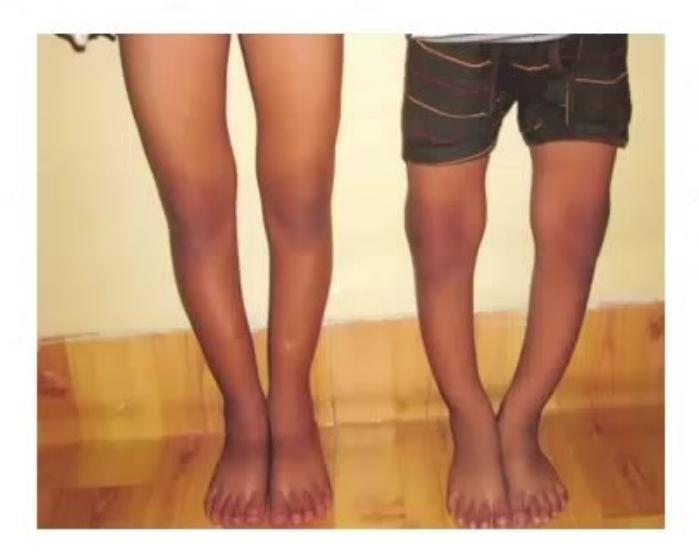
- What is the diagnosis?
- What is the mode of inheritance?
- It is due to mutation in which gene?
- What is the treatment?
- Write four endocrinal causes of short stature.
Answer
- Diagnosis: X-Linked Hypophosphatemic Rickets (XLH) (Familial hypophosphatemic rickets / Vitamin D-resistant rickets).
- Inheritance: X-linked dominant.
- Gene mutation: Mutation in the PHEX gene (Phosphate-regulating endopeptidase homolog, X-linked) on chromosome Xp22.1
elevated fibroblast growth factor 23 (FGF-23). - Treatment:
- Oral phosphate supplements (
in 4–5 divided doses) - Active vitamin D: Calcitriol (
or ) or Alfacalcidol ( ) - Novel targeted therapy: Burosumab (anti-FGF-23 monoclonal antibody).
- Oral phosphate supplements (
- Four endocrinal causes of short stature:
- Growth hormone deficiency (isolated GHD or panhypopituitarism)
- Hypothyroidism (cretinism / juvenile hypothyroidism)
- Cushing syndrome (hypercortisolemia)
- Poorly controlled Diabetes Mellitus (Mauriac syndrome) / Pseudohypoparathyroidism.
MNJ20-010
Observe the developmental assessment chart below:
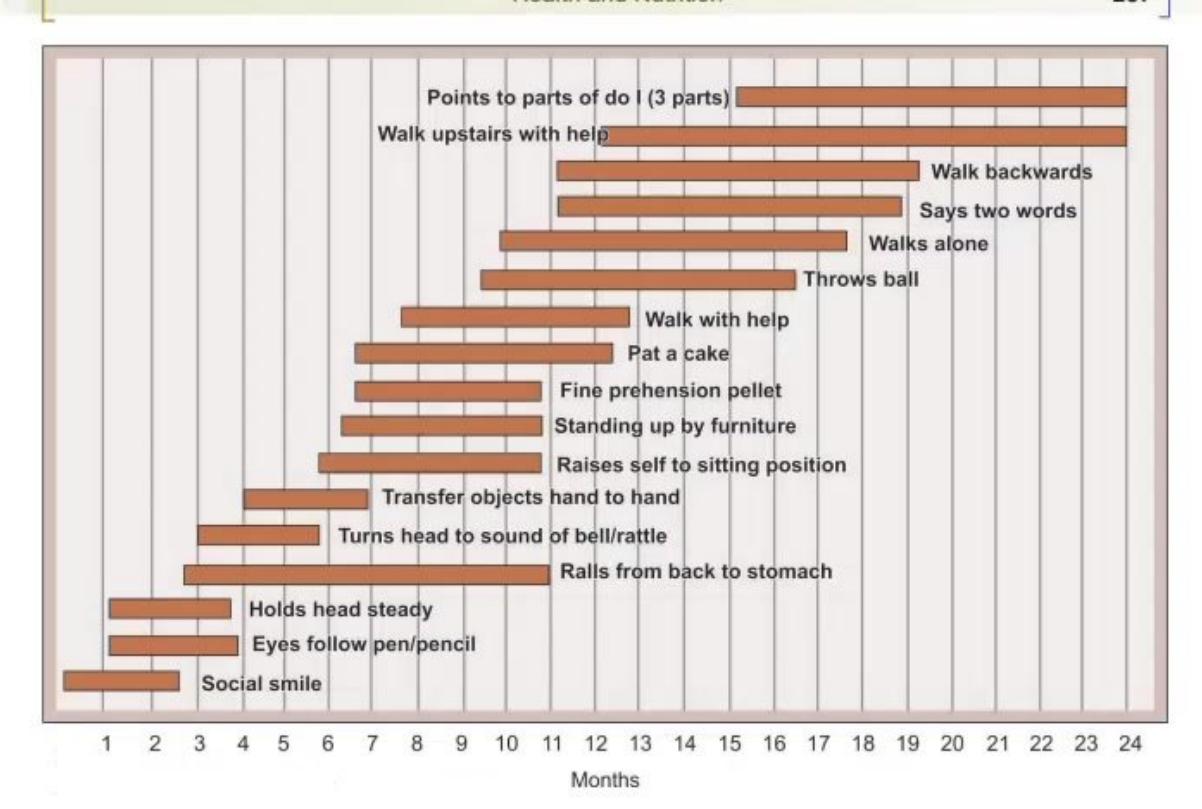
- What is this screening chart called?
- What are its uses and applicable age range?
- How do you use it?
- Name three other screening/diagnostic developmental tools.
Answer
- Name: Trivandrum Development Screening Chart (TDSC).
- Uses & Age: Simple community-based screening tool for rapid assessment of developmental delay in children from 0 to 24 months (or TDSC 0–6 years).
- How to use: A vertical line (or pencil) is placed vertically at the exact chronological age (or corrected age for preterms) of the child. If the child fails to perform any milestone that lies to the left of the vertical line, the child is flagged for developmental delay.
- Other tools:
- Denver Developmental Screening Test (DDST / Denver II)
- Developmental Assessment Scales for Indian Infants (DASII)
- Baroda Development Screening Test (DST)
- Bayley Scales of Infant and Toddler Development (BSID).
MNJ20-011
- Write Mosteller's formula for Body Surface Area (BSA).
- Using the formula, calculate the alternate-day dose of prednisone for a child (weight 12 kg, height 80 cm) with MCNS in maintenance remission therapy (
). - Half-normal saline (
) contains _____ mEq/L of , _____ mEq/L of , and _____ kcal/L. Glucose solution contains _____ g/mL. Calcium gluconate contains _____ mEq/mL of elemental calcium. Mannitol contains _____ mEq/L of , _____ mEq/L of , and _____ kcal/L.
Answer
- Mosteller's Formula:
- Prednisone dose calculation:
- Dose (
) as a single alternate-day dose.
- Half-normal saline (
): Contains of , of bicarbonate, and . Glucose: Contains ( ). Calcium gluconate: Contains ( ) of elemental calcium. Mannitol: Contains of , of , and .
MNJ20-012
As per Integrated Management of Neonatal and Childhood Illness (IMNCI) clinical guidelines:
- How are children categorized based on age groups?
- What do the color codes stand for:
- a. Pink
- b. Yellow
- c. Green
- What are the six steps of the case management process in IMNCI?
- What will you advise for a child presenting with "some palmar pallor"?
Answer
- Age categorization:
- Young infants: 0 to 2 months (birth up to 2 months)
- Older infants and children: 2 months up to 5 years.
- Color codes:
- Pink: Urgent pre-referral treatment and emergency hospital referral.
- Yellow: Specific medical treatment and advice at primary health facility.
- Green: Home management, counseling on feeding/fluids, and home care.
- Six steps of IMNCI case management:
- Step 1: Assess the young infant / child
- Step 2: Classify the illness (using color-coded triage)
- Step 3: Identify specific treatment
- Step 4: Treat the child (administer pre-referral or clinic drugs)
- Step 5: Counsel the mother (feeding, fluids, when to return immediately)
- Step 6: Provide follow-up care.
- Advice for "Some Palmar Pallor" (classified as Anemia):
- Give oral iron and folic acid (IFA) daily for 14 days
- Give age-appropriate deworming (Albendazole if child
months and not given in past 6 months) - Counsel mother on iron-rich complementary feeding
- Advise follow-up in 14 days.
MNJ20-013
Match the protective factors in breast milk (i–v) with their primary functions (a–e):
| Protective Factor | Function |
|---|---|
| i. Bile salt-stimulated lipase (BSSL) | a. Inhibits E. coli growth by binding iron |
| ii. Para-aminobenzoic acid (PABA) deficiency | b. Promotes brain/CNS maturation |
| iii. Bifidus factor | c. Kills Giardia lamblia and Entamoeba histolytica trophozoites |
| iv. Lactoferrin | d. Protects against falciparum malaria |
| v. Human |
e. Promotes proliferation of Lactobacillus bifidus |
Answer
- i - c: Bile salt-stimulated lipase (BSSL)
Kills Amoeba and Giardia trophozoites - ii - d: Low PABA in human milk
Protects against malaria - iii - e: Bifidus factor
Promotes growth of Lactobacillus bifidus (acidifies gut) - iv - a: Lactoferrin
Chelation of iron, inhibiting E. coli - v - b: Human
-casomorphin CNS development and mucosal protection
MNJ20-014
Match the following National Health Programs/Acts and Trace Element Deficiencies:
Part A: National Health Schemes / Acts
| Scheme / Act | Objective |
|---|---|
| 1. Ujjawala Scheme | a. Safe Motherhood Services |
| 2. The Sharda Act (Child Marriage Restraint Act) | b. National Rural Health Mission (NRHM) community link |
| 3. Kishori Shakti Yojana | c. Prevention of child and women trafficking |
| 4. ASHA | d. Prevention of child marriage |
| 5. Vande Mataram Scheme | e. Adolescent girls' health and empowerment |
Part B: Trace Element Deficiencies
| Trace Element | Deficiency Manifestation |
|---|---|
| i. Copper | a. Impaired glucose tolerance / Hyperglycemia |
| ii. Selenium | b. Central scotoma / visual field defects |
| iii. Chromium | c. Keshan disease / Endemic Cardiomyopathy |
| iv. Molybdenum | d. Reddening of hair / depigmentation / skeletal defects |
| v. Manganese | e. Refractory microcytic anemia, neutropenia, sensory ataxia |
Answer
Part A:
- 1 - c: Ujjawala Scheme
Prevention of trafficking and rescue/rehabilitation - 2 - d: Sharda Act
Prevention of child marriage - 3 - e: Kishori Shakti Yojana
Adolescent girl health and empowerment - 4 - b: ASHA
National Rural Health Mission (NRHM) - 5 - a: Vande Mataram Scheme
Safe Motherhood Services / Antenatal care
Part B:
- i - e: Copper
Refractory anemia, neutropenia, sensory ataxia - ii - c: Selenium
Cardiomyopathy (Keshan disease) - iii - a: Chromium
Hyperglycemia / insulin resistance - iv - b: Molybdenum
Central scotoma / lens dislocation / encephalopathy - v - d: Manganese
Reddening of hair / bone changes
MNJ20-015
A 10-month-old female child Neerja is brought to the OPD with complaints of dry scaly skin around the thighs, stomach, perioral area, and on palms along with reddish tint of the hair for the last 2 months. Lesions are increasing in severity. She was exclusively breastfed up to 6 months of life, and now is on top feeding with cow's milk. Her weight is 6.2 kg (birth weight was 3.0 kg) and length is 67 cm. On examination, she is found to have conjunctivitis, blepharitis, glossitis, and periorificial dermatitis:
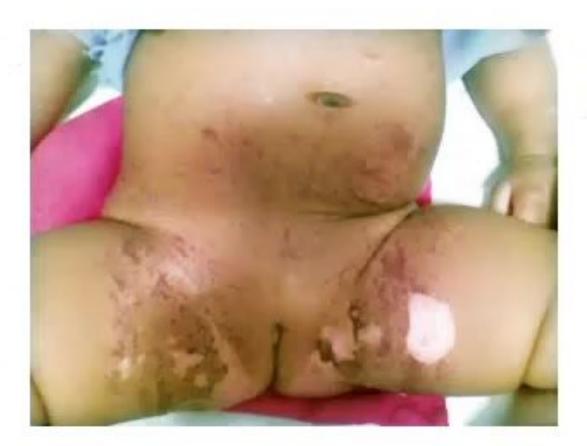
- What is the most likely diagnosis?
- What is the mode of inheritance?
- Which laboratory investigation clinches the diagnosis?
- What is the treatment?
Answer
- Diagnosis: Acrodermatitis Enteropathica (congenital zinc malabsorption triggered upon weaning from breast milk to cow's milk).
- Mode of inheritance: Autosomal recessive (mutation in SLC39A4 gene encoding ZIP4 zinc transporter).
- Confirmatory laboratory investigation: Low plasma zinc level (
), low serum alkaline phosphatase (a zinc-dependent metalloenzyme). - Treatment: Lifelong oral zinc supplementation:
of elemental zinc (as zinc sulfate, acetate, or gluconate). Rapid clinical resolution occurs within days.
MNJ20-016
A 16-month-old male child Bhupesh is admitted with rhythmic involuntary tremors (distal > proximal) of the upper limbs, tremulous cry, and generalized hypotonia since one month. He has brownish hair, reticular hyperpigmentation of the skin particularly of the dorsum of hands and feet, and loose stools for 7–8 days. He is pale and has regression of motor milestones over the last 4 months. He has mild hepatosplenomegaly. The involuntary movements disappear during sleep. CT brain of this child is given below:
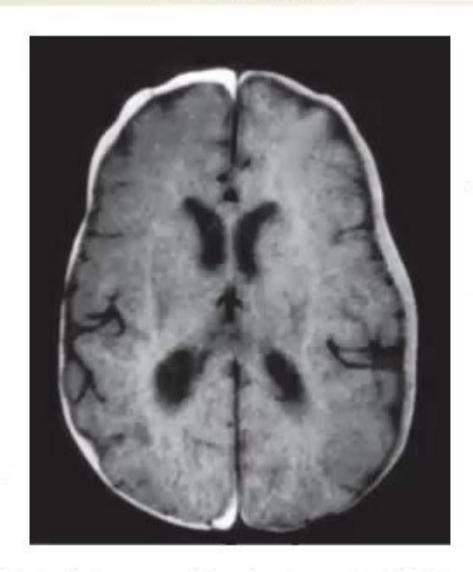
- What is the diagnosis?
- What do you expect on peripheral smear and CT head in this patient?
- What changes are seen on liver biopsy?
- What is the treatment for the involuntary movements and the condition?
Answer
- Diagnosis: Infantile Tremor Syndrome (Nutritional Tremor Syndrome).
- Investigations:
- Peripheral blood smear: Megaloblastic anemia (macrocytosis, hypersegmented neutrophils) and/or dimorphic anemia.
- CT Head: Reversible cerebral/cortical atrophy with prominent sulci and ventriculomegaly.
- Liver biopsy findings: Diffuse fatty changes (hepatic steatosis).
- Treatment:
- Vitamin
(Cobalamin) IM daily/alternate day, plus Folic acid ( ) and Iron. - For control of tremors: Carbamazepine (
) or Propranolol ( ) or Phenobarbital. - Adequate protein-calorie diet.
- Vitamin
MNJ20-017
A 9-month-old female child Sapna is admitted with failure to thrive. Anthropometric examination shows: weight: 5.5 kg, head circumference: 40 cm, length: 72 cm, and mid-upper arm circumference (MUAC): 8.5 cm:
- Calculate the Kanawati index, Rao index, and Shakir's measure and give your final impression.
- Give 5 indications for inpatient hospital admission in Protein-Energy Malnutrition (PEM).
Answer
- Anthropometric Indices:
- Kanawati & McLaren Index:
(Normal; indicates severe PEM). - Rao's Weight-for-Height Index:
(Normal; indicates severe wasting/PEM). - Shakir's MUAC measure:
( indicates Severe Acute Malnutrition [SAM]). - Impression: All three indices confirm Severe Acute Malnutrition (Severe PEM).
- Kanawati & McLaren Index:
- Indications for inpatient admission in SAM:
- Age
months or weight - Severe bilateral pitting edema (kwashiorkor Grade +++)
- Failed appetite test / unable to feed
- High fever or hypothermia (
) - Severe dehydration, shock, or severe electrolyte imbalance (e.g.,
) - Severe anemia (
or with respiratory distress) - Hypoglycemia, severe infection (pneumonia, sepsis, meningitis), or severe lethargy/coma.
- Age
MNJ20-018
Observe the clinical photograph below:
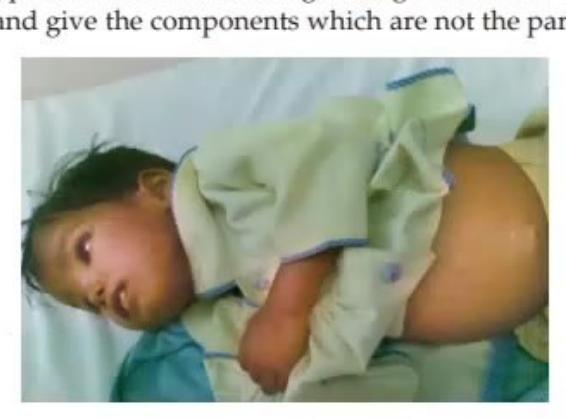
- Identify the clinical disorder shown in the figure.
- Give the essential diagnostic triad of this disorder.
- Name the various hypotheses proposed for the etiology of PEM.
- Elaborate ReSoMal and state its key differences from standard WHO-ORS.
Answer
- Clinical disorder: Kwashiorkor (edematous protein-energy malnutrition with "flaky paint" dermatosis, moon facies, and flag sign of hair).
- Essential diagnostic triad:
- Retarded physical growth (stunting/wasting)
- Psychomotor changes (apathy, irritability, misery)
- Generalized bilateral pitting edema.
- Etiological Hypotheses in PEM:
- Classical energy-protein theory: Marasmus
Energy deficiency Protein deficiency; Kwashiorkor Severe protein deficiency with relatively preserved carbohydrate intake. - Gopalan's Dys-adaptation theory: Failure of hormonal adaptation (failure of adrenal cortisol rise causing loss of lean mass protection
kwashiorkor). - Golden's Free Radical / Oxidative Stress theory: Deficiency of dietary antioxidants (glutathione, zinc, selenium, vitamins A/E/C) causing free radical tissue damage and edema.
- Classical energy-protein theory: Marasmus
- ReSoMal Differences from standard WHO-ORS:
- Lower sodium concentration (
vs ) - Higher potassium concentration (
vs ) - Higher glucose concentration (
vs ) - Added minerals: Magnesium (
), Zinc ( ), and Copper ( ).
- Lower sodium concentration (
MNJ20-019
- Give the nutritional value (calories and protein) of the following cooked items:
- One chapatti or one bread slice
- One biscuit
- One whole egg
- One teaspoon (tsp) mashed potato
- One tablespoon (tbsp) cooked dal
- Answer the following rapid numerical questions:
- Dextrose content of 1 liter Ringer's Lactate
content of of content of of - Elemental Calcium in
of calcium gluconate content of 1 liter of Isolyte-P
Answer
- Nutritional values:
- One chapatti / bread slice:
and protein - One biscuit:
and protein - One whole egg:
and protein - One tsp mashed potato:
and protein - One tbsp cooked dal:
and protein (or 1 tsp and protein).
- One chapatti / bread slice:
- Numerical answers:
- Dextrose in 1 L Ringer's Lactate:
in of : ( ) in of : ( ) - Elemental Calcium in
of calcium gluconate: ( ) in 1 L Isolyte-P: .
- Dextrose in 1 L Ringer's Lactate:
MNJ20-020
Observe the bone radiograph below:
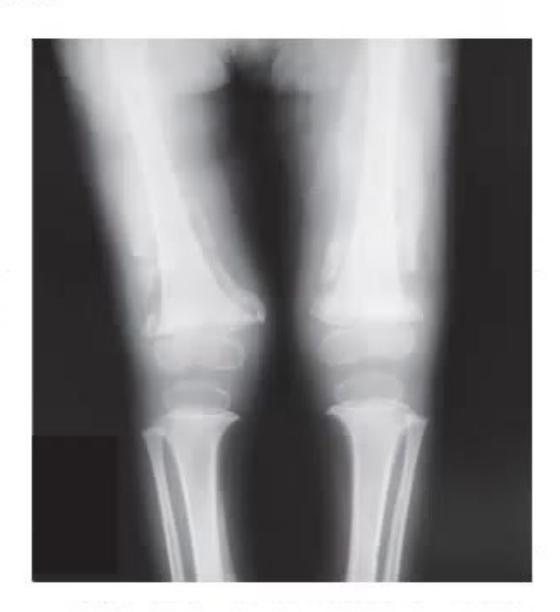
- Give five classical radiological findings of this disease.
- What is the diagnosis and management?
Answer
- Five Radiological Findings:
- Ground-glass osteoporosis (demineralization of shaft) with pencil-thin cortex
- White line of Fraenkel (dense, irregular zone of provisional calcification at metaphysis)
- Pelkan spurs (lateral metaphyseal boney spurs)
- Trümmerfeld zone (scorbutic zone of rarefaction/radiolucency underneath the white line)
- Wimberger's sign (thin, dense calcified ring surrounding a radiolucent center in epiphyses)
- Subperiosteal hemorrhage and calcification.
- Diagnosis & Management:
- Diagnosis: Infantile Scurvy (Vitamin C / Ascorbic Acid Deficiency).
- Management: Oral or parenteral Vitamin C (Ascorbic acid)
(up to in divided doses) for 1–2 weeks followed by daily dietary maintenance and citrus fruits.
MNJ20-021
A one-year-old child has a weight of 6.4 kg, length of 70 cm, and no edema:
- What is the nutritional status of the child as per:
- a. IAP classification
- b. Wellcome classification
- c. Gomez classification
- d. Waterlow classification
- Describe the criteria for the Gomez and Waterlow classifications.
Answer
- Nutritional status (Expected 1-year weight
, expected length ; Expected weight for ): - a. IAP Classification: Grade II PEM (
). - b. Wellcome Classification: Undernutrition (
without edema). - c. Gomez Classification: Grade II (Moderate) Malnutrition (
). - d. Waterlow Classification:
- Weight-for-Height:
Grade II Wasting ( ) - Height-for-Age:
Grade I Stunting ( ).
- Weight-for-Height:
- Classification Schemes:
- Gomez Classification (Weight-for-Age % of 50th percentile):
: Normal : Grade I (Mild) : Grade II (Moderate) : Grade III (Severe).
- Waterlow Classification:
- Stunting (Height-for-Age):
Normal, Grade I, Grade II, Grade III. - Wasting (Weight-for-Height):
Normal, Grade I, Grade II, Grade III.
- Stunting (Height-for-Age):
- Gomez Classification (Weight-for-Age % of 50th percentile):
MNJ20-022
Classify the following conditions into either Food Intolerance (a) or Food Hypersensitivity / Allergy (b):
- Lactose intolerance
- Abdominal migraine
- Urticaria
- Heiner syndrome
- Celiac disease
- Irritable bowel syndrome
Answer
- Lactose intolerance: (a) Food intolerance (enzymatic lactase deficiency)
- Abdominal migraine: (a) Food intolerance (pharmacological/dietary amines)
- Urticaria: (b) Food hypersensitivity (IgE-mediated)
- Heiner syndrome: (b) Food hypersensitivity (non-IgE cow's milk pulmonary hypersensitivity)
- Celiac disease: (b) Food hypersensitivity (cell-mediated/immune-mediated enteropathy to gluten)
- Irritable bowel syndrome: (a) Food intolerance (functional/non-immunologic).
MNJ20-023
- Match the major food allergen (a–d) with its principal allergenic protein (1–4):
- a. Cow's milk
1. Parvalbumin - b. Egg
2. Vicilin - c. Peanut
3. Ovomucoid - d. Fish
4. Casein
- a. Cow's milk
- What is the recommended age for introducing:
- a. Cow's milk
- b. Egg
- c. Peanut and seafood
Answer
- Allergen matches:
- a - 4: Cow's milk
Casein (and -lactoglobulin) - b - 3: Egg
Ovomucoid (and ovalbumin) - c - 2: Peanut
Vicilin (Ara h 1, Ara h 2, Ara h 3) - d - 1: Fish
Parvalbumin (Gad m 1).
- a - 4: Cow's milk
- Age of introduction:
- a. Whole cow's milk: After 1 year (12 months) of age as main drink.
- b. Egg: Around 6 months (once complementary feeds start; well-cooked).
- c. Peanut / Seafood: Around 6 months (early introduction between 4–11 months prevents food allergy in high-risk infants).
MNJ20-024
- A child with rickets has the following laboratory findings:
- Serum Ca: 9 mg/dL, Serum Phosphorus: 1.5 mg/dL, ALP: 2000 IU
- a. What is the diagnosis?
- b. What is the mode of inheritance?
- c. What is the first clinical manifestation?
- Another child with rickets has the following findings:
- Serum Ca: 7 mg/dL, Serum Phosphorus: 1.7 mg/dL, ALP: 5000 IU. This child has total alopecia.
- a. What is the diagnosis?
- b. What is the type of inheritance?
- c. What is the treatment of choice and the dose?
Answer
- Case 1:
- a. Diagnosis: X-Linked Hypophosphatemic Rickets (Familial hypophosphatemia / Vitamin D-resistant rickets).
- b. Inheritance: X-linked dominant.
- c. First clinical manifestation: Progressive bowing deformity of lower extremities (genu varum/valgum) and waddling gait upon onset of weight-bearing.
- Case 2:
- a. Diagnosis: Vitamin D-Dependent Rickets Type 2 (VDDR-II / Hereditary 1,25-dihydroxyvitamin D-resistant rickets) with alopecia.
- b. Inheritance: Autosomal recessive (mutations in Vitamin D Receptor [VDR] gene).
- c. Treatment: High-dose oral Calcitriol (
) ( ) plus high-dose oral or intravenous Calcium infusions ( elemental calcium).
MNJ20-025
- Name two manifestations of Vitamin E deficiency in preterm babies.
- The antioxidant and therapeutic effect of Vitamin E is by virtue of which chemical property?
- What is the normal daily requirement of Vitamin E in preterm infants?
- Vitamin E deficiency is diagnosed when the serum ratio of
-tocopherol to total lipid is less than _____? - How many International Units (IU) of tocopherol are in
of standard injectable/oral preparation?
Answer
- Manifestations in preterms: Hemolytic anemia, thrombocytosis, peripheral edema, retinopathy of prematurity (ROP), intraventricular hemorrhage (IVH), spinocerebellar ataxia.
- Chemical property: Antioxidant (lipid-soluble free radical scavenger preventing lipid peroxidation of polyunsaturated fatty acids in cell membranes).
- Daily requirement in preterms:
(or ). - Diagnostic ratio: Serum
-tocopherol to total serum lipid ratio . - Concentration: Evion / standard solution contains
(or ).
MNJ20-026
Observe the clinical image of an 8-month-old infant below:
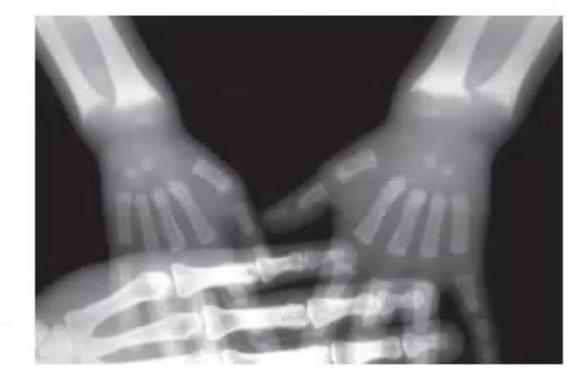
- What is the diagnosis?
- This infant is 8 months old; what is the most likely etiology?
- What is the earliest clinical sign of this disorder?
- What is the first radiological change that occurs in response to specific therapy?
- How could this have been prevented?
- What are the non-specific urinary findings in this disorder (at least two)?
Answer
- Diagnosis: Nutritional Rickets.
- Most likely etiology: Vitamin D deficiency (inadequate sunlight exposure, exclusive unsupplemented breastfeeding).
- Earliest clinical sign: Craniotabes (ping-pong ball sensation on palpation of parietal/occipital bones, present in infants
months). - First radiological healing sign: Appearance of the dense provisional zone of calcification in the submetaphyseal radiolucent zone.
- Prevention: Routine oral Vitamin D supplementation:
starting from birth for all breastfed infants. - Non-specific urinary findings (secondary to secondary hyperparathyroidism):
- Generalized aminoaciduria
- Phosphaturia (decreased tubular reabsorption of phosphate)
- Hypercitraturia
- Renal tubular acidosis / impaired renal acidification.
MNJ20-027
Mention the single nutritional deficiency most commonly associated with each of the following:
- Exclusive cow's milk feeding in infancy
- Exclusive unboiled goat's milk feeding
- Prolonged unsupplemented exclusive breastfeeding beyond 6 months
Answer
- Cow's milk feeding: Iron deficiency anemia (and occult GI blood loss).
- Goat's milk feeding: Folic acid (folate) deficiency (megaloblastic anemia).
- Prolonged exclusive breastfeeding: Iron deficiency (and Vitamin D deficiency).
MNJ20-028
- Severe Vitamin D deficiency is defined as serum
less than _____ ng/mL. - The toxicity threshold for Vitamin D is serum
more than _____ ng/mL. of Vitamin is equal to _____ International Units (IU). - Write the dose and duration of oral calcium for the treatment of hypocalcemia in nutritional rickets.
- List the sequence/order in which the following biochemical parameters normalize after starting therapy for nutritional rickets:
- Serum Calcium, Serum Phosphorus, Alkaline Phosphatase, PTH
Answer
- Severe Vitamin D deficiency:
(or ; insufficiency ; sufficiency ). - Toxicity threshold:
(with hypercalcemia/hypercalciuria). - Equivalence:
( ). - Calcium therapy: Oral elemental calcium
in 3 divided doses for 1–2 weeks, then halved and continued until PTH and Vitamin D normalize. - Sequence of normalization:
- 1st: Serum Phosphorus (normalizes within 72–96 hours)
- 2nd: Serum Calcium
- 3rd: Serum PTH
- 4th (Last): Serum Alkaline Phosphatase (ALP) (takes several weeks to months to normalize; reliable marker of complete healing).
MNJ20-029
What is the developmental age at which each of the following sets of milestones is achieved?
- Can tie shoelaces; differentiates between morning and afternoon
- Can button up clothes; states which line is longer of two lines
- Builds a tower of nine cubes; unbuttons shirt
- Picks up a ball without falling; uses words 'I', 'Me', and 'You'
- Kneels without support; likes to take off shoes
Answer
- 5 years (60 months): Ties shoelaces, differentiates morning vs afternoon.
- 4 years (48 months): Buttons clothes, identifies longer of two lines.
- 3 years (36 months): Tower of 9 cubes, unbuttons clothes.
- 2 years (24 months): Picks up ball without falling, uses 'I', 'Me', 'You'.
- 15 months: Kneels without support, removes shoes/socks.
MNJ20-030
A 5-year-old male child Rajender is brought with a history of developmental delay. He is found to have mild intellectual disability and sensory peripheral neuropathy. He belongs to a low socioeconomic family and his father is a battery-recycling laborer. Radiographs are shown below:
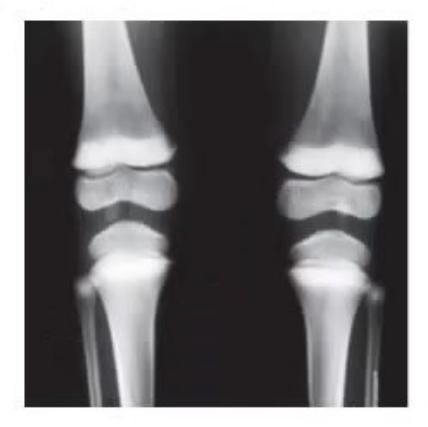
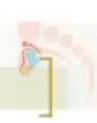
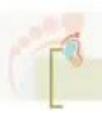
- What is the most probable diagnosis?
- What are the treatment/chelation options?
- What blood lead level indicates chelation therapy?
- What urine investigation supports the diagnosis?
Answer
- Diagnosis: Chronic Lead Poisoning (Plumbism) (radiographs show dense metaphyseal "lead lines" at knees and wrists).
- Treatment / Chelation options:
- Remove from lead exposure source.
- Dimercaptosuccinic acid (DMSA / Succimer): Oral drug of choice for moderate toxicity.
(Calcium Disodium Edetate) IV/IM. - BAL (Dimercaprol): Used in conjunction with
for severe lead encephalopathy.
- Indication for chelation: Blood Lead Level (BLL)
(normal reference level ). - Urine investigation: Increased urinary
-aminolevulinic acid ( -ALA), elevated coproporphyrin, and elevated blood/urine Zinc Protoporphyrin (ZPP).
MNJ20-031
Provide the ingredients, caloric value, and protein content per
- Hyderabad Mix
- Shakti Ahar
Answer
- Hyderabad Mix (per
): - Ingredients: Whole wheat (
), Bengal gram ( ), Groundnut ( ), Jaggery ( ) - Nutritional value:
and protein per ( and protein per ).
- Ingredients: Whole wheat (
- Shakti Ahar (per
): - Ingredients: Roasted wheat (
), Roasted Bengal gram ( ), Roasted peanuts ( ), Jaggery ( ) - Nutritional value:
and protein per .
- Ingredients: Roasted wheat (
MNJ20-032
Describe the developmental milestones achieved by a normal child at one year (12 months) of age in the four domains:
- Gross Motor
- Fine Motor / Adaptive
- Language
- Personal-Social
Answer
- Gross Motor: Walks with one hand held; stands independently for a few seconds; rises to standing independently.
- Fine Motor / Adaptive: Releases object to another person on request; neat pincer grasp (picks pellet with tip of index and thumb).
- Language: 1 to 2 meaningful words with meaning besides 'mama' and 'dada'; jabbers with intonation.
- Personal-Social: Plays simple interactive games (e.g., 'peek-a-boo', ball rolling); assists with dressing by extending arm or leg; waves bye-bye.
MNJ20-033
Give the approximate developmental age of the child in each of the following clinical scenarios:
- A child can successfully copy a square and a triangle, but has difficulty copying a diamond.
- A child walks around furniture (cruising), stands alone for a few seconds, uses a fine pincer grasp, but has no single words yet.
- A child copies a circle, climbs stairs alternating feet (one foot per step), and builds a tower of 9 cubes.
- A child sits unsupported, babbles contentedly, transfers a biscuit from one hand to the other and puts it in mouth, but cannot walk.
Answer
- 5 years (60 months): Copies triangle (
), square ( ), diamond ( ). - 12 months (1 year): Cruising, standing alone, fine pincer grasp.
- 3 years (36 months): Copies circle, tower of 9 cubes, climbs stairs alternating feet.
- 9 months (or 7–9 months): Sits unsupported, transfers objects hand-to-hand, babbles.
MNJ20-034
- Child A walks up and down stairs two feet per step, climbs onto furniture, and jumps off bottom step:
- a. What is the developmental age?
- b. Name two adaptive milestones for this age.
- Child B copies a cross and a square, and imitates the construction of a "gate" of 5 cubes:
- a. What is the developmental age?
- b. Mention two motor milestones for this age.
Answer
- Child A:
- a. Developmental age: 24 months (2 years) (or 30 months).
- b. Adaptive milestones: Builds tower of 6–7 cubes; imitates vertical and circular strokes; dumps pellet from bottle by imitation.
- Child B:
- a. Developmental age: 48 months (4 years).
- b. Motor milestones: Hops on one foot; throws ball overhand; catches bounced ball; climbs ladders skillfully.
MNJ20-035
- Enumerate six red flags / warning signs while screening a 2-year-old child for speech and language problems.
- What is the developmental age of a child having the following skills:
- Brings hands to midline
- Reaches for objects (bidextrous grasp)
- No mature babbling yet
- Stares at own hands (hand regard)
Answer
- Language Red Flags at 2 Years (24 months):
- No spoken single words by 15–18 months
- No 2-word spontaneous meaningful phrases/combinations by 24 months
- Inability to follow simple 1-step verbal commands without gestures
- Speech unintelligible to parents by 24–36 months
- Avoidance of eye contact or vocal/verbal communication
- Any regression or loss of previously acquired language or social milestones.
- Developmental Age: 4 months (Hand regard appears at 3–4 months; hands brought to midline and reaching for objects occurs at 4 months).
MNJ20-036
Observe the radiograph of the wrists shown below:
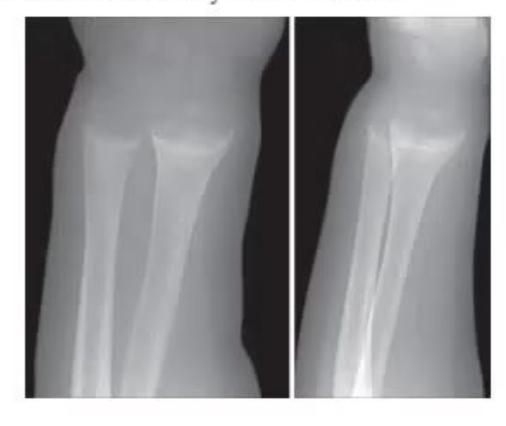
- What is the diagnosis?
- Describe three classical features seen on the radiograph.
- What biochemical tests confirm the diagnosis?
- What is the treatment of this condition?
Answer
- Diagnosis: Active Nutritional Rickets (Wrist radiograph).
- Three radiological features:
- Cupping of the distal metaphysis (concave distal margin)
- Flaring / widening of the metaphyseal ends
- Fraying (brush-like, irregular margins of the provisional zone of calcification)
- Increased distance between the distal metaphysis and epiphysis.
- Biochemical tests:
- Serum Calcium (normal or low), Serum Phosphorus (low), Serum Alkaline Phosphatase (markedly elevated)
- Serum
(low, ), Serum PTH (elevated).
- Treatment:
- Stoss therapy: Vitamin
orally or IM as a single dose (or daily therapy: for 6–12 weeks). - Concurrent oral elemental calcium
for 2–4 weeks to prevent hungry bone syndrome/hypocalcemic tetany.
- Stoss therapy: Vitamin
MNJ20-037
- Child A walks up and down stairs with alternating feet:
- a. What is the developmental age?
- b. Name two adaptive milestones for this age.
- Child B copies a cross and a square, and builds a "gate" of 5 cubes:
- a. What is the developmental age?
- b. Mention two motor milestones for this age.
- Match the milestone with its normal age of achievement:
- a. Palmar grasp reflex disappears
____ months - b. Transfers object from hand-to-hand
____ months - c. Turns pages of a book one by one
____ months - d. Neat pincer grasp
____ months
- a. Palmar grasp reflex disappears
Answer
- Child A:
- a. Age: 36 months (3 years).
- b. Adaptive milestones: Copies circle; builds tower of 9–10 cubes; imitates 3-cube bridge.
- Child B:
- a. Age: 48 months (4 years).
- b. Motor milestones: Hops on one foot; throws ball overhand; cuts paper with scissors.
- Matching:
- a: Palmar grasp disappears
3–4 months - b: Transfers object hand-to-hand
6–7 months - c: Turns pages of a book one by one
24 months (turns multiple pages at 12–15 months) - d: Neat pincer grasp
12 months (immature pincer at 9 months).
- a: Palmar grasp disappears
MNJ20-038
A 2-year-old child is brought by parents with complaints of toe walking:
- What is the most common cause?
- What is the differential diagnosis?
- Up to what age can idiopathic toe walking be considered normal?
Answer
- Most common cause: Idiopathic / Habitual toe walking (normal developmental variant).
- Differential diagnosis:
- Cerebral Palsy (spastic diplegia/hemiplegia)
- Duchenne Muscular Dystrophy (Gowers sign, pseudohypertrophy)
- Tethered cord syndrome / Spinal dysraphism
- Congenital short Achilles tendon (tendo-Achilles contracture)
- Developmental Dysplasia of the Hip (DDH) / Leg length discrepancy
- Autism Spectrum Disorder.
- Normal up to: Up to 3 years of age, provided the child can walk flat-footed when asked and has normal neurological tone and range of motion.
MNJ20-039
Regarding the PM POSHAN (Mid-Day Meal) Scheme in India:
- What are the key principles and nutritional targets?
- Write a model menu with recommended quantities of food groups for primary schoolchildren.
Answer
- Key Principles & Targets:
- Supplementary meal to supply at least
of daily energy and of daily protein requirements. - For Primary (Classes I–V): At least
and protein. - For Upper Primary (Classes VI–VIII): At least
and protein. - Use locally available, cost-effective foods prepared fresh and hygienically at schools.
- Supplementary meal to supply at least
- Model Menu (Primary school quantities per child per day):
- Cereals / Millets (Rice/Wheat):
(or ) - Pulses (Dal):
- Vegetables (Leafy and others):
- Oil and Fat:
- Salt and condiments: As needed.
- Cereals / Millets (Rice/Wheat):
MNJ20-040
Observe the developmental test drawings below:
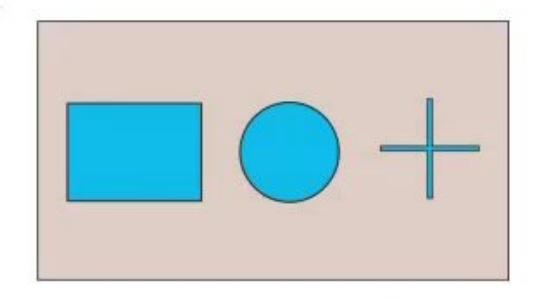
- At what age would you expect a normal child to copy each of the following shapes correctly:
- Line (vertical stroke), Circle, Cross (+), Square, Triangle, Diamond
- Name the five conditions historically grouped under Pervasive Developmental Disorders (PDD).
Answer
- Age for copying geometric figures:
- Vertical line / stroke: 2 years (24 months)
- Circle (
): 3 years (36 months) - Cross (
): 4 years (48 months) (imitates cross at 3.5 yrs) - Square (
): 4 to 4.5 years - Triangle (
): 5 years (60 months) - Diamond (
): 6 to 7 years (72 months).
- Pervasive Developmental Disorders (PDD):
- Autistic Disorder (Autism)
- Asperger Syndrome
- Rett Syndrome
- Childhood Disintegrative Disorder (Heller syndrome)
- Pervasive Developmental Disorder - Not Otherwise Specified (PDD-NOS).