VVK12-001
Give position for postural drainage of both right middle lobe and lingula (left) (physiotherapy demonstration not required).
Answer
Right middle lobe:
Lateral and medial bronchus — lying supine with the body a quarter turned to the left maintained by a pillow under the right side from shoulder to hip and foot end raised by 14 inches (35 cm).
![[images/VVK-P-Osce 12. Respiratory System_page_13_Picture_6.jpeg]]
Lingula Left:
Superior and inferior bronchus — lying supine with the body a quarter turned to the right maintained by a pillow under the left side from shoulder to hip and foot end raised by 14 inches (35 cm).
![[images/VVK-P-Osce 12. Respiratory System_page_13_Picture_9.jpeg]]
VVK12-002
Respiratory compensation of metabolic disorders. What is the conversion factor (
- a. Metabolic acidosis
- b. Metabolic alkalosis
Answer
| Disorder | Expected Compensation |
|---|---|
| a. Metabolic acidosis | |
| b. Metabolic alkalosis |
VVK12-003
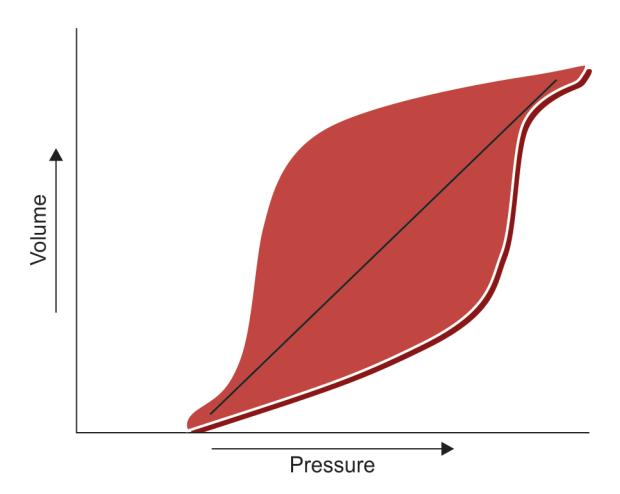
- a. Describe the above loop.
- b. What is your diagnosis?
- c. What is the cause?
Answer
- a. PV loop shows "bird beak" appearance at the top of the loop.
- b. Overdistension / alveolar hyperinflation.
- c. Tidal volume (
) or peak pressure set too high on pressure ventilation.
VVK12-004
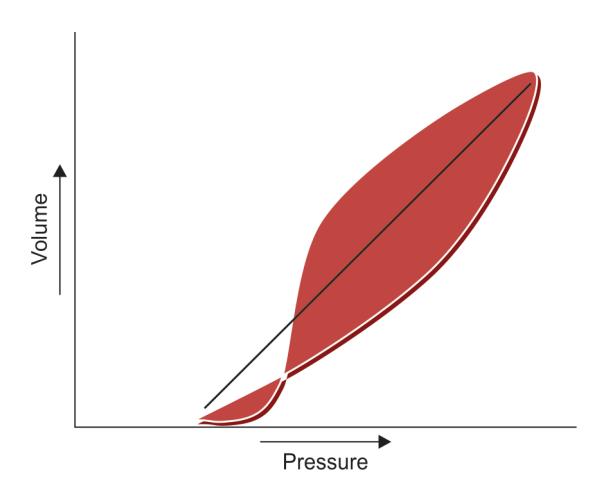
- a. Describe above PV loop.
- b. What is the commonest cause?
Answer
- a. Figure of eight expiration or a "pigtail" at the bottom of the loop. (The bigger the pigtail, the higher the patient's work of breathing to trigger the breath).
- b. Increased work of breathing due to trigger sensitivity set too high (inappropriate trigger threshold).
VVK12-005
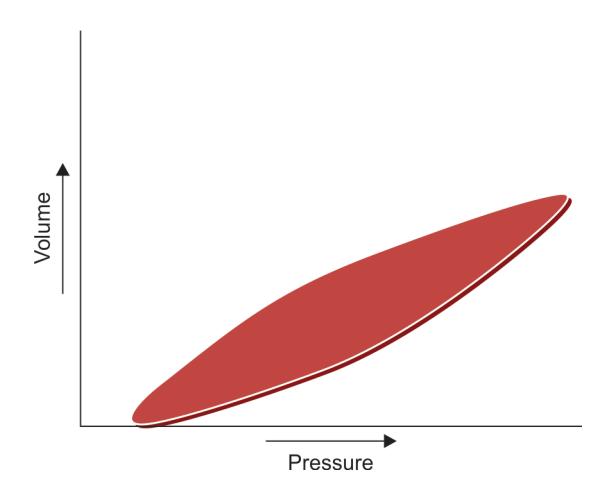
- a. Describe the above PV loop.
- b. What do you suspect?
- c. Enlist 3 causes.
Answer
- a. There is a slowly rising inspiratory limb. Change in volume is small compared to change in pressure (dynamic compliance is reduced; loop shifted to the right).
- b. Decreased lung compliance.
- c. Causes: RDS (HMD), ARDS, Pneumothorax, Pulmonary edema, Abdominal distension.
VVK12-006
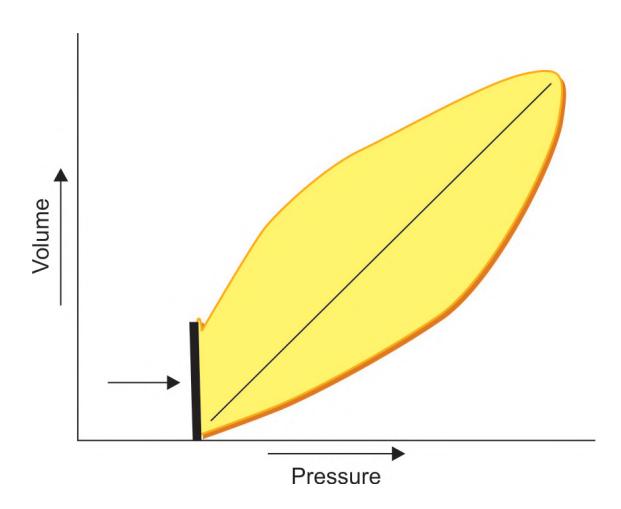
- a. Describe the above changes.
- b. What do you suspect?
- c. Enlist 3 causes.
Answer
- a. Pressure-Volume loop fails to close; tidal volume waveform does not reach baseline at end-expiration.
- b. Air leak / circuit leak.
- c. ET tube cuff leak, uncuffed tube too small, wrong ET placement, circuit tubing detached, water trap seal loose, flow sensor not seated.
VVK12-007
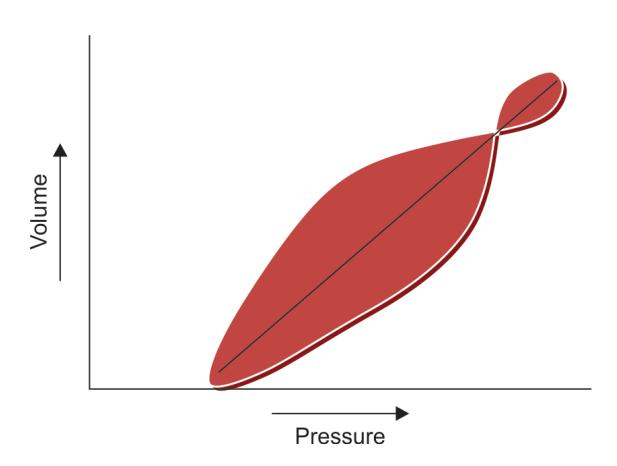
Mention what you suspect in the PV graph below:
Answer
Low minute volume, inadequate inspiratory flow rate, trigger sensitivity set too high, little separation (narrow hysteresis) between inflation and deflation limbs of PV loop.
VVK12-008
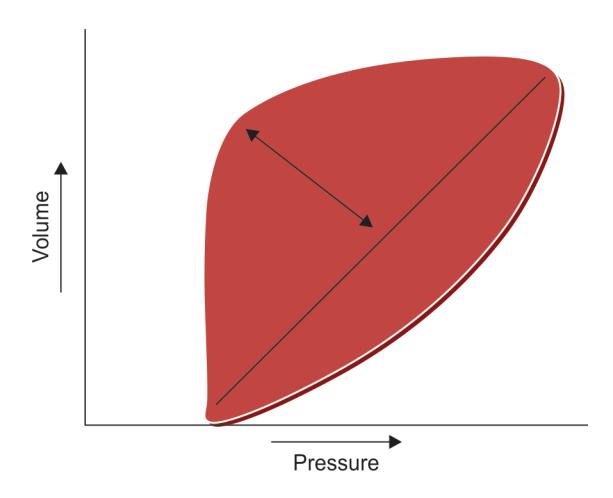
- a. Describe the changes of above graph.
- b. What pathology can be associated with above changes?
- c. Mention 3 common causes of above pathology.
Answer
- a. Widened loop with increased expiratory resistive work (scalloping / prolonged expiratory limb).
- b. Obstructive airway disease / increased airway resistance.
- c. Meconium Aspiration Syndrome (MAS), Bronchopulmonary Dysplasia (BPD), Acute Asthma / Bronchiolitis.
VVK12-009
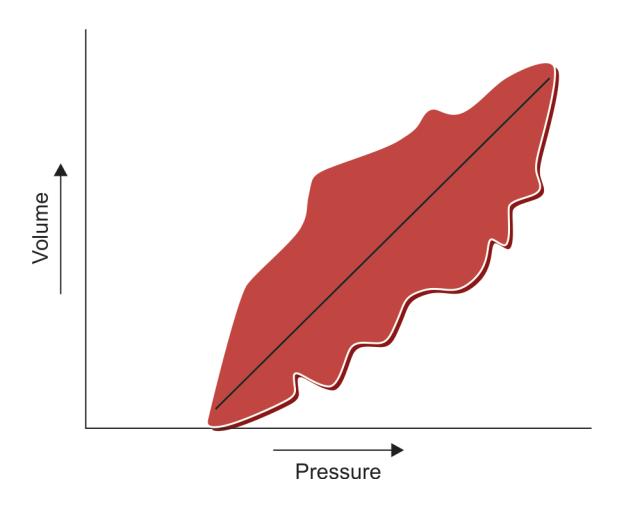
- a. Describe above PV loop.
- b. Enlist 2 causes.
Answer
- a. Noisy / serrated signals on both inspiratory and expiratory limbs of the loop.
- b. Causes:
- i. Water condensation in the ventilator tubing circuit
- ii. Excessive airway secretions in the endotracheal tube / tracheobronchial tree
VVK12-010
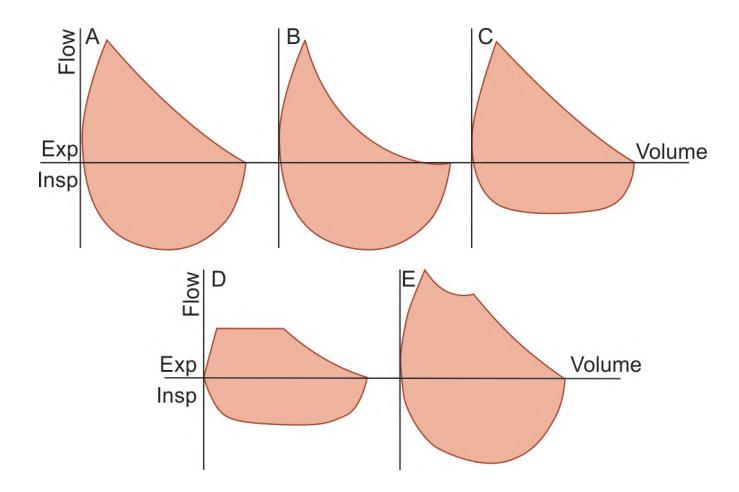
Following are representatives of flow-volume curve, here by convention, flow is represented on the Y-axis, volume on the X-axis, expiration as an upward deflection and inspiration as a downward deflection. Name the flow volume curves (A to E):
Answer
- a. Normal flow-volume loop
- b. Intrathoracic peripheral airway obstruction (e.g. Asthma, small airways disease)
- c. Variable extrathoracic airway obstruction (e.g. Vocal cord paralysis, laryngomalacia)
- d. Fixed airway obstruction (intra- or extra-thoracic, e.g. Tracheal stenosis)
- e. Variable intrathoracic central airway obstruction (e.g. Tracheomalacia)
VVK12-011
Following are constructed from spirometric data, please use them to locate the site of airway obstruction:
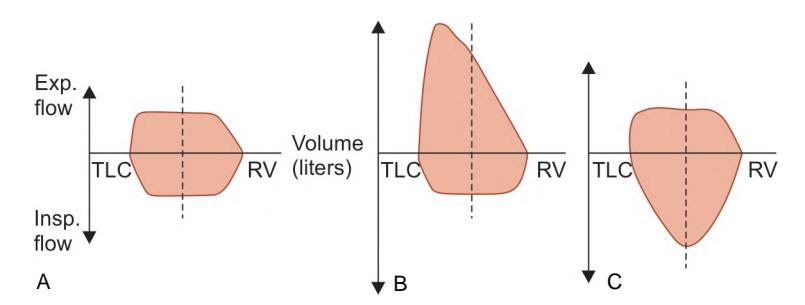
Answer
- a. Fixed obstruction (intra- or extra-thoracic)
- b. Extrathoracic obstruction (variable)
- c. Intrathoracic obstruction (variable)
VVK12-012
Intranasal mass: Match the following (can choose more than 1 option):
- a. Polyp
- b. Encephalocele
- c. Glioma
- d. Dermoid
Options:
-
- Always intranasal, never extranasal
-
- Pulsatile
-
- Trans-illuminable
-
- Always defect in skull
-
- None of the above
Answer
- a. Polyp
Always intranasal, never extranasal (1) - b. Encephalocele
Pulsatile (2), Trans-illuminable (3), Defect in skull (4) - c. Glioma
None of the above (5) / non-pulsatile, non-transilluminable - d. Dermoid
None of the above (5) / may have hair / pit, rarely defect in skull
VVK12-013
A 6-week-old infant is presented with on/off history of noisy breathing; on examination you diagnose it as stridor. Baby is otherwise stable with no other clinical concern.
- a. What is most likely diagnosis?
- b. How do you confirm the diagnosis from history or examination?
- c. Enlist 3 causes each of:
- i. Persistent causes of stridor
- ii. Acute causes of stridor
Answer
- a. Laryngomalacia
- b. Stridor increases when supine or agitated, and decreases/disappears when the child lies prone. Confirmed by flexible laryngoscopy.
- c. Causes:
- i. Persistent: Laryngomalacia, Subglottic stenosis, Vascular ring, Laryngeal web/cleft, Aryepiglottic fold cyst, Vocal cord palsy.
- ii. Acute: Acute laryngotracheobronchitis (Croup), Acute epiglottitis, Foreign body aspiration, Acute angioneurotic edema, Diphtheria, Thermal/chemical inhalational injury.
VVK12-014
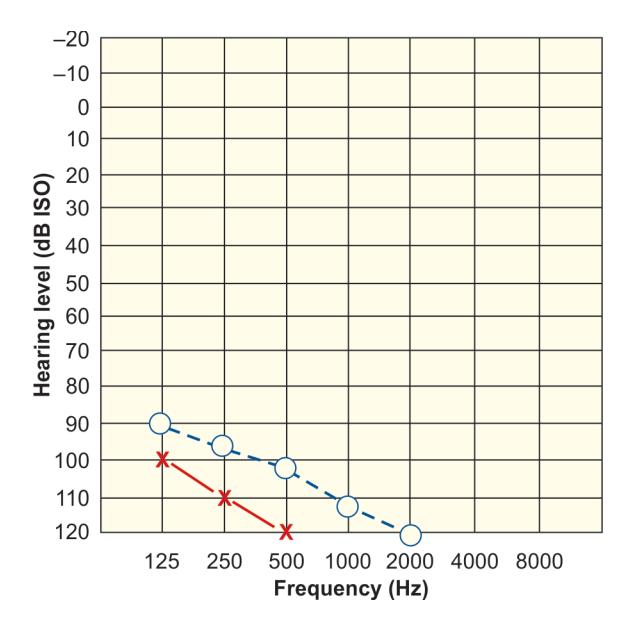
- a. What is the audiometric abnormality?
- b. Define:
- Mild hearing loss
- Moderate hearing loss
- Severe hearing loss
- Profound hearing loss
Answer
- a. Bilateral profound sensorineural hearing loss.
- b. Grading of Hearing Loss:
- Mild:
( ) - Moderate:
( ) - Severe:
( ) - Profound:
( )
- Mild:
VVK12-015
Attached is the audiogram of a 3 year old:
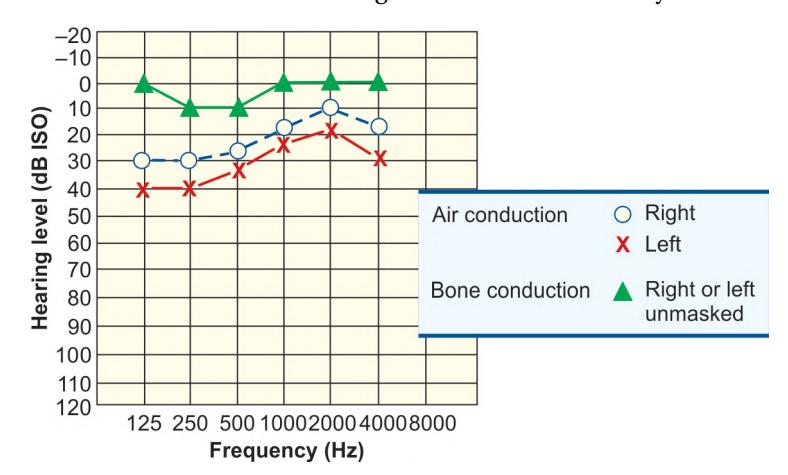
- a. What is the audiometric abnormality?
- b. Enlist 3 common reasons leading to above abnormality.
Answer
- a. Bilateral conductive hearing loss (Air-bone gap with preserved bone conduction).
- b. Common causes:
- i. Serous otitis media / Otitis media with effusion (Glue ear)
- ii. Impacted cerumen (earwax)
- iii. Acute otitis media
- iv. Otitis externa / foreign body in external canal
- v. Tympanic membrane perforation / ossicular chain disruption
VVK12-016
Answer the following questions:
- a. Name the clinical signs which are recommended for assessment of a case of suspected respiratory tract infection under ARI program.
- b. A working family has been using a servant maid to care for their 8-month-old child while they go for work. The maid is diagnosed with smear positive pulmonary tuberculosis. PPD test of the 8-month-old is negative. What will you do for this baby?
Answer
- a. Clinical signs:
- i. Fast breathing (Tachypnea)
- ii. Lower chest indrawing (Subcostal retractions)
- iii. Central cyanosis
- iv. Grunting
- v. Inability to feed / stridor in calm child
- b. Management:
- Start Isoniazid (INH) chemoprophylaxis at
for 3 months. - Repeat Mantoux test at 3 months:
- If Mantoux is negative (
induration) and child is asymptomatic: Stop INH and administer BCG vaccine if not given previously. - If Mantoux is positive (
): Continue INH for a total of 6 months after ruling out active TB disease.
- If Mantoux is negative (
- Start Isoniazid (INH) chemoprophylaxis at
VVK12-017
Study this arterial blood gas report of a 4-year-old child in the PICU with feeble peripheral pulses:
-
-
-
-
-
a. Give the complete ABG diagnosis and possible cause of the abnormality.
-
b. Name the most appropriate corrective measure for this child.
-
c. Calculate the predicted carbon dioxide level for this level of bicarbonate.
Answer
- a. Partially compensated / uncompensated metabolic acidosis with respiratory compensation; Shock / Hypovolemia / Poor tissue perfusion.
- b. Rapid intravenous fluid bolus (
normal saline or Ringer lactate) to restore circulating volume and tissue perfusion. - c. Predicted
:
VVK12-018
Study the arterial blood gas report and answer the questions:
-
-
-
-
-
a. Interpret this blood gas.
-
b. What is the normal
level expected if a child is breathing room air with normal lungs? -
c. Above mentioned ABG was taken when patient was inspiring 60%
. Calculate the assuming R as 1.
Answer
- a. Respiratory acidosis with partial metabolic compensation and hypoxemia.
- b.
on room air. - c.
Calculation:
VVK12-019
A baby is admitted to the NICU with persistent pulmonary hypertension (PPHN). He is on ventilator with
- a. What is the interpretation of this ABG?
- b. Calculate oxygenation index (OI).
- c. What are the indications for extracorporeal membrane oxygenation (ECMO) in terms of:
- i.
- ii. Oxygenation index (OI)
- i.
Answer
- a. Mixed respiratory/metabolic acidosis with severe hypoxemia secondary to right-to-left shunting in PPHN.
- b. Oxygenation Index (OI):
- c. ECMO Criteria:
- i.
for 12 hours, or for 8 hours - ii.
for at least 4 hours
- i.
VVK12-020
Answer the following questions:
- a. What are the differences between safe and unsafe CSOM? Give three differences.
- b. How would you treat safe and unsafe CSOM?
Answer
- a. Differences:
- Safe (Tubotympanic): Central perforation, copious mucoid/non-foul discharge, absence of cholesteatoma/granulations, conductive hearing loss, sclerotic mastoid on X-ray.
- Unsafe (Atticoantral): Attic or marginal perforation, scanty foul-smelling discharge, presence of cholesteatoma/granulations with bony erosion, mixed hearing loss, potential intracranial complications.
- b. Treatment:
- Safe CSOM: Aural toilet, topical/systemic antibiotics, Tympanoplasty / Myringoplasty.
- Unsafe CSOM: Surgical intervention — Modified radical or radical Mastoidectomy with tympanoplasty.
VVK12-021
Study the arterial blood gas report and answer the questions:
-
-
-
-
-
a. What is your diagnosis?
-
b. If the baby's
is and is 100%, calculate of the blood. -
c. Name one change in ventilator setting that will normalize the blood gas.
Answer
- a. Uncompensated respiratory alkalosis (Hyperventilation) with hyperoxia.
- b.
Calculation:
- c. Decrease ventilator rate (RR), decrease peak inspiratory pressure (PIP) / tidal volume, or reduce
.
VVK12-022
Study the arterial blood gas report of a 12-day-old neonate on ventilator:
- a. Interpret this blood gas.
- b. What change in bicarbonate do you expect if there is a rise in
by in a chronic process? - c. What change in bicarbonate do you expect if there is a rise in
by in an acute process?
Answer
- a. Respiratory acidosis with partial metabolic compensation.
- b. Chronic respiratory acidosis:
increases by for every rise in . - c. Acute respiratory acidosis:
increases by for every rise in .
VVK12-023
A 2-year-old male child is brought to a health care centre with findings of a respiratory rate of 60/min without any chest indrawing.
- a. Classify the severity of the disease according to IMNCI.
- b. What is the choice of antibiotics?
Answer
- a. Pneumonia (Tachypnea without chest indrawing or general danger signs).
- b. Oral Amoxicillin (
in 2 divided doses for 3–5 days) or Oral Cotrimoxazole (Septran).
VVK12-024
A 35-week gestation newborn with a birth weight of 2 kg presented with episodes of coughing, cyanosis and respiratory distress specially after feeding at 12 hours of age. Clinically, the neonate was tachypneic, with subcostal and intercostal retractions. The abdomen was scaphoid and there was difficulty in passing a nasogastric tube.
- a. What is the diagnosis?
- b. Which associated anomalies should be looked for?
Answer
- a. Esophageal Atresia (Type A - isolated without fistula, accounting for scaphoid abdomen).
- b. VACTERL association:
- V: Vertebral anomalies
- A: Anal atresia / imperforate anus
- C: Cardiac anomalies (VSD, ASD, TOF)
- TE: Tracheoesophageal fistula / Esophageal atresia
- R: Renal / urinary anomalies
- L: Limb anomalies (radial ray defects)
VVK12-025
A 6-year-old child after suffering from acute episodes of asthma suddenly started complaining of stabbing pains in the chest radiating to neck. On examination, there was decreased cardiac dullness to percussion and a "mediastinal crunch" (Hamman's sign) was heard on auscultation.
- a. Identify the complication.
- b. Name two conditions that can give rise to this complication.
Answer
- a. Pneumomediastinum (Mediastinal emphysema).
- b. Causes: Acute severe asthma, blunt chest trauma, forceful coughing/vomiting (Boerhaave syndrome), esophageal perforation, dental extraction, mechanical positive pressure ventilation.
VVK12-026
A child with pneumonia on ventilator has respiratory acidosis.
- a. What is the acid-base disorder?
- b. Is it a simple disorder or mixed?
- c. Is it a compensated disorder?
- d. What is most likely intervention that will correct the abnormality?
Answer
- a. Respiratory acidosis.
- b. Simple disorder.
- c. Uncompensated.
- d. Interventions: Increase ventilator respiratory rate / tidal volume, suction secretions from ET tube, decrease dead space / tubing length.
VVK12-027
An 8-year-old boy presented with breathlessness on lying supine. He is markedly pale with liver 4 cm, spleen 5 cm below costal margin and axillary nodes bilaterally
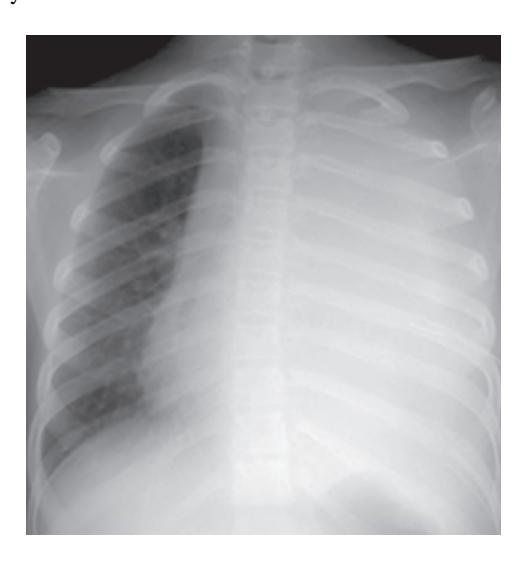
- a. What are your findings on this chest X-ray?
- b. What is your likely diagnosis based on chest X-ray and clinical findings?
- c. How would you confirm?
Answer
- a. Left-sided homogenous opacity with mediastinal/tracheal shift to the right, widening of superior mediastinum, with intercostal chest tube in situ on left.
- b. Mediastinal mass with left-sided massive pleural effusion; likely T-cell Lymphoblastic Lymphoma / Leukemia.
- c. Pleural fluid cytology & immunophenotyping, Bone marrow examination, CT chest and biopsy of lymph node / mediastinal mass.
VVK12-028
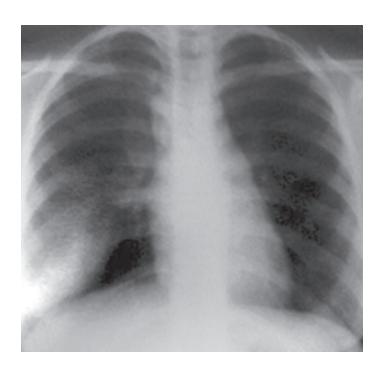
A 13-year-old girl weighing 26 kg presents with prolonged fever, loss of weight of 6 weeks duration. Her chest X-ray is shown below:
- a. List the findings.
- b. She was investigated and had PPD
. GA for AFB were negative. The treating pediatrician decided to start ATT in this patient. Give: - i. Category of the disease (WHO-RNTCP).
- ii. Drug combination and duration.
- c. At the end of treatment, the patient is afebrile, asymptomatic and weighs 33 kg. Her repeat chest X-ray shows 20% residual disease. The repeat PPD ordered by the doctor is
. - i. What is the relevance of the increase in the PPD?
- ii. What is the optimal future course?
Answer
- a. Right paratracheal lymphadenopathy and right hilar lymphadenopathy (Mediastinal TB adenopathy).
- b. ATT Regimen:
- i. Category I / Category 3 pediatric regimen
- ii. 2 months IP (HRZ) + 4 months CP (HR) (2 RHZ / 4 RH)
- c. Follow-up:
- i. No clinical relevance; Mantoux/PPD once positive remains positive and should never be repeated for monitoring response.
- ii. No further ATT required; regular clinical follow-up as she has gained weight and is clinically cured.
VVK12-029
Answer the following questions on asthma:
- a. What is the grade of asthma severity in a child having:
- Symptoms of airflow obstruction > once a day.
- Night time symptoms > once a week.
- PEF — 60–80% of personal best with > 30% diurnal variation.
- b. What would be the pulmonary score/severity of asthma exacerbation in a 7 year old child with a respiratory rate of 35, terminal expiratory wheeze and mild increase in work of breathing?
Answer
- a. Moderate persistent asthma.
- b. Score: 3 (Mild asthma exacerbation).
VVK12-030
Answer the following questions:
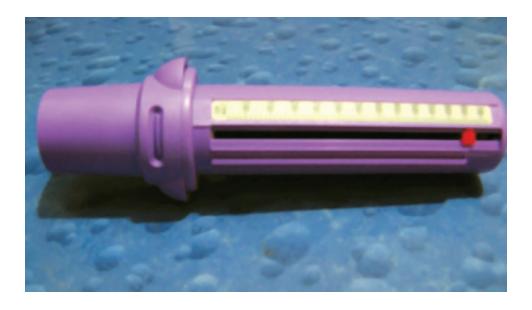
- a. Name the device shown.
- b. What would be the approximate normal value of PEFR of a subject standing 120 cm tall?
- c. What does a spirometer measure?
Answer
- a. Peak Flow Meter (Wright's Peak Expiratory Flow Meter).
- b. Formula:
- c. Vital capacity and its subdivisions (FVC, FEV1, FEF25-75%) and inspiratory/expiratory airflow rates.
VVK12-031
Answer the following questions on pneumonia:
- a. Resistance to penicillin in streptococcal pneumonia is mediated by ________.
- b. The most important indirect marker of PCP (P. jirovecii / P. carinii) pneumonia is ________.
- c. Chest radiograph findings typical of PCP pneumonia is __________.
Answer
- a. Alterations in Penicillin-Binding Proteins (PBPs) with reduced affinity for penicillin.
- b. Hypoxemia (
on room air out of proportion to exam) and elevated Serum LDH. - c. Bilateral diffuse perihilar / interstitial infiltrates with apical sparing early in the disease (ground-glass appearance).
VVK12-032
A 4-year-old girl presents with fever and a cough. She looks toxic, has a temperature of 39.8°C, refusing fluids, sitting on mother's knees quietly, looking flushed and anxious. You notice a soft inspiratory stridor, tracheal tug and intercostal recessions. RR 40/min, HR 140/min. Arterial oxygen saturation is 92% in room air.
- a. What is your most likely diagnosis?
- b. What characteristic posture does a child usually adopt to find some relief in such a case?
- c. How do you confirm the diagnosis in this case and what precautions will you take?
- d. What characteristic sign is seen on X-ray?
- e. What immediate management is warranted if such a child collapses suddenly?
Answer
- a. Acute Epiglottitis.
- b. Tripod position — sitting upright and leaning forward with chin thrust forward and mouth open while bracing on arms.
- c. Direct visualization of swollen cherry-red epiglottis under controlled conditions in the operating theatre with full airway and intubation/tracheostomy equipment ready.
- d. "Thumb sign" on lateral neck soft tissue radiograph.
- e. Emergency bag-mask ventilation followed by immediate endotracheal intubation or surgical cricothyroidotomy / tracheostomy.
VVK12-033
During the winter season a 7-month-old child is referred to the emergency department with worsening cough. Temperature is 37.6°C, RR 70 bpm, HR 130 bpm, moderate intercostal recessions, oxygen saturation 88% on room air. Auscultation reveals bilateral scattered fine crepitations and expiratory wheeze.
- a. What is your likely diagnosis?
- b. What is the main causative organism for this? Give 2 other causative organisms.
- c. What is the mainstay of treatment?
- d. Which babies are prone to this disease and how do you prevent disease in them?
Answer
- a. Acute Bronchiolitis.
- b. Organisms:
- Main: Respiratory Syncytial Virus (RSV, >50% of cases)
- Others: Parainfluenza virus, Human Metapneumovirus, Adenovirus, Rhinovirus.
- c. Humidified supplemental oxygen, fluid maintenance, and supportive airway clearance.
- d. High-risk groups & Prophylaxis:
- High risk: Preterm infants (<35 weeks), Bronchopulmonary dysplasia (BPD/CLD), Congenital heart disease, Immunodeficient infants.
- Prevention: Monthly intramuscular Palivizumab (monoclonal antibody against RSV F protein) during RSV season.
VVK12-034
A 7-month-old boy is referred in January with a fever of 38.1°C, cough, recurrent diarrhea for 3 months, weight dropped from 75th to 25th percentile despite good appetite. On exam: RR 50 bpm, mild intercostal recessions, bilateral crepitations.
- a. What is your likely diagnosis?
- b. Mention 3 other respiratory manifestations of this disease.
- c. Mention 2 endocrine manifestations of this disease.
- d. Give common organisms that colonise the airways in this disease.
- e. What is the standard diagnostic test for this condition?
Answer
- a. Cystic Fibrosis.
- b. Respiratory manifestations: Bronchiectasis, Recurrent pneumonia, Nasal polyposis, Chronic sinusitis, Hemoptysis, Pneumothorax, Cor pulmonale.
- c. Endocrine manifestations: Cystic Fibrosis-Related Diabetes (CFRD), Delayed puberty, Failure to thrive, Osteopenia.
- d. Colonizing organisms: Staphylococcus aureus, Pseudomonas aeruginosa, Burkholderia cepacia, Haemophilus influenzae.
- e. Quantitative Sweat Chloride Test using pilocarpine iontophoresis (
).
VVK12-035
A 12-year-old patient with homozygous sickle-cell disease presents during winter with fever 39.5°C, leg pains for 6 hours, right-sided chest pain, RR 44/min, HR 140/min,
- a. What is your most likely diagnosis?
- b. What do you expect in chest X-ray of this patient?
- c. What is the most common preceding event for this condition?
- d. Give 2 ways that help to reduce the frequency of such episodes.
Answer
- a. Acute Chest Syndrome (ACS).
- b. New segmental/lobar alveolar infiltrate (most commonly left lower lobe or bilateral lower lobes).
- c. Vaso-occlusive painful crisis, hypoventilation, infection, or fat embolism.
- d. Prevention: Incentive spirometry during painful crises, adequate hydration without fluid overload, early ambulation, Hydroxyurea therapy, regular transfusion therapy.
VVK12-036
A 5-month-old infant presents with paroxysms of coughing and going blue while feeding. She has not received routine immunizations.
- a. What possibility do you suspect in this baby?
- b. What two most relevant investigations will you send?
- c. The child was reviewed 4 weeks after discharge. Her mother is very concerned that she is still coughing. How do you convince the mother?
- d. What complications are expected in untreated cases?
Answer
- a. Pertussis (Whooping Cough caused by Bordetella pertussis).
- b. Investigations:
- i. Complete Blood Count (showing marked absolute lymphocytosis)
- ii. Nasopharyngeal swab for PCR / Direct Fluorescent Antibody (DFA) / Culture for B. pertussis
- c. Explain that Pertussis is known as the "100-day cough"; paroxysms of coughing can persist for weeks to months during the convalescent stage even after effective antibiotic eradication of bacteria.
- d. Complications: Secondary pneumonia, apnea/cyanotic spells, seizures, hypoxic encephalopathy, pneumothorax, subconjunctival hemorrhages, death.
VVK12-037
A 6-year-old boy presents with high fever, tachypnea, right-sided chest pain, dullness on percussion and absent breath sounds over the right lower zone.
- a. What is your most likely diagnosis?
- b. Pleural effusion is said to be purulent when leukocytes are ________.
- c. Give 4 diagnostic features on pleural fluid examination to call it as empyema.
Answer
- a. Right Empyema Thoracis / Complicated Parapneumonic Effusion.
- b. Leukocytes
(predominantly neutrophils). - c. Diagnostic criteria for Empyema:
- Frank pus / purulent appearance
(or Pleural/Serum ) - Positive Gram stain or culture for bacteria
VVK12-038
A 28-month-old child presents with fever and recurrent right middle lobe infiltrate on chest X-ray twice in the past month. Mantoux test is negative.
- a. What is the most likely diagnosis causing this "secondary pneumonia"?
- b. What other presentations could a child with this diagnosis have?
- c. What bronchus is most likely to be affected?
- d. How do you make the diagnosis and how do you confirm it?
- e. What is the most common age of presentation for this?
Answer
- a. Foreign body aspiration (Tracheobronchial foreign body).
- b. Choking episode, acute respiratory distress, intractable wheezing, recurrent localized pneumonia, unilateral hyperinflation / atelectasis.
- c. Right main bronchus (due to steeper angle and wider lumen).
- d. Diagnosis: Clinical suspicion + Inspiratory/Expiratory chest X-rays (air trapping/atelectasis); Confirmation: Rigid Bronchoscopy.
- e. 1 to 3 years of age.
VVK12-039
Answer the following questions on ventilation:
- a. A child is ventilated on a pressure-limited ventilator whose ABG shows
with normal oxygenation. Which is the best change in ventilator settings to achieve normocapnia? - b. A patient breathes spontaneously on a ventilator delivering
pressure throughout respiration. What is this mode called? - c. What is the expiratory time in pressure control ventilation with I:E ratio of 1:2 with 10% pause at rate of 20 breaths/min?
- d. In a volume-flow curve, an intubated 4-year-old child has inspiratory tidal volume of 12 mL but expiratory tidal volume of only 4 mL. What does this indicate?
- e. What should be the ventilator strategy in a child with acute severe asthma?
Answer
- a. Increase ventilator respiratory rate (RR) or increase peak inspiratory pressure (PIP) to increase minute ventilation.
- b. CPAP (Continuous Positive Airway Pressure).
- c. Total cycle time
. With I:E ratio 1:2, Inspiratory time , Expiratory time . - d. Peritubal air leak / circuit leak or uncuffed ET tube leak.
- e. Permissive hypercapnia, low respiratory rate, prolonged expiratory time (long TE, I:E ratio 1:3 or 1:4), and low PEEP to prevent dynamic hyperinflation (auto-PEEP).
VVK12-040
A newborn infant is in respiratory distress requiring several resuscitation attempts in delivery room. When crying, her breathing improves and sounds are normal. Direct laryngoscopy is unremarkable. Deep inspirations are ineffective.
- a. What is your likely diagnosis?
- b. What will be your immediate and most effective intervention?
- c. Give 2 conditions commonly associated with this entity.
Answer
- a. Bilateral Choanal Atresia.
- b. Immediate insertion of an oral Guedel airway (or McGovern nipple).
- c. CHARGE Syndrome:
- C: Coloboma
- H: Heart defects
- A: Atresia choanae
- R: Retarded growth & development / CNS anomalies
- G: Genital hypoplasia
- E: Ear anomalies / deafness
VVK12-041
A 4-year-old child complains of ear pain with fever of 38.9°C (102.1°F) and cold for several days.
- a. What is the most likely diagnosis?
- b. What is the best therapy?
- c. What is the most common causative organism for this?
Answer
- a. Acute Otitis Media (AOM).
- b. High-dose oral Amoxicillin (
in 2 divided doses for 10 days) + analgesia / antipyretics. - c. Streptococcus pneumoniae, followed by non-typable Haemophilus influenzae and Moraxella catarrhalis.